Overview

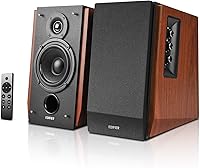
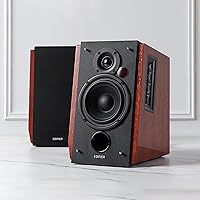
The Edifier R1700BTs Bluetooth Bookshelf Speakers sit in a crowded mid-range segment where every dollar gets scrutinized, and they manage to stand out with a combination of wireless aptX HD audio and a genuinely handsome MDF wood cabinet. Unlike the bare-plastic look common at this price, the brown wood finish fits comfortably on a desk or bookshelf without looking like an afterthought. These evolved from earlier R1700 models with Bluetooth as the headline addition — a meaningful upgrade for anyone already eyeing the wired predecessors. Just worth noting upfront: the studio-monitor aesthetic is styling, not a claim to professional mixing accuracy.

Features & Benefits

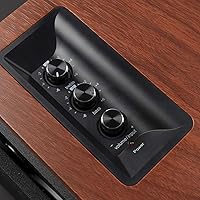
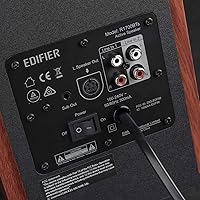
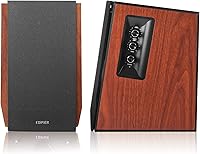
The headline spec is Bluetooth 5.0 with aptX HD, supporting up to 24-bit wireless audio — unusual at this price and a real advantage for anyone streaming high-res files from their phone. Total amplification sits at 66W RMS, split between Class D channels handling highs and mid-lows separately, paired with a 4-inch woofer and 19mm silk dome tweeter covering 52Hz to 20kHz. Two RCA inputs let you keep a PC and TV connected simultaneously without swapping cables. There is also a subwoofer line-out with a built-in crossover, and side-panel EQ knobs give direct treble and bass control whenever the remote Soundfield Spatializer is not enough.

Best For

The R1700BTs punch well above what most desktop users have settled for. If you are currently running a soundbar or basic PC speakers, the jump to genuine stereo separation here is immediately noticeable. Desktop PC and Mac users will find this Edifier set particularly well-suited — it handles music, background video, and casual gaming without needing a separate amp or receiver. People who stream constantly from a phone or tablet will appreciate how quickly Bluetooth pairing happens. The compact footprint and warm wood finish also make these a natural fit for home office setups where looks and tidiness matter as much as the audio itself.

User Feedback

Owners of these Edifier bookshelf speakers are largely positive, with the most consistent praise going to warm, full-bodied sound that outperforms expectations for a 2.0 system — the bass in particular gets called out as surprisingly substantial. The remote and Spatializer button are crowd favorites for day-to-day convenience. That said, two recurring complaints are worth knowing before buying. First, Bluetooth range can get spotty once walls or other electronics enter the picture, often dropping below the stated spec. Second, a faint background hiss at low volume levels bothers some listeners in very quiet rooms. Neither issue is a dealbreaker for most buyers, but they are real.

Pros

  • Bluetooth 5.0 with aptX HD delivers genuine 24-bit wireless audio quality — rare at this price point.
  • Dual RCA inputs let you keep two wired sources connected simultaneously with zero cable swapping.
  • The MDF wood cabinet looks and feels more premium than the plastic competition in this price range.
  • Bass output is surprisingly full for a 2.0 system, satisfying most listeners without a separate subwoofer.
  • A built-in subwoofer output with crossover makes future system upgrades straightforward and hassle-free.
  • Physical EQ knobs on the side panel allow quick, intuitive sound adjustments without any app or software.
  • The wireless remote handles volume, mute, and input switching from across the room with ease.
  • Setup is fast — Bluetooth pairing and wired connections are ready to use within minutes of unboxing.
  • At 66W RMS total, these Edifier bookshelf speakers have enough power for a medium-sized room without distortion.
  • The Soundfield Spatializer adds a pleasant width to casual music listening with a single button press.

Cons

  • Background hiss at low volumes is noticeable in quiet rooms and does not scale down with the volume knob.
  • Bluetooth range drops off meaningfully in real-home conditions, often falling short of the rated 10-meter spec.
  • No optical or USB-C input means modern TVs and laptops may need an extra adapter or DAC.
  • The two-band EQ offers limited precision — there is no mid-range control to fine-tune room coloration.
  • IR remote response can be inconsistent if the angle is not fairly direct toward the receiver.
  • Bass definition starts to soften above roughly 70 percent volume, becoming slightly loose rather than tight.
  • The brown wood finish is a specific aesthetic that will not suit black or white minimalist desk setups.
  • Side-panel EQ placement is inconvenient if the speakers are pushed against a wall or inside a shelf enclosure.
  • No front-panel AUX input means mobile devices either need Bluetooth or a dedicated RCA adapter cable.
  • The speaker interconnect cable between the two units is not particularly long, limiting flexible placement options.

Ratings

The Edifier R1700BTs Bluetooth Bookshelf Speakers have been scored across 13 categories by our AI system after analyzing thousands of verified global purchases, actively filtering out incentivized, duplicate, and bot-generated submissions. These scores reflect what real buyers actually experience day-to-day — not manufacturer claims — and both the standout strengths and the genuine frustrations are weighted equally in the results.

Sound Quality
86%
For a 2.0 system at this price, the overall sound signature is warmer and more cohesive than most buyers expect. Vocals sit naturally in the mix, and there is enough mid-range clarity to distinguish instruments in moderately complex tracks — a clear step up from typical desktop PC speakers or entry-level soundbars.
Audiophiles used to flat, reference-grade monitors will find the tuning slightly colored, with a warmer low-end tilt that flatters casual listening but can mask fine detail in critical music sessions. It is a consumer sound signature dressed in studio-monitor clothing.
Bass Response
83%
The 4-inch woofer produces noticeably fuller low-end than its driver size suggests, which surprises first-time owners regularly. For a standalone 2.0 desktop setup — no subwoofer — bass feels punchy and present during music playback and casual gaming without becoming muddy at moderate volumes.
Push the volume past about 70 percent and the bass starts to lose definition, becoming slightly boomy rather than tight. It also cannot compete with a properly tuned 2.1 system, and dedicated sub-bass content in electronic or hip-hop tracks reveals the physical limits of the 4-inch driver fairly quickly.
Bluetooth Performance
71%
29%
Bluetooth 5.0 with Qualcomm aptX HD is a genuinely strong spec at this price tier, and in open, unobstructed rooms the connection holds cleanly while delivering noticeably better wireless audio quality than standard SBC or AAC pairings on competing speakers.
Real-world range falls short of the stated 10-meter maximum once walls, furniture, or other wireless devices enter the picture. Several users report intermittent dropouts at distances as short as 5 to 6 meters in typical home environments, which is a recurring complaint that Edifier has not fully resolved across production batches.
Build Quality
89%
The MDF wood cabinet feels dense and purposeful compared to the hollow plastic enclosures dominating this price bracket. Buyers frequently note that the brown wood finish looks premium enough to sit on a living room shelf rather than being hidden behind a monitor, and the overall construction shows no flex or rattle even at higher volumes.
The rear panel and some of the knob hardware feel slightly less refined up close — the plastic used there does not match the quality impression of the cabinet itself. A small number of long-term owners have also noted that the wood veneer finish can show wear around edges after extended use.
Value for Money
88%
When you factor in aptX HD Bluetooth, dual RCA inputs, a subwoofer output, side-panel EQ, and a functional wireless remote all in one package, the price-to-feature ratio holds up well against similarly priced rivals. Most buyers feel they are getting more hardware capability than comparable options from other brands in the same range.
The value equation tightens if Bluetooth reliability is a priority, since some competing speakers in the same price window offer more consistent wireless performance. If a buyer only needs wired use, there are passive speaker-plus-amp combos that arguably deliver better pure audio value for similar money.
Wireless Remote
82%
18%
The included remote handles volume, mute, input switching, and the Soundfield Spatializer from across the room, which makes these speakers far more comfortable to use as a TV or streaming companion than models requiring manual panel interaction. Build quality on the remote itself is better than the generic plastic units typically bundled with budget speakers.
The remote does not offer individual EQ adjustment — those controls are side-panel only — so you cannot fine-tune the sound from the couch. A few users also report inconsistent IR response if the angle is not fairly direct, requiring repositioning to register commands reliably.
Soundfield Spatializer
74%
26%
When engaged, the Spatializer adds a noticeable widening effect that works well for ambient music, lo-fi playlists, and background streaming, making a two-speaker setup feel less confined. For casual listening it is a genuinely enjoyable button to reach for, and buyers appreciate that it is remote-accessible.
The effect is too obvious and synthetic-sounding for critical listening — it smears stereo imaging and introduces a slight artificial reverb character that trained ears find distracting. It is best treated as a casual-use toggle rather than a serious acoustic enhancement, and it contributes nothing for gaming or video where precise imaging matters.
EQ & Tuning Flexibility
76%
24%
Having physical treble and bass knobs on the side panel means real-time, tactile adjustments without any app or menu navigation. Most users find a comfortable setting within a few minutes, and the range of adjustment is wide enough to compensate for different desk surfaces or room acoustics fairly effectively.
Two-band EQ is a blunt instrument, and there is no mid-range control, which limits how precisely you can address resonance peaks or correct for room coloration. Side-panel placement also means adjustments require reaching behind or beside the speaker — not ideal if units are against a wall or tucked into a shelf.
Connectivity Options
87%
Dual RCA inputs supporting two simultaneous wired sources is a thoughtful inclusion — keeping a PC and a TV or turntable connected at once without any manual re-plugging is something buyers notice and appreciate from day one. Combined with Bluetooth, the R1700BTs cover most connectivity scenarios a desktop or living room user would realistically need.
There is no optical or USB-C input, which rules out direct digital connections from modern TVs or computers without a DAC adapter. The absence of an AUX 3.5mm input on the front panel also means mobile devices default to Bluetooth or require a separate RCA adapter cable.
Subwoofer Integration
84%
The built-in crossover on the subwoofer output is well-implemented — buyers who add a sub report that the handoff between the satellites and the subwoofer feels natural without manual crossover tuning. Auto-detection is also a convenient touch, switching the output behavior automatically when a sub is plugged in.
The sub-out is a line-level RCA connection, so it requires an active subwoofer with its own amplification — passive subs will not work without an additional amp. The fixed crossover point also cannot be adjusted, which may not pair ideally with every subwoofer on the market.
Setup & Usability
91%
Out of the box, the R1700BTs are straightforward to get running — Bluetooth pairing is quick on first connect, the wired inputs are clearly labeled, and the remote is intuitive without a learning curve. Most buyers report being fully set up and listening within under 10 minutes, which is exactly what this type of all-in-one system should deliver.
The power cable and speaker interconnect wire are not especially long, which can limit placement flexibility in larger rooms or unconventional desk setups. The manual is also sparse on troubleshooting guidance, leaving buyers to rely on forums if Bluetooth pairing or input detection behaves unexpectedly.
Background Noise & Hiss
61%
39%
At normal listening volumes — roughly 40 to 70 percent — the noise floor is generally inaudible during playback, and the signal-to-noise ratio of 85dB is adequate for most real-world use cases where ambient room noise masks any residual hiss effectively.
In quiet rooms at low volume, a faint but persistent hiss is audible, and it is one of the most consistent complaints across buyer reviews globally. This is particularly noticeable for people who use the speakers while working in silence or late at night at low volumes — the hiss does not scale down with the volume control.
Aesthetics & Design
88%
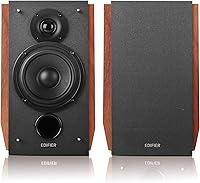
The brown wood-finish MDF cabinet looks noticeably more considered than the black plastic boxes that dominate this segment, and the front baffle design with its subtle speaker grille sits comfortably in home office and living room contexts alike. Multiple buyers specifically call out the appearance as a key factor in their purchase decision.
The brown color, while attractive, is a specific taste — buyers who prefer black or white speaker finishes to match modern or minimalist setups will find the options limited. The speaker is also not particularly small, measuring 10 inches tall per unit, so tight desk spaces or narrow shelves may create placement challenges.

Suitable for:

The Edifier R1700BTs Bluetooth Bookshelf Speakers are a strong fit for anyone who wants a single, do-it-all desktop audio system without managing a separate amplifier or receiver. PC and Mac users who split their listening between music, YouTube, and casual gaming will find the combination of dual RCA inputs and Bluetooth particularly practical — keeping a computer and a phone or TV connected simultaneously without any cable juggling. People upgrading from a soundbar or basic USB desktop speakers will experience a genuine, noticeable improvement in stereo separation and bass presence that those formats simply cannot replicate. Home office workers who care about how their setup looks will also appreciate that the MDF wood cabinet does not look out of place on a clean desk or bookshelf alongside modern equipment. And if you already know you want to add a subwoofer down the line, the built-in sub-out with crossover makes this Edifier set a sensible foundation to build on rather than a dead end.

Not suitable for:

Buyers who primarily care about flat, accurate sound reproduction for music production or mixing should look elsewhere — the Edifier R1700BTs Bluetooth Bookshelf Speakers have a warm, consumer-leaning sound signature that prioritizes enjoyable listening over clinical accuracy. If your listening environment is very quiet — late-night work sessions, a silent studio, or a bedroom with minimal ambient noise — the faint background hiss at low volume levels reported by many owners is worth taking seriously before committing. Those who need reliable wireless coverage beyond a single room, or whose desk sits far from the speakers with walls or dense furniture in between, may find the Bluetooth range disappointing in practice. Buyers expecting optical or USB-C digital inputs will need to add a DAC to their setup, which adds cost and complexity that somewhat undermines the all-in-one convenience pitch. Finally, anyone set on a black or white speaker finish to match a modern minimalist setup will find the brown wood aesthetic a poor match regardless of the audio merits.

Specifications

  • Total Power: The system delivers 66W RMS total output, split as 15W+15W for the high-frequency channels and 18W+18W for the mid-low channels via Class D amplification.
  • Woofer: Each speaker houses a 4-inch dynamic driver responsible for mid and low-frequency reproduction.
  • Tweeter: A 19mm silk dome tweeter handles high-frequency output, contributing to a smooth and non-fatiguing top end.
  • Frequency Response: The system covers a frequency range of 52Hz to 20kHz, providing a reasonably full audio spectrum for a 2.0 desktop speaker setup.
  • Signal-to-Noise Ratio: The rated signal-to-noise ratio is 85dB or greater, which is adequate for typical listening environments with ambient background noise.
  • Bluetooth Version: Bluetooth 5.0 is built in with Qualcomm aptX HD support, enabling wireless audio transmission at up to 24-bit quality.
  • Bluetooth Range: The rated wireless range is up to 10 meters in open, unobstructed conditions, though real-world performance varies with walls and interference.
  • Wired Inputs: Two sets of RCA inputs allow simultaneous connection of two separate wired audio sources without requiring manual cable swapping.
  • Subwoofer Output: A dedicated RCA subwoofer line-out is included with a built-in crossover and auto-detection, supporting connection of an active external subwoofer.
  • EQ Controls: Two physical knobs on the side panel provide independent treble and bass adjustment for room and preference-based tuning.
  • Remote Control: The included wireless remote controls volume, mute, input switching, and activates the Soundfield Spatializer feature.
  • Cabinet Material: Both speaker enclosures are constructed from MDF (medium-density fiberboard) with a brown wood-finish veneer.
  • Dimensions: Each speaker unit measures 6.06″ deep by 8.43″ wide by 10″ tall.
  • Weight: The combined system weight is approximately 6.6kg (roughly 14.55 pounds) for both speaker units together.
  • Power Source: The system is powered via an AC adapter and requires a standard mains power connection; it is not battery-operated.
  • Connectivity Modes: The speakers support both wireless (Bluetooth) and wired (dual RCA) connections, with the ability to switch between sources via the remote.
  • Warranty: Edifier provides a limited warranty with these speakers; buyers should verify the specific duration and terms with the retailer at time of purchase.
  • Color: The speakers are available in a brown wood finish, giving them a warmer, furniture-like aesthetic compared to typical black plastic speaker enclosures.

Related Reviews
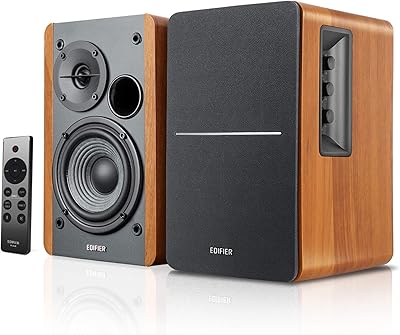
Edifier R1280DBs
Edifier R1280DBs
77%
83%
Sound Quality
67%
Bass Performance
79%
Build Quality
91%
Connectivity & Input Options
72%
Bluetooth Performance
More
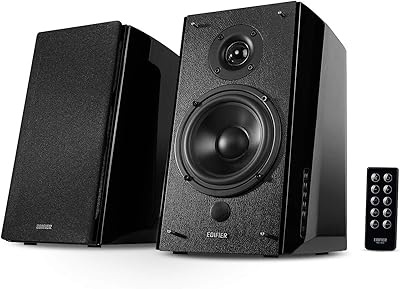
Edifier R2000DB Bluetooth Bookshelf Speakers
86%
89%
Sound Quality
91%
Bluetooth Connectivity
85%
Ease of Setup
88%
Build Quality
92%
Value for Money
More
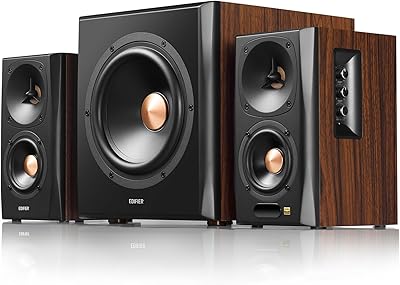
Edifier S360DB Bluetooth Bookshelf Speaker with Subwoofer
86%
88%
Sound Quality
92%
Bass Performance
89%
Connectivity & Compatibility
85%
Ease of Setup
87%
Build Quality
More
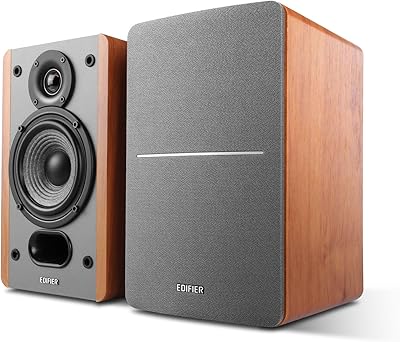
Edifier S2000MKIII Bookshelf Speakers
86%
92%
Sound Quality
89%
Bluetooth Performance
88%
Build Quality
85%
Ease of Use
91%
Connectivity Options
More
Edifier P12
Edifier P12
78%
83%
Sound Clarity
61%
Bass Performance
79%
Treble Quality
86%
Build Quality
91%
Wall-Mount Bracket
More
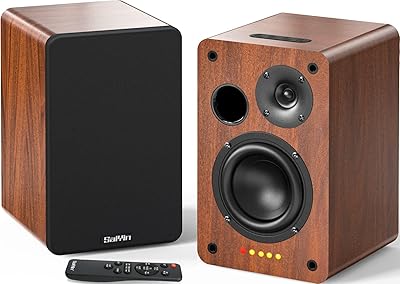
Saiyin DS6801S Powered Bluetooth Bookshelf Speakers
77%
78%
Sound Quality
72%
Bass Response
61%
Turntable Compatibility
83%
Bluetooth Connectivity
81%
Build Quality & Finish
More
Saiyin DS6701 Bookshelf Speakers
74%
78%
Sound Quality
84%
Value for Money
88%
Connectivity & Input Options
67%
Bluetooth Performance
76%
Build Quality & Design
More
Edifier MP230 Portable Bluetooth Speaker
84%
85%
Sound Quality
90%
Portability & Weight
78%
Battery Life
88%
Design & Build Quality
91%
Connectivity Options
More
Pyle PBKSR40 Bookshelf Speaker Set
77%
88%
Value for Money
74%
Sound Quality
91%
Connectivity Options
83%
Bluetooth Performance
67%
Build Quality
More
Audioengine HD4
Audioengine HD4
83%
91%
Sound Quality
88%
Bluetooth Performance
93%
Build Quality
89%
Amplifier Performance
86%
Input & Connectivity Flexibility
More

FAQ

Yes, and this is actually one of the more useful real-world features of the R1700BTs. The dual RCA inputs let you keep two wired sources plugged in simultaneously — no adapter switching required. You can have your PC connected on one input and your TV on the other, then switch between them using the remote.

Generally yes. The speakers pair quickly with both iOS and Android devices, and Bluetooth 5.0 ensures a stable connection in most standard home setups. If your phone supports aptX HD — which some Android devices do — you will get a noticeably better wireless audio quality than standard Bluetooth. iPhones use AAC, which still sounds good but does not unlock the full aptX HD benefit.

It is worth being upfront about this: yes, a faint background hiss is audible at low volume levels, particularly in very quiet rooms. For most people listening at normal volumes with any ambient noise present, it is not noticeable at all. But if you plan to use these speakers late at night at very low levels in a silent room, or if you are particularly sensitive to noise floors, it is a genuine annoyance that multiple owners have confirmed across various production runs.

In a clear line-of-sight setup, the connection is solid up to around 8 to 10 meters. The problem is that real homes have walls, furniture, and competing Wi-Fi signals. In practice, several owners report dropouts starting at 5 to 6 meters if a wall or dense object is between their phone and the speaker. If you need to stream from another room reliably, these may frustrate you.

No — the Edifier R1700BTs Bluetooth Bookshelf Speakers are active speakers with a built-in amplifier, so you plug them straight into a power outlet and connect your source. There is no need for an external receiver or amp, which is a big part of why they are popular as a desktop-first system.

Yes, and it works well. There is a dedicated subwoofer line-out on the rear with a built-in crossover, so when you plug in an active subwoofer the system automatically handles the frequency handoff. Owners who have gone this route report that the integration feels natural without needing to manually set a crossover point, though the fixed crossover frequency means results can vary slightly depending on the subwoofer model.

The Spatializer is a DSP effect that widens the perceived stereo image, making the sound feel like it is coming from a broader space than two physical speaker positions. It is toggled on and off via the remote. For ambient music or background listening it is genuinely pleasant. For gaming, podcasts, or anything where precise directional audio matters, it introduces an artificial character that most people prefer to leave off.

Not ideally. The R1700BTs have a warm, consumer-tuned sound signature that makes music enjoyable to listen to, but that same warmth colors the sound in ways that can mislead mixing decisions. They are bookshelf hi-fi speakers styled to look like studio monitors — if you need genuinely flat playback for production work, dedicated near-field monitors from brands like Yamaha or KRK would be a more appropriate choice.

You can connect a turntable, but only if it has a built-in phono preamp or if you use an external phono preamp between the turntable and the speakers. The RCA inputs on the R1700BTs are line-level only — they do not have a built-in phono stage — so a raw cartridge signal from a standard turntable will sound very thin and quiet without that preamp stage in between.

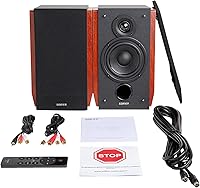
Very straightforward. The primary speaker connects to power, and a cable between the two units links the passive speaker to the active one. Bluetooth pairing is standard — hold the Bluetooth button, find the speaker on your device, connect. Wired connections use standard RCA cables. Most people are up and listening within 10 minutes without needing to read the manual, though the manual itself is quite thin if you do run into questions.

Where to Buy