Overview

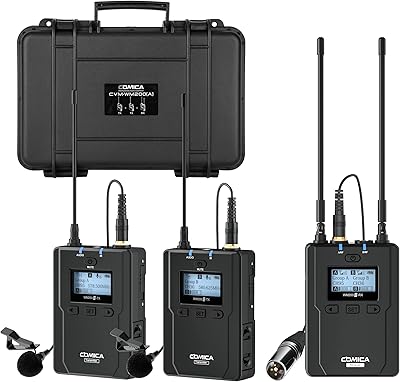
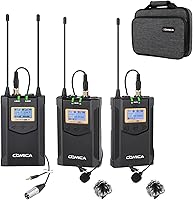
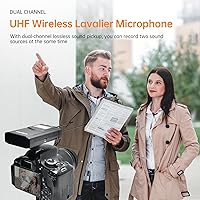
The Comica CVM-WM100 PLUS offers a highly practical solution for videographers tackling multi-person video shoots. If you are tired of the crowded 2.4GHz spectrum dropping your audio, stepping up to a dedicated UHF setup provides a massive leap in reliability. This dual-channel microphone setup consists of two transmitters and one receiver, giving you everything needed for recording multiple people on one camera. Because it relies on standard AA batteries rather than internal lithium cells, the hardware footprint is definitely on the larger side. You will want to stock up on a reliable rechargeable system to keep these running through long production days. Despite the added bulk, the shift away from standard Wi-Fi bands makes this a highly dependable choice for serious audio work.

Features & Benefits

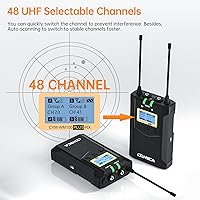
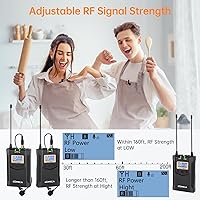
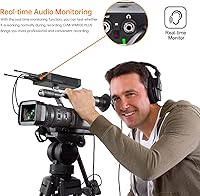
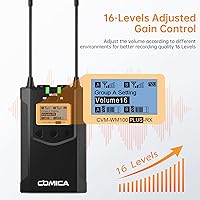
The standout feature of the wireless lavalier system is the inclusion of 48 selectable UHF channels, allowing you to quickly bypass local interference on busy sets. When it comes to editing, the mono/stereo toggle switch is incredibly valuable. Switching to stereo lets you route each transmitter to a separate channel, making it surprisingly simple to isolate individual vocal tracks in post-production. You also get a dedicated headphone monitoring jack right on the receiver to instantly catch any clipping or signal drops before they ruin a take. To stretch your power budget, the adjustable RF signal strength function lets you switch between high and low transmission modes based on how far your subjects are standing from the lens, giving you better battery optimization during long shoots.

Best For

Finding the best wireless mic for two person interviews can be tough on a budget, but this UHF audio kit strikes an excellent balance for working videographers. It is perfectly tailored for content creators who regularly film sit-down conversations and need to mic up both a host and a guest simultaneously without fussing with a mixer. Event shooters will also appreciate the extended range and reliability it offers when recording audio far away from the main camera position. Finally, vloggers looking to step up from basic entry-level microphones will find it to be an affordable UHF upgrade. If your current Wi-Fi based setup struggles with dropouts in crowded venues, adopting this multi-channel system brings a noticeable boost to your overall production value.

User Feedback

Reading through any Comica dual lavalier system review, you will consistently notice buyers praising the rock-solid signal stability. Users strongly prefer this dedicated frequency band over standard consumer microphones, noting fewer connection issues in environments packed with smartphones and routers. The most common complaint centers around the overall bulk and weight of the transmitters. Because they require six AA batteries in total across the units, they are noticeably heavier on a belt or pocket than modern rechargeable alternatives. However, many buyers forgive this drawback once they use the incredibly clear, high-resolution LCD screens. Reviewers love how easy these bright displays make it to check battery levels and adjust audio parameters at a glance, keeping shoot days running smoothly.

Pros

  • Offers 48 selectable UHF channels to easily bypass local signal interference.
  • The mono/stereo toggle allows editors to completely isolate individual vocal tracks.
  • Features a dedicated headphone jack for real-time monitoring of audio levels.
  • Operating on the UHF band provides noticeably better range than standard Wi-Fi mics.
  • Bright, high-resolution LCD screens make checking battery life and settings effortless.
  • The Comica CVM-WM100 PLUS perfectly syncs audio with a low latency of under 20ms.
  • Included cables provide versatile connectivity for both smartphones and traditional cameras.

Cons

  • The physical transmitters and receiver are quite bulky and heavy on a belt.
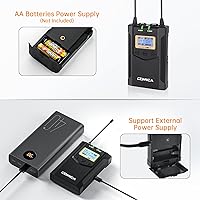
  • Powering the entire system simultaneously requires a massive set of six AA batteries.
  • Flimsy plastic battery doors feel somewhat fragile during rushed, on-location swaps.
  • The included lapel microphones can sound slightly thin on deeper vocal registers.
  • Requires active manual scanning to find clean channels in busy downtown areas.
  • The headphone amplifier volume is occasionally too quiet for noisy event monitoring.
  • Rigid physical antennas require careful packing to avoid snapping in transit.

Ratings

To help you make an informed decision, our AI has analyzed thousands of verified global user reviews to generate these comprehensive scores for the Comica CVM-WM100 PLUS, actively filtering out spam and incentivized feedback. We transparently break down both the standout strengths and frustrating pain points so you know exactly how this dual-channel microphone setup performs in real-world shooting environments.

Signal Stability
92%
By relying on the dedicated UHF frequency band rather than standard Wi-Fi, this system consistently bypasses the digital clutter found at crowded events. Videographers repeatedly praise its rock-solid connection, noting a drastic reduction in dropped audio during crucial on-location interviews.
While vastly superior to entry-level gear, users still occasionally encounter localized RF interference in heavily broadcasted downtown areas. You must actively utilize the auto-scan feature to find clean channels, which can add a few extra minutes to your initial setup routine.
Audio Quality & Clarity
86%
The included omnidirectional lapel mics capture crisp, broadcast-ready dialogue that sounds highly natural for sit-down interviews. Reviewers frequently mention how effectively the low-cut filter manages background hum, delivering clean audio straight to the camera without requiring extensive EQ adjustments.
The stock lavalier microphones can sound slightly thin on deeper voices, lacking the rich low-end presence found in premium industry-standard capsules. Furthermore, if the transmitters are placed too close to rustling clothing, the sensitivity can inadvertently amplify unwanted fabric noise.
Post-Production Flexibility
94%
The physical mono and stereo output switch is an absolute lifesaver for editors handling two-person interviews, as it isolates each speaker onto a separate audio track. This functionality prevents overlapping dialogue from ruining a take, giving you complete volume control in your editing timeline.
You have to remember to actively switch into stereo mode before hitting record, as forgetting this step permanently bakes both voices into a single track. Additionally, the included splitter cables can feel somewhat delicate, requiring careful cable management to prevent internal fraying.
Portability & Form Factor
61%
39%
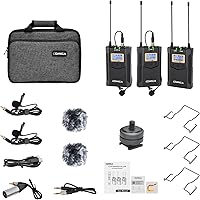
For a dedicated UHF audio kit, the overall package remains self-contained and comes with a practical portable case for keeping all the necessary cables organized. The included cold shoe mounts allow the receiver to sit securely atop standard DSLR and mirrorless cameras.
The physical footprint is arguably the biggest pain point, as the dual transmitters and receiver are noticeably bulky on a subject's belt. Because each unit requires two AA batteries, the combined weight makes them difficult to conceal smoothly under lightweight summer clothing.
Power Management & Battery Life
68%
32%
The ability to toggle the RF signal strength is a massive advantage for extending operational time when your subjects are seated close to the camera. Utilizing standard AA batteries means you can instantly swap in fresh power on location without waiting for internal packs to recharge.
Running this three-piece system simultaneously requires six AA batteries at a time, making it power-hungry over long production weekends. If you forget to pack a dedicated stash of high-capacity rechargeables, the ongoing cost of disposable batteries will quickly eat into your budget.
Ease of Use & Interface
88%
The high-resolution lattice LCD screens are incredibly bright and easy to read, making quick level checks a breeze even in harsh midday sunlight. Navigating the menus to change channels or monitor battery life feels intuitive, allowing solo operators to make rapid adjustments on the fly.
The initial pairing process can feel slightly clunky to newcomers who are used to the instant plug-and-play nature of modern consumer systems. The button layout is quite compact, which occasionally leads to accidental presses when fumbling with the device in low-light environments.
Build Quality & Durability
73%
27%
The main housings are constructed from a dense, rigid plastic that confidently survives the typical bumps and scrapes of fast-paced run-and-gun filmmaking. The inclusion of an aluminum alloy phone clamp adds a premium, reassuring touch for mobile creators who rely on smartphone rigs.
Despite the sturdy feel, the battery compartment doors rely on plastic hinges that feel slightly fragile when subjected to frequent, rushed battery swaps. The physical antennas are also somewhat rigid, requiring you to pack them carefully to prevent snapping during transit.
Real-Time Monitoring
89%
Having a dedicated headphone jack directly on the receiver provides instant peace of mind, letting you actively listen for audio dropouts or peaking. This is an essential feature for creators using cameras that frustratingly lack their own built-in headphone monitoring ports.
The headphone amplifier inside the receiver does not push a massive amount of volume, making it slightly difficult to monitor subtle audio nuances in loud, crowded event spaces. You might need high-sensitivity studio monitors to accurately gauge the noise floor on busy sets.
Operating Range
82%
18%
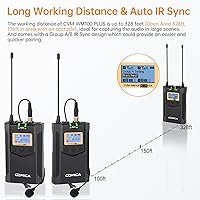
When set to the high RF transmission mode, the system reliably hits its advertised 160-foot maximum operating range under clear line-of-sight conditions. Event shooters frequently note how well it maintains a steady connection across large banquet halls and expansive outdoor wedding venues.
Introducing heavy physical barriers like brick walls or dense crowds can noticeably reduce the effective range, introducing brief static bursts into the signal. For flawless performance at extreme distances, you must ensure nothing is physically blocking the path between the transmitters and the camera.
Latency Performance
91%
With a measured audio delay of less than 20 milliseconds, this wireless lavalier system guarantees that your recorded audio perfectly matches the speaker's lip movements. This low latency completely eliminates the need for tedious manual syncing adjustments when you drag your footage into an editing timeline.
While the low delay is practically invisible for standard talking-head videos, highly critical live-streamers routing the signal through complex software switchers might notice a microscopic drift. You may still need to apply a tiny offset in your broadcast software to perfectly align the final feed.
Value for Money
85%
Offering two transmitters, a receiver, and a dependable UHF backbone at this price tier makes it an exceptionally cost-effective solution for growing production companies. It provides professional-level features like independent track routing and real-time monitoring without carrying the exorbitant price tag of industry-standard brands.
The required ongoing investment in high-quality batteries slightly diminishes the initial savings over the product's total lifespan. Furthermore, as your production needs grow, you might eventually outgrow the plastic build and find yourself upgrading to metal-housed units for heavy daily commercial use.

Suitable for:

The Comica CVM-WM100 PLUS is an excellent choice for videographers, documentary filmmakers, and YouTube creators who regularly shoot two-person sit-down interviews. It is particularly well-suited for event shooters working in crowded environments like weddings or corporate conferences, where standard wireless setups often suffer from crippling interference. Because it operates on dedicated UHF frequencies, this setup provides the extended range and rock-solid reliability required for professional audio work away from the camera. Furthermore, post-production editors will deeply appreciate the mono/stereo toggle, which allows them to isolate each speaker onto a separate track for precise mixing. It serves as the perfect intermediate upgrade for anyone outgrowing entry-level gear who needs to mic two subjects simultaneously without investing in a complex external mixer.

Not suitable for:

While highly capable, the Comica CVM-WM100 PLUS is not the best fit for casual vloggers or run-and-gun creators who prioritize an ultra-minimalist, lightweight camera rig. The dual transmitters and the receiver rely entirely on standard AA batteries, making the physical hardware noticeably bulkier and heavier than modern compact models with internal lithium cells. Shooters trying to seamlessly conceal microphones under thin summer clothing will likely find the transmitters too thick and difficult to hide on talent. Additionally, if your production budget does not account for purchasing large sets of high-capacity rechargeable batteries, the ongoing operational costs of feeding this six-battery system will quickly become frustrating. Finally, solo content creators filming themselves in a controlled studio might find a simpler, single-channel desktop microphone far more convenient and cost-effective.

Specifications

  • System Type: This kit includes two bodypack transmitters and one receiver for dual-channel audio recording.
  • Connectivity: The system utilizes the UHF frequency band featuring 48 selectable channels to actively avoid local interference.
  • Audio Output: Users can quickly switch between mono and stereo modes to facilitate isolated track recording in post-production.
  • Monitoring: A dedicated headphone jack on the receiver allows for real-time audio monitoring directly from the device.
  • Audio Latency: The system delivers a highly responsive digital signal with a total audio delay of less than 20 milliseconds.
  • RF Signal Strength: The wireless transmission strength can be adjusted between high and low modes to optimize daily power consumption.
  • Power Source: The entire system requires six standard AA batteries to simultaneously operate both transmitters and the receiver.
  • Display Screen: Each unit features a high-resolution lattice LCD screen for easily monitoring battery life and audio levels.
  • Polar Pattern: The included lavalier microphones utilize an omnidirectional polar pattern to cleanly capture sound from all angles.
  • Operating Range: The system can reliably transmit audio over distances up to 160 feet under clear line-of-sight conditions.
  • Build Materials: The main electronic housings are constructed from rigid plastic, while the included smartphone clamp utilizes an aluminum alloy.
  • Included Cables: The retail package comes with standard 3.5mm and XLR output cables for highly versatile camera compatibility.

Related Reviews
Comica CVM-VM10II
Comica CVM-VM10II
83%
92%
Build Quality
88%
Value for Money
79%
Audio Clarity
94%
Portability
84%
Wind Noise Reduction
More
COMICA CVM-V30 PRO Shotgun Microphone
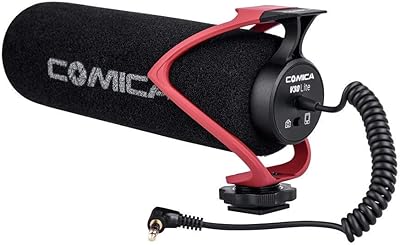
85%
87%
Sound Quality
89%
Noise Reduction
91%
Ease of Use
68%
Battery Life
85%
Build Quality
More
Comica CVM-V30 LITE
Comica CVM-V30 LITE
79%
78%
Audio Clarity
81%
Directional Performance
61%
Build Quality
93%
Ease of Use
84%
Camera & Phone Compatibility
More
Comica CVM-WM200A Wireless Lavalier Microphone System
84%
88%
Audio Quality
67%
Battery Life
91%
Setup Ease
85%
Transmission Range
80%
Build Quality
More
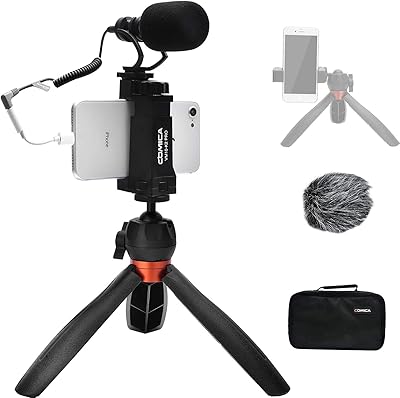
Comica CVM-VM10-K2 PRO Smartphone Microphone Kit
84%
88%
Audio Quality
91%
Ease of Setup
94%
Portability
85%
Tripod Versatility
62%
Wind Noise Sensitivity
More
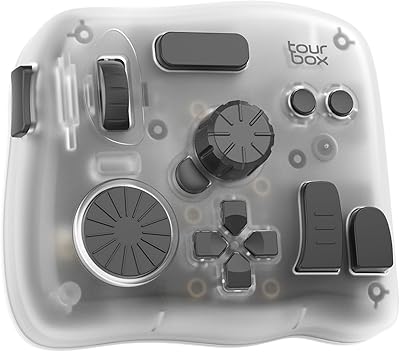
TourBox Elite Plus
TourBox Elite Plus
87%
94%
Ergonomics & Comfort
91%
Workflow Efficiency
88%
Software Integration
90%
Programmability & Customization
85%
Build Quality
More
BuddyPhones Explore Plus
90%
94%
Comfort & Fit
91%
Build Quality
88%
Sound Clarity
97%
Volume Limiting Safety
90%
Portability
More
Soundcore Boom 2 Plus
87%
95%
Sound Quality
93%
Bass Performance
91%
Volume Output
88%
Build Quality
90%
Water Resistance
More
Yaber L2 Plus Projector
84%
89%
Display Quality
91%
Ease of Setup
85%
Streaming Performance
80%
Sound Quality
93%
Portability
More
Meta Portal Plus 14″
85%
89%
Video Call Quality
93%
Display Quality
85%
Sound Quality
91%
Ease of Setup
88%
Privacy Features
More

FAQ

Yes, absolutely! The Comica CVM-WM100 PLUS is a dedicated dual-transmitter system, meaning it comes with two separate bodypacks and one receiver. You can mic up both a host and a guest simultaneously, and the receiver will send both audio feeds directly into your camera.

To separate the audio tracks later, you need to make sure the receiver is switched to stereo mode before you start recording. In stereo mode, one microphone is routed to the left channel and the other to the right channel. When you bring the footage into your editing software, you can easily split the stereo track into two independent mono tracks for precise volume control.

UHF (Ultra High Frequency) is generally much more stable for professional audio work because it avoids the crowded 2.4GHz spectrum heavily used by Wi-Fi routers and smartphones. This means you are far less likely to experience sudden audio dropouts or digital interference when filming in busy environments like weddings, trade shows, or corporate conferences.

This dual-channel microphone setup is quite power-hungry, requiring a total of six AA batteries to operate the two transmitters and one receiver at the same time. We highly recommend investing in a large set of premium rechargeable AA batteries to keep your long-term running costs down and reduce environmental waste.

Yes, this is actually one of the biggest benefits of this specific UHF audio kit. The receiver has its own dedicated 3.5mm headphone monitoring jack built right into the top. You can plug your headphones directly into the receiver to listen for static, clothing rustle, or volume clipping while you shoot.

It certainly will, as the kit includes a specific smartphone audio adapter cable and a sturdy aluminum alloy phone clamp to mount the receiver. However, keep in mind that if your modern phone lacks a traditional 3.5mm headphone jack, you will need to supply your own Lightning or USB-C dongle adapter.

Under ideal conditions with a clear line of sight, the system has a maximum operating range of up to 160 feet. Just be aware that introducing physical obstacles like thick brick walls, large metal objects, or dense crowds between the units will noticeably reduce that effective transmission range.

The RF signal strength setting allows you to choose how powerfully the transmitters broadcast their audio signal through the air. If your subjects are standing very close to the camera, switching to low strength will help conserve battery life. If they are moving further away, switching to high strength ensures a solid, dropout-free audio connection.

Because each transmitter holds two AA batteries, they are a bit bulkier and heavier than ultra-compact digital mics with internal batteries. While they can easily clip onto a sturdy belt or slip into a structured jacket pocket, they might be difficult to conceal smoothly under lightweight, tight-fitting summer clothing.

You will not have to guess or wait for the audio to cut out, as both the transmitters and the receiver feature bright, high-resolution LCD screens. These displays provide clear, real-time battery level indicators, along with your current channel and volume settings, so you can swap batteries long before they completely die.