Overview

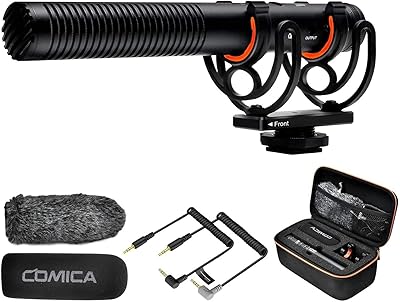
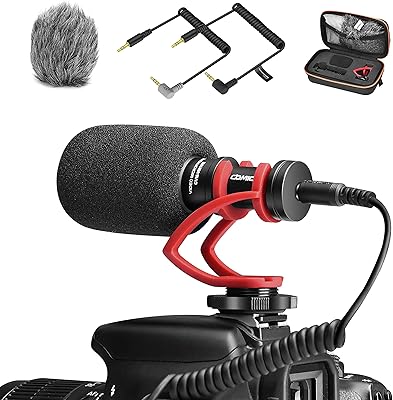
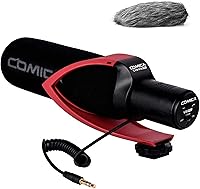
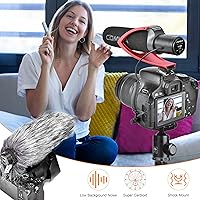
The Comica CVM-V30 PRO Shotgun Microphone sits in a comfortable spot for content creators who want a genuine audio upgrade without committing to a professional-grade rig. Built around a super-cardioid polar pattern, it focuses on what is directly in front and pushes aside ambient noise creeping in from the sides. It connects through a standard 3.5mm jack, so compatibility with Canon, Nikon, Sony, and most other DSLR or mirrorless cameras is essentially a non-issue. The metal housing feels solid in hand, and at 172g it will not throw your rig off-balance. With over 1,500 Amazon ratings averaging 4.2 stars, it has enough of a track record to take seriously.

Features & Benefits

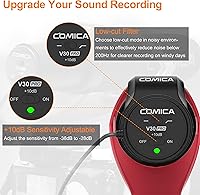
The low-cut filter is probably the feature you will reach for most — flip it on when shooting outdoors or in a reverberant room and it trims the low-frequency rumble that would otherwise muddy your audio. The sensitivity adjustment is equally practical: rather than a vague dial, this on-camera microphone gives you a defined 10dB range, letting you pull back when recording a loud speaker or open it up for quieter subjects. The integrated shock mount handles incidental knocks and camera taps that slip past most on-camera mics, and the 78dB signal-to-noise ratio keeps background hiss at a respectable level for this tier.

Best For

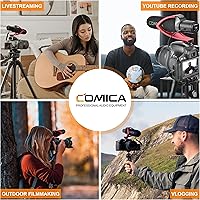
The CVM-V30 PRO makes the most sense for solo YouTubers, travel vloggers, and beginner filmmakers who want a real step up from their camera's built-in microphone without the complexity of a separate audio recorder. If you are doing run-and-gun interviews or tutorial videos without a sound operator nearby, this shotgun mic handles the job without needing phantom power or a complicated setup — just drop two AAA batteries in and clip it to your hot shoe. It is not aimed at professional broadcast work, but for anyone building their first or second production kit, it performs well above what you might expect at this level.

User Feedback

Across a broad base of reviews, the most consistent praise centers on how noticeably cleaner audio sounds compared to a camera's built-in mic — for many buyers, that difference alone justifies the purchase. The shock mount earns specific shout-outs from desk-based creators who say it effectively cuts keyboard and chair noise. On the downside, battery dependency comes up regularly; shooters accustomed to plug-in-powered mics find adding AAA batteries to their pre-shoot checklist mildly frustrating. The windscreen handles a light breeze adequately, but outdoor shooters in stronger wind feel it falls short. A few reviewers also note that leaning too hard on the low-cut filter can strip noticeable warmth from a speaker's voice.

Pros

  • Immediately noticeable audio upgrade over any DSLR or mirrorless camera built-in microphone.
  • The integrated shock mount genuinely reduces handling noise and desk vibration during recording.
  • Sensitivity adjustment gives practical, real-world control without requiring a separate audio interface.
  • Metal build feels durable and well above what the price point typically delivers.
  • Super-cardioid pattern does a solid job rejecting ambient room noise from the sides and rear.
  • Lightweight enough to keep a handheld or travel camera rig balanced and easy to manage.
  • Low-cut filter is a useful tool for taming wind rumble and low-frequency background hum.
  • 3.5mm connectivity means it works out of the box with virtually any camera that has a mic jack.
  • Compact size makes it easy to pack without dedicating meaningful space in a camera bag.

Cons

  • Requires two AAA batteries that are not included, adding a recurring cost and a pre-shoot checklist step.
  • Windscreen offers only basic protection and struggles noticeably in stronger outdoor wind conditions.
  • No XLR output limits compatibility with professional audio recorders and broadcast cameras.
  • Overusing the low-cut filter can strip warmth from a speaker's voice, requiring careful calibration.
  • Battery compartment adds a dependency that plug-in-powered alternatives do not have.
  • Audio quality, while solid for the segment, will not satisfy videographers with professional broadcast expectations.
  • No onboard monitoring output, so you cannot check levels in real time through headphones.
  • Some users find sensitivity labeling and switch placement could be more intuitive in the field.

Ratings

The scores below for the Comica CVM-V30 PRO Shotgun Microphone were generated by our AI system after analyzing thousands of verified global user reviews, with spam, bot-submitted, and incentivized feedback actively filtered out. Each category reflects a balanced synthesis of what real buyers praised and where they ran into genuine frustrations — nothing is glossed over. From audio clarity to outdoor performance, the ratings give you an honest, data-driven picture of how this on-camera microphone performs across the scenarios that matter most.

Audio Clarity
83%
The most consistent praise across reviews centers on how noticeably cleaner voices sound compared to a camera's built-in mic. Vloggers filming tutorials at home and interviewers in quiet meeting rooms both report that dialogue comes through with a level of presence and definition that genuinely transforms the watchability of their videos.
In noisier or more reverberant spaces, the audio can pick up more room character than some users expect from a directional mic. A few reviewers note that output in echoey environments like tiled rooms lacks the tight, dry sound they were hoping for without additional post-processing.
Noise Rejection
78%
22%
The super-cardioid pattern does a solid job of keeping ambient chatter and side-room noise from bleeding into recordings during interviews and street vlogs. Users filming in busy cafes or near moderate traffic report that the mic stays focused on whoever is in front of it without constant fighting with the background.
Off-axis rejection is not airtight, and in genuinely noisy environments — busy markets, loud events — some ambient bleed is still audible. The CVM-V30 PRO is not a substitute for careful placement or a quieter shooting environment when the conditions get challenging.
Build Quality
86%
The all-metal housing is one of the most frequently mentioned positives in reviews, with users noting it feels noticeably more substantial than plastic-bodied competitors at a similar price point. Travel creators appreciate that it survives being tossed into a camera bag repeatedly without developing rattles or structural wear.
The battery compartment cover on some units has drawn criticism for feeling slightly less refined than the main body, with a couple of users reporting a loose fit over time. The windscreen foam also shows wear after extended outdoor use and is not particularly easy to source as a replacement.
Shock Mount Performance
81%
19%
Users doing desk-based recordings are particularly enthusiastic about how well the integrated shock mount handles keyboard taps, desk bumps, and footstep vibration. It meaningfully reduces the low thudding sound that plagues many cheaper on-camera mics when the camera body itself is touched or adjusted mid-shot.
For aggressive handheld movement or run-and-gun shooting with fast panning, the shock mount handles most but not all vibration — some mechanical handling noise still bleeds through in very dynamic shooting scenarios. It is effective for typical use but should not be treated as a full substitute for a proper camera stabilizer.
Low-Cut Filter
74%
26%
Switching on the low-cut filter when shooting outdoors or in rooms with HVAC noise makes a clear audible difference, cutting the low-frequency rumble that would otherwise require time-consuming cleanup in post-production. Tutorial shooters and travel vloggers working in variable environments particularly value being able to flip it on mid-shoot without any fuss.
The filter is somewhat blunt as an instrument — a meaningful portion of reviewers note that it strips enough low-end warmth from voices to make the audio sound slightly thin, especially on speakers with naturally deeper voices. It requires careful situational judgment rather than being a simple set-and-forget solution.
Sensitivity Control
76%
24%
Having a defined 10dB sensitivity range rather than a vague dial gives users practical control over how aggressively the mic picks up sound in different conditions. Live event shooters and tutorial creators appreciate being able to quickly step between settings when recording a quiet speaker versus a louder presenter without touching any camera settings.
The physical switch for sensitivity adjustment is small and can be tricky to operate while looking through a viewfinder, which frustrates solo operators trying to make quick changes on the fly. Some users also feel the two-position adjustment is too coarse and wish there were a middle ground between the two settings.
Windscreen Effectiveness
57%
43%
The included foam windscreen handles light breezes and mild outdoor conditions adequately, making it genuinely useful for calm-day exterior shooting or balcony recordings where wind is not a primary concern. For new creators who mostly shoot indoors and step outside occasionally, it covers basic needs without any extra cost.
In any kind of sustained or moderate wind, the windscreen falls well short of what most outdoor shooters need, and this is one of the most repeated complaints in user reviews. Creators who regularly shoot outdoors will almost certainly need to purchase a third-party deadcat windscreen separately, which adds to the overall cost of the setup.
Camera Compatibility
91%
The 3.5mm TRS connector means this shotgun mic works with virtually any DSLR, mirrorless, or camcorder that has a standard microphone input — Canon, Nikon, Sony, Panasonic, Fuji, and Olympus bodies all connect without adapters. Buyers consistently report a plug-and-play experience with zero compatibility surprises, which is particularly valued by beginners who do not want to troubleshoot audio routing.
The 3.5mm connection does have inherent limitations compared to XLR-equipped alternatives, particularly around maximum cable length and noise susceptibility in electrically noisy environments. Users wanting to connect to professional field recorders or broadcast cameras with only XLR inputs are entirely out of luck without a separate preamp.
Value for Money
84%
Across a wide range of reviewers, the consensus is that this on-camera microphone punches meaningfully above its price tier, particularly when judged against the built-in microphones on cameras costing many times more. Beginner filmmakers and students repeatedly describe it as one of the highest-impact upgrades they have made to their production setup on a limited budget.
As the bar for affordable audio gear rises with new competitors entering the market, some experienced users feel the CVM-V30 PRO is approaching the ceiling of what its feature set can justify. Buyers who then want to step up to better audio will find they outgrow it relatively quickly as their production standards rise.
Setup & Ease of Use
89%
Attaching this on-camera microphone to a hot shoe and plugging in the 3.5mm cable takes under a minute, making it genuinely beginner-friendly with no software, drivers, or complex routing required. Solo operators who do not want to think about their audio setup before a shoot repeatedly cite this simplicity as a genuine strength.
The battery requirement does add a small but real friction point to the setup process — it is easy to sit down for a shoot and realize the batteries are dead, which is a non-issue with plug-in-powered mics. Keeping spare AAA batteries on hand becomes an essential habit rather than an optional precaution.
Size & Portability
88%
At 172g and with a compact footprint, this shotgun mic adds minimal bulk to a camera kit and fits easily alongside a body and lens in most standard camera bags. Travel vloggers and outdoor content creators consistently cite its size as a practical advantage over longer shotgun mics that complicate packing and balance.
The physical length does extend the camera profile enough that some compact mirrorless users find it proportionally oversized on smaller bodies like the Sony ZV-E10 or Canon M50. It is not a dealbreaker, but the visual imbalance bothers some users who shoot in public spaces where a low-profile kit is preferred.
Durability Over Time
72%
28%
Most users who have owned this on-camera microphone for a year or more report that the metal housing holds up well without developing new rattles or degradation in audio quality. The build materials suggest it was designed to outlast the typical lifespan of entry-level plastic audio accessories in the same price range.
Longer-term users have occasionally reported that the sensitivity switch or filter toggle becomes less crisp with heavy use over time, suggesting the internal controls are not built to the same standard as the outer housing. The foam windscreen also deteriorates with extended outdoor exposure and is not easily replaced with an official part.
Signal-to-Noise Ratio
77%
23%
A 78dB SNR means the background hiss floor is kept low enough that most viewers watching content recorded with this mic will not notice any audible noise in normal listening conditions. For YouTube and social media delivery, where audio is typically compressed and streamed, this is more than sufficient to sound clean and professional.
In post-production with significant gain applied — common when audio was recorded at a lower level than intended — the noise floor becomes more apparent and may require noise reduction tools. Audiophiles or creators delivering to high-fidelity platforms will notice the limitations more readily than casual viewers.

Suitable for:

The Comica CVM-V30 PRO Shotgun Microphone is a strong fit for solo content creators who are tired of their camera's built-in mic but are not yet ready to invest in a full external audio recorder setup. YouTubers, vloggers, and tutorial makers will get the most out of it — particularly those shooting in controlled or semi-controlled environments like home studios, small meeting rooms, or quiet outdoor locations. Travel videographers will appreciate that this on-camera microphone adds minimal weight and bulk to a travel kit while delivering a meaningful improvement in audio clarity. Indie interviewers and run-and-gun documentary shooters working alone can also rely on the sensitivity adjustment to quickly adapt to different recording environments without stopping to reconfigure a complex rig. Students and beginner filmmakers entering video production on a modest budget will find it a practical, low-risk first step toward better audio.

Not suitable for:

The Comica CVM-V30 PRO Shotgun Microphone is not the right tool for shooters who need broadcast-quality audio or who work in professional production environments where clients expect pristine, studio-grade sound. Because it runs on AAA batteries rather than phantom power drawn from a camera or recorder, it introduces an extra variable that working professionals generally prefer to eliminate. Videographers shooting frequently in strong wind will find the included windscreen underpowered for those conditions and will likely need to budget for a more substantial dead-cat cover separately. This shotgun mic also does not offer XLR connectivity, which rules it out for anyone working with professional mixers, field recorders, or broadcast cameras that lack a 3.5mm input. Podcasters or voice-over artists looking for a desktop recording solution should look toward dedicated condenser or dynamic microphones instead, as this on-camera microphone is purpose-built for camera-mounted video capture rather than stationary studio recording.

Specifications

  • Brand: Manufactured by Comica, a brand focused on affordable audio accessories for video creators.
  • Model: The exact model designation is CVM-V30 PRO, with the red variant identified as CVM-V30 PRO R.
  • Polar Pattern: Super-cardioid (unidirectional) pattern that captures audio primarily from the front while rejecting off-axis sound.
  • Connector: Connects via a 3.5mm TRS jack, compatible with the standard mic inputs found on most DSLR and mirrorless cameras.
  • Power Source: Requires 2x AAA batteries for operation; batteries are not included in the box.
  • Signal-to-Noise Ratio: Rated at 78dB, delivering acceptably low background noise levels for video content in this product category.
  • Sensitivity Range: Adjustable sensitivity between -38dB and -28dB, providing a 10dB range to suit quiet or loud recording environments.
  • Low-Cut Filter: Features a switchable low-cut filter mode designed to reduce low-frequency rumble from wind, traffic, and ambient noise.
  • Shock Mount: Integrated shock mount is built into the housing to minimize vibration and handling noise transferred from the camera body.
  • Weight: Weighs 172g (6.1oz), light enough to keep a handheld camera rig comfortable during extended shooting sessions.
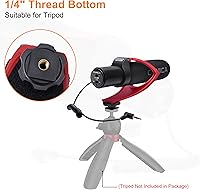
  • Dimensions: Measures 4.53 x 10.24 x 3.74 inches, making it compact enough for most standard camera hot shoe configurations.
  • Material: Housing is constructed from metal, contributing to a build quality that feels sturdy relative to the product's price tier.
  • Windscreen: A foam windscreen is included in the box to provide basic protection against light wind and plosive noise outdoors.
  • Compatibility: Universally compatible with DSLR and mirrorless cameras equipped with a 3.5mm microphone input jack.
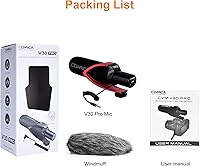
  • Box Contents: Package includes the CVM-V30 PRO microphone, one foam windscreen, and an English user manual.

Related Reviews
Comica CVM-V30 LITE
Comica CVM-V30 LITE
79%
78%
Audio Clarity
81%
Directional Performance
61%
Build Quality
93%
Ease of Use
84%
Camera & Phone Compatibility
More
COMICA CVM-VM10-K2 PRO Smartphone Vlogging Kit
76%
83%
Audio Quality
91%
Ease of Setup
74%
Build Quality
79%
Value for Money
88%
Portability
More
Comica VM40
Comica VM40
83%
88%
Audio Quality
93%
32-Bit Float Recording
82%
Wireless Performance
91%
Onboard Backup Recording
89%
Build Quality
More
Comica VM20
Comica VM20
81%
83%
Audio Clarity
78%
Noise Rejection
88%
Build Quality
81%
Low-Cut Filter Performance
76%
Gain Control
More
Comica VM30
Comica VM30
79%
83%
Audio Clarity
78%
Wireless Performance
91%
Build Quality
63%
Battery Life
88%
Connectivity & Compatibility
More
Comica CVM-VM10II
Comica CVM-VM10II
83%
92%
Build Quality
88%
Value for Money
79%
Audio Clarity
94%
Portability
84%
Wind Noise Reduction
More
Comica VM10 Pro
Comica VM10 Pro
87%
93%
Build Quality
96%
Portability
88%
Digital Audio Performance
91%
Gain Control Functionality
84%
Real-Time Monitoring
More
Comica CVM-WM100 PLUS
83%
92%
Signal Stability
86%
Audio Quality & Clarity
94%
Post-Production Flexibility
61%
Portability & Form Factor
68%
Power Management & Battery Life
More
Comica EJoy D10 PRO Wireless Dynamic Microphone
76%
78%
Wireless Performance
74%
Audio Quality
91%
Ease of Setup
82%
Battery Life
71%
Build Quality
More
COMICA Ejoy Uni PRO(A)
80%
93%
Ease of Setup
78%
Audio Clarity
74%
Noise Cancellation
71%
Wireless Performance
63%
Build Quality
More

FAQ

Yes, as long as your camera has a 3.5mm microphone input jack, the CVM-V30 PRO will connect and work without any adapters or special settings. Both the Sony ZV-E10 and Canon EOS M50 have that input, so you are good to go right out of the box.

You do need batteries for this one — it requires 2x AAA batteries and cannot run on plug-in power drawn through the 3.5mm jack the way some simpler mics do. It is worth keeping a spare set in your camera bag so you are not caught short mid-shoot.

It depends on your phone. If your phone has a standard 3.5mm TRRS headphone and mic combo jack, you may get it to work with the right adapter, but this mic is really designed with cameras in mind. For smartphones, a dedicated mobile mic with a lightning or USB-C connector will generally give you better results.

The low-cut filter rolls off low-frequency sounds — think road noise, air conditioning hum, or wind rumble — that tend to sit in the deeper bass range. Flip it on when you are outdoors or in a noisy environment, but use it cautiously indoors, as some reviewers have noted it can make voices sound slightly thinner if the room is already quiet.

Think of it practically: if your subject is loud or close to the mic, dial the sensitivity down toward -38dB to avoid distortion. If you are recording someone further away or in a quiet environment, push it toward -28dB to pick up more detail. It only takes a short test recording to find the right spot for your specific situation.

It handles typical handheld movement and incidental knocks quite well — users doing desk recordings and handheld vlogging both praise it for cutting down vibration noise. That said, it is not going to eliminate all motion noise if you are doing aggressive movement or running shots; for those situations, a separate camera stabilizer helps too.

The foam windscreen works fine on a calm or lightly breezy day, but it is not built for windy outdoor conditions. If you regularly shoot outside in open spaces or on windy days, it is worth picking up a deadcat-style furry windscreen separately for noticeably better protection.

You can, but this on-camera microphone is not really designed for stationary desk use. It is a camera-mounted shotgun mic, so the directionality and sensitivity are optimized for video subjects at a distance rather than someone seated close in front of a microphone. A side-address condenser or dynamic microphone would serve a podcaster much better.

At 172g, it is light enough that most users do not notice any meaningful balance shift on a standard DSLR or mirrorless body. If you are running a very compact camera like a pocket cam, you might feel a slight top-heaviness, but for any full-sized camera it should not be an issue.

You get the microphone itself, a foam windscreen, and an English user manual. Batteries are not included, so grab a pair of AAA batteries before your first shoot to avoid any delays.

Where to Buy