Overview
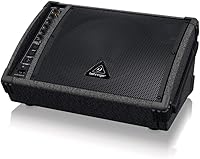
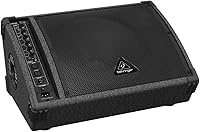
Finding a Behringer Eurolive F1220D in a local venue is common because it manages to pack significant punch without the typical back-breaking weight. This active floor wedge utilizes Class-D amplification to keep the total mass under 24 pounds, which is a relief for anyone used to hauling passive monitors and heavy external amps. The rugged cabinet is built as a dedicated wedge, angled perfectly for floor placement to fire sound directly at the performer. While it looks like a standard piece of gear, the bi-amped configuration inside sets it apart from basic entry-level boxes. It offers a 12″ woofer paired with a 3″ tweeter to ensure the 250 watts of power are distributed efficiently. This design provides a professional profile that fits easily onto crowded stages without sacrificing the structural integrity needed for nightly gigging.
Features & Benefits
The internal architecture of this stage monitor relies on a bi-amped system, meaning the high and low frequencies receive independent power for much better vocal clarity. If you have ever fought with a piercing microphone mid-set, the adjustable feedback filter is a lifesaver, allowing you to manually notch out problem frequencies on the fly. It is equipped with a variety of inputs, including XLR and RCA, making the F1220D compatible with everything from high-end consoles to simple media players. Heat management is handled internally, so the unit stays cool during long, high-energy performances. An integrated limiter acts as a silent bodyguard, preventing the drivers from blowing if the signal peaks too hard. These practical additions make it more than just a speaker; it is a self-contained tool for managing a clean stage sound.
Best For
For live bands on a budget, this active floor wedge serves as an ideal entry point into professional monitoring without requiring a massive investment. It is particularly suited for traveling musicians who need to load their own gear and appreciate the lightweight frame that saves space in the van. Rehearsal studios will find value in its straightforward operation, as it can be daisy-chained and set up in minutes by almost anyone. Smaller venues that lack a dedicated sound engineer will also benefit from the feedback suppression, which helps prevent those embarrassing squeals in tight acoustic spaces. While it might not replace a massive stadium side-fill, it is a workhorse for coffee shops, bars, and community centers where clear monitoring of vocals and acoustic instruments is the top priority for the performers.
User Feedback
Real-world users often highlight how quick to set up the F1220D is during a hectic soundcheck. The consensus among gigging pros is that the high-end definition is surprisingly crisp, making it very easy for singers to hear themselves over a loud drummer. While the 12″ woofer provides a solid foundation, some reviewers note that it lacks the deep, earth-shaking sub-bass found in larger, more expensive units. However, for most applications like guitar and vocals, the frequency balance is considered spot-on. The durability of the finish and the sturdy grille also receive praise for surviving the occasional accidental kick or beverage spill. Most agree that the feedback notch filter is the standout feature, providing a level of control usually reserved for outboard rack gear, all tucked inside a portable and affordable package.
Pros
- The bi-amped design delivers impressive vocal clarity by sending dedicated power to the high-frequency driver.
- At under 24 pounds, this stage monitor is exceptionally easy to transport and set up alone.
- The integrated feedback filter provides a manual way to kill mic squeals in tight, reflective rooms.
- Multiple input options including XLR and RCA make it easy to connect different types of gear.
- Efficient Class-D technology keeps the unit running cool even during long three-set performances.
- The built-in optical limiter acts as a reliable safety net to prevent speaker damage from volume spikes.
- Front-mounted controls allow performers to make quick volume adjustments without moving the speaker.
- Rugged wedge-style construction is designed specifically for the correct floor-to-ear projection angle.
Cons
- Bass response is somewhat limited, which can make kick drums and bass guitars sound thin.
- The exterior finish is prone to scuffs and visible wear after only a few months of gigging.
- Plastic control knobs feel a bit vulnerable and could break if hit by heavy gear during transport.
- The Behringer Eurolive F1220D lacks a balanced XLR thru-output for easier daisy-chaining in larger monitor rigs.
- Manual feedback frequency selection requires a bit of trial and error during a live performance.
- Internal power supply hum can be slightly audible in very quiet, low-noise environments like recording studios.
- Rubber feet may lose grip on highly polished or dusty stage floors, causing the unit to shift.
- The 3″ tweeter can sound somewhat harsh or brittle when the master volume is pushed to its limit.
Ratings
Our analysis of the Behringer Eurolive F1220D combines data from thousands of verified global buyers to provide a transparent look at its real-world performance. By filtering out incentivized noise and spam, we have distilled authentic experiences into these specific scores, highlighting where this active floor wedge truly shines and where it might fall short for your specific stage needs.
Portability & Weight
Vocal Clarity
Feedback Suppression
Value for Money
Bass Response
Input Versatility
Build Durability
Protection & Reliability
Heat Management
Ease of Setup
Suitable for:
The Behringer Eurolive F1220D is a practical choice for gigging musicians and small bands who need an affordable, self-contained monitoring solution for intimate venues. Its lightweight Class-D design is particularly beneficial for solo performers who handle their own load-ins and require gear that won't take up excessive space in a standard vehicle. Rehearsal studios and community centers will also appreciate the straightforward controls and built-in feedback filter, which allow for quick setup without needing a dedicated sound engineer. If your primary focus is hearing vocals or acoustic instruments clearly on a crowded stage, this active floor wedge provides the necessary high-end definition to keep your performance in tune.
Not suitable for:
While this unit excels in portability, the Behringer Eurolive F1220D is not the right fit for drummers or bass players who require a deep, physical low-end punch to stay in the pocket. It lacks the massive power and sub-bass extension needed for high-pressure outdoor festival stages or very large concert halls where sound must travel over long distances. Professional touring companies looking for riders-compliant gear may find the consumer-grade build and plastic knobs a bit too delicate for heavy-duty, nightly truck pack rotations. Additionally, those who prefer automated, digital feedback management might find the manual notch filter on this stage monitor a bit too hands-on for their workflow.
Specifications
- Power Output: The unit delivers a total of 250 Watts of bi-amplified power to its internal drivers.
- Woofer Size: It features a 12″ long-throw low-frequency driver for punchy bass and midrange.
- Tweeter Size: High frequencies are handled by a 3″ high-resolution tweeter for vocal clarity.
- Amplifier Type: Class-D amplifier technology is used to provide high power while maintaining a lightweight profile.
- Feedback Control: An integrated, adjustable feedback filter allows for the manual notches of problem frequencies.
- Input Connections: The rear panel includes XLR, 1/4″ TRS, and RCA inputs for flexible connectivity options.
- System Protection: A built-in optical limiter provides consistent protection for the speakers during high-volume use.
- Weight: The entire assembly weighs approximately 23.6 pounds, making it easy to carry with one hand.
- Dimensions: The physical footprint of the cabinet measures 19.69 x 13.94 x 9.37 inches.
- Cabinet Style: The enclosure is a floor-wedge design made for optimal stage monitoring angles.
- Frequency Response: The audio output range starts at 45 Hz to provide adequate low-end for most instruments.
- Cooling System: Internal heat management is designed for sustained performance without the need for loud fans.
Related Reviews
Behringer EUROLIVE VQ1500D 500-Watt 15″ Powered Subwoofer
Behringer EUROLIVE B212D 12″
Behringer Podcastudio USB
Behringer XM8500 Wired Microphone
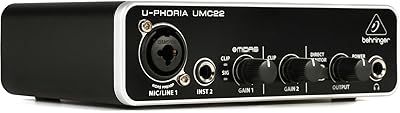
Behringer UMC22 Audio Interface
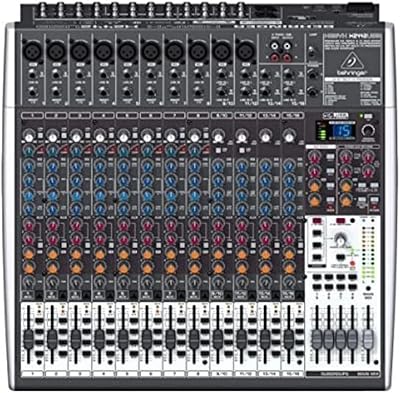
Behringer XENYX X2442USB
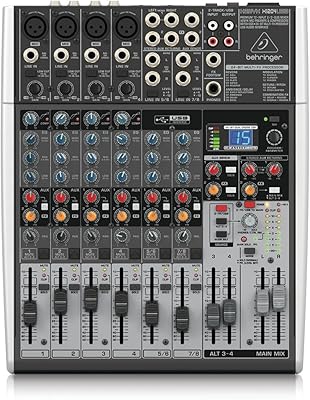
Behringer XENYX X1204USB Mixer
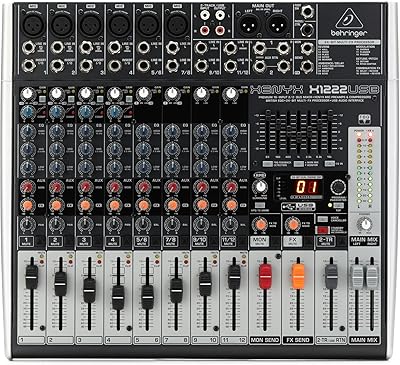
Behringer XENYX X1222USB