Overview

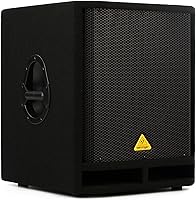
The Behringer EUROLIVE VQ1500D 15-inch Active PA Subwoofer has been a fixture in the budget-to-mid-range PA market since 2013 — and that kind of longevity usually means something. Behringer divides opinion among audio professionals, but for working DJs, gigging bands, and small venue operators, the brand consistently delivers solid performance per dollar. This is not a sub built for audiophile listening rooms or large festival stages. Think bar nights, community halls, corporate speeches, mobile DJ rigs — situations where you need dependable low-end reinforcement without spending a fortune on professional-grade gear. Set your expectations accordingly and the VQ1500D makes a lot of sense.
Features & Benefits

The most practical thing about the VQ1500D is its built-in active crossover. If you have ever had to wrangle a separate crossover processor just to split signal between your tops and sub, you will appreciate how much this simplifies setup. The high-pass outputs feed directly to your full-range speakers, and a dedicated level control lets you dial in sub-to-satellite balance on the fly. Under the hood, the 500-watt Class-D amplifier runs cool and efficiently, with protection circuits guarding against thermal overload, clipping, and driver over-excursion during extended sets. The 15-inch long-excursion woofer handles sustained low-frequency output without bottoming out, and XLR connectivity slots right into any standard PA signal chain.

Best For

This Behringer sub is a natural fit for mobile DJs and bands who need a reliable, self-contained sub that does not require additional signal processing to run. Small venue operators — bars, houses of worship, rehearsal studios — will find it capable of filling a room with meaningful low-end without complicated installation. It also works well for public address applications where bass presence adds body to speech or background music without being the main event. That said, buyers should understand this powered subwoofer has real limits outdoors or in larger spaces. If you are covering a big outdoor festival or a warehouse party, you will want something with considerably more headroom. For anything under roughly 300 to 400 people indoors, it holds its own.

User Feedback

Buyers generally respond well to this Behringer sub, praising its punchy, room-filling bass for the price and calling out the onboard crossover as a genuine time-saver at load-in. Setup is straightforward enough that first-time sub owners rarely complain about the learning curve. On the downside, the plastic enclosure draws consistent skepticism from road-hardened musicians — it is fine for careful handling, but do not expect it to shrug off the punishment that touring gear typically endures. At 73 pounds, it is also on the heavier side for a solo haul. Some buyers note that the VQ1500D feels adequate for smaller rooms but runs out of steam at larger outdoor events. Still, its long-held ranking in Stage Subwoofers reflects a product that earns repeat trust at its price tier.

Pros

  • The built-in active stereo crossover eliminates the need for an external processor, saving both money and setup time.
  • Punchy, room-filling bass output that consistently impresses buyers at this price tier.
  • Class-D amplifier runs efficiently and cool, even during extended live sets.
  • Onboard protection circuits guard against clipping, overheating, and driver over-excursion.
  • XLR inputs and outputs slot directly into any professional PA signal chain with zero adapters needed.
  • The dedicated subwoofer level control lets you balance the sub against your tops quickly without touching a mixer.
  • Pole-mount design fits naturally into standard live sound setups without extra hardware.
  • Has maintained consistent buyer demand since 2013, suggesting long-term reliability as a product line.
  • Class-D power stage keeps the cabinet lighter than comparable Class-AB units at this driver size.

Cons

  • The plastic enclosure raises real durability concerns for anyone gigging frequently on the road.
  • At 73 pounds, solo load-ins become physically taxing fast, especially across multiple events per week.
  • Output headroom runs thin in larger outdoor spaces or venues with high ambient noise levels.
  • No carry handles are integrated into the cabinet design, making transport more awkward than it needs to be.
  • The VQ1500D carries no water resistance rating, ruling it out for uncovered outdoor installations entirely.
  • Some buyers report that the low-frequency extension does not reach as deep as competing subs in a similar price bracket.
  • Behringer’s customer support reputation is inconsistent, which matters if warranty service becomes necessary.
  • The plastic pole-mount cup may flex or wear over time under repeated heavy use.
  • No DSP presets or onboard EQ beyond the level control, leaving fine-tuning entirely to upstream gear.

Ratings

The scores below reflect AI-driven analysis of verified global user reviews for the Behringer EUROLIVE VQ1500D 15-inch Active PA Subwoofer, with spam, bot-generated, and incentivized submissions actively filtered out before scoring. Every category captures the honest range of buyer experiences — including the frustrations — so you can make a genuinely informed decision. Strengths and pain points are weighted equally and transparently reflected in each score.

Value for Money
83%
For buyers entering the powered sub market or working within a tight gigging budget, the VQ1500D consistently punches above its price bracket. The combination of a 15-inch driver, onboard amplification, and a built-in crossover at this price tier is hard to match from competing brands.
A vocal minority of reviewers feel the overall package cuts too many corners — particularly the plastic enclosure — to justify the asking price when more rugged alternatives exist for a modest step up in cost. Long-term value is harder to defend if durability becomes an issue early.
Bass Output & Impact
76%
24%
In smaller indoor venues like bars, rehearsal rooms, and community halls, the low-end hit from this Behringer sub is genuinely satisfying — enough thump to fill the room and get people feeling the music without muddiness. DJs running it at moderate volumes in club-sized spaces report consistent, crowd-pleasing results.
Push it toward larger outdoor settings or bigger indoor rooms and the limitations become apparent fast. At high volumes the bass can feel strained rather than authoritative, and users expecting festival-level output from a single unit will be left wanting considerably more headroom.
Ease of Setup
88%
The onboard active crossover is a genuine time-saver, especially for buyers upgrading from a passive-only rig. Run your XLR in, connect your tops to the filtered outputs, adjust the level knob — the whole signal chain is sorted in minutes, even for first-timers.
A small number of users were initially confused by the crossover output labeling, expecting more granular control over the crossover frequency point. Those coming from systems with fully adjustable DSP crossovers may find the fixed configuration limiting for fine-tuned room correction.
Build Quality
57%
43%
The cabinet feels solid enough in controlled conditions — semi-permanent bar installs and careful home studio use report no structural complaints over extended periods. For buyers who treat their gear gently and transport it properly padded, the construction holds up adequately.
The plastic enclosure is the single most criticized aspect of the VQ1500D across all buyer feedback. Road-tested users report scuffing, cracking at corners, and flex under physical stress that a wood or composite cabinet simply would not show — a meaningful concern for anyone gigging weekly.
Portability & Transport
53%
47%
The Class-D amplifier helps keep weight lower than a comparable Class-AB powered sub would be at this driver size, which is a real practical advantage when comparing options on paper. The footprint is manageable for vehicle transport when laid flat.
At 73 pounds and with no integrated carry handles on the cabinet, solo load-ins are a recurring complaint. Hauling the VQ1500D across a parking lot, up a flight of stairs, or in and out of a van repeatedly is genuinely taxing — a dolly or second pair of hands is effectively mandatory for most users.
Crossover Functionality
81%
19%
Having the active stereo crossover built directly into the sub removes a meaningful step from the signal chain, which experienced users appreciate during fast turnaround event setups. The stereo high-pass outputs allow clean feeding of two full-range tops simultaneously without additional hardware.
The crossover offers no user-adjustable frequency point, which means you are locked into the manufacturer-set split. For operators who prefer to tune the crossover precisely for different rooms or speaker pairings, this inflexibility is a notable limitation.
Amplifier Reliability
79%
21%
The protection circuitry — covering thermal shutoff, clip limiting, and over-excursion — gives the amplifier a degree of real-world resilience that buyers notice during long events. Most users report the amp running without issue across multi-hour sets under normal load conditions.
A smaller subset of reviewers report the protection circuits kicking in prematurely at moderate volumes in warm environments, cutting output unexpectedly mid-set. While this is the protection doing its job, it signals that thermal headroom under sustained high-volume use is tighter than some buyers expect.
Low-Frequency Extension
67%
33%
The long-excursion 15-inch driver moves enough air to reproduce kick drums, bass lines, and low-frequency music content with reasonable authority in small-to-medium spaces. For live music and DJ applications where a felt bass presence matters more than ultra-deep sub-bass, performance is broadly satisfactory.
Buyers comparing this powered subwoofer against competing units in a similar price range frequently note that the lowest octave feels rolled off or softened rather than extended and tight. Sub-bass material below around 50 Hz lacks the authority that more focused subwoofer designs in this class can deliver.
XLR Connectivity
86%
Standard XLR in and out means the VQ1500D slots into virtually any professional PA signal chain without adapters or converters. Working sound engineers appreciate not having to think twice about compatibility when connecting to mixers, processors, or additional speaker units.
The XLR-only connectivity is a limitation for buyers hoping to integrate this unit into consumer home audio setups or DJ controllers that only offer RCA or 3.5mm outputs. Those users will need adapters, which adds a step and a potential point of signal degradation.
Pole Mount Integration
82%
18%
The top-mounted pole socket allows a full-range speaker to sit directly above the sub in a tidy, professional-looking stack — the standard configuration for mobile DJ and live band rigs. Most users report the socket accepting standard poles without play or wobble under normal conditions.
The plastic construction of the pole-mount cup draws some concern from users who stress-test the connection with heavier speaker cabinets mounted on top. Over time and repeated use, there is a noted risk of the socket wearing or developing looseness that a metal-reinforced cup would resist.
Long-Term Durability
54%
46%
For buyers using the VQ1500D in fixed or semi-permanent installations — a bar corner, a small venue stage, a rehearsal room — long-term performance reports are generally positive, with units running reliably for several years under consistent but careful use.
Frequent touring use tells a different story. The plastic enclosure chips, scuffs, and structurally weakens faster than wood alternatives, and Behringer's after-sale support experience is inconsistent enough that buyers dealing with component failures post-warranty have reported frustrating resolution processes.
Thermal Management
74%
26%
Class-D amplifier efficiency means the unit generates far less heat than older Class-AB designs, which translates to more stable operation over a full evening set without requiring active cooling pauses. Most buyers note the cabinet running warm but not uncomfortably hot under typical loads.
In enclosed spaces with poor air circulation or during particularly high-volume summer outdoor events, thermal protection can become a practical issue. Users running the sub near its limits in hot environments have reported protection-triggered shutdowns that interrupt performance at inopportune moments.
Sound Clarity at High Volume
63%
37%
At moderate volume levels the VQ1500D reproduces bass content cleanly enough for the intended use case — kick drums hit with impact, bass lines have body, and the overall low-end character suits live PA work rather than critical listening. For its market tier, mid-volume clarity is respectable.
Pushing the unit hard reveals compression artifacts and a loss of definition that is typical for this price bracket but still worth flagging. Buyers who regularly need to run a sub at or near maximum output will notice the sound becoming less controlled and punchy at the top of its range.

Suitable for:

The Behringer EUROLIVE VQ1500D 15-inch Active PA Subwoofer is a strong match for mobile DJs, small touring bands, and part-time sound operators who need a dependable, self-contained sub without a steep learning curve or a large equipment budget. If you regularly play bars, community halls, houses of worship, or small corporate events, this powered subwoofer gives you meaningful low-end reinforcement without requiring a separate crossover processor — the onboard active crossover handles that job cleanly. It is also a smart entry point for buyers stepping up from a purely passive setup for the first time, since the signal routing is straightforward and the level control makes real-time adjustments easy. Bands looking to add bottom-end weight to a mid-size PA rig will find it a practical add-on that integrates with any standard XLR signal chain without fuss.

Not suitable for:

The Behringer EUROLIVE VQ1500D 15-inch Active PA Subwoofer is not the right tool for anyone who regularly works large outdoor venues, warehouse events, or festival stages where serious SPL headroom is non-negotiable. At 73 pounds, solo load-ins can become a genuine physical challenge over time, so sound engineers who do frequent one-person setups may find it more exhausting than practical. The plastic enclosure, while adequate for careful semi-permanent or controlled-environment use, is unlikely to hold up well under the sustained physical punishment of heavy touring — road warriors who throw gear into vans week after week should budget for something with a more robust cabinet. Audiophiles or studio professionals expecting tight, articulate low-frequency reproduction will also be disappointed; this sub is tuned for impact and volume in live settings, not precision listening. Finally, outdoor-only installations or any scenario involving rain exposure are a hard no — this unit carries no water resistance rating.

Specifications

  • Driver Size: The cabinet houses a 15-inch long-excursion woofer designed to move significant air for sustained low-frequency output.
  • Amplifier Power: An internal 500-watt Class-D amplifier powers the driver, offering efficient operation with minimal heat generation during extended use.
  • Frequency Response: The unit is rated to handle frequencies up to 200 Hz, covering the standard subwoofer range for live PA applications.
  • Impedance: The driver operates at 8 ohms impedance, consistent with standard professional passive and active loudspeaker conventions.
  • Connectivity: Signal input and output is handled via XLR connectors, compatible with virtually all professional mixing consoles, processors, and full-range speakers.
  • Crossover: A built-in active stereo crossover provides high-pass filtered outputs, allowing direct connection to full-range satellite speakers without a separate crossover unit.
  • Protection: Onboard protection circuits guard against thermal overload, signal clipping, and driver over-excursion to reduce the risk of damage during demanding sets.
  • Mounting Type: The enclosure includes a pole-mount socket, allowing compatible speaker stands or poles to seat a full-range top speaker directly above the sub.
  • Enclosure Material: The cabinet is constructed from plastic, which keeps weight down but offers less physical ruggedness than wood or composite alternatives.
  • Weight: The unit weighs 73 pounds, which places it on the heavier end for a single-driver powered sub at this cabinet size.
  • Dimensions: The cabinet measures 20.75 x 19.29 x 24.25 inches, making it a moderately compact footprint for a 15-inch subwoofer enclosure.
  • Power Source: The VQ1500D runs on corded AC power and does not support battery operation or portable power sources.
  • Output Mode: The unit supports stereo audio output, enabling left and right high-pass signals to be fed to separate full-range speakers simultaneously.
  • Water Resistance: This subwoofer carries no water resistance rating and is intended strictly for indoor use; outdoor exposure to moisture should be avoided.
  • Voice Coil: The 15-inch woofer uses a high-temperature voice coil designed to handle sustained thermal stress during long or high-volume performances.
  • Level Control: A dedicated subwoofer level control on the unit allows real-time adjustment of the balance between subwoofer and satellite speaker output.
  • Warranty: Behringer provides a limited warranty with this product; buyers should verify current terms directly with Behringer or their authorized retailer at time of purchase.

Related Reviews
Behringer EUROLIVE B212D 12″
88%
93%
Portability & Handling
91%
Vocal Clarity
68%
Low-End Punch
84%
Build Durability
94%
Value for Money
More
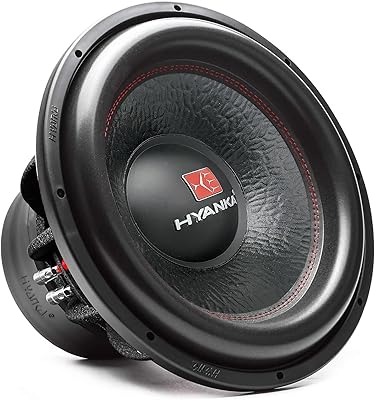
HYANKA BSF-15-4 15-Inch Car Subwoofer
72%
83%
Bass Output & Impact
86%
Value for Money
67%
Power Handling (Real-World)
74%
Build Quality
79%
Sound Quality & Tone
More
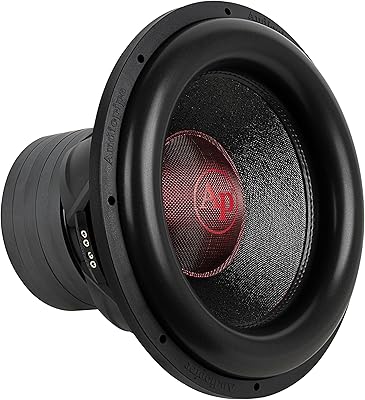
Audiopipe TXX-BDC-V-15 15-Inch Subwoofer
85%
91%
Bass Performance
88%
Build Quality & Durability
84%
Ease of Installation
89%
Sound Clarity
92%
Power Handling
More
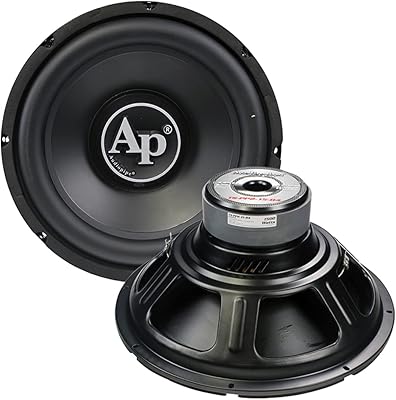
Audiopipe TS-PP2-15-D4 15-inch Car Subwoofer
84%
94%
Bass Output
92%
Power Handling
90%
Durability
87%
Value for Money
89%
Sound Clarity
More
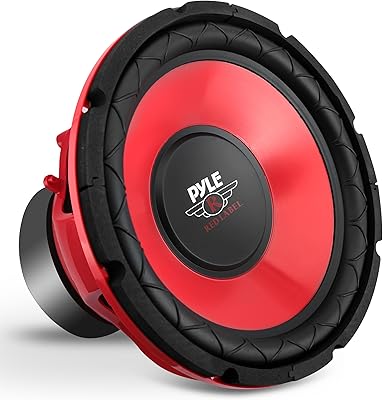
Pyle PLW15RD 15-Inch Car Subwoofer
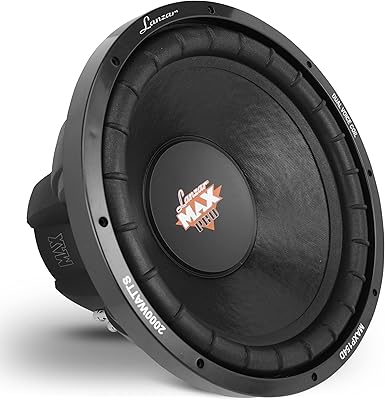
85%
93%
Bass Performance
88%
Sound Clarity
90%
Build Quality
82%
Ease of Installation
87%
Durability
More
Lanzar MAX15D 15-Inch Car Subwoofer
84%
94%
Sound Performance
91%
Value for Money
88%
Build Quality
75%
Installation Ease
89%
Durability
More
Lanzar MAXP154D 15-inch Car Subwoofer
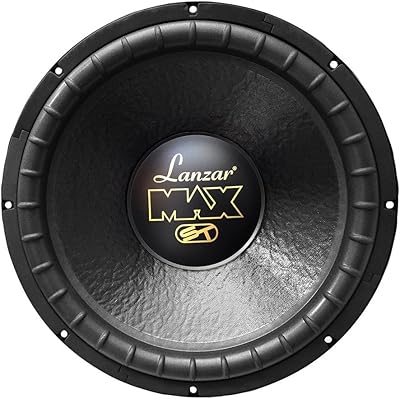
87%
92%
Bass Quality
88%
Sound Clarity
85%
Ease of Installation
90%
Build Quality
89%
Durability
More
Rockville RW10CA 10-inch Powered Car Subwoofer
77%
88%
Ease of Installation
74%
Bass Output Quality
91%
Low-Profile Fit
69%
Built-in Amplifier Performance
86%
Remote Bass Knob
More
Klipsch SPL-150SW 15-inch Powered Subwoofer
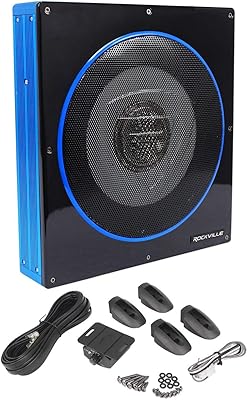
79%
93%
Bass Output & Power
89%
Build Quality & Materials
84%
Placement Flexibility
88%
Amplifier Performance
71%
Integration & Tuning Controls
More
Q Power HD115 15-Inch Subwoofer Enclosure
74%
78%
Build Quality
74%
Carpet Finish
82%
Bass Output
86%
Value for Money
88%
Ease of Installation
More

FAQ

No, and that is one of the more practical things about this unit. The VQ1500D has a built-in active stereo crossover that splits the signal for you, sending filtered high-pass audio to your full-range speakers via dedicated XLR outputs. You just run your source signal in, connect your tops to the crossover outputs, and set the level control — no external processor needed.

For smaller indoor spaces — bars, community halls, rehearsal rooms, or small clubs — it delivers solid, noticeable bass without much strain. Once you push it toward larger outdoor environments or rooms holding several hundred people, it starts to run out of headroom. It is capable for its intended use case, but do not expect it to anchor a large festival stage.

Yes, running a pair of them is a common approach when a single unit feels insufficient for the room. Using two subs doubles your headroom and gives you more even bass coverage across the floor. Just make sure your mixer or signal source can feed both units cleanly.

It depends on how rough your workflow is. For semi-permanent installations or careful transport in a vehicle with padding, the plastic enclosure holds up fine. If you are throwing gear into a trailer every weekend, touring hard, or working with a crew that handles equipment roughly, the cabinet is more vulnerable to cracking or damage than a wood or composite alternative would be. It is a real trade-off worth thinking through honestly.

Yes, the cabinet includes a standard pole-mount socket on top, so you can seat a compatible speaker pole and place a full-range top directly above the sub. This is the classic satellite-and-sub stack configuration and works well for mobile DJ setups or small live rigs.

It is not really designed for that use case. The VQ1500D is tuned for live sound impact — punchy and loud — rather than the controlled, accurate bass reproduction you want in a home listening environment. The XLR-only connectivity also makes integrating it with consumer home audio gear awkward unless you use adapters. A dedicated home theater subwoofer will serve you better in that setting.

It is manageable, but 73 pounds with no integrated carry handles makes solo transport genuinely inconvenient over any distance. Getting it in and out of a vehicle, up stairs, or across a parking lot on your own is doable but not pleasant, especially repeatedly. A hand truck or a second person helps considerably.

Technically you can operate it outdoors in dry conditions, but there is no water resistance rating at all, so any rain, heavy humidity, or dew exposure is a real risk. For covered outdoor areas on a dry day it can work, but leave it unprotected in variable weather and you are gambling with the unit. It is rated for indoor use for good reason.

Anything with a standard XLR output will work — mixing boards, DJ controllers with XLR outs, audio interfaces, or any other professional signal source. The built-in crossover handles the frequency splitting, so your mixer just needs to send a full-range signal into the sub and the unit takes care of the rest.

Behringer occupies a well-established spot in the live sound market — widely used, budget-accessible, and generally reliable for the price point. The trade-off compared to premium brands is in build quality and customer support consistency rather than day-to-day performance. Many working DJs and small venue operators use Behringer gear for years without issue; others have frustrating experiences. Buying from a reputable retailer and keeping your proof of purchase is always a smart move with this brand.

Where to Buy