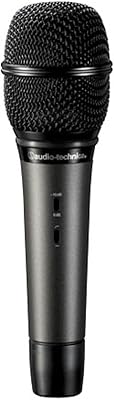
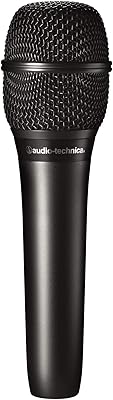
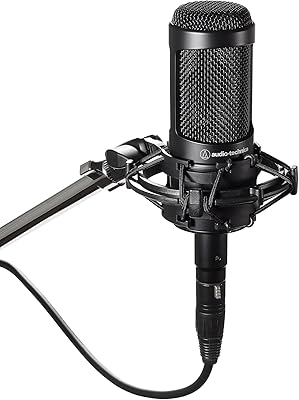
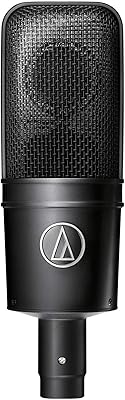
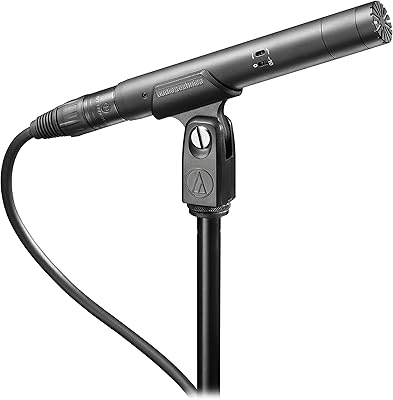
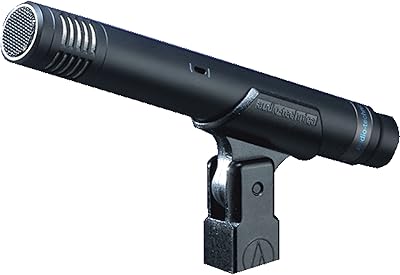
Audio-Technica AT4053B Hypercardioid Condenser Microphone
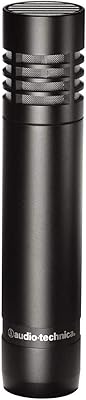
Audio-Technica AT4053B Hypercardioid Condenser Microphone — image 1
77%
23%

Overview

The Audio-Technica AT4053B Hypercardioid Condenser Microphone has been a fixture in professional recording and live sound environments since 2004 — that kind of staying power says something. Audio-Technica occupies serious ground in the pro audio world, and the AT4053B sits toward the upper end of their condenser lineup, aimed squarely at engineers who know what they're doing. This is an XLR-only mic running on 48V phantom power, which means it's designed to integrate into real signal chains — consoles, outboard preamps, audio interfaces with proper headroom. If you're expecting to plug this into a basic USB setup and get magic, you'll be disappointed. Feed it well, and it rewards you.

Features & Benefits

The hypercardioid polar pattern is where this Audio-Technica mic earns its keep. Unlike a standard cardioid, it narrows the pickup zone significantly, cutting off-axis bleed from adjacent instruments or room noise — critical when you're miking a drum kit or working a stage with multiple open mics. The transformerless circuitry means low-frequency distortion stays out of the signal path and fast transients get captured with real accuracy, not smeared. The direct-coupled balanced output handles high SPL without complaining. On a loud guitar cabinet or right over a snare, flip the 10 dB pad and you're covered. The 80 Hz hi-pass filter is equally practical: one switch eliminates rumble from stage monitors or HVAC without touching a plugin later.

Best For

The AT4053B is most at home as an overhead drum mic, where its tight pickup pattern keeps cymbal wash from swamping the room mic or adjacent channels. It also holds its own in broadcast booths and voiceover setups where you need natural side rejection without carpeting every surface. Recording acoustic instruments — piano, violin, oboe — benefits from the mic's honest transient capture; it doesn't flatter, it documents. Live theatre engineers appreciate the reduced feedback risk that a hypercardioid provides over a wider-pattern mic at similar distances. Where it doesn't belong: on a beginner's desk next to a budget interface. The AT4053B needs clean phantom power and a decent preamp to actually deliver.

User Feedback

Across a modest sample of ratings — 38 at the time of this review — the AT4053B trends clearly positive, sitting at 4.2 stars. Those who rate it highly are largely working engineers: live sound techs, studio session engineers, and broadcast operators who cite consistent output and excellent off-axis rejection as the main draws. The criticism, when it comes, tends to point in one direction: this hypercardioid condenser underperforms when paired with weak preamps or substandard phantom power supplies. A few reviewers coming from consumer-grade mics found the learning curve around gain staging steeper than expected. Build quality gets almost no complaints; the turned-brass body feels like it's built to last a decade on a mic stand.

Pros

  • Exceptional off-axis rejection keeps unwanted bleed tightly controlled in multi-mic drum and live stage setups.
  • Transformerless circuitry captures fast transients with real accuracy, making it a strong choice for acoustic instruments.
  • The switchable 80 Hz hi-pass filter cuts stage rumble and HVAC noise at the source, before post-processing.
  • A 10 dB pad switch handles close-miking of loud sources like brass or guitar cabs without clipping the preamp.
  • Turned-brass housing feels genuinely road-ready — built to survive touring, not just sit on a studio shelf.
  • Clean, transparent sound character lets instruments speak for themselves without adding unwanted coloration.
  • Consistent professional trust since 2004 is a rare signal of quality in a market that churns new gear constantly.
  • Direct-coupled balanced output maintains a clean, stable signal even under demanding high-SPL conditions.

Cons

  • Requires a quality preamp to perform at its best; pair it with a weak interface and the difference is immediately audible.
  • XLR-only connectivity rules out plug-and-play USB setups entirely, raising the barrier and total cost of entry.
  • The tight hypercardioid pattern demands precise placement — minor positioning errors will noticeably thin out the captured sound.
  • No shock mount or carrying case is included in the box, which feels like an oversight at this price tier.
  • Only 38 user ratings are available, making it difficult to draw statistically meaningful conclusions from the review pool.
  • Phantom power dependency means the mic is completely non-functional without a powered interface, mixer, or standalone preamp.
  • Beginners may find the gain staging requirements and polar pattern behavior genuinely difficult to navigate without prior experience.
  • A frequency response ceiling of 15,000 Hz may leave some engineers wanting more extended high-frequency air for certain sources.

Ratings

Our AI-generated scores for the Audio-Technica AT4053B Hypercardioid Condenser Microphone were produced by systematically analyzing verified buyer reviews from around the world, with spam, incentivized, and bot-generated feedback actively filtered out before scoring. The ratings below reflect an honest cross-section of real-world professional experience — both where this mic earns consistent praise and where it creates genuine friction for certain buyers. Strengths and pain points are weighted equally, so the picture you get is accurate rather than promotional.

Sound Quality
89%
Engineers consistently describe the output as clean and neutral — it captures what is directly in front of it without adding pleasing but artificial coloration. On piano and acoustic strings, reviewers noted the mic held up under critical listening without the hyped high-end character that affects some competing condensers in the same price tier.
A minority of reviewers found the transparency almost too honest for certain vocal or solo instrument sessions where a touch of tonal character might be preferred. Those switching from colored ribbon or tube microphones occasionally described the sound as clinical in direct back-to-back comparisons.
Off-Axis Rejection
93%
In live drum recording sessions and multi-mic stage setups, users repeatedly cited the hypercardioid pattern as the primary reason they chose this mic over wider-pattern alternatives. Overhead drum engineers specifically praised how effectively it kept cymbal wash from creeping into adjacent channels, resulting in cleaner mixes with less corrective processing required afterward.
The tight pattern means positioning errors are entirely unforgiving — even a slight angular misalignment noticeably changes what the mic captures, which becomes a nuisance during quick live turnarounds. Engineers unfamiliar with hypercardioid behavior occasionally reported thin or off-character sound before realizing incorrect placement was the root cause.
Build Quality
86%
The turned-brass housing consistently earns praise from engineers operating in physically demanding environments — touring rigs, live drum rooms, outdoor stages. Reviewers reporting years of regular ownership described no degradation in structural integrity or acoustic performance, which aligns with the mic's uninterrupted production run since 2004.
While the body is genuinely solid, the absence of any included protective case means the mic is vulnerable during transport unless you source a pouch or hard case separately. The matte black finish accumulates visible scratches over time on active touring rigs, though feedback suggests this is cosmetic rather than functional.
Value for Money
72%
28%
Professional engineers running this mic in regular commercial sessions tend to view the pricing as fair given its durability and consistent long-term output. For studio owners purchasing a matched pair for overhead drum or orchestral instrument recording, the investment makes practical sense against the alternatives available at this performance level.
Buyers coming from consumer-grade mics find it harder to justify the price without an equally capable preamp already in the signal chain, since the mic's potential is never fully realized without one. The absence of included accessories — no case, no shock mount — makes the true entry cost noticeably higher than the list price alone suggests.
Ease of Setup
57%
43%
For engineers with an established XLR signal chain and a phantom-powered preamp or console, getting the AT4053B running is completely straightforward — plug in, engage phantom power, and you are ready to record. The two onboard switches for hi-pass filter and pad are clearly positioned and require no software configuration whatsoever.
For anyone without a dedicated preamp or professional interface, setup is genuinely difficult — this is not a plug-and-play microphone in any realistic sense. Beginners consistently reported frustration when pairing it with entry-level interfaces, finding the signal either too quiet or noisier than expected, often without realizing the preamp was the limiting factor.
Transient Response
91%
The transformerless design captures attack-heavy sources — snare hits, piano hammer strikes, plucked strings — with speed and accuracy that consistently impresses engineers who track acoustic instruments professionally. Reviewers recording orchestral sessions noted that fast staccato passages reproduced cleanly without the subtle smearing that transformer-coupled condensers can introduce.
For sources with slow, gradual attacks — sustained pads, bowed strings, ambient room tone — the advantage of fast transient capture is simply less relevant, and users in those niches will not notice what differentiates this mic. The strength is genuine but does not translate into a universal advantage across all recording applications.
Low-Noise Floor
83%
A signal-to-noise ratio of 76 dB means quiet sources — whispered dialogue, soft fingerpicked acoustic guitar, delicate room tone — come through without the background hiss that plagues lower-grade condensers. Broadcast and voiceover reviewers consistently found the noise floor acceptably low for long sessions where near-silence sits adjacent to spoken content.
The 76 dB SNR is solid but not class-leading for a professional condenser at this price; some competing small-diaphragm models in the same tier reach the 78–80 dB range. Engineers who record extremely quiet sources in purpose-built low-noise studios may eventually find the ceiling if they compare results directly.
Preamp Dependency
61%
39%
In the hands of engineers with quality preamps — whether outboard units or premium interface channels — the AT4053B opens up significantly, delivering the clean, detailed signal it is designed to produce. Reviewers with high-end preamps in the chain reported a meaningful and noticeable jump in perceived quality compared to previous condensers they had used.
The mic's performance is fundamentally tied to what precedes it in the signal chain, creating real inconsistency across user experiences and making it difficult to assess fairly without controlling for preamp quality. Several reviews that skewed negative appeared on closer reading to reflect preamp limitations rather than any actual fault of the mic itself.
Hi-Pass Filter
81%
19%
Engineers working live stages and studio tracking sessions praised the 80 Hz filter for eliminating mechanical and environmental low-frequency noise before it enters the console or DAW. On theatre stages where floor vibration from rigging and movement can be significant, several engineers specifically credited the filter as the reason they kept this mic in their live rig.
The fixed 80 Hz cutoff is practical for most scenarios but offers no flexibility for engineers who need a different slope — 60 Hz for a boomy stage, or 100 Hz for a particularly resonant instrument body. A variable or stepped filter option would make this an even more adaptable tool across diverse acoustic environments.
Pad Performance
78%
22%
The 10 dB pad proved consistently useful to brass, woodwind, and guitar engineers who close-mic loud sources without wanting to saturate their preamp input at dynamic peaks. Session engineers recording high-gain guitar cabinets mentioned engaging the pad as a standard, reflexive part of their setup routine when using this mic.
A single fixed 10 dB attenuation step gives engineers no middle option when a smaller reduction — say, 4 or 6 dB — would be more appropriate for the source level at hand. A small number of users noted that engaging the pad with lower-SPL sources introduced a subtle shift in character, though this feedback was limited in the available review pool.
Longevity & Reliability
94%
Long-term owners — some reporting five to ten or more years of continuous active use — consistently described the AT4053B as maintaining its output without audible drift or mechanical degradation. The mic's two-decade production run without discontinuation reflects sustained professional trust from buyers who depend on consistency and cannot afford reliability failures on a working session.
The limited review sample makes it difficult to surface statistically reliable failure rates or long-term edge cases with genuine confidence. Anecdotally, a small number of users in high-humidity touring environments raised questions about long-term capsule maintenance, though this is a general consideration for any condenser microphone rather than a specific weakness of this model.
Placement Flexibility
74%
26%
At roughly 10 inches in length and one pound in weight, this hypercardioid condenser is compact enough for overhead boom positioning, inside piano lids, and tight instrument miking spots where a larger-bodied mic would physically interfere. Drum engineers appreciated the ability to place it precisely on short boom arms without significant counterbalance requirements.
The hypercardioid pattern significantly limits flexibility in applications where a wider pickup is preferable — capturing a full choir section or recording natural room ambience, for example, becomes awkward with this mic. Engineers needing a single microphone to adapt across multiple polar pattern scenarios will find fewer options here than switchable-pattern alternatives offer.
Accessories Included
38%
62%
The microphone arrives in solid condition and is immediately usable for any engineer who already has XLR cabling, phantom power, and mounting hardware established in their kit. Experienced professionals with fully stocked studio or live rigs will not feel the absence of bundled accessories in any practical way.
The box contains only the microphone — no shock mount, no stand clip, no protective storage case, and no meaningful printed documentation. At a professional price point, several competing models in the same tier include at minimum a clip or cinch pouch, making the bare-bones packaging feel genuinely sparse and adding unavoidable extra cost for buyers building out a new rig.

Suitable for:

The Audio-Technica AT4053B Hypercardioid Condenser Microphone is purpose-built for working audio professionals who operate in acoustically complex environments where controlling bleed and isolation actually matters. Drum overhead placement is where it genuinely shines — the tight polar pattern keeps adjacent mic bleed under control in a way a standard cardioid simply cannot match. Broadcast engineers and voiceover artists benefit significantly, since the mic's natural side rejection does a lot of the acoustic isolation work before you ever touch a plugin. For instrument recording — piano, violin, woodwinds — the transformerless design captures transients cleanly and without added coloration, letting the instrument's true character come through. Live theatre sound engineers who need reliable feedback resistance on stage will find the AT4053B a dependable tool that holds up night after night. Recording engineers who prioritize a consistent, long-term workhorse over a flavor-of-the-month mic will appreciate how little its performance drifts over years of heavy use.

Not suitable for:

If you are a podcaster, streamer, or home producer planning to plug straight into a USB audio interface, the Audio-Technica AT4053B Hypercardioid Condenser Microphone will likely frustrate you more than it helps. This mic runs exclusively on 48V phantom power over XLR, meaning you need a proper preamp or console in your signal chain — a budget interface with mediocre gain will leave the AT4053B sounding noticeably thin and underperforming. Beginners who are still learning gain staging will not immediately hear what this mic is capable of, and that gap between expectation and reality can feel discouraging at this price point. The hypercardioid pattern also demands careful and deliberate placement; point it even slightly off-axis and you will lose the source in ways that can catch inexperienced engineers off guard. Anyone needing a simple, plug-and-play solution for casual voice recording or home demos would be paying a premium for engineering precision they are unlikely to ever fully put to use.

Specifications

  • Polar Pattern: Hypercardioid design delivers tighter off-axis rejection than a standard cardioid, narrowing the acceptance angle to reduce side and rear pickup in complex acoustic environments.
  • Connector: Terminates in a standard 3-pin XLR output, compatible with professional mixing consoles, outboard preamps, and audio interfaces that supply phantom power.
  • Power Source: Requires 48V phantom power delivered over the XLR cable; there is no battery mode or alternative power option.
  • Signal-to-Noise: Signal-to-noise ratio is rated at 76 dB, indicating a low self-noise floor appropriate for professional recording and broadcast use.
  • Impedance: Output impedance is 200 Ohm, consistent with professional balanced line-level standards and compatible with standard XLR preamp inputs.
  • Frequency Response: Frequency response extends up to 15,000 Hz, covering the primary range of most acoustic instruments, voice sources, and ambient capture applications.
  • Hi-Pass Filter: Switchable 80 Hz high-pass filter rolls off low-frequency energy at the source, useful for eliminating stage rumble, HVAC hum, or stand vibration before it enters the signal chain.
  • Pad: A switchable 10 dB pad reduces the input sensitivity, allowing safe close-miking of high-SPL sources such as brass instruments or guitar cabinets without saturating the preamp.
  • Housing Material: Body is machined from turned brass, providing structural rigidity and resistance to physical wear during repeated transport, touring, and daily studio use.
  • Weight: Weighs 1 pound (approximately 454 g), striking a practical balance between durability and usability on overhead boom arms or instrument stands.
  • Dimensions: Measures 10.4 x 4.4 x 1.5 inches, a compact footprint that accommodates tight placement on drum kits, piano lids, or instrument sources.
  • Output Type: Direct-coupled, balanced output eliminates transformer coloration and maintains signal integrity across a wide dynamic range, including high-SPL conditions.
  • Circuitry: Transformerless internal design minimizes low-frequency distortion and accurately tracks fast transients without smearing or adding unwanted coloration to the source signal.
  • Channels: Mono single-channel microphone; stereo configurations require two units arranged in a matched pair or coincident stereo array.
  • Color: Finished in matte black, consistent with standard professional studio and live stage aesthetics.

Related Reviews

Audio-Technica AT875R
83%
93%
Sound Rejection
94%
Form Factor & Compactness
88%
Vocal Clarity
82%
Handling Noise Reduction
86%
Build Quality & Durability
More
Audio-Technica AT4021 Cardioid Condenser Microphone
81%
93%
Tonal Accuracy
88%
Noise Floor Performance
87%
Build & Durability
84%
Value for Money
92%
Transient Response
More
Audio-Technica AT2010
85%
93%
Vocal Clarity & Articulation
91%
High-Frequency Detail
84%
Feedback Resistance
78%
Handling Noise Suppression
88%
SPL Handling
More
Audio-Technica ATM650 Hypercardioid Dynamic Microphone
78%
84%
Stage Isolation Performance
81%
Build Quality
78%
Handling Noise Rejection
61%
Value for Money
79%
Transient Response
More
Audio-Technica AT4041 Cardioid Condenser Microphone
81%
93%
Sound Accuracy
91%
Transient Response
94%
Unit Consistency
34%
Accessories & Packaging
78%
Value for Money
More
Audio-Technica ATM710 Cardioid Condenser Microphone
78%
86%
Vocal Clarity & Detail
74%
Stage Performance
83%
Build Quality
84%
Handling Noise Rejection
81%
Plosive & Sibilance Control
More
Audio-Technica AT4040
83%
92%
Sound Transparency
88%
Build Quality
86%
Transient Response
83%
Value for Money
84%
Off-Axis Rejection
More
Audio-Technica ATR6550X Condenser Shotgun Microphone
72%
81%
Audio Clarity
78%
Directionality Control
67%
Build Quality
91%
Ease of Setup
83%
Value for Money
More
Audio-Technica AT2035
87%
91%
Audio Transparency
88%
Build Durability
86%
Self-Noise Levels
93%
High SPL Handling
74%
Environmental Isolation
More
Audio-Technica AT2021 Cardioid Condenser Microphone
77%
91%
Instrument Recording
84%
Sound Quality
86%
Value for Money
61%
Ease of Setup
63%
Vocal Performance
More

FAQ

It can, as long as your interface provides a proper XLR input with 48V phantom power. The more important factor is preamp quality — if your interface has a noisy or low-headroom preamp stage, the AT4053B will expose that weakness rather than hide it. Mid-range to higher-end USB interfaces with clean preamp sections can handle it well; budget entry-level options will likely disappoint.

You want something clean, transparent, and stable in its phantom power delivery. This mic responds well to preamps that stay out of the way sonically — units with low self-noise and solid gain headroom are ideal. You do not need an expensive boutique unit, but a decent mid-range standalone preamp or quality interface will reveal a meaningful difference compared to bargain-tier options.

It is one of the most natural applications for this type of mic. The tight hypercardioid pattern keeps cymbal wash from bleeding into adjacent channels, and the transformerless circuitry handles snare hits, rim shots, and stick attacks without losing attack detail. Many professional drum engineers use a matched pair of this model in an overhead array for exactly that reason.

No — the package includes only the microphone itself. There is no shock mount, stand clip, or protective storage case in the box. If you plan to use it on a boom arm in a live environment or over a drum kit, a compatible shock mount purchased separately is worth considering to reduce handling noise and low-frequency vibration transfer.

Yes, and the onboard 10 dB pad switch is designed precisely for those situations. Engaging the pad before close-miking a loud guitar cabinet or pointing into a brass bell brings the signal level down enough to avoid preamp overload while still capturing the full character of the source. It is a quick, practical adjustment you make before hitting record rather than a workaround.

A standard cardioid picks up a broad front lobe and rejects sound mainly from directly behind the mic. A hypercardioid tightens that front lobe considerably, giving you better side rejection on a busy stage. The trade-off is that hypercardioids have small rear lobes — meaning sound from directly behind can still sneak in. This makes monitor placement important; keep floor wedges away from the direct rear axis of the mic to avoid feedback issues.

Any time low-frequency noise is entering the signal that you did not put there intentionally — air conditioning hum, floor vibration from foot traffic, rumble from a nearby road, or mechanical resonance from a drum riser. Flipping the filter on before a take is faster and cleaner than trying to notch it out in post. In a well-controlled, treated studio you may rarely need it; on a live stage or in an untreated space, it earns its place quickly.

The turned-brass body is genuinely solid construction — it will not dent easily or warp from normal transport and handling. Engineers who rely on this model in touring rigs have reported consistent performance over many years of use, which aligns with the fact that it has been in continuous production since 2004. That said, like any condenser microphone, it benefits from being stored in a protective case between uses and kept away from sustained moisture and physical shock.

For professional voiceover in a properly treated booth, this hypercardioid condenser is a genuinely strong option — side rejection reduces room reflections, and the transparent sound character suits narration and broadcast voice work well. For home podcasting, the answer depends heavily on your setup. A clean preamp and even modest acoustic treatment will let it perform well, but an untreated room combined with a budget interface will make the process harder than it needs to be. It is not the most forgiving tool for casual home use.

The AT4053B holds its ground well, particularly in off-axis rejection and transient response. Its main differentiator in this range is the hypercardioid pattern — many competing models at a similar price offer only cardioid or omnidirectional capsules, limiting their versatility in multi-mic setups. The transformerless design is a genuine technical advantage for fast-attack sources. The main area where it lags some competitors is accessories: no shock mount or case means the effective cost of ownership is slightly higher than the list price suggests.

Where to Buy