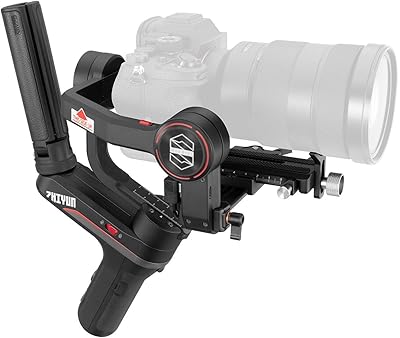
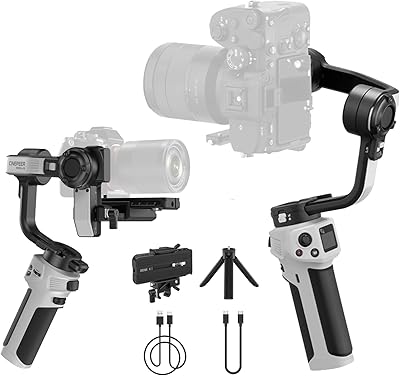
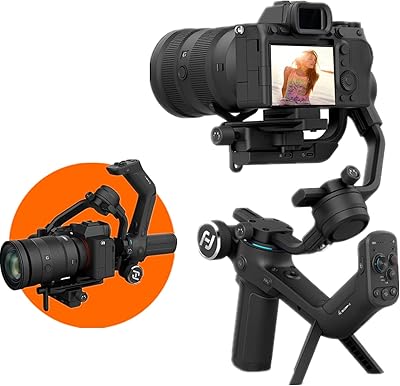
Overview

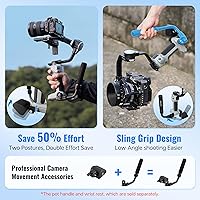
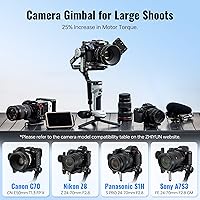
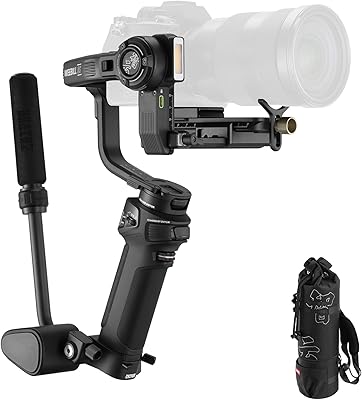
The ZHIYUN Crane 4E Camera Gimbal Stabilizer sits firmly in the upper tier of handheld stabilizers, aimed at working videographers who need professional-grade performance rather than a casual point-and-shoot solution. It competes with the likes of DJI's RS series, and ZHIYUN clearly put serious thought into the ergonomics — a redesigned wrist rest and sling grip, plus a two-handed hold mode, collectively cut down on fatigue in ways you genuinely feel after a few hours on location. The Crane 4E supports a wide spread of camera bodies across Canon, Nikon, Sony, FUJIFILM, Panasonic, Blackmagic, Sigma, and ZCAM. That said, this is not a grab-and-go tool for beginners — expect a setup and balancing process that rewards patience.
Features & Benefits

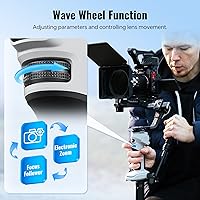
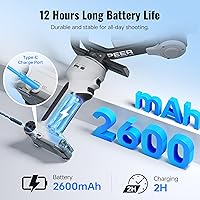
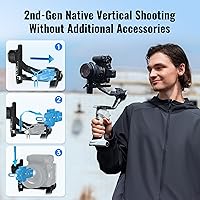
One of the more practical additions here is native vertical shooting — no extra adapter or plate required. A simple flip of the integrated quick-release lets you go from widescreen to portrait format without fumbling mid-shoot. Bluetooth shutter control is genuinely useful; losing the cable means one less thing to snag or break during fast-paced work. The side-mounted wave wheel lets you adjust shutter speed, aperture, and ISO on the fly without reaching back to the camera body, keeping your eye on the frame where it belongs. Battery life is strong enough to carry you through a full shooting day on a single charge, and the fast-charging support means a short break can top it back up without much downtime.

Best For

This gimbal makes the most sense for videographers who spend long days on their feet — documentary shooters, event filmmakers, and wedding cinematographers who cannot afford a shaky critical moment. If you regularly post to Instagram Reels, TikTok, or YouTube Shorts, the native vertical orientation removes a real workflow headache. Filmmakers running follow-focus setups will appreciate the dual servo focuser compatibility, which enables more precise, repeatable lens pulls. ZHIYUN's flagship stabilizer also makes a compelling upgrade for anyone already on an older Crane body. Worth noting though: if you primarily shoot with a compact mirrorless camera, the size and weight may feel like overkill for your particular rig.

User Feedback

Owners consistently highlight the motor strength and build quality, noting the Crane 4E handles heavy full-frame setups with less drift or jitter than earlier models. The ergonomic grip updates earn praise especially from users of previous Crane generations, with several mentioning reduced wrist strain across multi-hour shoots. The criticisms that surface regularly are worth noting: initial balancing can be time-consuming for newcomers, and some users flag a reliance on the companion app to unlock certain shooting modes. A handful of reviewers mention occasional Bluetooth pairing hiccups, though firmware updates appear to have addressed most of those. Stacked against rivals in the same class, the consensus is that the feature depth justifies the investment for working professionals.

Pros

  • High-torque motors handle heavy full-frame DSLR and mirrorless rigs without struggling or drifting.
  • Native vertical shooting requires no extra adapters, making orientation switching fast and practical on the fly.
  • All-day battery performance means most shooters can complete a full job on a single charge.
  • Fast PD charging gets the gimbal back to full power during a short break rather than an overnight wait.
  • The Crane 4E supports dual servo focusers, enabling precise and repeatable follow-focus control on set.
  • Bluetooth shutter triggering removes cable clutter and keeps shooting fluid during fast-moving sequences.
  • The side-mounted wave wheel lets you adjust core camera settings without ever pulling your eye from the viewfinder.
  • Broad camera brand compatibility means it works across most professional kits without needing special plates.
  • Ergonomic grip redesign meaningfully reduces wrist and arm fatigue compared to earlier Crane generations.
  • Pass-through charging support lets you shoot while plugged in, eliminating forced downtime on long productions.

Cons

  • Initial balancing and axis setup is time-consuming and has a steep learning curve for newcomers.
  • Several features are locked behind the companion app, adding dependency on a phone during shoots.
  • At over 2.4 kg, this gimbal is bulky and tiring to travel with if you are already carrying heavy gear.
  • Occasional Bluetooth pairing inconsistencies have been flagged by users, though firmware updates partially address this.
  • The size and weight make it a poor match for shooters using compact or lightweight mirrorless systems.
  • Some users find the quick-release mechanism requires deliberate practice before it feels truly intuitive in the field.
  • Accessory grips needed for certain shooting configurations are sold separately, adding unexpected cost.
  • The feature depth can be overwhelming without investing time in tutorials or the manual before your first shoot.

Ratings

The scores below reflect AI-driven analysis of verified global user reviews for the ZHIYUN Crane 4E Camera Gimbal Stabilizer, with spam, bot-generated, and incentivized feedback actively filtered out to preserve accuracy. Every category has been scored based on patterns found in real buyer experiences, from professional film sets to solo content creators shooting on location. Both the standout strengths and the friction points that consistently surface across reviews are represented transparently here.

Stabilization Performance
91%
Users running full-frame bodies with heavy lenses consistently report smooth, drift-free footage even during brisk walking or dynamic movement. The high-torque motors draw particular praise in comparison to previous Crane generations, with event videographers noting reliable compensation during fast-paced ceremony shots.
A small subset of users with very heavy lens and camera combinations report occasional micro-jitter at the edges of the motor's payload range. Fine-tuning the motor strength settings via the app is usually required to fully resolve this, which adds setup overhead.
Build Quality
88%
The construction feels genuinely premium in hand — the chassis has a solid, well-toleranced feel that inspires confidence during paid shoots. Multiple reviewers specifically mention that the gimbal does not feel fragile after months of regular use, which is a meaningful endorsement for professional kit.
A few users have noted that the plastic sections around the quick-release mechanism feel slightly less robust than the main body, raising mild durability concerns for high-frequency shooters. Scuffs and cosmetic wear on the light gray finish appear more visibly than on darker alternatives.
Ergonomics & Fatigue
86%
The redesigned sling grip and wrist rest make a tangible difference during shoots lasting several hours — this is one of the aspects buyers mention most when upgrading from an older Crane. Wedding and documentary shooters in particular report noticeably less arm and wrist strain by the end of a full day.
Despite the ergonomic improvements, the overall weight of the unit still causes fatigue for users with lighter builds or those doing extended one-handed operation. The two-handed hold mode helps, but it is not always practical in run-and-gun scenarios where you need one hand free.
Battery Life
89%
All-day battery performance is one of the most praised aspects across reviews, with event shooters regularly completing full ceremonies and receptions without needing a recharge. The pass-through charging capability adds a practical safety net for anyone who connects a power bank between setups.
Battery longevity can drop noticeably in cold outdoor conditions, which a handful of winter-shoot reviewers flag as a real-world caveat. A small number of users also report that battery health degrades more quickly than expected after several months of frequent fast-charging cycles.
Ease of Setup & Balancing
58%
42%
Once a user is familiar with the balancing process for a specific camera and lens combination, repeating it becomes faster and more muscle-memory driven. Several experienced gimbal users note that the axis adjustment points are well-positioned and accessible compared to some competing models.
For newcomers, the initial balancing process is the single most common frustration across reviews. Multiple buyers describe spending 30 to 60 minutes on their first attempt, and the instruction manual is widely described as insufficient — most users end up relying on third-party video tutorials to get it right.
App & Software Integration
63%
37%
The ZY Cami app provides a genuinely expanded feature set when it works well, giving users access to advanced shooting modes and motor tuning that meaningfully extend the gimbal's capabilities. Firmware updates pushed through the app have resolved several early Bluetooth pairing issues reported after launch.
App dependency is one of the most consistent criticisms — users feel that too many useful functions are locked behind a mobile connection rather than accessible directly on the unit. Interface stability has improved over time, but crashes and connectivity drops during active use are still mentioned in recent reviews.
Vertical Shooting
87%
The native vertical orientation support without adapters is a standout feature for creators producing portrait-format content, and it saves meaningful time for hybrid shooters switching formats mid-day. Reviewers producing Instagram Reels and TikTok content particularly highlight this as a feature that other gimbals in the class still handle clumsily.
A handful of users find the quick-release transition between horizontal and vertical modes requires both hands and more deliberate action than they expected from what is marketed as a fast switch. In fast-moving shoot environments, stopping to flip orientation is still a brief but real workflow interruption.
Follow Focus System
79%
21%
Filmmakers who invest in the servo focuser accessories report a precise and repeatable follow-focus experience that holds up well on controlled narrative shoots. The wave wheel integration for manual parameter adjustments is consistently praised as responsive and well-positioned for active shooting.
The full follow-focus capability requires purchasing additional accessories that are not included in the standard package, which catches some buyers off-guard. Users expecting a complete out-of-box cinema-style focus system are often disappointed to discover the base unit only offers a partial solution.
Bluetooth Shutter Control
74%
26%
When the Bluetooth connection is stable, the wireless shutter control is a genuine quality-of-life improvement — no cable dangling near moving parts, and triggering feels responsive enough for most shooting situations. Travel and solo-operator shooters particularly appreciate it for self-filming setups.
Pairing inconsistencies are the most frequently cited Bluetooth complaint, with some users needing to re-pair on each session or experiencing delayed triggers. Camera model compatibility also varies, and a few Sony and Canon users report that the shutter control works less reliably on their specific body than on others.
Camera Compatibility
83%
The broad official compatibility list covering Canon, Nikon, Sony, FUJIFILM, Panasonic, Blackmagic, Sigma, and ZCAM is a genuine asset for multi-body shooters or those likely to switch camera systems. Most users report their primary camera working reliably without needing special plates or workarounds.
Full electronic integration — such as Bluetooth shutter and parameter control — varies across camera brands and specific body models, with some setups requiring additional configuration steps. Users with older or less common bodies occasionally report limited smart feature support despite physical compatibility being fine.
Portability & Travel
61%
39%
The gimbal ships in a reasonably compact configuration for its feature level, and users who carry a dedicated gimbal case find it manageable for location work and short-haul travel. The included tripod adds value without significantly increasing the packed footprint.
At over 5 lbs before attaching a camera body and lens, this is not a lightweight travel companion, and it fills a significant portion of a standard camera backpack. Reviewers who prioritize mobility above all else consistently recommend looking at lighter alternatives for travel-first shooting styles.
Value for Money
77%
23%
For professional videographers and serious content creators who will use the full feature set regularly, the Crane 4E delivers enough capability to justify its price point — particularly given the battery performance, motor strength, and ergonomic refinements over earlier models. Upgraders from older Crane bodies tend to view the investment favorably.
Casual shooters or those who only use a gimbal occasionally are likely to find the price difficult to justify relative to simpler options that cover 80% of common use cases. The need to purchase servo focuser accessories separately also adds real cost for users who want the complete follow-focus experience.
Quick-Release Mechanism
72%
28%
The integrated quick-release system is well-conceived and removes the need for a separate plate when switching between horizontal and vertical orientations, which streamlines the setup compared to older attachment methods. Users who take time to learn the mechanism report smooth, reliable operation once it becomes familiar.
The learning curve on the quick-release is steeper than the marketing suggests — first-time users frequently describe it as unintuitive until they have practiced it several times. In field conditions, particularly under time pressure, the mechanism has drawn complaints about being fiddly compared to simpler plate-and-lock designs.
Charging Experience
84%
Fast charging support dramatically reduces downtime between shoots, and users consistently appreciate being able to top up the battery to a usable level during a lunch break rather than waiting hours. The ability to operate while charging is a meaningful practical benefit for long-production-day scenarios.
The fast-charging capability requires a compatible PD charger, which is not included in the box — an omission that frustrates buyers who expect a complete package at this price tier. A small number of users also report inconsistent charging speeds when using third-party cables rather than dedicated PD accessories.

Suitable for:

The ZHIYUN Crane 4E Camera Gimbal Stabilizer is built for videographers and filmmakers who spend serious time in the field and need a stabilizer that can keep up across a full shooting day. Event and wedding cinematographers will appreciate the all-day battery life that eliminates the anxiety of running out of power mid-ceremony. Content creators who regularly produce both landscape video and portrait-format social content will find the native vertical switching genuinely saves time and reduces the need for post-production cropping or adapter workarounds. Filmmakers running controlled narrative shoots who depend on precise, repeatable follow-focus pulls will get tangible value from the dual servo focuser support. Those already in the ZHIYUN ecosystem, upgrading from an older Crane model, will find the ergonomic improvements — particularly during long handheld stretches — make a noticeable difference in how the body feels at the end of a shoot.
Not suitable for:

If you are new to gimbals and expecting to unbox this, attach your camera, and start shooting within minutes, the ZHIYUN Crane 4E Camera Gimbal Stabilizer will likely frustrate you early on. Proper axis balancing takes time to learn, and the companion app is more or less required to access the full feature set, which adds a layer of setup complexity that casual users rarely want to deal with. Photographers or video shooters using lightweight compact cameras or small crop-sensor mirrorless bodies may find the size and weight of this stabilizer disproportionate to their actual needs — there are lighter, less expensive options better matched to that use case. Budget-conscious buyers or hobbyists who shoot occasionally on weekends are unlikely to justify the investment here when simpler gimbals would cover their typical shooting scenarios just fine. Anyone with limited storage or travel space should also consider that this is not a small piece of kit to pack and haul.
Specifications

  • Brand: Manufactured by ZHIYUN, a professional-grade stabilizer brand with an established presence in the filmmaker and content creator market.
  • Model Number: The official model designation is CR131, sold under the Crane 4E product line.
  • Stabilization Axes: Uses a 3-axis motorized stabilization system to counteract pitch, roll, and yaw movement during handheld shooting.
  • Compatible Cameras: Supports camera bodies from Canon, Nikon, Sony, FUJIFILM, Panasonic, Blackmagic Design, Sigma, and ZCAM across DSLR and mirrorless form factors.
  • Battery Capacity: Equipped with a built-in 2600mAh rechargeable battery that supports approximately 12 hours of continuous operation on a full charge.
  • Charging Speed: Supports up to 25W PD fast charging, allowing the battery to reach a full charge in roughly 2 hours when using a compatible PD charger.
  • Pass-Through Charging: The gimbal can operate normally while connected to a power source, enabling uninterrupted shooting during long productions.
  • Shooting Orientations: Supports both horizontal and vertical shooting natively via an integrated quick-release structure, requiring no additional adapters or accessories.
  • Shutter Control: Includes wireless Bluetooth shutter control, allowing the camera to be triggered remotely without a physical cable connection.
  • Parameter Adjustment: A built-in wave wheel on the side of the unit provides on-the-fly adjustment of shutter speed, aperture, and ISO settings.
  • Follow Focus: Compatible with dual servo focusers and supports the Scale Mapping accessory series for visual follow-focus and zoom control.
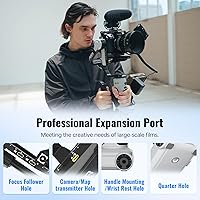
  • Expansion Port: Features a standard 1/4-inch professional expansion port for mounting accessories such as lights, microphones, or monitors.
  • Unit Weight: The stabilizer weighs approximately 2.43 kg (5.34 lbs), placing it in the heavier range of handheld gimbals suited for professional rigs.
  • Package Dimensions: The retail package measures 15.75 x 12.6 x 4.53 inches, reflecting the size of the unit plus included accessories in its carrying configuration.
  • Grip System: Features a second-generation sling grip with adjustable length and direction, paired with a wrist rest and a two-handed hold mode to reduce long-session fatigue.
  • Motor Type: Powered by high-torque motors designed to maintain stable control under the load of heavier full-frame camera and lens combinations.
  • Color: Available in Light Gray as the standard colorway for this model.
  • Market Ranking: Holds a Best Sellers Rank of approximately #472 in Video Camera Supports and Stabilizers on Amazon as of its listing data.

Related Reviews
Zhiyun Crane 2S 3-Axis Gimbal Stabilizer
74%
91%
Stabilization Performance
88%
Build Quality
58%
Setup & Balancing
54%
Ease of Use & Learning Curve
89%
Motor Power & Payload Handling
More
Zhiyun Crane M2S Camera Gimbal Stabilizer
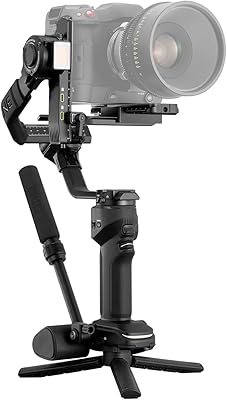
74%
83%
Stabilization Performance
91%
Portability & Size
78%
Build Quality
86%
Fill Light Quality
88%
Quick Release System
More
ZHIYUN Crane 4 Combo 3-Axis Gimbal Stabilizer
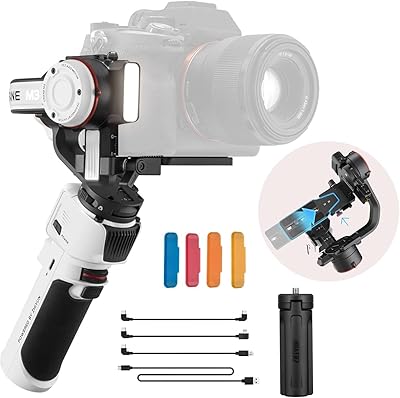
77%
91%
Stabilization Performance
88%
Motor Strength & Payload Handling
93%
Build Quality & Materials
61%
Balancing Ease
84%
Built-in Fill Light
More
Zhiyun Crane M3 3-Axis Gimbal Stabilizer
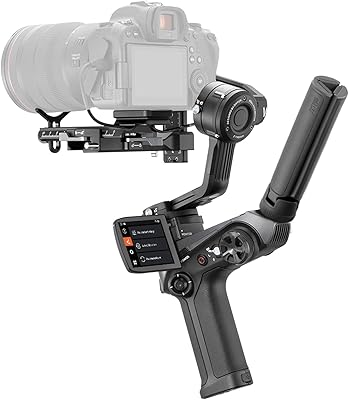
78%
83%
Stabilization Performance
91%
Portability & Form Factor
82%
Build Quality
79%
Ease of Setup
74%
Touchscreen & Interface
More
ZHIYUN Weebill 2 3-Axis Gimbal Stabilizer
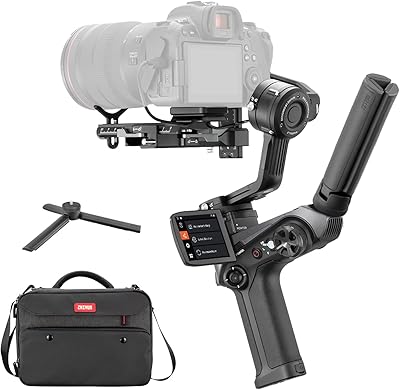
77%
83%
Stabilization Performance
88%
Touchscreen Usability
79%
Build Quality & Durability
74%
Ergonomics & Handling
91%
Battery Life
More
ZHIYUN Weebill 2 SE 3-Axis Gimbal Stabilizer
76%
83%
Stabilization Performance
88%
Battery Life
86%
Charging Speed
81%
Touchscreen Usability
79%
Build Quality & Durability
More
Zhiyun Weebill 3S Combo
80%
91%
Stabilization Performance
88%
Orientation Switch Speed
79%
Built-In Fill Light
93%
Battery Life
84%
Build Quality & Materials
More
Zhiyun Weebill S
Zhiyun Weebill S
76%
83%
Stabilization Performance
91%
Battery Life
78%
Build Quality & Durability
86%
Ergonomics & Comfort
88%
Camera Compatibility
More
Zhiyun Cinepeer Weebill 3E Gimbal
80%
88%
Stabilization Performance
76%
Build Quality & Materials
93%
Portability & Form Factor
91%
Native Vertical Shooting
82%
Battery Life & Charging
More
DJI Ronin-S Gimbal Stabilizer
85%
94%
Stabilization Performance
85%
Ease of Use
89%
Build Quality
82%
Portability & Size
88%
Battery Life
More

FAQ

Yes, the Crane 4E is designed to handle full-frame Sony bodies, including the A7 series. Just make sure to factor in the weight of your lens as well, since a heavy telephoto can push the balance setup closer to the motor limits. A standard prime or mid-range zoom will pair with it without issues.

You can use the core stabilization functions out of the box, but to access advanced shooting modes, fine-tune motor settings, or update firmware, the ZY Cami app is effectively required. Some users find this frustrating — just plan for a setup session before your first real shoot so you are not configuring things on location.

It takes patience. Balancing a 3-axis gimbal like this one involves adjusting three separate axes until the camera holds its position without motor assistance. It is not complicated once you understand the logic, but the first few attempts can be time-consuming. There are solid tutorial videos from ZHIYUN that walk through the process clearly, and it gets faster once you have done it a couple of times with the same camera setup.

Yes, that is one of the more practical features here. The integrated quick-release lets you rotate the camera mount to portrait orientation natively, without needing a separate vertical adapter. It is a genuinely useful time-saver if you regularly produce both widescreen and portrait-format content.

In real-world conditions, the battery handles a full day comfortably for most event shooters. The pass-through charging feature also means you can keep it plugged into a USB-C power bank in your bag between ceremony and reception, so you are never working with a low battery going into an important moment.

It does support Blackmagic Design cameras, and the high-torque motors are built for heavier loads. That said, with a Pocket Cinema 6K or similar body plus a lens, you will want to balance carefully and check that your total payload stays within a comfortable range for stable operation.

If you are upgrading from a Crane 3-series body, the ergonomic improvements alone are noticeable — particularly if you shoot for hours at a time. The grip redesign and wrist rest address complaints that were common with earlier models. If you are on a Crane M or similar lightweight model, be aware that this is a significantly larger and heavier unit, so make sure your shooting style actually calls for that step up.

Basic focus control depends on your camera model and how it integrates via Bluetooth or the USB control port. For a proper mechanical follow-focus setup with the wave wheel and servo system, you will need to purchase the servo focuser accessories separately, as they are not included in the standard package.

For most users it works reliably, but a handful of reviewers have noted occasional pairing inconsistencies, particularly when switching between devices or after a firmware update. ZHIYUN has pushed fixes through updates, so keeping the firmware current helps. In critical shooting scenarios, some professionals still prefer a physical cable trigger as a backup.

It is not a compact travel gimbal. At over 5 lbs before attaching a camera, it adds meaningful weight to your kit, and the form factor is substantial. For dedicated travel setups or shooters prioritizing mobility above all else, a lighter option may serve better. That said, for travel videographers doing serious documentary or destination work who need the full feature set, the trade-off is often worth it.

Where to Buy