Overview

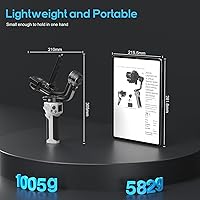
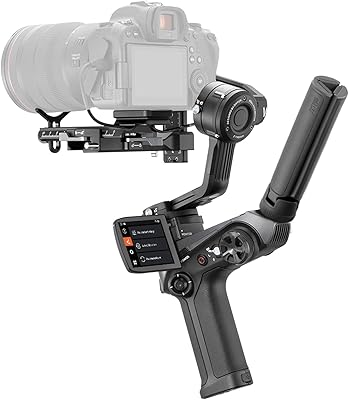
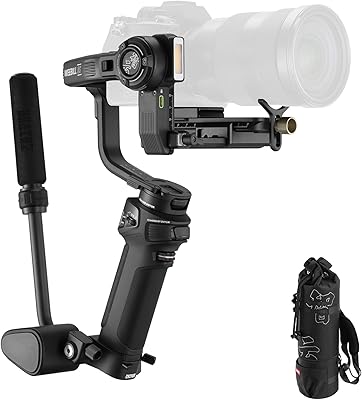
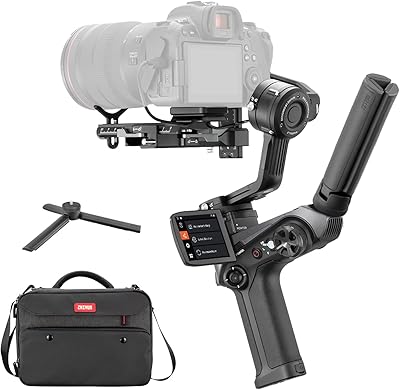
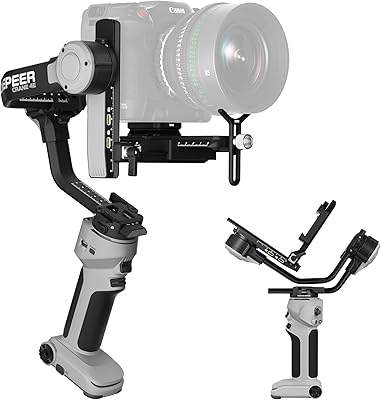
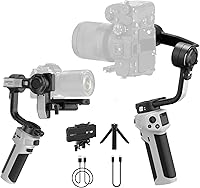
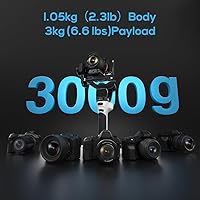
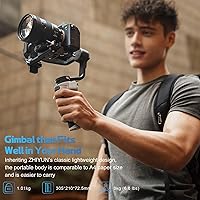
The Zhiyun Cinepeer Weebill 3E Gimbal arrived in April 2024 under Zhiyun's Cinepeer sub-brand, targeting hybrid shooters and content creators who want capable stabilization without hauling a heavy rig. At just over a kilogram and roughly A4-sized when folded, portability is a genuine strength here. It handles up to 6.6 lbs of payload, which covers most mirrorless bodies with a standard lens attached. At its price point, the stabilization performance is solid, though buyers coming from professional-tier gimbals may notice trade-offs in motor tuning and build refinement. Realistic expectations matter.
Features & Benefits

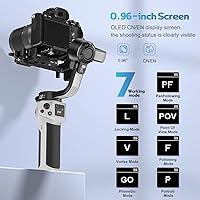
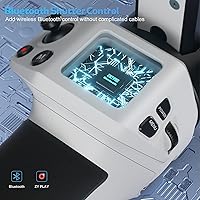
What makes this gimbal stand out day-to-day is its native vertical shooting mode, which lets you flip between landscape and portrait orientation without detaching anything or rebuilding your balance — a real time-saver when cutting between Reels and standard video. Bluetooth shutter control works reliably across Sony, Canon, and Nikon bodies, cutting out cable clutter. The built-in battery charges fully in under three hours via fast charging, which is practical on busy shoot days. Pair that with an ergonomic handle that fits a natural grip, and fatigue during long handheld sessions drops noticeably.

Best For

This stabilizer fits best in the hands of social media creators who regularly switch between horizontal and vertical formats — the kind of workflow that used to mean extra adapters or a second setup. Travel and run-and-gun filmmakers will appreciate how little space it takes up in a bag without sacrificing meaningful payload capacity. Hybrid shooters migrating from stills to video will find the plug-and-play camera compatibility refreshingly straightforward. Solo operators benefit especially from wireless shutter control, since it removes one more cable from an already busy rig. If you're upgrading from a budget stabilizer, the performance jump feels worthwhile.

User Feedback

Early buyers have responded warmly, with the Weebill 3E sitting at 4.7 out of 5 stars across roughly 90 ratings. The most consistent praise centers on quick, intuitive setup and the compact form factor, with several reviewers calling out the vertical mode as genuinely useful rather than a checkbox feature. On the critical side, a recurring frustration is that the sling grip and wrist rest — prominently featured in marketing — are sold separately, catching some buyers off guard. A handful of users pushing heavier full-frame setups near the payload ceiling report that motor confidence drops. The review pool is still relatively small, so long-term durability remains an open question.

Pros

  • Native vertical shooting switches orientation in seconds — no disassembly, no accessories needed.
  • At just over a kilogram, this gimbal fits into a camera bag without reorganizing your entire kit.
  • Bluetooth shutter control works reliably out of the box with Sony and Canon mirrorless bodies.
  • A 6.6 lb payload capacity covers the vast majority of mirrorless and mid-range DSLR setups comfortably.
  • Fast charging gets the battery fully topped up in under three hours, keeping downtime short on busy shoot days.
  • Camera compatibility spans Sony, Canon, Nikon, Panasonic, Fujifilm, Olympus, ZCAM, and Sigma — impressively broad.
  • First-time gimbal users consistently report getting balanced and shooting within 15 minutes of unboxing.
  • The ergonomic handle reduces wrist strain during shorter to mid-length shoots compared to less contoured designs.
  • Early buyer ratings are notably high, reflecting strong out-of-box satisfaction across a range of shooting styles.

Cons

  • The wrist rest and sling grip are sold separately, despite being central to the advertised Sling Mode experience.
  • Motor performance becomes less reliable when the rig is loaded close to the maximum payload limit.
  • Bluetooth shutter control does not extend to Panasonic or Fujifilm cameras, limiting wireless functionality for those users.
  • The companion app feels underdeveloped — functional but lacking the depth offered by competing platforms.
  • Firmware update instructions are poorly documented, causing unnecessary confusion for users trying to stay current.
  • Rebalancing is required every time you switch camera bodies, with no preset memory to speed up the process.
  • Long shoots beyond two hours can cause fatigue if you haven't purchased the optional sling accessories.
  • The review base is still relatively small, so long-term durability after sustained heavy use is not yet proven.
  • Bluetooth connection drops were reported by a minority of users during extended shooting sessions.
  • Advanced tuning and calibration options are not covered adequately in the included paper documentation.

Ratings

The Zhiyun Cinepeer Weebill 3E Gimbal has been scored by our AI system after analyzing verified buyer reviews from multiple global markets, with spam, bot submissions, and incentivized feedback actively filtered out. Scores reflect a balanced picture — where this stabilizer genuinely delivers and where real-world users have run into friction. Both the highs and the frustrations are represented honestly.
Stabilization Performance
88%
Most users report that footage comes out impressively smooth for a gimbal in this price tier, particularly during walking shots and slow pans. Mirrorless users with Sony A7 and Canon R series bodies consistently noted that motor response felt confident and tracking stayed locked without constant recalibration.
A handful of reviewers pushing heavier full-frame bodies close to the 6.6 lb payload limit reported occasional motor strain and micro-jitter during aggressive movements. It performs best when matched with lighter rigs rather than being maxed out.
Build Quality & Materials
76%
24%
The overall construction feels solid enough for daily use, with a fit and finish that punches above its category. The handle in particular received praise for feeling robust rather than hollow, which matters during extended outdoor shoots.
Some buyers noted that the plastic components around the axis arms feel less premium compared to higher-end competitors like the DJI RS series. Long-term durability after heavy use or travel knocks remains uncertain given the limited review history.
Portability & Form Factor
93%
At just over a kilogram and folding down to roughly A4-paper size, this stabilizer fits into a camera bag side pocket without drama. Travel shooters and commuters found it significantly less cumbersome than comparable payload-class gimbals on the market.
The folded dimensions, while compact in surface area, are still a touch thick for ultra-slim sling bags. A very small number of users wished the axes locked more securely during transport to prevent accidental movement.
Native Vertical Shooting
91%
This was one of the most genuinely praised features in the review pool. Social media creators highlighted how switching to portrait orientation took seconds without any disassembly or add-on accessories, which meaningfully sped up their shooting workflow.
The vertical mode works best with smaller mirrorless bodies and compact zoom lenses. A few users with larger camera setups found balance in vertical orientation a bit fiddlier to dial in than the horizontal configuration.
Battery Life & Charging
82%
18%
The fast-charging capability was a recurring positive — being able to top up fully in under three hours is practical when shooting across a full day with limited downtime. Most users comfortably got through a half-day shoot on a single charge.
Heavy users doing multi-hour continuous recording sessions noted the battery running thin toward the end of the day. The gimbal does not support pass-through charging, which means you have to pause if you need to charge mid-shoot.
Bluetooth & Cable Control
84%
Wireless shutter integration with Sony and Canon bodies worked reliably out of the box for most reviewers, pairing quickly on first connection and staying connected during active use. Solo creators especially appreciated cutting down on cable management.
Bluetooth pairing occasionally dropped during longer sessions for a minority of users, requiring a manual reconnect. Panasonic and Fujifilm users noted that Bluetooth control is not supported for their systems, leaving them cable-dependent.
Ease of Setup & Balancing
86%
First-time gimbal users reported getting a balanced setup within 10 to 15 minutes, which is notably quick for a 3-axis stabilizer. The quick-release plate and axis adjustment mechanism drew specific praise for being intuitive without consulting a manual.
Users switching frequently between multiple camera bodies found the rebalancing process repetitive, as the gimbal does not offer preset balance memory. Getting precise balance with longer telephoto lenses required extra patience.
Ergonomics & Comfort
79%
21%
The handle shape fits a natural hand position reasonably well, and most users noted reduced wrist fatigue compared to older or less contoured gimbal handles. For shoots under 90 minutes, comfort held up well across varied grip styles.
During shoots exceeding two hours, several users reported hand and forearm fatigue setting in — largely because the Sling Mode 2.5 accessories that would address this are sold separately and not included in the box.
Sling Mode & Accessories
58%
42%
Users who purchased the optional wrist rest and telescopic sling grip separately found the expanded sling configuration genuinely effective at reducing physical load during long events or documentary-style shooting days.
The fact that these accessories are not included is a consistent source of frustration. Many buyers felt the marketing implied a more complete kit, and the additional cost to unlock the sling mode adds up on top of the gimbal price itself.
Camera Compatibility
89%
The breadth of supported cameras is one of the strongest practical arguments for this stabilizer. Sony, Canon, Nikon, Panasonic, Fujifilm, Olympus, ZCAM, and Sigma are all covered, making it a genuinely versatile option for shooters who use multiple systems.
Older DSLR bodies sometimes required cable adjustments not well-documented in the included guides. A small number of users with less mainstream camera models found compatibility required additional troubleshooting beyond what the manual covered.
App & Firmware Experience
67%
33%
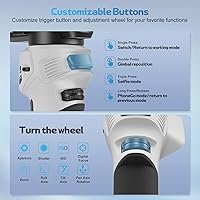
Basic motor tuning and mode switching can be handled directly on the gimbal without needing a smartphone app, which streamlined the experience for users who prefer not to juggle another app on set.
The companion app experience was described as functional but barebones by several reviewers, lacking the polished interface found in competing apps. Firmware update instructions were considered unclear by a meaningful portion of users.
Value for Money
83%
Against comparable 3-axis gimbals in the same price bracket, the Weebill 3E offers a strong feature-to-cost ratio, particularly given the native vertical mode and broad compatibility list. Most buyers felt they got more than expected for the outlay.
Once you factor in the cost of the separately sold sling accessories, the total investment climbs noticeably. Buyers on a strict budget may find the full experience costs more than the base price suggests.
Documentation & Out-of-Box Experience
61%
39%
The physical quick-start guide is clear enough to get the gimbal powered on and roughly balanced without confusion. The step-by-step layout works well for users who are new to 3-axis stabilizers.
Several reviewers flagged that the paper manual lacks depth for advanced features like custom motor tuning and axis calibration. Digital resources and video tutorials from the brand were considered insufficient compared to rivals.

Suitable for:

The Zhiyun Cinepeer Weebill 3E Gimbal is a strong fit for content creators who live in the vertical-horizontal switching world of social media production — think Instagram Reels, YouTube Shorts, and TikTok shooters who can't afford to lose time fiddling with accessories between takes. Travel filmmakers and run-and-gun documentarians will appreciate how effortlessly it slides into a camera bag, especially when covering events across multiple locations in a single day. Hybrid photographers making the transition from stills to video will find the broad camera compatibility reassuring — whether they're shooting on a Sony A7 series, a Canon R-series body, or a Fujifilm X-T, the setup process is refreshingly direct. Solo operators benefit particularly from wireless shutter control, which cuts cable clutter and lets one person manage both camera operation and movement at once. If you're stepping up from a budget-tier entry-level stabilizer and want meaningfully better performance without jumping into professional-grade pricing, this gimbal represents a logical and well-priced upgrade path.
Not suitable for:

Professional cinematographers or videographers who regularly shoot with heavy cinema-oriented rigs, large telephoto lenses, or accessories like external monitors and follow-focus systems will find the Zhiyun Cinepeer Weebill 3E Gimbal working against them near its payload ceiling, where motor confidence noticeably drops. Buyers expecting a fully ready-to-use sling rig straight out of the box should know upfront that the wrist rest and telescopic grip — the components that make extended shooting genuinely comfortable — are sold separately, adding to the total cost. Users who depend heavily on a polished companion app for motor tuning, custom profiles, or remote control will likely find the software experience underwhelming compared to what competitors offer at similar or slightly higher prices. Those who need rock-solid long-term durability data before committing should also exercise caution — the review pool is still relatively small and the product is less than a year old, so multi-year wear patterns simply haven't been documented yet. Finally, shooters primarily working with Panasonic or Fujifilm bodies should note that Bluetooth control is not available for those systems, which limits the wireless workflow benefits that make this stabilizer appealing in the first place.
Specifications

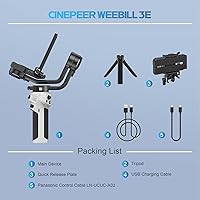
  • Brand & Model: Manufactured by Zhiyun under the Cinepeer sub-brand, model number zy00030.
  • Stabilization: 3-axis motorized gimbal stabilization covering pan, tilt, and roll axes.
  • Payload Capacity: Supports cameras and lens combinations up to 6.6 lbs (3 kg).
  • Gimbal Weight: The unit itself weighs 1.05 kg (approximately 2.23 lbs) without a camera attached.
  • Dimensions: Assembled dimensions measure 3″ deep by 8″ wide by 12″ tall.
  • Folded Size: Folds down to approximately 8.27″ (L) x 11.69″ (W) x 0.2″ (H) for transport.
  • Battery Capacity: Built-in non-removable 2600mAh lithium battery powers the gimbal during operation.
  • Charging Speed: Supports 14W fast charging with a full charge completed in approximately 2 hours and 46 minutes.
  • Vertical Shooting: Native vertical shooting mode is built in and requires no additional accessories or hardware changes.
  • Bluetooth Control: Wireless Bluetooth shutter control is supported for select Sony, Canon, and Nikon camera models.
  • Cable Control: Wired cable control is compatible with Sony, Canon, Nikon, Panasonic, Fujifilm, Olympus, ZCAM, and Sigma cameras.
  • Sling Mode: Sling Mode 2.5 is supported via an optional telescopic grip and wrist rest, both sold separately.
  • Color: Available in Black as the standard colorway for this model.
  • Compatible Devices: Designed for use with mirrorless and DSLR cameras from major manufacturers.
  • First Available: This product was first made available for purchase in April 2024.
  • Best Sellers Rank: Ranked #58 in Professional Video Stabilizers and #65 in Video Camera Supports and Stabilizers on Amazon.
  • Avg. User Rating: Holds an aggregate rating of 4.7 out of 5 stars based on 92 verified buyer reviews.

Related Reviews

ZHIYUN Weebill 2 Gimbal Stabilizer
87%
91%
Stabilization Performance
88%
Build Quality
85%
Portability
86%
Usability/Ergonomics
79%
Battery Life
More
Zhiyun Weebill 3S Combo
80%
91%
Stabilization Performance
88%
Orientation Switch Speed
79%
Built-In Fill Light
93%
Battery Life
84%
Build Quality & Materials
More
ZHIYUN Weebill 2 SE Gimbal Stabilizer
86%
88%
Performance & Stabilization
90%
Battery Life
85%
Usability & Ease of Use
72%
Portability & Weight
84%
Build Quality & Durability
More
Zhiyun Weebill S
Zhiyun Weebill S
76%
83%
Stabilization Performance
91%
Battery Life
78%
Build Quality & Durability
86%
Ergonomics & Comfort
88%
Camera Compatibility
More
Zhiyun Crane M3 Gimbal
85%
91%
Portability & Size
88%
Ease of Setup
84%
Battery Life
87%
Build Quality
93%
Quick Release System
More
ZHIYUN Crane 4E Gimbal Stabilizer
87%
91%
Stability and Performance
88%
Ease of Use
94%
Build Quality
85%
Battery Life
89%
Ergonomics and Comfort
More
Zhiyun Crane M2S Gimbal Stabilizer
85%
91%
Portability & Weight
88%
Stabilization Performance
85%
Ease of Use
89%
Build Quality
86%
Camera Compatibility
More
ZHIYUN CINEPEER CM15 RGB Video Light
89%
86%
Performance
94%
Portability
89%
Battery Life
91%
Ease of Use
92%
Color Accuracy
More
ZHIYUN CINEPEER CX100 100W
81%
96%
Portability & Size
93%
Light Output & Brightness
91%
Color Accuracy
48%
Internal Battery Life
84%
Thermal Management
More
Zhiyun Cinepeer CM25
78%
91%
Brightness Output
93%
Color Accuracy
58%
Battery Life
94%
Portability & Form Factor
82%
Build Quality
More

FAQ

Yes, it does. The native vertical mode is built directly into the gimbal mechanism, so you can switch from landscape to portrait orientation without detaching anything or purchasing add-ons. It is one of the more practical features for social media creators who shoot both formats regularly.

No, and this catches a lot of buyers off guard. The telescopic sling grip and wrist rest that enable Sling Mode 2.5 are sold separately. If extended handheld shooting comfort is a priority for you, budget for those accessories on top of the gimbal itself.

Yes, the Sony A7M4 is on the official compatibility list for both cable control and Bluetooth control. Pairing it for the first time connects automatically, and after that initial setup the camera remembers the connection, so you won't need to re-pair every session.

Most users comfortably get through a half-day shoot on a single charge under normal use conditions. Heavy continuous recording sessions may push into territory where battery life becomes a constraint toward the end of a long day, so carrying a power bank for in-between charges is worth considering.

It depends on the total combined weight of your camera and lens. The Canon R5 body itself is under 700g, but a 24-70mm f/2.8 lens adds considerable weight. You'll want to weigh your exact kit before purchasing — if the total comes close to or exceeds 3 kg, you may run into motor strain under load.

Bluetooth shutter control is not available for Fujifilm bodies with this stabilizer. You can still use cable control with supported Fujifilm models like the X-T3, X-T4, X-T5, X-H2, and X-H2s, but the wireless functionality is limited to Sony, Canon, and select Nikon cameras.

The Zhiyun Cinepeer Weebill 3E Gimbal is consistently described by first-time users as one of the more approachable options to balance. Most people get a working setup within 10 to 15 minutes. The axis adjustment points are straightforward, and the quick-release plate system doesn't require specialized tools.
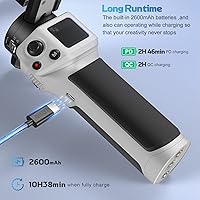
No, pass-through charging is not supported. If the battery runs low mid-shoot, you will need to pause and charge rather than continuing to record while plugged in. Planning around the roughly 3-hour charge time and carrying a backup power source is the most practical workaround.

Without turning this into a detailed comparison, the main practical differences come down to the vertical shooting workflow and camera compatibility breadth, where this stabilizer holds its own. DJI's RS series at similar price points tends to offer a more polished app experience and more refined build materials, so your priorities will determine which makes more sense for your setup.

The 4.7-star average is encouraging, but with around 92 ratings it is worth tempering expectations slightly. The product launched in April 2024 and long-term reliability data simply does not exist yet at scale. The early feedback is positive across multiple use cases, but giving it another 6 to 12 months to accumulate more reviews would give you a more complete picture of durability over time.