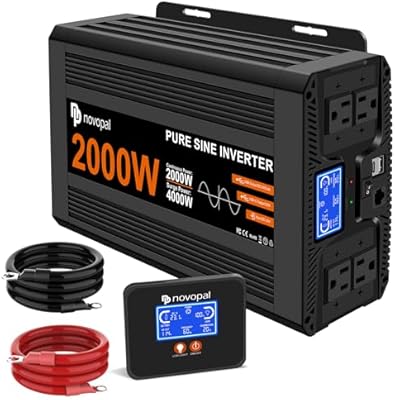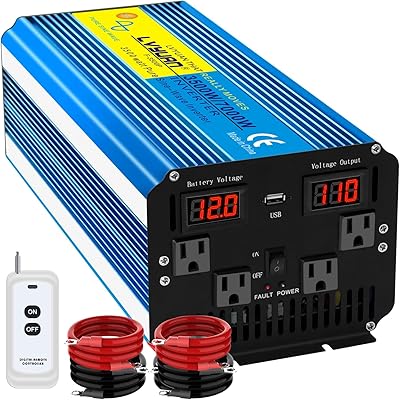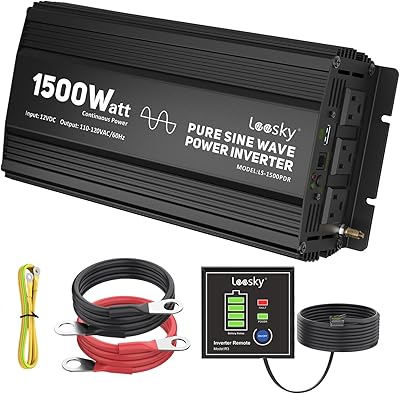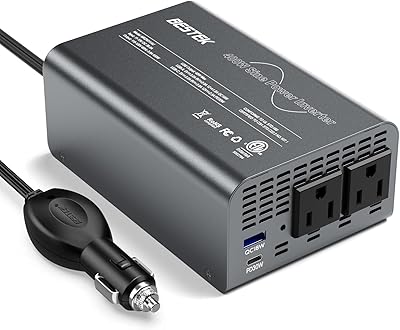
Overview

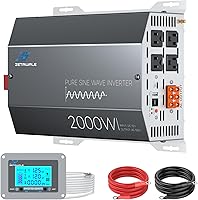
The ZETAWALE 2000W Pure Sine Wave Power Inverter enters a crowded market with a straightforward pitch: solid, reliable performance at a price that doesn't require a second mortgage. ZETAWALE is a relatively new brand, but it's building a reputation quickly, and the early reviews back that up. At its core, this sine wave inverter delivers 2000 watts continuous output — with a 4000-watt surge capacity for motor startups — converting 12V DC battery power into clean 110V/120V AC. Just be clear-eyed about what that means: it handles most household appliances and mobile power needs comfortably, but it's not a substitute for a whole-home generator.

Features & Benefits

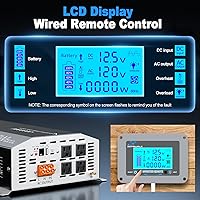
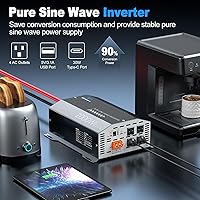
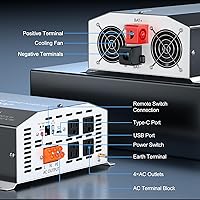
What sets this sine wave inverter apart from cheaper modified sine wave alternatives is the quality of its output. Pure sine wave power matters when you're running a CPAP machine, a laptop, or anything with a variable-speed motor — those devices can run hot, buzz audibly, or simply underperform on dirtier waveforms. Four standard AC outlets handle multiple devices at once, while the USB-A and USB-C fast charging ports mean you're not hunting for adapters. The nearly 15-foot wired remote with its own LCD display is genuinely useful when the inverter is mounted in a truck bed or under an RV cabinet. Dual cooling fans keep temperatures in check without much noise, and the AC terminal blocks let you wire in high-draw appliances that exceed a standard 15-amp outlet.

Best For

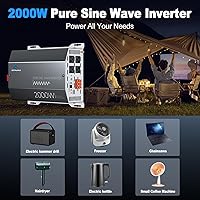
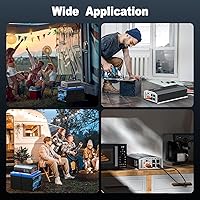
This 2000-watt unit fits a pretty specific — and sizable — audience. RV owners and van builders get reliable household-style power without hauling a generator. Truck drivers can run a mini-fridge, microwave, or medical device like a CPAP off their cab battery without worrying about waveform compatibility. If you're building a small solar off-grid setup around a 12V battery bank, this inverter covers a cabin, workshop, or weekend retreat without overcomplicating the wiring. Overlanders and serious campers who've outgrown basic inverters will appreciate the step up in quality. Where it falls short: it's not suited for three-phase equipment, whole-home circuits, or commercial-scale loads. Think mobile and moderate off-grid power, not permanent electrical infrastructure.

User Feedback

With a 4.6-star average across more than 250 verified purchases, the ZETAWALE inverter has earned its standing through consistent real-world performance. Buyers are especially complimentary about the quiet operation under typical loads and the convenience of monitoring voltage and draw directly from the remote's LCD screen. That said, a few users have noted the unit gets noticeably warm when running near its continuous limit for extended stretches — though the protection systems do kick in appropriately. The other recurring gripe is the stock battery cables, which some buyers consider undersized for high draws. Worth budgeting for heavier-gauge replacements if you plan to run demanding loads regularly. Overall, the feedback paints a fair picture: solid value, minor hardware compromises.

Pros

  • Pure sine wave output is safe for CPAP machines, laptops, and variable-speed motors that modified sine wave units can damage over time.
  • Four AC outlets let you run multiple appliances at once without a power strip workaround.
  • The nearly 15-foot wired remote is a genuine convenience when the inverter is tucked away in a truck bed or RV cabinet.
  • USB-C fast charging means one less adapter brick cluttering your setup.
  • Dual cooling fans keep the unit quiet under moderate loads — noticeably less intrusive than many single-fan competitors.
  • AC terminal blocks let you hardwire heavy-duty appliances that exceed a standard 15-amp outlet, adding real installation flexibility.
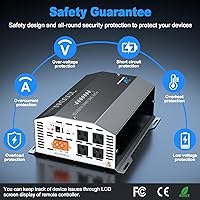
  • Comprehensive protection suite handles overload, voltage extremes, overheating, and short circuits without requiring manual intervention.
  • A 4.6-star average across more than 250 verified buyers signals consistent real-world satisfaction, not just a handful of outliers.
  • The LCD display on the remote gives you live voltage and load readings, which is genuinely useful for managing battery draw.
  • Compatible with all standard 12V battery types, including lithium and AGM, so it fits into most existing setups without extra hardware.

Cons

  • The stock battery cables are undersized for sustained high-power draws — plan to replace them if you run demanding loads regularly.
  • No built-in battery charger or transfer switch means it cannot serve as an automatic backup or true UPS system.
  • Only compatible with 12V DC input, so owners of 24V or 48V battery systems cannot use this unit at all.
  • The unit runs noticeably warm when operating near its continuous 2000W limit for extended periods.
  • Peak 4000W capacity is a momentary motor-startup surge only — it cannot sustain that output, which can mislead buyers expecting higher continuous power.
  • The neutral-to-ground wiring on the AC terminal blocks is not pre-connected, which requires a manual step that may confuse users unfamiliar with electrical wiring.
  • ZETAWALE is a newer brand with a shorter track record than established names, so long-term reliability data is still limited.
  • No wireless remote option — the wired remote, while long, can be awkward to route in certain vehicle or installation configurations.

Ratings

The scores below were generated by AI after analyzing verified buyer reviews for the ZETAWALE 2000W Pure Sine Wave Power Inverter from multiple global sources, with spam, bot-generated, and incentivized feedback actively filtered out. Each category reflects what real owners consistently reported across hundreds of hands-on installations — in trucks, RVs, solar cabins, and emergency home setups. Both the strengths and the friction points are represented transparently, so you can make a genuinely informed call.

Output Power Quality
93%
Buyers running CPAPs, laptops, and variable-speed tools consistently report clean, stable power with zero audible interference or device malfunctions. The pure sine wave output is indistinguishable from grid power in practical use, which is exactly what sensitive electronics need during extended off-grid stays.
A small number of users noted minor voltage fluctuations at loads approaching the 2000-watt ceiling, though this appears to be the exception rather than the rule. Those pushing the unit hard for long stretches should monitor output via the LCD rather than assume it stays perfectly flat under sustained stress.
Value for Money
88%
For a mid-range pure sine wave inverter with this feature set — four outlets, USB-C, a wired remote, and dual fans — most buyers feel the price is well justified. Comparably specced units from more established brands typically cost noticeably more for similar continuous wattage and waveform quality.
A handful of buyers feel the included battery cables undercut the overall package value, as upgrading to adequate gauge wire adds an immediate out-of-pocket cost. If you factor in those upgrades, the effective cost of a properly running setup is higher than the sticker price suggests.
Remote Control & LCD
91%
The nearly 15-foot wired remote is one of the most frequently praised features among RV and truck installers, giving them full control and live monitoring without crawling into storage compartments. Seeing real-time voltage and load draw directly on the remote screen during a camping trip or power outage is genuinely useful rather than decorative.
The remote is wired-only, which limits routing flexibility in some installations and can look untidy if the inverter is mounted in a visible location. A wireless option would make this a near-perfect control solution, but that is not currently available on this model.
Thermal Management
79%
21%
Under light to moderate loads, the dual fans are remarkably quiet and most users report barely noticing the inverter running in the background. The temperature-sensing fan control means the unit stays cooler during typical use than rivals relying on a single fixed-speed fan.
When pushed near its continuous limit for extended periods — running a microwave on a hot day in a poorly ventilated truck box, for example — the unit gets noticeably warm and fan noise increases meaningfully. A minority of buyers have flagged this as a concern for sustained high-draw applications, though the protection systems do engage before anything goes wrong.
Build Quality
82%
18%
The chassis feels solid and well-assembled for the price tier, with a no-flex enclosure that holds up well in vibration-prone vehicle environments. The AC outlet housing is firm and the terminal block connections feel secure once properly torqued down.
The included battery cable connectors show some inconsistency in crimping quality, and a few users reported having to re-terminate one end to get a reliable connection. The overall finish is functional rather than polished, which is appropriate at this price but may feel underwhelming to buyers used to premium-branded hardware.
Ease of Installation
84%
Most buyers with basic DIY comfort — including first-time inverter installers — report a straightforward setup process, largely thanks to clear labeling and the included hardware. The compact footprint makes it easy to tuck into a truck cab corner or RV under-cabinet space without elaborate mounting.
The neutral-to-ground terminal block configuration requires a manual wiring step that is not immediately obvious to users unfamiliar with AC wiring conventions. Without reading the documentation carefully, some buyers have been confused by the separated N and PE terminals, which could lead to wiring errors in more complex setups.
Included Accessories
61%
39%
The wired remote and basic mounting hardware included in the box are genuinely useful and cover the core installation needs for most vehicle builds. Having both USB-A and USB-C charging ports built in removes the need for a separate charging hub in simpler setups.
The bundled battery cables are the most consistent complaint across user feedback — they are undersized for anyone planning to run loads above roughly 1000 watts continuously. Buyers treating this as a ready-to-run kit will be disappointed; the cables should be considered placeholders rather than a long-term solution.
Protection Systems
89%
Across hundreds of reviews, the protection suite has earned genuine trust — users report that overload and thermal shutdowns activate reliably and that the unit recovers cleanly once the fault condition is cleared. For RV owners using the inverter unattended overnight, knowing it will shut down safely rather than overheat is a meaningful confidence booster.
A few users found the under-voltage cutoff to be triggered slightly earlier than expected, disconnecting loads before the battery was as depleted as their battery management system indicated. This is likely a conservative threshold to protect batteries, but it can be frustrating when you feel like you have capacity left.
Noise Level
81%
19%
At typical loads — a laptop, a phone charger, and a small lamp — the inverter runs near-silently, which matters a lot for overnight use in a van or truck sleeper cab. The intelligent fan design avoids the constant low-level drone that plagues cheaper single-speed fan inverters.
Under heavy loads the fans become clearly audible, which some users found disruptive in quiet sleeping environments. It is not unusually loud for a 2000-watt class inverter, but buyers expecting near-silent operation at all load levels will need to recalibrate their expectations.
Port & Outlet Variety
86%
Four AC outlets, a USB-A port, and a USB-C fast charging port cover a wide range of simultaneous device needs without requiring a power strip or hub — a real convenience in a truck cab or at a campsite where cable management matters. The USB-C inclusion in particular is a welcome upgrade over older inverter designs that often stopped at USB-A.
There is only one USB-A and one USB-C port, so larger groups or setups with many small devices will still need a USB hub. The AC outlets are also rated at 15 amps each rather than 20 amps, which slightly limits flexibility for appliances with higher plug-rated requirements.
Compatibility Range
87%
Working with all standard 12V battery chemistries — including lithium iron phosphate, AGM, and flooded lead-acid — this 2000-watt unit plugs into virtually any existing 12V vehicle or off-grid system without additional adapters or configuration. That flexibility is a genuine advantage for buyers upgrading from an older battery setup.
The hard limit to 12V DC input excludes it entirely from 24V or 48V battery systems, which are increasingly common in larger solar builds and some commercial vehicles. Buyers planning to expand their system voltage in the future will eventually need to replace rather than repurpose this inverter.
Monitoring & Diagnostics
83%
The ability to read live voltage, load percentage, and fault codes directly from the remote-mounted LCD is more useful than it might seem at first — especially when something unexpected trips the inverter and you need to diagnose the cause quickly without pulling the unit out of its mount. Experienced installers specifically call this out as a time-saver.
The LCD display is functional rather than rich; it shows key metrics but lacks the granularity of more advanced inverter displays that log historical data or show individual phase information. For most buyers this is fine, but power users doing serious off-grid system management may want more detail than this screen provides.
Brand Reliability
72%
28%
The early track record for ZETAWALE is genuinely encouraging — a 4.6-star rating across more than 250 verified purchases within its first year on the market suggests the brand is not just selling on specs alone. Customer service responses in public review threads show reasonable engagement with reported issues.
ZETAWALE is still a new name with a limited long-term reliability dataset, which is a real unknown compared to brands with five or ten years of field history. Buyers prioritizing long-term support infrastructure and established warranty service networks may find the lack of track record a meaningful risk factor.

Suitable for:

The ZETAWALE 2000W Pure Sine Wave Power Inverter is a strong match for anyone who needs dependable, appliance-grade AC power away from the grid without the bulk and noise of a generator. RV owners and van-lifers will get the most out of it, especially those running a mix of devices — a small fridge, a microwave, a laptop, and a CPAP — simultaneously from a 12V battery bank. Truck drivers who spend nights in their cab will appreciate the clean waveform, since modified sine wave inverters can cause CPAP motors to run hotter and shorter-lived over time. It also fits naturally into small solar off-grid builds: pair it with a decent lithium or AGM 12V battery bank and you have a capable power station for a cabin, workshop, or weekend retreat. Overlanders and serious campers who have already outgrown a 400-watt gas-station inverter but don't need industrial-grade hardware will find this a practical, well-priced step up.

Not suitable for:

If your power needs go beyond mobile or small off-grid scenarios, the ZETAWALE 2000W Pure Sine Wave Power Inverter is not the right tool. Anyone hoping to run a whole-home circuit during a prolonged outage will quickly run into its limits — 2000 watts continuous is enough for selective loads, but not an entire house simultaneously. It runs on 12V DC only, so anyone with a 24V or 48V battery system will need a different unit entirely. The included battery cables are on the thin side for sustained high-draw use, meaning buyers planning to push the inverter near its continuous ceiling should budget for heavier-gauge replacements immediately. It also has no built-in battery charger or transfer switch, so it cannot function as a true UPS or automatic backup system. Contractors needing to run three-phase tools or large compressors should look elsewhere — this unit is strictly for single-phase residential-style loads.

Specifications

  • Continuous Output: This inverter delivers a steady 2000 watts of continuous AC power under normal operating conditions.
  • Peak Output: A 4000-watt peak capacity handles the brief startup surge that motors and compressors require when they first power on.
  • Input Voltage: The unit accepts 12V DC input only, making it compatible with standard automotive and RV battery systems.
  • Output Voltage: It converts battery power into 110V/120V AC output, matching standard North American household current.
  • Waveform Type: Pure sine wave output closely replicates utility grid power, ensuring compatibility with sensitive and motor-driven electronics.
  • AC Outlets: Four standard US three-prong AC outlets are built into the unit for direct appliance connections.
  • Charging Ports: One USB-A port and one USB-C fast charging port are included for direct device charging without an adapter.
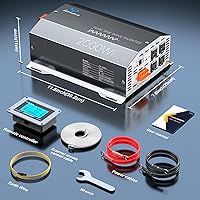
  • Remote Control: A wired remote control with a 14.76-foot cable includes its own LCD display for monitoring and on/off switching.
  • Display: The LCD screen on the remote shows real-time data including input voltage, output load, and fault information.
  • Cooling System: Dual intelligent cooling fans adjust automatically based on internal temperature to manage heat and reduce unnecessary noise.
  • Protections: Built-in safeguards cover overload, over-voltage, under-voltage, over-temperature, and short-circuit conditions with automatic shutdown response.
  • Terminal Blocks: AC terminal blocks allow hardwired connections for high-draw appliances that exceed the 15-amp rating of the standard outlets.
  • Dimensions: The unit measures 11.93 x 7.87 x 4.33 inches, making it compact enough for under-seat or cabinet mounting in most vehicles.
  • Weight: At 8.16 pounds, this 2000-watt unit is manageable for single-person installation in a truck, RV, or van.
  • Battery Compatibility: Compatible with all standard 12V battery types, including flooded lead-acid, AGM, gel, and lithium iron phosphate (LiFePO4).
  • Brand & Model: Manufactured by ZETAWALE under model number ZETAWALE-2000P, first made available in August 2024.

Related Reviews
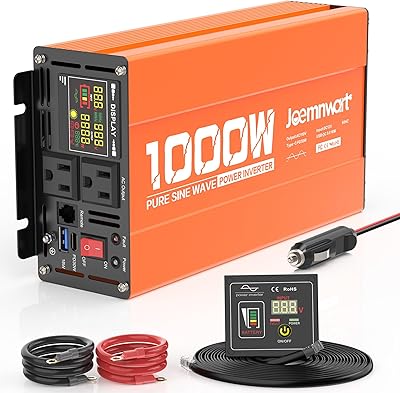
Joemnwart 1000W Pure Sine Wave Power Inverter
79%
88%
Power Output Quality
79%
Build Quality
84%
USB Charging Performance
86%
Safety Protection System
82%
Noise Level
More
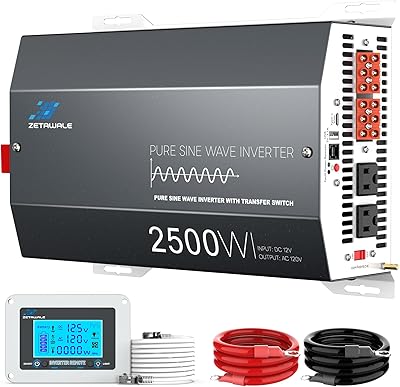
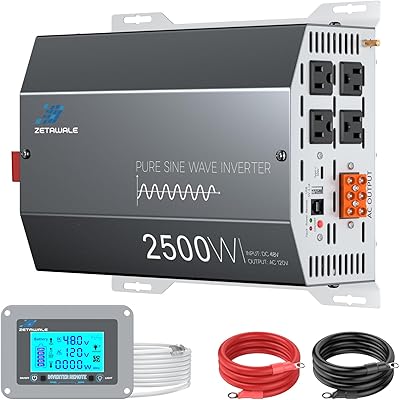
ZETAWALE 2500W Pure Sine Wave Inverter
78%
91%
Pure Sine Wave Quality
87%
Auto Transfer Switch
84%
Value for Money
61%
Long-term Reliability
68%
Cooling & Noise
More
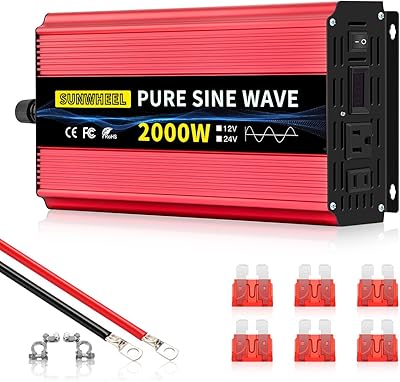
SUNWHEEL 2000W Pure Sine Wave Inverter
80%
86%
Power Output Reliability
91%
Waveform Quality
83%
Build Quality
88%
Noise Level
67%
LCD Display Usefulness
More
LEESKY 1500W Pure Sine Wave Power Inverter
82%
88%
Output Power Quality
84%
Build Quality
86%
Value for Money
91%
Remote Controller Usefulness
79%
Noise Level
More
Yinleader 3500W Pure Sine Wave Power Inverter
73%
83%
Power Output Quality
61%
Build Quality
67%
Thermal Management
63%
Surge Performance
86%
Ease of Setup
More
Novopal 2000W 24V Pure Sine Wave Inverter
79%
88%
Power Output Quality
83%
Build Quality
79%
Value for Money
74%
Ease of Installation
81%
Remote Control Functionality
More
ZETAWALE 48V 2500W Pure Sine Wave Inverter
85%
88%
Performance
85%
Ease of Installation
91%
Reliability
80%
Cooling System Effectiveness
87%
Compatibility with Appliances
More
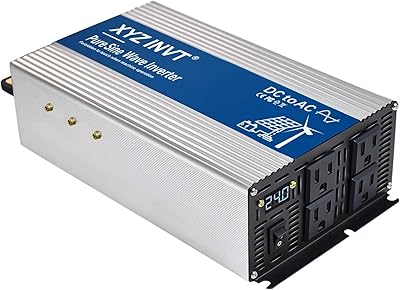
XYZ INVT 2000W Pure Sine Wave Inverter
75%
88%
Power Output Quality
58%
Thermal Management
83%
Surge Handling
91%
Portability & Size
86%
Conversion Efficiency
More
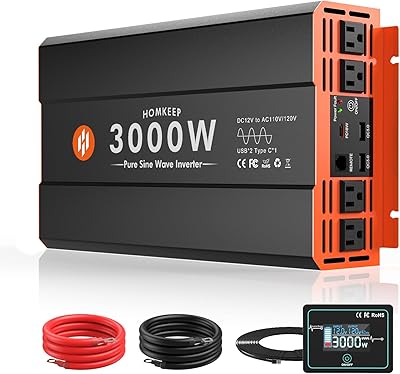
Homkeep 3000W Pure Sine Wave Power Inverter
88%
93%
Power Performance
88%
Ease of Use
90%
Build Quality
85%
Noise Level
91%
Safety Features
More
BESTEK 400W Pure Sine Wave Power Inverter
81%
91%
Power Output Quality
74%
Real-World Wattage Reliability
88%
USB Charging Speed
83%
Fan Noise
76%
Build Quality & Durability
More

FAQ

Yes, and this is actually one of the stronger use cases for this type of unit. Because it produces a pure sine wave, your CPAP motor runs exactly as it would on grid power — no buzzing, no extra heat, no reduced lifespan. Modified sine wave inverters can cause CPAP machines to run louder and wear out faster, so the waveform quality here genuinely matters.

The 4000-watt figure refers to the surge capacity — a very short burst of extra power the inverter can supply when a motor or compressor first kicks on. It is not a continuous rating. Once the motor is running, your load drops back to its normal wattage. Do not plan around running 4000 watts of sustained load; the continuous ceiling is 2000 watts.

No. This inverter is strictly a 12V DC input unit. If your battery bank runs at 24V or 48V, you would need a different inverter rated for that input voltage. Connecting a higher-voltage source to this unit would likely trigger protection or cause damage.

The included wired remote cable is 14.76 feet, which is enough to reach from a truck bed mount to the cab, or from a lower cabinet to a dashboard panel in most RVs. Extending it is technically possible with a compatible cable, but the manufacturer does not officially support extensions, so results may vary.

On a standard household outlet, the neutral and ground lines are bonded together at the breaker panel. In this inverter's terminal block, they are kept separate by default — the ground (PE) connects only to the chassis ground. For most appliances, this is fine. If you are wiring something that specifically requires a neutral-to-ground bond, like certain transfer switch setups, you can manually connect the N and PE terminals yourself. If you are not comfortable with basic electrical wiring, have an electrician handle that step.

A standard 700-watt to 1000-watt countertop microwave is well within its continuous range, so yes. A small portable air conditioner is trickier — many draw 1200 to 1500 watts continuously and have a startup surge, so you need to check the unit's exact specs before assuming it will work. You have headroom, but it is worth verifying the appliance's actual running wattage first.

The dual fans are temperature-controlled, meaning they ramp up based on how hard the inverter is working. At light loads, they are barely noticeable. Under heavier or sustained loads, they will spin faster and become more audible, though most users describe the noise as moderate rather than disruptive.

The included cables are functional for light to moderate use, but if you plan to regularly run loads close to the 2000-watt ceiling, most experienced installers recommend upgrading to 2 AWG or even 1/0 AWG welding or battery cables for runs under 3 feet. Heavier cables reduce voltage drop and heat buildup at high currents, which protects both the inverter and your battery.

Yes, but keep in mind that any inverter draws a small amount of power in standby mode. Over days or weeks, that idle draw can drain a battery that is not being charged. If you are storing your vehicle or leaving it parked for an extended period, it is good practice to disconnect the inverter or use the remote to switch it off entirely.

It can handle selective loads during a short outage — a lamp, phone charger, fan, or small refrigerator — as long as your 12V battery bank has enough capacity. However, this sine wave inverter is not a whole-home solution. It has no transfer switch, no built-in battery charger, and no automatic switchover. Think of it as a capable portable backup for critical devices, not a replacement for a standby generator or proper UPS system.