Overview

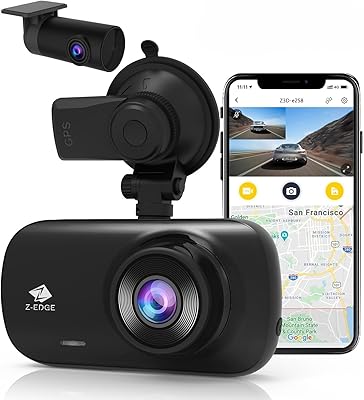
The Z-Edge T4K Dual Dash Cam is a mid-range front-and-rear option aimed at drivers who want meaningful video coverage without paying flagship prices. Z-Edge has been carving out a space in budget-to-mid-tier dash cam hardware since early 2022, and this dual dash cam reflects that positioning honestly. A 32GB card included out of the box means you can mount and start recording right away, with no extra purchases required. For anyone stepping up from a basic single-lens unit, the jump to simultaneous front-and-rear coverage adds real peace of mind, and the easy initial setup makes that transition feel genuinely approachable.
Features & Benefits

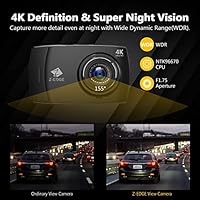
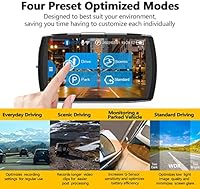
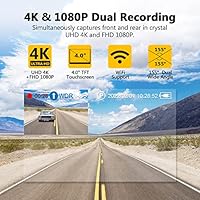
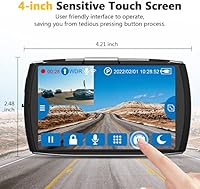
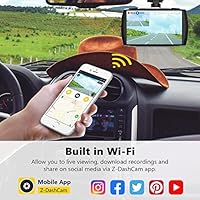
The 4-inch touchscreen is one of the first things you notice — it is larger than most dash cam displays and genuinely easy to navigate while parked. On the front lens, single-mode recording hits true 4K resolution; run both cameras simultaneously and the front steps down to 1440P while the rear holds 1080P, which is worth knowing upfront. Built-in WiFi connects to the Z-Dash app, making it easy to pull clips to your phone without touching a cable. WDR processing and the NTK96670 chip help in tricky lighting situations, and automatic loop recording paired with G-sensor incident locking means critical footage stays protected without any manual effort.

Best For

This front-and-rear camera suits drivers who want solid daily documentation without spending hours on installation or fine-tuning settings. Regular commuters benefit from coverage of both directions, and rideshare or delivery drivers will find the reliable loop recording particularly useful for managing storage over long shifts. Parking mode is supported, but it requires a separately purchased hardwire kit or external battery — that is not included, so budget accordingly. The large touchscreen makes this dual dash cam a natural pick for anyone who finds button-only cameras unnecessarily fiddly. Drivers who prioritize a compact, low-profile camera over features may want to consider whether the 4-inch display works for their windshield setup.

User Feedback

Across a solid base of real-world reviews, daytime footage clarity earns the most consistent praise — license plates read clearly at speed and colors look accurate. Night performance is more of a mixed bag: urban driving with decent ambient light holds up reasonably, but on truly dark roads the camera reveals its limits since the improvement is processor-assisted rather than optical. The touchscreen gets frequent positive comments from buyers who previously dealt with button-only cameras. The most common frustration is the resolution trade-off — some buyers feel the dual-recording drop from 4K to 1440P on the front is not clearly communicated. A handful of users also note occasional WiFi app sync delays. The included card and mount are consistently appreciated.

Pros

  • Daytime 4K footage is sharp and clear enough to capture license plates reliably at highway speeds.
  • The 4-inch touchscreen is noticeably easier to navigate than the button-heavy controls found on many rivals.
  • Built-in WiFi lets you pull clips to your phone without touching a cable or removing the SD card.
  • A 32GB card is included in the box, so you can start recording immediately after mounting.
  • Simultaneous front-and-rear recording adds genuine peace of mind for incident documentation.
  • Loop recording and G-sensor auto-locking work quietly in the background with zero manual effort required.
  • Storage is expandable up to 256GB, giving long-haul or commercial drivers real headroom.
  • The 155-degree field of view on both lenses covers a wide enough angle to catch lane changes and side impacts.
  • WDR processing helps retain readable detail in high-contrast daytime situations like tunnels or bright intersections.
  • Packaging, included accessories, and build quality are consistently rated as good value for the price tier.

Cons

  • Running both cameras simultaneously drops the front resolution from 4K to 1440P, which is easy to miss before buying.
  • Night vision on dark, unlit roads is mediocre — the processor boost only goes so far without strong ambient light.
  • The WiFi app occasionally loses sync, and a handful of users report it can be slow to connect reliably.
  • No GPS logger means you cannot overlay speed or location data onto footage, which some insurers or fleet users require.
  • Parking mode sounds fully featured but actually needs a separately purchased hardwire kit or external battery to function.
  • The 4-inch display is large enough to be a noticeable obstruction depending on your windshield layout and mounting position.
  • At 1.3 pounds with its mount, this front-and-rear camera is bulkier than more compact single-unit competitors.
  • The Z-Dash app works well for basic tasks but lacks the polished feel and reliability of apps from premium-tier brands.
  • No built-in GPS also means no speed warning or driver assistance overlay features, which some buyers assume are included.
  • Loop recording defaults may need manual adjustment out of the box to suit individual storage and clip-length preferences.

Ratings

The scores below for the Z-Edge T4K Dual Dash Cam were generated by our AI engine after analyzing verified purchase reviews from buyers worldwide, with spam, incentivized, and bot-flagged submissions actively filtered out before scoring. Each category reflects the genuine balance of praise and frustration real drivers have reported across thousands of ownership experiences. Where trade-offs exist, they are scored honestly — strong points are not inflated, and recurring pain points are not softened.
Daytime Video Clarity
88%
Reviewers consistently describe the front footage in single-camera mode as sharp enough to read license plates at highway speeds, with accurate colors and minimal distortion across the 155-degree field of view. For daily commuters dealing with fender-benders or disputed lane changes, the footage holds up well as usable evidence.
A meaningful portion of buyers are caught off guard when they discover the front resolution drops to 1440P the moment the rear camera is activated. While 1440P is still clear, it feels like a downgrade from what was advertised, and some drivers find the trade-off hard to accept at this price point.
Night Vision Performance
63%
37%
In well-lit urban environments — city streets, suburbs, highways with regular lighting — the NTK96670 processor and WDR processing do a reasonable job pulling out detail that cheaper cameras would lose entirely. Most city commuters report footage that is usable and readable after dark.
On dark rural roads or poorly lit parking areas, the camera struggles noticeably. The improvement is processor-assisted rather than optical, so there is a hard ceiling on what it can recover. Drivers who regularly travel unlit routes at night report footage that is often too grainy to be useful.
Touchscreen Usability
86%
The 4-inch capacitive display is a genuine differentiator in this product tier. Drivers who have previously wrestled with tiny physical buttons on older dash cams find the touchscreen faster and far more intuitive for adjusting settings, reviewing a clip, or locking footage after an incident.
The screen size that makes it easy to use also makes it physically large on the windshield. In smaller vehicles or for drivers with limited upper windshield real estate, the unit can sit in a noticeable position that some find distracting or obstructive during daytime glare conditions.
WiFi and App Experience
71%
29%
The built-in WiFi and Z-Dash app remove a real friction point — no cables, no card readers, and no laptop required to pull footage. For rideshare drivers who need to grab a clip quickly between shifts, wireless transfer is a meaningful convenience that buyers regularly highlight in positive reviews.
The app experience is functional but not polished. A recurring complaint involves the WiFi connection dropping or being slow to re-establish after the phone screen locks or the app is backgrounded. A handful of users describe it as unreliable enough that they default to removing the SD card instead.
Rear Camera Quality
74%
26%
At 1080P FHD, the rear camera captures enough detail for rear-end incidents and tailgating documentation, which is exactly what most buyers need from a second lens. The 155-degree angle gives good lane width coverage, and color reproduction in daylight is considered acceptable by the majority of reviewers.
The rear camera is clearly the supporting lens rather than the star, and it shows in low-light conditions where it underperforms even relative to the already-limited front night performance. Buyers hoping for symmetrical quality across both lenses come away mildly disappointed.
Installation Ease
84%
The suction cup windshield mount is secure and quick to position, and most drivers describe the full installation — mounting, cable routing, and first recording — as achievable in under 30 minutes without any tools. The included 32GB card eliminates one common first-day headache.
Cable management remains the most mentioned friction point during setup, particularly routing the power cord neatly along the headliner and A-pillar to avoid it hanging visibly. This is a common dash cam issue rather than a flaw unique to this model, but it still adds time for neater installers.
Value for Money
79%
21%
The combination of dual-channel recording, a large touchscreen, built-in WiFi, and an included memory card at this price tier is genuinely competitive. Buyers who compare this front-and-rear camera against single-lens rivals at a similar price consistently view it as the better overall package for the money.
The value case weakens slightly once buyers factor in the parking mode limitation — adding a hardwire kit or external battery to unlock that feature adds meaningful cost on top of the purchase price. For drivers who specifically want parking surveillance, the real total spend is higher than it first appears.
Loop Recording Reliability
83%
Automatic loop recording works quietly in the background and has not generated significant complaints from buyers around missed recordings or corrupted files. The G-sensor incident lock has been specifically praised by drivers who captured rear-end collisions and found the footage safely preserved without having to intervene.
Some users note that the default clip length and loop settings require adjustment out of the box to suit their preferences, and the process of navigating those settings through the menus — even with the touchscreen — can feel more involved than expected for a first-time dash cam owner.
Build Quality
76%
24%
The unit feels solid in hand and does not rattle or shift on the mount during daily driving, which is a baseline expectation buyers appreciate being met. The touchscreen glass and overall chassis finish read as mid-tier rather than cheap, which aligns with where this camera sits in the market.
Prolonged exposure to summer heat in parked cars — a common reality in warmer climates — has been flagged by a small number of reviewers as causing temporary display issues or mount softening. It is not a widespread complaint but worth noting for drivers in consistently hot environments.
Storage Flexibility
81%
19%
Support for cards up to 256GB is a practical advantage for long-haul drivers, delivery workers, or anyone who cannot check and manage footage daily. The included 32GB card is a genuine starter buffer, and upgrading is straightforward with any compatible microSD card.
The camera does not include any cloud backup or automatic upload functionality, so managing and offloading footage is entirely manual. Drivers who record high-resolution dual-channel footage continuously will also find that 32GB fills up faster than expected before loop recording takes over.
Parking Mode
52%
48%
The parking surveillance feature is available and functional once properly powered, and drivers who have installed a hardwire kit report it works reliably for detecting motion and impacts while the car is unattended — a genuinely useful capability for urban parking situations.
The fact that parking mode requires a separately purchased accessory that is not included or clearly disclosed upfront frustrates a notable share of buyers. Many purchase expecting full parking functionality only to discover the limitation after the box is open, which damages overall satisfaction disproportionately.
GPS and Tracking
31%
69%
The absence of GPS keeps the hardware simpler and the firmware leaner, and buyers who only need incident footage rather than journey logging are unaffected by its omission. For pure dashcam use without fleet or insurance overlay requirements, it does not create a daily gap.
For drivers who want speed data, route logs, or location timestamps embedded in footage — particularly for insurance claims or fleet compliance — the lack of any GPS is a hard dealbreaker. There is no external module option offered either, making this a permanent limitation rather than an upgradeable gap.
App Clip Sharing
68%
32%
The ability to download a clip directly to a smartphone via the Z-Dash app and share it immediately to messaging apps or social platforms is a feature that buyers appreciate when they actually need it — particularly after an incident when quick sharing to an insurer matters.
Video file sizes at higher resolutions make wireless transfer noticeably slow over the camera's direct WiFi connection, and some users report the app preview quality is lower than the actual saved footage, which creates brief confusion about whether something was captured correctly.
Wide-Angle Coverage
82%
18%
The 155-degree field of view on both lenses captures a wide swath of traffic, which is particularly useful for multi-lane highway driving or urban intersections where incidents can happen at oblique angles. Reviewers note that side-swipe and lane-change events are captured with enough frame width to be useful.
The extreme corners of ultra-wide footage show some barrel distortion, which is standard physics for lenses at this angle but can make distance estimation in footage slightly misleading. It does not affect practical incident documentation but is noticeable if you review footage critically.

Suitable for:

The Z-Edge T4K Dual Dash Cam is a strong fit for everyday commuters who want front-and-rear incident coverage without wading through a complicated setup process. Rideshare and delivery drivers in particular will appreciate the automatic loop recording and G-sensor incident locking, which handle storage management and footage protection in the background while they focus on the road. The built-in WiFi and companion app make clip retrieval genuinely convenient — no fumbling with SD card adapters at the end of a shift. Drivers who are upgrading from a basic single-camera unit and want a meaningful step up in both coverage and video quality will find the dual-lens setup a worthwhile improvement. The included 32GB card and windshield mount mean you can be recording on your first drive without any additional purchases, which lowers the barrier considerably for first-time dash cam buyers.
Not suitable for:

Buyers who expect uncompromised 4K resolution across both cameras simultaneously should look elsewhere — the Z-Edge T4K Dual Dash Cam drops the front camera to 1440P when the rear lens is active, which is a meaningful trade-off that the marketing does not always make obvious. Drivers who regularly travel on poorly lit rural roads at night may also find the low-light performance underwhelming, since the improvement is largely processor-driven rather than the result of a superior optical sensor. Those who want GPS track logging built in will need to shop in a different category entirely, as this front-and-rear camera does not include that feature. If parking surveillance is a priority, factor in the additional cost of a hardwire kit or external battery pack, since the parking mode is not functional out of the box. Finally, anyone who values a low-profile, minimalist camera design may find the 4-inch touchscreen too large and visually prominent on the windshield.
Specifications

  • Front Resolution: The front camera records at 4K UHD (3840x2160) in single-front mode and steps down to 1440P when the rear camera is recording simultaneously.
  • Rear Resolution: The rear camera records at Full HD 1080P at 25 frames per second when running in dual-channel mode.
  • Display: A 4-inch capacitive touchscreen is built into the unit, allowing menu navigation and settings adjustment directly on the camera.
  • Processor: The NTK96670 chip handles video encoding and low-light processing for both the front and rear channels.
  • Lens Aperture: Both the front and rear lenses feature an F/1.75 aperture, which aids light intake in dim driving conditions.
  • Field of View: Each lens covers a 155-degree wide-angle field of view, capturing traffic across multiple lanes in both directions.
  • Storage Included: A 32GB microSD card is included in the box and is ready to use immediately upon installation.
  • Max Storage: The camera supports microSD cards up to 256GB, giving drivers extended recording capacity for long trips or commercial use.
  • Connectivity: Built-in WiFi allows pairing with the Z-Dash app on Android and iOS devices for wireless footage viewing and download.
  • Loop Recording: Loop recording is enabled by default, automatically overwriting the oldest footage when storage is full to keep recording uninterrupted.
  • G-Sensor: An integrated G-sensor detects sudden impact or hard braking and automatically locks the current clip to prevent it from being overwritten.
  • WDR: Wide Dynamic Range technology is applied during recording to balance exposure between bright and dark areas of the frame.
  • Parking Mode: Parking surveillance mode is supported but requires either an external battery pack or a separately purchased hardwire kit to function.
  • Mount Type: The camera attaches to the windshield via a suction cup mount included in the package.
  • GPS: No GPS module is built in, and there is no provision for speed or location data overlay on recorded footage.
  • Power Source: A built-in lithium polymer battery provides short-term backup power, while the camera primarily runs via the vehicle's 12V socket.
  • Dimensions: The unit measures 7.05 x 5.04 x 3.5 inches, making it a moderately sized camera that occupies a visible portion of the windshield.
  • Weight: The camera weighs 1.3 pounds including the mount, which is heavier than many compact single-lens alternatives.
  • Compatibility: The Z-Dash companion app is compatible with both Android and iOS smartphones for remote footage management.
  • Date Available: This model became available in March 2022 and represents Z-Edge's mid-range dual-channel product line at the time of writing.

Related Reviews
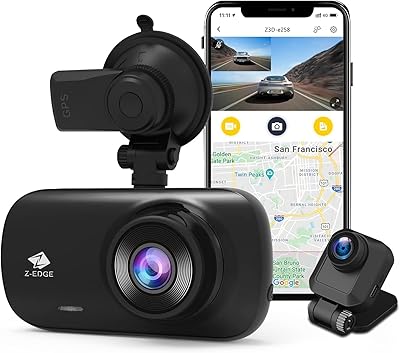
Z-Edge Z3Pro Dual Dash Cam
68%
83%
Video Quality (Day)
67%
Night Vision (Exterior)
74%
Interior IR Night Vision
86%
Dual-Channel Recording
58%
App & Wi-Fi Performance
More
Z-Edge Z3D Dash Cam
Z-Edge Z3D Dash Cam
81%
90%
Video Quality
75%
Ease of Installation
88%
Night Vision Performance
84%
Wi-Fi and Connectivity
80%
GPS Functionality
More
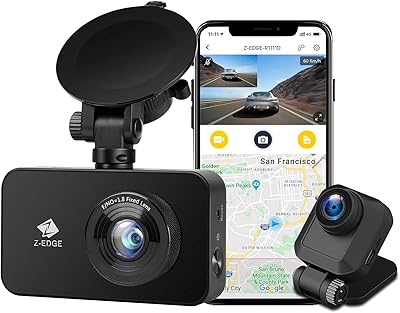
Z-Edge Z3D 4K Front and Rear Dash Cam
76%
88%
Daytime Video Quality
67%
Night Vision Performance
71%
Rear Camera Quality
84%
GPS Accuracy
74%
Wi-Fi and App Experience
More
Z-Edge R1 WiFi Dual Dash Cam
74%
84%
Daytime Video Quality
71%
Night Vision Performance
62%
Wi-Fi & App Experience
81%
Installation Ease
78%
G-Sensor Reliability
More
ORSKEY S800 Dual Dash Cam
73%
88%
Value for Money
82%
Front Camera Video Quality
53%
Rear Camera Video Quality
61%
Night Vision Performance
91%
Ease of Installation
More
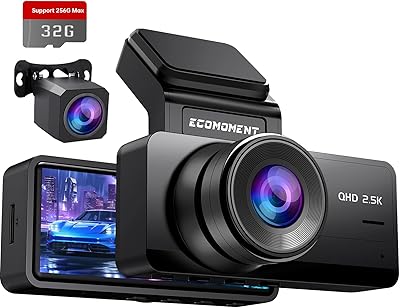
Ecomoment S70 Dual Dash Cam
71%
88%
Value for Money
84%
Daytime Video Quality
61%
Night Vision Performance
91%
Ease of Installation
82%
Display & Playback
More
Thinkware Q200 2-Channel Dash Cam
76%
84%
Front Camera Clarity
67%
Rear Camera Clarity
72%
Night Vision Performance
76%
Parking Mode
63%
GPS Alert Accuracy
More
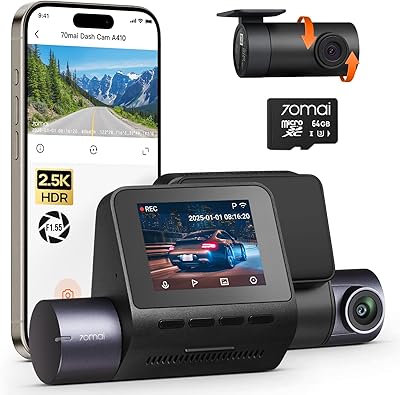
70mai A410 Dual Dash Camera
78%
88%
Daytime Video Clarity
71%
Night Vision Performance
74%
Rear Camera Quality
67%
App & Wi-Fi Experience
84%
GPS Accuracy & Data Logging
More
ROVE R2-4K Dual Dash Cam
80%
91%
Video Clarity (Front)
88%
Night Vision Performance
74%
Rear Camera Quality
78%
Wi-Fi & App Experience
86%
GPS Accuracy & Logging
More
SUVCON M02 4K/1080P Dual Dash Cam
77%
88%
Video Clarity (Daytime)
71%
Night & Low-Light Performance
74%
Rear Camera Quality
66%
App Experience (Viidure)
91%
Ease of Installation
More

FAQ

It depends on which mode you use. When you run the front camera on its own, you get true 4K at 3840x2160. The moment you switch on the rear camera to record simultaneously, the front drops to 1440P while the rear runs at 1080P. Both are still solid resolutions for incident documentation, but it is worth knowing upfront so you can choose the mode that suits your priorities.

No, a 32GB microSD card comes included in the box. That gets you started immediately after mounting. If you drive long hours or want a bigger buffer before loop recording kicks in, you can swap it out for a card up to 256GB.

The camera creates its own direct WiFi connection that your phone links to, so there is no need for a home router or hotspot. Once connected, you open the Z-Dash app and can browse, preview, and download clips wirelessly. Most users find it convenient, though a handful report occasional delays when the app is reconnecting after being closed.

Parking mode is a supported feature, but it does not work out of the box with just the standard power cable. You will need either a dedicated hardwire kit that draws low-level power from the fuse box or an external battery pack designed for dash cams. Neither is included, so budget for that if overnight surveillance is important to you.

In urban areas with streetlights and ambient light, the footage is readable and useful. On genuinely dark rural roads, the results are more limited. The low-light improvement comes from the NTK96670 processor and WDR processing rather than from a physically superior lens, so there is a ceiling to what it can do in near-total darkness. It handles typical city and suburban night driving well enough for most drivers.

Not at all. The suction cup mount attaches to the windshield in seconds, and routing the power cable along the headliner and door trim to the 12V socket is straightforward for most cars. Most people have it recording on their first drive without any tools or professional help.

It depends on your car and preferred mounting position. The 4-inch display is larger than what you find on most compact dash cams, so it does take up more visual real estate. Most drivers mount it behind the rearview mirror to minimize obstruction, which works well in larger vehicles. In smaller cars with less windshield space, it can feel more prominent.

Yes, the front camera has a built-in microphone that records in-cabin audio by default. You can disable this through the settings menu if you prefer privacy or do not want audio captured during rideshare trips.

The G-sensor detects the impact and automatically locks the current video clip so loop recording cannot overwrite it. That locked file stays protected until you manually delete it or copy it off the card, giving you reliable preservation of incident footage without having to act quickly in a stressful moment.

There is no GPS built into this front-and-rear camera, and no external GPS module option is listed for it either. If route tracking, speed logging, or location data stamped onto footage is important for your use case — particularly for fleet or insurance purposes — you would need to look at a different camera that includes GPS hardware.