Overview

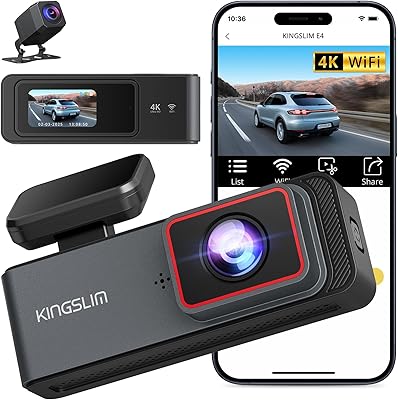
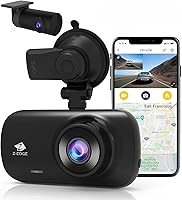
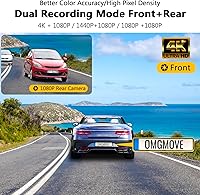
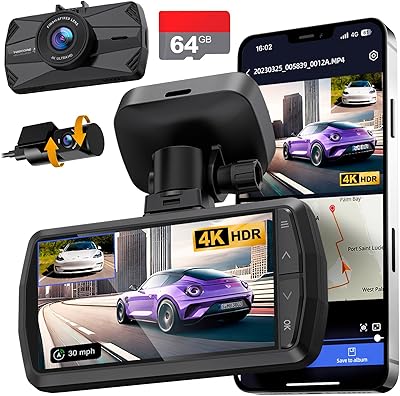
The Z-Edge Z3D 4K Front and Rear Dash Cam sits in the mid-range sweet spot — enough camera for drivers who want real 4K resolution up front without paying flagship prices. One thing worth stating clearly: only the front lens records at 3840x2160; the rear camera runs at 1080p, which is still perfectly usable but a step down. Released in early 2025, this front-and-rear camera is relatively new yet has built up a solid rating base. Before ordering, note that no SD card is included — you will need to purchase one separately, though the unit handles cards up to 512GB.
Features & Benefits

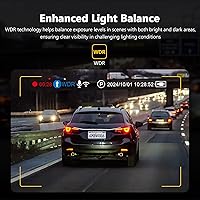
The Z3D pairs a 4K front camera with a 1080p rear unit, both processed through the NTK96670 chip with Wide Dynamic Range technology — which in practice means better-balanced exposure when switching between bright and shadowed stretches of road. Both lenses cover 155 degrees, reducing blind spots across up to four lanes. The built-in GPS logs your speed and position on every trip, data that can prove invaluable when disputing an insurance claim. Wi-Fi and the Z-Dash Cam app let you pull footage wirelessly to your phone without fumbling with a card reader. Loop recording cycles storage automatically, and parking mode kicks in to monitor your vehicle even when you are not behind the wheel.

Best For

This dual dash cam makes most sense for commuters and ride-share drivers who need dependable front-and-rear coverage throughout the day. If you park in high-risk areas overnight, the parking mode surveillance adds real peace of mind. The 19.6-foot USB cable is a genuine bonus for SUV and minivan owners who often struggle to run a clean hidden install in larger cabins. The Z3D also suits drivers who actually want to engage with the tech features — meaning you will open the app and review footage regularly. For someone who just wants a basic set-and-forget camera, the feature set may be more than necessary.

User Feedback

With over 4,300 ratings averaging 4.3 stars, the Z3D has a broad enough sample to draw real conclusions. Buyers consistently praise daytime footage quality — license plates, lane markings, and traffic details come through with solid clarity. App setup also earns frequent positive mentions, with most users connecting quickly on both Android and iOS. On the critical side, some reviewers note that nighttime footage, while functional, shows noticeable noise in genuinely dark conditions — a common trade-off at this price tier. A handful flag the missing SD card as an unexpected added cost. Long-term G-sensor reliability rarely surfaces as a complaint, though it is worth watching as the review base grows.

Pros

  • Front camera captures sharp 4K footage that holds up well when you need to identify plates or read road details.
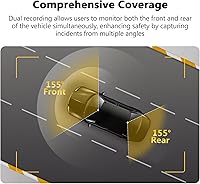
  • The 155-degree wide-angle lens covers multiple lanes simultaneously, reducing blind spots on busy roads.
  • Built-in GPS logs speed and location on every trip, giving you solid supporting data for insurance claims.
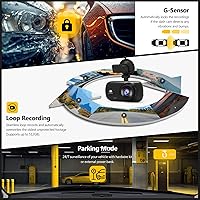
  • Loop recording manages storage automatically so you never need to manually clear old footage.
  • G-sensor locks critical clips on impact, ensuring the footage that matters most is never overwritten.
  • Parking mode adds genuine security value for drivers who leave their vehicle in high-risk areas overnight.
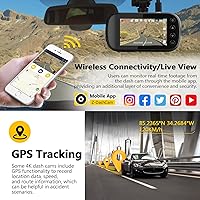
  • Wi-Fi connectivity lets you pull footage to your phone quickly without removing the memory card.
  • The 19.6-foot USB cable makes clean installs practical even in larger vehicles like SUVs and vans.
  • With over 4,300 ratings at 4.3 stars, the Z3D has a meaningful real-world track record behind it.
  • The Z-Dash Cam app works on both Android and iOS and earns consistent praise for straightforward pairing.

Cons

  • Only the front camera records in 4K — the rear shoots 1080p, which is a real gap buyers should understand before purchasing.
  • Night footage quality drops noticeably in very dark conditions, which limits usefulness on unlit rural roads.
  • No SD card is included, adding an extra purchase that should factor into your total budget.
  • Some users report occasional app instability, which can interrupt wireless footage review sessions.
  • The unit is relatively large for a dash cam, which may partially obstruct sightlines on smaller windshields.
  • As a product launched in early 2025, long-term durability data is still limited compared to more established models.
  • Parking mode requires a stable power source to function reliably, which may need a separate hardwire kit in some setups.
  • The 2.7-inch display is functional but not particularly sharp, making on-device playback a secondary experience.

Ratings

The Z-Edge Z3D 4K Front and Rear Dash Cam scores below were generated by AI after analyzing thousands of verified global buyer reviews, with spam, bot activity, and incentivized feedback actively filtered out. Ratings reflect the full picture — what this dual dash cam genuinely excels at and where real users have run into frustrations. Both strengths and recurring pain points are represented transparently across each category.
Daytime Video Quality
88%
In daylight conditions, the 4K front camera delivers footage sharp enough to read plates several car lengths ahead, which commuters and ride-share drivers consistently highlight as a standout. Lane markings, road signs, and surrounding vehicle details come through with solid clarity during typical daily driving.
Some users note that high-contrast scenes — like driving directly into bright sun — can cause temporary overexposure even with WDR active. The 25fps cap also means fast-moving objects at the edge of the frame can show minor blur.
Night Vision Performance
67%
33%
In moderately lit suburban or urban environments, the WDR processor keeps footage usable and exposure reasonably balanced. Many drivers report that oncoming headlights and streetlit intersections are captured without the severe washout common in cheaper cameras.
In genuinely dark conditions — unlit rural stretches or dim parking structures — noise increases noticeably and fine detail degrades, particularly on the rear camera. This is one of the most consistently mentioned limitations across critical reviews, and it is a real trade-off buyers should factor in.
Rear Camera Quality
71%
29%
The 1080p rear unit provides clear enough footage to identify tailgating vehicles and capture rear-end incident evidence in good lighting. Buyers using it during daytime city driving generally find it adequate for its intended purpose.
The resolution gap between front and rear is tangible, and buyers who expect 4K performance from both cameras come away disappointed. In low-light situations the rear footage degrades faster than the front, which limits its usefulness during nighttime parking incidents.
GPS Accuracy
84%
The built-in GPS locks on reliably during most driving conditions and embeds accurate speed and location stamps into every recorded clip. Drivers who have used the footage in insurance disputes specifically call out the GPS data as a credible, timestamped asset that strengthened their case.
A small number of users report slower satellite acquisition in dense urban canyons or underground parking areas. GPS track accuracy on winding back roads is occasionally reported as slightly smoothed rather than perfectly precise.
Wi-Fi and App Experience
74%
26%
Initial pairing with the Z-Dash Cam app is straightforward on both Android and iOS, and being able to pull footage wirelessly to your phone without removing the SD card is genuinely convenient for quick clip reviews after an incident. Most users get connected within a minute or two.
App stability is a recurring theme in critical reviews — some users experience disconnects during longer download sessions or occasional crashes when switching between settings menus. The app works, but it does not feel as polished as the hardware it connects to.
Parking Mode Reliability
76%
24%
When set up with a stable power source, the parking monitor reacts quickly to motion and collision triggers, capturing footage of cars bumping in lots or people approaching the vehicle. Drivers in dense urban areas or high-theft zones find real value in this feature.
Parking mode is only fully effective when the camera has sustained power, which typically requires a separate hardwire kit not included in the box. Without that, the built-in battery only sustains brief file-save operations rather than extended monitoring.
G-Sensor and Loop Recording
82%
18%
The G-sensor responds well to sudden braking and impact events, locking clips automatically without any driver input. Long-term users report that loop recording cycles reliably without corrupting files or causing gaps in footage on trips spanning several hours.
If G-sensor sensitivity is set too high, minor road vibrations or speed bumps can trigger unnecessary clip locks, gradually filling protected storage and eventually interrupting the loop recording cycle. Adjusting sensitivity in the settings resolves this, but it requires some initial trial and error.
Installation Experience
86%
The 19.6-foot USB cable is long enough to run a clean, hidden install in full-size SUVs and minivans — something that shorter cables in competing kits simply cannot manage. Most users report having both cameras mounted and running within 30 to 45 minutes without professional help.
The front unit is on the larger side for a windshield-mounted camera, and in smaller vehicles it can sit noticeably in the driver's peripheral view. Routing the rear camera cable neatly through headliner trim takes patience, particularly in vehicles with complex interior paneling.
Build Quality
79%
21%
The housing feels solid for a mid-range unit, with buttons that click firmly and a mount that holds position without creeping over time on most windshield surfaces. The 14°F to 158°F operating range means it handles both winter cold starts and hot summer interiors without issue in most climates.
The plastic finish picks up fingerprints and shows smudges easily, and a few long-term owners note that the rear camera connector can feel slightly loose after repeated cable adjustments. It does not feel fragile, but it also lacks the premium material quality of higher-end cameras.
Display Usability
63%
37%
The 2.7-inch screen is adequate for confirming camera angle during installation and navigating menus to adjust settings. Having a display at all is useful compared to app-only models that require your phone for every adjustment.
On-device video playback is a secondary experience at best — the screen resolution and size make it hard to review fine details without squinting. Most users quickly default to the phone app for any meaningful footage review, treating the built-in display purely as a setup tool.
Value for Money
83%
For a dual dash cam that includes 4K front recording, built-in GPS, Wi-Fi, parking mode, and a long power cable, the price sits at a point where the feature-to-cost ratio is genuinely competitive. Buyers stepping up from a basic single-cam setup consistently describe it as a worthwhile upgrade.
Once you factor in a quality SD card and potentially a hardwire kit for sustained parking mode use, the real total cost is meaningfully higher than the sticker price. Buyers who compare on headline price alone may feel the value slightly less compelling after those additions.
SD Card Situation
58%
42%
The camera supports cards up to 512GB, which gives buyers real flexibility to choose a storage size that fits their recording habits — whether that is a compact 64GB for daily commuting or a larger card for extended road trips.
No SD card is included, which is a friction point that catches first-time dash cam buyers off guard. It is not a dealbreaker, but it is an added step and added cost that competing kits at similar price points sometimes absorb for the buyer.
Wide-Angle Coverage
85%
The 155-degree field of view on both cameras captures wide lane coverage that reduces blind spots meaningfully in multi-lane traffic. Ride-share drivers especially appreciate being able to capture the full interior context of a roadway without repositioning the camera.
At the edges of the 155-degree frame, some barrel distortion is visible, which is normal for wide-angle lenses but can slightly warp the appearance of nearby objects. This rarely affects the usability of footage as evidence but is noticeable if you are closely scrutinizing clips.
Long-Term Reliability
72%
28%
The majority of owners who have used the Z3D for several months report consistent performance without major hardware failures or significant firmware issues. The rating volume of over 4,300 reviews provides a more meaningful reliability signal than most newer dash cams can offer.
As a product launched in early 2025, multi-year durability data simply does not exist yet, so long-term assessments are still forming. A portion of newer reviews flag occasional firmware quirks and app update issues that suggest the software side is still being actively refined.

Suitable for:

The Z-Edge Z3D 4K Front and Rear Dash Cam is a strong fit for daily commuters, ride-share drivers, and anyone who spends significant time on the road and wants documented proof if something goes wrong. The 4K front camera produces footage detailed enough to read license plates and capture lane markings clearly — exactly what you need when an insurance dispute hinges on video evidence. Drivers who park in busy urban areas or overnight in unfamiliar spots will appreciate the parking mode, which keeps an eye on the vehicle even when it is sitting unattended. The built-in GPS adds another layer of usefulness for anyone who wants speed and location data attached to their recordings. Larger vehicle owners — think SUVs, minivans, or pickup trucks — will particularly benefit from the generous 19.6-foot cable, which allows for a much cleaner installation without visible wire runs. If you are the type of driver who likes to review footage on your phone without pulling a memory card, the Wi-Fi app integration suits that workflow well. This is also a practical step-up choice for drivers graduating from a basic front-only camera who want more coverage without a steep investment.
Not suitable for:

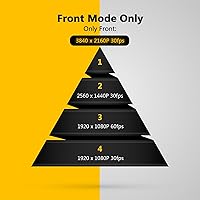
The Z-Edge Z3D 4K Front and Rear Dash Cam will disappoint buyers who expect true 4K performance from both cameras — the rear unit records at 1080p, which is a meaningful difference in low-light or high-speed scenarios where detail matters most. Drivers who frequently navigate poorly lit roads at night should temper expectations, as the night footage, while adequate in moderate conditions, shows noticeable noise in genuinely dark environments — a limitation common at this price tier but worth knowing upfront. If you are looking for a completely hands-off, install-and-forget experience, the feature set here might feel like overkill; the GPS logs and Wi-Fi app only add value if you actually engage with them. This dual dash cam also requires you to budget for a memory card separately, which adds to the real out-of-pocket cost and can catch first-time buyers off guard. Drivers who prioritize the absolute best nighttime imaging or need a hardwired solution with advanced cloud backup would be better served looking at higher-end alternatives in a steeper price bracket.
Specifications

  • Front Resolution: The front camera records at 3840x2160 (4K UHD) at 25 frames per second, delivering sharp detail for license plate and lane identification.
  • Rear Resolution: The rear camera captures footage at 1920x1080 (Full HD), providing solid clarity for following-vehicle monitoring though a step below the front unit.
  • Processor: Powered by the NTK96670 imaging processor, which handles dual-channel recording and Wide Dynamic Range exposure balancing simultaneously.
  • Display: A 2.7-inch LCD screen is built into the front unit for on-device playback and menu navigation.
  • Field of View: Both front and rear lenses offer a 155-degree wide-angle field of view, covering up to four lanes of traffic in typical road conditions.
  • GPS: A built-in GPS module logs vehicle speed and geographic coordinates continuously, embedding location data directly into recorded footage.
  • Connectivity: Built-in Wi-Fi allows wireless pairing with the Z-Dash Cam app on Android and iOS devices for footage preview, download, and settings management.
  • Storage Support: Supports microSD cards up to 512GB; no card is included in the box and must be purchased separately.
  • Loop Recording: Loop recording automatically overwrites the oldest footage when the card is full, ensuring continuous capture without manual intervention.
  • G-Sensor: An integrated G-sensor detects sudden impacts or sharp braking and immediately locks the current clip to prevent it from being overwritten.
  • Parking Mode: Parking mode activates the camera automatically when motion or a physical collision is detected while the vehicle is parked and the engine is off.
  • Battery: A built-in lithium polymer battery provides enough power to save and close files properly when the vehicle loses power, preventing data corruption.
  • Cable Length: The included USB power cable measures 19.6 feet, making it practical for routing a clean install in larger vehicles such as SUVs and minivans.
  • Operating Temp: The unit is rated to operate reliably between 14°F and 158°F, with a storage temperature range of -4°F to 158°F.
  • Mount Type: Attaches to the windshield via a suction-cup or adhesive windshield mount included in the package.
  • Dimensions: The front unit measures 6.89 x 4.9 x 3.5 inches and weighs 1.34 pounds, which is on the larger side for a dash cam.
  • In the Box: Package includes the front camera unit, rear camera unit, car mount, and USB power cable; no SD card or hardwire kit is included.
  • App Compatibility: The Z-Dash Cam companion app is available for both Android and iOS and supports footage download, live preview, and remote settings adjustment.

Related Reviews
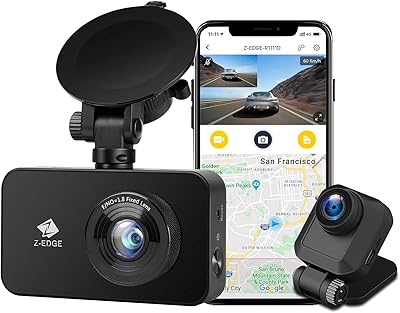
Z-Edge R1 WiFi Dual Dash Cam
74%
84%
Daytime Video Quality
71%
Night Vision Performance
62%
Wi-Fi & App Experience
81%
Installation Ease
78%
G-Sensor Reliability
More
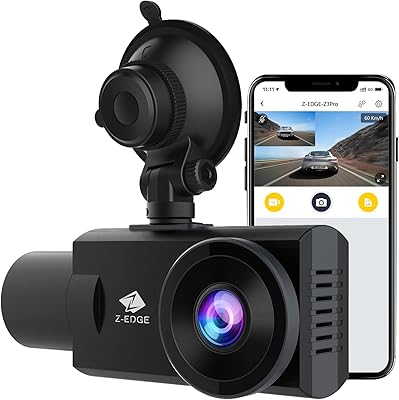
Z-Edge Z3Pro Dual Dash Cam
68%
83%
Video Quality (Day)
67%
Night Vision (Exterior)
74%
Interior IR Night Vision
86%
Dual-Channel Recording
58%
App & Wi-Fi Performance
More
Z-Edge Z3D Dash Cam
Z-Edge Z3D Dash Cam
81%
90%
Video Quality
75%
Ease of Installation
88%
Night Vision Performance
84%
Wi-Fi and Connectivity
80%
GPS Functionality
More
YEECORE H22 4K Dual Dash Cam
76%
88%
Video Quality (Front)
79%
Night Vision
74%
Rear Camera Quality
83%
GPS Accuracy
63%
App & Wi-Fi Experience
More
Kingslim E4 4K Dual Dash Cam
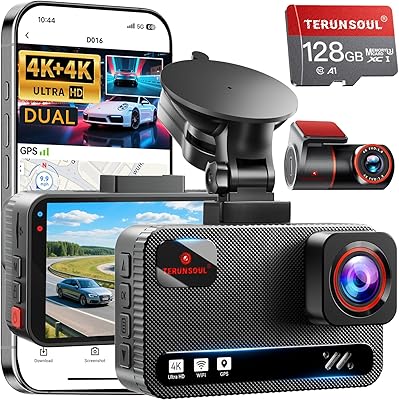
74%
86%
Daytime Video Quality
61%
Night Vision Performance
78%
Build Quality
72%
WiFi App Experience
83%
G-Sensor & Incident Lock
More
Terunsoul D016 4K Dual Dash Cam
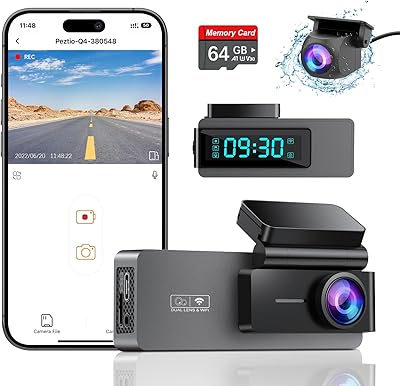
81%
93%
Video Clarity — Front Camera
88%
Video Clarity — Rear Camera
86%
Low-Light & Night Vision
63%
App Experience
84%
GPS Accuracy & Data Logging
More
ARIFAYZ Q4 4K Dual Dash Cam
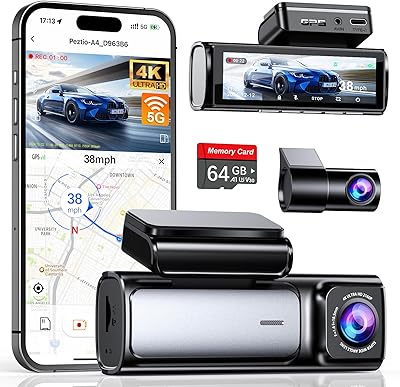
72%
83%
Daytime Video Quality
61%
Night Vision Performance
67%
Rear Camera Quality
89%
Ease of Installation
63%
Wi-Fi App Reliability
More
Affver A4 4K Dual Dash Cam
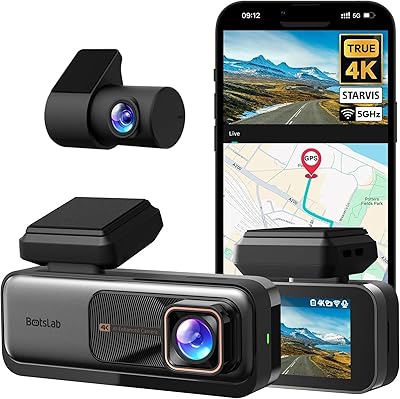
77%
88%
Daytime Video Clarity
72%
Night Vision Performance
74%
Rear Camera Quality
63%
App Experience & Wi-Fi Connectivity
81%
GPS Accuracy & Logging
More
BOTSLAB G980H Dual Dash Cam
75%
88%
Video Quality (Front)
81%
Night Vision Performance
74%
Rear Camera Quality
63%
ADAS Reliability
58%
App & Wi-Fi Experience
More
Z-Edge T4K Dual Dash Cam
73%
88%
Daytime Video Clarity
63%
Night Vision Performance
86%
Touchscreen Usability
71%
WiFi and App Experience
74%
Rear Camera Quality
More

FAQ

No, and this is worth knowing before you buy. Only the front camera records in 4K UHD. The rear unit captures at 1080p Full HD, which is still clear enough to identify vehicles behind you, but it is a noticeable step down in detail compared to the front.

Yes, you do. The Z3D does not include an SD card in the box, so factor that into your budget before ordering. The camera supports cards up to 512GB, and most buyers find that a 64GB or 128GB card is a practical starting point for everyday use.

Parking mode uses the built-in battery to handle file saves when your engine cuts off, but for sustained overnight monitoring it relies on continuous power from your vehicle. If you want to use parking mode for extended periods without risking battery drain, a hardwire kit connected to a fused circuit is the smarter setup, though that kit is not included.

Most users find the Z-Dash Cam app connects fairly quickly on both Android and iOS. You enable Wi-Fi on the camera, select it from your phone network list, and open the app. A small number of reviewers mention occasional stability hiccups, but straightforward initial pairing is the more common experience.

In moderately lit urban environments, the WDR processor does a reasonable job balancing exposure and pulling in detail. In genuinely dark conditions — unlit rural roads or poorly lit parking garages — you will notice more noise and softer detail, particularly on the rear camera. It is functional, but do not expect miracles in pitch-black environments.

The unit is rated to operate up to 158°F and store up to the same temperature, which covers typical summer interior conditions in most climates. That said, parking a device in direct summer sun in a very hot region can push temperatures higher than rated limits, so positioning it behind your rearview mirror where there is some shade is a sensible habit.

Yes, and that is one of the most practical reasons to have GPS built in. Every recording carries embedded speed and location data, which gives you an objective, timestamped record of where you were and how fast you were going — useful context when filing a claim or disputing fault.

Most people get the rear camera mounted and the cable run in under 30 minutes. The 19.6-foot cable is long enough to tuck along the headliner and down the door trim in most cars, SUVs, and minivans, keeping things reasonably tidy without professional help.

Loop recording handles normal footage by overwriting the oldest files, but any clip locked by the G-sensor is protected and will not be erased automatically. Keep in mind that if you accumulate too many locked clips without reviewing and clearing them, they can eventually fill the card and interrupt normal loop recording.

Honestly, it depends on your definition of simple. The Z3D installs without much trouble and records automatically every time you start the car, so basic use is straightforward. But features like GPS logging, the Wi-Fi app, and parking mode add layers that only benefit you if you engage with them — if you want a truly minimal setup, a simpler single-cam model might be a better fit.