Overview

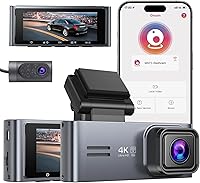
The Sarmert M572 4K Dual Dash Camera sits in a practical middle ground — offering genuine 4K front recording without pushing into premium pricing territory. What sets it apart from many competitors in this range is the supercapacitor power design, which skips the lithium battery entirely. That matters more than it sounds: in hot climates, battery-based dash cams can swell, fail, or shut down mid-summer. This one handles temperatures up to 158°F without issue. It tucks neatly behind the rearview mirror, ships with a magnetic mount, cable clips, and electrostatic films, and connects to your phone via the OMBAR app for on-the-go video access.
Features & Benefits

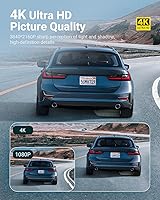
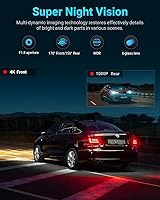
The front lens records at a true 3840×2160 resolution — sharp enough to actually read a license plate from a reasonable following distance in good light. Night driving is where the F1.8 aperture earns its keep, pulling in more light than average and pairing with WDR to keep footage legible when exiting a tunnel or facing oncoming headlights. Transferring clips to your phone works over dual-band Wi-Fi, though the connection holds best within roughly 25 feet of the camera. The 3.18-inch IPS screen is genuinely usable in direct sunlight, and the G-sensor locks footage automatically when it detects a collision or hard brake.

Best For

This dash cam is a natural fit for everyday commuters who want dependable 4K front documentation without spending on a flagship device. Rideshare and delivery drivers will appreciate having both angles covered — it adds accountability without a complicated multi-camera rig. The supercapacitor build makes it a smart pick for anyone parking in hot garages or living in warmer states where summer heat regularly destroys battery-powered cameras. First-time installers should find the magnetic mount and cable routing relatively straightforward, with most setups wrapping up in under 20 minutes. Those who prefer app-based clip management over fumbling with SD cards will feel right at home.

User Feedback

With a 4.2-star average across 182 ratings, the M572 lands in solid — if not exceptional — territory. Buyers tend to praise daytime video clarity and how quickly the magnetic mount gets the camera positioned. The app connection draws positive mentions too, though some users note it becomes finicky once your phone drifts past the effective Wi-Fi range. The more consistent complaints center on two omissions: no SD card is included, so budget for one separately, and continuous parking mode requires a hardwire kit sold apart from the main package. One genuine quirk — live app preview tops out at 1080P; actually viewing 4K footage means downloading the clip first.

Pros

  • Front camera delivers genuine 4K resolution — sharp enough to read license plates in normal daylight conditions.
  • The supercapacitor design holds up in extreme heat, making it far more reliable than battery-based rivals in hot climates.
  • Magnetic windshield mount makes positioning and removal quick, with no adhesive mess or tools required.
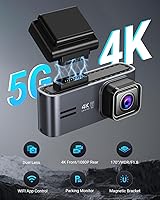
  • Dual-band Wi-Fi (5G and 2.4GHz) lets you switch bands to avoid interference and speeds up clip transfers noticeably.
  • The F1.8 aperture and WDR combination handles tunnel transitions and bright headlights better than entry-level sensors.
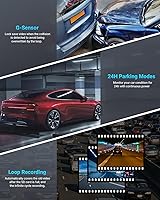
  • Loop recording with G-sensor auto-lock means critical incident footage is protected without any manual intervention.
  • The 3.18-inch IPS screen stays readable in direct sunlight — a small detail that makes a real difference on bright days.
  • A 12-month warranty and 24-hour support availability provide a reasonable safety net for a mid-range purchase.
  • Setup from unboxing to working installation takes most drivers under 20 minutes.

Cons

  • No GPS means recorded clips carry no location data — a notable gap if you need that for insurance claims.
  • A microSD card is not included, so you cannot actually record anything straight out of the box.
  • The hardwire kit for full-time parking monitoring is sold separately, adding to the real total cost.
  • App-based 4K preview is not possible — you must download the clip before viewing it at full resolution.
  • Wi-Fi range tops out at around 25 feet, limiting how conveniently you can pull footage from a distance.
  • The rear camera cable runs 20 feet but must stay connected during use — unplugging it while recording can cause issues.
  • With only 182 ratings at time of review, long-term reliability data is thinner than more established brands.
  • No GPS also means no speed overlay on footage, which some drivers use as additional evidence documentation.

Ratings

The Sarmert M572 4K Dual Dash Camera has been scored by our AI rating engine after analyzing verified global buyer reviews, with spam, incentivized feedback, and bot activity actively filtered out before any score was calculated. The result is an honest, balanced breakdown that reflects both what this dual-channel camera does well and where real-world buyers have run into friction. Strengths and pain points are weighted equally — nothing is glossed over.
Video Clarity (Daytime)
84%
In daylight, the front camera's 4K output is sharp enough that drivers regularly report being able to freeze a frame and read a license plate from several car lengths back — genuinely useful after a hit-and-run. The 170° field of view also captures lane-adjacent detail that narrower cameras miss entirely.
Some users note that footage can look over-sharpened at the edges due to the distortion correction processing, which occasionally makes peripheral detail look slightly artificial. Performance is strong but does not quite match premium-tier sensors costing twice as much.
Night Vision & Low Light
71%
29%
The F1.8 aperture makes a noticeable difference in unlit residential streets compared to entry-level cameras with slower lenses, and the WDR processing keeps tunnel exit frames from blowing out completely. Most commuters find it adequate for capturing vehicle shapes and colors after dark.
At highway speeds in true darkness, finer details like license plates on fast-moving vehicles become harder to read, which is a known limitation of this sensor tier. Buyers expecting premium-brand low-light performance at this price will likely be underwhelmed in very dark conditions.
App Experience
63%
37%
The OMBAR app covers the basics well — connecting, previewing clips, and downloading footage to share after a minor incident — and the dual-band Wi-Fi does speed things up compared to older single-band systems. Users who just want to grab a clip quickly after a parking lot scrape generally find the workflow functional.
Several buyers report the app connection drops or requires restarting when the phone moves beyond about 25 feet from the camera, and the interface itself feels less polished than competitor apps. The 1080P live preview limitation — you must download a clip to see true 4K — is a recurring frustration mentioned in user feedback.
Parking Mode
58%
42%
Having two distinct parking modes — time-lapse for general surveillance and impact detection for collision events — gives drivers more flexibility than cameras that offer only one option. For urban drivers who park on busy streets, impact detection has proven useful for catching door dings and minor bumps.
The hardwire kit required for continuous 24-hour monitoring is not included and must be purchased separately, which catches many buyers off guard after unboxing. Without it, parking mode is limited to what residual power the supercapacitor can sustain, which does not support extended overnight monitoring.
Supercapacitor Reliability
89%
This is one of the M572's clearest real-world advantages: drivers in Texas, Arizona, and other hot-climate states consistently report the camera surviving summer heat without the swelling or failure they experienced with previous battery-based units. The supercapacitor also powers down and restarts more cleanly than lithium alternatives.
A supercapacitor holds less energy reserve than a battery, which means if power is cut suddenly — say, in a severe accident — the camera has a shorter window to finish writing the last file. This is a rare edge case, but it is a genuine trade-off versus battery designs.
Build Quality & Design
77%
23%
The camera feels solid for its price bracket, with a matte plastic shell that does not attract fingerprints and a magnetic mount that snaps into place with satisfying firmness. The compact footprint genuinely disappears behind most rearview mirrors without blocking sightlines.
The rear camera housing feels noticeably lighter and cheaper than the front unit, and a handful of buyers have flagged that the magnetic connection can feel less secure on vehicles with heavy vibration, such as trucks or older cars with engine rattle.
Installation Ease
82%
18%
The magnetic mount and electrostatic film system removes the most frustrating part of dash cam installs — repositioning after a bad adhesive stick. Most buyers report a complete front-and-rear install in under 20 minutes, and the included pry tool for cable tucking is a thoughtful addition.
Routing the 20-foot rear camera cable neatly along the headliner takes patience, and the instructions in the manual are thin on vehicle-specific guidance. Buyers with SUVs or larger cabins occasionally find the cable just barely reaches with limited slack.
Rear Camera Performance
66%
34%
The 1080P rear camera covers the lane behind the vehicle adequately for documenting tailgaters and rear-end collisions, and the 150° field of view is wide enough to catch adjacent lane activity. The flexible rotation is a practical bonus for rideshare drivers pointing it inward at passengers.
Compared to the front camera, the rear image quality gap is noticeable — night footage from the rear is significantly softer and less detailed. Buyers who prioritize rear image quality as much as front may find the resolution disparity frustrating over time.
Value for Money
79%
21%
For a camera offering genuine 4K front recording, dual-band Wi-Fi, a supercapacitor, and a reasonably complete accessory kit, the price lands in competitive territory for the feature set delivered. Most everyday drivers report feeling they got what they paid for when accounting for daytime performance and build quality.
When you add in the cost of a required microSD card and an optional hardwire kit for full parking functionality, the effective total spend climbs beyond what the sticker price suggests. Buyers on a strict budget should factor those additions in before committing.
Loop Recording & G-Sensor
86%
The automatic footage locking on impact works reliably in real-world tests — drivers report that even moderate hard braking triggers a lock, keeping the relevant clip safe from overwriting. Loop recording itself is seamless and requires no manual management once the card is formatted.
The G-sensor sensitivity cannot be fine-tuned through the app, only through the on-device menu, which some users find fiddly while parked. On rough roads or unpaved surfaces, false-trigger locks can fill up the protected storage partition faster than expected.
Screen Usability
81%
19%
The 3.18-inch IPS panel is genuinely glare-resistant in a way that cheaper TN screens are not — checking live footage at a gas station in full afternoon sun is actually practical rather than a squinting exercise. The display size is large enough to navigate the menu without repeated misstaps.
At certain viewing angles the colors shift slightly, which is a known IPS trade-off at this panel tier. The screen also has no brightness auto-adjustment, so in very dark environments it can feel slightly too bright without manual intervention.
Wi-Fi & Connectivity
61%
39%
Switching to the 5G band noticeably reduces transfer time for larger 4K clips compared to 2.4GHz, and pairing the app the first time is straightforward enough that most non-technical buyers complete it without consulting the manual.
The 25-foot effective range is a genuine limitation that surfaces repeatedly in user feedback — stepping away from the car in a parking lot often drops the connection mid-download. There is also no cloud connectivity or remote access; everything must happen within direct Wi-Fi range.
Warranty & Support
72%
28%
A 12-month warranty with 24-hour support availability is a reasonable commitment for a mid-range brand, and users report getting responses from the support team within a practical timeframe for replacements and troubleshooting.
Sarmert is a smaller brand without the established service network of larger names, so warranty fulfilment experience can be inconsistent depending on region. Long-term support beyond the warranty window is an open question given the brand's relatively short market history.

Suitable for:

The Sarmert M572 4K Dual Dash Camera is a strong fit for everyday commuters who want front-facing 4K clarity — particularly for capturing license plates after a fender-bender — without stretching into high-end pricing. Rideshare and gig economy drivers will find real value in having both front and rear angles covered, since that rear camera adds a layer of accountability when passengers are in the vehicle. Anyone living in Arizona, Texas, Florida, or similarly hot-climate states should take the supercapacitor design seriously: it handles temperatures that routinely kill battery-powered rivals left baking in a parked car. First-time dash cam buyers will also appreciate the magnetic mount and straightforward cable routing, which keeps installation from becoming a weekend project. If you prefer pulling up footage on your phone rather than digging out an SD card reader, the OMBAR app workflow suits that habit well.
Not suitable for:

Drivers who rely heavily on GPS-integrated footage for route logging or insurance documentation should look elsewhere, as the M572 has no built-in GPS — your clips will lack location metadata. Power users who expect to review 4K footage live through the app will hit a wall quickly; the in-app preview caps at 1080P, and seeing the full-resolution recording means downloading it first, which adds friction after an incident. The Wi-Fi connection also works best within roughly 25 feet of the camera, so anyone hoping to pull clips remotely from inside their house while the car sits in the driveway will be disappointed. Budget-conscious buyers should also factor in two additional purchases before the camera is fully functional: a compatible microSD card (sold separately) and a hardwire kit if you want round-the-clock parking monitoring. If continuous 24-hour parking surveillance is a top priority and you want everything in one box, this dual-channel camera is not quite a complete out-of-the-box solution.

Specifications

  • Front Resolution: The front camera records at 4K UHD (3840×2160), delivering enough detail to capture license plates and road signage under normal daylight conditions.
  • Rear Resolution: The included rear camera records at 1080P FHD, providing a clear secondary angle for following vehicles and rear-end incidents.
  • Screen: A 3.18-inch IPS display with an anti-glare coating allows live footage review directly on the unit, even in bright sunlight.
  • Field of View: The front lens covers 170° and the rear lens covers 150°, together spanning more than three lanes of traffic with minimal blind spots.
  • Aperture: The front camera uses an F1.8 six-element glass lens, which improves low-light capture and reduces motion blur on moving vehicles at night.
  • Wi-Fi: Dual-band Wi-Fi (5G and 2.4GHz) is built in, with effective range working best within approximately 25 feet of the camera.
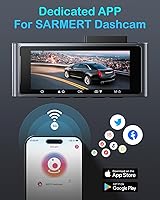
  • Companion App: The free OMBAR app for iOS and Android allows users to preview, playback, download, and share footage wirelessly from a smartphone.
  • Power Design: A built-in supercapacitor replaces the traditional lithium battery, enabling reliable operation across temperatures from -4°F to 158°F (-20°C to 70°C).
  • Parking Modes: Two parking modes are available — time-lapse and impact detection — though continuous 24-hour monitoring requires a separately purchased hardwire kit.
  • Storage Support: The M572 supports microSD cards up to 256GB; no card is included in the box, and formatting before first use is required.
  • Loop Recording: Footage records in continuous loops, with the G-sensor automatically locking and protecting incident clips to prevent them from being overwritten.
  • Mounting Type: A magnetic windshield mount is included, allowing tool-free installation and quick removal without leaving adhesive residue on the glass.
  • Power Port: The unit is powered via a USB-C cigarette lighter cable (3.5m included); the same port type is used for the optional hardwire kit.
  • Rear Camera Cable: The included rear camera connects via a 6-meter (approximately 20-foot) cable routed along the headliner and A-pillar.
  • Imaging Technology: Wide Dynamic Range (WDR) processing helps balance exposure when the camera transitions between very bright and very dark environments, such as tunnel entrances.
  • GPS: This camera does not include a GPS module, so recorded footage does not contain embedded speed or location data.
  • Warranty: Sarmert provides a 12-month warranty with 24-hour customer support availability for defects and operational issues.
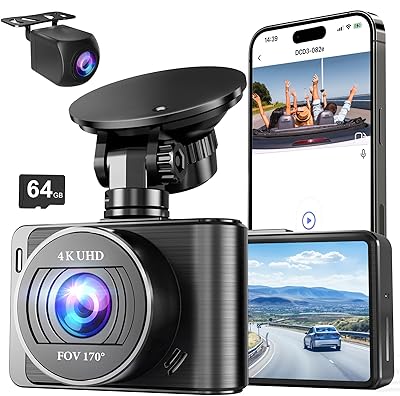
  • In-Box Contents: The package includes the front camera, rear camera with cable, USB-C power cable, magnetic mount, four electrostatic films, five cable clips, a pry tool, and a user manual.

Related Reviews

Nezion D3 4K Dual Dash Cam
77%
83%
Video Quality (Front Camera)
71%
Video Quality (Rear Camera)
67%
Night Vision Performance
91%
Ease of Setup
88%
Value for Money
More
Meiqils Dual 1080P Front and Inside Dash Cam
73%
91%
Value for Money
89%
Ease of Installation
82%
Video Quality (Daytime)
63%
Night Vision Performance
78%
G-Sensor Reliability
More
Wkreuoar RM Front and Inside Dash Camera
70%
78%
Video Clarity (Daytime)
63%
Night Vision Performance
83%
Dual-Channel Coverage
86%
Ease of Installation
74%
G-Sensor & Incident Lock
More
Miden 2K Dual Dash Camera
72%
83%
Daytime Video Clarity
69%
Night Vision Performance
88%
Value for Money
86%
Ease of Installation
57%
Parking Mode Reliability
More
Kolvt L3 4K Dual Dash Cam
77%
86%
Front Video Quality
77%
Rear Video Quality
71%
Night Vision
74%
App and Wi-Fi
76%
Build Quality
More
IIWEY N2 4K Dual Dash Cam
83%
92%
Video Quality
84%
Ease of Use
89%
Durability
60%
Installation Process
90%
Wi-Fi Functionality
More
COOAU D20S Dual Dash Cam
76%
84%
Front Camera Quality
81%
Interior Night Vision
77%
App Experience
79%
GPS Accuracy
62%
Parking Mode
More
Kingslim D4 Dual Dash Cam
75%
88%
Daytime Video Quality
71%
Night Vision Performance
84%
GPS Accuracy
57%
App & WiFi Connectivity
76%
Ease of Installation
More
DDPAI N5 Dual Front and Rear Dash Cam
77%
88%
Video Quality (Front)
71%
Video Quality (Rear)
74%
Parking Mode & Surveillance
82%
Wi-Fi Speed & App Experience
83%
GPS Accuracy & Logging
More
SUVCON M02 4K/1080P Dual Dash Cam
77%
88%
Video Clarity (Daytime)
71%
Night & Low-Light Performance
74%
Rear Camera Quality
66%
App Experience (Viidure)
91%
Ease of Installation
More

FAQ

You will need to buy a microSD card separately before you can record anything — the camera does not include one. Sarmert recommends cards up to 256GB, and you should format it in the camera before first use. Everything else needed for a basic front-and-rear setup is included in the box.

Not live — the app preview is capped at 1080P while the camera is streaming. To view your footage at full 4K resolution, you need to download the clip to your phone first. It is a minor but real friction point worth knowing before you buy.

Most first-timers get the Sarmert M572 4K Dual Dash Camera up and running in 15 to 20 minutes. The magnetic mount attaches to the windshield with an electrostatic film (no adhesive), and the included pry tool helps tuck the cables cleanly behind the headliner and A-pillar. Routing the rear camera cable is the part that takes the most patience, but it is manageable without professional help.
Yes, and this is one area where this dash cam has a genuine edge. The supercapacitor design handles temperatures up to 158°F, which covers the interior heat levels a parked car reaches in most climates. Standard lithium battery cameras can swell or fail in those conditions — this one is built to handle it.

Partially. The two built-in parking modes — time-lapse and impact detection — will activate when the car is parked, but they rely on the camera staying powered. For continuous round-the-clock monitoring, you need a hardwire kit that connects directly to the car's fuse box, which is sold separately.

The connection works reliably within about 25 feet of the camera. That covers most in-car use cases comfortably, but if you are hoping to pull footage from your driveway while standing inside your house, the signal may not reach that far.

No — this dual-channel camera does not have a built-in GPS module. Your recordings will not include speed overlays or map coordinates. If that kind of data logging matters to you for insurance or fleet tracking purposes, you would need to look at a different model.

The M572 uses loop recording, which continuously overwrites the oldest footage as new space is needed. However, if the G-sensor detects a sudden impact or hard brake, it automatically locks that clip so it cannot be overwritten during the next loop cycle.

Yes, the rear camera supports flexible rotation, so it can be angled inward to monitor the cabin — a useful setup for rideshare and taxi drivers who want to record passengers as well as the road behind them.

The camera supports cards up to 256GB, and Sarmert recommends a specific card in their listing (ASIN: B0C787PFMD) as a verified-compatible option. In general, use a Class 10 or U3 rated card from a reputable brand — cheap cards tend to corrupt footage under the constant read-write demands of loop recording.