Overview

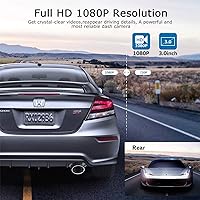
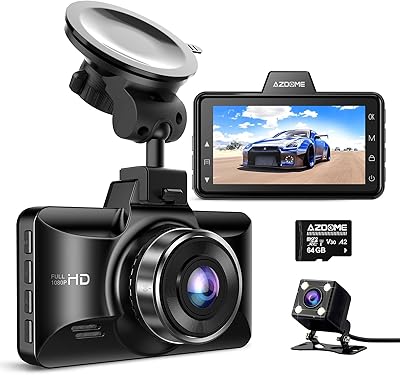
The ORSKEY S800 Dual Dash Cam is a no-frills, budget-conscious option that records both the front and rear of your vehicle at the same time — genuinely useful for commuters and rideshare drivers who want basic coverage without overspending. The front camera shoots in full 1080p, while the rear unit is a waterproof VGA camera that handles the elements without complaint. Setup takes just minutes using the included suction mount, and the 3.0″ LCD screen makes framing straightforward. Worth knowing upfront: you'll need to supply your own microSD card (up to 32GB) before it records anything — it doesn't come in the box.
Features & Benefits

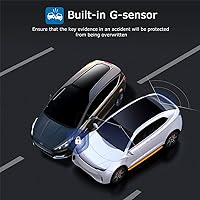
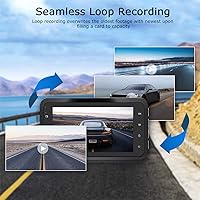
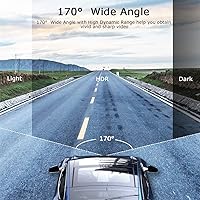
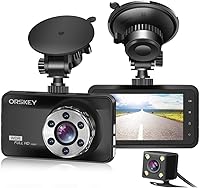
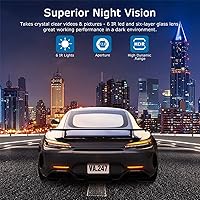
The 170-degree field of view is one of the S800's most practical strengths — at highway speeds, it captures enough of the surrounding lanes to provide meaningful context if an incident occurs nearby. Six infrared LEDs paired with WDR technology help the front camera handle low-light roads reasonably well; it's not a premium night system, but it holds up on lit suburban streets after dark. The G-sensor locks footage automatically during hard impacts, keeping critical clips safe from being overwritten. Loop recording then handles everything else quietly in the background, cycling through older footage so the card never fills up and you never have to intervene.

Best For

This dual dash cam suits daily commuters who want front-and-rear coverage without dealing with Wi-Fi setup, companion apps, or complicated menus. Rideshare and delivery drivers will appreciate the 18-foot rear cable, which provides enough reach to position the camera usefully in most vehicles. It also works well for first-time dash cam buyers who find feature-heavy alternatives unnecessarily complex — the plug-and-record approach removes nearly all the friction. If you want a device that quietly does its job in the background and only calls attention to itself when something goes wrong, the S800 fits that role without asking much of you.

User Feedback

Owners frequently highlight how fast this budget-friendly camera goes from box to windshield, with most reporting a painless setup experience. Front footage quality earns consistent praise in daylight conditions, but the rear camera draws the most pushback — VGA resolution is noticeably softer than the front, and in near-total darkness the rear IR performance falls short. Some buyers have hit loop recording issues linked to card brand compatibility, and using a quality Class 10 card seems to reduce those problems. A recurring complaint involves the suction cup losing its grip during summer heat, and a few users find the LCD menu a little cramped to navigate once mounted.

Pros

  • Front 1080p footage in daylight is sharp enough to capture plates and road details reliably.
  • Dual-channel recording at this price point is rare and gives commuters meaningful front-and-rear coverage.
  • Installation takes minutes — the suction mount is simple, and no professional fitting is required.
  • The G-sensor locks incident footage automatically, so critical clips survive loop recording cycles.
  • An 18-foot rear cable accommodates most vehicle sizes without needing any extra hardware.
  • Loop recording keeps the camera running indefinitely without manual card clearing.
  • The standalone, app-free design means nothing to configure, update, or troubleshoot on your phone.
  • Infrared LEDs give the front camera a real advantage in low-light suburban driving conditions.
  • The 12-month warranty and round-the-clock support are reassuring for a product at this price tier.
  • The wide field of view catches activity in adjacent lanes — useful in busy urban traffic.

Cons

  • Rear camera resolution is VGA only, making it unreliable for reading plates or fine detail.
  • No microSD card is included, adding an overlooked cost before the camera works at all.
  • The suction mount has a known tendency to fail in hot weather, which is a recurring buyer complaint.
  • Loop recording reliability is card-dependent, and the manual gives little guidance on compatible brands.
  • Rear night vision is weak in genuinely dark conditions, limiting its usefulness after dark.
  • The LCD menu is layered and not intuitive, especially when the unit is mounted at windshield height.
  • No Wi-Fi or app connectivity means pulling footage requires physically removing the memory card.
  • The thin rear camera cable feels flimsy during installation and lacks included cable management clips.

Ratings

The ORSKEY S800 Dual Dash Cam has been scored by our AI system after processing thousands of verified global buyer reviews, with spam, bot-generated feedback, and incentivized posts actively filtered out before any score was calculated. The result is a transparent, balanced picture of where this budget dual-channel camera genuinely delivers and where real-world buyers have run into frustration. Both the standout strengths and the recurring pain points are honestly reflected in every category below.
Value for Money
88%
Buyers consistently point to this camera as one of the better-equipped options at its price tier, citing the dual-channel setup as a feature they expected to pay significantly more for. Getting front-and-rear recording, a display, and a G-sensor in a single affordable package earns it strong approval from budget-conscious commuters.
A handful of buyers feel the value equation shifts once they factor in purchasing a compatible microSD card separately, which is an easy-to-overlook added cost. Those who experienced loop recording failures tied to card incompatibility felt the overall package fell short of what they paid for.
Front Camera Video Quality
82%
18%
In daylight conditions, the front camera produces clear, detailed 1080p footage that captures license plates and road signage at a practical distance. Commuters and rideshare drivers frequently praise it for holding up well on bright suburban roads and open highways.
In overcast conditions or at dusk, some softening is noticeable, particularly at the edges of the wide-angle frame. Buyers comparing it to slightly pricier competitors note the Sony sensor performs adequately rather than impressively when lighting is less than ideal.
Rear Camera Video Quality
53%
47%
The rear unit is waterproof and functional, and for basic documentation purposes — confirming a vehicle was present, a lane was clear, or a parking lot incident occurred — it does the minimum required job without issue.
VGA resolution is a genuine step down from the front, and buyers notice it immediately. In lower light, the rear footage often lacks the detail needed to read plates or identify vehicle colors reliably, which undercuts its usefulness in the scenarios where rear coverage matters most.
Night Vision Performance
61%
39%
The front camera benefits meaningfully from the six infrared LEDs and WDR processing on well-lit city streets and suburban roads, producing footage that is usable and reasonably clear for a camera in this price range.
In truly dark conditions — unlit rural roads or poorly lit parking areas — the front IR helps but reaches its limits, and the rear camera in low light is noticeably weak. Buyers who purchased specifically for night driving have flagged disappointment with rear nighttime footage quality.
Ease of Installation
91%
Setup is one of the most praised aspects across buyer feedback. The suction mount attaches to the windshield in seconds, the rear camera cable is long enough to route cleanly around most door frames, and the plug-in power design means most drivers are recording within minutes of opening the box.
Routing the 18-foot rear cable neatly without it sagging visibly takes a bit of patience, and a small number of buyers noted that their specific vehicle trim made clean cable management harder than expected.
Suction Mount Reliability
58%
42%
In moderate climates and for shorter daily drives, the suction mount holds firm against the windshield without drama. Most buyers in temperate conditions had no mounting complaints during the first several months of use.
Summer heat is where the complaints cluster. Buyers in hot climates reported the mount releasing mid-drive on particularly hot days, which is both annoying and a safety concern. This is a recurring pattern across user reviews, not an isolated issue.
Loop Recording
74%
26%
When functioning correctly, loop recording works quietly and automatically, cycling through older footage without requiring any manual intervention. For daily commuters who never want to think about storage management, this is exactly the kind of background behavior they need.
A notable subset of buyers experienced loop recording glitches or unexpected stops, nearly always traced back to card brand or speed class incompatibility. The camera is picky about microSD cards, and the manual does not provide enough clear guidance on which brands work reliably.
G-Sensor & Event Detection
78%
22%
The G-sensor responds well to genuine impact events — sudden braking, collisions, or sharp swerves — locking footage reliably so it is not overwritten by subsequent loop cycles. Drivers who have been in minor incidents reported that the locked clips were intact and useful afterward.
Sensitivity calibration is not finely adjustable, and a few buyers noted the sensor occasionally triggering on rough roads or speed bumps, generating more locked clips than necessary and complicating file management on the card.
Display & Menu Navigation
63%
37%
The 3.0-inch LCD is adequate for initial setup and for quickly confirming the camera framing before a drive. Footage playback on the screen works well enough to verify whether a recording captured what it needed to.
The display feels cramped once the camera is mounted high on the windshield, and the menu system requires navigating multiple layers to adjust basic settings. Several buyers described it as functional but not intuitive, especially compared to apps-based competitors.
Wide-Angle Coverage
84%
The 170-degree field of view does a genuine job of capturing adjacent lanes, pedestrians, and side intersections that a narrower lens would miss. Commuters driving in dense urban traffic find this breadth of coverage particularly reassuring when incidents happen slightly off-center.
At the extreme edges of the frame, some barrel distortion is visible — a normal trade-off with ultra-wide lenses, but worth knowing if clean straight-line framing matters to you. A few buyers noted that edge detail is softer than the center of the frame.
Build Quality & Durability
69%
31%
The main unit feels reasonably solid for its price point, and the rear camera's waterproofing is a practical feature for rear-window or exterior mounting. Buyers generally report no immediate build failures out of the box.
The plastic housing has a noticeably budget feel, and some long-term users report creaking or minor rattles developing over time. It does not feel like a device built for a decade of use, though for the price tier that expectation may be unrealistic.
Warranty & Customer Support
77%
23%
The 12-month warranty with 24/7 support contact is a genuine differentiator at this price point. Several buyers who encountered issues reported getting responsive replies and, in some cases, replacement units without significant friction.
Warranty experiences are mixed — buyers with straightforward issues tend to report good outcomes, while those with more complex complaints about firmware or compatibility have reported longer resolution timelines and less satisfying outcomes.
Rear Cable Length & Routing
79%
21%
Eighteen feet of rear camera cable is generous and accommodates most sedans, SUVs, and even some larger vehicles without needing an extension. Buyers with longer vehicles specifically called this out as a pleasant surprise.
The cable itself is thin and can feel flimsy during installation. A few buyers in larger trucks or vans found eighteen feet just barely sufficient, and the lack of any cable management clips in the box made keeping the run tidy a manual effort.
Compatibility & Setup Requirements
66%
34%
The USB-powered setup works with virtually any car charger, and the camera is broadly compatible across vehicle types without requiring any special wiring or professional installation. For buyers who want to move the camera between vehicles, it is straightforward to do so.
The unlisted microSD card requirement catches some buyers off guard, and the camera's sensitivity to card quality creates a compatibility friction point that is not clearly communicated in the product listing. Buyers using cheap or older cards have reported the most reliability complaints.

Suitable for:

The ORSKEY S800 Dual Dash Cam is a strong fit for everyday commuters who want front-and-rear road documentation without spending a lot or dealing with a complicated setup. Rideshare and delivery drivers will find particular value here — having a rear camera rolling during passenger trips or at drop-off points adds a layer of accountability that matters in disputed situations. First-time dash cam buyers who feel overwhelmed by app-dependent, Wi-Fi-enabled systems will appreciate that this one simply records when you drive and stops when you park, with no accounts to create or software to update. The generous 18-foot rear cable means it works in most vehicle types, from compact sedans to mid-size SUVs, without needing an extension. If your priority is basic, reliable coverage at a price that does not sting, this dual dash cam fits that need squarely.
Not suitable for:

Buyers who need high-resolution rear footage — for insurance documentation, fleet monitoring, or any scenario where identifying a plate number from the back matters — should think carefully before committing to the ORSKEY S800 Dual Dash Cam, because the rear camera's VGA output is a real limitation that no amount of good front footage can compensate for. Drivers who frequently travel unlit rural roads at night will also find the rear night vision underwhelming; the infrared LEDs help in partially lit conditions but fall short in genuine darkness. Anyone expecting to pull footage wirelessly to their phone, receive incident alerts via an app, or integrate with a cloud storage platform will be disappointed — there is no Wi-Fi, no Bluetooth, and no companion app. Buyers living in hot climates should also be aware that the suction mount has a documented pattern of releasing in high heat, which is a practical safety concern. If you want a long-term, set-and-forget system with premium build quality, this budget-oriented camera is likely not the right endpoint.

Specifications

  • Front Resolution: The front camera records in Full HD 1920x1080p at 30 frames per second for clear daytime road footage.
  • Rear Resolution: The rear camera records at VGA resolution and is waterproof, making it suitable for external or rear-window mounting.
  • Display: A built-in 3.0″ LCD screen allows for live preview, playback, and menu navigation directly on the unit.
  • Field of View: The front lens covers a 170-degree wide angle, reducing blind spots across adjacent lanes and intersections.
  • Lens Construction: The front camera uses a 6-element all-glass lens paired with a Sony image sensor for improved clarity and color accuracy.
  • Night Vision: Six infrared LED fill lights combined with Wide Dynamic Range (WDR) processing support low-light recording on the front camera.
  • G-Sensor: The built-in G-sensor detects sudden impacts or hard braking and automatically locks the current footage file to prevent it from being overwritten.
  • Loop Recording: Continuous loop recording automatically overwrites the oldest unlocked footage when the storage card reaches capacity.
  • Storage: The camera accepts microSD cards up to 32GB (Class 10 recommended); no card is included in the box.
  • Rear Cable Length: The rear camera connects via an 18-foot cable, providing enough reach for most sedans, SUVs, and mid-size vehicles.
  • Mount Type: The unit attaches to the windshield via an included suction cup mount that requires no tools or permanent adhesive.
  • Power & Connectivity: The camera is powered through a USB car charger (included) and has no Wi-Fi or Bluetooth connectivity.
  • Dimensions: The main unit measures 1.38 x 3.54 x 2.05 inches, keeping windshield obstruction minimal.
  • Weight: The front unit weighs 2.47 ounces, light enough that the suction mount handles it without strain under normal conditions.
  • In the Box: The package includes the front dash cam, rear camera with cable, suction mount, USB car charger, USB data cable, and a user manual.
  • Warranty: ORSKEY covers this camera with a 12-month manufacturer warranty supported by a 24/7 customer service team.
  • Power Source: The camera requires one lithium metal battery for internal clock retention and draws primary operating power from the vehicle's 12V USB charger.
  • Model Number: The official model designation is S800, first made available in July 2020 and confirmed as still in production.

Related Reviews
70mai A410 Dual Dash Camera
78%
88%
Daytime Video Clarity
71%
Night Vision Performance
74%
Rear Camera Quality
67%
App & Wi-Fi Experience
84%
GPS Accuracy & Data Logging
More
Ecomoment S70 Dual Dash Cam
83%
88%
Video Quality (Front & Rear)
91%
Night Vision Performance
85%
Ease of Installation
89%
Field of View (Wide Angle)
82%
Durability & Build Quality
More
Thinkware Q200 2-Channel Dash Cam
76%
84%
Front Camera Clarity
67%
Rear Camera Clarity
72%
Night Vision Performance
76%
Parking Mode
63%
GPS Alert Accuracy
More
Thinkware U3000 4K Dual Dash Cam
86%
93%
Video Quality (4K Performance)
90%
Night Vision Performance
88%
Ease of Installation
85%
Radar Parking Mode
70%
App Connectivity & Control
More
Kingslim D6 4K Dual Dash Cam
84%
91%
4K Video Quality
88%
Night Vision Performance
84%
Ease of Setup
89%
WiFi & GPS Functionality
82%
Build Quality & Durability
More
IIWEY N2 4K Dual Dash Cam
83%
92%
Video Quality
84%
Ease of Use
89%
Durability
60%
Installation Process
90%
Wi-Fi Functionality
More
COOAU D20S 4K Dual Dash Cam
83%
91%
Video Quality (Daytime)
75%
Night Vision Performance
88%
Ease of Installation
82%
App Control and Software Experience
86%
GPS Accuracy and Tracking
More
Sarmert M572 4K Dual Dash Cam
85%
94%
Video Quality
89%
Ease of Installation
88%
Night Vision Performance
70%
Wi-Fi Connectivity
80%
App Experience
More
SUVCON M02 4K/1080P Dual Dash Cam
77%
88%
Video Clarity (Daytime)
71%
Night & Low-Light Performance
74%
Rear Camera Quality
66%
App Experience (Viidure)
91%
Ease of Installation
More
AZDOME M01 Pro Dual Dash Cam
64%
76%
Video Quality (Front)
54%
Video Quality (Rear)
67%
Night Vision
88%
Ease of Installation
58%
ADAS Performance
More

FAQ

Yes, a microSD card is not included in the box and the camera will not record without one. You will need a card up to 32GB — a Class 10 card from a reputable brand like SanDisk or Samsung is strongly recommended to avoid compatibility issues that some buyers have reported with cheaper cards.

No, this camera has no Wi-Fi or Bluetooth connectivity and there is no companion app. To access your footage, you will need to remove the microSD card and read it on a computer or use the included USB data cable to connect the unit directly. If wireless access to footage is important to you, this is not the right camera.

The front camera handles low-light suburban and city driving reasonably well thanks to the infrared LEDs and WDR processing — you will get usable footage on lit roads after dark. That said, this is not a premium night vision system, and in genuinely dark conditions like unlit country roads, the footage quality drops noticeably. The rear camera is weaker still in the dark, so manage expectations if nighttime rear footage is a priority.

The rear camera is waterproof, so it can be mounted externally if needed. Most buyers mount it inside against the rear windshield for a cleaner look and less exposure to road debris, but the waterproofing does give you flexibility for external placement on a hatchback or SUV if the cable route works better that way.

This is a known weak point. In moderate climates the mount performs fine, but a number of buyers in hot regions have reported it releasing from the windshield on very hot days — particularly when the car has been parked in direct sun. If you live somewhere with intense summer heat, it is worth pressing the mount firmly onto a clean, grease-free windshield and checking it periodically during the warmer months.

For most standard sedans, crossovers, and mid-size SUVs, 18 feet is sufficient to route the cable around the headliner and down the door pillar. Larger vehicles like full-size vans or extended SUVs may find it tight, and a small number of buyers with bigger vehicles have noted the cable barely makes it. Measuring your intended cable route before purchasing is a good idea if you drive a larger vehicle.

Any footage that was locked by the G-sensor during an incident is protected and will not be overwritten by loop recording. Regular footage that had not yet been locked may be incomplete if power cuts mid-clip, but this is standard behavior for loop-recording dash cams and not specific to this model. Keeping a quality, high-endurance microSD card helps minimize file corruption risk during unexpected power loss.

The camera officially supports up to 32GB only, and using a larger capacity card is not recommended — it may not be recognized correctly or could cause recording instability. A 32GB Class 10 card gives you roughly three to four hours of continuous footage before loop recording begins overwriting the oldest clips, which is more than enough for most daily driving use cases.

Yes, the S800 includes a built-in microphone and records audio by default. Most users leave it enabled for full documentation, but if you prefer not to record conversations in the vehicle — which is a reasonable concern for rideshare drivers — the audio recording can be turned off in the camera's menu settings.

It is quite straightforward. The suction mount detaches cleanly, the car charger plugs into any standard 12V USB port, and there is no pairing or registration involved. The main consideration is the rear camera — if you want rear coverage in both vehicles, you would need to re-route the cable each time, which takes a few minutes. Some drivers who switch vehicles frequently simply leave the rear camera in their primary vehicle and use only the front unit in the second car.