Overview

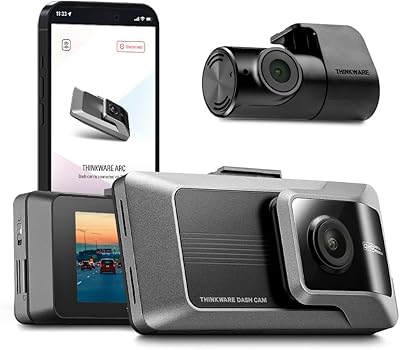
The Thinkware Q200 2-Channel Dash Cam arrived in early 2024 as a confident mid-range entry from a Korean brand with a long track record in the dash cam space. The headline here is 2K QHD recording on both the front and rear cameras — a genuine step up from the 1080p units that dominated this price tier until recently. It isn't a flagship, but it doesn't pretend to be. What it offers is a solid out-of-box package: 32GB microSD, a 12V cigar adapter, and a hardwiring cable all included — meaning most buyers can get up and running without an extra trip to the accessories aisle.
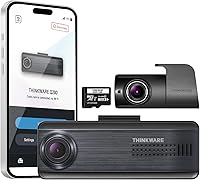
Features & Benefits

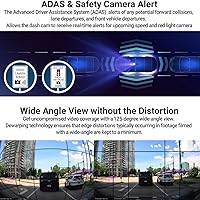
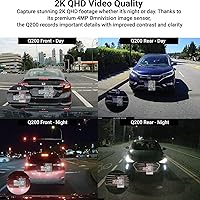
Front footage from the Q200 is sharp enough in daylight to read license plates from a comfortable following distance — that's the practical payoff of 2K QHD resolution at 30fps. Where it gets more interesting is low light. The combination of WDR and Super Night Vision 2.0 keeps footage usable in tricky conditions: tunnels, poorly lit parking structures, and the glare-and-shadow mix of oncoming headlights. Built-in Wi-Fi lets you pull clips directly to your phone via Thinkware's app, no card reader needed. GPS-backed speed and red-light camera alerts are a thoughtful addition for urban drivers, and ADAS warnings for lane drift add a layer of active safety awareness on longer trips.

Best For

The Q200 suits drivers who want a reliable, no-fuss front-and-rear setup for daily commuting. If you regularly navigate city streets filled with intersections and speed traps, GPS alert coverage will earn its keep here. It also makes sense for anyone who parks in unsecured lots or on busy streets overnight — the parking surveillance mode is genuinely useful, provided you use the included hardwiring cable rather than relying on the cigar adapter. Rideshare drivers and those logging significant daily mileage will appreciate the loop recording and G-sensor incident tagging. Anyone upgrading from a single-channel or 1080p camera will notice a clear gain in footage sharpness.

User Feedback

With a 4.3-star average from around 200 ratings, buyer sentiment for this Thinkware unit leans positive for a camera that only launched in early 2024. Daytime image clarity earns consistent praise — reviewers frequently mention being able to identify plates and road signs with confidence. The app and Wi-Fi workflow get solid marks for convenience. On the flip side, some buyers note the rear camera doesn't quite match the crispness of the front lens, which is worth keeping in mind. Cable management during installation draws the most frustration; the unit is compact, but routing wires neatly takes patience. GPS alert frequency also divides opinion, with a handful of users reporting occasional false triggers.

Pros

  • Front camera footage is sharp enough in daylight to reliably capture license plates at a normal following distance.
  • Both a 12V cigar adapter and a hardwiring cable are included, which is genuinely useful and not always standard.
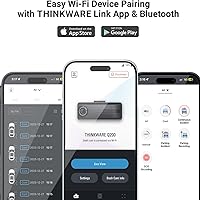
  • The Thinkware app makes reviewing footage straightforward — connect via Wi-Fi and pull clips without touching the SD card.
  • Super Night Vision 2.0 and WDR work together to keep footage usable in tunnels and poorly lit environments.
  • GPS-backed red-light and speed camera alerts are a practical daily benefit for city and highway commuters.
  • Loop recording and G-sensor incident tagging run automatically, making the system low-maintenance once installed.
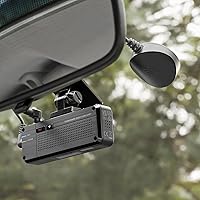
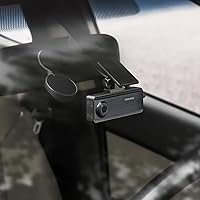
  • The compact form factor keeps the unit discreet and avoids blocking significant sightlines on the windshield.
  • ADAS lane departure and forward collision warnings add genuine safety value on longer or highway drives.
  • Supports up to 256GB microSD cards, giving plenty of headroom for extended recording without constant card management.
  • A 4.3-star average from buyers in its first year on market signals solid real-world reliability for a newer model.

Cons

  • Rear lens sharpness lags behind the front camera noticeably in real-world footage, despite matching specs on paper.
  • Activating parking mode requires hardwiring into the fuse box — not a simple install for less experienced users.
  • GPS alert accuracy has mixed reviews, with some users reporting false triggers near certain intersections.
  • Cable management during installation is consistently flagged as tedious, even though the unit itself is small.
  • No built-in screen means you rely entirely on the app or a card reader to review footage on the go.
  • The included 32GB microSD card fills up faster than expected with dual 2K streams, prompting an early upgrade for many buyers.
  • Wi-Fi connectivity, while convenient, can be slow when transferring large video files to a smartphone.
  • ADAS sensitivity may frustrate some drivers, as lane warnings can trigger frequently in heavy stop-and-go traffic.

Ratings

The scores below reflect our AI-powered analysis of verified global buyer reviews for the Thinkware Q200 2-Channel Dash Cam, with spam, bot activity, and incentivized feedback actively filtered out before any scoring was applied. Each category is evaluated independently, so both the genuine strengths and the recurring frustrations are represented transparently — no category has been softened to protect an overall average.

Front Camera Clarity
84%
Daytime footage from the front lens consistently earns praise from buyers who rely on it for incident documentation. Drivers report being able to clearly identify license plates and road signs at a normal following distance, which is the practical test that matters most in a real-world collision or near-miss.
At night, the improvement over good 1080p cameras is real but not dramatic. Some buyers expected a more pronounced low-light advantage at this resolution and came away with mixed feelings about footage usability on unlit rural roads.
Rear Camera Clarity
67%
33%
The rear camera delivers a noticeable step up from standard 1080p, and for most urban driving scenarios — capturing a tailgater's plate or documenting a rear-end collision — the footage is more than adequate. Buyers upgrading from a single rear camera report a clear improvement.
Reviewers consistently note that the rear lens does not match the front in sharpness, particularly under low-light conditions. For a camera marketed as dual 2K, the gap between the two lenses is wide enough to disappoint buyers who assumed parity across both channels.
Night Vision Performance
72%
28%
The combination of Super Night Vision 2.0 and WDR handles the tricky scenarios — tunnels, parking garage exits, and mixed glare from oncoming headlights — better than most mid-tier competitors. Buyers in urban environments with varied lighting praise how well the camera holds detail through transitions.
In genuinely dark conditions, like unlit highways or rural roads with no ambient light, the footage degrades noticeably. A handful of buyers note that Super Night Vision 2.0 is an improvement over earlier Thinkware generations but still falls short of premium competitors at higher price points.
Parking Mode
76%
24%
For buyers who park overnight in shared lots or on city streets, this feature offers genuine peace of mind. The fact that the hardwiring cable is included rather than sold separately is a meaningful differentiator, and users report that motion and impact detection is reliably sensitive without being overly trigger-happy.
Setting up parking mode requires hardwiring into the vehicle fuse box, which is not a simple install for everyone. Some buyers were frustrated to discover this requirement after purchase, even though the cable is in the box — the setup complexity is higher than the out-of-box experience implies.
GPS Alert Accuracy
63%
37%
For commuters who regularly pass through known speed trap zones or red-light camera intersections, the alert system is a useful heads-up layer. Buyers in well-covered metro areas report that the database is reasonably up to date and catches the majority of common alert points on their daily routes.
False alerts near certain intersections and zone boundaries are a recurring complaint. A noticeable share of buyers found the alerts more disruptive than helpful, particularly in areas where the Thinkware database appears to lag behind real-world changes. The alert system feels like a strong foundation that needs more consistent database maintenance.
Wi-Fi and App Experience
78%
22%
The ability to pull footage directly to a smartphone over the camera's own Wi-Fi network is one of the more consistently praised features. Buyers appreciate not having to carry a card reader or remove the SD card after an incident — the app connects quickly and browsing clips feels intuitive.
Transferring large video files over Wi-Fi can be slow, and a few users report occasional connection drops that require restarting the app. The app itself is functional and reasonably polished, but it has not been described as exceptional — more reliable than exciting.
ADAS Warnings
69%
31%
Lane departure warnings proved useful on longer highway drives, where fatigue-related drifting is a genuine risk. Buyers who commute on multi-lane roads found forward collision alerts added a useful second layer of awareness, particularly when traffic slows suddenly.
In stop-and-go city traffic, ADAS warnings can become repetitive and distracting. Several urban drivers turned off lane departure alerts entirely after finding them trigger too frequently in dense traffic conditions, suggesting the sensitivity calibration is better suited to open-road driving.
Installation Experience
61%
39%
The unit's compact dimensions make windshield placement clean and unobtrusive, and the basic cigar adapter setup can be completed in under fifteen minutes. Buyers appreciate how little the camera intrudes on sightlines once mounted.
Cable management for a clean finish is consistently described as tedious, with the A-pillar routing process frustrating buyers who expected a quicker install. Hardwiring for parking mode raises the complexity further, and several users recommend budgeting for professional installation if a tidy result matters to you.
Build Quality
81%
19%
The housing feels solid for a camera in this class, and thermal protection circuitry gives buyers in warm climates reasonable confidence that the unit can handle summer heat without shutting down or degrading prematurely. The windshield mount holds firmly without creep over time.
The plastic finish does not have the premium feel of higher-end competitors, and the mounting mechanism, while functional, is not as refined as what you find on flagship models. For the price tier, it is acceptable — just not impressive to the touch.
Value for Money
77%
23%
When you account for the included 32GB card, cigar adapter, and hardwiring cable, the out-of-box package represents solid value relative to competitors that charge separately for equivalent accessories. For buyers who want dual 2K coverage without reaching into premium territory, the Q200 delivers a fair deal.
Buyers who prioritize rear camera quality may feel the value equation tips against them once they see the real-world footage gap between front and rear. A few reviewers noted they could have bought a front-only camera at a lower price point and achieved comparable practical results for their specific use case.
Loop Recording Reliability
86%
Buyers who rely on this camera daily — rideshare drivers, couriers, and fleet operators — report that loop recording runs without interruption and the G-sensor clip-locking function works as expected when it counts. The system runs quietly in the background without demanding user attention.
The included 32GB card can fill up faster than expected with dual 2K streams, and some buyers were caught off guard by how quickly they needed to manage storage. Upgrading to a higher-capacity card is almost a given for anyone doing more than an average daily commute.
Ease of Use
82%
18%
Day-to-day operation requires almost no active involvement once the camera is installed and configured — it powers on with the ignition and handles recording, incident locking, and alerts automatically. For buyers who want a set-it-and-forget-it experience, this Thinkware unit delivers exactly that.
Initial setup, particularly configuring the app and GPS alert preferences, has a moderate learning curve that some less tech-savvy buyers found slightly frustrating. The manual does the job but is not always clear, and several users relied on online forums to work through configuration questions.
Discreetness
88%
At under four inches wide and weighing barely over two ounces, the camera sits behind the rearview mirror without creating a noticeable obstruction. Buyers who care about avoiding attention — or simply want a clean cabin aesthetic — consistently remark on how unobtrusive the unit looks once installed.
The rear camera cable run from front to back of the vehicle is visible unless professionally hidden, which undermines the otherwise discreet front installation. Buyers who want a fully hidden setup will need to invest additional effort or cost into cable concealment.
Included Accessories
83%
Including both the 12V cigar adapter and the hardwiring cable in the same box is a genuinely buyer-friendly decision that most competitors skip. The 32GB microSD card is a useful starting point, and the windshield mount is solid enough that buyers rarely feel compelled to replace it.
The 32GB card is the one weak link in an otherwise complete package — it is enough to get started, but dual 2K recording will have most buyers shopping for a larger card within a few weeks. A 64GB card would have felt like a more honest inclusion at this price point.

Suitable for:

The Thinkware Q200 2-Channel Dash Cam is a strong fit for daily commuters who want dependable front-and-rear coverage without spending hours configuring a complex system. Urban drivers in particular get real value from the GPS-backed speed and red-light camera alerts, which quietly work in the background on familiar routes. If you regularly park in public lots, on city streets, or anywhere a hit-and-run is a realistic risk, the included hardwiring cable means you can activate parking surveillance mode without buying anything extra. Rideshare and gig economy drivers will appreciate the continuous loop recording and automatic incident tagging via the G-sensor — it runs reliably in the background without demanding attention. Anyone stepping up from a single-channel or 1080p setup will notice an immediate and meaningful improvement in daytime footage clarity, especially when it comes to capturing plate numbers at a normal following distance.
Not suitable for:

The Thinkware Q200 2-Channel Dash Cam is not the right choice for buyers expecting flagship-grade performance across both lenses. The rear camera, while rated at 2K QHD on paper, tends to produce footage that is noticeably softer than the front in real-world use — if rear image quality is your top priority, you may want to audition alternatives before committing. Drivers who want a truly plug-and-play parking mode should also be aware that while the hardwiring cable is included, installation still requires tapping into the vehicle fuse box, which is not a five-minute job for most people. If you have zero tolerance for occasional false GPS alerts near certain intersections or zone boundaries, the alert system may become more of an annoyance than a convenience. Finally, buyers hoping for a built-in LCD screen for on-device playback will need to look elsewhere, as clip review here depends on the smartphone app or a card reader.
Specifications

  • Front Resolution: The front camera records at 2K QHD (1440p) at 30 frames per second, providing clear detail for license plate and road sign capture.
  • Rear Resolution: The rear camera also records at 2K QHD (1440p) at 30 frames per second, though real-world sharpness may be slightly softer than the front lens.
  • Field of View: Both cameras offer a 125-degree wide-angle field of view, covering multiple lanes and roadside detail simultaneously.
  • Night Vision: Super Night Vision 2.0 works alongside WDR to produce usable footage in low-light conditions including tunnels, parking structures, and nighttime driving.
  • Connectivity: Built-in Wi-Fi allows the unit to pair with the Thinkware mobile app for wireless footage review and camera management without removing the microSD card.
  • GPS: An integrated GPS module enables real-time speed and location data overlay on footage, and powers the red-light and speed camera alert system.
  • ADAS: The Advanced Driver Assistance System provides audible lane departure warnings and forward collision alerts based on front camera image processing.
  • G-Sensor: A built-in G-sensor detects sudden acceleration or impact and automatically locks the current clip to prevent it from being overwritten during loop recording.
  • Storage Support: The unit supports microSD cards up to 256GB, and ships with a 32GB card included in the box.
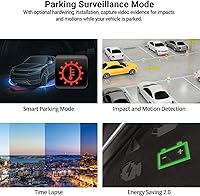
  • Parking Monitor: Parking Monitor mode activates motion and impact detection when the vehicle is parked, and requires the included hardwiring cable for continuous low-power operation.
  • Power Input: The unit can be powered via the included 12V cigar lighter adapter or the included hardwiring cable for permanent installation.
  • Thermal Protection: Built-in thermal protection safeguards internal components during prolonged exposure to high cabin temperatures, particularly relevant in warm climates or summer months.
  • Dimensions: The unit measures 0.9″ deep by 3.9″ wide by 1.3″ tall, making it one of the more compact dual-channel units in its class.
  • Weight: The camera body weighs 2.56 ounces, contributing to a discreet windshield presence that does not obstruct the driver's sightlines.
  • Mounting Type: The Q200 uses a windshield mount included in the box, designed for straightforward placement behind the rearview mirror.
  • Loop Recording: Continuous loop recording automatically overwrites the oldest non-locked footage once the microSD card reaches capacity, ensuring uninterrupted capture.
  • Alert System: GPS-sourced red-light camera and speed camera alerts notify the driver in real time, with coverage dependent on the Thinkware alert database for the driver's region.
  • Vehicle Compatibility: The unit is compatible with cars, trucks, minivans, buses, and RVs, making it broadly suitable across personal and light commercial vehicle types.

Related Reviews
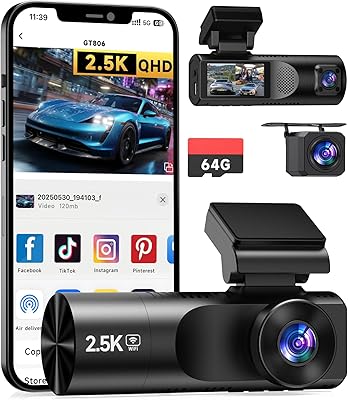
TUIFAC GT806 3 Channel Dash Cam 2.5K+1080P+1080P
83%
89%
Value for Money
92%
Camera Quality (Front)
90%
Ease of Setup
78%
Night Vision Performance
85%
Rear Camera Quality
More
THINKWARE ARC Front and Rear Dash Cam
78%
91%
Video Clarity (Day)
72%
Night Vision Performance
78%
Parking Mode
74%
App & Wi-Fi Experience
86%
GPS & Alerts
More
iZEEKER GD100 2.5K Dash Cam
76%
88%
Video Clarity (Daytime)
63%
Night Vision Performance
93%
Value for Money
91%
Ease of Setup & Installation
86%
Wide-Angle Coverage
More
Zengest 3 Channel Dash Cam
86%
88%
Video Quality
85%
Ease of Installation
92%
Night Vision Performance
72%
App Control Experience
90%
Parking Mode Reliability
More
AZDOME M580 3-Channel Dash Cam
85%
93%
Video Quality
88%
Ease of Setup
85%
GPS Tracking Accuracy
90%
Night Vision Performance
82%
Build Quality
More
Yonvim DC339C 2.5K Dash Cam
73%
83%
Video Clarity
61%
Night Vision
88%
Ease of Use
86%
Installation
67%
Build Quality
More
BAEASU J07 3-Channel Dash Cam
73%
83%
Video Clarity (Front Camera)
71%
Night Vision Performance
88%
Interior Cabin Recording
74%
Rear Camera Quality
86%
Ease of Installation
More
Rexing R4 4-Channel Dash Cam
79%
88%
Video Quality
84%
Ease of Use
77%
Parking Mode Performance
60%
Installation Process
89%
Wi-Fi and App Integration
More
Icesky M4 3-Channel Dash Cam
85%
91%
Video Quality
87%
Ease of Use
83%
App Control
88%
Parking Mode Performance
75%
Wi-Fi Connectivity
More
Thinkware U3000 4K Dual Dash Cam
86%
93%
Video Quality (4K Performance)
90%
Night Vision Performance
88%
Ease of Installation
85%
Radar Parking Mode
70%
App Connectivity & Control
More

FAQ

Good news here — the hardwiring cable needed for parking mode is already included in the box, so you do not need to buy it separately. That said, hardwiring does require tapping into your vehicle's fuse box, which is a step beyond a simple plug-in install. If you are not comfortable doing that yourself, a car audio or auto accessories shop can usually handle it in under an hour.

No data plan or hotspot required. The Q200 creates its own local Wi-Fi signal that your smartphone connects to directly, similar to how you would connect to a router at home. From there, the Thinkware app lets you browse and download clips without ever pulling out the SD card. It works whether you are in a parking lot or a rural area with no cell signal.

Both cameras are rated at 2K QHD on the spec sheet. In practice, the front camera delivers noticeably crisper footage than the rear — that is a common pattern across dual-channel cameras at this price point, and the Q200 is no exception. The rear is still a clear step above 1080p, but if rear clarity is your top priority, set your expectations accordingly.

Thinkware maintains a GPS alert database that covers many regions, but coverage quality varies by country and how frequently the database is updated. The alerts work best in markets where Thinkware has strong distribution, such as the US, Canada, and parts of Europe. It is worth checking Thinkware's website for your specific region before assuming full coverage.

The G-sensor is designed to handle exactly this situation. When it detects a significant impact, it immediately locks the current recording clip so that loop recording cannot overwrite it. You can also manually lock clips through the app if you notice an incident and want to preserve the footage before the card cycles.

With dual 2K streams running simultaneously, 32GB fills up faster than many buyers expect — typically somewhere in the range of two to three hours of continuous footage. For most daily driving that is perfectly adequate since loop recording keeps overwriting older clips. If you do a lot of highway driving or want a larger safety buffer, upgrading to a 64GB or 128GB card is a practical move.

Yes, the Thinkware app is available for both Android and iOS. Setup involves connecting your phone to the camera's Wi-Fi network and opening the app, which walks you through the initial configuration. Most users find the pairing process straightforward on both platforms.

The camera records automatically as soon as it powers on — no app required for day-to-day use. The app is optional and mainly useful when you want to review footage, adjust settings, or update the GPS alert database. For basic recording and parking mode operation, you can set it once and forget it.

Plugging in via the cigar adapter is straightforward and most people can do it in under fifteen minutes. The trickier part is cable management — routing the power cable neatly along the headliner and down the A-pillar takes patience and the right trim removal tool. Hardwiring for parking mode adds another layer of complexity. If you want a clean install, a professional fitting is worth considering.

The Q200 includes thermal protection circuitry that helps manage heat buildup during prolonged exposure to high cabin temperatures. In practice, any electronics left in a parked car in direct sunlight will run warm, but this unit is designed with that environment in mind. If you live somewhere with extreme summer heat, parking in shade or using a windshield sunshade will help extend the longevity of any dash cam, including this one.

Where to Buy