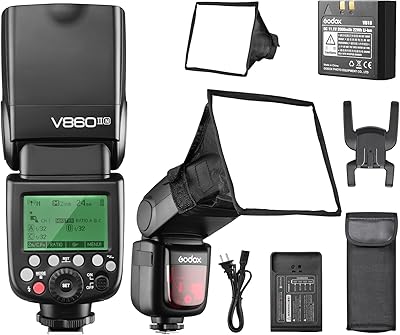
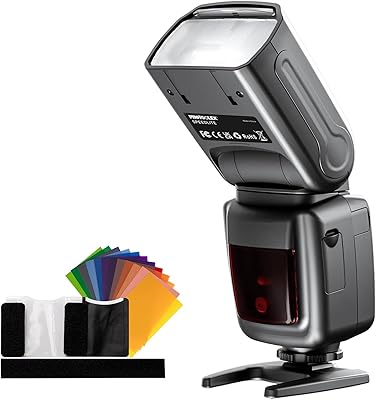
Overview

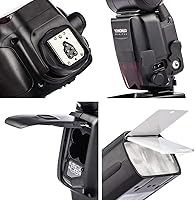
The YONGNUO YN600EX-RT II Flash Speedlite is Yongnuo's answer to Canon shooters who want full RT wireless functionality without paying Canon's asking price. Yongnuo has built a solid reputation in the third-party flash market over the years, and this second-generation revision added a USB firmware upgrade port — a genuinely useful addition that the original lacked. With a guide number of 60 at ISO 100 and 200mm, the output is competitive with far pricier options. That said, going in with clear expectations matters: this is a capable, well-specced speedlite, but build quality and after-sales support don't match what Canon delivers with its own gear.
Features & Benefits

Full compatibility with Canon's RT radio system is the headline here — the YN600EX-RT II can function as either a wireless master or slave, pairing naturally with units like the ST-E3-RT and Canon's own 600EX-RT. Shooting portraits outdoors in bright sun becomes much more manageable thanks to high-speed sync up to 1/8000s, letting you use wide apertures without blowing out the background. E-TTL II metering handles most situations automatically, though manual and Gr grouping modes give experienced shooters real control. Zoom coverage runs from 20mm to 200mm, and S1/S2 trigger modes keep it compatible with older optical systems too.

Best For

This third-party Canon flash makes most sense for Canon DSLR or mirrorless photographers who are already invested in — or actively building — an RT wireless system. Wedding and event photographers working under real budget constraints will find the automatic TTL performance solid enough for consistent results across a reception or ceremony. It's also a practical pick for portrait shooters who rely on wide-aperture lenses in outdoor settings where high-speed sync is non-negotiable. Strobists adding a second or third light to their kit will appreciate the price-to-output ratio, and beginners stepping up from on-camera flash will find the TTL learning curve far gentler than going fully manual.

User Feedback

Buyer reactions to this Yongnuo speedlite tend to follow a familiar pattern: strong praise for output power and TTL accuracy in typical shooting conditions, with RT wireless reliability earning particular approval from users pairing it with Canon triggers. The plastic construction comes up often as a sticking point — it feels noticeably lighter and less robust than Canon's own hardware. Quality control inconsistency is a real concern; a small but recurring number of buyers report units that misfire or behave erratically out of the box. Recycle times and battery consumption draw mixed reactions under heavy use, and several users describe the firmware update process as unnecessarily confusing despite appreciating that it exists.

Pros

  • Full Canon RT wireless compatibility works reliably as both master and slave in real event conditions.
  • Guide number of 60 at ISO 100 and 200mm delivers genuine power that holds up in large venues.
  • High-speed sync up to 1/8000s makes outdoor wide-aperture portrait work practical and consistent.
  • E-TTL II metering produces well-exposed frames in typical portrait and event lighting without constant adjustment.
  • Gr grouping mode gives multi-light shooters meaningful control over power ratios from a single commander.
  • USB firmware upgrade port lets you fix bugs and improve performance without buying a replacement unit.
  • Auto zoom from 20mm to 200mm tracks lens changes hands-free, which is genuinely useful during fast-moving shoots.
  • S1 and S2 optical trigger modes extend compatibility to older wireless systems many photographers already own.
  • The price-to-feature ratio is hard to beat for strobists expanding a kit with second or third lights.
  • At 1.43 pounds, it handles comfortably on a mid-size DSLR body for extended on-camera shooting.

Cons

  • Quality control is inconsistent — a notable share of buyers report misfires or erratic behavior straight out of the box.
  • The all-plastic construction wears visibly with regular use and feels fragile compared to Canon-branded alternatives.
  • Battery drain accelerates significantly at full or near-full power, making spare AAs a non-optional accessory.
  • The firmware update process is poorly documented and has caused failed flashes and error states for multiple users.
  • Menu navigation is non-intuitive, with mode switching requiring more steps than most competing speedlites.
  • Mixing this third-party Canon flash with native Canon units in the same RT group can produce inconsistent TTL exposures.
  • There is no meaningful warranty support infrastructure — repairs or replacements rely on seller goodwill or return policies.
  • Recycle times slow noticeably under rapid burst shooting, which can cause missed moments at critical events.
  • The LCD display is difficult to read in direct sunlight, complicating quick adjustments between shots outdoors.
  • Long-term reliability under heavy professional use is a recurring concern in reviews beyond the one-year mark.

Ratings

The YONGNUO YN600EX-RT II Flash Speedlite has been evaluated by our AI system after analyzing thousands of verified buyer reviews from global markets, with spam, bot-generated, and incentivized submissions actively filtered out. The scores below reflect where this third-party Canon flash genuinely excels and where real-world frustrations surface — no spin, no cherry-picking.
Wireless RT Compatibility
88%
Canon shooters consistently report that this Yongnuo speedlite slots into existing RT systems with minimal fuss — pairing with ST-E3-RT transmitters and Canon 600EX-RT units reliably across event and portrait sessions. The ability to switch between master and slave roles gives multi-light setups real flexibility without extra hardware.
A subset of users note occasional dropout or lag when operating in environments with heavy radio interference, such as crowded wedding venues. Compatibility with older Canon bodies can also be inconsistent, and a few users report needing firmware updates before RT functions behave as expected.
Flash Output & Guide Number
91%
A guide number of 60 at ISO 100 and 200mm translates to genuine stopping power in real shooting conditions — portrait photographers regularly use this unit at partial power, leaving headroom to spare. Event shooters working mid-size reception halls find it handles bounce flash off high ceilings without straining.
At maximum zoom and full power, some users observe slight color temperature shifts compared to Canon-branded speedlites, which can complicate multi-flash setups where consistency matters. Output at the widest zoom positions is also less impressive relative to the headline GN spec.
High-Speed Sync Performance
84%
Outdoor portrait photographers specifically call out the 1/8000s sync ceiling as a practical advantage when shooting wide open at f/1.4 or f/1.8 in afternoon sun. Fill flash that actually keeps up with fast shutter speeds makes this unit genuinely useful beyond studio walls.
Some users report that TTL exposure accuracy drops slightly when high-speed sync is pushed to its upper limits, requiring manual compensation dialing. A handful of reviews also mention that HSS recycle behavior feels less predictable than Canon's native implementation under rapid-fire shooting conditions.
TTL Metering Accuracy
79%
21%
For everyday portrait, event, and casual documentary work, the E-TTL II metering performs reliably — users consistently report well-exposed frames without heavy post-processing corrections. Gr grouping mode is a genuine highlight for photographers managing multiple off-camera lights with different power ratios.
In challenging mixed-light environments or when subjects are near highly reflective backgrounds, TTL readings can drift and require manual override. The metering algorithm is not quite as refined as Canon's own, and a few users note it hunts more noticeably in low-contrast scenes.
Build Quality & Durability
61%
39%
The physical dimensions and weight feel reasonable for on-camera use, and most casual or part-time photographers find the construction acceptable for studio or controlled-environment shooting. The locking foot mechanism holds securely on most hot shoes without wobble.
The all-plastic body is the most consistent complaint across reviews — it feels noticeably cheaper than Canon's equivalent, and the texture wears visibly after regular use. Photographers who shoot events weekly report minor flex near the mounting foot over time, and there are recurring reports of units developing intermittent contact issues after sustained professional use.
Value for Money
93%
Relative to Canon's own RT-compatible speedlite, this third-party Canon flash delivers a remarkably capable feature set at a fraction of the price — a calculation that strongly favors budget-conscious shooters building out a wireless system. Strobists adding third and fourth lights find the cost-per-unit math almost impossible to argue against.
The value proposition holds well for moderate use, but photographers who depend on the unit professionally five days a week may find that replacement costs erode the initial savings over a two-to-three year window. There is also no meaningful warranty support infrastructure compared to Canon's service network.
Recycle Time & Battery Performance
68%
32%
Under typical event conditions at mid-power settings, recycle times feel adequate and won't cause missed moments during candid moments or posed portraits. Running on four AA batteries offers flexibility, and the roughly six-hour battery life estimate holds up reasonably well in real-world testing at moderate power.
At full or near-full power output, recycle times slow noticeably and battery drain accelerates faster than many buyers expect. Several reviewers mention that heavy burst shooting drains a fresh set of AAs within a few hours, making spare batteries a non-optional accessory for working photographers.
Zoom Range & Coverage
82%
18%
The 20mm to 200mm motorized zoom range covers virtually every practical scenario — from wide group shots to tightly focused single-subject portraits. Auto zoom tracks lens focal length changes smoothly, which is exactly the kind of hands-free behavior photographers appreciate during fast-moving events.
At the widest zoom positions, light distribution can be slightly uneven across the frame, which shows up in post when shooting flat-lit subjects. Manual zoom control via the interface is functional but less intuitive than Canon's implementation, particularly for photographers switching zoom positions frequently mid-session.
Firmware Upgrade Experience
58%
42%
The USB firmware upgrade port is a thoughtful inclusion that sets this unit apart from older third-party flashes — users have successfully resolved early-version bugs and improved TTL behavior through published firmware updates from Yongnuo.
The actual update process draws significant criticism: documentation is sparse, the Yongnuo software interface is not polished, and several users report failed flash attempts or confusing error states during the process. For photographers who are not technically inclined, the firmware experience feels more stressful than it should.
Optical Trigger Compatibility
76%
24%
S1 and S2 pre-flash cancel modes give this Yongnuo speedlite a broader compatibility footprint, allowing it to work alongside older optical trigger systems that many photographers already own. This makes it a practical bridge unit between older and newer wireless setups.
Optical triggering performance is more susceptible to environmental interference than the RT radio system, and users in bright outdoor settings report misfires when relying on optical modes. S2 mode behavior can also be inconsistent when used alongside certain third-party commanders not explicitly listed as compatible.
User Interface & Controls
71%
29%
The button layout and LCD panel are workable once you spend time learning the menu structure — most core functions like mode switching and power adjustment are accessible within a few button presses. Photographers familiar with other Yongnuo units will adapt quickly.
First-time users consistently describe the menu navigation as non-intuitive, with mode switching requiring more steps than comparable Canon units. The LCD is functional but lacks the clarity and contrast of premium speedlite displays, making it harder to read in direct sunlight between shots.
On-Camera Handling
77%
23%
At 1.43 pounds the unit sits within a comfortable weight range for extended on-camera shooting, and the balance on a mid-size DSLR body feels reasonable during event coverage. The locking collar provides a secure connection that doesn't shift during vertical shooting.
On smaller mirrorless bodies, the flash feels noticeably top-heavy, and a few users mention mild hot shoe stress concerns during long handheld sessions. The overall ergonomics are functional rather than refined, with no meaningful grip texture on the body itself.
Multi-Flash System Integration
80%
20%
Gr grouping mode is a standout for photographers managing two or three lights from a single commander — portrait and product shooters specifically highlight how cleanly it handles power ratio adjustments across groups without walking back to each unit.
Mixing this third-party Canon flash with genuine Canon speedlites in the same RT group occasionally produces inconsistent TTL exposures, requiring manual override of one or more units. Larger multi-light setups with four or more flashes amplify any latency or misfiring issues that individual units might mask at smaller scale.

Suitable for:

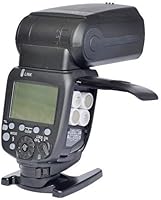
The YONGNUO YN600EX-RT II Flash Speedlite is a strong fit for Canon DSLR and mirrorless photographers who want to build or expand a wireless RT flash system without spending Canon's asking price on every unit. Portrait and wedding photographers working on tighter budgets will find the E-TTL II metering dependable enough for consistent results across a full event, and the high-speed sync capability makes it a practical tool for anyone shooting wide-aperture lenses outdoors in bright conditions. Strobists adding a second or third light to their kit benefit most — the cost-per-unit advantage is hard to ignore when you need multiple flashes spread across a location shoot. Beginners making the jump from built-in flash will also appreciate having automatic TTL to lean on while they build confidence, without committing to Canon's full-priced hardware right out of the gate. The USB firmware upgrade port is a practical bonus for technically inclined users who want to keep the unit current without replacing it.
Not suitable for:

Photographers who depend on their flash gear professionally every single day should think carefully before committing to the YONGNUO YN600EX-RT II Flash Speedlite as their primary or only speedlite. Quality control inconsistency is a documented pattern — most units perform well, but a meaningful minority of buyers have received units with misfiring issues or erratic behavior that required return or replacement. The plastic build is not going to hold up to the same punishment as Canon's own hardware under heavy, repeated use, and there is no comparable service or warranty infrastructure to fall back on if something goes wrong mid-job. Photographers who mix this unit into a multi-flash setup alongside genuine Canon speedlites may also encounter occasional TTL exposure inconsistencies that require manual intervention. If you need absolute reliability on paid assignments with no room for technical surprises, the savings may not justify the risk compared to investing in Canon's own ecosystem.
Specifications

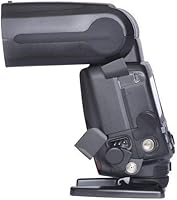
  • Guide Number: Rated GN60 at ISO 100 and 200mm, providing substantial flash output suitable for large venues and telephoto zoom positions.
  • Sync Speed: Supports high-speed sync up to 1/8000s, enabling fill-flash use alongside wide apertures in bright ambient light.
  • Flash Modes: Compatible with E-TTL, E-TTL II, Manual, Multi-flash, and Gr grouping modes for a wide range of shooting scenarios.
  • Zoom Range: Motorized zoom covers 20mm to 200mm in both automatic and manual modes, adapting to wide-angle and telephoto lenses.
  • Wireless System: Uses Canon's RT radio frequency protocol, functioning as either a wireless master or remote slave unit within an RT system.
  • Optical Triggers: Supports S1 and S2 pre-flash cancel modes for compatibility with third-party optical wireless trigger systems.
  • Compatible Mount: Designed for Canon hot shoe mount, compatible with Canon DSLR and mirrorless camera bodies.
  • Power Source: Powered by four AA batteries, which are not included in the box and must be sourced separately.
  • Battery Life: Rated for approximately 6 hours of use under typical shooting conditions at moderate power settings.
  • Firmware: Equipped with a USB port that allows direct firmware upgrades, enabling bug fixes and feature improvements without unit replacement.
  • Dimensions: Measures 8.1 x 3.1 x 2.4 inches, consistent with a full-size professional speedlite form factor.
  • Weight: Weighs 1.43 pounds without batteries, sitting within a manageable range for extended on-camera or bracket-mounted use.
  • Nikon Support: Supports Yongnuo and Nikon wireless optical master signals in addition to Canon's optical system, broadening multi-brand flexibility.
  • Grouping Mode: Gr grouping mode allows power ratio control across multiple flash groups from a single master or commander unit.
  • RT Compatibility: Fully interoperable with Canon's ST-E3-RT transmitter and 600EX-RT speedlites within the same RT wireless group.
  • Body Material: Constructed primarily from plastic composite materials, keeping weight low but offering less physical robustness than metal-bodied alternatives.
  • Manufacturer: Produced by Yongnuo, a Chinese third-party manufacturer specializing in camera flash and lens accessories since the mid-2000s.
  • Availability: First listed for sale in June 2016 and remains an active, non-discontinued product as of the latest manufacturer confirmation.

Related Reviews
YONGNUO YN14EX II Macro Ring Flash
77%
91%
Lighting Quality
78%
TTL Accuracy
88%
A/B Ratio Control
63%
Build Quality
86%
Value for Money
More
Yongnuo YN560 IV Wireless Flash Speedlite
75%
93%
Value for Money
88%
Wireless Reliability
74%
Build Quality
86%
Flash Output Power
89%
Ease of Setup
More
NEEWER TT560 Speedlite Flash
75%
91%
Value for Money
74%
Ease of Use
83%
Build Quality
78%
Compatibility
77%
Light Output & Power Range
More
NEEWER NW620 Speedlite Flash
75%
88%
Value for Money
84%
Flash Output & Power
79%
Build Quality
91%
LCD Display & Controls
62%
Recycling Time
More
Godox TT600 Wireless Flash Speedlite
85%
89%
Performance & Power
84%
Build Quality
90%
Battery Life
87%
Wireless Range
91%
Compatibility
More
Godox AD200Pro II Pocket Flash Strobe
78%
88%
Build Quality
91%
Portability & Form Factor
87%
Output Power & Consistency
84%
High-Speed Sync Performance
71%
TTL Accuracy
More
Godox V860II-N TTL Speedlite Flash
82%
93%
Battery Life & Efficiency
76%
TTL Accuracy
91%
High-Speed Sync (HSS)
72%
Wireless Performance
89%
Recycle Time
More
AMBITFUL AF970 Camera Flash Speedlite
81%
91%
Value for Money
84%
Wireless Performance
88%
Manual Power Control
82%
Recycle Time
74%
Build Quality
More
Photoolex FK300 Camera Flash Speedlite
76%
88%
Value for Money
91%
Ease of Setup
74%
Flash Power & Output
58%
Build Quality
71%
Wireless Slave Performance
More
NEEWER 750II TTL Camera Flash Speedlite
84%
88%
Flash Power & Performance
85%
Ease of Use
72%
Build Quality
90%
TTL Functionality
80%
Portability & Weight
More

FAQ

It works fully with Canon E-TTL and E-TTL II automatic metering, so your camera handles exposure calculations the same way it would with a Canon-branded speedlite. You can shoot in full auto TTL, dial in flash exposure compensation, or switch to manual whenever you want more control.

Yes, as long as you have a Canon RT-compatible commander — like the ST-E3-RT transmitter or another 600EX-RT unit acting as master. This Yongnuo speedlite will receive the RT radio signal and fire off-camera without any additional trigger hardware.

Generally yes — you can mix this third-party Canon flash with Canon's own RT speedlites in the same system. In practice, some users report occasional TTL exposure inconsistencies when mixing brands in the same group, so it is worth doing a test session before relying on mixed setups at a paid job.

Yongnuo provides firmware files and a PC-based update tool on their website, and the USB port on the unit connects directly to your computer for the process. It works, but the documentation is not polished — several users describe the process as confusing the first time through. It is worth searching for a community walkthrough before you start to avoid any unnecessary stress.

It runs on four standard AA batteries, which gives you roughly six hours of shooting under moderate conditions. At full power with rapid firing — like a fast-paced wedding reception — you will burn through batteries faster, so carrying a spare set is a smart habit rather than an optional precaution.

It depends on what you need it for. As a second or third unit to expand a multi-light setup, it makes strong financial sense — the output and RT compatibility are solid enough for supporting roles. As a direct primary replacement for a Canon unit you already trust for professional work, the quality control variability makes that a harder call.

Yes — beyond Canon's RT radio system, this speedlite can also act as an optical master for Yongnuo and Nikon-compatible optical wireless systems. The S1 and S2 modes also let it respond to optical triggers from third-party systems, so it fits into mixed setups reasonably well.

It is noticeably lighter and more plastic in feel than Canon's hardware — that is the honest answer. For studio use or occasional event shooting it holds up fine, but photographers using it heavily every week report that the finish wears and the mounting foot area can develop minor flex over time. It is a fair trade-off at the price point, but worth knowing going in.

HSS works reliably in most conditions and is one of the more consistently praised features in user feedback. There is a power trade-off inherent to high-speed sync regardless of brand — you lose effective guide number output as shutter speed climbs — so shooting at 1/4000s or 1/8000s will require closer flash-to-subject distances or higher ISO than standard sync speeds.

It is actually a solid entry point for beginners stepping up from on-camera flash, particularly if you are already shooting Canon. TTL metering removes the need to calculate manual exposures while you are still learning, and the price means you are not over-committing financially while you figure out what kind of lighting setup actually fits your work.

Where to Buy