Overview

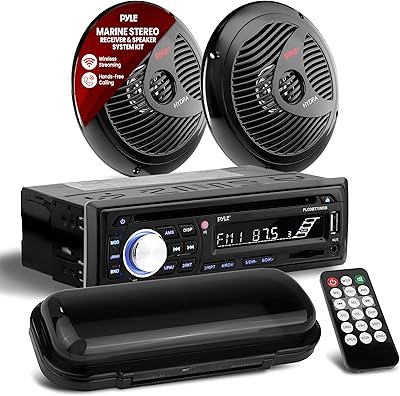
The Pyle PLCD43BTM Marine Bluetooth Stereo Receiver is a solid mid-range option for boat owners who want modern connectivity without overspending on a premium marine audio brand. It slots into the standard single-DIN opening found in most boats, making it a straightforward replacement for an aging factory unit. Pyle occupies the budget-to-mid-range tier of the audio world, so manage expectations accordingly — this isn't a Fusion or a JVC. What it does deliver is a surprisingly complete feature set at a price that still leaves room in the budget for decent speakers and proper installation.

Features & Benefits

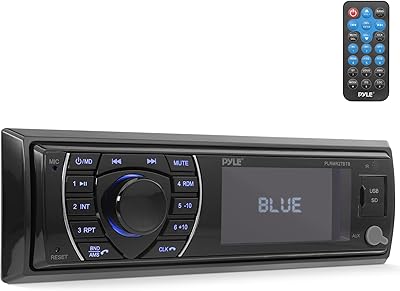
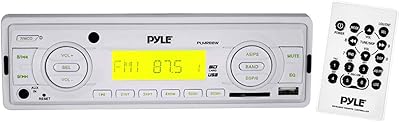
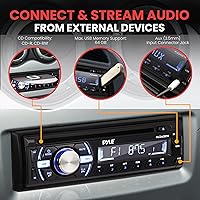
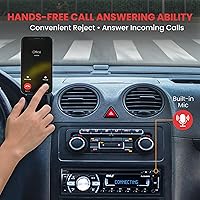
This marine receiver packs in more source options than you'd expect at this price. Up front you get a CD player, USB port, and a 3.5mm AUX input alongside an AM/FM tuner — so whether you're playing a burned disc, a thumb drive full of MP3s, or streaming from your phone via Bluetooth, you're covered. Bluetooth also handles hands-free calling, with the caller's number showing up on the LCD display and a dedicated answer button right on the faceplate. Pyle lists the output at 300 watts peak, but real-world performance works out to roughly 75 watts per channel — adequate for most recreational boat setups. Rear RCA outputs let you add an external amp when you're ready.

Best For

This head unit makes the most sense for recreational boaters on a budget who need to replace a dead or outdated factory stereo. Pontoon and fishing boat owners tend to hit the sweet spot here — people who spend weekends on the water and want Bluetooth for music and the occasional call, but don't need audiophile-grade gear to enjoy themselves. It also suits DIY installers well; the single-DIN chassis slides right in where most old marine receivers lived, and a wiring harness is included to skip the marine shop visit. If you still own a physical CD collection and want to spin discs on the water, this is one of the few options that still makes that possible.

User Feedback

Owners who put the Pyle boat stereo in pontoon and smaller fishing boats frequently praise how quickly Bluetooth pairs and how clean the audio sounds at moderate volumes in open-air conditions. Installation draws consistent positive comments, particularly from first-timers who appreciated the included wiring harness and mounting hardware. On the flip side, AM/FM reception is a recurring complaint — some users find it noticeably weak compared to older units, especially in areas with sparse tower coverage. A few buyers also noted that the LCD display can be tough to read in strong direct sunlight, and the remote control range is limited. Long-term durability in harsh marine environments remains a mixed bag, with some owners reporting issues after extended exposure to moisture and salt air.

Pros

  • Installs in most standard single-DIN marine dash openings with no modifications required.
  • Included wiring harness simplifies setup and reduces the need for additional adapter purchases.
  • Bluetooth pairs quickly with both Android and iOS devices and holds a stable connection on the water.
  • Covers nearly every input source — CD, USB, AUX, AM/FM, and Bluetooth — in one affordable unit.
  • Rear RCA outputs make it easy to add an external amplifier when you are ready to expand the system.
  • Onboard EQ controls for bass, treble, balance, and fader let you tune sound to your specific speaker layout.
  • Detachable face plate adds a practical layer of theft deterrence for boats stored at public marinas.
  • Hands-free calling with caller ID displayed on the LCD is a genuinely useful feature at this price point.
  • Sound clarity at moderate volumes in calm open-air conditions is solid for casual recreational listening.
  • Represents strong value for boaters who want multiple connectivity options without a premium brand price tag.

Cons

  • AM/FM tuner reception is noticeably weak and frustrates users in fringe or rural coverage areas.
  • LCD display washes out significantly in direct sunlight, which is exactly when and where it matters most.
  • Remote control range is too limited to be useful on larger pontoon or deck boats.
  • Peak power rating is heavily inflated — actual usable output per channel is a fraction of the advertised figure.
  • Bluetooth does not always auto-reconnect after the unit is powered off and back on, requiring manual re-pairing.
  • Build materials feel budget-grade and raise legitimate questions about multi-season durability in marine conditions.
  • Salt air and repeated water exposure have caused corrosion and electrical issues for some owners after two or more seasons.
  • CD mechanism feels flimsy and has drawn complaints about disc-reading failures after temperature fluctuations.
  • Wind noise at higher boat speeds undermines the hands-free calling microphone to the point of near-uselessness.
  • The one-year limited warranty provides minimal coverage for a product used in a demanding outdoor environment.

Ratings

The Pyle PLCD43BTM Marine Bluetooth Stereo Receiver earns an overall score built from AI analysis of verified buyer reviews collected globally, with spam, bot activity, and incentivized feedback actively filtered out before scoring. Across hundreds of real-world ratings from pontoon owners, fishing boat enthusiasts, and DIY installers, both the standout strengths and the genuine frustrations are reflected honestly below. No score has been inflated to protect brand perception — what you see is what real buyers consistently experienced on the water.

Ease of Installation
88%
A large share of buyers — including self-described beginners — completed the install in under an hour using only basic tools. The included wiring harness and standard single-DIN sizing meant it dropped right into the space left by most factory marine units without any modification or adapter brackets.
A small number of users ran into confusing wire labeling on the harness, particularly when trying to match it to older boat wiring setups. Without a boat-specific wiring diagram, those unfamiliar with marine electrical systems occasionally needed to consult forums or YouTube to finish the job confidently.
Bluetooth Connectivity
83%
Pairing with Android and iOS devices was quick and consistent for the majority of users, with most reporting a stable connection throughout a full day on the water. Streaming Pandora or a local playlist via Bluetooth rarely dropped once initially connected, which buyers appreciated during longer outings.
Some users noted the Bluetooth range is on the shorter side, which became inconvenient when moving around a larger boat. A handful also reported that reconnecting after powering the unit off and back on was occasionally sluggish, requiring a manual re-pair rather than automatic reconnection.
Sound Quality
74%
26%
At moderate volumes in open-air boating environments, the audio output was described as clear and enjoyable by most recreational users. The onboard EQ controls for bass, treble, balance, and fader gave owners enough flexibility to tune the sound to their speaker setup without needing an external processor.
Push the volume higher and the limitations of the internal amplification become apparent — distortion crept in at elevated levels, particularly in the high frequencies. Buyers running premium aftermarket speakers also noted that the head unit's internal amp held the overall system back, making the rear RCA outputs and an external amp the better long-term path.
AM/FM Reception
54%
46%
In areas with strong local signal coverage, the AM/FM tuner performed adequately for casual listening, picking up major stations without significant dropout. Users who primarily relied on Bluetooth or USB playback were largely unaffected by this limitation and rated it as a non-issue for their usage pattern.
Weak AM/FM reception was one of the most consistent criticisms across buyer feedback, with many reporting noticeably worse tuner performance compared to older units they replaced. Boaters in rural or coastal fringe areas found the tuner nearly unusable, and a few suspected the included antenna connection was partly to blame.
Hands-Free Calling
71%
29%
The built-in microphone handled calls adequately in calm, low-wind conditions, with callers reporting they could hear the driver clearly at idle or slow speeds. The LCD display showing the incoming caller's number was a practical touch that several reviewers specifically called out as useful.
Wind noise on the water at higher speeds significantly degraded call quality, making conversations difficult without slowing the boat down. The microphone placement and sensitivity were seen as adequate for docks and idle situations but fell short for real underway communication, which is often when you actually need it most.
Display Readability
61%
39%
In shaded or overcast conditions, the LCD panel was bright enough to read track information, station frequencies, and caller ID without squinting. The layout of the display was clean, and users appreciated being able to see what was playing at a glance from the helm.
Direct sunlight — the exact environment this unit was built for — washed out the LCD display significantly, making it hard to read from any angle. This was a recurring theme in warm-weather reviews, where boaters spending long days in bright sun found themselves guessing at the displayed information rather than reading it.
Remote Control
58%
42%
Having a remote included at this price point was appreciated, and it covered the core functions needed for basic operation without touching the head unit directly. Buyers who mounted the receiver in a recessed dash found it genuinely useful for adjusting volume from a distance.
The effective range of the remote disappointed several buyers, with many noting it barely functioned beyond a couple of feet in real-world conditions. On larger pontoon boats where the helm and seating areas are spread apart, the remote was essentially decorative rather than functional.
Build Quality & Materials
63%
37%
The chassis feels reasonably solid for a mid-range unit, and the faceplate buttons have a tactile response that held up well for buyers in their first season of use. The detachable face plate added a layer of confidence for owners who store their boats in marinas or public docks.
The plastics used throughout have a budget feel that experienced boaters noticed immediately, and a few owners reported button or knob wobble after a season of regular use. For a marine environment where UV exposure, vibration, and occasional water contact are routine, the construction leaves some durability questions unanswered beyond the first year.
Moisture & Marine Durability
55%
45%
For buyers in calmer freshwater environments who kept the unit reasonably protected from direct spray, it held up reasonably well through a full boating season. Some owners in mild climates reported no issues after multiple seasons, particularly when the faceplate was removed and stored during off-season storage.
Salt air and repeated spray exposure accelerated wear on several units, with some buyers reporting corrosion or intermittent electrical issues after their second season. For serious offshore or saltwater boating applications, this unit's marine credentials feel more nominal than fully ruggedized, and buyers in those environments should weigh that risk carefully.
Input Source Versatility
86%
Having a CD player, USB port, AUX input, AM/FM tuner, and Bluetooth all in one unit at this price is genuinely rare, and buyers who wanted flexibility praised this aspect consistently. For older boaters who still keep burned CDs or those who prefer a USB drive over streaming, the variety of options was a meaningful differentiator.
The USB port, while functional for MP3 playback, does not support all file formats, and a few users were caught off guard when certain audio files on their drives were unrecognized. The CD mechanism also drew occasional criticism for feeling flimsy, and some buyers reported disc-reading issues after the unit had been exposed to temperature swings.
Value for Money
81%
19%
Measured against what competing single-DIN marine units offer at a similar or higher price, this head unit delivers a strong features-per-dollar ratio that resonated with budget-conscious boaters. Many buyers explicitly stated they were surprised by how much functionality came packed into the unit for what they paid.
The value equation shifts if you factor in the likelihood of needing to replace it sooner than a premium marine brand unit. Buyers who view durability as part of the value calculation — especially those boating in saltwater — may find the math less favorable over a three-to-five-year ownership window.
EQ & Audio Controls
76%
24%
The onboard equalizer with individual bass, treble, balance, and fader adjustments gave users enough control to compensate for different speaker placements and boat acoustics. Several owners noted it was easy to dial in a reasonably satisfying sound without any external tuning equipment.
Audiophiles or users with a more critical ear found the EQ adjustments a bit coarse — each step made a noticeable jump rather than allowing fine-tuned gradual changes. There is no built-in loudness or preamp boost control, which left some buyers wishing for a little more flexibility when driving lower-sensitivity speakers.
Wiring Harness & Accessories
79%
21%
The bundled wiring harness was seen as a genuine time-saver by buyers who had previously dealt with marine stereo installs requiring separate adapter purchases. The metal mounting chassis and frame cover were included and functional, reducing the list of additional parts needed to complete a clean install.
The harness connectors felt cheaper than those found in automotive aftermarket equivalents, and a couple of buyers expressed concern about the long-term reliability of the crimp connections in a vibrating marine environment. The antenna adapter was also called out as a potential culprit in the weak FM reception some users experienced.

Suitable for:

The Pyle PLCD43BTM Marine Bluetooth Stereo Receiver is a strong fit for recreational boaters who want a meaningful upgrade from a dead or outdated factory unit without committing to a premium marine audio budget. Pontoon owners, weekend anglers, and small cabin cruiser enthusiasts will find it hits the sweet spot — enough features to genuinely improve the on-water experience, without the sticker shock of a Fusion or Kenwood Marine unit. DIY installers in particular will appreciate the single-DIN chassis that slides directly into most standard marine dash cutouts, paired with an included wiring harness that keeps the install clean and self-contained. If you still have a collection of burned CDs or prefer loading music onto a USB drive rather than relying on a data connection, this head unit is one of the few options at this price that keeps those workflows alive alongside Bluetooth streaming. For freshwater boaters on lakes and rivers who keep their boat docked and covered between outings, the durability concerns are far more manageable, making this a genuinely practical choice.
Not suitable for:

The Pyle PLCD43BTM Marine Bluetooth Stereo Receiver is not the right call for boaters who spend serious time in saltwater, offshore, or in consistently harsh marine environments where moisture, salt air, and sustained vibration are daily realities — the build quality and corrosion resistance simply are not up to that level of punishment over multiple seasons. Buyers who prioritize strong AM/FM reception — whether for weather radio, local stations, or coastal maritime use — should look elsewhere, as this is one of the more consistently criticized aspects of the unit and is unlikely to satisfy anyone who depends on it. If you plan to drive a high-output speaker system at full volume regularly, the internal amplification will be the bottleneck; the real-world power delivery per channel is a fraction of the advertised peak figure, and the internal amp will run out of headroom before premium aftermarket speakers do. Audiophiles or anyone expecting crisp, high-fidelity audio at helm-level volume in a loud open-boat environment will almost certainly be disappointed. And if you need a truly reliable remote control across a larger boat — a pontoon with separated helm and lounging areas, for instance — the limited remote range makes that feature largely impractical.
Specifications

  • Chassis Size: Fits standard single-DIN dash openings, making it a direct replacement for most factory marine and automotive head units.
  • Peak Power: Rated at 300 watts total peak output across four channels, which translates to 75 watts per channel under peak conditions.
  • Dimensions: The unit measures 9″ long by 3.25″ tall by 11.25″ deep, including the mounting chassis.
  • Weight: The complete unit weighs 3.03 pounds, light enough to mount in most standard marine dash configurations without structural reinforcement.
  • Bluetooth: Integrated Bluetooth supports wireless audio streaming and hands-free calling via a built-in microphone, compatible with smartphones and tablets.
  • Display: An LCD digital panel on the front face shows track information, AM/FM station data, and incoming caller ID in real time.
  • Audio Inputs: Front-panel connectivity includes a CD player slot, a USB port for MP3 playback, and a 3.5mm AUX input jack.
  • Tuner: Built-in AM/FM tuner is accessible directly from the front panel with standard seek and scan controls.
  • Audio Outputs: Rear RCA line-out jacks allow connection to an external amplifier or powered subwoofer for expanded system capability.
  • EQ Controls: Onboard equalizer provides independent adjustment of bass, treble, balance, and fader to tune output to the installed speaker configuration.
  • Faceplate: The front panel is fully detachable for storage or theft deterrence when the boat is left unattended at a dock or marina.
  • Remote Control: A wireless remote control is included in the box and covers core functions such as volume, track skipping, and source selection.
  • Compatibility: Designed to work with Bluetooth-enabled smartphones and tablets running both Android and iOS operating systems.
  • Special Features: Includes ID3 tag song title readout, last-dialed number redial, and compatibility with internet radio services such as Pandora via a paired device.
  • Voltage: Operates on a 12-volt DC power supply, standard for marine and automotive electrical systems.
  • Warranty: Covered by a one-year limited manufacturer warranty through Pyle, administered by Sound Around.
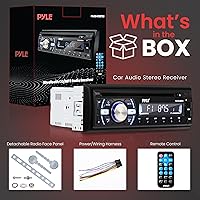
  • Included Accessories: Package contents include a power and wiring harness, metal mounting chassis, trim frame cover, and the wireless remote control.
  • Audio Encoding: Supports stereo audio output mode with standard stereo encoding across all input sources.
  • Model Number: The manufacturer model identifier for this unit is PLCD43BTM, used for warranty registration and part identification.
  • Brand: Manufactured and sold under the Pyle brand by Sound Around, a company known for budget-to-mid-range consumer audio products.

Related Reviews

Citreal Marine Bluetooth Stereo Receiver
74%
76%
Water Resistance
83%
Bluetooth Performance
81%
Ease of Installation
61%
Sound Quality
79%
AM/FM Reception
More
Pyle PLMRM29BT Marine Stereo Receiver
72%
88%
Ease of Installation
72%
Bluetooth Reliability
67%
Sound Quality
81%
Value for Money
58%
Marine Durability
More
Pyle PLMR88W Marine Stereo Receiver
66%
78%
Value for Money
84%
Ease of Installation
51%
Build Quality
67%
Sound Quality
53%
Connectivity Options
More
Sony DSXM55BT Marine Stereo Receiver
81%
83%
Bluetooth Connectivity
76%
Sound Quality
78%
Build & Marine Durability
89%
Ease of Installation
54%
Display Readability
More
GUZARE GR306 Marine Bluetooth Stereo Receiver
75%
88%
Weather & Water Protection
83%
Bluetooth Reliability
76%
Sound Quality
86%
Ease of Installation
58%
Display Readability
More
Pyle PTA42BT Bluetooth Karaoke Stereo Amplifier
76%
88%
Ease of Setup
84%
Bluetooth Connectivity
79%
Microphone Performance
86%
Talk-Over Function
67%
Power & Volume Output
More
Pyle PLCDBT75MRB Marine Stereo Receiver Kit
71%
88%
Ease of Installation
83%
Bluetooth Performance
61%
Sound Quality
71%
Weather Resistance
79%
Value for Money
More
Pyle PLMR91UB Marine Stereo
82%
89%
Waterproof Performance
76%
Bluetooth Connectivity
83%
Sound Quality
90%
Ease of Installation
85%
Durability in Marine Environments
More
VOXXBASS Bluetooth Marine Radio Receiver
86%
92%
Durability and Waterproofing
87%
Sound Quality
90%
Bluetooth Connectivity
75%
Ease of Installation
85%
Compatibility with Devices
More
Pyle PDA69BU Stereo Amplifier Receiver
75%
83%
Bluetooth Connectivity
74%
Sound Quality
79%
Build Quality
86%
Value for Money
88%
Input Versatility
More

FAQ

Honest answer — neither, really. The Pyle PLCD43BTM Marine Bluetooth Stereo Receiver is designed for marine environments, but it does not carry an IP waterproof rating. It can handle occasional light spray and humidity reasonably well, but it is not built to take direct water exposure or heavy rain repeatedly. If you boat in consistently rough or saltwater conditions, you would be better served by a unit with a certified IPX rating.

In most cases, yes. This is a standard single-DIN unit, which is the most common head unit size in both boats and cars. As long as your current stereo slot fits a single-DIN receiver — which is roughly 7 inches wide and 2 inches tall — this head unit should drop right in. The included metal chassis and trim frame help fill any minor gaps around the edges for a clean finish.

Most users report solid, stable Bluetooth connections for the duration of a boating session once the initial pairing is done. The pairing process itself is quick with both iPhones and Android phones. The one known annoyance is that the unit does not always reconnect automatically when you power it back on after it has been off — you may need to manually re-pair occasionally rather than having it connect on its own.

The 300-watt figure is a peak power rating, not a continuous or RMS output — and that distinction matters a lot. In real-world terms, you are getting roughly 75 watts per channel at peak, and the practical usable output is lower than that. For a typical set of marine coaxial speakers on a pontoon or fishing boat, this is plenty of power for normal listening. It is not going to be mistaken for a high-powered aftermarket amp, but it drives a standard four-speaker setup without issue at reasonable volumes.

Yes, and this is actually one of the more useful features of this head unit. The rear panel includes RCA line-out jacks, which let you run a signal to a dedicated external amplifier. So you can start with the internal amp and basic speakers, and expand the system later without replacing the head unit itself.

This is one of the more consistent complaints from real buyers, so it is worth being upfront about it. AM/FM reception on this unit tends to underperform compared to older dedicated marine tuners, and several users have noted the FM signal is noticeably weaker than they expected. If you rely heavily on weather radio or local FM stations while boating, this is a real limitation. The antenna connection is a possible contributing factor, and using a quality external marine antenna can help somewhat, but do not expect premium tuner performance from this unit.

Yes, hands-free calling is built in. The unit has an integrated microphone on the faceplate, a dedicated call answer and end button, and it displays the caller's number on the LCD when a call comes in. It works well enough at slow speeds or at idle, but wind noise at higher speeds on open water can make it hard for the other person to hear you clearly. It is a practical feature for dock use or slow cruising, less so for underway conversations.

Realistically, no — not on a larger vessel. The remote range is short enough that it works fine if you are sitting very close to the helm, but on a pontoon or any boat where the seating area is more than a few feet from the stereo, the remote becomes unreliable. Think of it as a bonus for close-range use rather than a feature you can count on from across the deck.

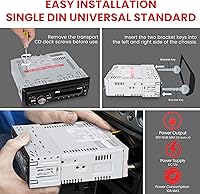
It is one of the easier marine stereo installs available at this price. The single-DIN chassis slides into a standard opening, and the included wiring harness removes a lot of the guesswork around connections. That said, if you have never worked with boat wiring before, spending 20 minutes watching a walkthrough video specific to your boat model is a smart move before you start. The main challenge is usually matching the harness wires to your existing boat wiring, which varies by manufacturer and year.

Longevity is genuinely a mixed picture based on real owner feedback. In freshwater environments with reasonable care — covering the boat, removing the faceplate during storage — many owners get multiple seasons out of it without major issues. In saltwater or high-humidity coastal environments, corrosion and intermittent electrical problems start showing up more frequently after the first or second season. It is not a set-and-forget unit for the long haul in demanding marine conditions, but for calm freshwater boating with proper care, it holds up better than its price might suggest.

Where to Buy