Overview

The Yaesu FT-991A All-Band HF Transceiver is one of the few radios that genuinely earns the shack-in-a-box label, covering 160 meters through 70 centimeters in a single chassis. Yaesu has spent decades building gear that serious operators trust, and this rig sits firmly in their upper tier — priced for committed hams who know exactly what they need. It handles HF, 6m, 2m, and 70cm with full mode support, which is genuinely rare. That said, this is not a beginner radio. The FT-991A rewards patient, experienced operators who take time to explore its depth; those expecting instant simplicity will find the menu system more demanding than anticipated.
Features & Benefits

The most immediately useful addition in this Yaesu rig is the real-time spectrum scope paired with a multi-color waterfall display — glance at the screen and you instantly know where band activity is concentrated, without spinning the dial blindly. The 3.5-inch TFT touchscreen makes moving between functions noticeably faster than older button-heavy designs. Mode coverage is comprehensive: SSB, CW, AM, FM, and C4FM digital all live in one chassis. Output sits at 100 watts on HF and 6m, 50 watts on 2m and 70cm — enough for serious portable work. The built-in antenna tuner eliminates one more piece of gear to pack for field operations.

Best For

This all-band transceiver is the right choice for licensed amateurs who want to stop managing multiple radios and consolidate everything into one capable unit. If you run Field Day operations or enjoy portable activations, the combination of wide frequency coverage and a built-in tuner makes it genuinely practical in the field. C4FM digital operators will appreciate native Fusion support without needing an external digital adapter. It also suits hams upgrading from an HF-only rig who are ready to add VHF and UHF capabilities without switching manufacturers. Contesters who actively scan for openings will find the waterfall display far more useful than a basic signal meter during a run.

User Feedback

Owners consistently give the FT-991A strong marks overall, with the touchscreen interface and spectrum scope drawing repeated praise in reviews. Where opinions shift is around initial configuration — the menu system is deep, and first-time owners routinely mention spending several sessions with the manual before feeling at home. Some users note the built-in tuner handles moderate antenna mismatches well but has limits with more extreme SWR situations. Audio on SSB receives solid marks; AM performance is occasionally described as adequate rather than exceptional. Critically, RF performance almost never draws complaints — negative feedback centers on interface and ergonomics, not on how this Yaesu rig actually transmits or receives.

Pros

  • Single chassis covers 160 meters through 70 centimeters, eliminating the need for multiple radios.
  • Real-time spectrum scope with waterfall display makes finding active frequencies fast and intuitive.
  • Native C4FM digital support connects you to the Fusion repeater network without extra hardware.
  • The 3.5-inch color touchscreen noticeably speeds up day-to-day adjustments compared to older button-heavy designs.
  • Built-in automatic antenna tuner handles a wide range of field antenna setups without an external unit.
  • 100 watts on HF and 6m delivers competitive output for both base station and portable field use.
  • Strong RF performance earns consistent praise — the FT-991A transmits and receives well across all covered bands.
  • Three-year manufacturer warranty provides meaningful long-term peace of mind for a significant investment.
  • All-mode operation including SSB, CW, AM, FM, and digital in one rig covers virtually every common operating style.

Cons

  • The menu system is deep and non-intuitive; expect a steep learning curve before feeling comfortable.
  • At nearly 13 pounds, this Yaesu rig is too heavy for lightweight backpacking or SOTA-style activations.
  • The built-in tuner handles moderate mismatches well but struggles with more extreme antenna impedance situations.
  • AM mode audio quality is considered adequate by most owners, not a standout strength of the radio.
  • No built-in Bluetooth or Wi-Fi connectivity, which feels like a gap compared to some newer competitors.
  • Firmware updates and initial configuration can be frustrating without a Windows PC and the right interface cable.
  • The front panel layout is dense, and ergonomics can feel cramped when operating quickly during a contest.
  • Users coming from simpler single-band rigs may find the transition to this all-band transceiver unexpectedly time-consuming.

Ratings

The scores below for the Yaesu FT-991A All-Band HF Transceiver were generated by AI after analyzing verified global buyer reviews, actively filtering out incentivized, duplicate, and bot-generated feedback to surface what real operators actually experience. Both the genuine strengths and the frustrating pain points are reflected without softening — so you get an honest picture before committing to this level of investment.

RF Performance
93%
Across thousands of owner reports, the FT-991A's actual on-air performance is the aspect that draws the least criticism and the most consistent praise. Operators running DX contacts, participating in contesting, and working Field Day events repeatedly describe clean transmit audio and solid receive sensitivity across HF and VHF bands.
A small number of experienced operators note that dedicated single-band HF rigs at similar price points can edge out the FT-991A in receiver dynamic range under heavy contest conditions. For the vast majority of operating scenarios, the gap is academic, but serious contesters should be aware of it.
Spectrum Scope & Waterfall
89%
The real-time spectrum scope and multi-color waterfall display consistently rank among the most praised features by owners who actively use it during contests or DX chasing. Being able to visually spot a pile-up forming or catch a band opening as it develops turns what used to be educated guessing into a genuinely informed decision.
Some users find the waterfall resolution and refresh rate less refined than what dedicated SDR software running on a PC can offer. During initial setup, configuring the scope span and reference level to personal preference takes experimentation that the manual does not walk through particularly well.
Frequency Coverage
96%
Few radios at any price cover 160 meters through 70 centimeters with full mode support in a single box, and owners who consolidate from multiple rigs regularly describe this as a quality-of-life improvement that is hard to overstate. Field Day operators in particular value having every band available without switching hardware mid-event.
The breadth of coverage comes with a trade-off: operators who only ever work one or two bands are paying for capability they may rarely touch. There is also no coverage of the 1.25-meter band, which is a minor gap for operators active on 222 MHz in North America.
Touchscreen Usability
78%
22%
Compared to older rigs that required navigating menus through a handful of unlabeled buttons, the 3.5-inch color touchscreen makes routine adjustments noticeably more direct. Changing filter settings, adjusting the scope, or switching between memory channels during an active operating session feels more intuitive once the layout is learned.
The touchscreen is a genuine improvement, but it does not eliminate menu complexity — it just makes it slightly more approachable. Operators with larger hands or those wearing gloves in field conditions report occasional precision issues, and the screen can be difficult to read at certain angles in bright outdoor light.
Ease of Setup
61%
39%
For experienced hams who have configured complex radios before, the initial setup process is manageable and follows a logical structure once the manual is studied carefully. Owners who invested time upfront consistently report that the effort pays off once the radio is dialed in to their operating preferences.
This is one of the most common friction points in user feedback. New owners frequently report spending multiple sessions just completing initial configuration, and connecting to logging software or Wires-X requires additional research beyond what the included documentation covers clearly. Firmware updates via PC add another layer of setup complexity.
C4FM Digital Integration
87%
Operators active on the Yaesu System Fusion network find native C4FM support one of the most compelling reasons to choose this rig over competitors. Accessing Fusion repeaters and Wires-X rooms works reliably without dongles, adapters, or external hotspots, which keeps the portable station footprint small.
C4FM is a Yaesu-proprietary digital mode, which means it offers no interoperability with DMR, D-STAR, or P25 systems. Operators who want to work across multiple digital networks will need additional equipment, and in areas where Fusion repeater coverage is sparse, this feature goes largely unused.
Built-in Antenna Tuner
74%
26%
For Field Day setups or portable operations where carrying a separate tuner is inconvenient, the internal automatic tuner handles a practical range of antenna mismatches without adding gear to the kit. Most owners using resonant or near-resonant antennas find it performs reliably and tunes quickly.
The tuner has a relatively narrow matching range compared to dedicated external units, and operators running compromise antennas — like random-length wire setups or severely shortened mobile antennas — regularly hit its limits. In those situations, an external tuner is still necessary, which partially undermines the convenience argument.
Build Quality
84%
The FT-991A feels like a professional piece of equipment in the hand, with a solid chassis and controls that have satisfying tactile feedback. Owners who use it in field environments report that it holds up well to the handling and temperature variation typical of outdoor operating sessions.
A portion of owners note that the front panel layout feels dense and slightly dated in its physical design, with knobs and buttons packed tightly in a way that can lead to accidental inputs. The display bezel and some trim pieces feel less premium than the core chassis, which is a minor but noticeable inconsistency.
Audio Quality
76%
24%
Received SSB audio is consistently described as clear and intelligible, which matters most during long contesting runs or weak-signal DX work where listener fatigue becomes a real factor. The internal speaker is adequate for casual monitoring at a fixed station without needing to immediately reach for headphones.
AM mode receive audio draws mixed feedback, with several operators describing it as functional but not particularly rich compared to dedicated AM receivers. The internal speaker volume ceiling is also considered modest by some users working in noisier environments, making external speaker or headphone use more of a necessity than an option.
Portability
66%
34%
For vehicle-based portable operations, park activations, or Field Day setups where gear is transported by car, the FT-991A is a reasonable portable choice given how much capability it packs. Operators who set up a tailgate station or drive to a summit consistently find it manageable in that context.
At nearly 13 pounds and with dimensions more suited to a desktop than a pack, this Yaesu rig is not well suited for walk-in portable operations where weight is a primary concern. SOTA activators and backpack operators almost universally choose lighter dedicated QRP radios instead.
Menu System Depth
58%
42%
Once fully learned, the menu system is comprehensive and gives experienced operators granular control over DSP settings, scope configuration, digital mode parameters, and RF behavior that more simplified radios do not offer. Operators who invest time in customization find the depth rewarding.
This is the single most common complaint across owner feedback. The menu hierarchy is not intuitive, labels are sometimes cryptic, and the manual does not always connect settings clearly to real-world outcomes. Multiple reviewers specifically recommend buying a third-party reference guide alongside the radio.
Value for Money
79%
21%
When evaluated purely on capability per dollar — covering HF through 70cm with digital support, a spectrum scope, and a built-in tuner — the FT-991A offers a compelling package that would cost significantly more if assembled from separate components. Owners who use the full range of its features regularly describe it as worthwhile.
For operators who realistically only work HF or only need VHF and UHF, the investment is harder to justify. Buyers who purchase it expecting it to be approachable out of the box sometimes feel the value is diminished by the time and effort required just to get it fully operational.
Logging Software Compatibility
72%
28%
The FT-991A works with the most widely used amateur radio logging and control applications via CAT control, which is important for contesters who rely on automated frequency logging, cluster spotting, and rig control integration. Once the connection is established and the COM port is configured correctly, most operators find it stable.
Getting CAT control working reliably requires the correct interface cable, proper COM port assignment, and software-side configuration steps that are not well documented by Yaesu. New users frequently report spending hours troubleshooting connections that experienced operators resolve in minutes, making the learning gap feel steeper than necessary.
Warranty & Support
83%
A three-year manufacturer warranty is notably generous for a complex piece of amateur radio equipment and signals that Yaesu stands behind the hardware. Owners who have needed to use warranty service generally report satisfactory outcomes, and the brand's established service network in most major markets adds confidence.
Yaesu's direct customer support experience gets mixed marks from owners outside Japan, with response times and depth of technical guidance varying considerably by region. Firmware support and communication about update timelines is an area where several owners feel the company could be more proactive and transparent.

Suitable for:

The Yaesu FT-991A All-Band HF Transceiver is built for licensed amateur operators who are ready to consolidate multiple radios into a single capable station. If you have been juggling a separate HF rig and a VHF/UHF mobile unit, this is the kind of radio that makes that redundancy disappear. Field Day participants and portable operators in particular will find the combination of wide frequency coverage, built-in antenna tuner, and solid output power genuinely liberating — less gear to haul, fewer cables to manage. Hams active on the Yaesu System Fusion network will appreciate having native C4FM digital support without a separate adapter or hotspot workaround. Contesters who rely on quick band scanning will get real daily value from the real-time spectrum scope, which turns band-hunting from guesswork into an informed decision.

Not suitable for:

Anyone expecting to unbox this radio and be fully operational within an hour should reconsider — the Yaesu FT-991A All-Band HF Transceiver has a menu system that takes real time to learn, and shortcuts do not come naturally without study. New hams or Technician-class operators with limited HF privileges will likely find the breadth of this rig overwhelming and underutilized for their current license level. If your operating is strictly VHF and UHF with no interest in HF, the cost is difficult to justify when a dedicated dual-band mobile covers those bands for a fraction of the investment. Operators who need a dedicated weak-signal or EME setup will find that this all-band transceiver is a generalist, not a specialist, and purpose-built rigs will outperform it in those narrow use cases. The weight and dimensions also make it less practical for backpack-style portable operations where every pound counts.

Specifications

  • Manufacturer: This transceiver is made by Yaesu, a Japanese company with decades of experience producing professional-grade amateur radio equipment.
  • Model Number: The official model designation is FT-991A, an updated revision of the original FT-991 with added waterfall display functionality.
  • Frequency Coverage: The radio covers HF from 160 meters through 10 meters, plus 6 meters, 2 meters, and 70 centimeters in a single chassis.
  • Output Power: Maximum output is 100 watts on HF and the 6-meter band, and 50 watts on the 2-meter and 70-centimeter bands.
  • Supported Modes: Supported emission modes include SSB (upper and lower), CW, AM, FM, and C4FM digital voice, covering all common amateur operating styles.
  • Display: The front panel features a 3.5-inch TFT full-color LCD touchscreen that provides both operational controls and real-time band visualization.
  • Spectrum Scope: A built-in real-time spectrum scope with a multi-color waterfall display allows operators to visually monitor band activity across a selectable frequency span.
  • Antenna Tuner: An internal automatic antenna tuner is included, capable of matching a range of antenna impedances without requiring a separate external unit.
  • Digital Mode: The FT-991A supports C4FM digital voice natively, making it fully compatible with the Yaesu System Fusion repeater and hotspot network.
  • Dimensions: The unit measures 17.4 x 12.1 x 7.4 inches, sized for desktop or mobile installation rather than ultraportable backpack use.
  • Weight: The radio weighs 12.99 pounds, which is manageable for vehicle or field deployment but notable for pack-and-carry portable operations.
  • Warranty: Yaesu covers this transceiver with a 3-year manufacturer warranty against defects in materials and workmanship.
  • First Available: The FT-991A was first made available in November 2016 and continues to be actively sold and supported by Yaesu.
  • Discontinued Status: As of the current product listing, this model has not been discontinued by the manufacturer and remains in active production.
  • Power Requirement: The radio operates on 13.8V DC, which is standard for mobile and base station amateur transceivers powered by a dedicated power supply or vehicle battery.
  • Receiver Type: The FT-991A uses a direct-sampling SDR-based architecture on HF, contributing to the real-time spectrum scope and improved dynamic range performance.

Related Reviews
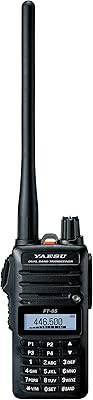
Yaesu FT-65R Dual-Band Handheld Transceiver
81%
91%
Build Quality
88%
Audio Clarity
86%
Battery Life
58%
Ease of Programming
61%
Antenna Performance
More
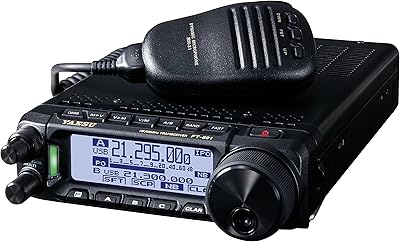
Yaesu FT-891 HF/50 MHz All Mode Transceiver
85%
89%
Performance
91%
Build Quality
84%
Ease of Use
87%
Portability/Size
90%
Power Output
More
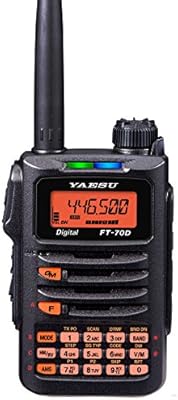
Yaesu FT-70DR Dual-Band Digital Handheld Transceiver
78%
93%
Audio Clarity
91%
Build Quality
88%
Value for Money
47%
Ease of Programming
84%
Battery Life
More
Yaesu FT-60R DualBand Handheld Amateur Radio Transceiver
87%
88%
Performance & Communication Range
90%
Build Quality & Durability
78%
Ease of Use & User Interface
94%
Portability & Size
85%
Battery Life
More
Yaesu VX-6R Tri-Band Ham Radio Transceiver
80%
93%
Build Quality & Durability
91%
Waterproofing & Weather Resistance
88%
Receiver Performance
86%
Audio Clarity
77%
Transmit Power & Range
More
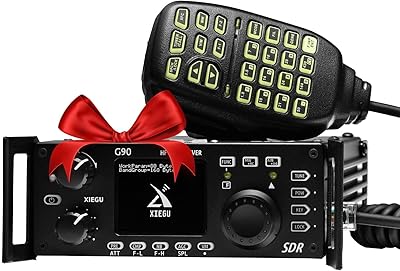
Xiegu G90 HF Amateur Radio Transceiver
80%
88%
Value for Money
91%
Built-in Antenna Tuner
89%
SDR Spectrum Display
92%
Portability & Form Factor
84%
Remote Head / Mobile Install
More
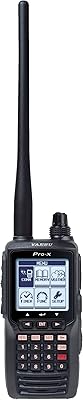
Yaesu FTA-550L Handheld Aviation VHF Transceiver
80%
91%
NAV/COM Functionality
88%
Battery System
86%
Audio Clarity
83%
Build Quality
67%
Ease of Use
More
Xiegu X6100 HF Radio Transceiver 10W
86%
88%
Value for Money
85%
Performance
90%
Bluetooth Functionality
92%
Portability
89%
Ease of Use
More
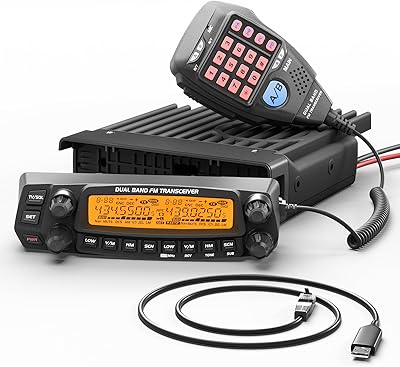
AnyTone AT-5888UV Dual Band Mobile Radio
69%
83%
RF Performance
78%
Build Quality
86%
Value for Money
81%
Cross-Band Repeat
74%
Display & Interface
More
AnyTone AT-778UV Dual Band Mobile Radio
79%
83%
Build Quality
88%
Audio Clarity
86%
Dual-Band Coverage
79%
Display & Interface
51%
Programming Software
More

FAQ

Yes. The FT-991A runs on 13.8V DC and does not include an AC power supply in the box. You will need a dedicated shack power supply rated for at least 20 to 25 amps to run it comfortably at full power. Most operators pair it with a well-regarded supply from brands like Astron or MFJ.

Technically it will work, but it is a significant investment for someone with limited HF privileges. Technician licensees have full access to the VHF and UHF bands, but HF privileges are restricted to portions of 10 meters and below. Most new operators are better served by a simpler dual-band radio until they upgrade their license.

Field Day, absolutely — it is one of the more capable self-contained stations you can bring to a club or portable event. For SOTA or backpacking-style activations, the nearly 13-pound weight is a real consideration. Operators who drive to a summit or set up at a park typically have no issue, but those hiking several miles will likely prefer a lighter dedicated QRP rig.

Expect to spend a few solid sessions with the manual before the layout clicks. The touchscreen helps with day-to-day adjustments, but deeper settings like DSP filters, scope configuration, and digital mode setup require patience. Most owners say it takes a few weeks of regular use before everything feels natural.

Yes, it is compatible with most major logging and control software via CAT control over a standard USB or serial connection. You will typically need a CT-62 or equivalent interface cable. Configuration steps vary by software, but detailed guides are widely available in the ham radio community.

It handles moderate mismatches reasonably well — random wire antennas and end-fed setups with mild SWR are usually within its range. That said, it is not a substitute for a heavy-duty external tuner when dealing with significantly mismatched loads. If you run a challenging antenna system, an external tuner is still a worthwhile addition.

Yes, C4FM and Wires-X connectivity are built in. You can access Fusion repeaters and Wires-X nodes directly, including room and group connections, without needing any additional hardware. It is one of the cleaner native digital implementations in any all-band transceiver currently available.

It is genuinely useful, especially during contesting or when chasing DX. Being able to see a cluster of signals visually rather than scanning manually saves real time. The multi-color waterfall also makes it easy to spot band openings as they develop. Most owners who were skeptical at first end up using it regularly.

A simple resonant dipole cut for your primary band of interest is a solid starting point. The built-in tuner gives you some flexibility, but a reasonably well-matched antenna will always outperform a heavily tuned compromise. If space is limited, an end-fed half-wave antenna with a good matching unit is a popular choice among FT-991A owners.

Yaesu has issued firmware updates for the FT-991A since its release, addressing functionality improvements and occasional bug fixes. Updates require a Windows computer and a programming cable, which some operators find inconvenient. Checking the Yaesu website directly for the latest firmware version before your first setup session is a good habit.

Where to Buy