


Overview

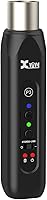
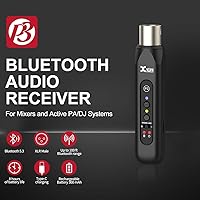
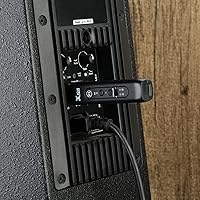
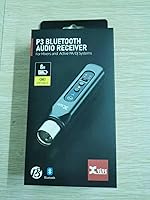
The Xvive P3 Bluetooth XLR Receiver does something surprisingly useful: it lets you stream audio from a phone or tablet directly into a professional mixer, PA system, or powered speaker — no cables, no adapters, no fuss. Xvive has built a solid reputation in the wireless audio accessories space, and the P3 fits neatly into that lineup as a practical tool aimed at gigging musicians, DJs, and AV installers who need a quick wireless input on existing gear. One thing worth clarifying upfront: this is a receive-only device. It brings audio in from your Bluetooth source — it does not transmit to wireless speakers or headphones. If that is what you need, look elsewhere.

Features & Benefits

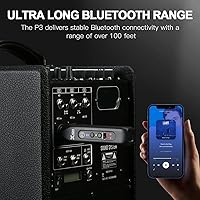
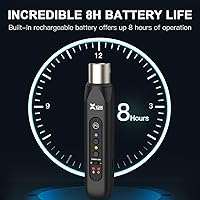
Running on Bluetooth 5.0, the P3 holds a noticeably more stable connection than older receivers — and that stability matters when you are mid-set and cannot afford a dropout. The quoted range of 30 meters is realistic in most indoor environments, giving a vocalist or presenter genuine room to move without glancing anxiously at the mixer. The built-in LiPo battery delivers a solid 8 hours on a single charge, covering most gigs without needing a wall outlet nearby. The XLR output plugs straight into a mixer channel or active PA with no level-matching gymnastics. At under four ounces, this wireless audio adapter is light enough to leave sitting on a console full-time.

Best For

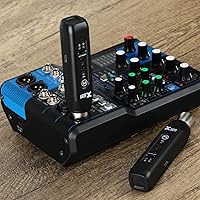
This Bluetooth XLR receiver is most at home with solo performers who stream backing tracks from a phone — plug it into a channel on your mixer and you are done. DJs will appreciate having a wireless backup input for handing off audio between devices without fumbling with cables mid-transition. Churches and event venues with a fixed mixing desk benefit too, since the P3 effectively adds a Bluetooth channel to almost any XLR-equipped board without rewiring anything. Educators and conference room presenters will find it similarly handy. It is also a low-cost way for audio techs to retrofit Bluetooth into older gear without replacing an entire mixer.

User Feedback

Most buyers highlight how quickly the P3 pairs with a phone and how little setup it demands — plug in, pair, play. That experience resonates especially with non-technical users who just want audio on a PA without a sound engineer's help. Where feedback splits is latency: for backing tracks or playlists, Bluetooth delay is barely noticeable, but anyone using it for video playback will likely spot lip-sync issues. Build quality opinions are mixed — the XLR connector feels sturdy to most, though a handful report loosening after heavy road use. Battery life tracks close to the advertised figure under moderate use. In dense RF environments like festivals, connection dropouts are a real enough risk that experienced users often keep a cable backup nearby.

Pros

  • Pairs with a phone or tablet in seconds — no app, no driver, no configuration headache.
  • Bluetooth 5.0 delivers a noticeably stable connection compared to older wireless adapters in the same category.
  • The XLR output plugs directly into any standard mixer channel or powered PA without level-matching issues.
  • Built-in rechargeable battery covers a full day of moderate use on a single charge.
  • Weighing under four ounces, the P3 is light enough to leave plugged into a mixer permanently without straining the connector.
  • 30-meter range gives performers and presenters real freedom of movement across a typical stage or meeting room.
  • USB recharging means no hunting for AA batteries before a gig or event.
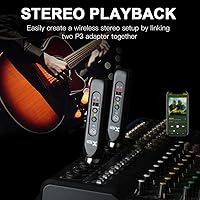
  • Stereo output preserves the full width of a backing track or playlist rather than collapsing it to mono.
  • Works with any Bluetooth-enabled source device — no proprietary ecosystem or app lock-in.
  • A practical, low-cost way to add a wireless audio input to older professional gear that was never designed for Bluetooth.

Cons

  • Bluetooth latency, while reduced, is still present — not reliable enough for tight video sync work.
  • Receive-only design means it cannot double as a transmitter to wireless speakers or headphones.
  • The XLR connector has been reported to loosen with heavy road use, raising durability concerns for touring applications.
  • Connection stability can degrade noticeably in crowded RF environments like festivals or dense multi-device venues.
  • No physical gain or volume control on the unit itself — output level depends entirely on the source device.
  • No visual battery indicator, so you cannot easily tell how much charge remains before a performance.
  • The plastic housing feels utilitarian rather than road-tough, which may give pause to users who gig frequently.
  • Only one output channel at a time, limiting use cases where multiple simultaneous wireless sources are needed.

Ratings

The scores below reflect an AI-driven analysis of verified buyer reviews for the Xvive P3 Bluetooth XLR Receiver, sourced globally and filtered to remove incentivized, spam, and bot-generated feedback. Each category is scored independently to give you an honest picture of where this wireless audio adapter genuinely delivers — and where real users have run into friction. Both the strengths and the recurring frustrations are weighted equally so you can make a clear-eyed buying decision.

Ease of Setup
93%
This is the single most praised aspect across user feedback. Performers plug it into a mixer channel, power it on, and their phone finds it in the Bluetooth device list within seconds — no app, no pairing code, no manual required. For solo artists setting up alone before a gig, that kind of frictionless experience genuinely matters.
A small number of users reported occasional pairing failures when switching between multiple source devices in quick succession, requiring a power cycle to reset the connection. This is rare but worth knowing if you plan to hand off audio between two phones during a live set.
Connection Stability
78%
22%
In typical indoor environments — rehearsal rooms, small venues, houses of worship — the P3 holds a rock-solid connection throughout a full performance. Bluetooth 5.0 is a meaningful upgrade over older chipsets, and most users in controlled settings report zero dropouts across extended sessions.
In RF-dense environments like outdoor festivals, multi-vendor trade shows, or venues with heavy Wi-Fi and wireless mic traffic, users have noted intermittent dropouts and reduced effective range. Audio professionals using this at larger events often keep a backup cable input available as a precaution.
Audio Quality
81%
19%
For backing tracks, playlists, and general music playback, the audio quality through this wireless audio adapter is clean and full-sounding. Stereo output is preserved through the XLR, so a well-mixed track retains its width and depth when fed into a PA — noticeably better than mono-collapsing alternatives.
Discerning listeners and audio engineers note that the Bluetooth codec does introduce some compression artifacts, particularly on complex orchestral or hi-fi material played at high volumes. It is not a replacement for a direct wired feed when pristine signal quality is the top priority.
Latency
67%
33%
For pure audio use — backing tracks, ambient music, DJ transitions — the latency is low enough that the vast majority of users simply do not notice it. Bluetooth 5.0 has brought the delay down to a range that is practically imperceptible when your ears are not cross-referencing against a visual source.
Anyone using this to stream video from a phone or laptop to a projector setup will almost certainly notice a lip-sync offset. Multiple reviewers flagged this specifically for presentation and worship video applications, and it is a real enough limitation that it rules the P3 out entirely for those scenarios.
Battery Life
83%
Real-world battery performance closely tracks the advertised 8-hour figure under moderate use, which is enough to cover most full-day events, multi-set gigs, or all-day conference sessions on a single charge. The built-in LiPo cell also means no scrambling for AA batteries between sets.
There is no reliable battery level indicator beyond a basic low-battery LED, which means you cannot monitor remaining charge during a performance. Users who forgot to charge before a gig reported unexpected shutdowns, which is avoidable but frustrating given the lack of a visible gauge.
Wireless Range
74%
26%
For stage performances and presentation environments, the effective range is generous — most users operating within 15 to 20 meters experience no degradation at all, and performers moving around a standard stage have no issues maintaining a clean signal.
The 30-meter specification is realistically achievable only in line-of-sight, obstacle-free conditions. In real venues with walls, gear racks, and competing signals, the practical ceiling is often closer to 15 to 20 meters, which may be limiting for larger rooms or outdoor setups.
Build Quality
62%
38%
For fixed or semi-permanent installations — a church mixer, a conference room PA, a home studio rack — the housing feels perfectly adequate and the XLR connector seats firmly. Users who leave the P3 plugged in rather than regularly removing it have very few complaints about durability.
Users who frequently unplug, transport, and re-plug the unit have reported the XLR connector loosening over several months of heavy road use. The plastic shell also feels less robust than the price point might suggest, and a few users noted the chassis showing wear marks after regular touring use.
Value for Money
86%
For the specific problem it solves — adding a Bluetooth input to an XLR-equipped system without buying a new mixer — the P3 represents genuinely good value. Users who understand its scope consistently describe it as exactly what they needed at a price that makes sense for the use case.
Buyers who discovered post-purchase that this is receive-only, or who expected wired-level audio fidelity, felt the value proposition did not hold up for their needs. The price is fair only if the product matches your actual use case — mismatched expectations are the primary source of negative value ratings.
Portability
91%
At under four ounces and roughly the size of a deck of cards, the P3 tucks easily into a gig bag, a cable pouch, or a laptop bag without adding meaningful bulk. Musicians who carry their own PA gear appreciate not having one more heavy item to manage.
The compact size means there is no onboard display, no physical volume knob, and no gain trim — all level control has to happen at the mixer or on the source device. That is a reasonable trade-off, but users who prefer hands-on hardware control will notice the absence.
Compatibility
88%
Since it presents itself as a standard Bluetooth audio device, the P3 pairs with virtually any modern smartphone, tablet, or laptop regardless of operating system. No proprietary ecosystem, no dongle, and no firmware pairing between devices makes it universally accessible.
Compatibility with older Bluetooth devices (pre-4.0) can be inconsistent, and a few users with aging laptops reported difficulty maintaining a stable connection. Additionally, there is no support for higher-quality codecs like aptX HD or LDAC, which limits the audio ceiling for users with compatible high-res source devices.
Charging Convenience
79%
21%
USB charging is genuinely practical — users can top up from a power bank in a green room, a laptop on a tour bus, or a standard phone charger at home without carrying a dedicated wall brick. For performers already managing multiple USB-charged devices, it fits naturally into an existing routine.
Charging and operating simultaneously is not reliably supported on this unit, which means if the battery runs out mid-performance you cannot simply plug in and continue without interruption. The lack of fast-charge support also means a rushed pre-gig charge may not reach full capacity in time.
Device Pairing Management
58%
42%
Initial pairing is quick and painless, and the unit remembers the last connected device and reconnects automatically on power-up — a practical touch that saves time during repeated use with the same phone or tablet.
Multi-device management is essentially nonexistent. Switching from one paired device to another requires manually disconnecting the first from its own Bluetooth settings, and there is no way to maintain a device list or toggle between saved sources. For scenarios involving two performers sharing one system, this is a real workflow friction point.

Suitable for:

The Xvive P3 Bluetooth XLR Receiver is purpose-built for anyone who regularly needs to feed audio from a phone, tablet, or laptop into a professional sound system without running a physical cable across a stage or room. Solo performers and singer-songwriters get the most obvious value — stream a backing track from your phone straight into a mixer channel and free yourself from being tethered to a table. DJs will find it a reliable wireless backup input, handy when handing off audio between two devices mid-set without awkward cable swaps. Houses of worship, event venues, and conference rooms with a fixed XLR-equipped mixer can essentially add a permanent Bluetooth input channel without rewiring anything or buying new gear. For educators, corporate presenters, and AV installers working on a tight budget, this wireless audio adapter is a low-effort, high-utility retrofit that most existing professional rigs can accommodate in under a minute.

Not suitable for:

If you are hoping the Xvive P3 Bluetooth XLR Receiver will function as a wireless microphone system or transmit audio to wireless speakers, you will be disappointed — it receives Bluetooth audio and outputs via XLR, and that is the full scope of what it does. Anyone who needs to sync audio tightly to video should approach this with caution; Bluetooth 5.0 reduces latency meaningfully but does not eliminate it, and lip-sync drift during video playback is a real enough issue that it has frustrated more than a few buyers. Professional touring engineers or studio engineers with high standards for signal purity may find the audio chain less transparent than a wired connection. The build quality, while acceptable for casual or semi-regular use, has drawn concerns from users who put it through heavy road use, particularly around the XLR connector loosening over time. And in environments with dense RF congestion — think crowded festivals or multi-device conference setups — connection reliability can become unpredictable enough to warrant a wired fallback.

Specifications

  • Bluetooth Version: The unit uses Bluetooth 5.0, which provides improved connection stability and lower latency compared to earlier Bluetooth standards.
  • Wireless Range: Rated for up to 30 meters of operating range in open, unobstructed conditions.
  • Output Connector: Audio is delivered via a standard male XLR connector, compatible with professional mixers, PA speakers, and stagebox inputs.
  • Audio Output Mode: Outputs stereo audio, preserving the left and right channels of the source signal rather than summing to mono.
  • Battery Type: Powered by a built-in Lithium Polymer (LiPo) rechargeable cell — no user-replaceable batteries required.
  • Battery Life: Rated for up to 8 hours of continuous playback on a full charge under normal operating conditions.
  • Charging Method: Recharges via USB, allowing use with standard wall adapters, power banks, or laptop ports.
  • Weight: The unit weighs 3.84 oz (approximately 109 g), making it light enough for permanent installation on a mixer or rack.
  • Dimensions: Physical dimensions measure 7 x 3 x 2 inches, giving it a compact footprint suitable for tight cable management areas.
  • Compatible Systems: Designed to work with XLR-equipped mixers, active PA speakers, and DJ systems that accept a balanced or unbalanced XLR input.
  • Device Function: Functions exclusively as a Bluetooth audio receiver — it accepts an incoming wireless signal and outputs it via XLR; it cannot transmit audio.
  • Color: Available in black, with a matte plastic housing intended to blend into standard rack and mixer environments.
  • Source Compatibility: Pairs with any Bluetooth-enabled device including smartphones, tablets, and laptops — no proprietary app or dongle required.
  • Signal Chain: Receives a stereo Bluetooth stream and converts it to an analog XLR output signal suitable for line-level or mic-level inputs depending on the mixer channel gain setting.
  • Included In Box: Package includes the P3 receiver unit and a USB charging cable; no external power supply or carrying case is included.

Related Reviews
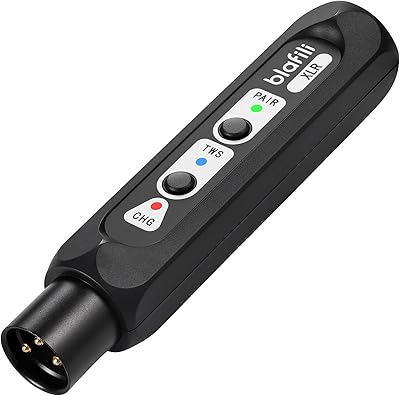
blafili XLR
blafili XLR
78%
88%
Signal Clarity
84%
Bluetooth Codec Performance
91%
Ease of Setup
76%
Build Quality
83%
Battery Life
More
Citreal Marine Bluetooth Stereo Receiver
74%
76%
Water Resistance
83%
Bluetooth Performance
81%
Ease of Installation
61%
Sound Quality
79%
AM/FM Reception
More
1Mii DS220 Bluetooth Receiver
78%
88%
Sound Quality
81%
Wireless Range & Stability
74%
Codec Support & Negotiation
91%
Output Versatility
86%
OLED Display & Interface
More
FiiO BTR3K
FiiO BTR3K
80%
88%
Sound Quality
91%
Balanced Output Performance
86%
Bluetooth Codec Support
72%
Connection Stability
93%
Portability & Form Factor
More
August MR285 Bluetooth Transmitter Receiver
78%
83%
Ease of Setup
76%
Bluetooth Connectivity Stability
78%
NFC Pairing Performance
79%
Audio Quality
72%
Latency Performance
More
Swiitech T1 Bluetooth Transmitter Receiver
75%
91%
Ease of Setup
83%
Connection Stability
74%
Latency Performance
52%
Device Compatibility
79%
Build Quality
More
FiiO BTA30Pro Bluetooth Receiver/Transmitter
84%
94%
Audio Quality
80%
Setup & Installation
88%
Bluetooth Range & Connectivity
85%
Portability & Design
86%
Build Quality
More
Pyle P2001BT Bluetooth Stereo Preamplifier Receiver
71%
83%
Value for Money
79%
Bluetooth Connectivity
76%
Microphone Performance
71%
Power Output & Volume
88%
Input Versatility
More
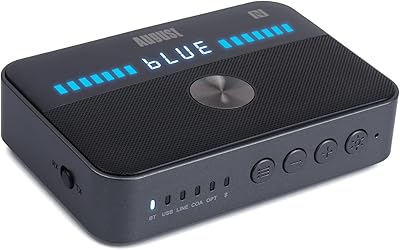
BluDento BLT-HD Bluetooth Hi-Fi Receiver
77%
91%
Audio Output Quality
88%
Codec Support & Compatibility
74%
Bluetooth Range
93%
Ease of Setup
77%
Connection Stability
More
VOXXBASS Waterproof Bluetooth Marine Stereo Receiver
72%
81%
Value for Money
72%
Waterproofing
77%
Bluetooth Performance
68%
Sound Quality
53%
Power Output
More

FAQ

Yes, in practice it will plug into any standard XLR input. Just be mindful of the gain staging on your mixer channel — treat it similarly to a line-level source and bring the channel gain up gradually to avoid clipping or a very low signal.

No. The Xvive P3 Bluetooth XLR Receiver is a receive-only device — it takes a Bluetooth signal from your phone or tablet and outputs it through XLR. It cannot broadcast audio to wireless speakers, headphones, or any other Bluetooth receiver.

For purely audio applications like backing tracks or music playback, most users find the latency imperceptible. However, if you plan to play video from your phone and need the audio to sync precisely with the picture, you will likely notice a small but real lip-sync offset — Bluetooth 5.0 reduces latency but does not eliminate it entirely.

Power the unit on, then open Bluetooth settings on your phone and look for the P3 in the available devices list. There is no pairing code or companion app required — it behaves like a standard Bluetooth audio output device. Most users report it pairs within about 10 to 15 seconds.

No, the P3 connects to one source device at a time. If you want to switch sources mid-event, you will need to disconnect the first device and pair the second, which takes a moment and may cause a brief audio gap.

Unfortunately, this wireless audio adapter does not have a visual battery gauge or multi-level indicator. There is typically a basic LED that signals low battery, but you cannot monitor a precise percentage. For longer events, it is worth charging fully before use and keeping a cable backup on hand just in case.

In a clean indoor environment with minimal obstructions, most users do get close to the rated range. In real-world situations — walls, other wireless devices, crowded venue RF environments — expect the practical range to be somewhat shorter. For most stage or meeting-room applications, range is rarely the limiting factor.

You should avoid enabling 48V phantom power on the channel where the P3 is connected. The unit is not designed for phantom power and sending it down the line could potentially damage the device. Always make sure phantom power is off on that specific channel.

A full charge typically takes around 1.5 to 2 hours from a standard USB port. The unit charges via USB, so you can top it up from a laptop, a phone charger, or even a power bank before a gig.

The P3 holds up well for semi-regular or moderate use — it is a solid enough piece of kit for rehearsals, smaller venues, and fixed installations. That said, a handful of users who travel frequently with it have reported that the XLR connector can loosen with repeated plugging and unplugging over many months. If you are loading in and out every weekend, it is worth handling the connector area with some care and checking it periodically.

Where to Buy