Overview

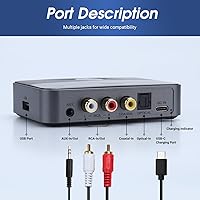
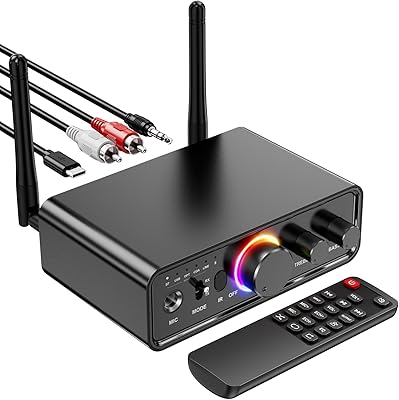
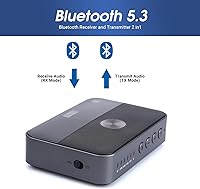
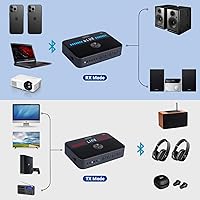
The August MR285 Bluetooth Transmitter Receiver is one of those rare adapters that actually earns its dual-mode label — it genuinely works as both a transmitter and a receiver, which matters more than it sounds. Many buyers confuse the two: transmit mode pushes audio wirelessly from a source like a TV or stereo out to headphones, while receive mode pulls audio from a phone into wired speakers. This transmitter-receiver handles both, connecting via 3.5mm AUX, RCA, optical TOSLINK, coaxial, or USB. At a mid-range price, the rechargeable battery and compact 10cm body make it practical for travel or home setups without needing a wall outlet nearby.
Features & Benefits

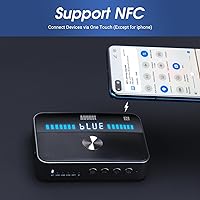
Bluetooth 5.3 keeps things current, but the standout convenience here is NFC tap-to-pair — on compatible Android devices, you just tap to connect rather than hunting through menus. The MR285 also supports multipoint, meaning two devices can be connected at the same time, which is handy when two people want to listen to the same TV without buying two separate adapters. The wired bypass mode is a quieter but genuinely useful feature: it routes coaxial or optical audio through to AUX or RCA without any wireless conversion, so the original signal stays intact. Latency sits under 40ms, which is generally fine for TV shows and casual listening, though anyone sensitive to lip-sync issues may still catch a slight delay.

Best For

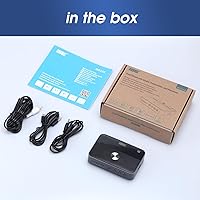
This Bluetooth adapter is a natural fit for anyone trying to add wireless headphone support to an older TV or hi-fi system that only has optical or coaxial outputs. It is also worth considering if you travel with audio gear and want to avoid carrying a tangle of cables — one device covers most connection scenarios you will run into. Households where two people share audio from the same source will find the dual-connection setup genuinely useful. Android users get the added bonus of NFC quick pairing, a small but real time-saver. Car setups with AUX or RCA inputs can also benefit, especially since the built-in mic handles basic hands-free calling without requiring a separate device.

User Feedback

Buyers tend to respond positively to how quickly the NFC pairing works in practice, though a few Android users note it does not always connect on the first tap with every device. Battery life generally holds up to the advertised range under normal use, but heavy multipoint streaming can trim that down noticeably. The LED screen earns consistent praise for readability in dim lighting, though a handful of users find it harder to see outdoors in direct sunlight. On the downside, the ABS plastic build feels lightweight in hand — functional, but not particularly solid. Some buyers also report occasional dropouts with optical connections over longer periods, which is worth keeping in mind if that is your primary input.

Pros

  • Genuinely covers both transmit and receive modes, replacing two separate adapters with one.
  • Bluetooth 5.3 with NFC tap-to-pair speeds up Android device connections significantly at gatherings.
  • Multipoint support lets two headphones share one audio source simultaneously, a rare feature at this price.
  • Wired bypass mode converts optical or coaxial to AUX or RCA with no wireless compression involved.
  • USB-C charging with a roughly 2-hour turnaround makes it easy to top up before heading out.
  • The LED screen displays mode and connection status at a glance, reducing guesswork during setup.
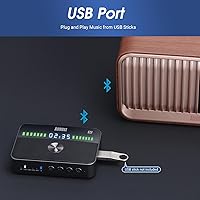
  • Five connection types — AUX, RCA, optical, coaxial, and USB — cover almost every legacy and modern scenario.
  • Compact enough to slip into a jacket pocket while still covering home, travel, and car use cases.
  • Battery life holds up well under moderate daily use, comfortably reaching the higher end of its stated range.

Cons

  • NFC pairing is inconsistent across Android brands, sometimes requiring multiple tap attempts before connecting.
  • Running two simultaneous Bluetooth connections can introduce occasional audio stutters, especially at range.
  • The ABS plastic body scuffs and marks easily during regular travel without a protective case included in the box.
  • Optical connectivity has drawn reports of intermittent dropouts during extended sessions on some units.
  • The LED screen becomes difficult to read in direct sunlight, limiting outdoor usability.
  • Battery life drops noticeably below the advertised figure when multipoint streaming is active continuously.
  • Accidental button presses inside a bag can switch the device out of its set mode without any warning.
  • The built-in microphone handles quiet environments adequately but deteriorates quickly in road or ambient noise.
  • USB audio source compatibility is narrower than the spec sheet implies, leaving some media players unrecognized.

Ratings

The scores below for the August MR285 Bluetooth Transmitter Receiver were generated by our AI system after analyzing verified buyer reviews from multiple global markets, with spam, bot activity, and incentivized feedback actively filtered out. The results reflect a genuine cross-section of real-world experiences — from living room TV setups to daily commutes — and both the strengths and the recurring frustrations are represented without sugarcoating.
Ease of Setup
83%
Most users get the MR285 running within a few minutes of unboxing, especially when using NFC pairing on Android. The LED screen helps a lot here — seeing the current mode displayed clearly removes the guesswork that plagues many similar adapters.
A handful of buyers found the initial mode selection confusing, particularly those who did not realize they needed to choose between transmit and receive before pairing. The manual has been described as thin on detail for edge-case configurations.
Bluetooth Connectivity Stability
76%
24%
Under normal home or car conditions with devices within a reasonable range, the Bluetooth 5.3 connection holds reliably for most users. Multipoint users appreciate being able to keep two devices paired without constantly re-connecting when switching sources.
Some buyers report intermittent dropouts when walls or other interference are in the path, and a small but consistent group notes that maintaining two simultaneous connections can occasionally introduce brief audio stutters, particularly with one device at the edge of range.
NFC Pairing Performance
78%
22%
Android users who have tried NFC tap-to-pair generally describe it as a genuine convenience at parties or shared listening situations. When it works, the speed difference compared to manual Bluetooth pairing is noticeable and appreciated.
NFC reliability is inconsistent across Android device brands — some users report needing two or three attempts before a successful tap connection. iOS users get no NFC benefit at all, which limits this feature to a subset of the audience.
Audio Quality
79%
21%
For everyday listening — TV shows, podcasts, background music — the audio output is clean and clear. Users running the wired bypass mode for optical or coaxial sources consistently report the lossless conversion delivers noticeably better fidelity than the wireless path.
Audiophiles pushing the wireless side through high-quality headphones sometimes notice a softening of detail compared to a direct wired connection. At louder volumes through some RCA setups, a faint background hiss has been mentioned by a small number of users.
Latency Performance
72%
28%
For casual TV watching and music streaming, the sub-40ms latency is broadly acceptable and most users do not notice any meaningful lip-sync delay during normal viewing. Car audio use cases in particular tend to receive positive feedback on this front.
Users watching action-heavy content or sports at higher attention levels do occasionally catch a slight audio delay, especially when two devices are connected simultaneously. Gaming or any real-time audio application is generally not recommended given the inherent wireless delay.
Battery Life
74%
26%
Under moderate use — a few hours of wireless audio per day — the battery comfortably reaches the upper end of the advertised range, and users appreciate that USB-C charging means no hunting for a proprietary cable.
Running multipoint connections continuously, or using the built-in microphone alongside audio playback, tends to reduce real-world battery life noticeably below the 12-hour headline figure. A couple of users flagged that the battery indicator jumps from full to low without much warning before the RGB alert kicks in.
Charging Speed
86%
The roughly 2-hour charge time is consistently confirmed by buyers and is one of the less controversial aspects of the MR285. For travelers packing up in the morning, a short top-up session is enough to cover a full day of use.
There is no pass-through charging — the adapter must be stationary while charging, which means a session interruption if you forget to charge the night before. A few users would prefer a car-charger-while-using option.
Build Quality
62%
38%
The MR285 feels solidly assembled for an ABS plastic unit at this price point, and most users treat it practically rather than expecting a premium feel. The buttons have reasonable tactile feedback and the ports feel secure during cable insertion.
The lightweight plastic body does not inspire confidence during regular travel, and a few users have mentioned scuff marks appearing after modest bag use. At this price, buyers seem to accept it, but those who handle their gear roughly may find it feels fragile over time.
LED Display Readability
81%
19%
In dim or indoor lighting conditions, the full-colour LED screen is genuinely useful — current mode, volume levels, and connection status are all readable at a glance without having to pick the device up. The RGB low-battery alert is an appreciated visual cue.
Outdoors or in direct sunlight, the screen becomes harder to read and some users describe it as nearly washed out. In bright car interiors on sunny days, checking the connection status requires angling the device deliberately toward shade.
Multipoint Functionality
74%
26%
The ability to connect two headphones to one TV simultaneously is the feature that drives a lot of purchases, and for many households it works exactly as described. Couples watching TV late at night without disturbing others are a recurring positive use case in feedback.
Some users find that audio sync between two simultaneously connected headphones can drift slightly, which is distracting for shared movie watching. Switching between the two connected devices does not always feel instantaneous and occasionally requires a manual disconnect-reconnect.
Input and Output Versatility
88%
The breadth of supported connections — optical TOSLINK, coaxial, RCA, 3.5mm AUX, and USB — means the MR285 covers almost any legacy or modern audio scenario a buyer is likely to encounter. This is frequently cited as a primary purchase reason.
USB audio support is more limited than some buyers expect, and a small number of users found their specific USB media source was not recognized. The inclusion of so many port types also means the physical layout feels slightly cramped on the device body.
Wired Bypass Mode
82%
18%
Users who discovered the bypass mode specifically for converting optical or coaxial to AUX or RCA without any Bluetooth overhead tend to rate it as an underappreciated highlight. It effectively turns the MR285 into a straightforward format converter when wireless is not needed.
The bypass mode is not well-documented out of the box, and several buyers only found out it existed after reading online. Optical bypass in particular has drawn occasional reports of connectivity dropping after extended sessions, though this appears limited to a minority of units.
Microphone Quality
61%
39%
For quick, occasional hands-free calls in the car, the built-in mic is adequate — callers on the other end can generally hear well enough for short conversations at low road noise levels.
On highways or in noisy environments, background noise bleeds into calls noticeably and call clarity suffers. Users who rely on hands-free calling regularly tend to be disappointed; this mic is better treated as a backup feature than a primary hands-free solution.
Portability
85%
At roughly 10cm and just over 100 grams, the MR285 slips into a jacket pocket or small bag compartment without any fuss. Travelers who previously carried multiple single-purpose adapters appreciate consolidating everything into one unit.
The unit lacks a carrying pouch or protective case in the box, so the ports and screen are exposed during transit. A few users have dealt with accidental button presses inside bags, which can switch the device out of the intended mode without warning.
Value for Money
84%
At its mid-range price, the MR285 offers a feature count that typically demands a higher spend from competing brands. Buyers who needed just one more feature than cheaper alternatives offered — NFC, multipoint, or bypass mode — tend to feel the price premium is justified.
Buyers who only need basic Bluetooth transmitter functionality will find they are paying for features they will never use. A small number of users feel the ABS build and occasional connectivity inconsistencies do not fully match the expectations set by the asking price.

Suitable for:

The August MR285 Bluetooth Transmitter Receiver is a strong match for anyone who owns older audio equipment — a TV with only optical or coaxial output, a vintage hi-fi stereo, or a car with RCA inputs — and wants to add wireless headphone capability without replacing the hardware. It is particularly well-suited to households where two people regularly share audio from a single source, like a couple watching late-night TV without disturbing others. Android users who juggle multiple devices will find the NFC tap-to-pair feature a genuine time-saver. Travelers who have previously resorted to carrying three or four different adapters for different scenarios will appreciate having one device that handles most situations. Anyone who occasionally needs a purely wired audio conversion path — optical to AUX, for example — will also get real utility from the bypass mode, which requires no Bluetooth at all.
Not suitable for:

The August MR285 Bluetooth Transmitter Receiver is not a good fit for buyers who need a reliable primary hands-free calling device — the built-in microphone is adequate for quiet environments but struggles noticeably on highways or in noisy surroundings. Dedicated audiophiles who need bit-perfect wireless audio transmission will likely find the Bluetooth path falls short of their expectations, even if the wired bypass mode satisfies them. iOS-only households will miss out on the NFC pairing feature entirely, which removes one of the more practical differentiators. Gamers or anyone needing near-zero audio latency for real-time applications should look elsewhere, as even sub-40ms wireless delay can cause problems in those contexts. If your use case is simple — a single Bluetooth device paired to a single source — there are cheaper, more straightforward adapters available, and paying for multipoint and bypass capabilities you will never use does not make much financial sense.
Specifications

  • Bluetooth Version: The adapter uses Bluetooth 5.3, offering improved connection stability and lower power consumption compared to older Bluetooth generations.
  • NFC Support: NFC tap-to-pair is supported for compatible Android devices, enabling quick connection without manually navigating Bluetooth settings.
  • Multipoint: Up to two devices can be connected simultaneously in both transmit and receive modes, allowing shared or dual-source audio.
  • Latency: Wireless audio latency is rated at under 40ms, which is broadly acceptable for casual TV and music listening scenarios.
  • Battery Capacity: A built-in 1000mAh lithium battery powers the adapter for approximately 10 to 12 hours of wireless audio on a full charge.
  • Charge Time: Charging via the USB-C port takes approximately 2 hours to reach a full battery from empty.
  • Audio Inputs/Outputs: Supported connections include 3.5mm AUX, stereo RCA, optical TOSLINK, coaxial, and USB audio, covering both legacy and modern equipment.
  • Bypass Mode: A wired bypass mode routes coaxial or optical audio directly to AUX or RCA output with no Bluetooth conversion, preserving lossless signal quality.
  • Microphone: A built-in microphone supports hands-free calling when the adapter is used in a car or portable configuration.
  • Display: A full-colour LED screen shows the current mode and connection status at all times, with an RGB indicator that alerts the user to low battery.
  • Dimensions: The adapter measures 3.94 x 2.95 x 0.98 inches, making it compact enough for pocket or travel bag storage.
  • Weight: The unit weighs 3.74 ounces (approximately 105g), contributing to its travel-friendly portability.
  • Body Material: The outer casing is constructed from ABS (Acrylonitrile Butadiene Styrene) plastic, a lightweight and impact-resistant thermoplastic.
  • Operating Modes: The device supports two primary modes: transmitter mode, which sends audio wirelessly from a source to headphones or speakers, and receiver mode, which brings wireless audio into a wired system.
  • Power Source: The adapter can operate on battery power or via wired USB-C connection, giving users flexibility in both portable and stationary setups.
  • Manufacturer: The MR285 is manufactured by August, a UK-based consumer electronics brand known for audio and smart home accessories.
  • Model Number: The official model number for this unit is MR285B, as listed by the manufacturer.
  • Battery Type: One lithium metal battery is required and is included with the device at the time of purchase.

Related Reviews

FiiO BTA30Pro Bluetooth Receiver/Transmitter
84%
94%
Audio Quality
80%
Setup & Installation
88%
Bluetooth Range & Connectivity
85%
Portability & Design
86%
Build Quality
More
Swiitech T1 Bluetooth Transmitter Receiver


75%
91%
Ease of Setup
83%
Connection Stability
74%
Latency Performance
52%
Device Compatibility
79%
Build Quality
More
ifofo 3-in-1 Bluetooth 5.0 Audio Adapter
79%
88%
Ease of Setup
84%
Bypass Mode Performance
79%
Audio Latency
71%
Wireless Range
76%
Dual Device Pairing
More
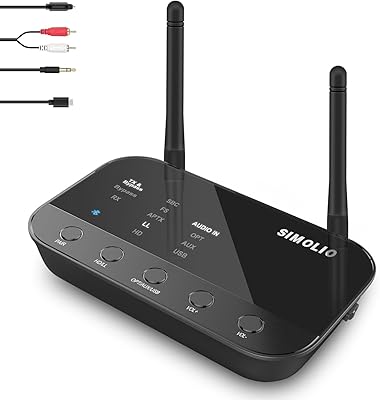
Pyle PDWM17BT Bluetooth Transmitter Receiver

68%
78%
Value for Money
83%
Ease of Setup
61%
Bluetooth Connection Stability
58%
Sound Quality
63%
Battery Life
More
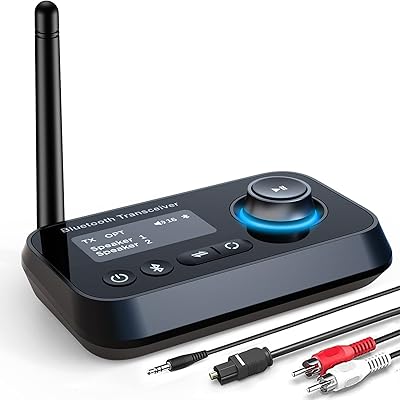
SIMOLIO JH-202D Bluetooth Transmitter Receiver
73%
78%
Ease of Setup
83%
Audio Quality
71%
Low Latency Performance
82%
Dual Headphone Streaming
79%
Bypass Mode (Headphones + Soundbar)
More
Beeitzie B103 Bluetooth 5.4 Transmitter Receiver
86%
89%
Audio Performance
93%
Ease of Setup
91%
Battery Life
85%
Connectivity Range
76%
Dual-Link Functionality
More
SOOMFON B9203A Bluetooth Transmitter Receiver
79%
88%
Latency Performance
83%
Audio Quality
74%
Ease of Setup
91%
Display & Interface
78%
Dual-Device Pairing
More
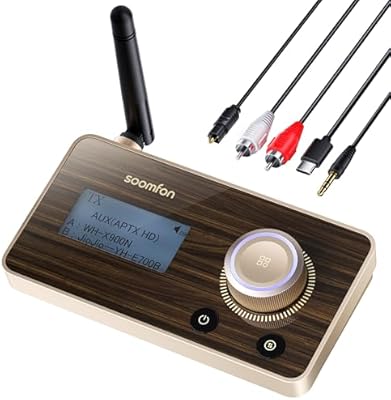
MepvabKY T10 Bluetooth Transmitter Receiver
80%
86%
Build Quality
82%
Bluetooth Connectivity
77%
Audio Latency
89%
Battery Life
84%
Battery Indicator
More
PONYBRO M8
PONYBRO M8
74%
91%
Ease of Setup
78%
Connection Stability
74%
Audio Quality
76%
Low Latency Performance
88%
Port & Compatibility Range
More
MOREGAX M18 Bluetooth Audio Receiver Transmitter
74%
91%
Ease of Setup
78%
Connection Stability
73%
Audio Quality
88%
Port Compatibility
67%
Wireless Range
More

FAQ

Transmit mode is for sending audio wirelessly from a source — like a TV or stereo — out to Bluetooth headphones or speakers. Receive mode does the opposite: it takes audio from a Bluetooth device, such as your phone, and plays it through wired speakers or a hi-fi system. You need to choose the right mode before pairing, which trips up a lot of first-time users.

No — the NFC tap-to-pair feature only works with compatible Android devices. iPhone users can still connect via standard Bluetooth pairing, but they will not get the quick tap functionality that Android users enjoy.

Yes, that is one of the most practical use cases for this adapter. In transmit mode, the multipoint feature lets two Bluetooth headphones connect simultaneously to a single TV source, so two people can watch without waking anyone else up. Just keep in mind that both headphones need to be within a reasonable range to maintain a stable connection.

Under normal conditions — one or two connected devices, moderate volume — most users get close to the advertised 10 to 12 hours. If you are running two devices simultaneously via multipoint for extended periods, expect something closer to 8 to 9 hours. It is a solid performer for daily use but not quite unlimited.

Bypass mode lets you convert an optical or coaxial audio signal to AUX or RCA output without any Bluetooth involved at all. It is useful if you just need a format converter — for example, connecting an older amplifier to a TV that only has an optical output — and you want to avoid any wireless compression or latency in the chain.

Yes, that is one of the most common setups for this transmitter-receiver. You connect the optical TOSLINK cable from your TV to the adapter, set it to transmit mode, and pair your Bluetooth headphones. If you want a wired connection instead, the bypass mode can also route that optical signal out through a 3.5mm or RCA jack.

It is reasonable for the price, but do not expect a premium feel. The ABS plastic body is light and functional, but it does pick up scuffs with regular bag use. Since there is no included pouch or case, wrapping it in a small cloth bag is a good idea if you plan to carry it daily.

Absolutely — this is a straightforward use case. Set the adapter to receive mode, connect it to your car stereo via the 3.5mm AUX cable, and pair your phone. The built-in microphone also means you can handle hands-free calls, though road noise at highway speeds will reduce call clarity noticeably.

The screen remains active to display the current mode and connection status, which is part of why it is useful at a glance. The impact on battery life is minimal, but the screen can be harder to read in bright sunlight outdoors, so it is better suited to indoor or in-car environments.

The MR285 supports a maximum of two simultaneous Bluetooth connections — it is a hard limit of the multipoint feature. A third device will not connect until one of the existing connections is dropped. You can pair additional devices in memory and switch between them manually, but active simultaneous audio is capped at two.

Where to Buy