Overview

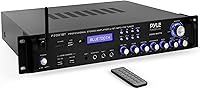
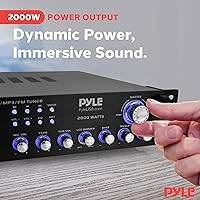
The Pyle P2001BT Bluetooth Stereo Preamplifier Receiver is a budget-friendly preamplifier packed with more inputs and controls than you would typically expect at this price point — built for casual entertainers, karaoke nights, and home theater setups rather than critical listening rooms. Its rack-mountable chassis makes it a natural fit for basement bars or dedicated media spaces. One thing worth addressing upfront: the 2000W peak power figure is a marketing maximum, not a continuous rating. Real-world output sits considerably lower depending on impedance load. That is still plenty loud for most home applications, but going in with accurate expectations makes the experience far more satisfying.
Features & Benefits

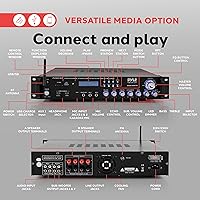
What this Pyle receiver does well is pack an unusual number of source options into a single unit — USB drives, SD cards, FM tuner, CD player, aux, and RCA, all without needing an external switcher. Bluetooth pairing with phones and tablets is straightforward. The dual microphone inputs with adjustable echo stand out most practically; plug in two mics and you have an instant karaoke or small event setup without a separate mixer. Front-panel rotary knobs handle bass, treble, echo, and volume with a reasonably tactile feel. One honest note: a built-in cooling fan runs during operation, which is noticeable in quieter listening environments.

Best For

This preamplifier receiver hits a specific sweet spot — buyers who want versatility without spending serious money. If you host karaoke or parties and want mic support without a separate mixer cluttering your setup, this unit handles it cleanly. It also suits people consolidating multiple source components — a turntable, a streaming device, a TV — into one central hub. The rack-mount form factor makes it a solid pick for basement entertainment rooms or small venues that need a tidy, structured solution. It is not the right choice for anyone chasing high-fidelity audio; the frequency response and noise floor both reflect the price tier honestly.

User Feedback

The P2001BT sits at roughly 3.8 stars across several hundred reviews — a score that tells a fairly honest story. Buyers consistently highlight easy Bluetooth pairing and the sheer volume it can push, often calling it surprisingly loud for the price. Build quality draws positive mentions too, with most users finding it sturdier than expected. On the downside, the FM tuner draws frequent criticism for weak signal reception, and some owners report a noticeable hum at higher volume levels. A number of buyers also flag long-term reliability concerns, noting issues surfacing after a year or two of regular use. Pyle's customer support experience comes across as inconsistent in the feedback.

Pros

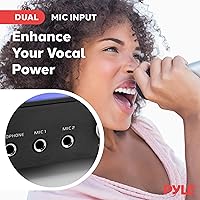
  • Dual mic inputs with echo adjustment make it a ready-to-go karaoke setup without extra hardware.
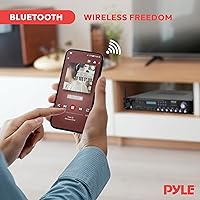
  • Bluetooth pairing with phones and tablets is fast, stable, and works reliably within a normal room range.
  • Seven distinct input types cover virtually every home audio source in a single unit.
  • Rack-mount brackets and a remote control are included, reducing extra purchase costs from day one.
  • Pushes genuinely impressive volume levels for casual party and entertainment use.
  • Built-in overload and short-circuit protection adds a practical safety layer during heavy use.
  • LED backlit display with a dimmer is a small but genuinely useful touch for dark media room setups.
  • Surprisingly solid exterior build for a budget-tier receiver — feels more substantial than the price suggests.

Cons

  • The 2000W power rating is a peak marketing figure; real continuous output is a fraction of that number.
  • An audible cooling fan runs constantly, which becomes distracting during quieter listening sessions.
  • FM tuner sensitivity is weak — expect static or poor lock in any area without strong broadcast signals.
  • A noticeable noise floor hum appears at higher volumes, particularly when microphones are in use.
  • Knob and input reliability issues are reported by a meaningful number of owners after 12 to 24 months.
  • Bluetooth audio quality is basic with no high-quality codec support, limiting wireless fidelity.
  • The included manual is thin on detail, leaving newer users to troubleshoot impedance and echo settings alone.
  • Customer support from Pyle is inconsistently rated, making post-purchase issues harder to resolve smoothly.
  • EQ adjustments are coarse and imprecise, with small knob movements sometimes producing disproportionate shifts.

Ratings

The Pyle P2001BT Bluetooth Stereo Preamplifier Receiver has been scored by our AI rating engine after processing hundreds of verified buyer reviews from multiple global markets, with spam, incentivized, and bot-flagged submissions actively filtered out before analysis. Scores reflect how real owners actually experience this preamplifier receiver day-to-day — not how it reads on a spec sheet. Both the genuine strengths and the recurring frustrations are represented transparently across every category below.
Value for Money
83%
For buyers setting up a basement entertainment room or a casual party space, the sheer number of features packed into this price tier is hard to argue with. Getting dual mic inputs, Bluetooth, FM tuner, and rack-mount hardware all in one box without spending significantly more is a real practical win.
A few owners feel the value proposition weakens after the first year, particularly if reliability issues surface. The gap between the marketed 2000W peak figure and real-world continuous output also leaves some buyers feeling the specs were oversold relative to what they paid.
Bluetooth Connectivity
79%
21%
Pairing with smartphones, tablets, and laptops is consistently reported as quick and hassle-free, even by buyers who are not particularly tech-savvy. Most users get a stable connection within a few seconds and find it holds reliably across a normal room-sized listening area.
Range limitations come up occasionally, with some users noting dropout when moving farther than about 30 feet. There is no aptX or higher-quality Bluetooth codec support, which keeps the wireless audio quality firmly in the functional rather than impressive category.
Microphone Performance
76%
24%
The dual mic input setup with adjustable echo is genuinely one of the most practical features here for anyone hosting karaoke nights or small events at home. Buyers frequently mention that plugging in two mics and dialing in the echo effect works well without needing a separate mixer in the chain.
At higher echo settings, some users report a muddiness that makes vocals harder to cut through the mix clearly. The mic preamp also picks up background hum on certain setups, which becomes more obvious in quieter passages between songs.
Power Output & Volume
71%
29%
Despite the inflated peak wattage marketing, most buyers are genuinely surprised by how loud this preamplifier receiver can get in a real room. For a backyard party, a basement bar, or a large living room, it pushes enough volume to fill the space without straining.
Savvy buyers who understand the difference between peak and RMS wattage feel misled by the 2000W headline figure. Real continuous power output is a fraction of that, and connecting high-impedance speakers at demanding volumes can expose the unit's actual ceiling.
Input Versatility
88%
Seven distinct input types in one unit at this price is genuinely uncommon. Buyers consolidating a turntable, a streaming device, a TV optical output, and a CD player appreciate not needing an external switcher or a more expensive receiver to manage multiple sources.
The SD card and USB playback functionality works, but format compatibility has limits — some users report issues with certain MP3 folder structures or higher-bitrate files not playing back reliably. The input labeling on the front panel can also be fiddly to read under dim lighting.
Build Quality
67%
33%
For its price bracket, the chassis feels reasonably solid and the front panel controls have a satisfying physical weight to them. The rack-mount brackets are a genuine bonus inclusion, and buyers setting this up in a dedicated media rack report it looking the part.
Closer inspection reveals some cost-cutting in the knob construction and rear-panel connector quality. A handful of long-term owners report that certain inputs or controls become intermittent after a year or more of regular use, suggesting the internal components reflect the budget price tier more honestly than the exterior does.
Sound Quality
62%
38%
For casual listening, background music at parties, or karaoke use where pristine audio fidelity is not the priority, this Pyle receiver delivers a perfectly acceptable sound. Bass and treble controls respond noticeably and give enough range for most everyday listening scenarios.
The noise floor is measurably higher than what you would find on a mid-range or audiophile-grade unit, and at higher volumes a background hiss becomes harder to ignore. The frequency response rolls off at the extremes in ways that more discerning listeners will find limiting.
FM Tuner
54%
46%
The FM tuner is a legitimate included feature rather than a pure checkbox item — in areas with strong broadcast signals, it picks up stations clearly enough for background listening in a home setting. The LCD display shows frequency cleanly.
Sensitivity is a recurring complaint across user reviews. In suburban or semi-rural areas, or anywhere with moderate signal interference, the tuner struggles to lock onto stations without noticeable static. Several buyers consider it one of the weakest functional components on the unit.
EQ & Control Layout
73%
27%
The rotary knob layout for bass, treble, echo, and master volume is intuitive enough that most buyers figure it out without reading the manual. The LED backlit display with dimmer control is a small but appreciated detail, especially for setups in darker rooms.
The knobs themselves lack the precision feel of higher-end units — small adjustments can sometimes produce bigger shifts than expected. The EQ range is fairly coarse, which limits how much fine-tuning is realistically possible for different speaker pairings.
Ease of Setup
81%
19%
Most buyers report being up and running within 20 to 30 minutes of unboxing, including Bluetooth pairing and basic speaker wiring. The included remote control and rack-mount brackets reduce the number of additional purchases needed right out of the box.
The manual has been described as thin on detail by several users, particularly around the microphone echo settings and speaker impedance matching recommendations. Buyers without prior receiver experience occasionally have to rely on community forums to fill in the gaps.
Cooling & Thermal Management
66%
34%
The built-in cooling fan does its job — the unit stays manageable thermally even during extended use at moderate to high volumes, and the overload protection circuitry has reportedly saved a few setups from damage during power fluctuations.
The fan is audible. In quiet listening environments or during low-volume background music sessions, the constant fan hum is noticeable enough to be distracting. This is one of those real-world details that does not appear in the product listing but comes up consistently in honest owner reviews.
Remote Control
69%
31%
Having a functional remote included at this price point is a convenience that buyers genuinely appreciate, particularly for rack-mounted setups where the unit might be installed below eye level or across the room from the primary seating area.
The remote feels lightweight and plasticky, and a few buyers report inconsistent response range requiring line-of-sight at shorter distances than expected. It covers the core functions but lacks some of the secondary controls available on the front panel directly.
Long-Term Reliability
57%
43%
A portion of owners who use this preamplifier receiver for casual weekend entertaining report no significant issues after one to two years. For light-duty use it holds up reasonably well, and the cooling fan likely contributes positively to sustained thermal health.
Reliability over the longer term is one of the more divided aspects in user feedback. A meaningful segment of buyers reports component issues — intermittent inputs, knob failures, or total unit faults — surfacing between 12 and 24 months of regular use. Pyle support experiences described in reviews are inconsistent.
Display & Interface
74%
26%
The LCD front panel display is clean and readable under normal conditions, showing source selection, volume levels, and FM frequency clearly. The LED backlight dimmer is a small but genuinely useful feature for home theater setups where ambient light control matters.
The display resolution and contrast are basic — nothing that will impress anyone coming from a more premium receiver. Under very bright ambient lighting the screen can wash out somewhat, making it harder to read quickly from across the room.

Suitable for:

The Pyle P2001BT Bluetooth Stereo Preamplifier Receiver is a strong fit for casual home entertainers who want a versatile, do-it-all hub without spending serious money on separate components. If you regularly host karaoke nights, backyard gatherings, or basement parties, the dual microphone inputs with echo control mean you can hand two people a mic and get going without routing anything through an external mixer. It also works well for anyone consolidating a messy stack of audio sources — a turntable, a streaming stick, a TV — into one centralized unit with a clean rack-mounted look. Buyers upgrading from a basic two-input stereo setup will find the jump in connectivity genuinely useful day-to-day. The rack-mountable chassis makes it a practical choice for dedicated media rooms, basement bars, or small venues where a tidy, structured installation matters more than bleeding-edge audio performance.
Not suitable for:

The Pyle P2001BT Bluetooth Stereo Preamplifier Receiver is not the right choice for anyone who prioritizes sound fidelity over feature count. Audiophiles or even casual listeners with quality bookshelf speakers will likely find the noise floor, limited frequency response, and coarse EQ adjustments frustrating rather than acceptable. The 2000W peak power headline is a marketing figure, not a realistic operating spec, so buyers expecting that kind of headroom for demanding speaker loads will be disappointed. Anyone planning to run this unit for extended daily sessions — rather than weekend entertaining — should also weigh the durability concerns raised by longer-term owners, as reliability tends to drop off after the first year or two of regular use. If FM radio reception matters to you, be aware the tuner is one of the weaker links on this unit, particularly in areas without strong broadcast signals. And if you need Bluetooth codec quality beyond basic streaming — for anything approaching high-resolution wireless audio — this preamplifier receiver is not built for that use case.
Specifications

  • Peak Power: The unit is rated at a maximum peak output of 2000W, which represents the absolute ceiling under ideal burst conditions rather than a sustained operating figure.
  • Continuous Power: Continuous RMS output is rated at 600W per channel at 2 ohms, 300W per channel at 4 ohms, and 200W per channel at 8 ohms.
  • Frequency Response: Audio frequency response is specified at 40Hz–15kHz with a tolerance of +/-2dB across the operating range.
  • S/N Ratio: The signal-to-noise ratio is rated at greater than 76dB, which is adequate for casual listening but trails behind mid-range and audiophile-grade receivers.
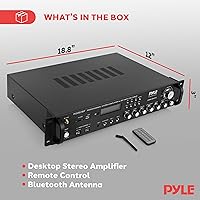
  • Dimensions: The chassis measures 13.78 x 16.93 x 3.15 inches, conforming to a standard rack-mount profile suitable for most home media rack enclosures.
  • Weight: The unit weighs 16.1 pounds, which is substantial enough to sit stably on a shelf but manageable for a single person to install into a rack.
  • Speaker Impedance: Compatible with speakers rated between 2 and 8 ohms, giving reasonable flexibility for pairing with a range of common home and budget PA speakers.
  • Channel Config: Configured as a 4-channel stereo unit with a dedicated RCA subwoofer output for adding a separate sub to the system.
  • Connectivity: Input and output options include Bluetooth, dual USB, SD card slot, FM tuner, 3.5mm aux jack, RCA audio in/out, and a CD player input.
  • Mic Inputs: Two independent microphone inputs are included, each with individual echo adjustment controls accessible directly from the front panel.
  • EQ Controls: Front-panel rotary knobs provide individual control over bass, treble, echo level, microphone volume, and master volume output.
  • Display: An LCD display with LED backlight illumination is built into the front panel, with a dimmer control to adjust brightness for different room environments.
  • Cooling: A built-in active cooling fan runs continuously during operation to manage internal temperatures during extended or high-volume use sessions.
  • Protection: Integrated overload and short-circuit protection circuitry is included to help prevent damage during power irregularities or speaker load faults.
  • Included Accessories: The package includes a handheld remote control and a set of rack-mount brackets for installation into a standard equipment rack.
  • Manufacturer: Manufactured by Pyle, a US-based consumer audio brand; the specific model designation is P2001BT.
  • Encoding: Audio encoding is stereo, with an output mode supporting stereo surround sound processing across connected speakers.
  • Controller: Primary control is via the front-panel interface with a hand remote included; there is no companion app or digital control surface support.

Related Reviews
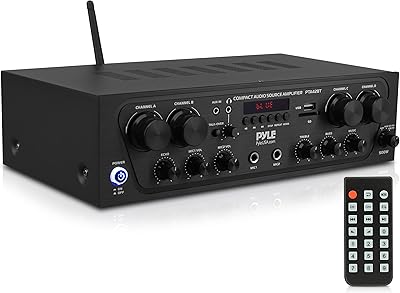
Pyle PTA42BT Bluetooth Karaoke Stereo Amplifier
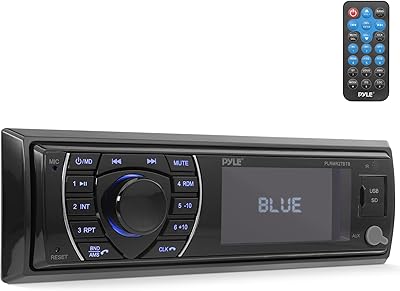
76%
88%
Ease of Setup
84%
Bluetooth Connectivity
79%
Microphone Performance
86%
Talk-Over Function
67%
Power & Volume Output
More
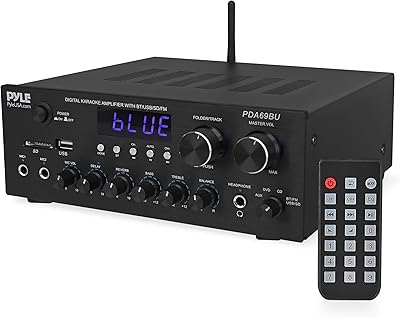
Pyle PDA69BU Stereo Amplifier Receiver
75%
83%
Bluetooth Connectivity
74%
Sound Quality
79%
Build Quality
86%
Value for Money
88%
Input Versatility
More
Citreal Marine Bluetooth Stereo Receiver
74%
76%
Water Resistance
83%
Bluetooth Performance
81%
Ease of Installation
61%
Sound Quality
79%
AM/FM Reception
More
Pyle PDA5BU Bluetooth Stereo Amplifier
82%
88%
Audio Performance
82%
Bluetooth Connectivity
71%
Build Quality
85%
Ease of Setup
90%
Input Versatility
More
Pyle PLMRM29BT Marine Stereo Receiver
72%
88%
Ease of Installation
72%
Bluetooth Reliability
67%
Sound Quality
81%
Value for Money
58%
Marine Durability
More
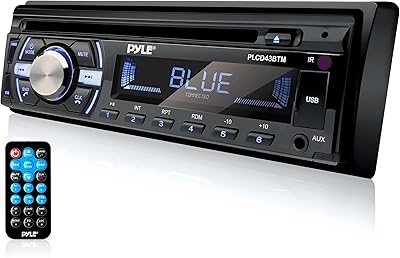
Pyle PLCD43BTM Marine Bluetooth Stereo Receiver
71%
88%
Ease of Installation
83%
Bluetooth Connectivity
74%
Sound Quality
54%
AM/FM Reception
71%
Hands-Free Calling
More
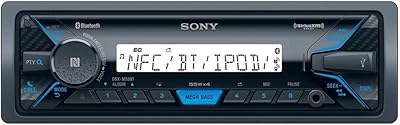
Sony DSXM55BT Marine Stereo Receiver
81%
83%
Bluetooth Connectivity
76%
Sound Quality
78%
Build & Marine Durability
89%
Ease of Installation
54%
Display Readability
More
Pyle PDWM17BT Bluetooth Transmitter Receiver
68%
78%
Value for Money
83%
Ease of Setup
61%
Bluetooth Connection Stability
58%
Sound Quality
63%
Battery Life
More
Pyle PHSKR28 Mini Stereo System
72%
74%
Sound Quality
67%
Amplifier Performance
83%
Bluetooth Connectivity
71%
CD & Physical Media Playback
88%
USB Recording Feature
More
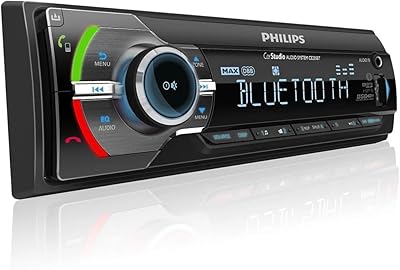
Philips Car Stereo Bluetooth Audio Receiver
82%
91%
Value for Money
88%
Sound Quality
75%
Bluetooth Performance
92%
Ease of Installation
85%
Connectivity Options
More

FAQ

It works with passive speakers — the kind without their own built-in amplifier. You connect them directly using the screw-type speaker terminals on the rear panel. Just make sure your speakers fall within the 2 to 8 ohm impedance range the unit supports, and you should be fine.

Honest answer: the 2000W figure is a peak marketing number, not a realistic operating wattage. Real continuous output is considerably lower depending on which speaker impedance you are running. That said, most users find it genuinely loud for home use — more than enough to fill a large room or basement space at a party without pushing the unit hard.

Yes, and this is actually one of the more practical use cases for this unit. There are two separate microphone inputs on the front panel, each with its own echo level adjustment. Plug in two mics, dial in the echo to taste, and you have a functional dual-singer karaoke setup without needing a separate mixer in the chain.

Bluetooth pairing is generally quick and straightforward with phones, tablets, and laptops. Range is roughly what you would expect from a standard Bluetooth receiver — solid within about 25 to 30 feet, but you may get occasional dropouts if walls or significant distance are involved. It does not support higher-quality codecs like aptX, so wireless audio quality is functional rather than exceptional.

It is noticeable. The fan runs continuously during operation, and in a quiet room during low-volume listening it produces an audible background hum. For party use or louder entertainment settings it gets masked easily, but if you plan to use this unit for relaxed, quiet background listening it is worth being aware of upfront.

Yes — the chassis is designed to standard rack dimensions and the package includes mounting brackets. The unit occupies a single rack unit height profile, so it should slot into most home media racks or equipment cabinets without modification.

There is a dedicated RCA subwoofer output on the rear panel specifically for this purpose. You would connect it to an active subwoofer — one with its own built-in amplifier — using a standard RCA cable. Passive subwoofers without their own amp would need additional hardware.

This is one of the weaker points on the unit, based on consistent buyer feedback. In areas with strong local FM broadcast signals it performs acceptably for casual background listening, but in suburban, rural, or signal-congested environments the tuner struggles to lock on cleanly and static is a common complaint. If FM radio is important to your use case, factor this limitation in before buying.

For light-duty use — occasional parties, weekend karaoke, casual entertaining — most owners report no major issues in the first year. Beyond that, a meaningful portion of longer-term owners describe intermittent input problems, knob degradation, or unit failures appearing in the 12 to 24 month range. It reflects the budget price tier honestly, so treating it as a casual-use unit rather than a daily-driver will likely extend its lifespan.

Only if your turntable has a built-in phono preamp or a line-level output. This Pyle receiver does not include a dedicated phono stage, which means a raw turntable signal straight from a cartridge will be too quiet and will sound thin or tinny. Many modern turntables include a built-in preamp with a switchable line output, and those connect without any problem via the RCA input.