Overview

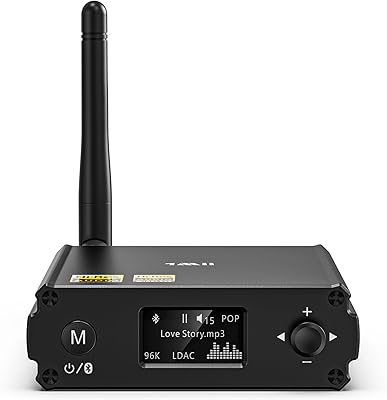
The BluDento BLT-HD Bluetooth Hi-Fi Receiver is, at its core, a compact bridge that lets you stream audio wirelessly to the wired stereo gear you already own. It has been on the market since 2018, and with nearly 1,000 ratings sitting well above 4 stars, it has clearly earned a loyal following. The price puts it squarely in mid-range territory — aimed at listeners who care about sound quality but aren't looking to spend serious money on a single accessory. One thing to get straight before buying: this is a Bluetooth DAC receiver, not an amplifier or speaker. It converts the wireless signal and sends it to your existing system; it doesn't drive anything on its own.
Features & Benefits

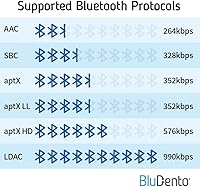
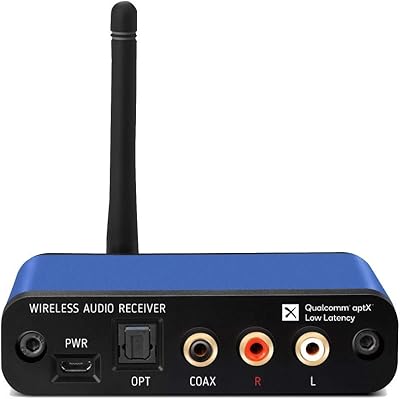
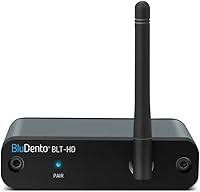
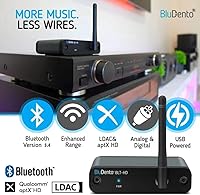
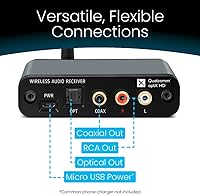
The BLT-HD supports an unusually wide codec range — LDAC and aptX HD at the top, which can carry near-lossless audio from compatible Android or Sony phones. Those codecs only matter, though, if your source device and streaming service both support high-resolution audio; otherwise you're defaulting to AAC or SBC like everything else. The Texas Instruments PCM5102A DAC handles analog conversion, and the difference in clarity over a cheap Bluetooth dongle is audible in a quiet listening room. You get three output options: stereo RCA for analog gear, plus optical Toslink and coaxial S/PDIF for digital connections. The Class 1 radio with an external antenna does push range further than the compact competitors.

Best For

This hi-fi Bluetooth adapter is a natural fit for anyone who owns a decent stereo — a vintage integrated amp, a preamp, powered bookshelf speakers — and wants to stream from a phone without compromising the sound chain. It makes particular sense for Android users with LDAC-capable devices, since that codec delivers a real step up in resolution over standard Bluetooth when the stars align. Home theater fans without native Bluetooth on their AVR will appreciate the digital output options, which keep the signal path clean. What this isn't built for: feature chasers. There's no app, no NFC tap-to-pair, no voice assistant hookup. You plug it in, pair it, and listen.

User Feedback

Across a large pool of verified buyers, the most consistent praise centers on audible sound quality improvement — especially from people who replaced a TV's built-in Bluetooth or a generic receiver dongle. Many noticed cleaner highs and better detail retrieval, which tracks with what a dedicated DAC chip brings to the table. Range feedback is more mixed: open-room performance is solid, but walls and furniture reduce the practical distance noticeably, so don't expect spec-sheet numbers in a real home. A recurring minor frustration is the absence of NFC pairing and any kind of display, which competing units at similar prices sometimes include. A few users also reported occasional reconnection hiccups after waking a source device from sleep — not a dealbreaker, but worth knowing.

Pros

  • LDAC and aptX HD support delivers genuinely better wireless audio quality for compatible Android devices.
  • The Texas Instruments DAC chip produces clean, low-noise analog output that outperforms cheap Bluetooth dongles.
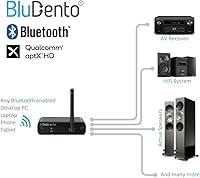
  • Three output types — RCA, optical, and coaxial — cover virtually every wired audio system you might own.
  • Class 1 Bluetooth with an external antenna gives it noticeably longer range than most compact receivers.
  • The tiny footprint tucks behind a receiver or rack shelf without adding visual clutter.
  • aptX Low Latency codec keeps audio in sync when connecting to a TV or watching video content.
  • Pairs quickly and reconnects reliably in normal single-room use with a consistent source device.
  • Has maintained a strong community rating across nearly 1,000 reviews over several years on the market.
  • Plug-and-play setup requires no app, no account, and no configuration — just pair and stream.

Cons

  • No NFC pairing means connecting a new device takes more steps than on some competing adapters.
  • iPhone and iPad users are limited to AAC, leaving LDAC and aptX HD completely inaccessible.
  • Real-world range drops considerably through walls, and results vary widely depending on your home layout.
  • Some users have reported occasional reconnection delays after a source device wakes from sleep.
  • No display or indicator beyond basic status lights makes troubleshooting connection issues less intuitive.
  • Powered by micro-USB rather than the more current USB-C standard, which may complicate cable management.
  • No volume control on the unit itself — output level is fixed, so you manage everything from the source or downstream gear.
  • LDAC benefits only materialize when both the source device and the streaming service support high-resolution audio files.

Ratings

The scores below for the BluDento BLT-HD Bluetooth Hi-Fi Receiver were generated by our AI after analyzing verified global buyer reviews, actively filtering out incentivized, duplicate, and bot-generated feedback to surface only genuine user experiences. Each category reflects both the consistent strengths buyers celebrate and the real frustrations that surfaced across hundreds of honest assessments. Nothing has been softened — the ratings transparently capture where this hi-fi adapter excels and where it falls short.
Audio Output Quality
91%
Buyers consistently report a clear, clean sound with noticeably low background noise — especially those who swapped out cheap Bluetooth dongles or relied on a TV's built-in wireless audio. The Texas Instruments DAC chip earns repeated praise for producing a warm, detailed analog signal that holds up well through quality speakers or headphone amplifiers.
A small number of users noted that the improvement is less dramatic when using the digital outputs into an already-capable external DAC, since the downstream converter takes over. Listeners expecting audiophile-grade refinement beyond what the source file and codec allow will hit a ceiling that has nothing to do with the hardware.
Codec Support & Compatibility
88%
The codec lineup — LDAC, aptX HD, aptX Low Latency, aptX, AAC, and SBC — is among the most comprehensive available in this product category. Android users with LDAC-capable phones who also subscribe to a lossless streaming tier report audible gains in resolution compared to standard Bluetooth connections.
iPhone users are permanently limited to AAC due to Apple's platform restrictions, which means a meaningful portion of the feature set simply goes unused for that audience. LDAC's full benefit also requires the stars to align: a compatible phone, a hi-res streaming subscription, and a revealing downstream system — not every buyer has all three.
Bluetooth Range
74%
26%
The Class 1 radio and external antenna give the BLT-HD a genuine edge over compact rivals in open spaces, and buyers in large living rooms or open-plan apartments report staying connected at distances that would drop a typical Class 2 adapter. For single-room use with the phone resting nearby, range is a non-issue.
Real-world performance degrades considerably through walls, and several buyers noted signal instability when moving between rooms or placing their phone in a pocket on the far side of the house. The gap between spec-sheet range and practical household range is wide enough that it generates recurring complaints in longer reviews.
Ease of Setup
93%
Pairing is genuinely fast — most buyers describe being up and running within a couple of minutes, with no app, no account creation, and no configuration menu to navigate. Both technically confident hobbyists and less experienced users praise the no-fuss approach, and first-time Bluetooth receiver buyers in particular find the process far less intimidating than expected.
There is no on-screen guidance or display to confirm pairing status, which leaves some new users momentarily uncertain about whether the process completed successfully. The lack of NFC also means that pairing a second or third device requires manually disconnecting the current one, which adds a small friction point in multi-user households.
Connection Stability
77%
23%
For day-to-day single-device use in a fixed listening spot, the BLT-HD holds its connection reliably, and the majority of long-term owners report months of drop-free streaming under normal conditions. Buyers who use it with a dedicated listening setup — phone docked nearby, consistent environment — rarely mention stability issues.
A recurring complaint involves the adapter failing to auto-reconnect smoothly after a paired device wakes from sleep mode, requiring a manual reconnection that interrupts the listening experience. This appears more common with certain Android phones and seems linked to how aggressively the phone manages background Bluetooth processes rather than a hardware fault.
Output Versatility
89%
Offering stereo RCA alongside both optical and coaxial digital outputs is genuinely rare at this price point, and buyers with older stereo systems appreciate being able to use the analog path while home theater owners favor the digital outs into an AVR or processor. The simultaneous output capability adds further flexibility for split-system setups.
The fixed-level RCA output with no onboard volume control can cause minor headaches when connecting directly to powered speakers with limited gain staging of their own. A few buyers found the 2.1 Vrms output level slightly hot for certain vintage preamps with sensitive input stages, requiring some careful level-matching.
Build Quality & Design
72%
28%
The compact rectangular enclosure is tidy and unobtrusive — it tucks behind a receiver or sits on a shelf without drawing attention, and the matte grey finish holds up well in a typical home environment. Buyers appreciate that the unit feels solid enough to justify its price and does not rattle or flex under normal handling.
Several reviewers described the overall build as functional rather than premium, noting that the plastic casing feels lightweight in a way that does not inspire long-term confidence. The unit lacks the heft or finish quality of boutique competitors, which matters to buyers who keep their gear visible in a dedicated listening room.
Value for Money
83%
Buyers who come from sub-30-dollar Bluetooth adapters consistently feel the step up in sound clarity justifies the cost, particularly given the TI DAC chip and broad codec support packed into a single compact unit. The longevity of this product on the market without a price collapse is itself a signal that buyers feel they are getting fair value.
At its price point, competing units from other brands now offer NFC pairing and OLED displays that the BLT-HD lacks, which makes the value calculation less clear-cut than it was when the product launched. Buyers who do not have an LDAC-capable device or a lossless streaming service may feel they are paying for features they cannot actually use.
Latency Performance
81%
19%
For buyers using the adapter to feed audio from a TV or for video content, the aptX Low Latency codec delivers noticeably better lip-sync performance than standard Bluetooth connections, and several reviewers confirmed it works well for movies and streaming video without obvious audio delay.
aptX Low Latency only activates when both the source device and the BLT-HD negotiate that specific codec, and not all devices support it — meaning some buyers using the adapter with smart TVs or older source hardware never benefit from the reduced latency mode at all.
Physical Footprint
86%
At 1×3×2 inches and just over 5 oz, this hi-fi Bluetooth adapter disappears into virtually any setup — behind a receiver, on a conditioner shelf, or zip-tied to the back of a rack panel. Buyers with space-constrained audio furniture particularly value not having to dedicate a visible shelf position to it.
The compact size also means the external antenna, while functional, sits close to the unit body in ways that can be obstructed by nearby gear. A few buyers in metal rack enclosures noted that antenna placement relative to surrounding equipment had a measurable effect on connection quality.
Reconnection & Memory
68%
32%
The unit stores previously paired devices and reconnects to a known source without requiring the user to re-initiate pairing from scratch each session, which works well for buyers who use a single phone or tablet as a permanent source device.
Reconnection after sleep or reboot events is the most commonly cited reliability complaint, and the lack of any display makes it hard to diagnose whether the issue is with the adapter or the source device. Multi-device households — where different family members want to connect their own phones — find the manual switching process cumbersome compared to multi-point adapters.
Smart Features
41%
59%
The absence of smart features is entirely intentional and is actually a selling point for buyers who want a lean, reliable audio chain without subscriptions, firmware updates, or app dependencies. Hobbyists who have had bad experiences with app-connected audio gear often cite the simplicity as a reason they chose this unit.
No NFC, no companion app, no voice assistant integration, and no display make this a poor fit for buyers who expect modern convenience features alongside their audio quality. Compared to similarly priced competing products that now include at least NFC and an OLED status display, the BLT-HD feels dated in this specific dimension.
Power & Cable Management
63%
37%
Using a standard micro-USB cable for power means most buyers already have a compatible cable on hand and can draw power from a USB port on their receiver or a wall adapter without sourcing a proprietary brick. The low power draw also means it runs cool and can be left on continuously without concern.
The micro-USB standard feels increasingly outdated as USB-C becomes universal, and buyers with modern cable collections often find it the only micro-USB device remaining in their setup. The power cable adds one more wire to manage in an audio rack that may already be cable-heavy, and there is no power switch — it is always on when connected.

Suitable for:

The BluDento BLT-HD Bluetooth Hi-Fi Receiver is purpose-built for people who already have a good wired audio system and simply want to cut the cable between their phone and their gear. If you own a vintage integrated amplifier, a stereo receiver, or a pair of powered bookshelf speakers with RCA inputs, this adapter slots in cleanly and lets you stream without degrading what you paid good money to hear. Android users with LDAC-capable phones get the most out of it, since that codec can carry noticeably more audio detail than standard Bluetooth — provided your streaming service also delivers high-res files. Home theater owners whose AVR lacks Bluetooth input will appreciate the digital output options, which pass the signal through intact rather than converting it unnecessarily. The plug-and-play setup also makes it a solid choice for less technical buyers who just want something that works without configuration headaches.
Not suitable for:

The BluDento BLT-HD Bluetooth Hi-Fi Receiver is not the right tool if you need smart features alongside your sound quality. There is no NFC tap-to-pair, no companion app, no voice assistant compatibility, and no display of any kind — if those conveniences matter to you, competing units at a similar price point offer more. It is also not a good fit for iPhone-centric households: Apple devices cap out at AAC, which means the LDAC and aptX HD capabilities you are partly paying for go entirely unused. Anyone expecting to stream reliably through multiple walls or across a large open-plan home should temper expectations, since real-world Bluetooth range rarely matches what spec sheets imply. Finally, this is strictly a receiver and DAC — it has no amplification stage, so it cannot power passive speakers on its own.
Specifications

  • Brand & Model: Manufactured by BluDento under the model designation BLT-HD.
  • Bluetooth Version: Uses Bluetooth 5.1 for stable, low-interference wireless connectivity.
  • Bluetooth Class: Class 1 radio with an external gain antenna for extended operating range compared to Class 2 devices.
  • Supported Codecs: Compatible with LDAC, aptX HD, aptX Low Latency, aptX, AAC, and SBC audio codecs.
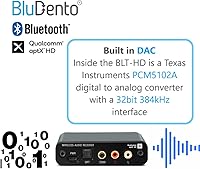
  • DAC Chip: Features a Texas Instruments PCM5102A digital-to-analog converter for high-fidelity analog output.
  • DAC Resolution: Supports PCM audio up to 32-bit depth at 384 kHz sampling rate.
  • Analog Output: Stereo RCA output with a maximum output level of 2.1 Vrms, suitable for driving preamps and powered speakers directly.
  • Digital Outputs: Provides both optical Toslink and coaxial S/PDIF digital outputs for connection to external DACs, AVRs, and digital amplifiers.
  • Power Input: Powered via micro-USB port; no proprietary power adapter required.
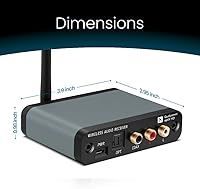
  • Dimensions: Measures 1 × 3 × 2 inches, making it compact enough to mount or tuck behind most audio equipment.
  • Weight: Weighs 5.3 oz, light enough to be held in place by connected cables in most installations.
  • Display: No OLED or LCD display is included; status is communicated through indicator LEDs only.
  • NFC Pairing: NFC pairing is not supported; Bluetooth pairing is initiated manually via the device button.
  • Color: Available in grey with a matte finish that blends into most rack or shelf setups.
  • Market Availability: Has been available for purchase since July 5, 2018, and has not been discontinued by the manufacturer.

Related Reviews

BluDento BLT-2
BluDento BLT-2
83%
88%
Sound Quality
84%
Wireless Range
93%
Ease of Setup
76%
Connection Stability
91%
Output Flexibility
More
RIVA Arena
RIVA Arena
76%
84%
Sound Quality
68%
Bass Performance
89%
Multiroom & Ecosystem Integration
61%
Setup & App Experience
91%
Streaming Platform Support
More
RIVA Concert Wi-Fi Bluetooth Smart Hi-Fi Speaker
85%
93%
Sound Quality
85%
Alexa Integration
88%
Connectivity Options
90%
Ease of Setup
87%
Multiroom Audio Compatibility
More
Technics EAH-AZ80
Technics EAH-AZ80
80%
93%
Sound Quality
74%
Active Noise Cancellation
88%
Call Quality
91%
Multipoint Connectivity
79%
Fit & Comfort
More
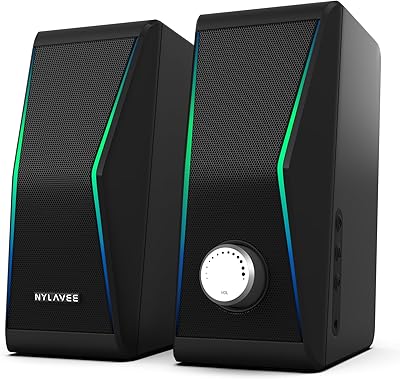
Nylavee SK600Pro
Nylavee SK600Pro
75%
78%
Bass Performance
61%
Treble & Midrange Clarity
91%
RGB Lighting
73%
Bluetooth Connectivity
86%
Value for Money
More
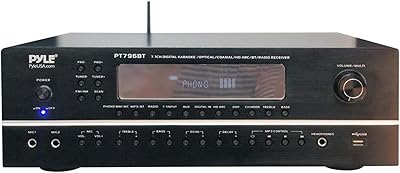
Pyle PT796BT 7.1-Channel AV Receiver
64%
67%
Value for Money
58%
Audio Performance
83%
Connectivity & Inputs
74%
Bluetooth Performance
52%
Build Quality
More
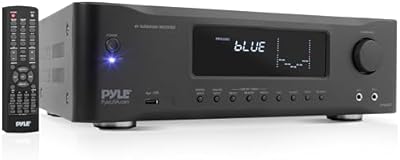
Pyle PT694BT 5.2-Channel Home Theater Receiver
66%
78%
Value for Money
83%
Ease of Setup
63%
Audio Performance
67%
Bluetooth Reliability
54%
Build Quality
More
Pyle P2001BT Bluetooth Stereo Preamplifier Receiver
71%
83%
Value for Money
79%
Bluetooth Connectivity
76%
Microphone Performance
71%
Power Output & Volume
88%
Input Versatility
More
FiiO BTR3K
FiiO BTR3K
80%
88%
Sound Quality
91%
Balanced Output Performance
86%
Bluetooth Codec Support
72%
Connection Stability
93%
Portability & Form Factor
More
Monster SuperStar HD Bluetooth Speaker
85%
89%
Sound Quality
94%
Portability
72%
Bluetooth Connectivity
85%
Battery Life
82%
Build Quality
More

FAQ

It pairs with iPhones without any issues, but iOS devices are limited to the AAC codec due to Apple's platform restrictions. That means the LDAC and aptX HD capabilities — which are the main audio quality differentiators — are only accessible from compatible Android or Sony devices. For iPhone users, it still works well, just not at its full potential.

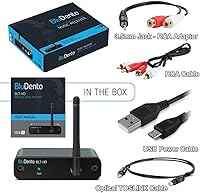
Yes, the RCA stereo output is exactly what you need for that. You plug the included or a standard RCA cable from the BLT-HD into any available analog input on your receiver — labeled AUX, CD, or Tape will all work fine. It treats the adapter like any other line-level source.

The Class 1 radio and external antenna do push range beyond most compact Bluetooth receivers, but real-world performance depends heavily on your environment. In an open room or line-of-sight scenario, you can expect solid connectivity at 30 feet or more. Add walls, metal furniture, or appliances between your phone and the unit, and that range drops noticeably. A realistic expectation for a typical living room setup is around 20 to 30 feet with one wall in between.

Not necessarily. Even when using standard SBC or AAC, the Texas Instruments DAC chip inside this hi-fi Bluetooth adapter handles analog conversion more cleanly than the generic circuitry in inexpensive dongles. Most buyers who upgraded from a budget adapter notice the difference in low-noise floor and midrange clarity, regardless of codec.

The BLT-HD passes audio through all outputs simultaneously, so yes — you can feed your analog preamp via RCA while also sending a digital signal to an external DAC or AVR through the optical or coaxial port at the same time.

In most cases, yes — it remembers previously paired devices and reconnects when the source device comes back into range. A handful of users have reported occasional delays when a phone or tablet wakes from sleep mode, requiring a manual reconnect. It is not a constant issue, but it does come up enough to be worth knowing about.

It can work for that purpose, particularly if you connect via the optical output and your TV has an optical audio-out port. The aptX Low Latency codec also helps reduce lip-sync delay when watching video, provided your TV or streaming device supports that codec. Just keep in mind that the BLT-HD is a receiver, meaning audio flows from your phone or tablet to your speakers — it cannot transmit audio from your TV to wireless headphones.

It uses a standard micro-USB cable for power, so you can draw power from a USB wall adapter, a USB port on a receiver or amplifier, or a computer's USB port. No proprietary charger is required, which keeps the cable situation simple.

The BluDento BLT-HD Bluetooth Hi-Fi Receiver stores multiple paired devices in memory, but it handles one active connection at a time. To switch from one person's phone to another, the current connection needs to be dropped first. It is not a multi-point adapter, so seamless handoff between two active sources is not supported.
There is no physical volume knob or digital attenuation built into this Bluetooth DAC receiver. The RCA output runs at a fixed line level, so volume control happens at the amplifier or powered speaker end — or through the source device itself. For most home audio setups this is perfectly normal behavior, but it is worth knowing if you were expecting a standalone volume dial.

Where to Buy