Overview

The 1Mii DS220 Bluetooth Receiver is a compact, practical solution for anyone wanting to stream music wirelessly to an existing stereo or AV system without replacing perfectly good equipment. At its price tier, it punches above its weight — the OLED display alone feels more refined than you would expect. What separates it from cheaper Bluetooth dongles is support for LDAC and aptX HD, codecs that carry significantly more audio data than standard SBC, resulting in noticeably richer playback on compatible Android and Sony devices. Launched in April 2023, it has built solid traction quickly. Just keep in mind: this is an add-on adapter, not an amplifier or standalone DAC.
Features & Benefits

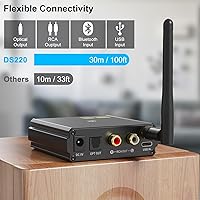
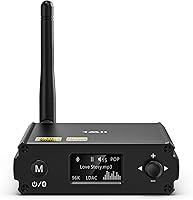
The dual-antenna Bluetooth 5.1 connection is rated to 100 feet, though real-world performance through walls and floors typically lands closer to 40–60 feet — still plenty for most living rooms. When it comes to outputs, the optical or coaxial connections are the better choices if your amplifier supports them, keeping the signal in the digital domain longer and avoiding analog noise from the RCA path. The OLED screen confirming your active codec is genuinely useful — knowing whether you are actually getting LDAC versus a fallback SBC removes all guesswork. Seven EQ presets are included, though they offer fairly subtle adjustments rather than anything close to a full parametric equalizer.

Best For

This wireless audio adapter suits legacy hi-fi owners who stream from Android phones or Sony devices and want to keep LDAC in the signal chain. It also performs well in larger living rooms where your source device sits across the room on a couch or desk. If your amplifier or AV receiver has an optical or coaxial input, use it — the signal path is cleaner than RCA. One honest caveat: iPhone users will not benefit from LDAC since iOS does not support the codec, making aptX HD the ceiling instead. And if you need tight audio-to-video sync, this adapter is probably not the right choice — lip-sync drift is a real risk.

User Feedback

Across roughly 275 ratings, the DS220 holds a well-earned 4.5 stars. Most praise centers on a clear improvement in audio clarity over the built-in Bluetooth found in older TVs and receivers, with straightforward setup also mentioned frequently. Connection stability is consistently highlighted as a strength. On the downside, some users note occasional reconnection delays following the 30-minute idle shutdown — the auto-reconnect works, but not always instantly. A handful of Android users report codec negotiation not reliably landing on LDAC during the first pairing. Build quality is generally described as solid, and seller responsiveness earns positive mentions, which carries real weight for a smaller, lesser-known audio brand.

Pros

  • LDAC and aptX HD support delivers noticeably richer audio on compatible Android and Sony devices.
  • The OLED screen confirms your active codec at a glance — no app needed, no guesswork.
  • Optical and coaxial outputs provide a cleaner digital signal path than a standard RCA connection.
  • Dual-antenna Bluetooth 5.1 holds a stable connection across a typical living room without drop-outs.
  • Setup takes under five minutes with no driver installation or account required.
  • Three output types in one compact unit cover nearly every home stereo scenario.
  • The DS220 fits neatly on a shelf beside existing gear without rearranging your whole setup.
  • 1Mii's customer support is responsive and has resolved pairing issues for multiple verified buyers.
  • Auto-reconnect on power-up restores the previous paired connection reliably without manual re-pairing.
  • A cost-effective way to add high-codec Bluetooth to legacy equipment rather than replacing it entirely.

Cons

  • iOS devices cannot use LDAC, which eliminates the key selling point for iPhone and iPad users.
  • The 30-minute idle shutdown cannot be disabled and interrupts background listening during quiet passages.
  • Codec negotiation occasionally falls back to aptX or SBC on the first pairing attempt, requiring a reset.
  • Real-world range through interior walls is significantly shorter than the advertised 100-foot line-of-sight figure.
  • No multipoint pairing means switching between two source devices requires a manual reconnect each time.
  • The seven EQ presets apply subtle changes at best and offer no custom curve or parametric control.
  • The plastic enclosure feels a step below the premium impression the OLED display creates.
  • Bundled RCA cables are basic quality and most users replace them immediately.
  • The included user manual is thin on troubleshooting guidance, pushing buyers toward customer support unnecessarily.
  • Thick optical cables or right-angle RCA plugs can be awkward to seat given the tightly spaced rear ports.

Ratings

The scores below were generated by our AI engine after analyzing verified buyer reviews for the 1Mii DS220 Bluetooth Receiver from multiple global sources, with spam, bot activity, and incentivized feedback actively filtered out. Each category reflects the honest distribution of real user experiences — not a curated highlight reel — so both standout strengths and genuine frustrations are weighted into every number you see here.
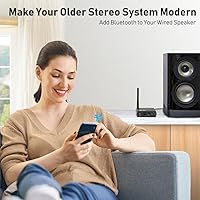
Sound Quality
88%
Users streaming via LDAC or aptX HD from compatible Android and Sony devices consistently report a noticeable step up from the built-in Bluetooth found in older amplifiers and AV receivers. The onboard DAC adds a level of clarity and soundstage width that genuinely surprised listeners accustomed to cheap dongles.
iPhone users are limited to aptX or SBC since iOS does not support LDAC, which puts a ceiling on audio quality for a significant portion of buyers. A few listeners also felt that the sonic improvement, while real, was modest when routed through the RCA output compared to optical or coaxial.
Wireless Range & Stability
81%
19%
In open-plan living rooms, the dual-antenna design delivers a notably stable connection with few drop-outs even when the phone is set down on the opposite side of a large room. Users upgrading from single-antenna adapters reported a clear improvement in connection consistency during extended listening sessions.
The advertised 100-foot range is a line-of-sight figure; through a couple of interior walls it tends to drop closer to 40–50 feet before stuttering begins. A handful of users in older apartments with thick plaster walls found the range disappointing relative to expectations set by the spec sheet.
Codec Support & Negotiation
74%
26%
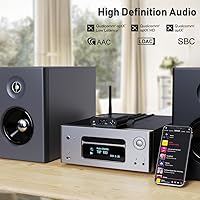
Support for LDAC, aptX HD, aptX, and SBC covers the full range of modern Android and Sony source devices, and the OLED screen removes all ambiguity by displaying the active codec in real time — a feature users genuinely appreciated for confirming they were getting the quality they paid for.
Codec negotiation does not always land on LDAC during the first pairing attempt on some Android phones, occasionally defaulting to aptX or SBC until the connection is manually reset. This inconsistency frustrated users who specifically bought the DS220 for LDAC performance and had to troubleshoot pairing more than once.
Output Versatility
91%
Having optical, coaxial, and RCA outputs on a single compact unit covers virtually every home stereo scenario, from a vintage integrated amp with only RCA inputs to a modern AV receiver with a bank of digital inputs. Users with Toslink-equipped receivers praised the cleaner noise floor versus the analog RCA path.
Only one output can typically be used at a time depending on the downstream device, which is standard but worth flagging for anyone hoping to feed two systems simultaneously. A few users also noted the RCA cables included in the box were basic quality and were quickly swapped out.
OLED Display & Interface
86%
At this price point, an OLED screen showing codec status, volume level, and connection state is a genuine differentiator. Users found it especially useful for confirming which codec was active without digging into phone settings, and the display remains readable from across the room.
The display brightness is fixed and can look slightly dim in bright rooms with direct sunlight nearby. A small number of users also wished the screen showed the name of the connected device rather than just its status, particularly in shared households with multiple Bluetooth sources.
Build Quality & Durability
77%
23%
Most users describe the enclosure as solid and well-finished for the price tier — it does not feel hollow or cheaply assembled, and the small footprint makes it easy to tuck behind a receiver without cluttering a shelf. The unit generally reports no issues with heat during several hours of continuous use.
The chassis is plastic rather than metal, which does not match the premium impression the OLED display creates. A few buyers noted slight wobble from the rubber feet on smooth shelving surfaces, and the remote control feels noticeably lightweight compared to the main unit.
Setup & Ease of Use
93%
Initial pairing is fast and the unit follows a predictable Bluetooth workflow that requires no app, no account, and no driver installation. Buyers who are not technically inclined — particularly those adding Bluetooth to an older receiver for the first time — consistently described setup as taking under five minutes.
Switching between two frequently used source devices takes a few extra steps since the DS220 does not support multipoint pairing. Users who routinely switch between a phone and a tablet found this mildly inconvenient compared to newer adapters that handle two simultaneous connections.
Auto-Shutdown & Reconnect Behavior
63%
37%
The auto-reconnect function works reliably once it kicks in, restoring the previous paired connection on power-up without any manual intervention. Users who leave the unit on a shelf in a dedicated listening room rarely notice the shutdown cycle during normal use.
The 30-minute idle shutdown is the most consistently mentioned frustration in negative reviews — it interrupts background listening during quiet passages or pauses and the reconnect, while functional, introduces a delay of several seconds. There is no way to disable the auto-shutdown, which bothers users who want a always-on setup.
EQ Customization
58%
42%
Having seven named presets gives casual listeners a quick way to shift the tonal balance for different genres without touching any settings on the amplifier itself. The Bass preset in particular earned positive mentions from users with smaller bookshelf speakers who wanted a warmer low-end response.
The presets apply fairly subtle changes — experienced listeners and audiophiles consistently found them underwhelming compared to the kind of control a dedicated parametric or graphic EQ provides. There is no way to save a custom curve, so users wanting precise sound shaping will need to rely on a downstream component instead.
Value for Money
84%
For buyers looking to add high-codec Bluetooth to a legacy stereo without a full system overhaul, the DS220 represents a cost-efficient path that would otherwise require a new streaming amplifier at several times the price. The inclusion of all three output types and the OLED screen strengthens the value argument further.
Buyers who later discover that their phone or source device does not support LDAC or aptX HD — and that they are therefore running SBC — often feel the premium over a basic adapter was not fully justified in their specific use case. A clearer codec-compatibility guide at the point of purchase would reduce this perception.
Compatibility (Android & Sony Devices)
89%
Android users with LDAC-capable phones, including most flagship Sony, Samsung, and Google Pixel devices, found this wireless audio adapter to be one of the most straightforward ways to unlock high-resolution wireless streaming to a home system without any additional software.
Compatibility is noticeably tiered: Android flagship users get the full LDAC experience, mid-range Android users typically land on aptX HD, and iPhone users are capped at aptX. This tiered reality is not prominently communicated in product listings and leads to mixed satisfaction among iOS users.
iOS Compatibility
47%
53%
The DS220 does pair with iPhones and iPads without issue, and aptX delivers a meaningful step up over the standard AAC connection that many older Bluetooth systems fall back to. Users who simply want reliable wireless audio — rather than specifically LDAC — were generally fine with the experience on iOS.
Apple devices do not support LDAC, which means the DS220's primary selling point is unavailable to iPhone users. Several one- and two-star reviews come directly from Apple ecosystem buyers who purchased based on LDAC marketing without realizing iOS imposes this hard limitation.
Seller & After-Sales Support
79%
21%
Multiple reviewers specifically called out 1Mii's customer service team as responsive and willing to troubleshoot pairing or codec issues via direct messaging. For a smaller audio brand, this level of post-purchase engagement is not guaranteed and appears to have saved several potentially negative reviews.
Response times for support inquiries are inconsistent — some users reported same-day replies while others waited several days. Documentation and the user manual have also been flagged as thin on troubleshooting detail, meaning buyers often have to reach out to support for guidance that could have been in the box.
Size & Physical Footprint
88%
At 3.5 x 3 x 1 inches and under 400 grams, the DS220 fits neatly on a shelf beside an amplifier or behind an AV receiver without requiring any rearrangement of existing equipment. Users with space-constrained rack setups or small hi-fi shelves particularly appreciated the compact form.
The small size means the connection ports are close together, and some users found it slightly awkward to seat thicker optical cables or right-angle RCA plugs without the unit shifting around. A mount or adhesive foot option would have helped in installations where the unit cannot simply rest on a flat shelf.

Suitable for:

The 1Mii DS220 Bluetooth Receiver is built for people who own a decent stereo amplifier, integrated amp, or AV receiver and simply want to cut the cord without spending on a whole new system. If you stream from an Android phone or a Sony device that supports LDAC, this adapter will genuinely improve the audio quality you hear through your existing speakers — assuming you route the signal through the optical or coaxial output rather than RCA. It suits larger living rooms well, since the dual-antenna design holds a stable connection across a reasonable distance, and the OLED screen makes it easy to confirm you are actually getting the high-quality codec you paid for. Budget-conscious audiophiles who are upgrading from a basic Bluetooth dongle, or anyone who wants visible feedback on their wireless connection without adding a companion app, will find this wireless audio adapter a sensible and relatively affordable step forward.
Not suitable for:

If your primary listening device is an iPhone or iPad, the 1Mii DS220 Bluetooth Receiver will disappoint — iOS does not support LDAC, which is the main codec this adapter is marketed around, and you will be limited to aptX at best. Buyers who need tight audio-to-video synchronization for watching content should also look elsewhere; Bluetooth inherently introduces latency, and despite codec-level improvements, lip-sync drift remains a real-world problem when pairing this adapter with a TV setup. The auto-shutdown after 30 minutes of idle time is hardwired and cannot be disabled, which is a genuine nuisance for anyone who wants a permanently active connection — say, for background music during gatherings where music pauses frequently. And if you are expecting this unit to serve as a standalone DAC for a high-end digital source or to replace a dedicated streaming node in a serious hi-fi system, it is simply not designed for that role.
Specifications

  • Bluetooth Version: Uses Bluetooth 5.1 for improved connection stability and reduced interference compared to older Bluetooth standards.
  • Antenna Design: Equipped with dual external antennas to extend wireless range and maintain signal integrity across larger rooms.
  • Wireless Range: Rated up to 100ft (30m) in unobstructed line-of-sight conditions; expect reduced range through walls or across floors.
  • Supported Codecs: Supports LDAC, aptX HD, aptX, and SBC, covering the full spectrum of modern Android and Sony source devices.
  • Audio Outputs: Provides three output options: optical (Toslink), coaxial (S/PDIF), and stereo RCA, allowing connection to a wide range of amplifiers and receivers.
  • Audio Inputs: Accepts signal via Bluetooth wireless connection and USB, with no analog line-level input included.
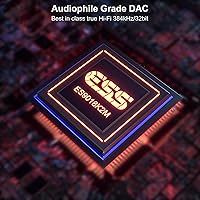
  • Onboard DAC: Incorporates a built-in digital-to-analog converter designed for audiophile-grade signal conversion from digital sources.
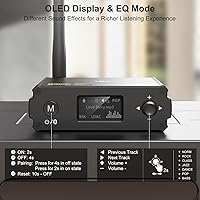
  • Display: Features an OLED screen that shows the active Bluetooth codec, current volume level, and connection status in real time.
  • EQ Presets: Includes 7 built-in equalizer modes: Norm, Rock, Classical, Jazz, Dance, Pop, and Bass, selectable via the included remote.
  • Channel Output: Outputs a standard 2-channel stereo signal; surround sound decoding or upmixing is not supported.
  • Auto-Shutdown: Automatically powers down after 30 minutes of idle with no active Bluetooth connection; this behavior cannot be disabled.
  • Auto-Reconnect: Automatically reconnects to the most recently paired device upon power-up, with no manual re-pairing required under normal conditions.
  • Dimensions: Measures 3.5 x 3 x 1 inches, making it compact enough to sit beside or behind most tabletop amplifiers without occupying significant shelf space.
  • Weight: Weighs approximately 0.37 kg (13 oz), light enough that it requires no mounting hardware in most shelf or rack placements.
  • Color & Finish: Available in black with a matte plastic enclosure and a contrasting OLED display panel on the front face.
  • Controller Type: Ships with a handheld remote control for volume adjustment and EQ preset switching from across the room.
  • iOS Compatibility: Pairs with iPhones and iPads via standard Bluetooth but is limited to aptX or SBC codecs, as Apple devices do not support LDAC.
  • Power Source: Powered via USB, making it compatible with standard USB power adapters or a free USB port on a nearby AV component.
  • Date Launched: First made available for purchase in April 2023, with ongoing sales placing it among the top 130 units in its Amazon subcategory.
  • Manufacturer: Designed and sold by 1Mii, a consumer audio accessories brand known for Bluetooth audio products targeting the home stereo segment.

Related Reviews

1Mii DS500
1Mii DS500
82%
88%
Audio Quality
82%
LDAC & Codec Performance
84%
Connectivity & Range
93%
Output Versatility
81%
Setup & Ease of Use
More
1Mii DS200Pro HiFi Bluetooth 5.3 Music Receiver
85%
94%
Sound Quality
91%
Bluetooth Range & Stability
89%
Ease of Use / Setup
90%
DAC Performance
93%
Audio Codec Support (LDAC, aptX HD)
More
1Mii SafeFly Pro Bluetooth Transmitter Receiver
81%
91%
Ease of Setup
88%
OLED Display Usefulness
83%
Audio Latency Performance
74%
Airplane Compatibility
86%
Dual Headphone Sharing
More
Citreal Marine Bluetooth Stereo Receiver
84%
88%
Sound Quality
91%
Bluetooth Connectivity
95%
Durability (Waterproof Rating)
60%
Ease of Installation
85%
Audio Inputs (AM/FM/USB/AUX)
More
August MR285 Bluetooth Transmitter Receiver
85%
88%
Audio Quality
91%
Battery Life
76%
Connectivity Reliability
89%
Ease of Setup
85%
Portability
More
VOXXBASS Bluetooth Marine Radio Receiver
86%
92%
Durability and Waterproofing
87%
Sound Quality
90%
Bluetooth Connectivity
75%
Ease of Installation
85%
Compatibility with Devices
More
FiiO BTA30Pro Bluetooth Receiver/Transmitter
84%
94%
Audio Quality
80%
Setup & Installation
88%
Bluetooth Range & Connectivity
85%
Portability & Design
86%
Build Quality
More
Swiitech Bluetooth Transmitter Receiver T1
87%
95%
Ease of Use
88%
Compatibility with Devices
90%
Audio Quality
80%
Battery Life
92%
Setup Process
More
FiiO BTR3K
FiiO BTR3K
80%
88%
Sound Quality
91%
Balanced Output Performance
86%
Bluetooth Codec Support
72%
Connection Stability
93%
Portability & Form Factor
More
Pyle P2001BT Bluetooth Preamplifier Receiver
82%
89%
Audio Power and Performance
84%
Connectivity and Compatibility
91%
Microphone Inputs and Karaoke Features
75%
Build Quality and Durability
78%
Ease of Use and Setup
More

FAQ

It will pair with your iPhone without any issues, but you will not get LDAC. Apple does not support the LDAC codec on iOS, so the connection will fall back to aptX or SBC depending on your device. You will still hear an improvement over many built-in Bluetooth options, but the headline high-resolution codec is off the table for iPhone users.

If your amplifier or AV receiver has a Toslink optical or coaxial digital input, use one of those first. Keeping the signal in the digital domain longer reduces the chance of picking up analog noise from the unit's internal circuitry. RCA works fine and is the most universally compatible option, but optical or coaxial is the cleaner path if you have the choice.

That is exactly what the OLED display on the front is for. It shows the active codec — LDAC, aptX HD, aptX, or SBC — so you can confirm what quality level your connection has negotiated without digging into your phone's developer settings. If it shows SBC when you expected LDAC, try unpairing and repairing to prompt a fresh codec negotiation.

Unfortunately, no. The 1Mii DS220 Bluetooth Receiver is programmed to shut down after 30 minutes with no active Bluetooth source, and this cannot be turned off in any setting or menu. The auto-reconnect feature will restore your connection when you resume playback, but there is a brief delay of a few seconds. If you regularly pause music for more than 30 minutes, this is worth factoring into your buying decision.
The 100-foot rating is measured in open air with no obstructions. In a typical home with drywall interior walls, most users find reliable performance out to about 40–60 feet, which covers most living rooms comfortably. Thicker walls — concrete, brick, or older plaster — will reduce that range further, so if your router sits in another room entirely, test it before committing.

This wireless audio adapter does not support multipoint pairing, so only one source device can be actively connected at a time. To switch from your phone to a tablet, you need to disconnect one device and manually connect the other. It remembers your most recently paired device and reconnects automatically on startup, but it does not juggle two sources simultaneously.

A small amount of warmth from the enclosure during a long listening session is normal and within safe operating range for a unit like this. Most users report it stays comfortably warm rather than hot. If you are placing it in an enclosed cabinet with poor airflow, leave a bit of space around it — but on an open shelf it should be completely fine.

Honest answer: they are fairly subtle. The Bass preset adds a noticeable warmth in the low end, and Classic and Jazz soften the high frequencies slightly, but these are gentle adjustments rather than dramatic tone shaping. If you want real control over your sound, you will still want to rely on the EQ or tone controls built into your amplifier.

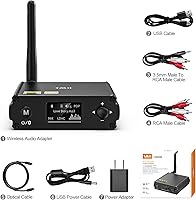
The DS220 runs off USB power, which keeps the setup clean and flexible. It draws a standard low-current USB load, so any 5V USB adapter you already own — or a free USB port on a TV or receiver — will work. Check the box contents on the listing to confirm whether a USB adapter is included in your regional version, as accessory bundles can vary.

It lands somewhere in between. It functions well for basic tasks like adjusting volume and cycling through EQ presets from the couch, which is genuinely handy. That said, it is lightweight and feels basic compared to the main unit. It does the job, but if you lose it, controlling volume directly from your phone or source device works just as well.