
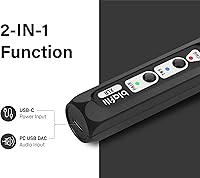
Overview
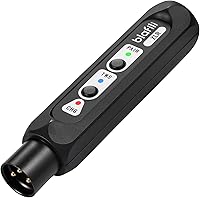
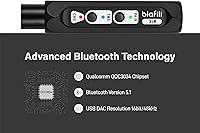
The blafili XLR fills a specific gap in the live audio world: a clean, affordable way to stream Bluetooth audio directly into XLR-equipped gear — without adapters, dongles, or unbalanced converters. Until recently, doing this meant either running a headphone-out cable with a stack of adapters or skipping wireless entirely. This wireless audio bridge runs on the Qualcomm QCC3034 chipset, a meaningful step up from the generic modules inside most budget Bluetooth adapters. It operates as a standalone battery-powered unit or as a USB-C DAC connected to a computer. One thing to be clear about upfront: it is a receiver only — no transmitting, no headphone output, no passive speaker support.
Features & Benefits
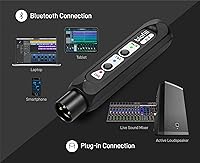
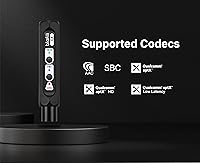
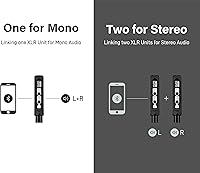
The standout spec is aptX Low Latency support alongside aptX HD — codec choices that actually matter in live sound, where audio needs to stay in sync with DJ cues or video without drifting. The single XLR male output delivers a balanced signal, which means significantly less noise pickup over long cable runs compared to an unbalanced RCA or 3.5mm connection. The USB-C DAC mode is a practical bonus: plug it into a laptop and it appears as a 16-bit/48kHz audio device, feeding a mixer without any software drivers. Worth establishing early — this wireless audio bridge is mono per unit; TWS stereo pairing requires purchasing two units and linking them together.
Best For
DJs, live sound engineers, and venue staff are the natural audience. If you are pulling background music from a phone or tablet into a PA mixer that only takes XLR inputs, this Bluetooth XLR receiver handles that cleanly without a signal chain full of adapters. Small venue operators — gyms, cafés, retail spaces — will find it particularly useful for a discreet, fixed wireless audio feed into an existing system. Presenters and educators who already work with a mixer or PA can drop the aux cable entirely. If you need LDAC, dual stereo XLR outputs, or a display readout, the B3 model in the same lineup is the more appropriate choice.
User Feedback
Across several hundred verified ratings, the consensus is solidly positive, with buyers consistently highlighting the clean signal output and straightforward pairing process. Range holds up well in open spaces, with most users reporting solid connection at the advertised 30-meter mark. The no-beep behavior earns specific praise from broadcast and live event users who cannot afford unexpected audio surprises mid-set. The main recurring gripe is the mono output — buyers who assumed a single unit delivers stereo were caught off guard. There is also a practical caveat worth stating plainly: do not plug this into a mic preamp channel with 48V phantom power active; it is simply not designed for that signal path.
Pros
- Balanced XLR output delivers a clean, low-noise signal even over long cable runs into mixers and PA gear.
- aptX Low Latency codec keeps audio in sync with video and DJ cues during live performances.
- Qualcomm QCC3034 chipset puts it well above generic Bluetooth adapters in connection reliability.
- No-beep pairing behavior is a genuine advantage in broadcast and live sound contexts where audio surprises are unacceptable.
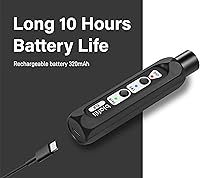
- Ten hours of battery life comfortably covers full-day events without mid-shift charging breaks.
- USB-C DAC mode lets it double as a driver-free computer audio interface for feeding a mixer from a laptop.
- Customizable Bluetooth broadcast name helps AV technicians manage multiple devices in the same space cleanly.
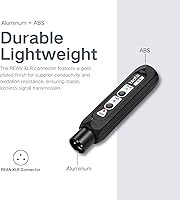
- At under 45 grams, this Bluetooth XLR receiver fits in a gig bag pocket and can be Velcro-mounted to any rack surface.
- Wide codec support — aptX HD, aptX LL, aptX, AAC, SBC — means it negotiates well above SBC with most modern devices.
- USB-C continuous power option makes it viable for permanent fixed installations without relying on battery cycles.
Cons
- A single unit outputs mono only — stereo playback requires buying two units and pairing them, doubling the cost.
- No passcode protection means any nearby device can potentially hijack the connection during a live event.
- Phantom power incompatibility trips up users who plug into mic preamp channels without checking first.
- No battery level indicator gives zero warning before the unit shuts off mid-performance.
- Effective indoor range drops noticeably in concrete buildings or crowded 2.4GHz environments.
- No LDAC support limits wireless resolution for users with high-end Android or Sony source devices.
- USB DAC resolution tops out at 16-bit/48kHz, which is adequate but not competitive with dedicated audio interfaces.
- No physical mounting solution is included, so fixed installs require improvised cable ties or adhesive clips.
- Documentation for the custom Bluetooth name feature is thin, leaving some users searching online for instructions.
- No locking XLR connector, which is a minor concern for installations where accidental disconnection could interrupt a live feed.
Ratings
The blafili XLR scores here reflect AI-assisted analysis of verified global buyer reviews, with spam, bot submissions, and incentivized feedback actively filtered out before any score was calculated. Ratings for this Bluetooth XLR receiver cover the full picture — from where it genuinely punches above its price tier to the real-world limitations that tripped up some buyers. Both sides are weighted honestly.
Signal Clarity
Bluetooth Codec Performance
Ease of Setup
Build Quality
Battery Life
Wireless Range
Mono Output Usability
USB DAC Functionality
Professional Environment Suitability
Phantom Power Compatibility
Value for Money
Portability & Form Factor
Device Compatibility
Suitable for:
The blafili XLR was built for a specific type of buyer, and if you fit the profile, it solves a real problem cleanly. DJs and live sound operators who need to pull a wireless audio feed from a phone or laptop directly into a PA mixer or active speaker with XLR inputs will find this wireless audio bridge does exactly that job without fuss. Small venue operators — a bar owner who wants background music from a streaming app fed into their house system, a gym manager tired of a 3.5mm cable running across the floor — get a professional-grade balanced signal with none of the noise or adapter chains that unbalanced workarounds introduce. Educators and presenters who already work with a mixer or PA but want to move freely without being tethered to a cable will also get solid, reliable use out of it. Home studio musicians who want to route a tablet or second device into their mixing console as an auxiliary input will appreciate the clean integration, and the USB-C DAC mode adds a useful secondary function for anyone occasionally feeding a laptop into the chain.
Not suitable for:
If you are expecting stereo output from a single unit, this is not your device — the blafili XLR outputs a single balanced mono signal, and achieving true stereo requires purchasing two units and pairing them in TWS mode, which significantly changes the cost equation. Audiophiles or studio engineers chasing maximum wireless resolution will be frustrated by the absence of LDAC and the 16-bit/48kHz ceiling on the USB DAC side — the B3 model in the same lineup addresses some of those needs. Anyone planning to plug this into a mic preamp channel with 48V phantom power active should know upfront that it is not designed for that signal path and will not perform correctly there — this catches more buyers off guard than it should. This wireless audio bridge is also strictly a receiver, not a transmitter, so if your use case involves sending audio out from a mixer to a Bluetooth speaker or headphone, this does nothing for you. Finally, buyers wanting a rugged touring-grade unit with locking connectors, a display, or any form of passcode security for public venue use will need to look at more purpose-built professional hardware.
Specifications
- Bluetooth Version: Uses Bluetooth 5.1 with A2DP and AVRCP profiles for stable, low-interference audio streaming.
- Chipset: Built on the Qualcomm QCC3034 chipset, a professional-grade module used across mid-to-high-tier Bluetooth audio hardware.
- Codecs Supported: Supports aptX HD, aptX Low Latency, aptX, AAC, and SBC, covering virtually all modern Bluetooth source devices.
- Audio Output: Single balanced XLR male output carrying a mono signal at line level, suitable for mixers, PA systems, and active speakers.
- USB DAC: Functions as a plug-and-play USB audio device at 16-bit/48kHz resolution when connected to a computer via USB-C cable.
- Battery: Built-in 320mAh lithium-ion cell delivers up to 10 hours of continuous playback on a full charge.
- Recharge Time: Fully recharges in approximately 2 hours via the USB-C port using any standard 5V USB power source.
- Wireless Range: Rated up to 100 feet (30m) in open-air conditions; real-world indoor range will vary based on obstacles and RF interference.
- Dimensions: Measures 117 x 30 x 25 mm (4.57 x 0.98 x 0.98 inches), roughly the size and shape of a thick marker pen.
- Weight: Weighs 1.44 ounces (approximately 41 grams), making it light enough to mount on a rack strip without cable stress.
- Materials: Housing is constructed from ABS plastic with aluminum elements, providing a reasonable balance of durability and light weight.
- TWS Support: Two units can be paired together in True Wireless Stereo mode to deliver discrete left and right channel output; stereo is not available from a single unit.
- Phantom Power: Not designed for use with 48V phantom-powered XLR inputs; connecting to such inputs will not damage the unit but will produce no usable output.
- Signal-to-Noise Ratio: Specified at 101dB or greater, indicating very low background noise relative to the audio signal at the XLR output.
- Distortion: Total harmonic distortion is rated at 0.1% or less, which is negligible for live sound and background music applications.
- Frequency Response: Covers 20Hz to 20kHz, spanning the full range of human hearing with no stated roll-off at the extremes.
- Power Input: Charges and operates via 5V DC USB-C; no power adapter is included in the box.
- Standby Current: Draws less than 50 microamps in standby, meaning the battery drains negligibly when idle and not actively streaming.
- Frequency Band: Transmits and receives on the 2.4GHz band between 2.4GHz and 2.48GHz, standard for all Bluetooth 5.x devices.
- Compatibility: Works with mixers, DJ controllers, PA systems, mixing consoles, and active pro audio speakers; not compatible with Bluetooth headphones, passive speakers, or microphones.
Related Reviews
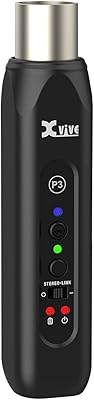
Xvive P3 Bluetooth XLR Receiver
Audio-Technica ATH-M50xSTS
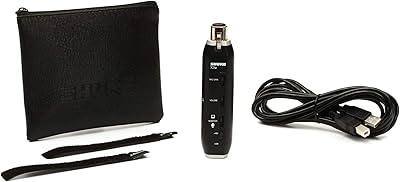
Shure X2u XLR-to-USB Audio Interface
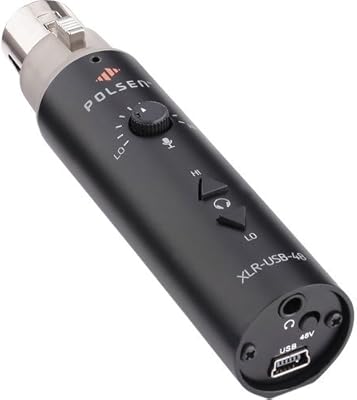
Polsen XLR-USB-48 XLR to USB Audio Interface
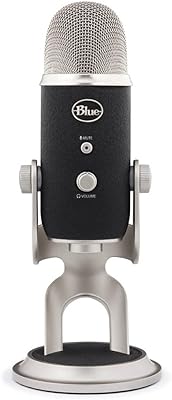
Blue Yeti Pro USB XLR Condenser Microphone
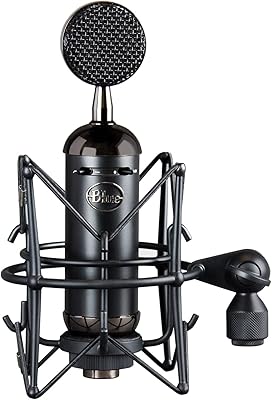
Blue Blackout Spark SL
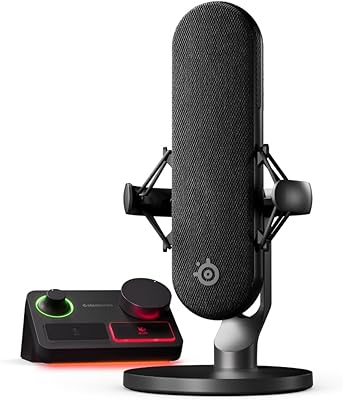
SteelSeries Alias Pro XLR Mic + Stream Mixer
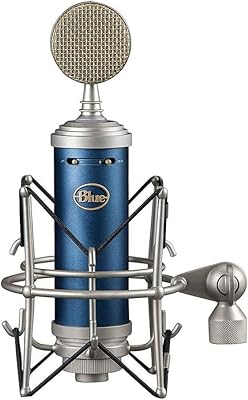
Blue Bluebird SL Condenser Microphone
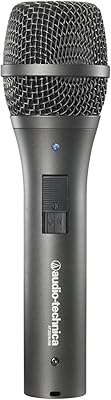
Audio-Technica AT2005USB