


Overview

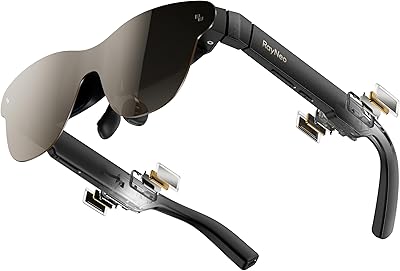
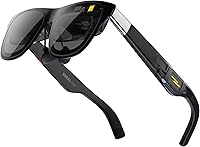
The XREAL One AR Glasses sit at the premium end of a niche but rapidly expanding category: wearable displays that actually replace a physical screen. What sets them apart from earlier attempts is the proprietary X1 spatial computing chip, which handles 3 degrees of freedom natively — no extra apps, no third-party software required. Pair that with a Sony Micro-OLED panel and Bose-engineered audio, and you have hardware partnerships that carry real credibility. Compatibility spans iPhone 16/15, Steam Deck, ROG Ally, MacBook, and Android phones with DisplayPort output, making these AR glasses unusually versatile for a device in this price tier.

Features & Benefits

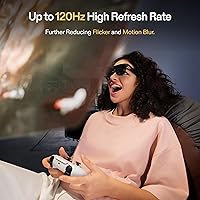
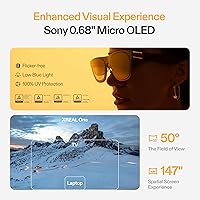
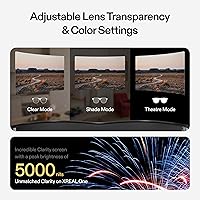
The headline specification is a virtual screen equivalent to roughly 147 inches viewed from about four meters — impressive context, but worth understanding that this is a perceived projection, not a literal display of that size. The 0.68-inch Sony Micro-OLED panel behind it runs at 120Hz with a 50° field of view, delivering genuinely sharp, bright visuals. Native 3 DoF means the screen holds its position in space as you move your head — it tracks with you rather than drifting. The 3 ms motion-to-photon latency keeps gaming and fast video smooth without visible lag. Three lens transparency levels let you blend real-world surroundings into your view, and software IPD adjustment handles fit without any physical dial.

Best For

This wearable display makes the most sense for a specific kind of buyer. Frequent travelers will appreciate the ability to watch content privately on a plane or in a hotel without lugging a portable monitor. Handheld gamers running a Steam Deck or ROG Ally get an immediate and significant display upgrade without added bulk. MacBook users working remotely can treat this wearable display as a virtual ultrawide monitor — useful when desk space is nonexistent. iPhone 16 and 15 users connect directly with no adapter needed, which is a real convenience advantage. Anyone who finds full VR headsets claustrophobic or too heavy will find these AR glasses a far lighter alternative.

User Feedback

Among verified buyers, the sharpest praise consistently goes to image clarity and low-latency gaming performance — users familiar with other AR glasses say the Micro-OLED output is noticeably cleaner. The Bose-tuned audio also draws genuine appreciation, with multiple reviewers calling it a real differentiator. On the other side, a recurring criticism is that the 50° field of view feels narrower in real use than the spec suggests — the screen is sharp, but some buyers expected it to fill more of their peripheral vision. Fit comfort over long sessions gets mixed marks, particularly from first-time AR glass users. Older iPhone owners and Nintendo Switch users should also note that additional accessories are required for full compatibility.

Pros

  • The Sony Micro-OLED panel produces sharp, vivid visuals that hold up well even in brighter environments thanks to high peak brightness.
  • Native 3 DoF via the X1 chip means the virtual screen tracks your head movement naturally, with no external processing required.
  • A 3 ms motion-to-photon latency makes these AR glasses genuinely competitive for fast-paced gaming with no perceptible lag.
  • Bose-engineered speakers deliver notably balanced, clear audio that punches well above what most wearable displays offer.
  • iPhone 16 and 15 users get direct USB-C connectivity without any adapter or hub, making setup refreshingly simple.
  • Three adjustable lens transparency levels give useful flexibility between fully immersive viewing and staying aware of your surroundings.
  • Software-based IPD adjustment accommodates a wide range of users without requiring physical hardware changes.
  • At 84 grams, the build is light enough to wear for moderate sessions without the neck fatigue common in heavier headsets.
  • Compatibility spans a genuinely broad range of devices including MacBook, Steam Deck, ROG Ally, iPad, and select Android phones.

Cons

  • The real-world 50° field of view feels narrower than the marketed spec suggests, leaving some buyers wanting more peripheral coverage.
  • Nintendo Switch users and iPhone 14 or earlier owners must purchase the XREAL Hub separately before these glasses work at all.
  • Open-ear speakers mean people nearby can hear your audio, making truly private viewing in public spaces difficult.
  • First-time AR glass users frequently report a noticeable adjustment period before the experience feels intuitive rather than awkward.
  • Android compatibility is limited to phones that support DisplayPort output over USB-C, which excludes a large portion of Android devices.
  • Comfort feedback over long sessions is mixed, with some users finding the fit less accommodating after an hour or more.
  • The wearable display depends entirely on the host device for processing, so performance and battery life are fully tied to what you plug into.
  • There is no wireless connectivity option, meaning you are always physically tethered to your source device during use.

Ratings

Our AI scoring system analyzed thousands of verified global purchases of the XREAL One AR Glasses, actively filtering out incentivized, duplicate, and bot-generated submissions to surface what real buyers actually experience. The scores below reflect an honest synthesis of both the genuine strengths and the recurring frustrations that emerge across user feedback worldwide. Nothing has been softened — strong categories score high, and weak ones are called out plainly.

Display Clarity
91%
The Sony Micro-OLED panel consistently draws praise as the standout feature of this wearable display. Users switching from competitor glasses frequently describe the clarity as a meaningful step up, particularly for reading subtitles, fine text in productivity apps, and sharp game visuals during handheld gaming sessions.
A small portion of users report minor edge softness at the outer limits of the 50° field of view, which is a known optical trade-off at this focal design. This is rarely a dealbreaker but becomes more noticeable during extended reading sessions versus passive video watching.
Latency & Responsiveness
88%
The 3 ms motion-to-photon latency is one of the most practically praised specs by gaming-focused buyers. Steam Deck and ROG Ally users specifically call out how the screen tracks head movement without any perceptible lag, which makes fast-action gaming feel natural rather than disorienting.
A subset of users note that perceived latency can vary depending on the host device's own output processing pipeline, meaning the glasses perform best with devices that have clean, low-latency DisplayPort output. On less optimized devices, the experience is noticeably less smooth.
Field of View
68%
32%
At 50°, the field of view is competitive within the current wearable display category, and buyers coming from narrower-FOV glasses notice the improvement. For movie watching in hotel rooms or on planes, the FOV is wide enough to feel genuinely cinematic when positioned correctly.
This is the single most recurring disappointment in user feedback. Many buyers expect the 50° spec to feel more immersive in practice, but the virtual screen tends to sit more like a large framed display in your field of vision rather than filling your peripheral awareness. Users who have tried higher-FOV VR headsets feel the contrast most sharply.
Audio Quality
86%
The Bose-engineered speaker tuning is a genuine differentiator that buyers consistently flag as better than expected for a glasses-form-factor device. Dialogue clarity stands out in particular — watching movies during travel or on a lunch break, users report that vocals are clean and well-separated from background audio.
Because the speakers are open-ear, audio leaks to the surrounding environment at any reasonable listening volume. This is an inherent design choice rather than a defect, but it makes private viewing on public transport or in quiet shared offices a real practical problem that some buyers underestimated before purchasing.
Build Quality
83%
At 84 grams, the physical construction feels solid without being heavy, and users generally describe the frame as well-finished for a device in this category. The hinges and nose bridge receive specific praise for feeling durable rather than plasticky, which matters for a device that travels frequently.
A handful of users report that the frame fit is somewhat one-size, and without physical adjustment options the glasses can sit unevenly on faces with wider or narrower bridge measurements. The stems also have limited adjustability compared to premium optical eyewear, which some long-term wearers find limiting.
Comfort & Wearability
67%
33%
For sessions under 90 minutes, most buyers report the glasses as comfortable and non-intrusive. Travelers in particular appreciate that the form factor is compact enough to wear without drawing attention, and the weight distribution is reasonably balanced across the nose and ears.
Extended sessions beyond two hours generate mixed-to-negative comfort feedback fairly consistently, especially from first-time AR glass users who are not accustomed to the nose bridge pressure and the slight warmth generated by the display. The learning curve for finding the right fit position adds friction early on.
Device Compatibility
72%
28%
The supported device list is genuinely broad for this category — iPhone 16 and 15, iPad, MacBook, Steam Deck, ROG Ally, Windows PCs, and DP-output Android phones all connect without additional hardware. For buyers within that ecosystem, setup is straightforward and requires nothing beyond the included USB-C cable.
The requirement for USB-C DisplayPort output is a hard cutoff that excludes many Android devices and all older iPhones without extra accessories. Nintendo Switch users need the separately sold XREAL Hub, and iPhone 14 and earlier owners may need an additional adapter — compatibility details that are easy to overlook before purchasing.
Setup & Ease of Use
79%
21%
For iPhone 16/15 and Steam Deck users, the plug-and-play experience is about as simple as it gets — connect the cable and the display works, with 3 DoF active immediately. No app installation, no firmware pairing process, and no account creation required for basic use.
Users with less common device configurations, or those trying to use the glasses as a productivity monitor on Windows, encounter a steeper learning curve around display settings, mirroring versus extended mode, and software IPD calibration. The onboarding experience is clearly optimized for the primary use cases and less polished for edge configurations.
Portability
92%
This is one of the clearest strengths for travel-oriented buyers. The glasses fold down to a compact form, weigh under 90 grams, and fit easily into a carry-on pocket or bag pouch. Frequent flyers replacing a portable monitor or tablet stand specifically call out the space savings as transformative for their packing routine.
The USB-C cable tether is the main portability constraint — you are always physically connected to your source device, which limits freedom of movement. There is also no included hard case in some configurations, and a few users report the frame is more susceptible to scratching in a bag without protection.
Value for Money
71%
29%
Buyers who use these AR glasses daily — primarily travelers, mobile gamers, and remote workers — tend to feel the premium price is justified by the Sony panel quality and the Bose audio partnership. For those use cases, there is a real daily utility argument that makes the cost feel reasonable over time.
For casual or infrequent users, the price tier is difficult to rationalize against the compatibility limitations, the accessory costs for older devices, and the FOV ceiling. Buyers who purchase based on the headline specs without fully matching their use case to the product's strengths are the most likely to feel the value proposition falls short.
Gaming Performance
84%
Handheld gamers running a Steam Deck or ROG Ally report a noticeably improved experience compared to the built-in screens of those devices, with the 120Hz refresh rate and low latency holding up well in fast-action titles. The head-locked screen stability during movement is specifically praised for not inducing the discomfort that some earlier AR glasses caused.
Gaming sessions are inherently limited by the host device's battery, and because the glasses draw power through USB-C, some users find their handheld device drains faster than expected. There is also no built-in audio privacy, so gaming audio in public spaces remains a shared experience unless the user adds separate earbuds.
3 DoF Tracking Stability
82%
18%
The X1 chip's native stabilization handles typical head movement — tilts, rotations, casual panning — without the screen wobbling or drifting. Users who previously tried software-based 3 DoF solutions on other glasses describe the hardware-native version as substantially more reliable and consistent across a viewing session.
In some demanding environments with fast, repeated head movement, a small number of users report brief moments of drift before the tracking resets. This is infrequent under normal use conditions but has been flagged by users who move their heads more actively during gaming compared to passive viewing.
IPD Adjustment
77%
23%
Software-based IPD calibration removes the physical dial that frustrated users of older wearable display designs, and the in-glasses adjustment works for a reasonably wide range of interpupillary distances. Most users achieve a clear, sharp image without much trial and error once they locate the correct setting.
Users at the outer edges of the IPD range report that the software adjustment cannot fully compensate, and achieving a perfectly sharp image requires more experimentation than buyers expect. The lack of a physical reference point also makes it harder to return to a preferred setting quickly after sharing the device.
Lens Transparency Control
74%
26%
Having three discrete transparency levels is practically useful in ways that a fixed-tint design is not. Outdoor use on a bright day benefits from the darker setting, while indoor productivity use where ambient awareness matters works better on the lighter setting. Users who switch contexts throughout the day find the flexibility genuinely helpful.
Three preset levels leave a gap for users who want finer control — some find the middle transparency level is close to but not quite right for their preferred balance between immersion and awareness. A few buyers also note that the darkest setting is not dark enough for bright direct sunlight to feel fully comfortable.

Suitable for:

The XREAL One AR Glasses are genuinely well-matched to a specific type of buyer: someone who moves around a lot and resents being tethered to a physical screen. Frequent travelers are probably the clearest fit — the ability to watch a movie privately on a long flight, without balancing a tablet or hunting for a screen, is a real and recurring convenience. Handheld gamers running a Steam Deck or ROG Ally also get an immediate payoff, since the 120Hz Micro-OLED display and 3 ms latency are built for exactly that kind of fast, immersive gaming session. Remote workers and MacBook users who work in cramped or shared spaces will find the virtual ultrawide monitor experience surprisingly practical for productivity. iPhone 16 and 15 users in particular get native plug-and-play compatibility, which removes the friction that has historically made AR glasses feel like a project rather than a tool.

Not suitable for:

Buyers expecting a true augmented reality experience — overlaid graphics, spatial apps, real-world interaction — will likely feel misled, because the XREAL One AR Glasses are fundamentally a wearable display, not a full AR platform. The 50° field of view, while respectable on paper, has disappointed users who expected the virtual screen to feel more expansive and peripheral in practice; if a wide, immersive field is your priority, you may come away underwhelmed. Anyone with an older iPhone, an iPhone 14 or earlier, or a Nintendo Switch will need to budget for additional accessories before these glasses work at all, which adds friction and cost to an already premium purchase. Users who plan on wearing these for three or four hours at a stretch should also temper expectations around comfort — 84 grams is light for this category, but extended sessions have drawn mixed feedback, especially from people new to head-mounted displays. Finally, buyers hoping for private, isolated audio should note that the open-ear speaker design, while well-tuned, will not block out ambient noise or prevent people nearby from hearing what you are watching.

Specifications

  • Display Panel: The glasses use a 0.68-inch Sony Micro-OLED panel, a display technology known for high pixel density and strong contrast performance in compact form factors.
  • Virtual Screen Size: The projected virtual screen is equivalent to approximately 147″ as perceived from roughly four meters away, not a physical display of that size.
  • Field of View: The optical system delivers a 50° diagonal field of view, which determines how much of your vision the virtual screen occupies while wearing the glasses.
  • Refresh Rate: The display runs at up to 120Hz, supporting smooth playback for fast-motion video content and responsive gameplay.
  • Brightness: Peak brightness reaches 5000 nits, with a perceived brightness of approximately 600 nits under typical wearing conditions.
  • Latency: Motion-to-photon latency is rated at 3 ms, meaning the display updates within three milliseconds of head movement to keep visuals synchronized.
  • Processor: An in-house XREAL X1 spatial computing chip handles 3 DoF tracking and display stabilization entirely within the glasses, without requiring a companion app or external device.
  • Degrees of Freedom: Native 3 DoF tracking allows the virtual screen to hold a stable position in space and move with the wearer's head rotation on three axes.
  • IPD Adjustment: Interpupillary distance is adjusted via software within the glasses themselves, accommodating different eye spacings without any physical mechanism.
  • Lens Transparency: Three selectable lens transparency levels let the wearer shift between a more immersive darkened view and increased awareness of the surrounding environment.
  • Audio System: The glasses feature open-ear speakers developed in partnership with Bose engineers, tuned for clarity and tonal balance across music, dialogue, and ambient sound.
  • Connectivity: Connection to source devices is via USB-C, and the host device must support DisplayPort output over USB-C for the glasses to function.
  • Compatible Devices: Supported devices include iPhone 16 and 15 series, iPad, MacBook, Windows PCs, Steam Deck, ROG Ally, and Android phones with USB-C DisplayPort output.
  • Nintendo Switch: Nintendo Switch compatibility requires the separately purchased XREAL Hub accessory; the Nintendo Switch Lite is not supported.
  • Weight: The glasses weigh 84 grams, placing them among the lighter options currently available in the wearable display category.
  • Dimensions: Physical dimensions measure 7.01 x 2.99 x 2.36 inches, sized to approximate a standard pair of eyeglass frames with thicker temples.
  • Color: The glasses are available in black as the standard colorway.
  • GPS: No GPS module is included; location services are not a feature of this device.

Related Reviews
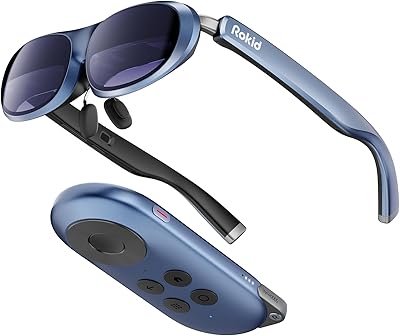
Rokid AR Joy Pack AR Glasses
75%
83%
Display Quality
67%
Comfort & Wearability
88%
Setup & Ease of Use
86%
App & Content Access
84%
DRM & Streaming Compatibility
More
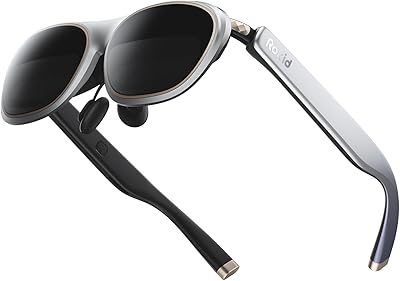
Rokid Max 2 AR Glasses
75%
91%
Display Quality
68%
Field of View
73%
Comfort & Fit
62%
Brightness & Visibility
74%
Build Quality
More
RayNeo Air 3s Pro AR Glasses
81%
93%
Display Brightness
91%
Image & Color Quality
88%
Eye Comfort & Fatigue
74%
Comfort & Wearability
69%
Device Compatibility
More
UHPPOTE UT-RL-209 Non-Visual One-to-One Intercom Doorphone
81%
87%
Audio Clarity
92%
Ease of Installation
83%
Range/Distance Performance
90%
Affordability
76%
Build Quality
More
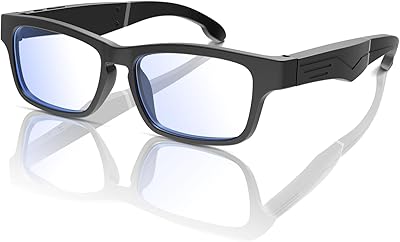
Emerhome E13 Bluetooth Smart Glasses
70%
83%
Ease of Pairing
79%
Call Clarity
58%
Audio Volume & Quality
54%
Battery Life
71%
Touch Control Accuracy
More
TnoxHD Smart Glasses
85%
85%
Audio Quality
90%
Battery Life
80%
Comfort and Fit
78%
Sound Clarity for Calls
88%
Ease of Use
More
Donner Dobuds ONE
Donner Dobuds ONE
85%
94%
Sound Quality
91%
Active Noise Cancellation
89%
Call Clarity
88%
Battery Life
87%
Fit and Comfort
More
OhO 128GB Smart Camera Glasses
69%
78%
Daytime Video Quality
41%
Low-Light Performance
63%
Battery Life
82%
Build & Frame Quality
76%
Comfort & Fit
More
Apogee One Audio Interface
85%
89%
Ease of Use
94%
Sound Quality
87%
Build Quality
90%
Portability
81%
Software Control (Maestro)
More
OAWLY All in One Makeup Kit
85%
88%
Ease of Use
91%
Packaging & Travel-Friendliness
70%
Quality of Brushes
85%
Waterproof Performance
92%
Value for Money
More

FAQ

No, that is actually one of the more practical advantages of the XREAL One AR Glasses over earlier models. The X1 chip handles all the 3 DoF processing internally, so you plug in via USB-C and the stabilized, head-tracked display works immediately without downloading anything.

Not directly out of the box. iPhones older than the 15 series do not output video over their Lightning or earlier USB-C ports in a way these glasses can use natively. You would need the XREAL Hub accessory to bridge the connection, so factor that additional cost into your decision.

Yes, and this is one of the more practical use cases. When connected to a MacBook via USB-C with DisplayPort output, the glasses function as an extended display. Some users run productivity apps or reference windows on the virtual screen while keeping their laptop display for primary work.

It helps to think of it as a perceived size rather than a literal measurement. The virtual image is designed to feel equivalent to watching a very large screen from several meters back. The actual field of view is 50°, which is substantial but does not fill your entire peripheral vision, so the experience is more like a large cinema screen in front of you than being surrounded by visuals.

The glasses are not designed to fit comfortably over most prescription frames. XREAL does offer prescription lens adapters as a separate accessory for users who need vision correction, which is a more practical solution than trying to layer two pairs of glasses.

The Micro-OLED panel has a high peak brightness rating, and the adjustable lens transparency helps in different lighting conditions. That said, bright direct sunlight remains a challenge for any glasses-style display — they perform better in moderate outdoor light or shade than in harsh midday sun.

Yes, and this is worth being realistic about. The open-ear design means sound is not contained, so people nearby will be able to hear audio at higher volumes. This wearable display is not a substitute for headphones in shared or quiet public spaces if audio privacy matters to you.

The Steam Deck has a USB-C port that supports DisplayPort output, so in most cases it connects directly to the glasses without additional hardware. It is worth confirming your specific Steam Deck hardware revision supports DP output before purchasing, though the vast majority do.

This varies quite a bit by person. At 84 grams the physical weight is manageable, but the combination of the nose bridge pressure, the frame design, and the visual adjustment required means many new users find one to two hours comfortable before needing a break. Extended gaming or work sessions may require some acclimatization over the first week or two of use.

There is no wireless mode — these glasses require a physical USB-C connection to the source device at all times. If wireless display streaming is important to your workflow, this is a genuine limitation to weigh before buying. The cable is necessary because the glasses rely on the host device for all processing and power.

Where to Buy

eBay
In stock $349.99
PayMore Murray
In stock $329.99
XREAL
In stock $449.00