Overview

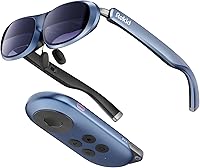
The Rokid AR Joy Pack AR Glasses arrived in late 2023 as one of the more accessible entries in the wearable display space, sitting well below the price ceiling of enterprise-grade headsets. The package includes two distinct components: the Max glasses, which handle the actual display, and the Station streaming box, which runs Android TV and manages your content. It is worth clarifying upfront — despite the AR branding, this is not a spatial-computing device that overlays information on the real world. Think of it more as a personal cinema headset you can carry in a bag. Rokid has carved out a clear niche here, targeting media consumption over immersive mixed reality.
Features & Benefits

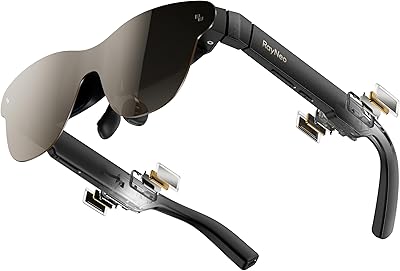
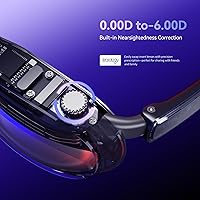
The headline spec is a 160″ virtual Micro-OLED display projected through a frame weighing just 75g — light enough that you genuinely forget something is sitting on your face. The Station box runs Android TV 12 with full Google Play access, so Hulu, Disney+, Peacock, and thousands of other apps are available without workarounds. Critically, HDCP support means premium DRM-protected content streams properly, something many competing wearables stumble on. The built-in diopter adjustment spans 0.00D to -6.00D, letting mildly nearsighted users skip prescription inserts entirely. Connectivity covers USB-C direct, HDMI adapter, and wireless, which means pairing with a Windows laptop, Android phone, or iOS device is straightforward.

Best For

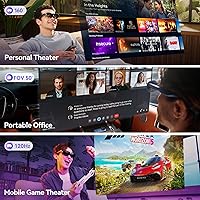
These AR glasses are a strong match for frequent travelers who want a large-screen experience on a plane or in a hotel room without hauling extra hardware. They also suit renters or students in smaller spaces where wall-mounting a TV simply is not practical. Cloud gamers who want a dedicated wearable display without buying a monitor should take a serious look, especially given the broad device compatibility. The diopter correction makes the Rokid Joy Pack genuinely practical for people with mild myopia who typically struggle with headsets. And for solo viewers who consume a lot of content during long commutes or late-night sessions, the private screen experience is difficult to replicate on a tablet.

User Feedback

Across roughly 300 ratings, this wearable display holds a 3.8-star average — decent, but a clear signal that real trade-offs exist. Owners consistently praise the display clarity for a device so compact, and most describe the initial setup as refreshingly painless. App availability through Google Play earns frequent positive mentions. On the downside, several buyers find the field of view narrower than anticipated, and extended wear beyond an hour can become uncomfortable. A number of reviews mention the Station box running warm during sustained use, and cloud gaming performance is reportedly inconsistent depending on connection quality. The sharpest criticism comes from buyers who expected genuine AR overlays — if that is your expectation, this is not that device.

Pros

  • The 160″ virtual Micro-OLED display delivers genuinely impressive clarity for a device this compact and lightweight.
  • At just 75g, these AR glasses are light enough to wear for extended stretches without immediate fatigue.
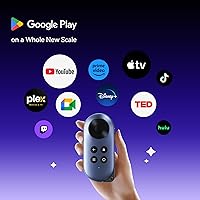
  • Android TV 12 with Google Play means real streaming app support, including Hulu, Disney+, and Peacock out of the box.
  • HDCP support is a practical differentiator — DRM-protected premium content actually plays, unlike on many rival wearables.
  • Built-in diopter adjustment from 0.00D to -6.00D makes this one of the few wearable displays mildly nearsighted users can use without inserts.
  • Setup is widely reported as plug-and-play, with minimal technical friction for new users.
  • Broad compatibility across iOS, Android, and Windows gives this wearable display real flexibility across different households and workflows.
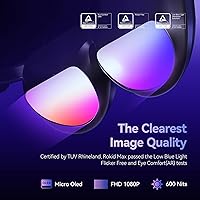
  • TÜV Rheinland Eye Comfort certification offers a credible third-party endorsement for extended viewing sessions.
  • The included Station box operates independently, so you do not need a phone or laptop plugged in to stream content.

Cons

  • The field of view is narrower than marketing visuals suggest, which can break immersion during cinematic content.
  • Comfort degrades noticeably on sessions longer than an hour, particularly around the nose and temples.
  • The Station streaming box runs warm during sustained use, which some buyers find distracting.
  • Cloud gaming performance is inconsistent and heavily dependent on network conditions, making it unreliable for competitive play.
  • Outdoor and bright-room use is impractical due to insufficient display brightness against ambient light.
  • Buyers with prescriptions stronger than -6.00D diopters are not covered by the built-in correction feature.
  • The AR label creates real expectation mismatches — there is nothing augmented about the reality you see through these glasses.
  • Carrying the Station box alongside the glasses adds bulk that undercuts the portability story somewhat.
  • At the current price tier, build quality on the frame feels more mid-range than premium, with limited material refinement.

Ratings

The scores below for the Rokid AR Joy Pack AR Glasses were generated by our AI rating engine after analyzing verified purchaser reviews from global markets, with spam, bot-submitted, and incentivized feedback actively filtered out. The result is an honest, data-driven snapshot that reflects what real buyers experienced — not what the marketing materials promised. Both the genuine strengths and the recurring frustrations are weighted transparently in every category score.
Display Quality
83%
The Micro-OLED panel draws consistent praise for its sharpness and color richness, particularly during movie playback in low-light environments. Travelers frequently describe the picture as punchy and detailed enough to make long-haul flights feel genuinely cinematic, which is a meaningful bar to clear for a 75g wearable.
Brightness is the persistent weak point — in well-lit rooms or on planes with windows open, contrast degrades quickly and the image loses impact. A small number of users also report subtle color uniformity issues at the edges of the display after extended sessions.
Comfort & Wearability
67%
33%
The 75g frame weight is legitimately light, and most buyers report the first hour of wear feels effortless. For short commutes, quick gaming sessions, or in-flight movies, the physical comfort is generally described as adequate and better than bulkier headset alternatives.
Beyond 60 to 90 minutes, pressure on the nose bridge and temples becomes a recurring complaint in user reviews. The fit also varies noticeably depending on face shape, and while swappable nose pads help, some users feel the adjustment range is not wide enough for comfortable all-day use.
Setup & Ease of Use
88%
First-time setup is widely praised as genuinely straightforward — plug in the Station box, pair the glasses, connect to Wi-Fi, and you are watching content within minutes. Even less tech-savvy buyers comment that the Android TV interface feels familiar enough to navigate without a learning curve.
A handful of buyers find the dual-component nature of the system slightly confusing at first, particularly around which device handles which function. Wireless adapter pairing has also been flagged as occasionally finicky on the first connection attempt.
App & Content Access
86%
Having the full Google Play Store on Android TV 12 is a real advantage — Hulu, Disney+, Peacock, and most major streaming platforms install and run without workarounds. Buyers who have used competing wearables that lack proper app ecosystems consistently note how much more complete this experience feels.
A small number of region-specific apps are not available through the Android TV Play Store, which can frustrate international buyers. A few users have also noted that certain apps require side-loading for the best experience, which adds friction for non-technical users.
DRM & Streaming Compatibility
84%
HDCP support is a practical differentiator that separates these AR glasses from several rivals at similar price points. Buyers specifically mention being able to stream protected Netflix and Disney+ content without the blank screen errors that plague non-HDCP wearables.
While most major platforms work well, a few niche streaming services with stricter DRM implementations have been reported as unreliable. This is partly a platform issue rather than a hardware flaw, but it can catch buyers off guard if they rely on less mainstream services.
Build Quality
71%
29%
The overall construction feels considered and deliberate for a mid-range product — hinges are reasonably solid, the frame does not flex excessively, and the glasses hold their shape after regular packing and unpacking into a travel bag. Most buyers feel the physical durability is appropriate for the price tier.
Several reviewers note that the materials feel noticeably mid-range compared to premium headsets, with a plastic finish that picks up minor scratches over time. The cable connections on the glasses themselves have also been flagged as a potential long-term durability concern by a subset of users.
Field of View
58%
42%
For pure media consumption in a dark room, the effective field of view is sufficient to create an immersive feeling during movies and casual gaming. Users who set expectations around a personal cinema rather than a wide-angle spatial experience tend to rate this aspect more favorably.
The field of view is consistently flagged as narrower than the promotional visuals imply, and buyers coming from wider-FOV devices or expecting a more enveloping experience regularly express disappointment. This is one of the most common recurring pain points across the review pool.
Cloud Gaming Performance
62%
38%
On a strong, stable Wi-Fi or wired connection, casual cloud gaming through services like Xbox Cloud Gaming or GeForce Now is described as workable and genuinely fun for slower-paced titles. The display quality during gaming sessions is frequently praised when network conditions cooperate.
Latency is inconsistent and heavily network-dependent, making the wearable display unreliable for fast-paced or competitive gaming. The Station box also runs noticeably warm during sustained gaming sessions, which some users find distracting and raises questions about long-term thermal management.
Diopter Correction
81%
19%
The built-in diopter adjustment from 0.00D to -6.00D is a meaningful feature that genuinely removes a barrier for mildly nearsighted users. Buyers who wear glasses for everyday life specifically appreciate not needing custom inserts or contacts just to get a sharp image.
The correction range tops out at -6.00D, leaving users with stronger prescriptions without a usable solution and requiring them to wear contacts during use. A small number of reviewers also note that the per-eye adjustment can be finicky to dial in precisely, especially for users with different prescriptions in each eye.
Portability
77%
23%
The glasses themselves pack down easily and the whole kit fits in a moderately sized carry-on pocket or bag, which is a genuine advantage for travelers who want a personal screen without hauling a laptop. The included case provides adequate protection for the glasses during transit.
The Station box adds meaningful bulk to the overall carry package, and when you factor in cables and adapters, the total kit is less pocketable than the glasses-only weight suggests. Buyers hoping for a truly minimalist travel setup sometimes feel the dual-component system works against that goal.
Device Compatibility
82%
18%
Working across iOS, Android, and Windows without needing proprietary adapters for most use cases is a practical strength that buyers across different device ecosystems appreciate. The USB-C direct connection in particular gets positive mentions for its simplicity when connecting to modern laptops and Android phones.
iOS connectivity is more limited than Android in terms of mirroring flexibility, and some Apple device users report that screen mirroring restrictions on iPhones reduce the range of content they can view. The wireless adapter, while convenient, occasionally introduces minor lag that the wired connections avoid.
Value for Money
73%
27%
Relative to flagship AR and VR headsets that cost several times more, the Rokid Joy Pack delivers a functional personal cinema experience at a price point that feels accessible to mainstream buyers. For the specific use case of solo streaming on the go, the value proposition is reasonably strong.
At the current price, buyers with higher expectations — particularly around build quality, field of view, and sustained comfort — feel the device falls short of truly justifying the investment. A 3.8-star average across nearly 300 reviews reflects a user base that is satisfied but not enthusiastic about the overall price-to-experience ratio.
Thermal Management
59%
41%
Under light usage like casual browsing or short streaming sessions, the Station box stays at an acceptable temperature and does not cause any functional issues. Most users find that short daily use sessions never push the hardware into uncomfortable thermal territory.
During prolonged streaming or cloud gaming sessions, the Station box runs noticeably warm — warm enough that multiple reviewers specifically call it out as a concern. It does not cause shutdowns in most reported cases, but the heat output during heavy use feels disproportionate to the device size.
Eye Comfort & Safety
78%
22%
The TÜV Rheinland Eye Comfort certification gives buyers a credible third-party data point that the display meets recognized standards for extended viewing, which carries real weight for users concerned about eye strain during regular use. Most buyers report no unusual eye fatigue during typical session lengths.
Eye comfort over very long sessions — two hours or more — is more variable, with some users reporting mild strain or dryness that they attribute to the optics rather than general screen fatigue. The narrow field of view can also cause some users to subconsciously strain to see edge content, contributing to tiredness over time.

Suitable for:

The Rokid AR Joy Pack AR Glasses are genuinely well-suited to a specific kind of buyer: someone who wants a large, private screen experience without the bulk of a monitor or the commitment of a wall-mounted TV. Frequent flyers and road warriors get the most obvious value here — slipping these into a carry-on and watching DRM-protected content from Hulu or Disney+ on what feels like a 160″ screen is a real convenience that a tablet simply cannot match. Renters, students, and anyone living in compact spaces will also appreciate having a big-screen feel without drilling a single hole in the wall. Mildly nearsighted users benefit from the built-in diopter correction, which removes the usual friction of sourcing custom lens inserts. Solo streamers and cloud gamers who want a dedicated personal display at a mid-range price point will find this wearable display hits a practical sweet spot that more expensive headsets price themselves out of.
Not suitable for:

Despite the AR branding, the Rokid AR Joy Pack AR Glasses are not the right tool for anyone expecting true augmented reality — there are no digital overlays on the physical world, no spatial anchoring, and no developer SDK for mixed-reality apps. Buyers who plan to share content with a partner or family will find the inherently solo nature of a personal display frustrating, since there is simply no way for two people to watch simultaneously. Those who need outdoor usability should look elsewhere, as the display brightness struggles against ambient light and the glasses are not designed for open-air use. People with stronger prescriptions beyond -6.00D diopters will still need corrective lenses, and buyers who plan to wear the device for several hours straight should be aware that comfort and heat from the Station box become real concerns. If you are after a social, versatile, or spatially aware AR experience, this wearable display will leave you underwhelmed.
Specifications

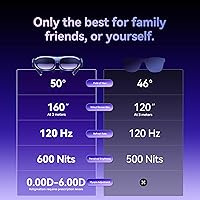
  • Display Type: The glasses use a Micro-OLED panel that projects a virtual image equivalent to a 160″ screen at a comfortable viewing distance.
  • Frame Weight: The Max glasses weigh just 75g, making them one of the lighter wearable displays available in this category.
  • Operating System: The Station streaming box runs Android TV 12, providing access to the Google Play Store and its broad library of streaming and entertainment apps.
  • Diopter Range: Built-in diopter adjustment covers 0.00D to -6.00D, allowing mildly nearsighted users to dial in a sharp image without prescription lens inserts.
  • DRM Support: Full HDCP support is included, enabling playback of DRM-protected content from major streaming platforms without compatibility errors.
  • Connectivity: The system supports USB-C direct connection, an HDMI adapter, and a wireless adapter, covering a wide range of source devices.
  • Device Compatibility: These AR glasses are compatible with iOS, Android, and Windows devices, making them usable across most common consumer hardware.
  • Eye Safety: The display has earned TÜV Rheinland Eye Comfort certification, providing third-party validation for extended viewing use cases.
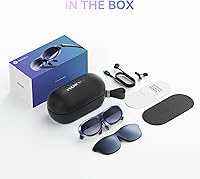
  • Package Contents: The full kit includes the Max glasses, the Station Android TV streaming box, two Lithium Ion batteries, and multiple adapter options.
  • Battery Type: Two Lithium Ion batteries are required and included in the box, powering the Station streaming box during use.
  • Package Dimensions: The retail package measures 5.5 x 10.33 x 5.5 inches and has a total shipping weight of 2.51 pounds.
  • Nose Pad Fit: The Max glasses include swappable nose pads in the package, allowing users to adjust fit for different face shapes.
  • App Ecosystem: Through the Google Play Store on Android TV 12, users can install apps including Hulu, Disney+, Peacock, and many other streaming services.
  • Manufacturer: The Rokid AR Joy Pack is manufactured by Rokid, a company focused on wearable AR and spatial computing consumer devices.
  • Release Date: The product was first made available in September 2023, positioning it as a mid-generation entry in the wearable display category.

Related Reviews
Rokid Max 2 AR Glasses
75%
91%
Display Quality
68%
Field of View
73%
Comfort & Fit
62%
Brightness & Visibility
74%
Build Quality
More
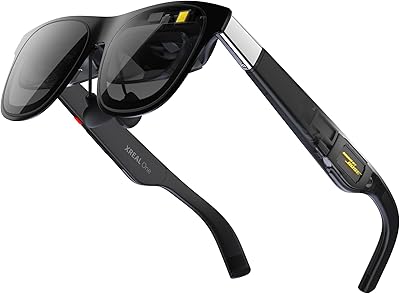
XREAL One AR Glasses
80%
91%
Display Clarity
88%
Latency & Responsiveness
68%
Field of View
86%
Audio Quality
83%
Build Quality
More
RayNeo Air 3s Pro AR Glasses
81%
93%
Display Brightness
91%
Image & Color Quality
88%
Eye Comfort & Fatigue
74%
Comfort & Wearability
69%
Device Compatibility
More
KEYWING 1oz Amber Glass Jars, 36 Pack
85%
88%
Quality of Glass
91%
Leak-Proof Design
85%
UV Protection Effectiveness
90%
Eco-Friendliness
80%
Storage Capacity (1oz size)
More
Sally's Organics Glass Spray Bottles 16oz - 2 Pack
89%
89%
Ease of Use
93%
Adjustable Spray Functionality
96%
Eco-Friendliness
88%
Durability
90%
Value for Money
More
Tecohouse 8 oz Glass Jars with Lids, 12 Pack
89%
89%
Packaging & Design
92%
Ease of Use
90%
Durability & Build Quality
93%
Leak-Proof Seal
85%
Aesthetic Appeal
More
KEYWING 4oz Amber Glass Jars with Black Lids, 48 Pack
87%
92%
Leak-Proof Design
89%
UV Protection
91%
Durability of Glass
85%
Ease of Use & Cleaning
88%
Eco-Friendliness
More
Furnido 6 Pack 8 oz Black Round Glass Jars
86%
93%
Leak-proof Performance
89%
Packaging Design
88%
UV Protection Effectiveness
85%
Ease of Use (Spatulas & Labels)
91%
Material Quality
More
KEYWING 2 oz Amber Glass Jars with Black Lids, 24 Pack

83%
92%
Durability
90%
Leak-Proof Seal
88%
UV Protection
85%
Ease of Cleaning
80%
Design & Aesthetics
More
Cornucopia Brands 32-Ounce Amber Glass Lotion Pump Bottles (2-Pack)
87%
89%
Value for Money
82%
Ease of Use & Functionality
91%
Design & Aesthetics
85%
Durability & Build Quality
87%
UV Protection Effectiveness
More

FAQ

No, and this is one of the more practical aspects of the setup. The Station box runs Android TV independently, so once it is configured you can stream content without a phone or laptop involved at all. The glasses simply connect to the Station box directly.

They will work for users with mild myopia between 0.00D and -6.00D, thanks to the built-in diopter adjustment on each lens. If your prescription falls outside that range, you would still need corrective lenses or contacts, as the adjustment dial will not fully compensate for stronger prescriptions.

HDCP support is built in, which means DRM-protected content from major platforms should play without issues. Netflix, Hulu, Disney+, and Peacock have all been reported working by users. That said, app availability can sometimes depend on regional Play Store libraries, so it is worth verifying your specific apps before purchasing.

The Max glasses are the display device — they sit on your face and show the image. The Station is a separate Android TV streaming box that processes and sends content to the glasses. Think of the Station as a miniature set-top box and the glasses as a wearable screen; they work together, but each handles a distinct function.

The 160″ figure refers to the equivalent perceived screen size at a standard viewing distance, not a literal measurement. In practice, most users describe it as a large, cinema-like image that fills a good portion of your field of view. It is immersive for solo viewing, though the actual field of view is narrower than you might expect from the marketing.

No. This wearable display is inherently a single-viewer device — the image is projected directly into your eyes, so there is no way for a second person to share the experience simultaneously. It is designed for solo use.

For shorter stretches of one to two hours, most users find the comfort acceptable. Beyond that, some buyers report pressure on the nose and temples becoming noticeable, especially without adjustment breaks. The Station box also runs warm during sustained use, which is worth keeping in mind on a long journey.

Bright environments are a real limitation here. The display is best experienced in dim or dark settings — a dark room, an airplane cabin with the window shade down, or a darkened hotel room. In direct sunlight or a well-lit room, the image loses significant contrast and readability.

Cloud gaming performance is variable and largely depends on your network connection rather than the hardware itself. On a strong, low-latency connection, users report a usable experience for casual gaming. For competitive or fast-paced titles where milliseconds matter, the added latency of cloud streaming through any wearable display is likely to be noticeable.

You can connect the glasses to a Windows machine and use them as a secondary or primary display via the USB-C or HDMI adapter. That said, the device is designed around media consumption, and the optics are optimized for video rather than small text or spreadsheets. Some users do use it for productivity, but it works best for content rather than detailed desktop work.

Where to Buy