
Overview

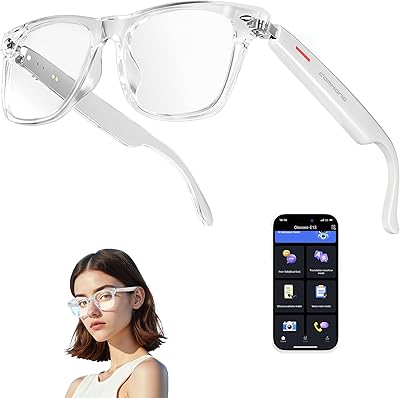
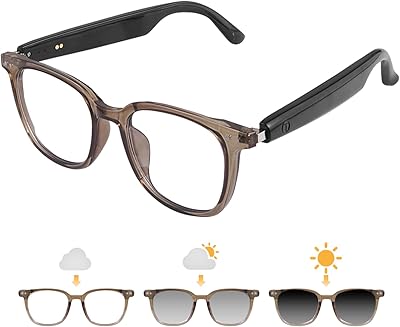
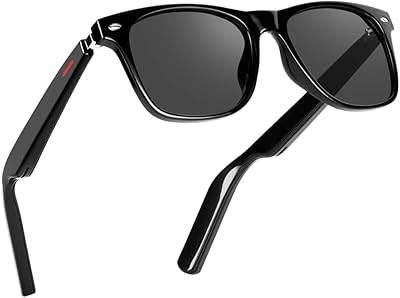
The Emerhome E13 Bluetooth Smart Glasses arrived in early 2025 as one of the more accessible entries in the wearable tech space — clear-lens frames that aim to blend into your daily routine rather than make a statement. Unlike the pricier options from established names, this Bluetooth eyewear sits firmly in the budget tier, which shapes what you should realistically expect from it. The frame combines audio streaming, voice commands, and touch controls in a package weighing just 5.6 oz. It has quietly climbed to #27 in Wearable Tech Glasses on Amazon, suggesting it is connecting with buyers who want basic smart features without a steep commitment.

Features & Benefits

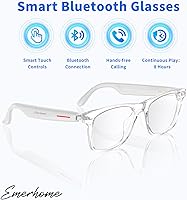
The standout convenience here is auto Bluetooth pairing — unfold the arms and they connect without any fuss, which is genuinely useful when you are trying to get out the door quickly. Temple tap controls let you manage calls, skip tracks, and adjust volume without reaching for your phone. Voice assistant support works through whatever assistant your phone already uses, though performance can vary depending on background noise. The built-in blue light filtering in the clear lens is a practical add-on for people who spend long stretches in front of screens. Battery life, rated at 1 Ah, is the spec to watch — real-world endurance will depend heavily on how you use it.

Best For

These smart glasses make the most sense for commuters and remote workers who want to stay connected without stuffing earbuds in their ears all day. The open-ear audio setup lets ambient sound through, which matters for anyone who needs to stay aware of their surroundings. Outdoor use is also a reasonable fit, given the UV protection built into the lens. If you have never tried smart glasses before, the E13 frames offer a low-stakes way to find out whether the category suits your lifestyle. That said, keep these away from the gym or wet conditions — there is no waterproofing specification listed, and the frame is not built for high-impact activity.

User Feedback

Buyer sentiment around this Bluetooth eyewear is fairly mixed, which tracks for a budget-tier device. Call clarity gets consistent praise — people report that voices come through well during hands-free conversations, which is the primary reason most are buying it. Pairing is also frequently cited as straightforward. Where things get more varied is battery endurance and audio volume, with some buyers finding the speaker output underwhelming for music in louder environments. A few users have flagged fit as an issue, particularly for those with narrower or wider face shapes. Return experiences appear manageable. Going in with realistic expectations — this is an entry-level gadget, not a premium wearable — makes a real difference in how satisfied buyers end up.

Pros

  • Auto Bluetooth pairing connects quickly without manual setup steps.
  • Touch controls on the temples handle calls, volume, and music without grabbing your phone.
  • Clear lens design works indoors and outdoors without looking out of place.
  • Built-in blue light filtering adds real value for heavy screen users.
  • Open-ear audio keeps you aware of your surroundings, unlike earbuds.
  • UV protection makes these smart glasses genuinely useful outdoors.
  • Lightweight at 5.6 oz, so they do not feel heavy during everyday wear.
  • Call clarity is one of the most consistently praised aspects by buyers.
  • Compatible with both Android and iOS via standard Bluetooth pairing.
  • At this price point, the feature set offers strong value for casual daily use.

Cons

  • Speaker volume can feel weak in noisy environments, limiting music enjoyment.
  • Battery life under heavy use may not last a full workday.
  • No waterproofing or sweat resistance rating makes wet conditions a real risk.
  • Frame sizing may not suit all face shapes, with fit issues flagged by some buyers.
  • Audio quality for music is noticeably below what traditional earbuds deliver at a similar price.
  • Voice assistant performance depends heavily on ambient noise levels.
  • No companion app or advanced audio customization is available.
  • The 1 GB onboard memory has no clear practical use case for most buyers.
  • Long-term durability data is limited given the early 2025 launch date.
  • No GPS or independent connectivity — it relies entirely on a paired phone.

Ratings

The scores below were generated by our AI rating engine after analyzing verified global buyer reviews for the Emerhome E13 Bluetooth Smart Glasses, with spam, bot-submitted feedback, and incentivized reviews actively filtered out before any scoring took place. The result is an honest, balanced snapshot of what real users experience day to day — covering both the aspects that genuinely impress and the friction points that frustrated buyers wish they had known upfront.

Ease of Pairing
83%
Most buyers report that connecting these smart glasses to their phone is refreshingly quick — power them on and they show up in the Bluetooth menu without any complicated steps. For commuters and busy users who just want things to work, this is one of the most consistently appreciated parts of the ownership experience.
A smaller subset of users report occasional reconnection drops after the phone and glasses have been separated for a while, requiring a manual reconnect. This is minor for most but can be annoying during a daily routine where you expect instant pickup.
Call Clarity
79%
21%
Hands-free call quality earns fairly consistent praise, particularly in quieter environments like home offices or calm outdoor settings. Voices come through clearly on both ends, and the microphone picks up the user's voice well enough for normal conversation without constant repetition.
In noisier conditions — busy streets, public transit, open-plan offices — the microphone can struggle to isolate the user's voice, and callers on the other end occasionally report background noise. It is functional, but not on the level of a dedicated headset or premium earbuds.
Audio Volume & Quality
58%
42%
For casual podcast listening or background music during a walk, the open-ear speakers are adequate and convenient. Users who prioritize awareness of their surroundings appreciate not having anything physically inserted in their ears while still getting audio output.
Music lovers will likely be disappointed — the speaker output lacks bass, depth, and volume headroom compared to even modestly priced earbuds. In any moderately noisy environment, the audio becomes difficult to hear clearly, which is a real limitation for everyday commuter use.
Battery Life
54%
46%
For short to moderate sessions — a morning commute, a lunch walk, or a few calls during errands — the battery holds up reasonably well and does the job it was asked to do. Users who charge overnight and use the frames for under two hours daily rarely complain about running out mid-day.
Heavy users consistently flag battery endurance as the weakest point of these frames. Continuous streaming drains the 1 Ah cell noticeably faster than most buyers expect, and there is no quick-charge capability mentioned, making mid-day top-ups a real consideration for longer wear days.
Touch Control Accuracy
71%
29%
The temple tap gestures work reliably for basic functions like answering calls and pausing music, and most buyers find the learning curve short. Once the gesture patterns are memorized, controlling audio without touching your phone feels genuinely convenient during daily tasks.
Accidental triggers are a recurring frustration, particularly when adjusting the glasses on your face or resting your hand near the temple. Some users also note that the gesture response can feel inconsistent, requiring a second tap more often than they would like.
Voice Control Performance
63%
37%
Triggering your phone's native voice assistant through the glasses works as advertised in calm environments, letting you send messages, make calls, or ask questions without reaching for your device. It is a genuinely useful feature for driving or cooking scenarios.
Voice recognition accuracy depends heavily on ambient noise, and these frames offer no noise cancellation to help. In any setting with background sound, voice commands frequently misfire or go unrecognized, which undercuts the hands-free convenience the feature promises.
Comfort & Fit
66%
34%
At 5.6 oz the frames are light enough that most wearers forget they have them on during shorter sessions, and the round silhouette suits a range of face shapes well enough for casual daily use. First-time smart glasses wearers often comment positively on how normal they feel to wear.
Users with narrower or wider face shapes report that the fit is not adjustable enough to compensate, leading to pressure points or looseness during extended wear. There is no nose pad customization mentioned, which limits how well the frames adapt to individual facial geometry.
Blue Light Filtering
72%
28%
Screen-heavy workers — developers, writers, remote staff who spend six or more hours in front of monitors — report a noticeable reduction in end-of-day eye strain compared to wearing no filtering at all. The clear lens means there is no color distortion affecting screen-based work.
The filtering effect is subtle and not independently certified to any published standard in the product documentation, which makes it hard to verify how much protection is actually delivered. Users expecting significant visible filtering will find the clear lens underwhelming compared to dedicated blue light glasses.
UV Protection
74%
26%
The UV protection built into the clear lens adds practical outdoor value, particularly for users who wear these frames during daytime walks or commutes. It is a thoughtful inclusion at this price tier that makes the glasses feel more complete as an all-day wearable.
No specific UV protection rating or standard is cited, so it is difficult to know whether coverage is partial or full-spectrum. Users in high-UV environments — beach, snow, direct summer sun — should not rely on this as a substitute for proper UV-rated sunglasses.
Build Quality
61%
39%
For the price, the frame construction feels reasonable out of the box — hinges move smoothly, the temples flex without feeling fragile, and the overall fit and finish is cleaner than some competing budget options in the wearable tech category.
Longer-term durability is genuinely unknown given the January 2025 release date and limited long-term ownership data. Several buyers note that the plastic construction feels lightweight in a less reassuring way, and there are concerns about hinge durability after extended daily use.
Value for Money
77%
23%
Evaluated purely against its price tier, this Bluetooth eyewear delivers a feature set — touch control, voice assistant integration, open-ear audio, blue light filtering, and UV protection — that would have cost considerably more just a few years ago. For first-time smart glasses buyers, the entry cost feels justified.
The value calculation shifts if you compare these frames against category leaders or if battery life and audio volume limitations make the glasses impractical for your specific daily use. For users who end up needing more, spending more on a better-tested product may prove smarter in the long run.
Design & Appearance
69%
31%
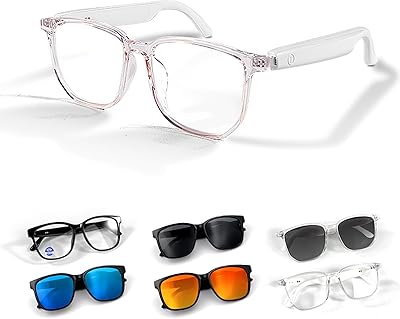
The round clear-lens frame has a clean, understated look that reads as ordinary glasses rather than tech gadgetry, which many buyers consider a plus — these do not scream wearable tech in a meeting or at a coffee shop. The unisex styling suits a broad range of personal aesthetics.
The design does not offer any meaningful personalization — no adjustable elements, no color variants noted, and the proportions skew toward a single average face size. Users who want distinctive styling or a custom fit will not find it here.
Setup & Onboarding
81%
19%
Getting up and running with these smart glasses is straightforward enough that most buyers do not report needing much time to go from unboxing to first connected call. The lack of a required companion app keeps the setup process clean and device-agnostic.
Without an app or detailed digital manual, discovering all available gesture commands and settings relies on the printed documentation, which some buyers describe as sparse. Users who want granular control or custom configurations will find the setup ceiling frustratingly low.
Compatibility
76%
24%
Bluetooth-based pairing means these frames work across the broadest range of devices without ecosystem lock-in — iOS, Android, and even computers or tablets that support Bluetooth audio all connect without issue in most reported cases.
The absence of a dedicated app means there is no equalizer, firmware update path, or device management dashboard available. iOS users in particular may find some voice assistant interactions slightly less fluid than on Android, though both platforms are functionally supported.

Suitable for:

The Emerhome E13 Bluetooth Smart Glasses are a solid pick for anyone who wants to dip a toe into smart eyewear without spending a lot. Commuters who find earbuds isolating will appreciate the open-ear audio setup, which keeps them connected to music and calls while still hearing the world around them. Remote workers who spend long hours in front of screens get a practical bonus from the blue light filtering built into the clear lens. Outdoor walkers and errand-runners will find the hands-free call functionality genuinely convenient, especially on the go. And for first-time smart glasses buyers, this is one of the lower-risk ways to find out whether the category fits your lifestyle before considering a pricier option.

Not suitable for:

The Emerhome E13 Bluetooth Smart Glasses are not the right choice for buyers expecting premium audio performance or all-day battery endurance. Anyone who listens to music in loud environments — commuter trains, busy streets, gyms — may find the speaker volume underwhelming compared to traditional earbuds or headphones. There is no confirmed water or sweat resistance rating listed, which makes these frames a risky companion for workouts, rain, or any setting where moisture is a factor. Audiophiles, athletes, and buyers who need a versatile pair of glasses for both indoor and demanding outdoor conditions will likely find this Bluetooth eyewear falls short of their needs. People with wider or narrower face shapes should also be cautious, as fit has been a recurring concern among buyers who found the frame sizing limited.

Specifications

  • Brand: Manufactured by Emerhome under the model designation E13.
  • Connectivity: Pairs with smartphones and other devices via standard Bluetooth wireless technology.
  • Lens Type: Clear lens with built-in blue light filtering and UV protection for everyday indoor and outdoor use.
  • Touch Control: Capacitive touch sensors on both temples allow users to control calls, music playback, and volume with tap gestures.
  • Voice Control: Supports hands-free voice commands through the phone's native assistant, such as Siri or Google Assistant.
  • Battery: Equipped with a 1 Ah lithium polymer rechargeable battery built into the frame.
  • Weight: The complete frame weighs 5.6 oz, positioning it as a lightweight daily-wear option.
  • Dimensions: Overall frame dimensions measure 7.09 x 7.09 x 11.02 inches including the temples.
  • Memory: Includes 1 GB of onboard memory, though no standalone media storage functionality is documented.
  • Compatibility: Works with both Android and iOS devices via Bluetooth pairing; no dedicated companion app is confirmed.
  • Special Features: Core functions include hands-free calling and wireless music playback streamed from a paired device.
  • GPS: No GPS hardware is included; location functionality depends entirely on the paired smartphone.
  • Water Resistance: No official IP rating or water resistance certification is listed for this model.
  • Release Date: First became available for purchase in January 2025.
  • Frame Shape: Round frame silhouette designed to suit a range of face shapes for general everyday wear.
  • Power Source: Rechargeable via the included cable; uses a CR5-type battery cell configuration according to the listing.
  • Audio Output: Integrated open-ear speakers are built into the temple arms for ambient audio without blocking external sound.
  • Use Case: Designed primarily for hands-free calls and casual audio streaming rather than immersive or high-fidelity listening.

Related Reviews
Smart Bluetooth Glasses GS038
85%
88%
Comfort & Wearability
82%
Sound Quality
86%
Battery Life
83%
Build Quality
70%
Connectivity Stability
More
Domhong E13 AI Smart Translation Glasses
72%
83%
Value for Money
67%
Translation Accuracy
58%
Audio Quality
76%
Comfort & Fit
78%
Battery Life
More
XO GS01 Bluetooth Audio Sunglasses
72%
88%
Value for Money
61%
Audio Quality
43%
Sound Leakage
67%
Battery Life
82%
Comfort & Fit
More
Emerhome Gen3 Bluetooth Translation Glasses
71%
61%
Translation Accuracy
67%
Audio Quality
84%
Modular Design
73%
Comfort & Fit
81%
Touch Controls
More
E10-C Smart Glasses Bluetooth Sunglasses
84%
88%
Comfort and Fit
91%
Battery Life
72%
Sound Quality
85%
Ease of Use
80%
Build Quality
More
RUIMEN Bluetooth Audio Smart Glasses AJ01
81%
83%
Audio Quality
89%
Comfort and Fit
78%
Battery Life
85%
Water Resistance
74%
Voice Control Functionality
More
Smart Bluetooth Audio Glasses G05-T3
84%
89%
Hands-Free Calling Performance
92%
Bluetooth Connectivity
74%
Sound Quality
78%
Comfort & Fit
85%
Battery Life
More
GenXenon GS07 Bluetooth Audio Smart Glasses
84%
88%
Bluetooth Audio Quality
76%
Battery Life
91%
Comfort & Fit
89%
Hands-Free Functionality
82%
Waterproof Durability
More
KONLEYA J6-5 Bluetooth Smart Glasses
66%
71%
Audio Quality
44%
Audio Leakage
68%
Battery Life
66%
Comfort & Fit
58%
Build Quality
More
MNVOEQ T6 AI Bluetooth Translation Smart Glasses
69%
67%
Translation Accuracy
61%
Audio Quality
53%
Battery Life
79%
Comfort & Fit
72%
Lens Quality
More

FAQ

They connect over standard Bluetooth, so they pair with both iPhones and Android phones without any major issues. Voice assistant functionality will default to whatever assistant your phone uses — Siri on iPhone, Google Assistant on most Android devices. There is no dedicated app required for basic operation.

The battery is rated at 1 Ah, but real-world endurance depends heavily on how you use it. Continuous music playback will drain it faster than intermittent calls. Based on the specs and user reports, expect a few hours of mixed use — it is not an all-day battery for heavy users, so charging overnight is a good habit.

This is an important one — there is no water resistance or IP rating listed for these frames. That means rain, sweat, and moisture are all risks. We would not recommend wearing them during exercise or in wet conditions until a confirmed waterproofing rating is available from the manufacturer.

The temples have capacitive touch zones that respond to simple tap patterns. A single tap might answer a call, a double tap might skip a track, and a longer press may adjust volume — the exact gesture map can vary, so checking the included manual for the full breakdown is worth doing when you first set them up.

This is one of the more common concerns from buyers. The open-ear speaker design is convenient, but volume output has limits. In quieter settings it works well, but in louder environments like a busy subway or street, some users find the audio gets hard to hear. If high-volume output in noisy places is a priority, earbuds may serve you better.

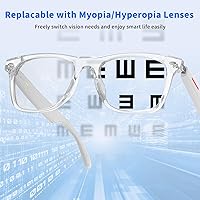
No — these are not prescription frames and cannot be fitted with corrective lenses. They are designed as a standalone wearable for people who do not need vision correction, or as a complementary accessory. If you need prescription eyewear, these would not substitute for your regular glasses.

The frames are designed to pair automatically when powered on and within range of a previously connected device. For first-time setup, you would enable Bluetooth on your phone, power on the glasses, and they should appear in your device list for pairing. No manual code entry or app download appears to be required based on the product documentation.

At 5.6 oz they are on the lighter side for smart glasses, which helps. That said, comfort during extended wear is subjective and depends on your face shape and nose bridge fit. Some buyers have noted the sizing feels better suited to certain face shapes, so if possible, be aware of the return policy before committing to a long-term daily use case.

Blue light filtering in clear lenses is generally subtle — you would not see a visible tint. The protection is meant to reduce eye fatigue from prolonged screen exposure rather than produce an obvious visual effect. It is a useful bonus for desk workers or frequent device users, but it is not a substitute for screen breaks or dedicated blue light glasses designed specifically for that purpose.

Warranty and return terms are managed through the seller on Amazon, so the specifics depend on the current listing terms at the time of purchase. Buyer experiences with returns have generally been described as manageable. It is always worth confirming the return window and warranty coverage directly on the product page before purchasing, especially with newer brands.