Overview

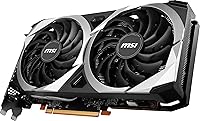
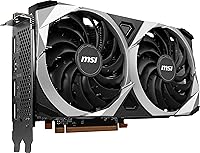
The MSI RX 6600 XT MECH 2X GPU is MSI's compact, dual-fan interpretation of AMD's mid-range silicon, landing squarely in the competitive space between budget builds and premium cards. It's centered on the RX 6600 XT chip — a capable performer at 1080p and a reasonable option for 1440p in the right titles. The MECH 2X cooling shroud keeps the physical footprint manageable, making it a practical fit for mid-towers without sacrificing thermal headroom. Eight gigabytes of GDDR6 handles most modern games comfortably at 1080p. Buyers hoping for genuine 4K capability, though, will find the hardware falls short of that promise regardless of what the spec sheet implies.
Features & Benefits

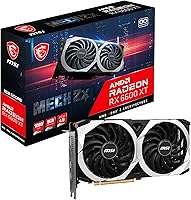
The MECH 2X runs MSI's TORX Fan 3.0 setup, and Zero Frozr is genuinely useful — the fans stay completely off during browsing or video streaming, so you won't hear anything until a real gaming load kicks in. Under sustained load, they spin up without becoming obnoxious. The card ships with a 2602MHz boost clock from the factory, giving it a small performance edge over reference-spec boards straight out of the box. PCIe 4.0 support adds useful bandwidth headroom as games push heavier asset loads. Three DisplayPort 1.4 outputs alongside one HDMI 2.1 gives multi-monitor setups real flexibility, and the compact dual-slot footprint makes it viable in mATX cases where larger cards simply won't fit.

Best For

This AMD mid-range GPU is where it matters most in high-refresh 1080p gaming — titles like Valorant, Apex Legends, or Fortnite will comfortably exceed 100 frames per second without pushing the card particularly hard. It handles 1440p adequately in older or less demanding games, though expectations need managing with newer titles. Builders working with compact cases will appreciate the shorter card length, which leaves more room for airflow and cables. AMD loyalists upgrading from older Radeon hardware will find driver continuity familiar and relatively painless. Light video editors or content creators needing versatile display outputs — especially HDMI 2.1 for a high-refresh panel — will also find it earns its place.

User Feedback

Across roughly 92 ratings and a 4.4-star average, reception for this MSI graphics card is broadly positive — though that sample size is small enough that the consensus deserves some skepticism. Buyers consistently highlight quiet idle behavior as a standout quality, and most report installation as clean and trouble-free. Where opinions split is on value: several reviewers flag that the narrow memory bus puts this card at a bandwidth disadvantage next to Nvidia's RTX 3060 at a comparable price. AMD's driver software gets mixed notices too — functional for most, but not as polished as competing ecosystems. The card earns its stars, but buyers should go in with eyes open on those specific tradeoffs.

Pros

  • Zero Frozr keeps the fans completely off at idle, so the card is genuinely silent during light desktop use.
  • The factory overclock to 2602MHz delivers a small but real performance boost without any manual tinkering.
  • Compact dual-slot design fits comfortably in mATX and smaller mid-tower builds where space is limited.
  • PCIe 4.0 support adds bandwidth headroom and keeps the card relevant as game engines grow heavier.
  • Three DisplayPort 1.4 outputs plus HDMI 2.1 give multi-monitor users and high-refresh panel owners real flexibility.
  • At 1080p in competitive titles, the MECH 2X consistently delivers high frame rates that justify a 144Hz monitor.
  • Installation is clean and straightforward — most buyers report no driver headaches out of the box.
  • The card runs notably quiet under sustained gaming load, not just at idle, which benefits open-case or quieter builds.
  • 8GB GDDR6 is sufficient for the vast majority of 1080p gaming workloads without memory pressure.

Cons

  • The 128-bit memory bus is a real bandwidth bottleneck compared to the RTX 3060 at a similar price point.
  • Performance in memory-hungry triple-A titles at 1440p can drop unexpectedly, exposing the bus width limitation.
  • AMD Radeon Software still trails Nvidia's ecosystem in polish, with occasional overlay and feature inconsistencies reported by users.
  • With only 92 ratings, the overall user sentiment picture is too thin to draw firm long-term reliability conclusions.
  • No ray tracing performance worth speaking of — enabling RT in supported titles hits frame rates hard on this hardware.
  • The card offers no competitive equivalent to Nvidia DLSS, and AMD FSR, while useful, is not supported in every game.
  • Value perception shifts negatively if street pricing climbs, as competing options close the gap quickly at higher price points.
  • 8GB VRAM may become a pressure point sooner than expected as 2025-era titles push higher default texture budgets.

Ratings

The scores below for the MSI RX 6600 XT MECH 2X GPU were generated by AI after analyzing verified buyer reviews from global markets, with spam, bot submissions, and incentivized feedback actively filtered out. Each category reflects the honest consensus — strengths where users consistently agree, and friction points where real buyers hit walls. Nothing has been softened to protect the rating.
1080p Gaming Performance
88%
In competitive titles like Valorant, Apex Legends, and CS2, this AMD mid-range GPU consistently clears the 144Hz threshold at 1080p without breaking a sweat. Buyers upgrading from older mid-range cards report a substantial and immediately noticeable jump in smoothness during fast-paced sessions.
In graphically demanding triple-A titles at 1080p maximum settings, the frame rate advantage narrows more than the spec sheet implies. A handful of buyers found themselves needing to drop shadow or texture settings to maintain consistently smooth gameplay in newer open-world releases.
1440p Gaming Performance
67%
33%
For casual 1440p gaming in older or less demanding titles, the MECH 2X delivers playable and often genuinely enjoyable frame rates without requiring heavy compromises on visual settings. Buyers who play a mixed library reported being pleasantly surprised by how it handles lighter workloads at that resolution.
The 128-bit memory bus becomes a genuine constraint at 1440p in texture-heavy games, causing frame pacing issues and drops that feel inconsistent rather than uniformly smooth. Users who bought this card primarily for 1440p gaming expressed the most disappointment among all buyer segments.
Cooling & Thermal Management
91%
Under sustained gaming loads, temperatures stay well within safe limits and the dual TORX fans never spin up aggressively enough to become noticeable over typical PC ambient noise. Buyers in warmer climates and open-bench setups both reported confidence in the thermal headroom during long gaming sessions.
In very cramped cases with poor airflow, some buyers noted temperatures climbing higher than expected under prolonged load, suggesting the cooler relies on at least moderate case ventilation to perform at its best. It is not the most robust thermal solution for sealed or poorly ventilated enclosures.
Noise Level
93%
Zero Frozr is genuinely appreciated in day-to-day use — the card produces absolutely no fan noise during browsing, video streaming, or light productivity tasks, which makes a real difference in open or semi-open case builds. Even under gaming load, the fan ramp is gradual enough that most buyers describe the noise as a background hum rather than an intrusion.
A small number of buyers reported fan bearing noise appearing after extended use, though this was not a widespread complaint given the sample size. At full thermal load in particularly intensive workloads, the fans can become audible enough to notice in a quiet room.
Memory Bandwidth
58%
42%
For the card's core 1080p use case, the 8GB GDDR6 pool is sufficient and buyers rarely report texture pop-in or memory-related stuttering at that resolution. The 16000MHz memory speed partially compensates for the narrower bus in bandwidth-light scenarios.
The 128-bit bus is the single most cited technical concern across buyer reviews, particularly from those who compared it directly against the RTX 3060's 192-bit interface. In memory-intensive scenes — dense open worlds, high-resolution texture packs, or sustained 1440p — the bandwidth ceiling is measurable and frustrating.
Build Quality
84%
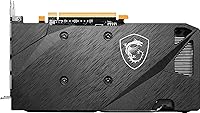
The card feels solid in hand, with a rigid PCB and a backplate that prevents flex during installation and long-term use. Buyers installing the card into tight mATX builds specifically commented on how confidently it seated without requiring force or adjustment.
The shroud material is competent but not premium — it has a slightly hollow feel compared to MSI's higher-tier cooler designs. A few buyers noted that the plastic finish picks up fingerprints and scuffs more visibly than expected for a card in this segment.
Form Factor & Fit
89%
At just over 9 inches in length and a two-slot footprint, the MECH 2X fits into a wider range of cases than many competing cards at this performance level. Builders specifically targeting mATX or compact mid-tower enclosures flagged this as a key reason they chose this card over alternatives.
The dual-slot design, while compact, still requires enough PCIe lane clearance that single-slot spacing builds will lose access to the adjacent slot. Buyers with particularly narrow cases should verify not just card length but also total height clearance near the IO bracket.
Driver Stability
71%
29%
For the majority of buyers, AMD Adrenalin driver installation was clean and trouble-free, with the card recognized immediately after the standard install process. Users upgrading within the AMD ecosystem found the transition especially smooth, with saved settings and profiles carrying over without issues.
A recurring minority of reviewers flagged occasional driver timeouts in specific games, and AMD's history of inconsistent software updates means confidence is not universal. Users coming from Nvidia hardware reported the steepest adjustment curve, particularly when expecting feature parity with GeForce Experience.
Software Ecosystem
63%
37%
AMD Radeon Software has matured enough that everyday tasks — monitoring temperatures, adjusting fan curves, and enabling FreeSync — work reliably without technical knowledge. The built-in performance overlay is functional and gives buyers useful real-time data during gaming sessions.
The software still lags behind Nvidia's ecosystem in polish, particularly for features like game-specific optimization profiles and streaming integration. Several buyers noted that certain third-party tools interact inconsistently with AMD's overlay, requiring workarounds that Nvidia users rarely encounter.
Display Output Versatility
86%
Three DisplayPort 1.4 outputs alongside HDMI 2.1 is a genuinely practical combination — buyers running triple-monitor setups or pairing the card with a high-refresh HDMI panel reported zero compatibility headaches. The HDMI 2.1 port specifically drew praise from buyers using the card with modern high-refresh monitors that lack DisplayPort.
There is no USB-C or Thunderbolt output, which limits compatibility with certain ultrawide monitors or portable displays that require those connections. Buyers using older HDMI-only monitors with high refresh rate expectations may find the HDMI 2.1 bandwidth ceiling becomes relevant sooner than expected.
Value for Money
69%
31%
At launch pricing, the MECH 2X offered a reasonable return for dedicated 1080p gamers who prioritized quiet operation and compact size over raw benchmark standing. Buyers who purchased it during promotional pricing windows or as part of system bundles rated value satisfaction significantly higher than those paying full retail.
At current street pricing, the value proposition tightens considerably when stacked against alternatives that offer wider memory buses or Nvidia feature sets for comparable spend. Several buyers expressed that the 128-bit bus limitation feels increasingly hard to justify as prices in the broader mid-range GPU market have shifted since the card's 2021 release.
Installation Experience
87%
Buyers across skill levels — from first-time builders to seasoned enthusiasts — consistently describe the physical installation as clean and uncomplicated, with the card seating firmly and the power connector routing without awkward cable bending. The light weight means no GPU sag concerns arise during or after the build process.
Buyers migrating from Nvidia who skipped a proper DDU wipe before installing AMD drivers occasionally encountered residual driver conflicts that required a clean OS-level resolution. This is a user-process issue rather than a card defect, but it contributed to negative early impressions for a handful of reviewers.
Ray Tracing Capability
41%
59%
The card technically supports ray tracing in compatible titles, and buyers who tested it in lighter implementations like ambient occlusion found it functional at reduced quality settings without fully destroying frame rates. For a card in this tier, basic RT exposure is a fair inclusion.
Enabling ray tracing in demanding implementations drops frame rates to a point where the experience becomes genuinely unpleasant, even at 1080p. Buyers who specifically cited ray tracing as a purchase factor were among the most dissatisfied — this card is not a practical choice if RT fidelity matters to you.
Longevity & Future-Proofing
72%
28%
PCIe 4.0 support and 8GB GDDR6 keep the card from feeling immediately dated, and AMD's continued RDNA 2 driver optimization means it has benefited from performance improvements post-launch. Buyers who primarily play esports titles or older game libraries are likely to remain satisfied for several more years.
The 128-bit memory bus is the card's most significant long-term liability — as game engines push higher default VRAM budgets and texture resolutions, this constraint will become harder to work around without settings compromises. Buyers planning a 4-plus year ownership window should weigh this carefully against newer alternatives.

Suitable for:

The MSI RX 6600 XT MECH 2X GPU is a strong match for PC gamers whose primary target is smooth, high-refresh 1080p gameplay — particularly in fast-paced competitive titles like Valorant, Apex Legends, or CS2, where raw frame rates matter more than ultra-high resolution. Casual 1440p gamers who play older titles or are willing to dial back settings in newer ones will also get acceptable results without spending significantly more. The compact dual-slot footprint makes this card a practical pick for builders working with mATX or smaller mid-tower cases, where card length is a genuine constraint rather than a minor preference. AMD loyalists upgrading from a Radeon RX 500 or RX 5000-series card will find the driver ecosystem familiar, with minimal relearning required. Light content creators who need versatile display output — especially HDMI 2.1 for a high-refresh monitor — round out the list of buyers who will feel well-served here.
Not suitable for:

The MSI RX 6600 XT MECH 2X GPU is not the right call for anyone chasing a true 4K gaming experience — the 128-bit memory bus creates a meaningful bandwidth ceiling that no amount of GPU clock speed can fully compensate for at that resolution. Buyers comparing this card directly against Nvidia's RTX 3060 should weigh the memory bandwidth gap carefully; the RTX 3060 carries a wider bus and performs more consistently in memory-intensive scenarios, which can tip the value calculation depending on the titles you play. Heavy creative professionals running GPU-accelerated rendering, video encoding at high resolutions, or machine learning workloads will likely find 8GB of VRAM insufficient and the AMD software ecosystem less mature than alternatives. Users who are sensitive to AMD's driver stability history or prefer Nvidia's feature set — including DLSS or a more polished overlay experience — will find this card frustrating rather than freeing. Anyone hoping to run demanding triple-A titles at maximum settings beyond 1080p should budget for a higher-tier card.
Specifications

  • GPU Chip: The card is built on the AMD Radeon RX 6600 XT silicon, using AMD's RDNA 2 architecture.
  • VRAM: 8GB of GDDR6 memory handles modern game textures and assets at 1080p without significant pressure.
  • Memory Bus: The 128-bit memory bus is narrower than some competing cards at this tier, which affects peak memory bandwidth in demanding scenarios.
  • Memory Speed: GDDR6 memory runs at 16000MHz effective, providing adequate throughput for the card's primary 1080p target resolution.
  • Boost Clock: The factory overclock pushes the GPU boost clock to 2602MHz, slightly above AMD's reference specification out of the box.
  • PCIe Version: PCIe 4.0 interface ensures the card has sufficient bus bandwidth for current and near-future game workloads.
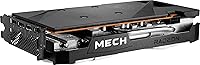
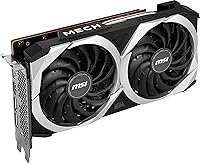
  • Cooling System: Dual TORX Fan 3.0 fans sit atop a custom heatsink designed to balance static pressure and airflow under sustained gaming loads.
  • Zero Frozr: The Zero Frozr feature halts both fans entirely during low-load tasks, keeping the card completely silent when full cooling is not required.
  • Display Outputs: Three DisplayPort 1.4 ports and one HDMI 2.1 port support multi-monitor configurations and high-refresh-rate panels up to 4K.
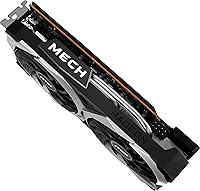
  • Slot Width: The card occupies a standard dual-slot footprint, preserving adjacent PCIe slots in most mid-tower and mATX motherboards.
  • Card Dimensions: At 9.25 x 4.92 x 1.81 inches, the MECH 2X is compact enough to fit in most smaller mid-tower and mATX cases without clearance issues.
  • Card Weight: The card weighs 1.65 pounds, which is light enough that GPU sag should not be a significant concern in most builds.
  • Power Connector: The RX 6600 XT requires an 8-pin PCIe power connector; a 550W or greater PSU is recommended for stable operation.
  • API Support: The card supports DirectX 12 Ultimate, Vulkan 2.0, and OpenGL 4.6, covering all major graphics APIs used in modern PC games.
  • Model Number: The official MSI model number is V502-004R, which can be used to verify compatibility and locate manufacturer documentation.
  • Manufacturer: MSI (Micro-Star International) manufactures and warranties this card; support is handled through MSI's regional service centers.
  • Release Date: This card was first made available in August 2021, meaning it is a mature product with an established driver and firmware history.
  • Max Resolution: The hardware supports output up to 7680x4320 pixels (8K) for display purposes, though gaming at that resolution is not practical on this card.

Related Reviews
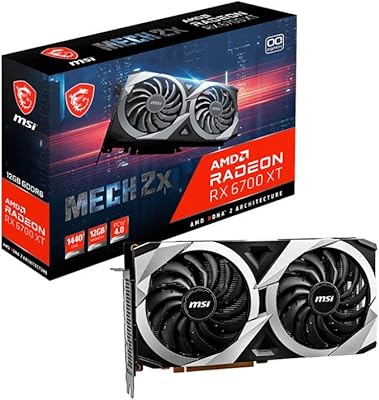
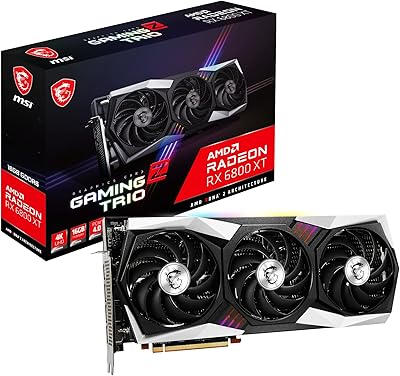
MSI Radeon RX 6700 XT MECH 2X 12G OC Graphics Card
84%
92%
Gaming Performance (1440p & 4K)
85%
Cooling Efficiency (Noise & Thermals)
91%
Ease of Installation
90%
Driver Compatibility
88%
Value for Money
More
MSI Radeon RX 6800 XT GAMING Z TRIO 16GB
88%
94%
Gaming Performance
89%
Cooling Efficiency
92%
Build Quality
87%
Noise Level
90%
Value for Money
More
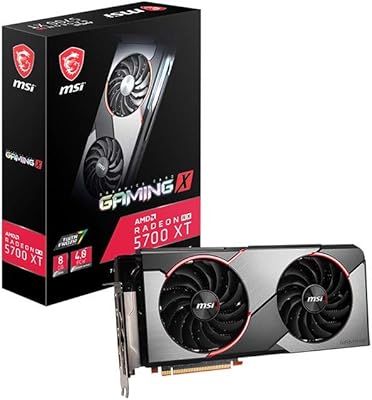
MSI Radeon RX 5700 XT Gaming X 8GB GDDR6 Graphics Card
84%
91%
Gaming Performance
84%
Cooling Efficiency
88%
RGB Lighting Customization
70%
Driver/Software Installation
65%
Noise Levels Under Load
More
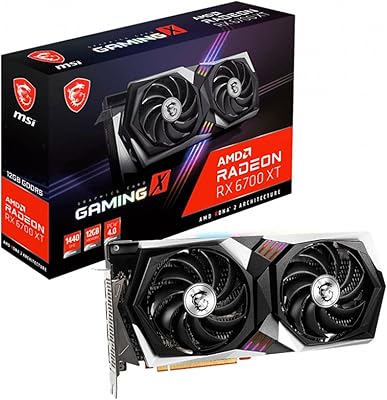
MSI RX 6700 XT Gaming X GPU
78%
88%
1440p Gaming Performance
84%
Thermal Management
91%
Noise Levels
87%
Build Quality
67%
Driver Stability
More
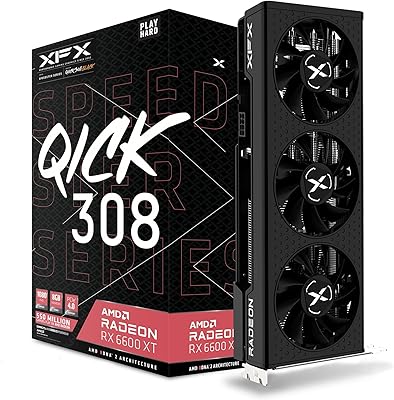
XFX QICK308 RX 6600 XT Graphics Card
79%
88%
1080p Gaming Performance
67%
1440p Gaming Performance
91%
Cooling Performance
86%
Noise Levels
53%
Ray Tracing Performance
More
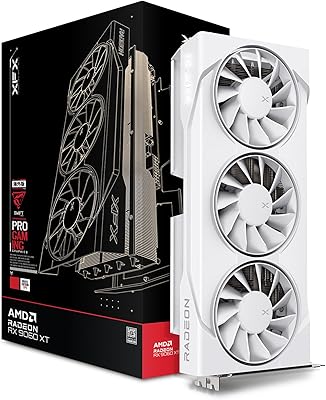
XFX RX 9060 XT 16GB
XFX RX 9060 XT 16GB
87%
94%
Gaming Performance
91%
4K Resolution Handling
88%
Cooling Efficiency
85%
Noise Levels
96%
Memory Capacity
More
PowerColor Radeon RX 7800 XT 16GB
85%
93%
Gaming Performance
88%
Cooling Efficiency
91%
4K Gaming Capabilities
85%
Build Quality
87%
Noise Level
More
PowerColor RX 5600 XT 6GB Graphics Card
67%
88%
1080p Gaming Performance
58%
VRAM Adequacy
83%
Thermal Management
81%
Noise Level
62%
Value for Money
More
MSI Radeon RX 580 Gaming X 8G
85%
86%
Gaming Performance
92%
Cooling Efficiency
89%
Value for Money
84%
Build Quality
91%
Noise Level
More
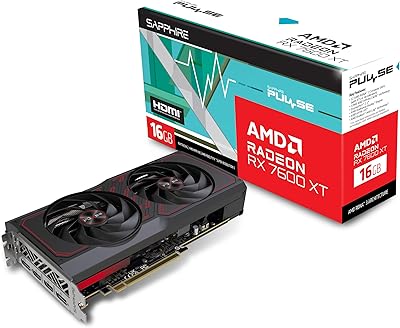
Sapphire Pulse RX 7600 XT 16GB GPU
78%
88%
1080p Gaming Performance
71%
1440p Gaming Performance
91%
VRAM Capacity
58%
Memory Bandwidth
89%
Thermal Performance
More

FAQ

Yes, for most competitive and mid-tier titles it handles 144Hz 1080p very comfortably. Games like Valorant, Apex Legends, and Fortnite will regularly push well above 100 frames per second. In heavier triple-A games you may need to dial back a couple of settings, but hitting 144Hz at 1080p is a realistic expectation for the majority of popular titles.

Raw rasterization performance at 1080p is competitive between the two, but the RTX 3060 has a wider 192-bit memory bus versus the 128-bit bus here, which gives Nvidia an edge in memory-intensive situations and at 1440p. Nvidia also offers DLSS, which has broader game support than AMD FSR at comparable quality levels. If you play a lot of memory-heavy open-world games or want DLSS access, the RTX 3060 edges ahead — but for competitive 1080p gaming, the gap is smaller than the specs suggest.

Not particularly. Under a sustained gaming load the fans spin up to manage heat, but most users describe the noise level as unobtrusive rather than distracting. At idle or during light tasks like browsing or video streaming, Zero Frozr keeps both fans completely off, so you will hear nothing at all from the card in those situations.

In most cases, yes. At 9.25 inches long and occupying two slots, the MECH 2X is on the more manageable end of mid-range cards. That said, you should always check your specific case's maximum GPU length specification before buying, as some compact mATX enclosures have tight clearances near drive bays or front-panel connectors.

AMD and MSI both suggest at least a 550W power supply for stable operation. If your system has other power-hungry components like a high-end CPU or multiple storage drives, bumping to 650W gives you a comfortable headroom buffer and is worth the minor extra cost.

It depends heavily on the game. Older titles, esports games, and graphically lighter games run well at 1440p on medium-to-high settings. In demanding newer releases at 1440p maximum settings, the 128-bit memory bus becomes a bottleneck and frame rates can drop more than you might expect. Think of 1440p as a secondary capability rather than the card's primary strength.

Yes, the RX 6600 XT supports AMD FreeSync through its DisplayPort and HDMI outputs, so if you have a FreeSync-compatible monitor you can enable adaptive sync to reduce screen tearing without paying for a G-Sync premium panel.

It has improved considerably over the past few years but still has a mixed reputation. For most users it works without issues — driver installation is straightforward and the Radeon overlay is functional. Where it occasionally frustrates people is in edge cases: some games trigger driver timeouts, and the software ecosystem is less polished than Nvidia's GeForce Experience for features like automatic game optimization or streaming tools.

Nothing out of the ordinary. Uninstall your existing GPU drivers using DDU (Display Driver Uninstaller) before swapping the card if you are coming from Nvidia hardware, seat the card firmly in the PCIe slot, connect the 8-pin power cable, and install the latest AMD Adrenalin drivers from AMD's website. The process is the same as any modern discrete GPU.

At 1080p it is still sufficient for the vast majority of games. At 1440p or in certain texture-heavy titles, 8GB is starting to feel like the minimum rather than comfortable headroom, and a few recent games have begun flagging VRAM warnings below 10GB at higher quality settings. For the card's core 1080p use case the 8GB allocation is fine today, but it is a factor worth considering if you plan to hold onto the card for three or more years.

Where to Buy