Overview

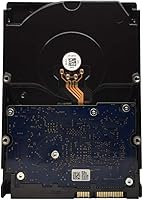
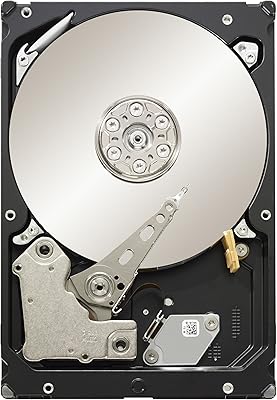
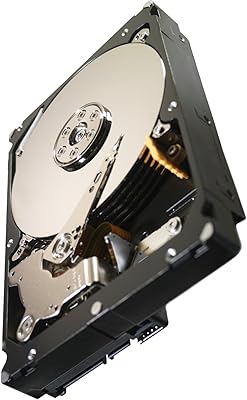
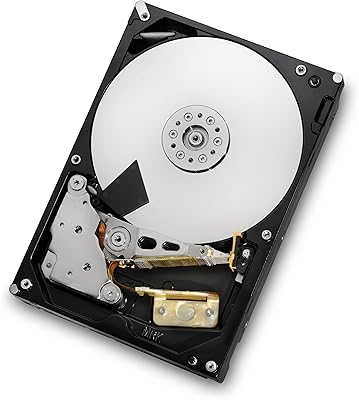
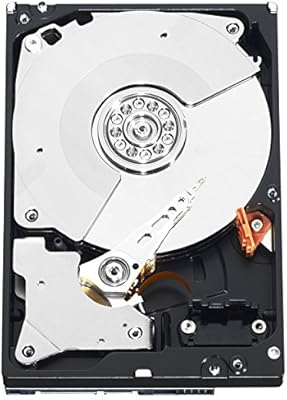
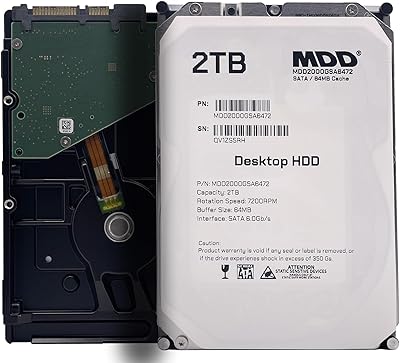
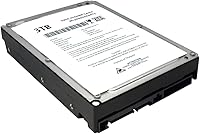
The White Label 3TB 7200RPM Internal Hard Drive is exactly what it sounds like: a no-frills, generic OEM drive aimed at buyers who care about storage capacity far more than logo recognition. White label simply means the drive is sourced from an OEM manufacturer and sold without a brand name attached — a common practice that keeps costs down without necessarily sacrificing reliability. Since its 2015 debut, this 3TB desktop HDD has built a surprisingly long sales track record, suggesting that budget-focused builders keep returning to it for desktop upgrades, NAS arrays, DVR systems, and basic RAID configurations where cost per gigabyte matters most.
Features & Benefits

At its core, 3 terabytes of capacity is the headline — enough to hold thousands of movies, months of security footage, or a sprawling photo archive without ever worrying about juggling drives. The 7200RPM spindle speed gives it a real edge over slower 5400RPM alternatives; transfers feel noticeably snappier, especially during large sequential reads or writes. A 64MB onboard cache helps buffer bursts of data, keeping performance steady under mixed workloads. It connects via SATA III, so it drops into virtually any desktop tower or NAS bay without compatibility gymnastics. The standard 3.5-inch form factor means no adapters, no surprises — just slot it in and go.

Best For

This white-label drive makes the most sense for users who value raw capacity over brand assurance. Plex and home media server builders will appreciate having 3TB of headroom without breaking the bank. It is also a solid pick for DVR and IP camera setups, where the drive needs to write continuously for extended stretches — and the 7200RPM spindle holds up better under that kind of sustained load than slower alternatives. Budget-minded RAID builders populating multiple bays will find the per-drive cost attractive. Small business or home office NAS users who rely on redundancy over prestige will feel right at home with this 3TB desktop HDD.

User Feedback

With a 4.5-star average across more than 400 ratings and a top-50 bestseller rank in Internal Hard Drives, the drive has clearly earned consistent buyer approval. The most common praise centers on value: buyers routinely report that it works exactly as expected, installs cleanly, and holds up well in NAS and DVR environments. That said, two concerns surface often enough to take seriously. Drive longevity is harder to predict with a generic OEM product — you simply do not know which factory floor it came from. The reseller-issued warranty, while functional, is not backed by a major manufacturer, so the claims process may be less straightforward than some buyers expect.

Pros

  • Three terabytes of storage at a budget price point is hard to beat for media libraries and archive builds.
  • The 7200RPM speed gives this white-label drive a real throughput edge over cheaper 5400RPM alternatives.
  • Drop-in SATA III compatibility means it works with virtually every modern desktop tower and NAS enclosure.
  • Buyers report clean, immediate drive recognition across a wide range of motherboards and RAID controllers.
  • The 3.5-inch form factor requires no adapters — it installs exactly like any standard desktop hard drive.
  • Over 420 verified ratings and a top-60 bestseller rank signal that this is not a fly-by-night listing.
  • For RAID 1 or RAID 5 arrays where redundancy already covers failure risk, the low per-drive cost makes a lot of sense.
  • Sustained write performance holds up well in DVR and home security camera setups under normal recording loads.
  • The 64MB cache keeps sequential workloads running smoothly without obvious hiccups during large file transfers.

Cons

  • The actual manufacturer is never disclosed, making it impossible to research failure rates or firmware history.
  • Warranty support runs through the reseller only — if they disappear, your coverage effectively disappears with them.
  • No TLER support means a RAID controller may drop the drive during a prolonged read error, a known desktop-drive limitation.
  • Drive-to-drive consistency is unpredictable; some buyers report early failures with no clear pattern or cause.
  • Heat builds up faster than expected in compact or poorly ventilated enclosures during extended write sessions.
  • The drive is not rated or optimized for high-channel surveillance workloads beyond basic home camera setups.
  • Mechanical seek noise is noticeable in quiet environments, especially when multiple drives are running in the same enclosure.
  • There is no path to firmware updates or technical documentation since there is no parent brand to reference.
  • Buyers on legacy SATA II hardware occasionally report interface negotiation issues that require manual BIOS adjustment.

Ratings

Our AI-generated scores for the White Label 3TB 7200RPM Internal Hard Drive are derived from a thorough analysis of verified global buyer reviews, with spam, bot-submitted, and incentivized feedback actively filtered out before scoring. The result is an honest snapshot of real-world performance across the use cases buyers care about most — from budget NAS builds to always-on DVR systems. Both the genuine strengths and the recurring frustrations are reflected transparently in each category below.
Value for Money
91%
Buyers consistently flag this as one of the strongest budget-tier storage options available for desktop and NAS builds. Getting 3TB of usable spinning storage at this price point is hard to argue with, especially for users populating multiple RAID bays where per-drive cost adds up fast.
A few buyers feel the value calculation shifts once you factor in the reseller-only warranty — if the drive fails in month ten, the support experience is far less reassuring than what a name-brand drive would offer at a modest price premium.
Storage Capacity
88%
Three terabytes hits a practical sweet spot for home media servers, security camera archives, and Plex libraries where content accumulates quickly. Users report going months without needing to manage or offload files, which is exactly what bulk storage is supposed to deliver.
For users with growing 4K video libraries or multi-camera surveillance setups, 3TB can fill up faster than expected. A handful of buyers wished they had gone straight to a 4TB or 6TB option rather than treating this as a long-term solution.
Read/Write Speed
83%
The 7200RPM spindle speed makes a noticeable difference compared to the 5400RPM alternatives that dominate the budget segment. Sequential transfers feel responsive, and users running NAS or DVR workloads report that the drive keeps up without obvious bottlenecks during sustained write sessions.
It is still a spinning platter drive, so anyone coming from an SSD environment will feel the difference immediately during random access tasks. Boot times and application loads are not this drive's territory — it earns its keep in bulk throughput, not snappy responsiveness.
Compatibility
89%
The standard 3.5-inch SATA III form factor means this drive slides into virtually any desktop tower, NAS enclosure, or DVR bay without adapters or configuration headaches. Buyers across a wide range of motherboard generations and NAS brands report clean, immediate recognition on first boot.
A small number of users running older SATA II systems noticed the drive was detected but did not always negotiate the interface speed cleanly without a firmware or BIOS adjustment. Not a widespread issue, but worth checking before assuming plug-and-play perfection on legacy hardware.
Build Quality & Reliability
67%
33%
Many buyers report the drive running without incident for a year or more in always-on NAS and DVR environments, which is a reasonable signal for basic reliability. The physical construction feels solid and comparable to what you would expect from a standard desktop HDD of this class.
Because the actual manufacturing origin is not disclosed, long-term reliability is genuinely harder to predict than with a named-brand drive. A subset of buyers reported early failures — not an alarming rate, but enough to suggest that drive-to-drive consistency is not tightly controlled.
Noise & Vibration
74%
26%
Under normal desktop or enclosed NAS use, most buyers describe the drive as acceptably quiet — nothing that intrudes on a home office environment. The standard 7200RPM operating noise is about what you would expect from any spinning drive in this speed class.
In open-air or minimally dampened enclosures, the mechanical hum and occasional seek noise are more audible than some users anticipated. A few buyers running multiple drives in a NAS reported a cumulative vibration effect that required foam dampening to manage comfortably.
Heat Management
72%
28%
In well-ventilated desktop towers and NAS enclosures with active airflow, the drive maintains reasonable operating temperatures during sustained workloads. Users running it in standard configurations rarely report thermal throttling or heat-related concerns.
In tightly packed enclosures or systems with poor airflow, the drive runs noticeably warm during long write sessions. A couple of buyers in compact NAS builds reported higher-than-expected temperatures that required adding a secondary fan to keep things stable.
Installation Experience
92%
Buyers across all experience levels — from first-time builders to seasoned system integrators — describe the installation as completely straightforward. Standard mounting holes, a familiar SATA power and data connector layout, and immediate OS detection make it one of the least fussy parts of any build.
There is genuinely little to criticize here for most setups. The only friction a handful of users encountered was in very old enclosures with non-standard drive sled configurations, which is more an enclosure problem than anything inherent to this drive.
NAS Performance
81%
19%
In multi-bay NAS enclosures running RAID 1 or RAID 5 configurations, this 3TB desktop HDD holds up well for home and small office workloads — file transfers, media streaming, and backup jobs all run without obvious strain under typical usage loads.
The drive is rated and sold as a desktop drive, not a purpose-built NAS drive, so it lacks features like vibration compensation or rotational vibration sensing found in enterprise-tier NAS HDDs. In densely packed multi-drive arrays, this can translate to slightly inconsistent performance under heavy simultaneous access.
DVR & Surveillance Suitability
78%
22%
The 7200RPM speed and the drive's tolerance for sustained sequential writes make it a workable choice for DVR systems handling two to four camera feeds. Buyers using it in home security setups report stable continuous recording without dropped frames under normal conditions.
This is not a purpose-built surveillance drive, so it lacks the ATA streaming commands and workload optimization that dedicated security drives use to maintain write consistency over long recording cycles. High-channel camera systems would be better served by a drive designed specifically for that workload.
RAID Compatibility
84%
The drive is explicitly listed as RAID-compatible, and buyers building RAID 0 or RAID 1 desktop arrays confirm that it initializes and syncs cleanly across common controllers and motherboard RAID implementations. Cost-conscious builders appreciate being able to populate a four-drive array without a large upfront investment.
Without time-limited error recovery (TLER) support — a feature standard on enterprise RAID drives — there is a risk that the drive's default error recovery behavior could cause a RAID controller to drop it from the array during a prolonged read error. This is a known trade-off when using desktop HDDs in RAID environments.
Warranty & Support
48%
52%
A one-year coverage period is better than nothing, and buyers who needed to make a claim during that window generally report the reseller fulfilled replacements without significant drama. For low-stakes secondary storage, the baseline coverage is adequate.
This is one of the drive's most tangible weaknesses. The warranty runs through the reseller, not a manufacturer, which means the claims process, response time, and replacement quality are entirely dependent on that third party. If the reseller becomes unavailable, the warranty is effectively void — a real concern for a drive with no parent brand to fall back on.
Brand Transparency
53%
47%
The white-label nature is disclosed upfront, and many buyers appreciate the honesty of that positioning. For experienced builders who understand OEM sourcing, the lack of a brand name is a reasonable trade-off for the lower cost.
Not knowing the actual manufacturer is a genuine information gap that affects purchasing confidence. Buyers have no way to look up firmware update histories, failure rate data, or technical support documentation — all things that named-brand drives provide as a matter of course.
Packaging & Delivery Condition
76%
24%
The majority of buyers report the drive arriving in adequate protective packaging with no cosmetic or functional damage. For a bare internal drive with no retail branding, the packaging does its job — keeping the unit safe in transit.
A small but consistent number of reviews mention drives arriving with minimal anti-static or cushioning protection, which is a legitimate concern for sensitive magnetic media. It is not a frequent complaint, but it is worth inspecting the drive immediately upon arrival rather than leaving it in storage.

Suitable for:

The White Label 3TB 7200RPM Internal Hard Drive is built for one type of buyer: someone who needs a lot of storage, wants to spend as little as possible to get it, and is not losing sleep over which factory assembled the drive. Home media server builders running Plex or Kodi will find the 3TB capacity genuinely comfortable headroom — enough to store a large movie and TV library without constantly pruning old content. DVR users and home security enthusiasts running two to four IP cameras will appreciate the sustained write tolerance that a 7200RPM drive offers over slower alternatives in that price range. Budget-conscious RAID builders populating a four-bay NAS will find the per-drive cost attractive when multiplied across an array, especially when redundancy already provides a safety net against individual drive failure. Small home office NAS setups where the priority is having a shared storage pool rather than bleeding-edge reliability will get solid mileage out of this 3TB desktop HDD. Essentially, if your use case is bulk storage in a redundant or low-stakes environment and cost efficiency is the primary filter, this drive fits the brief well.
Not suitable for:

The White Label 3TB 7200RPM Internal Hard Drive is a poor fit for anyone who needs long-term reliability guarantees, manufacturer-backed support, or purpose-built workload optimization. If you are building a production NAS for a small business where drive failure means real downtime and data risk, spending a bit more on a named-brand NAS-rated drive with TLER support and a proper manufacturer warranty is simply the smarter call. Power users running dense multi-drive RAID arrays under heavy simultaneous access should be aware that this drive lacks the vibration compensation and rotational vibration sensing features found in enterprise-class HDDs, which can affect consistency under load. Anyone expecting SSD-like responsiveness for OS use or application storage will be disappointed — this is a bulk storage drive, full stop. Buyers who want peace of mind knowing exactly where their drive was made, what its documented failure rate looks like, or where to turn if the reseller disappears mid-warranty period will find the anonymous sourcing a genuine frustration rather than an acceptable trade-off.
Specifications

  • Storage Capacity: The drive provides 3TB of raw storage, equivalent to approximately 3,000GB, suitable for large media libraries, surveillance archives, and bulk file storage.
  • Spindle Speed: The platters spin at 7200RPM, delivering faster sequential read and write throughput compared to the 5400RPM drives common in the budget segment.
  • Cache Buffer: A 64MB onboard cache helps smooth burst data transfers and maintain consistent performance during sequential read and write workloads.
  • Interface: The drive uses a SATA III connection running at up to 6Gb/s, ensuring broad compatibility with modern desktop motherboards and NAS enclosures.
  • Form Factor: At 3.5 inches, this is a standard desktop hard drive size that fits directly into tower PC bays, NAS enclosures, and DVR chassis without adapters.
  • Dimensions: The drive measures 9.3 x 5.4 x 3.7 inches, consistent with the universal 3.5-inch desktop HDD footprint.
  • Weight: The unit weighs approximately 1.37 pounds, which is typical for a 3.5-inch spinning hard drive of this capacity class.
  • Installation Type: This is an internal hard drive intended for permanent installation inside a desktop PC, NAS enclosure, DVR, or RAID array chassis.
  • RAID Support: The drive is listed as RAID-compatible and has been confirmed by buyers to initialize correctly in RAID 0, RAID 1, and RAID 5 configurations on common desktop controllers.
  • Compatible Systems: Designed for use in desktop PCs, NAS enclosures, DVR systems, and RAID arrays running on standard PC hardware platforms.
  • Brand & Origin: Sold under a white-label or generic classification with no disclosed parent manufacturer, meaning the OEM source varies and is not publicly documented.
  • Color & Finish: The drive housing is silver, consistent with standard bare internal hard drive aesthetics and requiring no cosmetic consideration for enclosed installations.
  • Warranty: Coverage is provided for one year through the reseller, not directly through a hardware manufacturer, which affects the claims process and post-warranty support options.
  • Hardware Platform: The drive is designed and tested for use in PC-based environments running Windows, Linux, and common NAS operating systems that support SATA storage.
  • First Available: This listing has been available since May 2015, giving it a multi-year sales history and a substantial base of verified buyer feedback.

Related Reviews
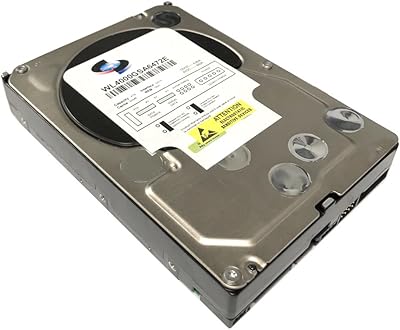
White Label WL4000GSA6472E 4TB Hard Drive
74%
88%
Value for Money
74%
Reliability
81%
Sequential Performance
83%
Vibration Handling
91%
Installation Ease
More
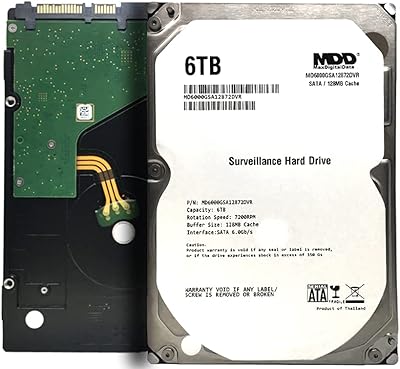
MaxDigitalData 6TB 7200RPM Internal Hard Drive
83%
88%
Performance
93%
Reliability for 24/7 Use
70%
Setup/Installation
85%
Data Transfer Speed
91%
Compatibility
More
Seagate Barracuda XT 3TB Internal Hard Drive
84%
89%
Performance
95%
Storage Capacity
88%
Speed/Access Time
92%
Value for Money
85%
Build Quality
More
Seagate BarraCuda Pro 1TB 7200RPM Internal Hard Drive
87%
92%
Performance
90%
Speed
88%
Reliability
95%
Ease of Installation
65%
Noise Levels
More
Western Digital 3TB WD Blue PC Internal Hard Drive
85%
78%
Performance
85%
Reliability
90%
Ease of Installation
92%
Noise Level
88%
Value for Money
More
HGST Deskstar 2TB 7200RPM SATA III Internal Hard Drive
86%
88%
Performance
92%
Value for Money
85%
Reliability
65%
Noise Level
89%
Build Quality
More
Seagate Constellation ES 1TB 7200RPM SATA Internal Hard Drive
84%
89%
Performance
88%
Reliability & Durability
90%
Power Consumption
65%
Noise Levels
87%
Vibration Tolerance
More
WD Caviar Black 1TB 7200RPM SATA III Internal Hard Drive
88%
94%
Performance
89%
Reliability & Durability
65%
Noise Level
92%
Value for Money
88%
Compatibility with Modern Systems
More
Seagate Constellation ES 4TB 7200RPM 6Gb/s SAS Internal Hard Drive
86%
89%
Performance
91%
Build Quality
94%
Security Features (Encryption & Erasure)
85%
Value for Money
90%
RAID Compatibility
More
MDD MaxDigitalData 2TB 7200RPM Internal Hard Drive
70%
83%
Value for Money
88%
Storage Capacity
74%
Read/Write Speed
71%
Installation & Setup
68%
Build & Physical Quality
More

FAQ

That is the honest question most buyers have, and the fair answer is: probably neither extreme. White-label drives are typically OEM units sourced from established production runs and sold without branding, not factory rejects. The sustained sales history and strong average rating across hundreds of buyers suggest the quality floor is acceptable — but because the manufacturer is never disclosed, you cannot independently verify the production standards or look up failure rate data the way you can with a named brand.

Most buyers using it in Synology and QNAP enclosures report clean recognition and stable operation for standard home and small office workloads. That said, this is a desktop-class drive rather than a purpose-built NAS drive, so it does not have the vibration compensation or error recovery tuning that NAS-rated drives include. For a one or two-bay setup with light to moderate use, it is generally fine. For a densely packed four or five-bay array under heavy simultaneous access, a NAS-rated drive is worth the extra cost.

Yes, and it is one of the more common use cases buyers report. The 7200RPM speed handles continuous sequential writes well, which is exactly what DVR and IP camera recording demands. For a home setup with two to four cameras, this 3TB desktop HDD holds up without obvious issues. If you are running a high-channel commercial system with eight or more camera feeds, a purpose-built surveillance drive with stream error handling would be a safer long-term choice.

It means that if the drive fails within the first year, you file a claim with the seller on the platform where you bought it — not with a manufacturer support line. The practical implication is that your experience depends entirely on how responsive and reliable that particular reseller is. If the reseller becomes inactive or their store closes, the warranty coverage effectively disappears with them. It is a meaningful limitation compared to a manufacturer-backed warranty, and worth factoring into your risk tolerance.

SATA III drives are backward compatible with SATA II and SATA I ports, so the drive will work in older systems. However, a small number of buyers have reported that the interface speed negotiation does not always happen cleanly on very old hardware without a BIOS adjustment. If you are installing in an older machine, it is worth checking your BIOS settings and ensuring your firmware is up to date before assuming the connection will be plug-and-play.

At 7200RPM it produces the standard mechanical hum you would expect from a spinning desktop drive — noticeable if the drive is exposed or in an open-air test bench, but generally inaudible inside a closed tower case with normal system fan noise present. In a quiet NAS enclosure sitting on a desk, you may hear some seek noise during active transfers. Multiple drives in the same enclosure can amplify vibration slightly, which a few buyers addressed with foam mounting pads.

Like virtually all bare internal drives, it will need to be initialized and formatted before use. Windows Disk Management, macOS Disk Utility, and most NAS operating systems handle this automatically when the drive is first detected. The process takes only a few minutes for initialization; a full format will take longer depending on your system. There is nothing unusual about the setup process compared to any other internal hard drive.

Technically it will work as a boot drive, but it is not well-suited for that role. A 3TB spinning drive at 7200RPM is slow for OS tasks compared to even a budget SSD — boot times, application launches, and system responsiveness will all feel sluggish by modern standards. This drive earns its keep as secondary bulk storage, not as a primary system disk. If you are building a new system, pair it with an SSD for the OS and use this for data storage.

After the one-year reseller warranty lapses, you are on your own — there is no manufacturer warranty to fall back on and no OEM support line to contact. This is why it is particularly important to keep backups of anything critical stored on this drive. For redundancy-focused setups like RAID 1 or RAID 5 arrays, a failed drive can be replaced without data loss, which partially mitigates the risk. For standalone use cases, treat this drive as replaceable storage rather than a permanent archive.

The main trade-off is transparency versus cost savings. A comparable named-brand drive from a major manufacturer gives you documented specs, verified reliability data, firmware update access, and a manufacturer-backed warranty — all of which reduce uncertainty. This white-label drive undercuts that price and delivers comparable raw performance for bulk storage tasks, but you are accepting a higher degree of unknown provenance in exchange. For low-stakes, redundant storage environments, that trade-off is often reasonable. For mission-critical data, it is harder to justify.