Overview
The Winegard SF-1000 Satellite Finder Meter has been on the market since 2009, and its staying power says something real about its usefulness. At its core, it is a passive inline device that sits between your coaxial cable and your satellite receiver, doing one job: telling you when your dish is pointed in the right direction. It does this through an audio tone that gets louder and more frequent as signal strength improves. It is not a professional-grade instrument, and it is not trying to be. For occasional DIY alignment work, though, it removes most of the frustration from the process.
Features & Benefits
The SF-1000 covers 950 to 2050 MHz, which handles the Ku-band signals most residential satellite systems run on, including major providers like DirecTV and Dish Network. Installation is straightforward: you connect this signal meter inline between the dish output and your receiver, and it draws power from the receiver through the coax itself — no batteries, no separate power supply needed. The audio feedback is the real practical advantage here. As you pan and tilt the dish, the beep intensifies when you are on target, meaning you can keep both hands on the mount rather than running back to check a screen. At under 4 ounces, it is easy to take anywhere.
Best For
This satellite finder earns its place most clearly in a few specific situations. RV and camper owners probably benefit the most — repointing a portable dish at every new stop is tedious without a signal reference right at the dish, and the audio feedback makes it a manageable solo task. Homeowners who need to realign a dish after a storm will also appreciate having one around; it can save a service call. It is equally handy for anyone installing in a remote location where having someone monitor an indoor receiver screen just is not realistic. If you want to eliminate the guesswork from dish aiming, this is the tool.
User Feedback
Buyers consistently point to ease of setup and the usefulness of the audio tone during solo installs as the strongest positives. A recurring complaint, though, is that the analog meter lacks the precision needed for final fine-tuning — once you are close to peak signal, the tone tends to plateau and it becomes hard to distinguish a good lock from a great one. The plastic housing draws some criticism too; it feels functional but would not hold up well on a busy job site. A few users note inconsistent results depending on the satellite provider. The most common workaround recommended by experienced buyers is to use the on-screen signal meter on your receiver for the last few degrees of adjustment.
Pros
- The audio tone feedback makes solo dish alignment genuinely practical — no second person needed indoors.
- Draws power directly from the receiver through the coax cable, so there are no batteries to manage or replace.
- At under 4 ounces, this satellite finder is light enough to carry in a pocket up to a rooftop or campsite.
- Universal fit means it works across most major residential satellite providers without any configuration.
- The inline coax design makes setup straightforward — connect it between the dish and receiver and you are ready.
- Has been on the market since 2009, which speaks to consistent demand and proven reliability over time.
- The 950–2050 MHz frequency range covers the Ku-band signals used by the vast majority of home satellite systems.
- Compact dimensions make it easy to store in an RV toolbox or installation bag without taking up meaningful space.
Cons
- The analog meter lacks the precision to distinguish near-peak from true peak signal, making final fine-tuning difficult.
- Some users report inconsistent performance depending on which satellite provider or system they are working with.
- The plastic housing feels budget-grade and would not hold up well under frequent heavy-use conditions.
- No numeric signal readout means you cannot log or compare signal levels between sessions or locations.
- Works only on single-channel setups, so it cannot assist with multi-satellite or multi-LNB configurations.
- Does not support Ka-band frequencies, limiting usefulness with newer satellite systems outside Ku-band range.
- Many buyers find they still need to rely on the on-screen receiver meter for the last few degrees of dish adjustment.
- No carrying case or protective pouch is included, leaving the connectors exposed during transport.
Ratings
The scores below for the Winegard SF-1000 Satellite Finder Meter were generated by our AI engine after analyzing thousands of verified global buyer reviews, actively filtering out incentivized, spam, and bot submissions to surface only genuine user experiences. Each category reflects both what real owners praise and what genuinely frustrates them, so you get a clear-eyed picture before committing to a purchase.
Ease of Use
Signal Detection
Build Quality
Compatibility
Value for Money
Audio Feedback Quality
Power Convenience
Portability
Setup Speed
Meter Readability
Durability Over Time
Documentation & Instructions
Professional Suitability
Brand Reliability
Suitable for:
The Winegard SF-1000 Satellite Finder Meter is a smart buy for anyone who needs to point a satellite dish on their own without a second person stationed at the TV. RV and camper owners are probably the single best fit — every time you move to a new site, you need to reacquire the satellite signal, and the audio tone lets you do that solo while keeping your hands on the dish mount. Homeowners who want to handle their own installation or fix a misaligned dish after high winds will also get real value here, since it removes the guesswork entirely without requiring technical knowledge. It is equally practical for remote or off-grid installs where running a long cable to an indoor monitor is not realistic. If your satellite use is occasional and you want a grab-and-go tool that just works without any setup fuss, this signal meter is genuinely hard to fault at its price point.
Not suitable for:
Professional satellite installers or anyone who regularly works with multiple system types will quickly find the Winegard SF-1000 Satellite Finder Meter too limited for serious use. The analog meter does not provide the signal granularity needed to fine-tune pointing on strong signals — once you are in the ballpark, the tone plateaus and stops giving you useful directional information. It is also not a good fit for anyone working with Ka-band or specialized commercial satellite systems, since its frequency range only covers standard Ku-band residential signals. The plastic housing is functional but would not survive the daily wear of a professional kit bag for long. If you are comparing the cost of this tool against the cost of a service call, it makes sense; but if you need precision alignment data, digital signal meters with numeric readouts are worth the extra investment.
Specifications
- Model Number: This device is manufactured under model number SF1000 by Winegard Company.
- Frequency Range: The unit operates across a frequency range of 950 to 2050 MHz, covering standard Ku-band residential satellite signals.
- Impedance: Input and output impedance is rated at 75 ohm, matching the standard coaxial cable used in most home satellite installations.
- Input Level: The meter is designed to detect input signal levels ranging from -25 to -75 dBm.
- Power Source: Power is supplied passively through the coaxial connection from the satellite receiver, requiring +13 to +18 VDC — no external power or batteries needed.
- Signal Feedback: Signal strength is communicated via an audio tone that increases in frequency and intensity as alignment improves.
- Channels: The device supports a single channel, making it suited for standard single-LNB satellite dish setups.
- Fit Type: The SF-1000 is rated as a universal fit, compatible with most residential satellite dish systems regardless of brand.
- Dimensions: The unit measures 7.25″ in length by 4.25″ in width by 1.75″ in height.
- Weight: At just 3.87 ounces, the device is light enough to carry easily to rooftop or remote installation sites.
- Housing Color: The outer housing is finished in black plastic construction.
- Antenna Type: This meter is designed specifically for use with satellite antenna systems.
- Manufacturer: The SF-1000 is produced by Winegard Company, a long-established U.S. manufacturer of antenna and satellite accessories.
- Market Debut: This product has been commercially available since May 2009, reflecting over fifteen years of continued market presence.
- Connector Type: The device uses standard F-type coaxial connectors for both input and output connections.
- Installation Type: The SF-1000 is an inline passive device, meaning it is connected between the dish coax output and the satellite receiver rather than used as a standalone handheld unit.
Related Reviews
Definitive Technology ProMonitor 1000
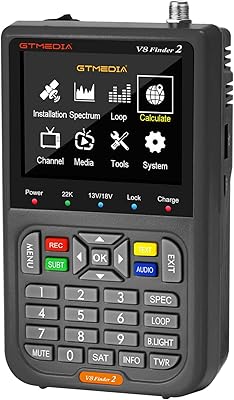
GTMedia V8 Finder2 Satellite Finder Meter
Winegard PL-8035R Playmaker Dual Portable Satellite Antenna
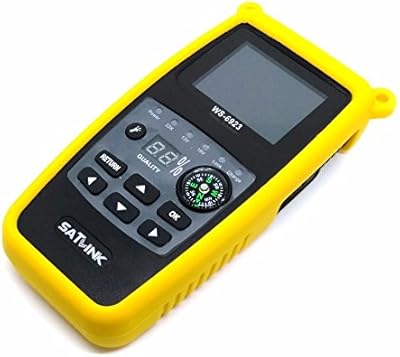
SatLink WS-6933 Satellite Signal Finder Meter
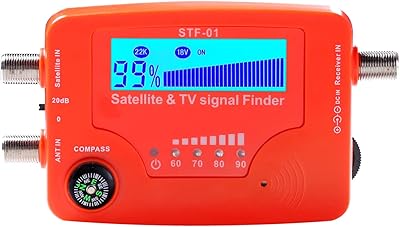
Weytoll STF-01 Satellite Signal Finder Meter
Dr.meter 1332B Digital Light Meter
Dr.meter LX1330B Digital Lux Meter
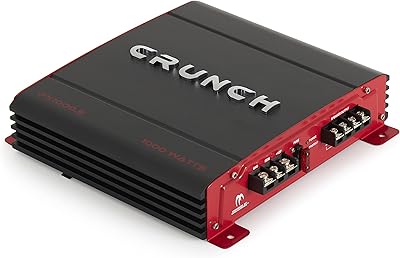
Crunch PX-1000.2 2-Channel Car Amplifier
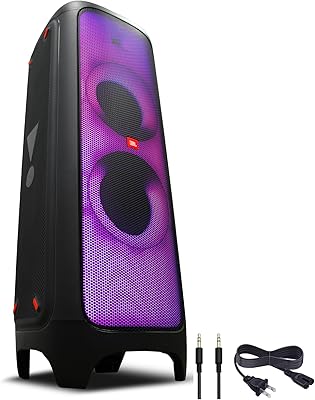
JBL PartyBox 1000 Bluetooth Party Speaker