Weytoll STF-01 Satellite Signal Finder Meter
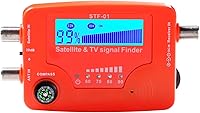
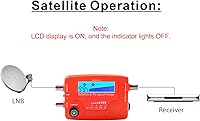
Weytoll STF-01 Satellite Signal Finder Meter — image 1
Weytoll STF-01 Satellite Signal Finder Meter — image 2
Weytoll STF-01 Satellite Signal Finder Meter — image 3
Weytoll STF-01 Satellite Signal Finder Meter — image 4
Weytoll STF-01 Satellite Signal Finder Meter — image 5
Weytoll STF-01 Satellite Signal Finder Meter — image 6
Weytoll STF-01 Satellite Signal Finder Meter — image 7
Weytoll STF-01 Satellite Signal Finder Meter — image 8
Weytoll STF-01 Satellite Signal Finder Meter — image 9
70%
30%

Overview

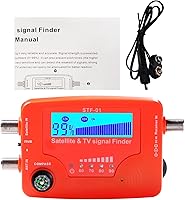
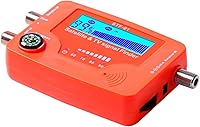
The Weytoll STF-01 Satellite Signal Finder Meter is a compact, no-frills 2-in-1 tool built for DIY installers who want to align a satellite dish or TV antenna without calling in a professional. Weytoll sits firmly in the value-tier electronics space, and this signal finder reflects that positioning — practical, lightweight, and straightforward rather than feature-packed. The ABS housing keeps the unit light enough to hold in one hand while adjusting your dish with the other, which matters more than it sounds when you're up on a roof or ladder. Microprocessor-controlled circuitry gives the readings a degree of consistency you wouldn't necessarily expect at this price point.

Features & Benefits

The star of the show, honestly, is the variable-pitch buzzer. When you're up on a ladder with both hands on the dish, you can't exactly stare at a screen — the tone climbing higher as you swing toward the satellite tells you everything you need to know. The backlit LCD adds a graphical signal bar that's clear enough in shade or at dusk, though direct midday sun can wash it out a little. A built-in compass helps you get your initial bearing before the fine-tuning begins — think of it as a rough starting point, not a precision instrument. One practical note: no batteries are included, so have some ready before you climb.

Best For

This 2-in-1 finder makes the most sense for DIY homeowners who've just moved, dealt with a storm-knocked dish, or are cutting the cord and setting up an OTA antenna for the first time. RV and caravan owners get a lot of value here too — it's small enough to tuck into a compartment and practical when you're reconfiguring your setup at a new campsite. Budget-conscious cord-cutters pointing a rooftop antenna will find it does the job without overcomplicated menus. Professional technicians may find its accuracy a bit limited for serious field work, but as a secondary checking tool it earns its keep. If you just need basic signal confirmation without spending much, this fits.

User Feedback

Buyers tend to split into two camps. Those doing a one-off self-install are generally pleased — the ease of use is a consistent compliment, and the buzzer audio feedback gets called out repeatedly as genuinely helpful when working alone. On the critical side, some users note that the LCD can struggle in harsh direct sunlight, and a handful report that switching between satellite and antenna modes isn't as intuitive as it could be. Durability impressions are mostly positive for occasional use, though heavy day-to-day professional use might wear the ABS casing faster. The recurring verdict: for the price, the Weytoll meter punches at or above its weight for casual and first-time installers, even if it won't replace a professional-grade meter.

Pros

  • The variable-pitch buzzer lets you keep both hands on the dish while tracking signal strength by ear — a genuine practical advantage.
  • Supporting both satellite and TV antenna alignment in one device saves buying two separate tools for a straightforward install.
  • At roughly 5.3 ounces, this signal finder is light enough to hold comfortably for extended positioning sessions.
  • The backlit LCD is clear and readable in shade, overcast conditions, and low-light situations like attic installs.
  • The built-in compass helps beginners get their initial dish bearing right before they start fine-tuning.
  • Microprocessor control gives readings a reasonable level of consistency for a budget-tier device.
  • Small enough to slip into a tool bag or even a jacket pocket, making it convenient to carry up a ladder.
  • Ranked among the top sellers in its category on Amazon, reflecting solid acceptance among DIY buyers.
  • The sensitive detection circuit picks up weak signals, which is helpful when you are close to the edge of a satellite footprint.

Cons

  • No batteries are included in the box, which catches many buyers off guard when they are ready to start an install.
  • The LCD display can wash out noticeably in strong direct sunlight, making readings harder to judge on a bright roof.
  • Switching between satellite and antenna modes is not immediately intuitive and has confused a number of first-time users.
  • Accuracy falls short of professional-grade meters, so it is not reliable enough for installers who need precise signal data.
  • The ABS housing is adequate for occasional use but shows wear faster under frequent or rough job-site conditions.
  • No signal frequency or channel information is displayed — you get strength only, with no deeper technical detail.
  • The compass is a basic magnetic pointer and provides only a rough bearing, not the precision needed for challenging installs.
  • Limited brand support and documentation make troubleshooting harder if something goes wrong after purchase.

Ratings

The scores below for the Weytoll STF-01 Satellite Signal Finder Meter were generated by AI after analyzing verified global buyer reviews, with spam, bot activity, and incentivized feedback actively filtered out. The ratings honestly reflect both where this 2-in-1 finder earns genuine praise and where real buyers have run into frustration. Nothing has been smoothed over — the pain points are as visible as the strengths.

Ease of Use
83%
Most buyers — especially first-timers — find this signal finder refreshingly straightforward to get going. Connect it in-line, point the dish, and the buzzer and LCD do the talking. Solo installers in particular appreciate not needing a second person to read a screen while they adjust.
Switching between satellite and TV antenna modes has tripped up a fair number of users who expected a clearly labeled toggle. The instructions are minimal, and without prior experience, the mode-switching process can cause genuine confusion at the start of an install.
Signal Detection
71%
29%
The detection circuit is sensitive enough to register weak signals, which matters when you are working near the edge of a satellite footprint or pointing an antenna in a marginal reception area. For basic alignment confirmation, it gives you enough feedback to get the job done.
Accuracy has clear limits compared to professional-grade meters, and some users have noted the readings can feel inconsistent when signal levels are borderline. It confirms signal presence reliably, but do not expect it to distinguish between a good lock and a marginal one with any real precision.
Buzzer Feedback
88%
The variable-pitch buzzer is the feature buyers mention most positively. When you are perched on a ladder with both hands on a dish, having an audio tone climb in pitch as alignment improves is a practical advantage that significantly speeds up the process. RV owners especially love this for campsite setups.
The buzzer volume is not adjustable, which some users find too loud in quiet residential neighborhoods or when working in enclosed attic spaces. A small number of buyers also report that the tone distinction between adequate and peak signal is not always dramatic enough to be conclusive.
Display Quality
67%
33%
The backlit LCD performs well in shaded conditions, overcast skies, and indoor environments like attics. The graphical signal bar is intuitive enough that buyers without any technical background can interpret it at a glance, which is exactly what this type of tool needs.
Direct sunlight is a genuine problem — the screen washes out noticeably in bright midday conditions, which is exactly when many outdoor installations happen. Several buyers have specifically flagged this as a frustration during rooftop work on sunny days, often resorting to shading the screen with a hand.
Build Quality
62%
38%
For occasional-use buyers — homeowners doing a single install or seasonal RV users — the ABS housing feels adequate and the unit holds together without obvious flaws straight out of the box. The lightweight construction is a genuine asset when handling it one-handed on a ladder.
The plastic construction is a recurring concern among buyers who use the Weytoll meter more regularly. Connectors and the casing show wear faster than expected under repeated use, and there is a general sense that the unit would not survive a hard drop onto concrete without damage.
Value for Money
79%
21%
For the specific scenario this tool targets — a homeowner or RV owner doing an infrequent DIY alignment job — buyers broadly agree the price is well justified. Getting a working result from a one-off dish realignment without paying a professional makes the math straightforward for most.
Buyers who expected more precision or durability relative to the asking price tend to feel let down. A handful note that spending a little more would have bought meaningfully better accuracy, and the lack of included batteries adds a minor but irritating unboxing frustration that colors first impressions.
Compass Utility
58%
42%
Having a compass built into a signal finder is a thoughtful addition for beginners who need a rough starting bearing before they begin sweeping for a satellite. It saves having to check a phone app separately while also holding the meter and adjusting the dish.
The compass is a basic magnetic pointer and does not account for magnetic declination or nearby interference from metal structures — both of which are common on rooftops and in equipment rooms. Buyers expecting precision orientation guidance have found it unreliable in practice.
Portability
91%
At just over 5 ounces and sized to slip into a jacket pocket or small tool pouch, this 2-in-1 finder is genuinely easy to carry. RV and caravan owners consistently highlight its packability as a selling point — it takes up almost no storage space.
The coaxial cable connection points are not protected by a cover or cap when not in use, so the connectors can collect grime inside a tool bag over time. A minor issue, but one that may affect longevity for buyers who carry this alongside other tools regularly.
Setup Speed
76%
24%
Once you understand the mode selection, getting the meter connected and reading signal takes under a minute. The combination of visual and audio feedback means you are not studying the display trying to interpret numbers — you just move and listen, which is fast and intuitive.
The initial learning curve around which mode to use and how to interpret the readings correctly can slow down a first-time user considerably. Without a clear quick-start guide, some buyers spend more time experimenting with setup than actually doing the alignment work.
Compatibility
73%
27%
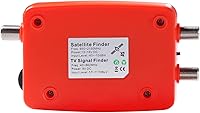
The dual satellite and DVB-T antenna functionality covers the two most common home signal scenarios, and the standard coaxial connections mean it hooks up to typical residential setups without any adapters. Buyers in multiple countries have reported it working with their local systems.
It functions as a passive signal strength indicator only, so it cannot confirm satellite lock or identify specific transponders. Buyers expecting to use it as a setup verification tool beyond basic alignment — such as for multi-LNB or motorized dish systems — have found its capabilities too limited.
Instruction Clarity
54%
46%
The physical operation of the meter — connect, point, read — is intuitive enough that many buyers get through a basic install without consulting the manual at all. The buzzer feedback in particular is self-explanatory once the unit is connected and powered.
The included documentation is thin and poorly translated in places, which creates real problems when buyers hit the less obvious steps like mode switching or signal attenuation. Multiple reviews mention the instructions as a source of frustration, particularly for first-time users working without prior context.
Durability Over Time
59%
41%
For buyers who use this signal finder a handful of times a year — storm realignments, seasonal moves, occasional campsite setups — the unit has generally been reported to hold up without issues over a reasonable period of ownership.
Buyers using the meter more frequently report that the connectors and plastic joints start showing signs of loosening or wear after extended use. There are also isolated reports of the buzzer weakening or the display developing inconsistencies after a year or more of regular use.
Sunlight Readability
52%
48%
In diffused light conditions the backlit display is perfectly adequate, and buyers doing indoor attic antenna installations or working under overcast skies have had no complaints about visibility. The backlight itself functions as intended for its target environment.
This is one of the more consistently flagged weaknesses in buyer feedback. Bright direct sunlight renders the LCD difficult to read clearly, and since many dish alignments happen outdoors on clear days, this is a practical limitation that affects a meaningful portion of real-world use cases.

Suitable for:

The Weytoll STF-01 Satellite Signal Finder Meter is a natural fit for anyone tackling a satellite or antenna installation on their own without professional help. Homeowners who need to realign a dish after a storm, a move, or a simple drift in signal quality will find this signal finder does exactly what it promises at a price that's easy to justify for a one-off job. RV and caravan owners get particular value here — the compact size means it lives happily in a storage bay, ready to help repoint a satellite setup at every new campsite. Cord-cutters aiming an outdoor or attic antenna to pull in free over-the-air channels will also appreciate that this 2-in-1 finder handles both use cases without requiring two separate tools. Even occasional-use technicians who want a lightweight backup meter for quick field checks will find it earns its place in the bag.

Not suitable for:

The Weytoll STF-01 Satellite Signal Finder Meter is not the right tool for professionals who depend on precise, repeatable signal measurements across a full working day. Installers running multiple jobs weekly will quickly hit the accuracy and durability limits of a value-tier ABS device — this signal finder is built for occasional use, not daily professional wear. Anyone expecting detailed signal analysis, frequency readouts, or advanced diagnostics should look at a dedicated professional-grade meter, as the Weytoll meter offers a graphical bar and buzzer tone, not granular technical data. Buyers who need to work frequently in intense direct sunlight may also find the LCD frustrating, as the screen can wash out in harsh midday conditions. If you need something rugged enough to take real job-site abuse over months or years, this 2-in-1 finder is likely to disappoint.

Specifications

  • Brand: Manufactured by Weytoll, a value-tier electronics accessories brand.
  • Model: The unit carries the model designation STF-01.
  • Function: Operates as a 2-in-1 device capable of finding and measuring signal strength for both satellite dish and terrestrial TV antenna systems.
  • Control System: Microprocessor-controlled circuitry manages signal detection and readout processing for consistent results.
  • Display: Features a backlit digital LCD screen with a graphical signal strength bar for clear readouts in varied lighting conditions.
  • Audio Feedback: Includes a variable-pitch buzzer that rises in tone as incoming signal strength increases.
  • Compass: A built-in magnetic compass assists with rough initial dish or antenna orientation before fine-tuning begins.
  • Material: The housing is constructed from ABS plastic, keeping the unit lightweight and moderately impact-resistant for occasional field use.
  • Item Weight: The unit weighs approximately 5.3 oz, making it easy to hold with one hand during installation.
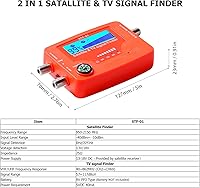
  • Dimensions: Packaged dimensions measure approximately 6.61 x 4.25 x 2.20 inches, compact enough to fit in a standard tool bag.
  • Batteries: No batteries are included in the box; the meter draws power through its coaxial connection to the satellite or antenna system rather than an internal battery.
  • Signal Sensitivity: The detection circuit is designed to register weak incoming signals and can attenuate strong ones to prevent overloading the readout.
  • Availability: First listed for sale on Amazon in July 2022.
  • ASIN: The Amazon Standard Identification Number for this product is B0B61KCKC2.
  • Sales Rank: Ranked #3 in the Satellite TV Dish Satellite Finders category on Amazon at the time of this review.

Related Reviews
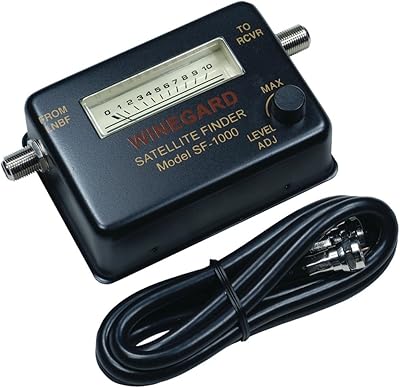
Winegard SF-1000 Satellite Finder Meter
71%
88%
Ease of Use
74%
Signal Detection
58%
Build Quality
71%
Compatibility
83%
Value for Money
More
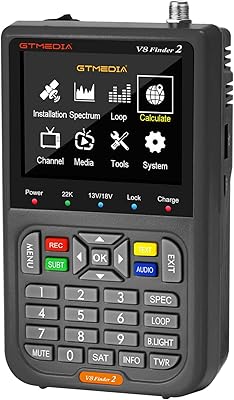
GTMedia V8 Finder2 Satellite Finder Meter
74%
83%
Signal Detection Accuracy
78%
Display Quality
86%
Battery Life
61%
Ease of Use
74%
Build Quality & Portability
More
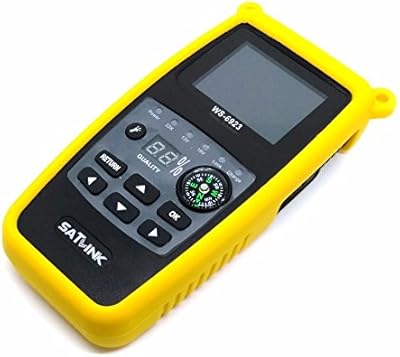
SatLink WS-6933 Satellite Signal Finder Meter
73%
83%
Signal Detection Accuracy
67%
Ease of Use
61%
Build Quality
62%
Battery Performance
58%
Compass Usefulness
More
Dr.meter 1332B Digital Light Meter
81%
91%
Ease of Use
78%
Measurement Accuracy
93%
Rotating Sensor
89%
Measuring Range
67%
Build Quality
More
Dr.meter LX1330B Digital Lux Meter
82%
83%
Measurement Accuracy
91%
Ease of Use
67%
Build Quality
74%
Display Readability
92%
Measurement Range
More
Lixada Wired Fishing Finder Sonar Sensor
70%
88%
Ease of Setup
76%
Display Clarity
63%
Depth Detection Accuracy
72%
Bottom & Structure Detection
58%
Audible Fish Alarm
More
SVS Prime Satellite Surround Sound Speakers
80%
88%
Sound Clarity
54%
Bass Performance
91%
Build Quality
76%
Value for Money
89%
Surround Integration
More
CyberPower PDU15M2F12R Metered PDU
69%
88%
Build Quality
91%
Outlet Count & Layout
79%
Load Monitoring (Digital Meter)
84%
Cable Management
93%
Power Cord Length
More
FYSCKEJI Smart Card Android Wallet Tracker
79%
91%
Ease of Setup
88%
Google Find Hub Integration
72%
Bluetooth Range
78%
Speaker Volume & Audibility
83%
Battery Life
More
Datacolor LightColor Meter LCM200
87%
93%
Measurement Accuracy
88%
Battery Life
90%
Ease of Use
78%
Bluetooth Connectivity
91%
Portability
More

FAQ

No, and this trips up quite a few buyers. The good news is the Weytoll STF-01 Satellite Signal Finder Meter does not actually run on its own batteries — it draws power through the coaxial cable connection from your satellite receiver or antenna system. So while nothing is included in the box to power it independently, you do not need to buy batteries separately either.

Yes, that is the whole point of the 2-in-1 design. This signal finder works with both satellite dish setups and standard DVB-T or over-the-air TV antenna systems. Just be aware that switching between the two modes is not always immediately obvious from the labeling, so give the included instructions a read before your first use.

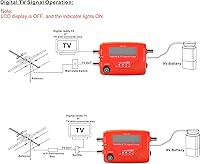
Connect the meter in-line between your dish or antenna and the receiver, then slowly pan or tilt the dish while listening to the tone. The pitch climbs as signal strength increases, so you just keep adjusting until the tone peaks. It is genuinely useful when you are on a ladder with both hands occupied and cannot stare at the screen.

In partial shade or overcast conditions it reads well, and the backlight helps at dusk or indoors. In strong direct midday sunlight, though, the display can wash out and become harder to read clearly. If you are doing a rooftop install on a sunny day, try to angle the meter so it is shaded by your body.

The compass gives you a rough magnetic bearing to help point the dish in approximately the right direction before you start fine-tuning with the signal reading. It is a basic analog-style pointer, not a precision navigation instrument. Think of it as a starting hint rather than a definitive guide — you will still need to sweep the dish to find the satellite.

The Weytoll meter is a passive signal strength detector, meaning it measures the level of signal on the coaxial cable rather than decoding or authenticating a specific service. It should work as a general alignment aid for most standard satellite setups, though it cannot confirm you are locked onto a specific satellite or transponder — it just shows that a signal is present and how strong it is.

For occasional use — a few installs a year, a camping trip here and there — the ABS casing holds up reasonably well. It is not ruggedized or weather-sealed, so avoid leaving it out in rain and protect it from drops onto hard surfaces. If you are a professional installer using tools daily on job sites, the housing may show wear faster than you would like.

Reasonably, yes. The combination of the visual bar and the audio buzzer means you do not need to interpret complex readings — you just move the dish until things peak. That said, it helps to look up the general azimuth and elevation for your satellite beforehand using a free online tool, so you have a sensible starting point rather than sweeping 360 degrees blind.

It is actually one of the better use cases for this 2-in-1 finder. It is small, light, and straightforward — exactly what you want when you are setting up at a new campsite and need to get your dish pointed quickly without a lot of fuss. RV owners consistently rate it well for exactly this kind of repeated, on-the-go alignment task.

The honest answer is that pricier meters offer more precise signal-to-noise data, frequency identification, and better build quality. The Weytoll meter tells you signal is present and roughly how strong it is — which is enough for most DIY alignment jobs. If you are a professional who needs accurate measurements for troubleshooting or system commissioning, you will want something more capable. For a homeowner doing an occasional self-install, though, this signal finder covers the basics without overcomplicating things.