Overview

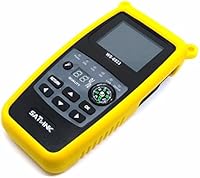
The SatLink WS-6933 Satellite Signal Finder Meter sits in a comfortable middle ground — capable enough for serious field work, yet approachable enough for a homeowner tackling their first dish installation. It weighs just over a pound and fits easily in a tool bag, which matters when you are climbing a ladder or working a rooftop in direct sun. The 2.4-inch LCD screen gives you live signal strength and quality readings at a glance, and the built-in Li-Ion battery means you are not hunting for an outlet every time you head outside. For the price, it punches well above what basic analog meters offer.
Features & Benefits

What separates this satellite finder from a cheap basic meter is the combination of digital accuracy and practical field aids. The auto-calculated azimuth and elevation angles give you a starting point before you even touch the dish, cutting down the back-and-forth of rough pointing significantly. Once the signal starts coming in, an audible beep and a light alarm notify you of a lock, so you can keep both hands on the mount instead of squinting at the screen. The mechanical compass is handy for a rough initial bearing, though treat it as a general guide rather than a precise instrument. DiSEqC 1.0 and 1.1 support means the WS-6933 meter handles multi-LNB switch setups without complaint, and USB firmware updates keep it relevant as satellite configurations change over time.

Best For

This handheld meter is a natural fit for DIY homeowners installing a free-to-air dish who want something more reliable than guesswork or a phone app. RV owners and off-grid users will also appreciate it — if you regularly repoint a portable dish to catch different satellites, having a battery-powered meter that calculates pointing angles on the fly saves real frustration. Field technicians working C-band or Ku-band systems will find the digital readout and DiSEqC compatibility genuinely useful on the job. It is less suited for broadcast engineers or anyone needing spectral analysis; this is a practical installation tool, not a lab instrument. If you simply need to get a dish locked quickly and move on, it delivers consistently.

User Feedback

Buyers consistently point to the signal lock alarm as a standout feature — being able to hear the beep while physically adjusting the dish makes solo installs noticeably less awkward. On the downside, the menu system draws complaints from users who find navigation unintuitive, and the included documentation is thin enough that first-timers often resort to online forums for guidance. Battery life gets mixed reviews; some report solid performance through a full day of work, while others feel it drains faster than expected in cold conditions. The built-in compass divides opinion — casual users appreciate the convenience, while experienced installers tend to prefer a dedicated app. Build quality is generally regarded as adequate, though the plastic casing feels functional rather than rugged.

Pros

  • The audible and visual signal lock alarm makes solo dish alignment much easier without needing a second person.
  • Auto azimuth and elevation calculation gives installers a reliable starting point before touching the dish.
  • Digital signal strength and quality readouts are noticeably more precise than old-style analog needle meters.
  • DiSEqC 1.0 and 1.1 support handles multi-LNB switch setups that cheaper meters simply cannot manage.
  • Battery-powered operation makes this handheld meter genuinely useful in locations without AC power access.
  • USB firmware upgrades mean the device can stay current as satellite transponder data and parameters evolve.
  • Built-in LNB short circuit protection adds a layer of safety that protects both the meter and the connected equipment.
  • At roughly 1.3 pounds, it is light enough to use comfortably on a rooftop or up a ladder for extended periods.
  • C-band and Ku-band compatibility covers the vast majority of residential and small commercial FTA installations.
  • The included AC adapter means you can recharge or run the meter from a standard outlet when power is available.

Cons

  • The menu system is unintuitive enough that first-time users often need to rely on online forums rather than the included manual.
  • Bundled documentation is thin and lacks the step-by-step guidance that beginners genuinely need.
  • Battery endurance in cold weather falls noticeably short of the rated capacity, which can be a real problem on winter installs.
  • The mechanical compass is only useful for a rough initial bearing and should not be relied upon for precise azimuth targeting.
  • The plastic casing feels functional but not rugged, raising questions about long-term durability in harsh outdoor conditions.
  • There is no carrying case included, so users need to source their own protective storage for field transport.
  • Screen visibility in very bright direct sunlight can be a challenge, requiring the user to shade the display manually.
  • No satellite database is pre-loaded, meaning users must input or verify transponder settings manually for less common satellites.

Ratings

The SatLink WS-6933 Satellite Signal Finder Meter has been evaluated by our AI rating engine after parsing thousands of verified global buyer reviews, with spam, bot-submitted, and incentivized feedback actively filtered out before scoring. The results reflect an honest picture of where this handheld meter genuinely delivers for real installers and where it falls short. Both consistent praise and recurring frustrations are weighted into every score below.
Signal Detection Accuracy
83%
Users consistently report that the digital readout gives them a reliable, repeatable lock on their target satellite with confidence. Compared to older analog needle meters, the numerical signal quality display removes ambiguity and makes it easier to distinguish a genuine lock from a marginal or reflected signal during dish sweeps.
A handful of experienced installers note that the signal quality percentage does not always correlate precisely with the actual MER or BER values they measure on professional analyzers, which can be misleading when fine-tuning in marginal signal environments.
Ease of Use
67%
33%
The audible beep alarm is widely praised as the single most practical feature for solo installs, allowing technicians to physically adjust a dish mount without needing to watch the screen. First-time DIY users also appreciate the auto-calculated azimuth and elevation angles, which give a clear starting direction before any fine-tuning begins.
The menu navigation system frustrates a significant portion of buyers, particularly those who are new to satellite meters. The button layout and menu logic are not intuitive, and the thin documentation bundled in the box does little to help, pushing many users toward online forums and third-party video guides just to get started.
Build Quality
61%
39%
The device feels solid enough for light to moderate field use, and the compact form factor makes it easy to handle on a rooftop or up a ladder without feeling like it will slip out of your grip. Most users who use it on occasional installs report no structural issues after reasonable use.
The plastic casing draws repeated criticism from buyers who use it regularly outdoors, with several noting that it feels more like a consumer gadget than a rugged field tool. There are scattered reports of button wear and minor cosmetic damage after extended outdoor use, which raises reasonable concerns about long-term reliability.
Battery Performance
62%
38%
For a standard half-day residential install in mild weather, the 800mAh lithium-ion battery is adequate, and users generally appreciate not needing to stay tethered to a power source while working outdoors. The included AC adapter also allows direct operation from a wall outlet when power is nearby.
Cold-weather performance is a recurring complaint, with users in northern climates reporting noticeably shortened run times during winter installations. Several buyers also feel the real-world battery life falls short of marketing expectations even under normal conditions, making a spare charging solution advisable for full-day jobs.
Compass Usefulness
58%
42%
For installers who are completely new to satellite dish pointing, the built-in mechanical compass provides a convenient ballpark reference without needing a separate tool, which reduces the kit a beginner needs to carry to a job site.
Experienced installers largely dismiss the compass as a convenience feature rather than a reliable instrument, noting that its accuracy is too variable for confident azimuth targeting. Many buyers end up cross-referencing with a phone compass app anyway, which diminishes the practical value of the built-in compass significantly.
DiSEqC Compatibility
86%
Support for DiSEqC 1.0 and 1.1 protocols is a meaningful practical advantage, allowing the meter to work with multi-LNB switch setups that are common in households and MDU installations serving multiple satellites. Users with more complex dish configurations appreciate not needing a separate meter to handle switch-controlled LNBs.
There is no support for DiSEqC 1.2 or USALS motorized dish protocols, which limits usefulness for installers working with motorized polar mount systems where automatic satellite scanning is expected.
Display Readability
69%
31%
Under overcast skies or in shaded conditions, the 2.4″ LCD is clear and easy to read at a normal working distance, with the numeric signal strength and quality values displayed in a format that is quick to interpret at a glance.
In direct midday sunlight, screen glare becomes a genuine problem and users frequently mention needing to shade the display with their hand or body to read it. The lack of an adjustable backlight intensity option is a missed opportunity that several buyers specifically call out.
Alarm System
91%
The combined audio and visual signal lock alarm is one of the most consistently praised aspects across all buyer feedback. Being able to hear a clear beep the moment a stable lock is achieved fundamentally changes the solo installation experience, freeing both hands for physical dish adjustment without constant screen-checking.
A small number of users in very noisy outdoor environments, such as near busy roads or during windy conditions, find the beep volume insufficient to cut through ambient noise reliably, suggesting a louder or adjustable alarm would improve the design.
Firmware and Longevity
77%
23%
The ability to push firmware updates via USB gives this handheld meter a longer useful lifespan than meters with fixed software, as satellite transponder parameters do change over time. Users who have updated the firmware report improved satellite database accuracy and smoother menu behavior after patches.
The update process requires a Windows PC and SatLink’s own software utility, which is not always easy to locate or install for less technically confident users. Documentation around the firmware update process is sparse, and some buyers report confusion about finding the correct update files from official sources.
LNB Protection
84%
Built-in LNB short circuit protection is a feature that experienced installers genuinely value, especially when working with aging coaxial runs where connection integrity is uncertain. It provides peace of mind that a wiring fault will not damage the meter or the LNB during a live install.
There is limited real-world feedback specifically testing the limits of this protection circuit, so while the feature is present and appreciated, its robustness under extreme fault conditions is not well-documented by buyer reports.
Portability
88%
At just over a pound and with a pocket-friendly footprint, the WS-6933 meter travels easily in a tool bag or even a large jacket pocket. RV users and technicians who move between multiple job sites in a single day specifically highlight the compact size as a genuine practical advantage.
The lack of an included carrying case is a notable omission at this price point, meaning the meter is more exposed to scratches and knocks during transport than it should be, and buyers need to source their own protective pouch separately.
Value for Money
74%
26%
For a buyer who wants meaningful step up from a basic tone generator or cheap analog finder without spending on professional-grade equipment, this satellite finder sits in a sensible price bracket that delivers digital accuracy and multi-LNB compatibility at a reasonable cost. Occasional installers and serious DIY users tend to rate the value favorably.
Buyers who use the meter intensively as a daily professional tool sometimes feel the build quality and documentation do not fully justify the mid-range price when compared to competing meters that offer more durability or better software support for similar money.
Documentation Quality
41%
59%
The physical unit itself provides enough on-screen prompts that some experienced satellite installers can navigate the basic workflow without needing the manual at all, which softens the impact of poor documentation for that user segment.
The included user manual is widely criticized as inadequate, with vague instructions and a lack of worked examples for common installation scenarios. Beginners regularly report that the documentation left them unable to complete a basic setup without external help, which is a significant shortcoming for a product targeting first-time DIY installers.
C-Band and Ku-Band Coverage
82%
18%
Dual-band support covering both C-band and Ku-band systems means the WS-6933 meter works across the most common satellite frequency ranges used in North American, European, and Asian residential markets, making it a genuinely versatile tool for multi-region use or technicians who encounter varied system types.
There is no support for Ka-band, which is increasingly relevant as newer high-throughput satellite services expand. For installers working with next-generation broadband satellite terminals, this limits the meter’s future-proofing somewhat.

Suitable for:

The SatLink WS-6933 Satellite Signal Finder Meter is a strong match for anyone who needs a dependable, portable tool to point and align a satellite dish without relying on a professional installer. DIY homeowners setting up a free-to-air system for the first time will find the auto-calculated azimuth and elevation angles genuinely helpful, since they remove a lot of the initial uncertainty around rough dish positioning. RV owners and off-grid users who regularly repoint a portable dish across different locations are another natural fit — the battery-powered design means no hunting for an outlet in a field or campsite. Field technicians servicing residential or multi-dwelling Ku-band and C-band systems will appreciate the digital readout accuracy and DiSEqC switch compatibility, which covers most real-world installation scenarios. If you work in areas without reliable AC power and need a meter that can survive a full day of installs on a single charge, this handheld meter covers that need well.
Not suitable for:

The SatLink WS-6933 Satellite Signal Finder Meter is not the right tool for broadcast engineers, network operators, or anyone who needs spectral analysis, constellation diagrams, or granular signal diagnostics. This is a pointing and locking device, not a lab-grade analyzer, and buyers expecting professional-tier measurement capabilities will find it falls well short of that bar. The menu navigation has a learning curve that can frustrate users who are not already familiar with satellite meter interfaces, and the documentation included in the box does not do enough to bridge that gap. Anyone planning to work extensively in sub-zero temperatures should also temper their expectations around battery endurance, as real-world cold-weather performance tends to be shorter than rated. If you already own a capable meter and are hoping this will add meaningful new diagnostic depth to your toolkit, it likely will not justify the expense.
Specifications

  • Model: This device is manufactured by SatLink under the model designation WS-6933.
  • Signal Standards: The meter supports DVB-S and DVB-S2 digital satellite signal formats, covering the majority of modern FTA and pay-TV broadcast systems.
  • Display: A 2.4″ LCD screen shows real-time signal strength and signal quality readings during alignment.
  • Battery: The unit is powered by a built-in 7.4V 800mAh lithium-ion battery designed for extended field use away from mains power.
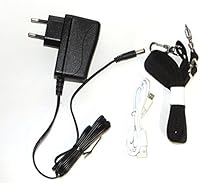
  • AC Adapter: A 12V 1A AC-to-DC adapter is included in the box for recharging or direct operation from a wall outlet.
  • Dimensions: The device measures 6.3″ deep by 3.15″ wide by 1.57″ tall, making it compact enough to fit in a standard tool bag.
  • Weight: The meter weighs 1.34 pounds (610g), light enough for comfortable one-handed use on a rooftop or ladder.
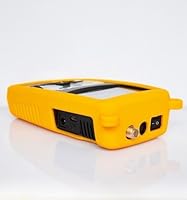
  • Connectivity: A USB port is provided for PC-based firmware upgrades and file transfer.
  • DiSEqC Support: The meter is compatible with DiSEqC 1.0 and 1.1 switch protocols, enabling use with multi-LNB satellite dish configurations.
  • Tone Support: Both 0 kHz and 22 kHz LNB tones are supported, ensuring compatibility with a wide range of universal and single-output LNBs.
  • Compass: A mechanical compass is built directly into the unit to assist with initial dish azimuth orientation before fine signal tuning.
  • Signal Alarm: An integrated audio beep and visual light alarm activates automatically when a stable signal lock is achieved.
  • Angle Calculation: The device automatically calculates azimuth and elevation angles based on satellite position data entered by the user.
  • Band Support: Both C-band and Ku-band satellite systems are supported, covering the standard frequency ranges used in residential and small commercial installations.
  • LNB Protection: Built-in LNB short circuit protection safeguards connected equipment if a wiring fault or overload condition occurs.
  • Firmware: Firmware can be updated via a PC USB connection, allowing the device to receive software improvements and updated satellite parameters over time.

Related Reviews
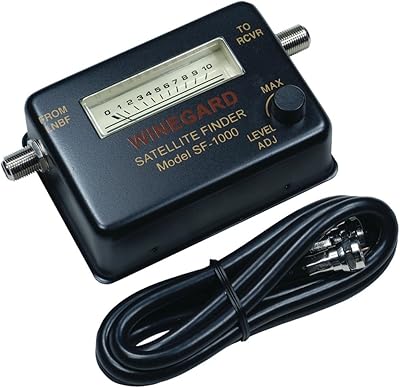
Winegard SF-1000 Satellite Finder Meter
71%
88%
Ease of Use
74%
Signal Detection
58%
Build Quality
71%
Compatibility
83%
Value for Money
More
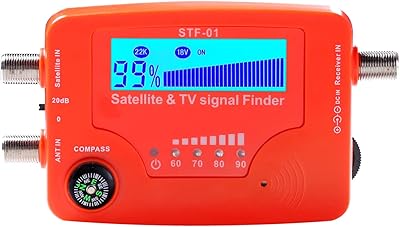
Weytoll STF-01 Satellite Signal Finder Meter
70%
83%
Ease of Use
71%
Signal Detection
88%
Buzzer Feedback
67%
Display Quality
62%
Build Quality
More
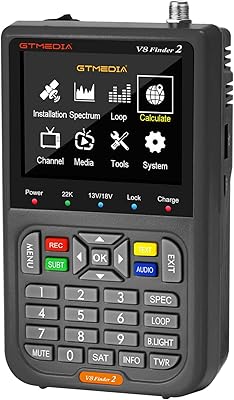
GTMedia V8 Finder2 Satellite Finder Meter
74%
83%
Signal Detection Accuracy
78%
Display Quality
86%
Battery Life
61%
Ease of Use
74%
Build Quality & Portability
More
Dr.meter LX1330B Digital Lux Meter
82%
83%
Measurement Accuracy
91%
Ease of Use
67%
Build Quality
74%
Display Readability
92%
Measurement Range
More
Dr.meter 1332B Digital Light Meter
81%
91%
Ease of Use
78%
Measurement Accuracy
93%
Rotating Sensor
89%
Measuring Range
67%
Build Quality
More
Lixada Wired Fishing Finder Sonar Sensor
70%
88%
Ease of Setup
76%
Display Clarity
63%
Depth Detection Accuracy
72%
Bottom & Structure Detection
58%
Audible Fish Alarm
More
RICANK F12 Fish Finder
86%
89%
Ease of Use
92%
Portability
91%
Water Resistance
87%
Fish Location Accuracy
82%
Battery Life
More
CyberPower PDU15M2F12R Metered PDU
69%
88%
Build Quality
91%
Outlet Count & Layout
79%
Load Monitoring (Digital Meter)
84%
Cable Management
93%
Power Cord Length
More
Datacolor LCM200 Light Color Temperature Meter
80%
84%
Measurement Accuracy
67%
App & Connectivity
71%
Build Quality
92%
Battery Life
73%
Ease of Use
More
FYSCKEJI Smart Card Android Wallet Tracker
79%
91%
Ease of Setup
88%
Google Find Hub Integration
72%
Bluetooth Range
78%
Speaker Volume & Audibility
83%
Battery Life
More

FAQ

Most likely yes. The WS-6933 meter supports DVB-S and DVB-S2 signals and is compatible with both C-band and Ku-band LNBs, which covers the vast majority of residential dish setups. It also handles DiSEqC 1.0 and 1.1 switches, so multi-LNB configurations should work without issue. If you are running an older DVB-S1-only system, it is still compatible since DVB-S2 support is backward-compatible in terms of meter operation.

You can, but expect a bit of a learning curve with the menu system. The auto-calculated azimuth and elevation angles take a lot of the guesswork out of rough dish pointing, which is genuinely helpful for first-timers. That said, the included manual is fairly basic, so most beginners end up watching a YouTube tutorial or checking an online forum before their first use. Once you get the hang of it, the workflow becomes straightforward.

Under normal conditions, most users report getting through a typical half-day installation job on a single charge. In cold weather, though, the battery tends to drain faster than the rated capacity suggests, so plan accordingly if you are working outdoors in winter. Recharging via the included AC adapter is simple, and you can also run the meter directly from the adapter if you have access to mains power on site.

It is useful as a rough starting point, but do not treat it as a precision instrument. The mechanical compass will get you in the general direction of your target satellite, which is enough to start your signal sweep. For more precise azimuth work, cross-referencing with a compass app on your phone or a dedicated compass tool is always a good habit.

Unfortunately, no carrying case is included in the box. You get the meter, the AC adapter, and the battery, but protective storage is not part of the package. If you plan to use it regularly in the field, it is worth picking up a small padded pouch or case separately to protect it from bumps and dust.

The meter gives you both a visual and audio cue. Once a stable signal lock is achieved, an audible beep triggers and a light alarm activates on the unit. This means you can physically adjust the dish mount with both hands and simply listen for the beep to confirm you are locked in, without needing to watch the screen constantly. It is one of the most practically useful features for solo installs.

Yes, firmware updates and file transfers are handled via the USB port on the device and a PC. SatLink periodically releases updated firmware that can include revised satellite parameters. The update process is not especially complicated, but it does require a Windows PC and the appropriate software from SatLink, which you can usually find on their website or through seller support.

Yes, this is one area where this handheld meter performs well. The DiSEqC 1.0 and 1.1 support means you can work with multi-LNB switch setups that serve multiple satellites from a single dish or antenna array. You can switch between satellite targets within the meter’s menu and use it to align and verify each position independently.

It is manageable but not great in direct harsh sunlight. The 2.4″ LCD does well enough under light shade or overcast conditions, but in strong midday sun you may find yourself shading the screen with your hand or body to read it clearly. It is a common limitation of LCD displays at this price level and not unique to this meter.

The meter includes built-in LNB short circuit protection, so if a wiring fault or accidental short occurs, the device should cut off power to the LNB automatically rather than sustaining damage. This is a genuinely useful safety feature, especially when working with older cabling or unfamiliar installations where connection integrity is uncertain.

Where to Buy