Overview

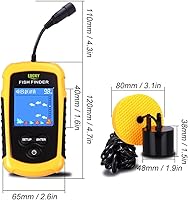
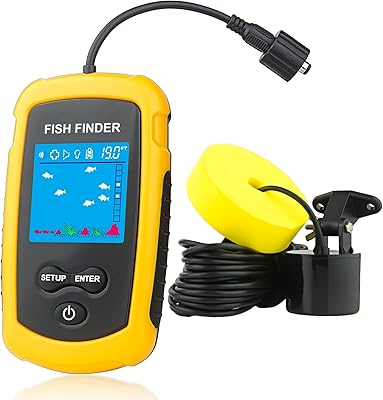
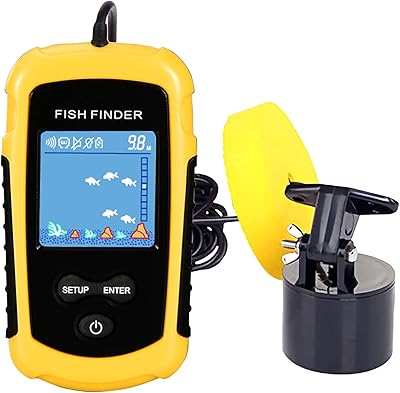
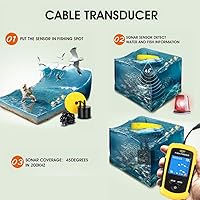
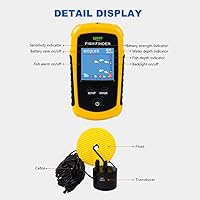
The Lixada Wired Fishing Finder Sonar Sensor is a compact, no-frills depth finder built for recreational anglers who want useful underwater feedback without spending big. It runs on batteries, weighs just over half a kilogram, and fits comfortably in a tackle bag. The round transducer attaches to a 7.5-meter cable with a removable float, so deploying it from a bank, dock, or kayak takes seconds. The 2-inch color LCD with LED backlight is readable in decent daylight, and while it won't rival a premium unit, it gives you a usable picture of what's happening below the surface.
Features & Benefits

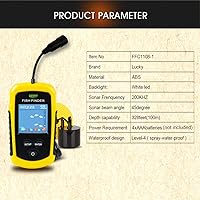
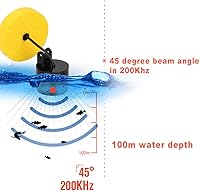
This sonar sensor covers depths from 0.7 to 100 meters, and you can toggle between metric and imperial readings depending on your preference. The 45-degree beam angle is fairly standard for this category — broad enough to give a useful snapshot of the water column without overwhelming the small screen. What stands out is its ability to differentiate bottom composition: it can flag fish, weeds, sand, and rocky patches, which helps when targeting specific structure. The audible fish alarm is a practical touch for hands-off moments, and the detachable float keeps the transducer stable and easy to manage throughout a session.

Best For

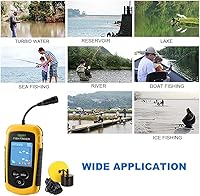
This wired fish finder suits a specific type of angler, and that's not a criticism — it's just clarity. Shore and bank fishing is where it performs most naturally; cast the transducer out, watch the screen, and listen for the alarm. Kayak anglers and those on small boats will also find it practical, since it requires no permanent mounting and packs away quickly. It works as a solid first fish finder for beginners, and it's particularly handy when hunting structure — weed edges, sandy drop-offs, or rocky bottom patches in lakes and ponds.

User Feedback

Buyers generally appreciate how quick to set up this sonar sensor is — unbox it, drop the transducer, and you're reading depth within minutes. The color screen gets consistent praise for legibility in bright conditions. Where opinions split is around the wired design: some find the cable a reliable, no-fuss choice; others who've used wireless finders miss the freedom of movement. Cable durability and the float connection point surface occasionally as long-term concerns after heavy use in cold or wet conditions. The alarm sensitivity draws mixed reactions too — useful when it triggers correctly, but prone to misfires in very shallow or weedy water.

Pros

  • No pairing, no app, no fuss — this sonar sensor is ready to fish within minutes of opening the box.
  • The color LCD display reads reasonably well in overcast and shaded outdoor conditions without straining your eyes.
  • Distinguishing between weed, sand, rock, and fish targets adds genuine tactical value for structure-focused anglers.
  • The removable float keeps the transducer stable at the right depth, making deployment from a bank or kayak straightforward.
  • At under 600 grams, this wired fish finder slips into a jacket pocket and adds almost nothing to your carry weight.
  • The audible fish alarm is useful during static sessions when you're not watching the screen constantly.
  • Depth readings in metric or imperial give flexibility for anglers used to either measurement system.
  • The 12-month warranty provides a basic but meaningful safety net for a budget-tier purchase.
  • Battery power means no cables running to a boat battery — ideal for kayak and walk-in bank sessions.
  • For first-time fish finder buyers, the learning curve is short and the feedback is immediately useful in shallow freshwater.

Cons

  • Depth accuracy drops noticeably beyond 20 to 30 meters, making the 100-meter maximum claim misleading in practice.
  • The audible alarm triggers false positives regularly in weedy or very shallow water, which gets frustrating fast.
  • The 2-inch screen becomes genuinely hard to read in direct sunlight due to glare.
  • Cable fraying near the connector has been reported after a single season of regular use — durability is a concern.
  • The float attachment point weakens over time with repeated casting and retrieval, especially in current.
  • At 7.5 meters, the cable length limits usefulness from elevated or steep-banked fishing positions.
  • Button feel is shallow and imprecise, which compounds the problem when operating with cold or wet hands.
  • The instruction manual is poorly translated and leaves beginners to work out several functions through trial and error.
  • No rechargeable battery option means carrying spares on longer sessions adds a small but real logistical headache.
  • Buyers who progress beyond beginner level almost universally find themselves outgrowing this sonar sensor within one season.

Ratings

The ratings below for the Lixada Wired Fishing Finder Sonar Sensor were generated by our AI review engine after analyzing verified buyer feedback from global markets, with spam, bot-submitted, and incentivized reviews actively filtered out before scoring. Each category score reflects the honest balance of what real anglers praised and what genuinely frustrated them — nothing is smoothed over to flatter the product. Whether this sonar sensor earns a place in your tackle kit or falls short of your expectations, the scorecard below lays it out plainly.
Ease of Setup
88%
Buyers consistently highlight how little effort it takes to get this wired fish finder running out of the box. There are no pairing processes, no app downloads, and no complicated calibration steps — drop the transducer in the water and the screen starts reading almost immediately, which anglers fishing from a bank or kayak especially appreciate.
A small number of users found the initial float assembly slightly fiddly, particularly in cold weather when dexterity is reduced. The instruction manual is also reported to be thin and poorly translated, leaving a few beginners to figure out certain features on their own.
Display Clarity
76%
24%
The 2-inch color LCD with LED backlight earns reasonable marks for a device in this price bracket. On overcast days or in shaded spots along a riverbank, the screen is genuinely readable, and the color differentiation between fish icons, weed symbols, and bottom types helps at a glance.
Direct sunlight is where the screen struggles most — several buyers report significant glare that makes the display hard to read during peak afternoon hours. At only 2 inches, the screen real estate is also tight, and users with poorer eyesight found themselves squinting to interpret the depth readings accurately.
Depth Detection Accuracy
63%
37%
For shallow to mid-range water — think lakes, ponds, and slow rivers under 20 meters deep — this sonar sensor gives a broadly reliable picture of what lies beneath. Anglers targeting weed edges or sandy drop-offs in typical freshwater conditions report that the readings are consistent enough to be useful when positioning along the bank.
Accuracy degrades noticeably at greater depths, which is a known limitation of budget-tier sonar. Buyers fishing deeper reservoirs or coastal marks report readings that jump around or lag behind the actual bottom, making the 100-meter maximum depth claim feel optimistic rather than practically reliable.
Bottom & Structure Detection
72%
28%
The ability to distinguish between fish, weeds, grass, sand, and rocky bottom is one of the more genuinely useful aspects of this sonar sensor. Shore anglers targeting carp or perch around structure found it helpful for identifying weed beds and drop-offs they couldn't see from the surface.
The classification is not always precise — dense weed and rocky bottom are occasionally misread as similar signatures on the small display. A few experienced anglers noted that the readings require some interpretation and can mislead beginners who take the icons too literally without local water knowledge to back them up.
Audible Fish Alarm
58%
42%
When conditions are right — clean water, moderate depth, and a stationary transducer — the alarm is a genuinely handy feature for anglers who want to watch a float or tend multiple rods without staring at the screen continuously. Several buyers fishing static sessions found it a useful backup alert.
False triggers are a recurring complaint, particularly in weedy or very shallow water where the sonar picks up vegetation and flags it as fish. A number of users also found the alarm tone difficult to hear in windy outdoor environments, which undercuts its practical value on exposed river banks or open lake shores.
Cable Quality & Length
61%
39%
The 7.5-meter cable is adequate for most bank and shore fishing situations, giving enough reach to position the transducer away from a disturbed margin without needing extra line management. The cable feels reasonably flexible even in cooler conditions, which is relevant for anglers using it through ice fishing holes.
Long-term durability of the cable is a genuine concern based on buyer feedback — several users reported fraying or weakening near the connector point after a season of regular use. The 7.5-meter length also frustrates anglers trying to reach deeper water from elevated positions like jetties or steep-banked reservoirs.
Transducer & Float Design
74%
26%
The removable float is a thoughtful addition that helps keep the transducer at the right depth and makes it easy to retrieve after a cast. Kayak and small-boat users in particular appreciate how quickly the whole assembly can be deployed and pulled back in without tangling or snagging.
The float attachment point has been flagged as a weak spot by buyers who fish frequently in current or who retrieve the transducer quickly. A handful of users reported the float loosening or detaching after repeated use, which is an annoyance when you're mid-session and relying on it to keep the sensor stable.
Portability
86%
At just over half a kilogram and compact enough to slip into a jacket pocket or small tackle bag, the Lixada finder is genuinely portable in a way that permanently mounted units simply are not. Kayak anglers and those who walk long distances to fish multiple spots in a session value this highly.
Battery dependency adds a small but real logistical burden — you need to carry spares for longer sessions, and a few buyers found the battery compartment slightly awkward to access quickly in the field. There's no rechargeable battery option built in, which is a minor step behind some competing units.
Value for Money
79%
21%
Relative to what you're getting — a functional depth finder with a color screen, structure detection, and fish alarm — the asking price sits in a reasonable place for a casual or beginner angler. For someone who has never owned a fish finder and wants to try the concept without significant financial risk, the Lixada finder makes a defensible choice.
Buyers who compare it directly against slightly higher-priced alternatives often feel the build and sonar quality gap is larger than the price gap suggests. Those who used it as a stepping-stone almost universally upgraded within a season, which implies its long-term value retention is limited for more committed anglers.
Build Quality
62%
38%
The main handheld unit feels solid enough for occasional outdoor use and has survived drops and rain exposure without immediate issues according to several buyers. The LCD housing is reasonably protected, and the overall form factor is compact without feeling dangerously fragile during normal handling.
The plastic casing gives a noticeably budget impression, and the buttons attract more criticism than the screen — they feel shallow and imprecise when switching modes or adjusting settings with cold or wet hands. Over time, buyers report that the casing shows wear faster than more durable mid-range competitors.
Screen Size Usability
67%
33%
For the core task of reading depth and bottom type at a glance, the 2-inch display does its job without requiring you to stare at it for long. The color coding of different underwater elements makes quick interpretation easier than a purely grayscale display would.
Displaying multiple data layers simultaneously on a 2-inch panel inevitably creates a crowded look, and some buyers found themselves misreading symbols in a hurry. Anglers over 50 or those with any degree of visual impairment consistently flagged the screen size as a practical limitation in real fishing conditions.
Beam Angle Coverage
69%
31%
The 45-degree beam angle gives a reasonable slice of the water column directly beneath the transducer, which is sufficient for most static fishing scenarios. Anglers dropping the sensor directly below a kayak or through an ice hole found the coverage adequate for getting a useful reading.
For moving boat fishing or when the transducer is being towed at any speed, the 45-degree angle becomes a limitation — the coverage cone shifts and returns become inconsistent. Anglers used to wider-angle units found the narrower beam somewhat restrictive when trying to scan a broader area of unfamiliar water.
Warranty & After-Sales Support
54%
46%
A 12-month warranty from Lixada provides a basic safety net that gives first-time buyers reasonable confidence at point of purchase. Some buyers reported successful replacements for units with clear defects, suggesting the warranty process functions at a baseline level.
Customer service response times and communication quality are inconsistent based on buyer reports, with some users experiencing slow or unhelpful replies when raising warranty claims. The after-sales infrastructure for a budget-tier overseas brand does not inspire confidence for buyers who encounter issues mid-season and need a quick resolution.

Suitable for:

The Lixada Wired Fishing Finder Sonar Sensor is a practical choice for casual and recreational anglers who fish from the bank, shore, kayak, or small boat and want basic underwater feedback without the complexity or cost of a mounted chartplotter system. If you've never owned a fish finder before and want to understand what the technology actually does for your fishing before committing to a serious investment, this sonar sensor is a low-risk entry point that genuinely delivers on the basics. It's particularly well-suited to freshwater fishing in lakes, ponds, and slow rivers where depths are manageable and the ability to spot weed edges, sandy patches, or rocky bottom gives you a real positional advantage. Ice anglers will find the wired transducer format makes good practical sense — drop it through the hole, read the depth, and listen for the alarm without juggling wireless connectivity in freezing conditions. Shore carp and perch anglers who fish multiple spots in a session will also appreciate how quickly this sonar sensor packs away and redeploys compared to anything that requires mounting hardware.
Not suitable for:

The Lixada Wired Fishing Finder Sonar Sensor is not the right tool for anglers who fish deep water regularly, need precise sonar returns at range, or want to cover wide areas from a moving boat. Beyond roughly 20 to 30 meters, the depth readings become less reliable, and experienced anglers accustomed to mid-range or premium units will notice the accuracy gap quickly — especially in complex underwater terrain. The 7.5-meter cable is also a limiting factor for anyone fishing from elevated positions like high-banked reservoirs or long jetties where extra reach matters. If you're the kind of angler who logs serious hours on the water across a full season, the build quality and cable durability may not hold up to that level of use without showing wear. Anyone looking for wireless flexibility, a larger display, GPS integration, or chart mapping capability will find this wired fish finder falls well short of those expectations and should budget accordingly for something more capable.
Specifications

  • Brand: Manufactured and sold under the Lixada brand, a budget-tier electronics and outdoor gear label.
  • Display: Features a 2-inch color LCD screen with LED backlight for visibility in varied outdoor lighting conditions.
  • Cable Length: The transducer connects to the handheld unit via a 7.5-meter wired cable with a removable float attached.
  • Depth Range: Capable of detecting underwater depth from a minimum of 0.7 meters up to a maximum of 100 meters.
  • Beam Angle: Uses a 45-degree sonar beam angle to scan the water column beneath the transducer sensor.
  • Unit Toggle: Depth readings can be displayed in either meters or feet, selectable by the user depending on preference.
  • Bottom Detection: The sonar can distinguish and display fish, aquatic weeds, grass, sandy bottom, and rocky seabed structure.
  • Fish Alarm: An audible alarm triggers automatically when the sonar detects fish targets beneath the transducer.
  • Power Source: Operates entirely on standard replaceable batteries with no built-in rechargeable cell or USB charging port.
  • Item Weight: The complete unit weighs approximately 0.57 kg, making it portable enough for walk-in bank fishing sessions.
  • Dimensions: The handheld unit measures 4.72 inches long by 2.56 inches wide by 1.2 inches tall.
  • Transducer: Round-profile transducer sensor with a detachable float designed to keep it at the correct operating depth.
  • Mounting Type: Supports multiple mounting options, though it is primarily designed for handheld and portable deployment scenarios.
  • Package Size: Ships in a box measuring 10.08 x 7.05 x 2.48 inches, compact enough for easy storage and transport.
  • Warranty: Covered by a 12-month manufacturer warranty against defects in materials and workmanship from date of purchase.
  • Model Number: Listed under the part number WXR4974784828523KA for manufacturer identification and warranty reference purposes.
  • UPC: The product carries a Universal Product Code of 737798224225 for retail and inventory identification.
  • Date Available: First made available for purchase on the Amazon marketplace on May 18, 2020.

Related Reviews

RICANK F12 Fish Finder
86%
89%
Ease of Use
92%
Portability
91%
Water Resistance
87%
Fish Location Accuracy
82%
Battery Life
More
Deeper START Castable Fish Finder
75%
88%
Ease of Setup
93%
Portability & Form Factor
67%
App Experience
71%
Sonar Accuracy & Fish Detection
76%
Battery Life
More
Venterior VT-FF005 Portable Castable Fish Finder
80%
91%
Ease of Setup
78%
Sonar Accuracy
84%
Display Readability
77%
Wireless Range & Connectivity
73%
Battery Life
More
Venterior VT-FF001 Fish Finder
88%
94%
Accuracy of Depth Readings
91%
Fish Detection Reliability
89%
Ease of Setup
95%
Portability and Weight
76%
Battery Life
More
RICANK TL88EK Portable Fish Finder
70%
88%
Ease of Setup
67%
Sonar Accuracy
79%
Display Quality
63%
Battery Life
84%
Portability & Design
More
Garmin Striker 4cv Fish Finder
86%
93%
Sonar Imaging Clarity
89%
Ease of Use
91%
Portability
84%
Battery Life
85%
Build Quality
More
Atibin Handheld Portable Fish Finder
69%
88%
Portability & Form Factor
84%
Ease of Setup
76%
Sonar Accuracy (Shallow Water)
51%
Sonar Accuracy (Deep Water)
58%
Screen Legibility
More
Humminbird PiranhaMAX 4 Fish Finder
87%
90%
Ease of Use
92%
Portability
85%
Battery Life
87%
Display Clarity
83%
Sonar Accuracy
More
Lowrance Eagle 7″ Fish Finder
80%
88%
Display Clarity
84%
Sonar Performance
91%
Ease of Installation
76%
FishReveal Imaging
82%
Chart Coverage & Navigation
More
LUCKY Y2020-CLA Fish Finder
86%
88%
Accuracy of Fish Detection
90%
Depth Measurement Precision
82%
Wireless Connectivity
75%
Battery Life
95%
Portability
More

FAQ

No, the Lixada Wired Fishing Finder Sonar Sensor is entirely self-contained — there is no Bluetooth, no Wi-Fi, and no app involved. You simply put batteries in, connect the transducer cable, drop the sensor in the water, and the readings appear directly on the built-in screen. It is about as plug-and-play as fish finders get.
The unit runs on standard replaceable batteries, though the exact type and count should be confirmed in the packaging insert as it can vary by production batch. Battery life depends heavily on how often the backlight is active and how long your sessions run, so it is worth carrying a spare set for full-day fishing trips.

The product description does not explicitly confirm saltwater resistance or IP-rated waterproofing, so using it in saltwater or heavy rain carries some risk. Most buyers use it in freshwater environments — lakes, ponds, rivers — where it performs as intended. If you fish saltwater regularly, a unit with a confirmed waterproof rating would be a safer long-term choice.

For typical bank, shore, and kayak fishing in moderate-depth water, 7.5 meters is usually sufficient. Where it starts to feel limiting is when you're fishing from an elevated position like a high-banked reservoir wall or a tall jetty, or when you need to reach deeper water by lowering the transducer further down. If those are your regular scenarios, the cable length may become a frustration.

In shallow to mid-range freshwater — say under 20 to 25 meters — the depth readout is broadly reliable for identifying drop-offs and structure. Beyond that, readings can become less consistent and occasionally jump around, which is a known limitation of budget sonar units in general. Treat the depth figures as a useful guide rather than a precision instrument, and you won't be disappointed.

This is a genuine complaint from a meaningful number of buyers. In dense weed or very shallow water, the sonar can struggle to differentiate between vegetation and fish targets, which leads to false alarm triggers. It works more reliably in open, cleaner water where the signal has an unobstructed path to the bottom and back.

The unit supports multiple mounting configurations, but it is primarily designed for portable, handheld use rather than permanent installation. For a kayak session, most users simply hold the display unit or prop it in a rod holder while the transducer hangs over the side on its cable and float. It's not really designed to replace a mounted chartplotter-style setup.

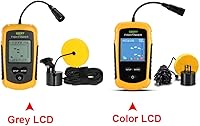
The color display is a genuine step up from grayscale units when it comes to reading bottom composition and distinguishing between target types at a glance. The color coding of fish, weeds, and bottom types makes the information faster to interpret in the field. That said, the 2-inch size is a limitation regardless of color, and in direct sunlight the glare can wash out the image somewhat.

Yes, and it's actually a strong fit for ice fishing scenarios. The wired transducer format is ideal for lowering through a drilled hole, and there's no wireless connectivity to worry about in freezing temperatures. The audible alarm is also useful when you're not hovering over the screen constantly. Just bring spare batteries, as cold temperatures can reduce battery performance noticeably.

Lixada offers a 12-month warranty, and some buyers have reported successful replacements for clearly defective units. That said, after-sales support quality appears inconsistent based on user feedback — response times and communication can be slow, particularly if you're purchasing from an international marketplace listing. Keep your purchase confirmation and any correspondence in case you need to escalate a claim.