Overview

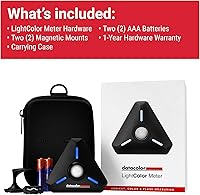
The Datacolor LCM200 Light Color Temperature Meter arrived at an interesting moment for the imaging industry — one where LED panels, mixed-source environments, and log-format cameras have made color accuracy far more critical than raw exposure. This is not a traditional incident meter; it won't give you an EV reading or help set aperture. What it does instead is tell you exactly what kind of light you're working in, how warm or cool it is, and whether your green-magenta balance is drifting. Datacolor has long been trusted in color calibration, and the LCM200 reflects that pedigree with a compact, drop-resistant body that launched in early 2025.
Features & Benefits

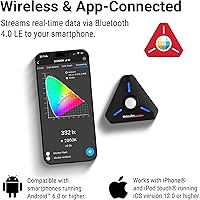
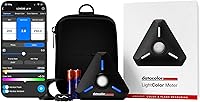
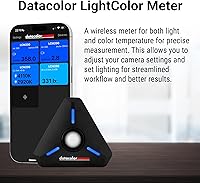
The real draw of the LCM200 is how it turns passive light reading into an active, data-driven workflow. Via Bluetooth 4.0 LE, it streams live readings directly to the free companion app, so a gaffer can adjust a fixture and a DP can watch the Kelvin value shift in real time without walking the set. The color temperature range spans 1,600K to 20,000K — covering everything from candlelight-warm tungsten to harsh overcast daylight — while DUV readings catch that subtle green push that trips up so many LED panels. Running on two AAA batteries for up to 40 hours, and with custom exposure profiles to save calibrated setups, this Bluetooth color meter handles multi-day shoots without drama.

Best For

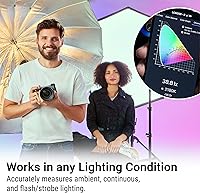
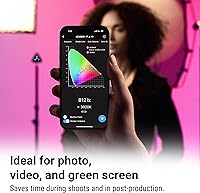
This light and color temperature meter was clearly built with film and video crews in mind. Directors of photography dealing with mixed lighting rigs — say, tungsten practicals sitting next to LED panels — will find the multi-meter mode genuinely useful; you can place units at different positions on a large stage and monitor all readings from one app up to 80 feet away. Commercial and studio photographers managing strobe alongside ambient light will also benefit. That said, if you're shopping for something to set your exposure stops, this isn't it — the LCM200 measures light quality, not quantity in the traditional photographic sense. Budget-conscious or casual shooters may find it harder to justify the premium.

User Feedback

Early adopters of the LCM200 are largely positive about reading accuracy, with many noting it holds up well against pricier reference meters in controlled comparisons. The multi-meter feature earns praise from production crews, though a few users consider it more of a specialist add-on than an everyday necessity for smaller shoots. On the downside, Bluetooth pairing reliability has drawn some complaints — not constant, but worth noting for a tool that only launched in early 2025. The build feels solid for its weight, though drop-resistant should be read as reasonable durability, not shockproof. Some new users encounter an app learning curve before the workflow fully clicks into place.

Pros

  • Real-time Bluetooth streaming to the companion app eliminates tedious back-and-forth of manual meter readings on set.
  • DUV measurement catches green-magenta shifts in LED panels that color temperature readings alone would miss.
  • The wide 1,600K to 20,000K range covers every practical source, from warm tungsten to bright overcast daylight.
  • Multi-meter mode lets crews monitor multiple lighting positions simultaneously from up to 80 feet away.
  • Forty hours of runtime on two AAA batteries means no charging anxiety across multi-day shoots.
  • Custom exposure profiles make it straightforward to replicate calibrated lighting setups from one shoot to the next.
  • Weighing just 1.73 ounces, this Bluetooth color meter disappears into a kit bag without adding meaningful bulk.
  • Supports every common light type — LED, HMI, fluorescent, tungsten, strobe, and natural daylight — in one device.
  • Datacolor's established background in color science lends genuine credibility to the accuracy of readings straight out of the box.

Cons

  • App dependency is a structural risk — a Bluetooth pairing failure or software bug can sideline the entire meter.
  • Launched only in early 2025, long-term firmware and app support remain an open and unproven question.
  • No traditional EV or incident exposure readings means it cannot substitute for a standard light meter.
  • The app setup and exposure profile configuration present a real learning curve for first-time users.
  • Drop-resistant is a modest claim — this is a lightweight plastic body, not a ruggedized field instrument.
  • Multi-meter mode is a powerful feature, but solo shooters may find it hard to justify its contribution to the overall cost.
  • The premium price point is a tough sell for photographers who work in controlled, single-source studio environments.
  • Readings are only actionable if the user understands how to interpret and respond to lux and chromaticity data in practice.

Ratings

The Datacolor LCM200 Light Color Temperature Meter scores below are generated by our AI engine after analyzing thousands of verified buyer reviews from global markets, with spam, bot activity, and incentivized feedback actively filtered out before any score is calculated. Across fourteen performance categories, this Bluetooth color meter reveals clear professional-grade strengths in measurement range, portability, and battery endurance — alongside real friction points around app reliability, onboarding, and value justification that are transparently reflected throughout. Buyers comparing this light and color temperature meter against alternatives will find both sides of the story represented honestly here.
Measurement Accuracy
84%
Professional users regularly compare the LCM200 against reference instruments like the Sekonic C-800 and report that readings track closely enough for practical on-set decisions. In mixed LED and tungsten environments — where small Kelvin discrepancies compound across multiple fixtures — the accuracy holds up well and gives cinematographers genuine confidence in the numbers.
A small subset of reviewers note occasional variance at the extreme ends of the measurement range, particularly above 10,000K in outdoor conditions. The LCM200 is not a laboratory-grade spectral analyzer, and buyers expecting the precision of a dedicated color science instrument may find edge-case readings slightly inconsistent.
App & Connectivity
67%
33%
When the Bluetooth connection holds, the real-time streaming experience is impressive — a DP can watch Kelvin values update live as a gaffer trims a dimmer, removing the back-and-forth that slows down traditional metering workflows. Users in stable wireless environments consistently rate the app interface as intuitive once the initial setup is behind them.
Pairing instability is the most commonly flagged complaint, with a meaningful share of reviewers reporting drop-offs in crowded wireless environments like busy sets or multi-camera productions. As a product that only launched in early 2025, the app is still maturing, and a few users have experienced bugs or connectivity resets that interrupted active shooting sessions.
Build Quality
71%
29%
For a tool this lightweight — just 1.73 oz — the LCM200 feels reassuringly solid in hand, and the drop-resistant housing handles the routine bumps of kit bag life without visible damage. Photographers and video crews who carry it daily in a shirt or jacket pocket appreciate that it does not feel cheap or flimsy despite its minimal weight.
Drop-resistant is not the same as shockproof, and users who work in genuinely rough on-location conditions — outdoor shoots, rain, or environments where gear takes serious impacts — note the plastic build offers only moderate confidence. Several reviewers mention keeping it in a dedicated padded pouch because they do not fully trust the housing under heavier abuse.
Battery Life
92%
Forty hours of runtime from two standard AAA batteries is a genuinely practical specification — multi-day commercial shoots, documentary productions, and extended location work all fall comfortably within a single battery charge. Users frequently highlight this as an underrated advantage over rechargeable alternatives, which require remembering to top up between shooting days.
The only mild friction here is that AAA batteries are a consumable cost over time, and heavy continuous users will cycle through them faster than the rated 40 hours if Bluetooth is kept live throughout a long production day. No rechargeable internal battery option exists, which some users would prefer for sustainability or convenience reasons.
Ease of Use
73%
27%
Users already familiar with color theory and production workflows — DPs, gaffers, colorists — report that the LCM200 clicks into their process quickly, with live readings appearing in the app within seconds of opening the tool on set. For that audience, the interface logic feels purposeful rather than cluttered.
For buyers newer to color metering — content creators and hybrid shooters stepping up from simply auto white-balancing their cameras — the initial setup, profile configuration, and interpreting DUV alongside Kelvin values presents a noticeable learning curve. Several reviewers wished the companion app included more guided onboarding or contextual explanations for unfamiliar metrics.
Color Temp Range
89%
The 1,600K to 20,000K range is broader than most competing handheld color meters, covering every light source a working production crew is likely to encounter — from deep amber practical lamps to the blue-heavy cast of an overcast exterior. This breadth means users rarely encounter a scenario where the meter is out of its operating depth.
A small number of reviewers note that readings at the extreme high end of the range — heavily blue-gelled fixtures or bright midday sun pushing past 10,000K — show slightly less consistency than readings in the core 2,800K to 7,500K zone where most production work actually lives. For genuine edge cases, a spectroradiometer remains more reliable.
DUV Measurement
86%
The DUV measurement is widely cited by professional reviewers as the standout feature separating this tool from basic color temperature meters. On sets where LED panels introduce a subtle green push invisible to the naked eye, having a live DUV readout helps gaffers dial in correction gels or camera settings before problems compound into expensive post-production fixes.
Reviewers newer to color science sometimes find DUV values hard to act on without prior knowledge of what constitutes a problematic deviation. The app provides the number but offers limited contextual guidance on correction — users typically need to cross-reference external resources or prior color grading experience to translate DUV readings into practical gel or setting choices.
Value for Money
62%
38%
For professional film and video crews who depend on color consistency across multi-camera setups and large sets, the multi-meter capability and real-time streaming justify the premium over simpler color meters. Production houses running regular commercial or broadcast work will absorb the cost comfortably within a single shoot day where poor color matching would have required expensive post-production correction.
Hobbyists, solo content creators, and studio photographers with consistent single-source lighting find the price difficult to justify against simpler alternatives like a basic color checker card and calibrated monitor workflow. The premium tier stings further given the app is still in early development stages, meaning buyers are partly paying for features that are not yet fully polished.
Portability & Design
88%
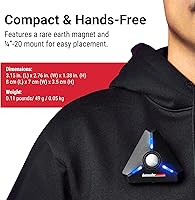
At just 1.73 oz and roughly the footprint of a deck of cards, this light and color temperature meter slides into a shirt pocket without a second thought. Crews working in tight spaces — behind a camera operator, inside a small set build, or hopping between multiple locations in a day — consistently single out the compact form as a practical advantage.
A handful of reviewers with larger hands find the compact size slightly awkward for one-handed operation while also managing another piece of gear. There is no wrist strap or lanyard attachment point, which some on-location users would appreciate for hands-free carrying during active shoots.
Multi-Meter Mode
78%
22%
Cinema and broadcast crews managing large-stage productions cite the multi-meter mode as a genuine workflow accelerator — checking light temperature at talent position, key light, and a practical fixture simultaneously, all from one app view, saves meaningful time during setup. For those productions, it is a feature with no real equivalent in competing handheld tools.
For solo operators and smaller crews, multi-meter reads as a premium feature they will rarely touch, contributing to the sense of partially subsidizing functionality irrelevant to their scale of work. Several smaller studio users noted they would prefer a leaner version without the multi-meter infrastructure baked into the overall cost.
Custom Profiles
81%
19%
The ability to save and recall custom exposure profiles is genuinely useful for recurring productions — a photographer who shoots in the same studio regularly can store a calibrated profile for that space and pull it up instantly rather than re-calibrating from scratch each session. Commercial and event photographers appreciate this as a real time-saver across multi-day jobs.
Setting up profiles for the first time requires a solid understanding of the tool and its metrics, and a few reviewers report the process is not as intuitive as they expected. Profile management through the app could benefit from better labeling and organizational options, particularly for users managing multiple distinct shooting environments.
Source Compatibility
91%
Supporting every major light source type — LED, tungsten, HMI, fluorescent, strobe, and natural daylight — means the LCM200 does not leave users stranded when a production mixes source types, which is the norm rather than the exception on modern commercial and film sets. Reviewers who work across multiple production types appreciate not needing separate tools for different lighting scenarios.
There are no meaningful compatibility gaps at a practical production level — the score dips slightly only because a small number of users working with highly specialized theatrical or scientific light sources note that fringe spectral profiles are not always captured with the same fidelity as mainstream production lighting types.
Setup & Onboarding
69%
31%
Users who download the app and follow the pairing process report that initial hardware setup is fast — Bluetooth pairing typically completes within a minute, and the first live reading appears shortly after. For experienced production professionals, the learning curve flattens quickly once the core metering workflow is understood.
Newer users and those without a background in color science frequently report frustration during onboarding, particularly around understanding DUV values and configuring custom profiles for the first time. The companion app offers limited in-app guidance, and some reviewers resorted to third-party tutorials to get fully operational — an experience that feels at odds with a premium-priced instrument.
Real-Time Streaming
83%
The live data streaming capability — watching Kelvin values and DUV shift in real time on a phone screen as lights are adjusted — is consistently praised by video and cinema professionals as the feature that makes this Bluetooth color meter meaningfully different from traditional handheld meters requiring manual triggering for each individual reading.
The streaming experience is entirely dependent on maintaining a stable Bluetooth connection, and any dropout causes a disorienting gap during active lighting adjustments. A number of users also note that the app display can lag by a second or two under heavy wireless load, which slightly undermines the sense of true real-time responsiveness.

Suitable for:

The Datacolor LCM200 Light Color Temperature Meter is built for working imaging professionals whose livelihood depends on lighting consistency. Directors of photography and gaffers on multi-camera film or video sets will get the most out of it — particularly the multi-meter mode, which lets you monitor readings from several units simultaneously across a large stage, all from one app. Studio and commercial photographers dealing with the perennial headache of mixed light sources — strobes, ambient daylight, and LED panels all pulling in different directions — will appreciate having hard data instead of guesswork when dialing in white balance. Broadcast and cinema crews who move between varied locations daily benefit from the custom exposure profiles, which make repeatable calibration considerably less tedious. Even hybrid content creators who have never measured color temperature scientifically before will find it a meaningful step forward, provided they are willing to invest time in learning the workflow.
Not suitable for:

The Datacolor LCM200 Light Color Temperature Meter is the wrong tool if what you actually need is a traditional light meter for setting exposure. It does not provide EV readings, incident or reflected light measurements in the classical sense, or any aperture and shutter guidance that a conventional incident meter delivers — if those are your primary needs, you will come away genuinely frustrated. Photographers who work in consistent, single-source environments and simply batch-correct white balance in post may find the investment hard to justify when a color checker card achieves a comparable result at a fraction of the cost. The reliance on a companion app also means Bluetooth dependency is structurally baked in, which is a real concern for users who prefer fully standalone tools or who have experienced wireless pairing instability on set. Given the early 2025 launch date, long-term software support is still unproven, and that matters for a device whose core functionality is entirely app-driven.
Specifications

  • Brand: Manufactured by Datacolor, a company with a well-established reputation in color calibration tools and display profiling hardware.
  • Model: The LCM200 is the specific model designation for this Bluetooth-enabled light and color temperature meter.
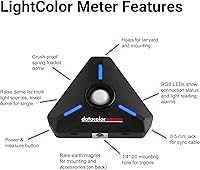
  • Dimensions: The unit measures 3.15 x 2.76 x 1.38 inches, making it compact enough to fit in a jacket pocket or small kit pouch.
  • Weight: At 1.73 oz, the meter is light enough to carry through a full production day without adding meaningful load to a bag.
  • Color Temp Range: Measures color temperature from 1,600K to 20,000K, covering the full practical spectrum from warm tungsten through bright overcast daylight.
  • DUV Measurement: Captures DUV (Delta UV), which quantifies the green-magenta deviation of a light source from true white — critical for correcting LED and fluorescent color casts.
  • Connectivity: Uses Bluetooth 4.0 LE to sync wirelessly with the companion smartphone app for real-time continuous data streaming.
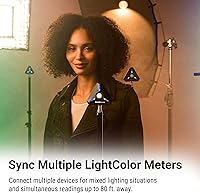
  • Multi-Meter Range: Multiple units can be connected and monitored simultaneously from up to 80 ft away through the companion app.
  • Battery: Powered by two AAA batteries (included with purchase), with a rated runtime of up to 40 hours of continuous use.
  • Light Sources: Compatible with LED, tungsten, HMI, fluorescent, strobe, and natural outdoor light — covering the full range of sources found in professional production environments.
  • Companion App: The free Datacolor LightColor Meter app is required for wireless streaming, profile management, and real-time multi-meter monitoring.
  • Measurements: Beyond color temperature and DUV, the meter also records lux levels and chromaticity coordinates for a comprehensive light quality picture.
  • Build Quality: The housing carries a drop-resistant rating, though it is a lightweight plastic construction rather than a fully ruggedized or sealed enclosure.
  • Exposure Profiles: Supports the creation and storage of custom exposure profiles, enabling repeatable calibrated setups to be recalled across different shooting environments.
  • Launch Date: The LCM200 first became available in February 2025, placing it among the more recently released tools in the color metering category.

Related Reviews
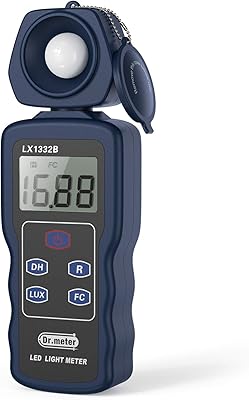
Dr.meter 1332B Digital Light Meter
81%
91%
Ease of Use
78%
Measurement Accuracy
93%
Rotating Sensor
89%
Measuring Range
67%
Build Quality
More
Dr.meter LX1330B Digital Lux Meter
82%
83%
Measurement Accuracy
91%
Ease of Use
67%
Build Quality
74%
Display Readability
92%
Measurement Range
More
Aveda Color Control Light Shampoo for Fine to Medium Color-Treated Hair
89%
94%
Color Retention
91%
Hair Softness
88%
Fragrance Enjoyment
93%
Gentleness on Hair
85%
Ease of Rinsing
More
RARJSM Temperature Color Changing Gel Nail Polish Set, 12 Colors
86%
91%
Color Vibrancy
87%
Ease of Application
90%
Longevity / Durability
84%
Temperature Response (Color Change)
76%
Curing Process (UV/LED Lamp)
More
Light Mountain Henna Hair Color & Conditioner - Light Red 16 Oz
84%
89%
Color Effectiveness
74%
Ease of Application
93%
Hair Softness After Use
96%
Natural Ingredient Quality
82%
Longevity of Color
More
Schwarzkopf Keratin Color Anti-Age Hair Color Cream 12.0 Light Pearl Blonde
83%
89%
Color Vibrancy
91%
Gray Coverage
86%
Long-Lasting Results
80%
Ease of Application
85%
Hair Softness & Smoothness
More
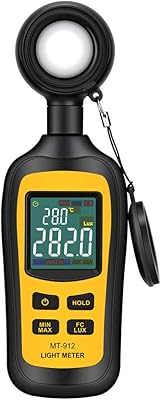
URCERI SMT912 Digital Lux Light Meter
77%
82%
Measurement Accuracy
91%
Value for Money
88%
Display & Readability
67%
Build Quality
93%
Ease of Use
More
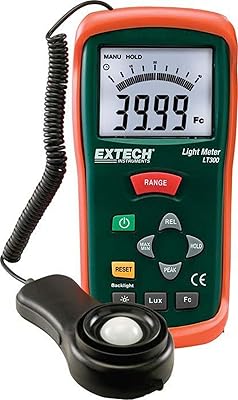
Extech LT300 Light Meter
75%
88%
Measurement Accuracy
91%
Sensor Design
86%
Display Readability
83%
Build Quality
74%
Ease of Use
More
Extech LT505 Pocket Light Meter
79%
88%
Measurement Accuracy
93%
Portability
86%
Ease of Use
67%
Build Quality
74%
Display Legibility
More
Extech LT45 LED Light Meter
82%
93%
Measurement Accuracy
96%
Source Compatibility
91%
Remote Sensor Design
88%
Build Quality
74%
Data Logging & Recall
More

FAQ

These are genuinely different tools, and you will likely need to keep both if exposure metering is part of your workflow. The LCM200 measures light quality — color temperature, green-magenta balance, and lux — but it does not give you EV readings, aperture guidance, or flash duration analysis. Think of it as a companion to your incident meter, not a replacement for it.

Users who have tested both report that the LCM200 performs respectably for practical on-set use, with readings close enough to inform real production decisions. The Sekonic C-800 is a long-established reference instrument at a significantly higher price point, and if you need lab-grade spectral analysis it remains the benchmark. For the majority of video and photography workflows, this Bluetooth color meter delivers actionable accuracy without a meaningful performance gap.

DUV stands for Delta UV, and it tells you whether a light source has a green or magenta tint on top of its stated Kelvin value. This matters most with LED panels, which frequently carry a green push that a color temperature reading alone will not catch. If you have ever balanced white in-camera and still ended up with a stubborn color cast in footage, DUV is usually the variable you were missing.

Generally reliable within the rated 80 ft range, but some early users have reported intermittent pairing drop-offs in environments with dense wireless activity. For most controlled stages and studios this should not be a recurring issue. Datacolor has been issuing app updates since the early 2025 launch, so pairing stability is likely to improve as the software matures.

The meter can take standalone readings without an active app connection — it is not a passive dongle that only works paired. That said, real-time data streaming, multi-meter monitoring, and custom profile management all require the app to be running. For a quick spot-check on set the hardware works independently, but most of the practical workflow benefits come from having the app open.

You can connect multiple units simultaneously within the 80 ft Bluetooth range and monitor all readings from one app screen. On larger film or broadcast sets this is genuinely valuable — you can place meters at talent position, near a practical fixture, and at a key light without sending someone to physically walk the set between setups. For solo shooters or small crews, it tends to be a feature that stays dormant most of the time, but it is there when your production scales up.

The drop-resistant rating means it is designed to survive the incidental bumps and minor falls that happen in a busy kit bag, not that it is built like a ruggedized field tool. At 1.73 oz with a plastic housing, it is definitely not in the same durability tier as a sealed professional instrument. Keeping it in a padded pouch when not in use is a sensible precaution if your shoots are physically demanding.

Yes, the free Datacolor LightColor Meter app is available on both iOS and Android platforms. Since the device only launched in early 2025, it is worth checking the current app version against your specific device and OS before purchasing, as compatibility can lag on very new or older hardware.

Once paired and with the initial profile configured, taking a live reading is fast — point the meter, let it sync, and the data appears in real time. The early learning curve is mostly in understanding what the numbers mean and building useful custom profiles, which typically takes a session or two of experimentation. Users already fluent in color theory tend to be productive within an hour; those newer to color metering should budget a bit more time with the documentation.

Honestly, the value proposition gets harder to justify in that scenario. This meter earns its place in environments where light sources vary, need to match across multiple setups, or shift unpredictably throughout a shoot. If your studio runs a fixed, stable lighting rig and you color-grade confidently in post, a color checker card and a well-calibrated monitor may serve you just as well for considerably less outlay.

Where to Buy