Overview

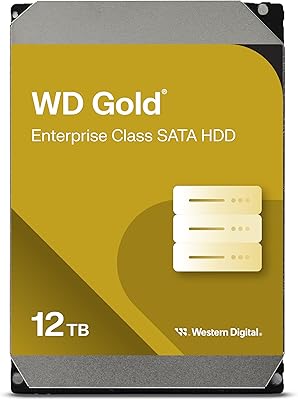
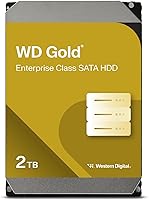
The Western Digital Gold 2TB Internal Hard Drive sits at the top of WD's spinning disk hierarchy — their enterprise lineup built explicitly for servers and NAS systems that run around the clock. Think of the Gold series as the serious workhorse tier, positioned above the Blue and Red families, designed for environments where downtime genuinely costs money. At 2TB, this is the entry point into the Gold range, which makes it appealing for buyers who want enterprise-class endurance without committing to the cost of higher-capacity models. It spins at 7200 RPM over a SATA 6 Gb/s connection — solid, expected specs for this class. Just be clear going in: this is a spinning disk, not an SSD.
Features & Benefits

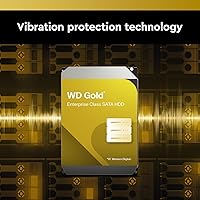
What separates the WD Gold 2TB from consumer drives isn't any single spec — it's how everything is tuned for continuous, heavy use. The drive carries a workload rating of 550TB per year, meaning it's engineered to handle the kind of relentless read/write cycles that would wear out a desktop drive in months. Its vibration compensation technology is a real practical asset in multi-drive enclosures, where neighboring drives create interference that can degrade performance over time. The 128MB cache keeps data moving efficiently during sequential workloads. With a standard 3.5-inch form factor and universal SATA compatibility, it drops into virtually any server chassis without adapter headaches. The five-year limited warranty rounds things out nicely.

Best For

This Gold-series drive is a strong match for anyone running a small business NAS that needs to stay online without interruption — think file servers, local backups, or media libraries with heavy write activity. Home lab builders assembling a RAID array will appreciate the enterprise endurance ratings, which offer real peace of mind over the long haul. It also works well in surveillance and archival applications where drives write continuously for months without rest. One honest caveat: the price-per-TB at 2TB is higher than you would pay stepping up to a larger Gold model. If you need exactly this capacity or have specific bay constraints, though, the value case still holds.

User Feedback

Across more than a thousand ratings, this enterprise hard drive lands at 4.1 stars — a score that reflects genuine satisfaction with some honest reservations baked in. Buyers consistently praise quiet, stable operation inside RAID configurations, with several noting it runs more reliably than the consumer drives it replaced. People upgrading from desktop-class storage frequently comment on the noticeable step up in build quality. That said, a recurring complaint involves dead-on-arrival units, so inspecting packaging carefully on delivery is worth the extra minute. Critics also point out that the 2TB capacity doesn't deliver great value per terabyte compared to larger Gold models — a fair concern for anyone not locked into a specific bay count.

Pros

  • Enterprise-rated endurance handles continuous workloads that would wear out consumer drives in a fraction of the time.
  • The five-year limited warranty provides genuine long-term peace of mind for business-critical storage.
  • Vibration compensation works noticeably well in multi-drive enclosures, keeping performance steady.
  • Quiet operation makes it a comfortable fit even in office environments where noise matters.
  • Universal SATA 6 Gb/s interface means no compatibility surprises with modern servers or NAS enclosures.
  • The WD Gold 2TB performs consistently in RAID configurations, which is where it tends to earn its best real-world reviews.
  • Broad OS compatibility covers Windows, Linux, and Mac environments without extra configuration.
  • Build quality is a clear step above consumer-grade drives, something buyers notice immediately when upgrading.
  • At 7200 RPM, sequential throughput holds up well for data-heavy archival and backup workloads.

Cons

  • Price-per-terabyte at 2TB is high compared to larger Gold models — capacity scaling is where the real value kicks in.
  • A meaningful number of buyers have reported dead-on-arrival units, making careful inspection on delivery important.
  • No performance advantage over consumer NAS drives for light or infrequent workloads — the premium is wasted.
  • This Gold-series drive generates more heat than lower-RPM alternatives, which can matter in poorly ventilated enclosures.
  • Random read/write speeds are unremarkable compared to even budget SSDs, so latency-sensitive tasks are not its strength.
  • The 128MB cache, while adequate, can feel limiting during mixed workloads with many small simultaneous file operations.
  • Heavier than many consumer 3.5-inch drives at 1.41 pounds, which matters in high-density rackmount configurations.
  • No NVMe or PCIe option exists in this line — buyers whose systems support faster interfaces may find SATA a bottleneck.
  • Packaging quality from some sellers has been inconsistent, contributing to transit damage and DOA complaints.

Ratings

Our AI rating system analyzed verified buyer reviews for the Western Digital Gold 2TB Internal Hard Drive from across global markets, actively filtering out incentivized, bot-generated, and outlier feedback to surface what real users consistently experience. The scores below reflect both the genuine strengths that earned this drive a loyal following among enterprise and home lab users, and the friction points that keep it from a perfect recommendation. Nothing is glossed over — the high marks and the pain points are weighted equally.
Long-Term Reliability
84%
Buyers running this Gold-series drive in NAS and server environments consistently report years of trouble-free operation, with many units clocking thousands of power-on hours without a single reallocated sector. The enterprise-grade binning process gives it a meaningful edge over consumer drives in sustained, always-on scenarios.
A statistically notable minority of buyers encountered early failures within the first few weeks, which pulls the reliability score down from what it could otherwise be. These early-life failures appear disproportionately linked to shipping damage, but they are frequent enough to warrant immediate health checks on first install.
Workload Endurance
91%
The 550TB-per-year workload rating is where this enterprise hard drive genuinely stands apart from prosumer alternatives like the WD Red lineup. Users running continuous backup jobs, 24/7 surveillance feeds, and database write cycles report the drive holds steady without performance degradation over extended periods.
The workload ceiling, while high, is only relevant if your actual use case demands it — buyers who do not push sustained write cycles are essentially paying for headroom they will never use. There is no tangible day-to-day benefit for lighter workloads that would not be met by a less expensive drive.
RAID Performance
86%
Reviewers building multi-drive RAID arrays specifically call out how stable and consistent the WD Gold 2TB performs across extended rebuild operations, something that exposes weaker drives quickly. The vibration compensation technology earns real praise in dense enclosures where neighboring drive vibration can cause noticeable read errors on lesser hardware.
Sequential throughput in RAID is solid, but random IOPS performance is unremarkable for the price tier — this is still a spinning platter, and latency-sensitive RAID workloads will expose that ceiling. Users expecting SSD-like responsiveness in a RAID cache scenario will be frustrated.
Noise & Acoustics
78%
22%
Most users describe the drive as noticeably quieter than older enterprise drives they have used, with a low-frequency hum during sequential operations that is easy to tune out in a typical office or home lab setting. In enclosed server cabinets, acoustic performance is essentially a non-issue.
During intensive sequential writes or RAID rebuilds, audible seek noise picks up to a level that is detectable in quiet home environments. Buyers who place their NAS in a living space — rather than a dedicated closet or server room — occasionally flag this as mildly annoying during peak activity.
Value for Money
61%
39%
For buyers who genuinely need enterprise endurance ratings and a five-year warranty at this specific capacity, the price reflects a clear value proposition that cheaper alternatives simply cannot match. IT teams managing compliance-driven storage environments tend to view the premium as justified insurance against downtime.
At 2TB, the cost-per-terabyte is hard to defend when compared to larger models in the same Gold lineup or competing enterprise drives at higher capacities. Buyers with flexible bay configurations almost universally get better value stepping up to a 4TB or larger unit, making this the weakest capacity point for pure dollar-per-gigabyte math.
Build Quality
88%
Buyers upgrading from consumer-tier drives consistently note the premium feel and structural rigidity of this Gold-series drive, which inspires confidence during installation. The engineering tolerances feel tighter, and the drive sits firmly in bays without the slight rattle sometimes found in budget units.
A handful of buyers received units with cosmetic imperfections or loose platters audible when shaking the drive, which — while rare — is alarming at this price point. These appear to be isolated quality control escapes rather than a systemic issue, but they are worth monitoring on first receipt.
Compatibility
93%
The standard SATA 6 Gb/s interface and 3.5-inch form factor mean this enterprise hard drive drops into virtually any server motherboard, NAS enclosure, or desktop chassis without adapters or firmware workarounds. Cross-platform support across Windows Server, Linux, and Mac OS environments is seamless out of the box.
There are no meaningful compatibility complaints in verified feedback, though a small number of users note that older SATA 3 Gb/s systems will bottleneck the interface speed. This is an infrastructure limitation rather than a drive fault, but worth flagging for anyone working with legacy hardware.
Thermal Management
72%
28%
In well-ventilated NAS towers and rackmount chassis with proper airflow, the drive maintains operating temperatures that buyers report as stable even during extended rebuilds. Users in environments with active cooling describe consistent thermal behavior over multi-year deployments.
In compact or passively cooled enclosures, the 7200 RPM spin rate generates enough heat to push temperatures into ranges that accelerate wear over time. Buyers using mini-ITX NAS builds or poorly ventilated desktop cases have flagged this as a concern that requires active monitoring with tools like CrystalDiskInfo or smartmontools.
Warranty & Support
82%
18%
A five-year limited warranty is among the stronger coverage periods available for an internal hard drive at this price tier, and WD's RMA process receives generally positive marks for speed and communication from enterprise buyers who have had to use it.
A segment of buyers report that WD's warranty support experience can be inconsistent depending on region and purchase channel, with some RMA processes dragging longer than expected. Data recovery is explicitly excluded from warranty coverage, which catches a few buyers off guard when a failed drive contains critical data.
Installation Experience
89%
Setup is entirely plug-and-play for anyone familiar with internal drives — standard SATA data and power connectors, no proprietary tools or software required to get the drive recognized and formatted. Both NAS operating systems and server OS environments detect it immediately without manual driver installation.
The bare drive format means no mounting screws or SATA cable are included, which is standard for enterprise storage but occasionally trips up first-time buyers expecting a more retail-packaged experience. This is more of an expectation mismatch than a genuine criticism of the product itself.
Packaging & Arrival Condition
58%
42%
When packaging is intact, the drive arrives well-protected with adequate cushioning for a bare drive shipped without a retail box. Buyers who inspect their orders carefully on arrival rarely report hidden damage when external packaging shows no signs of mishandling.
This is one of the more consistently flagged pain points across verified reviews — dead-on-arrival units and drives showing early SMART errors are frequently traced back to inadequate transit protection from sellers. The frequency of these reports is high enough that buyers should treat an immediate health scan as a mandatory first step, not an optional precaution.
Sequential Throughput
76%
24%
For a mechanical drive, throughput during large sequential transfers — full-directory backups, surveillance footage ingestion, ISO imaging — is solid and consistent, meeting the expectations set by the 7200 RPM class rating. NAS users handling bulk media transfers report satisfying speeds for the workload type.
Throughput is entirely adequate for spinning disk expectations but falls well short of even entry-level SATA SSDs, which can feel jarring for buyers coming from an SSD-primary workflow. Anyone expecting to use this drive for fast virtual machine storage or database query performance should recalibrate expectations considerably.
Vibration Resistance
87%
The multi-axis vibration compensation technology earns genuine praise from users running four-bay and eight-bay NAS enclosures, where mechanical feedback from neighboring drives is a known reliability risk. Several long-term reviewers credit this feature with maintaining error-free operation through years of RAID workloads.
The vibration compensation is effective but not magic — in very high-density enclosures with twelve or more drives running simultaneously, users report that performance can still dip slightly during peak activity. This is a physics constraint rather than a design flaw, but worth acknowledging for buyers planning dense deployments.

Suitable for:

The Western Digital Gold 2TB Internal Hard Drive is built for buyers who need a drive that can take a beating over years of continuous operation without flinching. Small business owners running a NAS for file sharing, local backups, or on-premise storage will find it a reliable backbone that holds up well under daily read/write pressure. Home lab enthusiasts building out a RAID array will appreciate that the endurance ratings here are genuinely enterprise-grade, not marketing language — 550TB of workload per year is a real-world spec with teeth. It also fits well into surveillance setups and archival systems where drives write non-stop for months, conditions that quickly expose the weakness in consumer-tier alternatives. If you are the kind of buyer who prioritizes long-term reliability and a solid warranty over squeezing every dollar out of raw capacity, this Gold-series drive makes a compelling case.
Not suitable for:

The Western Digital Gold 2TB Internal Hard Drive is a poor fit for buyers expecting desktop PC performance or anyone comparing spinning disks to SSDs on speed — that comparison simply does not apply here, and anyone hoping otherwise will be disappointed. At the 2TB capacity point, the price-per-terabyte is noticeably steep; buyers who need larger storage pools and have the bay space to accommodate it will get much better value stepping up to a 6TB, 8TB, or larger Gold model. Casual home users storing photos, streaming media locally, or running a basic desktop workload have no practical need for enterprise endurance ratings — a WD Red or even a Blue would cover those needs at a lower cost. This Gold-series drive also offers no advantage in laptop or ultracompact builds, as it is a full 3.5-inch unit requiring a standard desktop or server bay.
Specifications

  • Capacity: This drive offers 2TB of raw storage, suitable for server and NAS environments with moderate storage demands.
  • Interface: Uses a SATA 6 Gb/s connection, ensuring broad compatibility with virtually all modern server and storage system motherboards.
  • Rotational Speed: Spins at 7200 RPM class, delivering the consistent throughput expected from an enterprise-grade spinning disk.
  • Cache: Equipped with 128MB of onboard cache to improve sequential read and write performance during data-intensive workloads.
  • Form Factor: Standard 3.5-inch form factor fits directly into rackmount server bays, desktop towers, and most NAS enclosures without adapters.
  • Workload Rating: Rated for up to 550TB of data transfer per year, reflecting its design for continuous, around-the-clock operation.
  • Vibration Protection: Multi-axis rotational acceleration feed-forward sensors actively compensate for vibration caused by neighboring drives in dense enclosures.
  • Warranty: Backed by a five-year limited warranty from Western Digital, covering manufacturing defects under normal operating conditions.
  • Compatible Systems: Designed for use in servers, NAS units, and storage arrays; not intended as a primary consumer desktop or laptop drive.
  • OS Support: Compatible with Windows, Windows Server, Linux, and Mac OS environments without requiring additional drivers for basic operation.
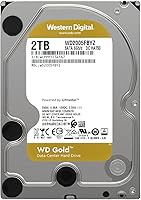
  • Dimensions: Measures 5.79 x 4 x 1.03 inches, conforming to the standard 3.5-inch HDD footprint used across enterprise and prosumer hardware.
  • Weight: Weighs 1.41 pounds, which is typical for a 3.5-inch enterprise hard drive and worth accounting for in high-density rack configurations.
  • Model Number: The official model identifier is WD2005FBYZ, used for warranty registration, compatibility verification, and sourcing replacement units.
  • Series: Part of the WD Gold Enterprise Class lineup, which represents Western Digital's highest-tier family of spinning hard drives.
  • Power Draw: Designed with power efficiency in mind for an enterprise spinning disk, though exact wattage varies by operational state and workload intensity.

Related Reviews
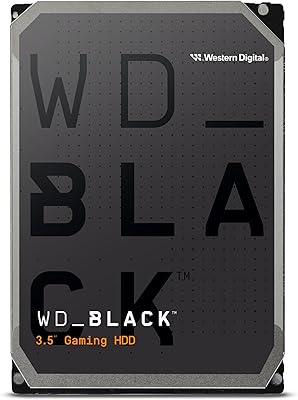
WD Black 2TB 3.5″ Internal Hard Drive
79%
78%
Read & Write Performance
82%
Reliability & Longevity
74%
Noise & Vibration
76%
Value for Money
89%
Installation & Compatibility
More
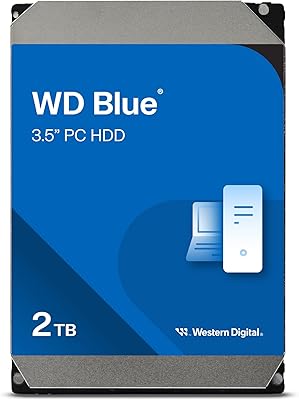
Western Digital WD Blue 2TB Hard Drive
81%
88%
Long-Term Reliability
91%
Value for Money
74%
Read/Write Performance
83%
Noise & Vibration
92%
Installation Ease
More
Western Digital 6TB WD Gold Enterprise Class Internal Hard Drive
88%
95%
Performance in Data-Intensive Tasks
93%
Reliability and Durability
88%
Vibration Protection Effectiveness
92%
Long-Term Stability (MTBF)
85%
Ease of Installation
More
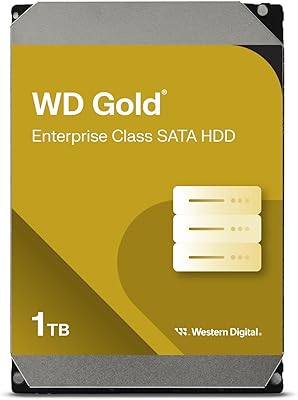
Western Digital 1TB WD Gold Enterprise Class Internal Hard Drive
84%
91%
Performance Under Load
88%
Reliability for 24/7 Operation
75%
Ease of Setup
90%
Data Transfer Speed
87%
Durability and Build Quality
More
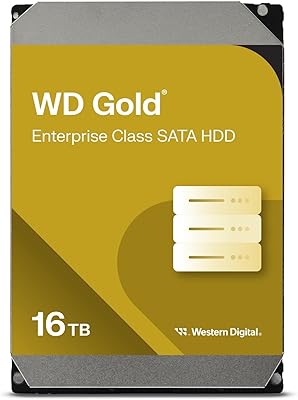
Western Digital WD Gold 16TB Internal Hard Drive
79%
88%
Long-Term Reliability
84%
Sustained Performance
91%
Build & Engineering Quality
63%
Noise & Vibration
67%
Thermal Management
More
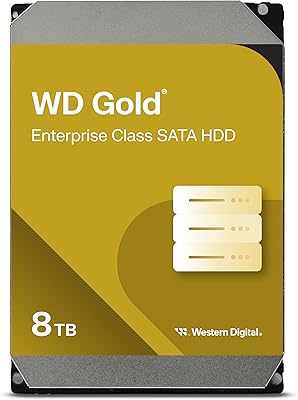
Western Digital WD Gold 8TB Hard Drive
76%
83%
Reliability & Endurance
74%
Performance
88%
RAID Compatibility
81%
NAS Compatibility
78%
Noise & Vibration
More
Western Digital 12TB WD Gold Enterprise Class Internal Hard Drive
86%
88%
Performance under Load
93%
Storage Capacity
91%
Reliability
85%
Ease of Integration
90%
Endurance for Demanding Workloads
More
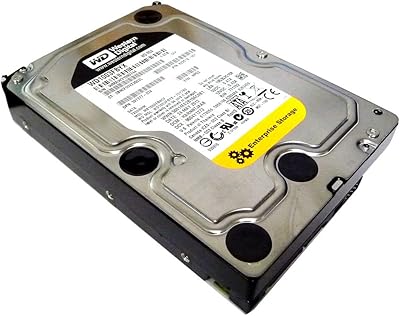
Western Digital RE4 1TB Internal Hard Drive
76%
91%
Reliability & Longevity
89%
RAID Compatibility
88%
TLER Firmware
71%
Value for Money
53%
Capacity Relevance
More
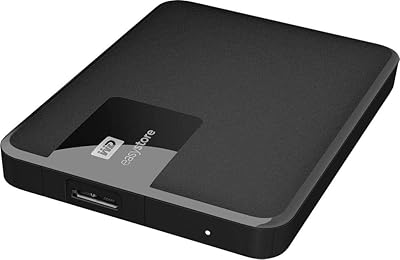
Western Digital EasyStore 2TB External Hard Drive
78%
88%
Value for Money
91%
Storage Capacity
67%
Transfer Speed
93%
Ease of Setup
84%
Portability
More
WD Black 6TB Internal Hard Drive
79%
83%
Read & Write Performance
88%
Storage Capacity Value
81%
Build & Reliability
63%
Thermal Performance
71%
Noise Level
More

FAQ

Technically it will work in a desktop — the SATA interface is the same — but it is genuinely overkill for that use case. The WD Gold 2TB is engineered for always-on server and NAS environments, and you would be paying an enterprise premium for workload endurance your desktop will never use. For a standard home PC, a WD Blue or WD Black is a much better fit.

Both are solid NAS choices, but they serve slightly different tiers. The Red Pro targets prosumer NAS builds and matches the Gold on RPM, but the Gold series carries a higher workload rating and is binned more strictly for enterprise reliability. If you are running a small business NAS that needs to stay online without interruption, the Gold is the more conservative, long-term choice. For a home media server or personal cloud, the Red Pro often hits a better price-to-performance balance.

In most cases, yes. WD Gold drives are widely supported across major NAS platforms including Synology and QNAP, but it is always worth checking the specific compatibility list on your NAS manufacturer's website before purchasing. The standard 3.5-inch form factor and SATA interface mean physical installation is straightforward in virtually any modern NAS enclosure.

It means the drive is rated to handle the equivalent of writing 550 terabytes of data every year without exceeding its design limits. To put that in perspective, a typical consumer NAS drive might be rated for 180TB per year. This headroom matters if your system runs backups, surveillance feeds, or database operations around the clock — workloads that push drives far harder than casual file storage.

Some buyers have reported receiving DOA drives, which is worth taking seriously even if it affects a minority of shipments. When your order arrives, inspect the outer packaging for signs of rough handling before opening. If the drive is unresponsive or throws errors immediately on first use, initiate a return or warranty claim right away. Buying from a reputable seller with a clear return policy helps mitigate this risk significantly.

Enterprise drives spinning at 7200 RPM do generate more heat than lower-RPM alternatives like the WD Red, so airflow planning matters. In a well-ventilated NAS or server chassis with adequate fan coverage, the drive stays within safe operating temperatures without issue. If your enclosure is compact or passively cooled, monitor drive temperatures during the first few days of operation to make sure thermals stay in a healthy range.

Honestly, if you have the budget and bay space, stepping up to a 4TB or 6TB Gold model typically offers better value per terabyte. The 2TB size makes the most sense when you have specific capacity constraints — a two-bay NAS already containing one drive, for example — or when you need to phase in storage gradually. Otherwise, the per-TB cost math tends to favor higher capacities in this lineup.

Most users describe this Gold-series drive as quiet, especially compared to older enterprise drives. You will hear it during heavy sequential writes — a faint hum and occasional seek sounds — but it is not disruptive in a typical office or home lab environment. In a sealed server room or closet, noise is essentially a non-issue.

No special drivers are needed. It operates as a standard SATA block device on Windows, Windows Server, Linux, and Mac OS. You simply connect it, format it through your OS or NAS interface, and it is ready to use. WD does offer optional dashboard software for monitoring drive health, but it is not required for normal operation.

You can register the warranty on Western Digital's website using the model number WD2005FBYZ and your drive's serial number. The five-year limited warranty covers manufacturing defects and premature failure under normal operating conditions — it does not cover physical damage, data recovery, or failure caused by exceeding the rated workload. Keeping a record of your purchase date is helpful if you ever need to make a claim.