Overview

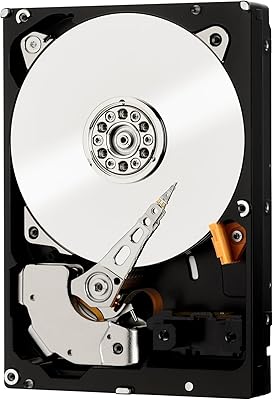
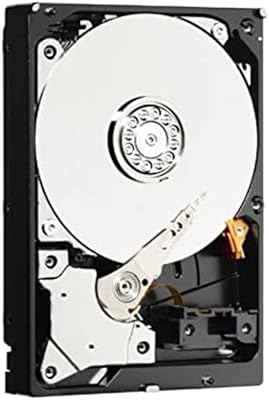
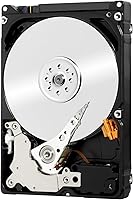
The WD RE 2TB Enterprise Hard Drive is an older but still-relevant workhorse from Western Digital's RAID Edition lineup — a series built specifically for always-on, business-critical environments rather than everyday desktop use. Unlike consumer-facing Blue or Red drives, the RE line was engineered with stricter tolerances and higher duty-cycle demands in mind. It's not a cutting-edge buy; newer enterprise options exist with higher capacities and better areal density. But at its current price point, this enterprise hard drive punches well above what you'd expect from a budget-tier purchase, making it a surprisingly practical choice for cost-conscious builders who still need genuine enterprise-grade reliability in their arrays.
Features & Benefits

Spin it up and the WD RE 2TB keeps pace through sustained workloads in a way most consumer drives simply cannot. Running at 7200 RPM with a 64 MB cache, it sustains sequential read speeds around 171 MB/s — useful for large file transfers or database reads where consistency matters more than peak bursts. The SATA III interface ensures it drops into virtually any modern or legacy system without adapter fuss. What really sets this RAID-edition drive apart in dense enclosures is its RAFF vibration compensation — an electronic system that actively corrects for the mechanical interference stacked drives generate, keeping performance stable where cheaper drives degrade. A dual-processor design handles simultaneous read/write operations more cleanly than single-processor alternatives.

Best For

This enterprise hard drive makes the most sense for people building serious storage on a measured budget. Home lab builders running TrueNAS, Unraid, or Proxmox with multi-drive RAID arrays will appreciate its vibration tolerance and endurance ratings — specs that consumer NAS drives like the WD Red cannot fully match. Small businesses needing always-on storage without paying full enterprise SAN prices will also find it fits well. It works for archival or cold-storage secondary tiers in existing datacenter setups, and for creative professionals managing large media archives. One particularly practical use case: replacing a failed drive in an existing RE-series array, where spec-matched compatibility matters far more than chasing the latest model.

User Feedback

Across nearly 800 ratings, the WD RE 2TB averages 3.9 out of 5 — a score that reflects a genuinely split user base. Long-term enterprise users, particularly those running 24/7 RAID configurations, tend to be enthusiastic: quiet operation, years of trouble-free uptime, and solid compatibility with tight enclosures come up repeatedly. The criticism is harder to ignore, though. A meaningful subset of buyers report early unit failures, and several raise concerns about receiving refurbished drives sold as new — a sourcing issue that can skew perceptions of actual reliability. Failures appear more concentrated in high-vibration rack environments, worth noting if your setup lacks proper dampening. The five-year warranty helps, but buying from verified sellers is strongly advisable.

Pros

  • Engineered for 24/7 continuous operation, making it far more durable than any consumer-grade alternative.
  • Active vibration correction keeps performance stable in densely packed multi-drive enclosures.
  • The SATA III interface ensures broad compatibility across both modern and older systems.
  • A dual-processor design handles overlapping read and write tasks more efficiently than single-processor drives.
  • Five-year limited warranty provides meaningful long-term coverage rarely seen at this price tier.
  • Consistently quiet under sustained load — a notable plus for office or home lab environments.
  • The WD RE 2TB Enterprise Hard Drive holds strong in RAID arrays, with many enterprise users reporting years of uninterrupted uptime.
  • RAID-compatible out of the box, with no firmware tweaks needed for standard array configurations.
  • Sustained sequential read speeds make it well-suited for large file transfers and backup workloads.

Cons

  • A 3.9 out of 5 average rating across nearly 800 reviews signals a non-trivial rate of buyer dissatisfaction.
  • Multiple buyers report receiving refurbished units sold as new, particularly through third-party sellers.
  • At 2 TB, the capacity feels dated when modern drives offer significantly more storage per dollar.
  • Early failures have been reported by a subset of users, with no consistent pattern pointing to a clear root cause.
  • This RAID-edition drive underperforms in high-vibration rack setups that lack dedicated dampening hardware.
  • Older areal density means lower energy efficiency compared to current-generation enterprise drives.
  • Sourcing a genuine, unmodified unit requires careful vetting of the seller — not ideal for buyers who want a frictionless purchase.
  • Not a practical choice if you anticipate scaling storage soon; the capacity ceiling will require additional purchases faster than a higher-capacity drive would.

Ratings

Our AI rating engine analyzed hundreds of verified global reviews for the WD RE 2TB Enterprise Hard Drive, actively filtering out incentivized, duplicate, and bot-generated submissions to surface genuine buyer experiences. The scores below reflect both the real strengths that keep this RAID-edition drive relevant years after its introduction and the pain points that prevent it from earning a clean recommendation across the board. Nothing has been smoothed over — the numbers tell an honest story.

Long-Term Reliability
74%
26%
A large portion of enterprise users — particularly those running the drive inside always-on NAS arrays or small business servers — report multi-year operation without a single failure. In environments where the hardware is properly cooled and vibration is controlled, this RAID-edition drive holds up impressively well over time.
A meaningful minority of buyers encountered failures within the first year, which pulls the reliability score down considerably. The inconsistency is hard to dismiss: for every five users praising its longevity, at least one reports an early-life failure that required an RMA claim.
Value for Money
69%
31%
Relative to purpose-built enterprise drives from competing brands, the WD RE 2TB sits at a price point that makes genuine datacenter-grade storage accessible for home lab builders and small businesses. The five-year warranty adds real monetary value that consumer-tier drives at similar prices rarely match.
The 2 TB capacity ceiling is where the value proposition frays. Newer high-capacity drives now offer significantly more storage per dollar, and buyers who need to scale will find themselves purchasing additional units sooner than expected, eroding the initial savings.
RAID Array Performance
83%
Users running TrueNAS, Unraid, and Proxmox consistently praise the stability of this drive inside multi-drive RAID arrays. It integrates without firmware workarounds, handles simultaneous read and write loads cleanly, and maintains consistent throughput during long backup or rebuild operations.
In very large arrays with eight or more drives in tight, undampened enclosures, a handful of users report performance degradation over time. These cases tend to cluster in poorly ventilated setups rather than reflecting a flaw in the drive itself, but it is worth factoring in.
Vibration Tolerance
86%
The onboard RAFF technology makes a noticeable real-world difference in multi-drive bays. Users who upgraded from WD Red or Seagate Barracuda drives in dense NAS enclosures frequently comment on more stable sustained performance, fewer timeout errors, and smoother operation during high-load periods.
In high-vibration server rack environments without dedicated dampening trays, the RAFF system's benefits are partially offset by the physical stress of the installation. Several enterprise users specifically noted that rack-mounted failures correlate strongly with vibration-heavy chassis that lack isolation hardware.
Sequential Read/Write Speed
78%
22%
For a spinning hard disk, sustained sequential throughput around 171 MB/s is genuinely useful in NAS backup workflows and large media archive transfers. Users moving multi-gigabyte files — video production archives, full system images, database dumps — report acceptable and consistent transfer times.
Compared to current-generation enterprise HDDs, this drive's sequential speeds show its age. Buyers expecting cutting-edge throughput will find the numbers underwhelming, and the gap widens further when compared to hybrid or SSD-cached storage solutions at similar price points.
Random I/O Performance
63%
37%
For a traditional spinning disk, the dual-processor design gives it a modest edge over single-processor consumer drives in random workloads, particularly in mixed read/write scenarios common in small business file servers and home lab virtualization environments.
Random I/O is simply not where any 7200 RPM spinning disk shines, and this enterprise hard drive is no exception. Database-heavy or IOPS-intensive workloads will expose its ceiling quickly, and buyers with those use cases should be looking at SSDs or NVMe storage regardless of budget.
Noise Level
84%
Most users describe the drive as noticeably quiet during standard read and write operations, which matters for home lab or office NAS builds where the equipment lives in a shared space. Several reviewers specifically compared it favorably to noisier Seagate enterprise-class alternatives they had used previously.
Seek noise during heavy random access — such as parity checks or large RAID rebuilds — is audible and can be jarring in otherwise quiet environments. This is a known characteristic of all high-RPM spinning disks, not a defect, but buyers sensitive to acoustic noise should factor it in.
Compatibility
91%
The standard SATA III interface and 3.5-inch form factor mean this drive drops into virtually any desktop, NAS enclosure, or server chassis without adapters or special configuration. Users report clean detection across Synology, QNAP, ASRock Rack, and consumer motherboards spanning more than a decade of hardware generations.
A small number of NAS manufacturers maintain approved compatibility lists, and this aging model may not appear on the latest versions of those lists. In practice this rarely causes issues, but users running enterprise NAS firmware with strict drive validation may encounter compatibility warnings.
Warranty Coverage
88%
A five-year limited warranty from Western Digital is among the most generous coverage periods available at this price tier and signals genuine manufacturer confidence in the product's durability. Users who have exercised the warranty report that the RMA process is straightforward and replacement turnaround is reasonable.
Warranty protection is contingent on purchasing from an authorized source, and given the documented prevalence of refurbished units sold as new through third-party sellers, some buyers may unknowingly void their coverage before the drive is even installed.
Build Quality
79%
21%
The physical construction is solid and consistent with what you would expect from an enterprise-class Western Digital product. The drive feels dense and well-assembled, and users who have handled multiple units across different batches generally report uniform build consistency.
A subset of buyers who received what appeared to be refurbished or pulled units noted cosmetic wear and pre-existing operational hours on the drive's S.M.A.R.T. data — something you would only discover after installation. This is a seller integrity issue as much as a product one, but it affects the real-world experience.
Heat Management
72%
28%
Under normal continuous workloads in adequately ventilated enclosures, operating temperatures stay within acceptable bounds. Users running the drive inside NAS units with active cooling report stable thermal readings even during extended backup windows or RAID rebuilds.
In cramped or passively cooled enclosures, sustained 24/7 operation pushes temperatures toward the higher end of the safe range. A few users in poorly ventilated setups reported throttling behavior and one correlated an early failure with chronic high operating temperatures in a sealed mini-ITX build.
Setup & Installation
93%
Installation is as straightforward as hard drives get — mount it, connect the SATA data and power cables, and the drive is recognized immediately by BIOS and operating systems alike. Home lab newcomers and experienced admins alike report zero friction getting it online, even in multi-drive RAID configurations.
There is essentially no setup complexity to criticize here; the occasional complaint involves drives that arrived with non-zero S.M.A.R.T. hours, suggesting prior use, which means first-time users should run a full diagnostic before trusting the drive with important data.
Power Efficiency
58%
42%
For users who prioritize uptime over power draw — as most enterprise and home lab buyers do — the drive's power consumption is a secondary concern that rarely gets flagged as a dealbreaker. In RAID arrays where always-on operation is the goal, the power characteristics are simply expected.
This is one of the more noticeable weaknesses of older enterprise spinning disks. Power-sensitive deployments, particularly those running on battery backup or minimizing electricity costs in dense multi-drive setups, will find that newer-generation drives offer meaningfully better watts-per-terabyte efficiency.
Purchase Experience
51%
49%
When purchased through authorized channels or large reputable retailers, the buying experience is uncomplicated — the drive arrives well-packaged, in new condition, and with a clear warranty registration path. Buyers who vet their sellers carefully tend to report satisfaction with the overall transaction.
The single most consistent complaint across negative reviews has nothing to do with the drive's performance — it is the prevalence of refurbished or used units sold as new through third-party marketplace listings. This issue is severe enough that it meaningfully depresses overall buyer satisfaction and makes seller vetting an essential step before purchasing.

Suitable for:

The WD RE 2TB Enterprise Hard Drive was built for buyers who need serious, continuous-duty storage without paying flagship enterprise prices. Home lab enthusiasts running TrueNAS, Unraid, or Proxmox will find it a natural fit — the drive's tolerance for vibration-dense multi-drive enclosures and its 24/7 duty-cycle rating give it a meaningful edge over consumer NAS options like the WD Red. Small business owners building their first NAS or expanding on-premises backup storage will also benefit, particularly when budget constraints rule out newer high-capacity alternatives. It's equally practical as a secondary cold-storage or archival tier in an existing datacenter setup, where cost-per-terabyte matters more than raw speed. Anyone replacing a failed drive inside an existing RE-series RAID array will appreciate the spec compatibility this model provides without needing to reconfigure the entire array.

Not suitable for:

If you're building a new storage system from scratch and capacity is a priority, the WD RE 2TB Enterprise Hard Drive's 2 TB ceiling will feel limiting quickly — modern alternatives offer three to four times the storage at comparable or lower price points. Buyers who are not technically comfortable evaluating seller reputation should proceed carefully, as reports of refurbished units being passed off as new are a real concern with this aging model on secondary marketplaces. This RAID-edition drive is also not the right call for general desktop users or casual home users who simply need extra storage for media files; a consumer-grade WD Blue or Red would cost less and serve that use case just as well. Those running high-vibration rack environments without proper dampening hardware should also temper expectations, as that is where failure clustering appears most pronounced. Finally, anyone prioritizing the latest interface speeds or NVMe-class throughput should look elsewhere entirely — this is a SATA spinning disk with performance ceilings to match.

Specifications

  • Storage Capacity: This drive provides 2 TB of usable storage, formatted and ready for installation in compatible systems.
  • Form Factor: Built in the standard 3.5-inch form factor, it fits desktop towers, NAS enclosures, and server bays designed for full-size hard drives.
  • Interface: Uses a SATA III 6 Gb/s connection, which is backward-compatible with SATA II ports at reduced throughput.
  • Spindle Speed: Spins at 7200 RPM, enabling faster data access and higher sustained transfer rates compared to 5400 RPM consumer drives.
  • Cache Buffer: Equipped with a 64 MB onboard cache to smooth out data flow during intensive read and write operations.
  • Sustained Transfer: Capable of sustained sequential data rates of approximately 171 MB/s, suitable for large sequential workloads like backups and media archives.
  • MTBF Rating: Rated at 1.2 million hours Mean Time Between Failures — a statistical measure of expected reliability across a large population of drives under continuous use.
  • Duty Cycle: Supports 100% duty cycle operation, meaning it is designed and rated to run continuously without scheduled downtime.
  • Vibration Control: Features Enhanced RAFF (Rotational Acceleration Feed Forward) technology, which uses onboard electronics to detect and compensate for both linear and rotational vibration in real time.
  • Processor: Incorporates a dual-processor architecture that allows the drive to manage simultaneous read and write requests more efficiently than single-processor designs.
  • RAID Support: Fully compatible with RAID configurations including RAID 0, 1, 5, 6, and 10, making it suitable for redundant multi-drive arrays.
  • Installation Type: Designed as an internal hard drive, requiring mounting inside a desktop, NAS, or server chassis with a standard 3.5-inch bay.
  • Warranty: Backed by a 5-year limited warranty from Western Digital, which is notably longer than the 2-to-3-year coverage typical of consumer hard drives.
  • Drive Weight: Weighs 1.66 pounds, consistent with standard full-size 3.5-inch hard drives and within tolerance for most NAS and server mounting hardware.
  • Dimensions: Measures 5.8 x 4 x 1 inches, fitting any enclosure or bay designed around the industry-standard 3.5-inch hard drive footprint.
  • Model Number: The official manufacturer model number is WD2000FYYZ, which can be used to verify compatibility or identify the specific hardware revision.

Related Reviews
Western Digital Gold 2TB Internal Hard Drive
80%
84%
Long-Term Reliability
91%
Workload Endurance
86%
RAID Performance
78%
Noise & Acoustics
61%
Value for Money
More
WD AV-GP WD20EURX 2TB Internal Hard Drive
74%
91%
Multi-Stream Video Handling
87%
Reliability & Longevity
84%
Thermal Management
83%
Noise & Vibration
77%
Sequential Read/Write Performance
More
WD Gold WD4002FYYZ 4TB Internal Hard Drive
80%
82%
Reliability & Longevity
89%
RAID & NAS Compatibility
80%
Sustained Performance Under Load
71%
Value for Money
84%
Build Quality
More
WD RE4 1TB Enterprise Hard Drive
85%
91%
Performance in Demanding Environments
94%
RAID Compatibility and Stability
89%
Durability and Long-Term Reliability
88%
Vibration Tolerance
70%
Noise Level
More
WD Green 2TB Desktop Hard Drive (WD20EARX)
84%
91%
Value for Money
94%
Noise Levels
89%
Power Efficiency
82%
Performance for Everyday Use
86%
Reliability
More
WD My Passport 2TB Portable Hard Drive
76%
93%
Portability
88%
Setup & Ease of Use
71%
Transfer Speed
67%
Build Quality & Durability
84%
Data Security
More
WD Gold 10TB Enterprise Hard Drive
75%
74%
Long-term Reliability
81%
Sustained Performance
54%
Value for Money
86%
RAID Array Suitability
61%
Warranty & Support
More
WD Elements Portable 2TB
75%
96%
Ease of Setup
88%
Reliability & Longevity
93%
Portability & Form Factor
61%
Transfer Speed
84%
Value for Money
More
Western Digital RE 3TB Enterprise Hard Drive
72%
76%
Long-Term Reliability
88%
RAID Performance
83%
Sequential Throughput
91%
Vibration Resistance
86%
NAS Compatibility
More
Western Digital WD Purple 2TB Internal Hard Drive
85%
93%
Surveillance Compatibility
81%
24/7 Reliability
88%
Value for Money
91%
Noise & Heat
79%
Write Performance
More

FAQ

Almost certainly yes. The WD RE 2TB Enterprise Hard Drive uses a standard SATA III interface and 3.5-inch form factor that virtually every modern NAS enclosure supports. That said, it is worth checking your NAS manufacturer's compatibility list, as some brands maintain approved drive lists and the RE series, being older, may not appear on them. In practice, most users report no issues running it in Synology, QNAP, and similar enclosures.

The WD Red is purpose-built for consumer NAS use and is a perfectly capable drive for that job. This RAID-edition drive, by contrast, was designed for enterprise-grade 24/7 operation with stricter tolerances, active vibration compensation, and a higher rated duty cycle. For a simple home NAS with two to four drives, a WD Red will serve most people fine. If you are running six or more drives in a tight enclosure, or need the array online around the clock without interruption, the enterprise hard drive's vibration handling and endurance rating make it the more defensible choice.

MTBF, or Mean Time Between Failures, is a statistical estimate derived from testing large batches of drives — not a guarantee that any single unit will last that long. In practical terms, a 1.2 million hour MTBF means the drive is engineered to a reliability standard significantly higher than consumer drives, which typically rate around 300,000 to 500,000 hours. Think of it as a confidence indicator, not a lifespan promise. Drives can and do fail earlier; MTBF just tells you that the design target is serious.

You can absolutely use it in a desktop PC — it connects over standard SATA like any other hard drive. The enterprise features will go largely unused in a desktop context, but the drive will function normally as internal storage. Just keep in mind that at 2 TB, it may feel limiting if you are building a media storage machine or working with large video files, and you can get more capacity per dollar from newer consumer drives.

This is a legitimate concern. There are documented reports of refurbished or pulled units being sold as new, particularly through third-party marketplace sellers. To reduce your risk, buy directly from Western Digital's authorized channel or from a large, reputable retailer with a clear return policy. Check the listing carefully for phrases like 'manufacturer refurbished' or 'OEM pull.' If the price looks unusually low compared to most listings, that is worth treating as a warning sign.

Yes — the WD RE 2TB is a common choice among home lab users running exactly those platforms. TrueNAS and Unraid both handle it without any special configuration, and its RAID compatibility means it integrates cleanly into ZFS-based pools or software RAID setups. Several long-term users in those communities report years of stable operation with this specific drive.

Generally, no. A consistent theme in positive user reviews is that the drive runs quietly under normal workloads. At 7200 RPM it is not completely silent, and you will hear seek noise during heavy random I/O, but it is not louder than comparable enterprise-class spinning disks. For a home lab in a spare room or closet, most users find the noise level acceptable.

Western Digital's 5-year limited warranty covers manufacturer defects and allows you to request a replacement through their RMA process. You will need the model number (WD2000FYYZ) and proof of purchase ready. One thing to note: if you bought through a third-party seller and received a refurbished unit, warranty coverage may be voided or limited — another reason to verify seller legitimacy before purchasing.

Honestly, that depends entirely on what you are storing and how fast your data grows. For a small business backup server or a home lab running virtual machines, 2 TB per drive can fill up faster than expected. If you are building a multi-bay NAS, you can always expand with additional drives, but starting with higher-capacity drives per bay is generally more efficient. If your budget allows for newer drives, 4 TB or 6 TB options in this reliability class are now available at competitive prices.

It handles vibration better than consumer drives thanks to its RAFF technology, which actively detects and corrects for the interference that neighboring drives generate. That said, several users have reported reliability issues specifically in high-vibration racks without proper dampening hardware. If you are mounting it in a dense rack alongside many other drives, investing in vibration-dampening drive trays is a smart precaution regardless of which drive you choose.