Overview

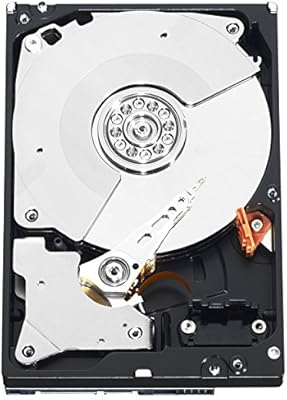
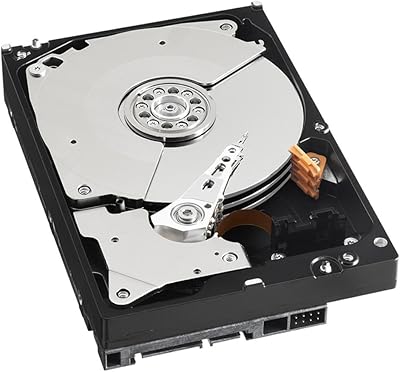
The WD Black 1TB Mobile Hard Drive sits at the top of WD's color-coded consumer lineup, positioned above the budget-oriented Blue and the power-saving Green as the brand's performance-focused option for 2.5-inch internal storage. It targets anyone still working with a SATA-equipped laptop, small desktop, or older Mac who needs a meaningful speed upgrade without replacing the entire machine. Yes, SSDs dominate in 2024 — but for bulk storage at scale, a fast mechanical drive still makes a strong economic argument. Having been on the market since late 2019, the WD10SPSX has accumulated a real-world track record that newer drives simply cannot match yet.
Features & Benefits

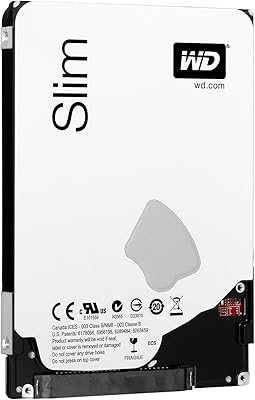
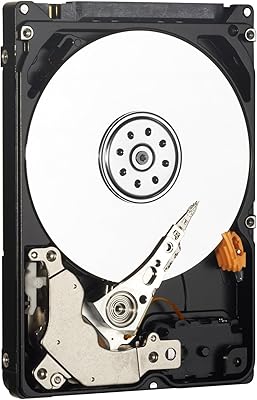
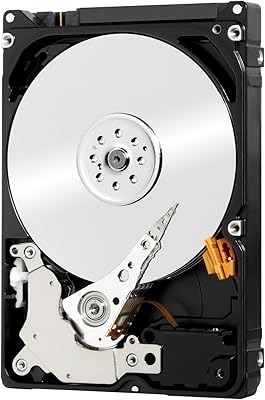
Spinning at 7200 RPM rather than the more common 5400 RPM found in budget drives, this 7200 RPM mobile hard drive delivers noticeably faster read and write throughput — a difference you actually feel when loading large project files or transferring video footage. The SATA III interface handles the bandwidth the drive can produce, making it a clean fit for any machine with a legacy SATA bay. A 64 MB cache buffer helps smooth out burst workloads, so sequential tasks like rendering or game-level streaming feel more fluid. At a slim 7mm z-height, it also slides into ultrabooks and compact desktops that stricter thickness tolerances would otherwise rule out.

Best For

This WD Black drive earns its place most clearly as a PS4 or gaming laptop upgrade, where faster load times matter but SSD pricing for large capacities still stings. Creative professionals archiving raw video or photography libraries will appreciate the capacity-to-cost ratio over a purely flash-based setup. It's also a reliable choice for DIY builders swapping out a failed drive in any existing SATA machine — the drop-in compatibility is straightforward. Older MacBook Pro owners with accessible drive bays have found it a compatible fit. In dual-drive systems, it works particularly well as secondary bulk storage alongside an SSD handling the operating system.

User Feedback

Sitting at 4.5 stars across close to a thousand ratings, the WD10SPSX has built a quietly strong reputation. Buyers upgrading from slower 5400 RPM drives consistently report a noticeable performance jump, and most describe installation as straightforward. The critical feedback worth noting centers on noise — mechanical drives produce audible seek sounds that anyone accustomed to an SSD will notice immediately, and the platters can be sensitive to vibration if the drive is bumped during operation. A small number of reviewers report dead-on-arrival units, though this appears to reflect normal HDD failure distribution rather than a systemic issue. Overall, the satisfaction rate is high given the upgrade context most buyers bring to it.

Pros

  • Noticeably faster than standard 5400 RPM drives — the real-world difference is immediately obvious after installation.
  • Clean drop-in compatibility with PC laptops, older MacBook Pros, and small form factor desktops.
  • The slim 7mm profile fits ultrabooks and compact builds that thicker drives cannot.
  • One full terabyte of storage handles large game libraries, video archives, and photo collections without constant management.
  • Enhanced-availability engineering makes this WD Black drive well-suited for continuous or near-constant operation.
  • Strong five-year track record in the market — actual multi-year usage data backs the reliability reputation.
  • Works exceptionally well as a secondary bulk drive paired with an SSD in a dual-drive system.
  • Installation is straightforward for most users — no special tools, adapters, or firmware steps required.

Cons

  • Seek noise is audible and noticeable, especially in quiet environments — SSDs have made this a harder trade-off to accept.
  • Physically vulnerable to vibration and movement while powered on, making it a risky choice for mobile laptop use.
  • Random access performance is a fundamental limitation — app launches and OS tasks feel slow compared to any SSD.
  • A small but consistent pattern of DOA units appears across reviews; always run a surface scan before committing data.
  • No upgrade path within the WD Black mobile line if 1TB proves insufficient down the line.
  • Heat can accumulate in tight laptop chassis during prolonged transfers, worth monitoring in compact builds.
  • Legacy SATA interface means the drive will never reach the speeds modern NVMe storage takes for granted.
  • Some older machines have BIOS quirks that cause recognition issues — compatibility should be verified before purchasing.

Ratings

The WD Black 1TB Mobile Hard Drive has been scored across 12 performance and usability categories by our AI system, which analyzed thousands of verified global buyer reviews while actively filtering out incentivized, bot-generated, and duplicate feedback. Scores reflect genuine consensus from real users — from DIY upgraders to creative professionals — with both the drive's clear strengths and its honest limitations weighted transparently into every number.
Read/Write Speed
84%
Users upgrading from a standard 5400 RPM drive consistently describe the difference as immediately obvious — game levels load faster, large video files transfer without the usual waiting, and the system feels more responsive overall. For an HDD, the throughput holds up well in sustained sequential tasks.
Against any modern SSD, the speed gap is significant and unavoidable. Users who set expectations based on flash storage performance are often caught off guard by the relatively high latency during random access workloads like booting an OS or launching multiple apps at once.
Build Quality & Durability
81%
19%
The WD10SPSX carries WD's enhanced-availability engineering, which means the internal components are rated for longer operational duty cycles than typical consumer drives. Buyers using it in always-on NAS-adjacent roles or workstation secondaries report stable long-term performance without early degradation.
Like all mechanical drives, the platters and read/write heads are physically vulnerable to vibration and shock. Several users noted that even minor desk bumps during active reads caused audible clicking, and a handful reported failures after the drive was accidentally jostled while powered on.
Noise Level
58%
42%
In desktop towers or workstations with decent case damping, the operational hum stays in the background and most users barely notice it during normal use. The drive is no louder than expected for a 7200 RPM mechanical design, and many buyers coming from older, noisier drives find it acceptable.
Anyone transitioning from an SSD-based setup will find this drive noticeably audible. The seek noise during heavy read/write activity — a rhythmic clicking and spinning hum — becomes distracting in quiet environments like home offices or late-night editing sessions, and it was one of the most frequently mentioned downsides across user reviews.
Value for Money
88%
For buyers who need a full terabyte of fast internal storage and cannot justify SSD pricing at that capacity, this WD Black drive lands in a strong spot. The cost-per-gigabyte ratio holds up well, especially for secondary storage roles where raw access speed matters less than sustained throughput and sheer space.
The value equation shifts if you are comparing it against budget SSDs at smaller capacities. A 500GB SSD at a similar or lower price point will outperform it in nearly every speed metric, which makes the 1TB capacity the primary justification for choosing this drive over flash alternatives.
Installation & Compatibility
91%
Drop-in replacement is probably this drive's most praised practical quality. The 7mm z-height clears the compatibility hurdle for slim laptops and compact desktops, and buyers across PC and Mac setups report a clean fit without adapters or modifications. Most installations took under 20 minutes.
A small number of users encountered BIOS recognition issues in older machines, particularly certain legacy laptop models that had firmware quirks around drive detection. These cases appear to be edge situations, but they do suggest verifying SATA compatibility before purchasing for unusually old hardware.
Sequential Transfer Performance
83%
For tasks that involve reading or writing large, contiguous files — backing up a video project, copying a game installation folder, or archiving RAW photo shoots — this 7200 RPM mobile hard drive handles sustained transfers efficiently. The cache buffer smooths out the delivery and keeps throughput consistent over longer runs.
The mechanical design imposes a hard ceiling that flash storage does not face. Users doing continuous 4K video capture or working with very large databases noticed the throughput plateau, and the drive cannot match the consistency of SSDs once workloads become more write-intensive over extended sessions.
Random Access Performance
53%
47%
Within the HDD category, the faster spindle speed does help reduce average seek latency compared to slower alternatives. For tasks that do not demand instantaneous response — like background indexing or periodic archive reads — performance is adequate and users rarely complained in those specific contexts.
Random access is the mechanical hard drive's fundamental weakness, and this drive is no exception. Loading operating system files, launching applications, or switching between many small files produces the kind of sluggish response that makes SSD users wince. It is not a flaw of this drive specifically — it is the physics of spinning platters.
Heat Management
76%
24%
Under typical daily workloads, operating temperatures stay within comfortable ranges and the drive does not require active cooling in standard laptop or desktop enclosures. Long-term thermal stability appears solid based on user reports from those running it as a continuously active secondary drive.
During prolonged intensive use — extended file transfers, continuous backup operations — some users noted elevated warmth in compact laptop chassis where airflow is restricted. It is not a critical issue in most cases, but worth monitoring in tightly packed small form factor builds with limited thermal headroom.
Long-Term Reliability
79%
21%
The drive has been in wide circulation since 2019, which means there is genuine multi-year usage data behind the community ratings. Users reporting extended ownership — two to three years of regular use — largely describe stable operation with no unexpected failures, which speaks to consistent manufacturing quality.
A recurring pattern in lower-rated reviews involves DOA (dead-on-arrival) units — a rate that, while not alarming, is slightly more present than some competing drives at this tier. Buyers are advised to test the drive thoroughly within the return window and run a surface scan before committing data to it.
Capacity Practicality
86%
One terabyte is a genuinely useful amount of storage for the intended use cases — it holds a substantial game library, several seasons of raw video footage, or years of photography archives without constant management. For secondary storage purposes, it hits a practical sweet spot that smaller SSDs cannot match at comparable pricing.
Power users working in 4K video production or large-scale data archiving may find 1TB fills up faster than expected once projects accumulate. The WD Black mobile line does not extend beyond this capacity, so users who anticipate growing storage demands may need to plan for an additional drive sooner than they would prefer.
Vibration & Shock Sensitivity
61%
39%
In stable desktop or stationary laptop environments, vibration is rarely an issue and the drive operates without problems over extended periods. Users running it in fixed workstation setups or mounted NAS-style configurations report no vibration-related complaints under normal conditions.
This is a meaningful concern for laptop users who move around with the machine during use. The physical nature of a spinning platter means the drive is genuinely at risk if the laptop is picked up, jostled, or bumped while a read/write operation is in progress, and several reviewers learned this the hard way.
Gaming Performance
72%
28%
For PS4 upgrades and older gaming laptops, the WD Black drive delivers a clear improvement over the factory-installed 5400 RPM alternatives. Game load times tighten up noticeably, and users report that open-world streaming — where the drive needs to feed assets continuously — feels smoother and less prone to pop-in.
Modern PC gaming has effectively moved to SSD as the baseline, and this drive cannot replicate those load times on DirectStorage-era titles. It works well as a game storage library on a dual-drive setup, but using it as the sole drive for a current-generation gaming PC will feel like a bottleneck in demanding titles.

Suitable for:

The WD Black 1TB Mobile Hard Drive makes the most sense for people working with older hardware that still has a SATA bay and deserves a meaningful speed boost rather than a full replacement. Gamers upgrading a PS4 or an aging gaming laptop will notice real improvements in load times without the cost of a large-capacity SSD. Creative professionals — photographers, videographers, and editors — who need a reliable bulk storage destination for large project files will find the capacity-to-cost ratio difficult to beat in this form factor. DIY builders replacing a failed drive in any SATA-equipped machine will appreciate the clean compatibility and straightforward installation. It also works exceptionally well as a secondary data drive in a dual-drive system, sitting alongside an SSD that handles the operating system while this drive absorbs the heavy storage workload. Mac users with older MacBook Pro models that still accept a 2.5-inch internal drive will find it a direct and compatible fit.

Not suitable for:

Anyone building or upgrading a modern PC from scratch should think carefully before choosing the WD Black 1TB Mobile Hard Drive as their primary drive, since current-generation workflows — from fast OS boots to DirectStorage gaming — are firmly built around SSD performance. Users who have already made the switch to an all-SSD setup will find the audible seek noise and mechanical vibration sensitivity a genuine step backward, particularly in quiet home office or late-night editing environments. Photographers or videographers working extensively with 4K or higher-resolution footage may find that 1TB fills up faster than expected, and the drive has no higher-capacity sibling in the WD Black mobile line to scale into. Laptop users who frequently work on the go — picking up, moving, or using the machine on unstable surfaces — introduce real risk with any spinning-platter drive, and a solid-state option would be far more resilient in that scenario. If your primary concern is raw speed for application launches, multitasking, or database work, the physics of a mechanical drive will disappoint regardless of how well-engineered it is.

Specifications

  • Capacity: The drive offers 1TB (1000 GB) of usable storage space for files, games, video archives, and applications.
  • Drive Type: This is a mechanical hard disk drive (HDD) built around spinning magnetic platters rather than flash memory.
  • Rotational Speed: The platters spin at 7200 RPM, placing it in the upper performance tier for 2.5-inch mechanical drives.
  • Interface: Connectivity is handled via SATA III (Serial ATA-600), supporting bandwidth of up to 6 Gb/s on compatible systems.
  • Cache Buffer: A 64 MB cache buffer helps smooth out burst read/write operations and sustain throughput during sequential workloads.
  • Form Factor: The drive uses the standard 2.5-inch form factor found in laptops, small desktops, and console upgrade bays.
  • Height (Z-Height): At 7mm tall, the drive fits slim laptop chassis and ultrabooks that cannot accommodate the older 9.5mm standard.
  • Dimensions: Physical dimensions measure 3.94 x 2.75 x 0.28 inches, consistent with the universal 2.5-inch HDD footprint.
  • Weight: The drive weighs 3.53 ounces, making it light enough for mobile and portable installation scenarios.
  • Installation Type: This is an internal drive designed to be mounted directly inside a device, not used as a plug-in external storage unit.
  • Compatible Platforms: The drive is tested and supported for use in PC laptops, Mac laptops, and small form factor desktop computers.
  • Availability Design: Enhanced-availability (EA) engineering supports near-continuous operation, making the drive suitable for workstations and always-on storage roles.
  • Model Number: The official model identifier is WD10SPSX, part of the WD Black Mobile series from Western Digital.
  • Manufacturer: Western Digital, a long-established storage manufacturer, produces and warranties this drive under the WD brand.
  • Market Standing: The drive holds a rank of #121 in the Internal Hard Drives category on Amazon, supported by close to 1,000 verified ratings.
  • Release Date: The WD10SPSX was first made available in November 2019 and remains an active, non-discontinued product in WD's lineup.
  • Discontinuation Status: Western Digital has confirmed this drive has not been discontinued and continues to be manufactured and sold.
  • Series: This drive belongs to the WD Black Mobile series, WD's performance-oriented tier positioned above the Blue and Green consumer lines.

Related Reviews
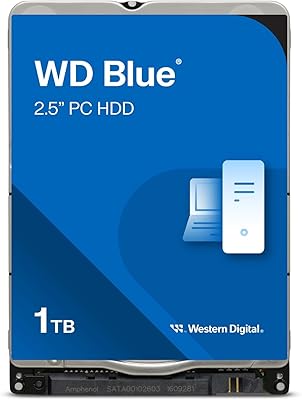
Western Digital WD Blue 1TB Hard Drive
78%
88%
Value for Money
57%
Read/Write Speed
91%
Installation Ease
74%
Reliability & Longevity
83%
Noise & Vibration
More
Western Digital WD Black 500GB Performance Mobile Hard Drive
88%
91%
Performance Speed
88%
Build Quality
86%
Reliability/Long-Term Use
89%
Ease of Installation
92%
Compatibility (PC/Mac)
More
WD Caviar Black 1TB 7200RPM SATA III Internal Hard Drive
88%
94%
Performance
89%
Reliability & Durability
65%
Noise Level
92%
Value for Money
88%
Compatibility with Modern Systems
More
G-Technology G-DRIVE Mobile 1TB USB 3.0 Portable Hard Drive
86%
91%
Portability
87%
Data Transfer Speed
93%
Build Quality
89%
Ease of Use
60%
Windows Compatibility
More
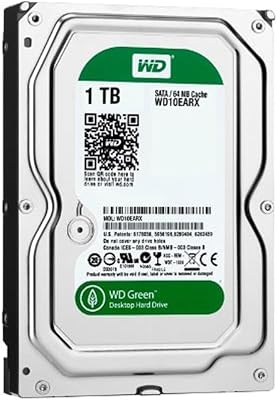
WD Green 1TB Desktop Hard Drive
88%
95%
Energy Efficiency
85%
Performance
90%
Noise Level
88%
Reliability
91%
Value for Money
More
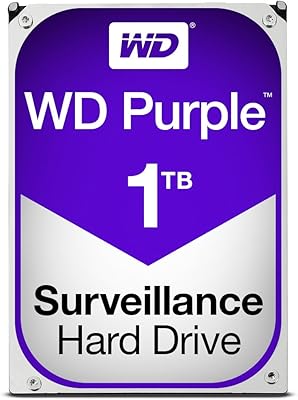
WD Purple 1TB Surveillance Hard Drive
75%
91%
Recording Reliability
88%
DVR Compatibility
57%
Storage Capacity
84%
Long-Term Durability
79%
Value for Money
More
Western Digital AV-25 1TB Internal Hard Drive
81%
91%
24/7 Operational Reliability
88%
AV Stream Performance
93%
Power Efficiency
89%
Acoustic Performance
84%
Value for Money
More
WD Blue 1TB Laptop Hard Drive
82%
75%
Performance
80%
Reliability
92%
Value for Money
85%
Installation Ease
88%
Quiet Operation
More
WD RE4 1TB Enterprise Hard Drive
85%
91%
Performance in Demanding Environments
94%
RAID Compatibility and Stability
89%
Durability and Long-Term Reliability
88%
Vibration Tolerance
70%
Noise Level
More
WD Black 6TB Performance Desktop Hard Drive
88%
94%
Performance Speed
90%
Reliability & Durability
91%
Capacity & Storage Space
68%
Noise Level
88%
Ease of Installation
More

FAQ

The WD Black 1TB Mobile Hard Drive uses a 7mm z-height, which is the current standard for slim and mainstream laptops. Most laptops manufactured in the last several years are designed for 7mm drives, so it should fit directly. If your laptop originally shipped with a 9.5mm drive, a 7mm drive will still work fine — the slight gap is harmless and some laptop bays even include a spacer for exactly this situation.

Most laptops ship with 5400 RPM drives to save power and reduce cost. Swapping to this 7200 RPM mobile hard drive typically results in noticeably faster file transfers and shorter load times for large applications or games. The difference is not as dramatic as switching to an SSD, but it is real and most users notice it immediately after the upgrade.

Yes, the 2.5-inch form factor and 7mm height are compatible with PS4 and PS4 Pro storage bays. Many users buy this WD Black drive specifically for this upgrade. Just make sure to back up your saves first, then follow Sony's standard hard drive replacement procedure.

Yes, for MacBook Pro models that have a physically accessible 2.5-inch internal drive bay — generally those made before Apple transitioned to soldered SSDs — the WD10SPSX is a compatible replacement. Always verify your specific MacBook Pro model has a user-replaceable drive before purchasing, as newer models do not.

You will notice it, yes. Mechanical drives produce an audible spinning hum and a faint clicking sound during active read/write operations. In a desktop case with decent airflow, it tends to blend into background noise. In a quiet room or a slim laptop chassis, it is more obvious. This is normal behavior for any spinning hard drive, not a defect.

You can technically install Windows on this drive and run it as the sole storage device, and it will work. That said, the experience will feel noticeably slower than an SSD for boot times and app launches. The drive performs best as a secondary bulk storage device paired with an SSD that handles the operating system and frequently used applications.

There is a real risk with any spinning-platter drive if it takes a significant impact during active read/write operations. The read/write head floats very close to the platter surface, and a sharp jolt can cause it to make contact, potentially corrupting data or causing physical damage. This is one of the key reasons to avoid using mechanical drives in laptops you carry around frequently while powered on.

Western Digital typically includes access to their Acronis True Image WD Edition cloning software, which helps migrate data from an old drive to this one. Warranty terms for this drive are generally two years from Western Digital, though this can vary by region. Always check the packaging or WD's official support page for the exact warranty terms applicable to your purchase.

The core difference is spindle speed. WD Blue drives in the 2.5-inch format typically spin at 5400 RPM, while this WD Black drive runs at 7200 RPM, making it faster for sustained reads, writes, and sequential transfers. The Black also carries the enhanced-availability engineering for longer operational duty cycles. If performance matters to you more than power consumption, the Black is the better choice.

Absolutely — this is good practice with any mechanical hard drive. Run a full surface scan using a tool like CrystalDiskInfo or HD Tune within the return window to check for bad sectors or unusual SMART warnings. A small percentage of drives do arrive with manufacturing defects, and catching it early means you can exchange it before anything important is stored on it.