Overview

The WD Gold 10TB Enterprise Hard Drive is not a drive you buy for a home PC or a budget NAS build — it sits at the top of Western Digital's storage hierarchy, above the Red Pro and Purple lines, purpose-built for enterprise environments like datacenter racks, server clusters, and always-on storage arrays. The 10TB capacity makes it a serious option for dense deployments where you're stacking multiple drives and every terabyte counts. At its premium price point, this gold-tier hard disk is realistically aimed at IT departments and SMB server builds, not casual users looking to add storage to a desktop. The 3.5-inch SATA form factor fits standard rack-mounted and tower server chassis without any adaptation.

Features & Benefits

Running at 7200 RPM over SATA 6 Gb/s, this enterprise drive is tuned for sustained throughput rather than peak burst speed — the kind of consistent performance that matters when a server is hammering the drive hour after hour. The 128MB cache helps smooth out read-heavy workloads and queued I/O operations, reducing latency under pressure. What really separates it from consumer options is the 550TB/year workload rating: most consumer drives top out at a fraction of that, so pushing them around the clock shortens their lifespan considerably. Western Digital's RAFF vibration compensation is a practical inclusion in multi-drive enclosures, where neighboring drives can quietly degrade each other's performance. The 5-year limited warranty reinforces it as a long-term investment rather than a disposable component.

Best For

This gold-tier hard disk is a natural fit for SMB NAS and server builds that run 24/7 — think file servers, backup repositories, surveillance storage, or any environment where a drive is expected to work continuously without a day off. IT pros assembling RAID arrays will appreciate the CMR recording method and the generous workload headroom; you're simply not going to push this drive into the red under normal enterprise use. Where it does not make sense is for home users or casual builders who need a few terabytes for personal storage. The cost-per-TB premium over consumer alternatives is real, and paying for enterprise-grade durability you'll never stress-test is difficult to justify outside a professional deployment.

User Feedback

The WD Gold 10TB sits at 3.6 out of 5 stars across over 700 reviews, and that number deserves honest context rather than a shrug. Long-term users in server and NAS environments frequently report solid multi-year reliability, quiet acoustics, and stable output under sustained load — exactly what this drive is built to deliver. The negative reviews cluster around two areas: DOA and early failure incidents, and friction with the RMA process when warranty claims arise. A meaningful share of the harshest feedback appears to come from buyers who deployed the drive outside its intended conditions. That said, early failure patterns are consistent enough across complaints to suggest occasional batch-level issues, so purchasing from a reputable seller with a clear return policy is genuinely advisable.

Pros

  • Rated for up to 550TB/year workload — far beyond what consumer drives can sustain without degrading.
  • The 5-year limited warranty provides meaningful long-term coverage in professional deployments.
  • CMR recording technology ensures predictable, consistent write performance under sustained pressure.
  • RAFF vibration compensation actively protects performance in multi-drive server and NAS enclosures.
  • The 2.5 million hour MTBF rating reflects a drive engineered for always-on, duty-cycle-intensive environments.
  • Long-term NAS users consistently report stable performance and quiet operation over multi-year deployments.
  • 10TB capacity allows dense storage builds without stacking an excessive number of drive bays.
  • Compatible with Windows, Windows Server, Linux, and macOS — straightforward to deploy across mixed environments.
  • The 128MB cache buffer helps reduce latency on read-heavy, queued workloads common in server environments.

Cons

  • Cost-per-TB is significantly higher than consumer or prosumer alternatives, making it hard to justify for light workloads.
  • Several verified buyers report DOA units or early failures, suggesting occasional quality control inconsistencies.
  • The RMA process has drawn repeated criticism for being slow or cumbersome when warranty claims arise.
  • No cables, screws, or mounting hardware are included — budget for extras if your server chassis requires them.
  • The 3.6-star overall rating is below what you would expect for a premium-priced enterprise component.
  • Some users report unexpected noise levels in certain enclosures, which may be an enclosure compatibility issue worth researching before buying.
  • Overkill — and overpriced — for home users, media hobbyists, or anyone running light personal storage workloads.
  • Batch-level inconsistencies hinted at in review patterns suggest the experience is not uniform across all units.

Ratings

Our scores for the WD Gold 10TB Enterprise Hard Drive are generated by AI after deep analysis of verified global buyer reviews, with spam, incentivized feedback, and bot activity actively filtered out. The ratings reflect both the genuine strengths that enterprise users praise and the real pain points that have driven down overall satisfaction — nothing is smoothed over. Whether you're evaluating this gold-tier hard disk for a server room deployment or trying to decide if the premium is justified, the breakdown below gives you an honest picture.

Long-term Reliability
74%
26%
IT administrators who deploy this enterprise drive in NAS arrays and file servers frequently report stable, uneventful operation stretching across two to four years of continuous use. For the buyers it was designed for — running 24/7 under sustained workloads — it tends to deliver on its reliability promise without requiring attention.
A consistent thread of DOA and early-failure reports pulls the score down meaningfully. While some failures likely stem from poor handling during shipping or mismatched use cases, the pattern across reviews is too persistent to dismiss as isolated incidents, and it introduces real risk for buyers without a robust replacement plan.
Sustained Performance
81%
19%
At 7200 RPM over a SATA 6 Gb/s connection, this gold-tier hard disk handles continuous read/write pressure without the throughput degradation that plagues SMR consumer drives under load. Server admins running backup jobs, large file transfers, and database reads overnight consistently report stable speeds that hold up across the full operation.
Sequential peak throughput figures are not officially published in a prominent way, which makes direct benchmarking comparisons harder than they should be for a premium product. A handful of users also note that performance under simultaneous mixed workloads can feel less consistent than enterprise SAS alternatives at a similar price tier.
Value for Money
54%
46%
For IT departments and data centers where the cost of a single drive failure — in downtime, data recovery, and labor — significantly exceeds the purchase price, the total-cost-of-ownership argument holds up reasonably well. The 5-year warranty and high workload ceiling do provide tangible value over a long deployment horizon.
The cost-per-TB premium over consumer and prosumer alternatives is steep, and for anyone who will not push this drive anywhere near its 550TB/year workload ceiling, that premium is largely wasted. Budget-conscious builders and home lab users will consistently feel they are overpaying for enterprise durability they will never actually stress-test.
RAID Array Suitability
86%
CMR recording makes this enterprise drive a reliable participant in RAID rebuilds, where SMR drives often stall or time out under sustained write pressure. IT pros assembling RAID 5 or RAID 6 arrays specifically call out its predictable behavior during rebuilds as a reason they keep returning to the WD Gold line.
There is no integrated TLER (Time-Limited Error Recovery) confirmation prominently published for this model, which some advanced RAID users flag as a concern — drives that take too long to recover from errors can cause a RAID controller to drop them from the array. Verifying TLER settings via WD's support documentation before deployment is advisable.
Warranty & Support
61%
39%
A 5-year limited warranty is a genuine differentiator at this product tier; most consumer and even prosumer drives cap out at two or three years. For organizations that refresh hardware on long cycles, having coverage that extends well into the drive's operational life reduces budget risk.
The RMA process is one of the most consistently criticized aspects across negative reviews. Users report slow turnaround times, confusing claim procedures, and inadequate communication from support during the process. For a drive at this price point marketed to professional environments, the after-sale support experience falls short of expectations.
Workload Capacity
93%
The 550TB/year workload rating is the specification that most clearly separates this drive from anything in the consumer or prosumer tier. Surveillance systems capturing continuous footage, backup servers ingesting daily full-image backups, and read-heavy database hosts can all run without concern about exceeding the drive's rated operational envelope.
The workload rating is a ceiling, not a guarantee of uniform performance at that ceiling across all units. A small number of power users running highly parallel I/O workloads note that real-world throughput under extreme concurrent load can lag behind what the spec sheet implies, particularly compared to SAS-based enterprise alternatives.
Vibration Resistance
84%
RAFF (Rotary Acceleration Feed Forward) technology is a practical, functional feature for anyone running four or more drives in a single chassis. Users with high-bay NAS enclosures specifically mention that the WD Gold 10TB holds its performance steadier under vibration than non-compensated drives they previously ran in the same slots.
Vibration compensation helps significantly but does not fully eliminate the issue in very dense configurations or chassis with poor damping. A few users with 12-bay and larger enclosures note some residual vibration noise that suggests the technology has limits when the physical environment is especially challenging.
Noise & Acoustics
67%
33%
The majority of server room deployments report acceptable acoustic levels — this drive is not notably loud by enterprise mechanical standards. In a properly ventilated rack environment where ambient fan noise dominates, most users say the drive itself adds very little to the overall sound profile.
In quieter environments like home labs or small office NAS setups without significant ambient noise, a subset of users reports audible clicking and seek noise that they find distracting. Some of this appears to be enclosure-specific resonance, but the drive is not universally quiet in all deployment contexts, which is worth noting for noise-sensitive installations.
Compatibility
88%
The standard 3.5-inch SATA form factor and support for Windows, Windows Server, Linux, and macOS make this enterprise drive broadly compatible across the major server platforms and NAS operating environments. Most major NAS vendors include this model in their compatibility databases for supported enclosures.
Compatibility with older server platforms that use legacy SATA controllers or have firmware-level capacity limits below 10TB requires verification before purchasing. A small number of users with older hardware report recognition issues that required firmware updates or controller replacements to resolve.
Build Quality
71%
29%
In the hands of buyers who receive units in good condition, the physical construction feels solid and the platters spin up smoothly and quietly. Long-term deployments of two years or more without incident are common in the positive reviews, suggesting that units that survive early operation tend to hold up well.
The DOA rate cited across reviews is higher than you would expect from a premium enterprise component, pointing to either quality control gaps at the manufacturing or packaging stage. Several buyers also note that shipping damage is a recurring issue, which raises questions about whether the standard retail packaging is adequate for a drive of this value.
Cache Efficiency
79%
21%
The 128MB cache buffer handles queued operations and read-ahead tasks noticeably better than the 64MB caches found on older or lower-tier drives. In mixed-workload server environments, this translates to smoother response times when the system is simultaneously serving multiple read requests across the storage pool.
For write-intensive workloads that repeatedly saturate the cache — such as high-frequency transactional database writes — the performance advantage of the 128MB buffer diminishes and the underlying platter speed becomes the limiting factor. Users with those specific workloads may find the cache insufficient without a hybrid caching tier in front of it.
Installation Experience
72%
28%
The screw-in 3.5-inch format is universally familiar to anyone who has built or maintained a server, and the drive is recognized automatically by major operating systems and RAID controllers without any special configuration steps in most cases. IT pros report zero-friction physical installation in standard chassis.
The complete absence of mounting hardware, cables, or even a basic setup guide in the box is a friction point for less experienced buyers. While veterans expect bare-drive packaging for enterprise units, buyers stepping up from the consumer or prosumer segment are sometimes caught off guard by what is — and is not — included.
Power Efficiency
68%
32%
Power draw is within normal range for a 7200 RPM enterprise mechanical drive, and most server power supply configurations handle multiple units without issue. In multi-drive NAS deployments, the aggregate power draw is predictable and consistent across the array.
Compared to newer helium-filled enterprise drives at similar capacities, power consumption is higher — both at idle and under load. For data centers running large numbers of drives where electricity costs are a meaningful operational expense, the energy efficiency trade-off versus helium alternatives is worth calculating over a multi-year deployment.

Suitable for:

The WD Gold 10TB Enterprise Hard Drive is built for buyers who need storage that simply does not stop — IT administrators managing small-to-medium business file servers, systems integrators stacking drives in RAID arrays, and data center operators who measure reliability in years rather than months. If you're running a NAS appliance around the clock, managing a backup repository for a team, or building out surveillance storage that captures footage 24/7, this drive sits comfortably within its design envelope. The 550TB/year workload rating means it can absorb the kind of sustained read/write pressure that would quietly wear down a consumer or prosumer drive within a year or two. Organizations that factor total cost of ownership into purchasing decisions — where a single drive failure costs more in downtime than the drive itself — will find the premium price easier to justify. For anyone operating in a multi-drive chassis, the built-in vibration compensation is a practical, real-world benefit that pays off over time.

Not suitable for:

If you're a home user looking to add bulk storage to a desktop PC or personal NAS, the WD Gold 10TB Enterprise Hard Drive is almost certainly more drive than you need, and the cost-per-TB premium will sting compared to consumer alternatives that handle lighter workloads just fine. External enclosure users should also steer clear — the drive is designed for screw-in internal installations, and running it in an external housing often means it never gets pushed hard enough to justify the expense. Budget-conscious builders assembling a home lab or media server on a tight budget will find better value in WD's Red Pro line, which covers prosumer NAS use cases at a lower price point. The 3.6-star average rating is also a signal worth heeding for risk-averse buyers: while many complaints stem from mismatched use cases, there are enough credible early-failure reports to warrant caution if you lack a robust warranty or return safety net.

Specifications

  • Capacity: This drive offers 10TB of raw storage, suitable for dense server and NAS deployments where multiple drives are combined into arrays.
  • Form Factor: The standard 3.5-inch form factor fits directly into rack-mounted servers, tower servers, and compatible NAS enclosures without adapters.
  • Interface: Uses a SATA 6 Gb/s interface, providing broad compatibility with modern server motherboards and HBA cards.
  • Rotational Speed: Spins at 7200 RPM, enabling consistent sustained throughput suited to high-demand, always-on workloads.
  • Cache Buffer: A 128MB cache buffer helps reduce latency on queued and read-heavy operations common in enterprise storage environments.
  • Drive Type: Uses Conventional Magnetic Recording (CMR), which delivers predictable and stable write performance under sustained pressure.
  • Rated Workload: Certified for workloads up to 550TB per year, far exceeding the 55–180TB/year ratings typical of consumer-grade hard drives.
  • MTBF Rating: Western Digital rates this drive at up to 2.5 million hours Mean Time Between Failures, reflecting its design for continuous duty-cycle operation.
  • Warranty: Backed by a 5-year limited warranty, which is meaningfully longer than the 2–3 year coverage common on consumer and prosumer drives.
  • Vibration Control: Rotary Acceleration Feed Forward (RAFF) technology actively compensates for vibration caused by neighboring drives in multi-drive chassis.
  • OS Compatibility: Compatible with Windows, Windows Server, Linux, and macOS, covering the major operating systems used in SMB and enterprise environments.
  • Installation Type: Designed for screw-in installation; no mounting hardware, cables, or accessories are included in the box.
  • Dimensions: Measures 5.79 x 4 x 1.03 inches, conforming to the standard 3.5-inch drive bay specification used in servers and desktop chassis.
  • Weight: Weighs 1.1 pounds, consistent with other enterprise-class 3.5-inch mechanical hard drives of this capacity.
  • Model Number: The official model designation is WD101KRYZ, which can be used to verify compatibility with server vendor qualification lists.
  • First Available: This drive was first introduced in June 2016 and remains an active, non-discontinued product in Western Digital's enterprise lineup.

Related Reviews
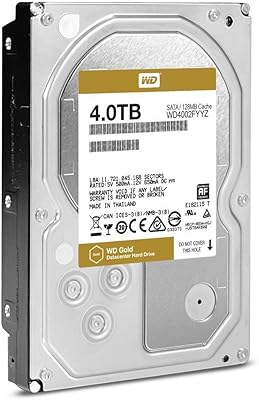
WD Gold 4TB Enterprise Hard Drive
86%
89%
Performance Under Load
93%
Reliability in 24/7 Environments
91%
RAID Compatibility
88%
Endurance and Lifespan
74%
Temperature Management
More
Western Digital WD Gold 8TB Hard Drive
76%
83%
Reliability & Endurance
74%
Performance
88%
RAID Compatibility
81%
NAS Compatibility
78%
Noise & Vibration
More
Western Digital WD Gold 16TB Internal Hard Drive
79%
88%
Long-Term Reliability
84%
Sustained Performance
91%
Build & Engineering Quality
63%
Noise & Vibration
67%
Thermal Management
More
Western Digital Gold 2TB Internal Hard Drive
80%
84%
Long-Term Reliability
91%
Workload Endurance
86%
RAID Performance
78%
Noise & Acoustics
61%
Value for Money
More
Western Digital 6TB WD Gold Enterprise Class Internal Hard Drive
88%
95%
Performance in Data-Intensive Tasks
93%
Reliability and Durability
88%
Vibration Protection Effectiveness
92%
Long-Term Stability (MTBF)
85%
Ease of Installation
More
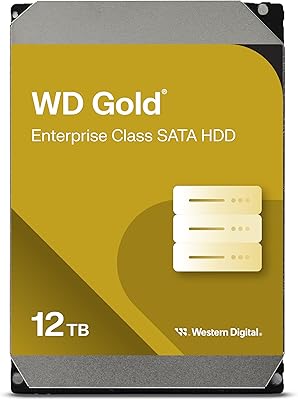
Western Digital 12TB WD Gold Enterprise Class Internal Hard Drive
86%
88%
Performance under Load
93%
Storage Capacity
91%
Reliability
85%
Ease of Integration
90%
Endurance for Demanding Workloads
More
Western Digital 1TB WD Gold Enterprise Class Internal Hard Drive
84%
91%
Performance Under Load
88%
Reliability for 24/7 Operation
75%
Ease of Setup
90%
Data Transfer Speed
87%
Durability and Build Quality
More
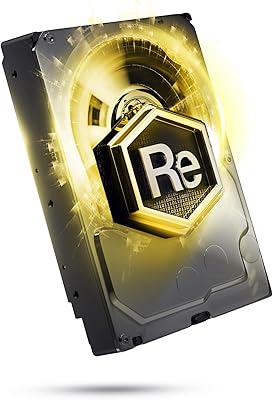
WD RE4 1TB Enterprise Hard Drive
85%
91%
Performance in Demanding Environments
94%
RAID Compatibility and Stability
89%
Durability and Long-Term Reliability
88%
Vibration Tolerance
70%
Noise Level
More
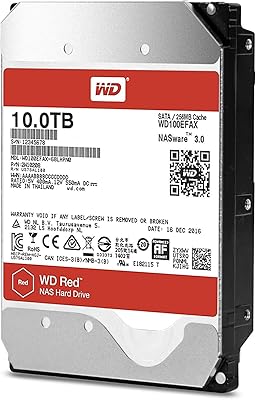
WD Red Pro 10TB NAS Hard Drive
82%
88%
RAID Reliability
91%
NAS Compatibility
83%
Sustained Throughput
86%
Acoustic Performance
69%
Long-Term Durability
More
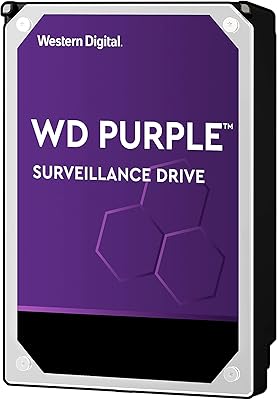
Western Digital WD Purple 10TB Internal Hard Drive
82%
91%
Long-Term Reliability
88%
24/7 Write Performance
83%
NVR and DVR Compatibility
79%
Value for Capacity
62%
Heat Management
More

FAQ

Most Synology and QNAP units that accept 3.5-inch SATA drives will physically work with the WD Gold 10TB, but you should cross-check the specific model number WD101KRYZ against your NAS manufacturer's official compatibility list before purchasing. Some older or entry-level NAS enclosures cap recognized capacity below 10TB, so verifying firmware support matters.

You can plug it in and it will work, but it's genuinely overkill for personal use. This gold-tier hard disk is engineered for 24/7 server workloads, and its premium price reflects that. For a desktop, a consumer WD Blue or WD Red will do the same job at a much lower cost per terabyte.

The WD Red Pro targets prosumer and high-bay NAS builds, while the WD Gold 10TB is positioned above it for true enterprise deployments like datacenter servers and storage clusters. The Gold carries a higher workload rating (550TB/year vs. 300TB/year for the Red Pro), a longer warranty, and RAFF vibration compensation optimized for server chassis rather than standalone NAS boxes.

No — the box contains the drive only. You will need to source your own SATA data cable and any chassis-specific mounting screws separately, which is standard practice for enterprise drives sold as individual units.

Most users in server rooms report it as acceptably quiet for an enterprise mechanical drive, but acoustics can vary depending on the enclosure. A small number of reviewers mention audible vibration noise in certain chassis, which is often an enclosure resonance issue rather than a defect in the drive itself. If noise is a concern, check your chassis damping before buying.

MTBF is a statistical reliability metric derived from fleet-level testing, not a promise that your individual drive will last that long. Think of it as a signal that this enterprise drive was designed and validated to handle demanding, continuous workloads — it is not a lifespan guarantee. Drive failures can still happen earlier, which is exactly why the 5-year warranty exists.

The mixed rating reflects a few different dynamics. Long-term users in server and NAS environments tend to rate it positively, praising its reliability and quiet operation. The lower scores mostly come from early failure reports and frustration with the RMA process — plus a portion of buyers who used it outside its intended environment and ran into issues. It's worth reading the reviews critically rather than taking the average at face value.

For NAS and RAID, yes — CMR (Conventional Magnetic Recording) is strongly preferred. SMR drives write data in overlapping tracks, which creates significant slowdowns during RAID rebuilds and sustained write operations. The WD Gold 10TB uses CMR, which means it behaves predictably under the kind of pressure that NAS and RAID workloads generate.

The drive is covered by a 5-year limited warranty through Western Digital, and claims are handled via their online RMA portal. In practice, the process has drawn some criticism in user reviews for being slower than expected, so it is worth keeping your purchase receipt and registering the drive with WD after installation to make any future claim smoother.

Technically it will function if the enclosure supports SATA drives, but it is genuinely not the right tool for that job. This enterprise drive is designed for internal, always-on server installations where it is pushed close to its rated workload. In an external enclosure used for occasional backups or file transfers, you would be paying a significant premium for durability you will never actually need.