Overview

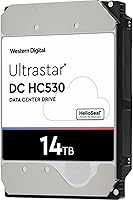
The Western Digital Ultrastar DC HC530 14TB Internal HDD started life in data centers — and that heritage shows in every aspect of how it is built and rated. This is not a consumer drive wearing an enterprise badge; it was genuinely designed for rack-mounted servers running around the clock. What makes this Ultrastar HC530 physically distinct is its helium-sealed chamber, which keeps internal pressure lower than air-filled competitors, reducing platter drag, heat output, and audible noise. With a 3.9-star average across more than 1,300 ratings, the score deserves honest context — enthusiasts tend to love it, while less technical buyers occasionally find its enterprise quirks frustrating.
Features & Benefits

The engineering here is built around one core idea: sustained, punishing workloads. This 14TB enterprise drive is rated for up to 550TB per year — roughly ten times what most desktop drives are designed to handle — so running it in a 24/7 NAS or backup server is well within its comfort zone. The fifth-generation HelioSeal platform packs more platters into the standard 3.5-inch chassis without adding heat, while Rotational Vibration Safeguard actively counteracts the resonance that clusters of spinning drives create in multi-bay enclosures. A 512MB cache and 7200 RPM spindle speed keep sequential reads brisk, and the standard SATA 6 Gb/s interface means you will not need exotic hardware to put it to work.

Best For

The WD Ultrastar is squarely aimed at home lab builders, NAS enthusiasts, and small businesses who need serious capacity without moving to SAS infrastructure. Synology and QNAP multi-bay enclosures are natural homes for it, and TrueNAS users chasing dense, reliable storage pools will appreciate the enterprise-grade duty cycle. Media server operators storing large 4K libraries or photo archives also benefit from its sustained throughput. That said, if you are shopping for a straightforward secondary drive inside a desktop PC, this is not the right fit — the price per terabyte is hard to justify for occasional use. This drive earns its keep under constant load, not sitting mostly idle.

User Feedback

Owners who have run the Ultrastar HC530 in NAS enclosures for extended periods generally report solid reliability and notably quieter operation compared to air-filled drives at this capacity — a real advantage in home environments. Compatibility with Synology and QNAP systems comes up frequently as a positive. On the downside, there are recurring reports of DOA units arriving from third-party sellers, which underscores the importance of buying from reputable sources. One practical issue worth flagging before purchase: the Legacy Pin 3 power behavior can cause this drive to fail to spin up in certain enclosures supplying 3.3V on Pin 3. It is fixable, but it catches buyers off guard. Firmware inconsistencies across batches are also occasionally noted.

Pros

  • Rated for up to 550TB of annual workload — far beyond what any consumer NAS drive can sustain.
  • Fifth-generation helium sealing allows more platters in the same chassis with meaningfully lower operating temperatures.
  • Rotational Vibration Safeguard keeps read/write accuracy stable in multi-drive enclosures where vibration stacks up.
  • The 5-year limited warranty provides genuine long-term coverage rarely seen outside enterprise product lines.
  • Runs noticeably quieter than comparable air-filled drives at high capacity, which adds up in always-on setups.
  • Compatible out of the box with major NAS platforms including Synology, QNAP, and standard desktop HBAs.
  • CMR recording technology means no SMR write-speed surprises when filling the drive with large sequential transfers.
  • The 512MB cache buffer helps sustain throughput during extended read or write sessions without significant slowdown.
  • MTBF rating of up to 2.5 million hours reflects the kind of reliability engineering that data center environments demand.

Cons

  • Frequently sold as a pulled or OEM unit, raising the risk of receiving a drive with prior heavy workload hours.
  • The Legacy Pin 3 power behavior can silently prevent the drive from spinning up in certain enclosures without any clear error.
  • Firmware versions are inconsistent across shipments, which can complicate setup in environments requiring uniform configurations.
  • Some buyers report the drive runs warmer than expected inside compact or poorly ventilated NAS enclosures.
  • No retail packaging or consumer-style unboxing experience — this is a bare drive often shipped with minimal protection.
  • DOA rates from third-party marketplace sellers appear higher than with boxed consumer alternatives, per user feedback patterns.
  • The premium price per terabyte is difficult to justify for anyone not running continuous or high-intensity workloads.
  • Helium-sealed units cannot be opened or repaired if the seal fails — data recovery options are limited and expensive.
  • Less experienced buyers may be caught off guard by enterprise behavior that differs from standard desktop or consumer NAS drives.

Ratings

Our AI-driven scoring for the Western Digital Ultrastar DC HC530 14TB Internal HDD was built by analyzing thousands of verified global buyer reviews, with spam, incentivized posts, and bot activity actively filtered out before any score was calculated. The results reflect a nuanced picture: this 14TB enterprise drive earns genuine praise from technically experienced users while surfacing real friction points that matter for less seasoned buyers. Both the strengths and the legitimate pain points are represented transparently in every category below.
Long-Term Reliability
83%
Users who have run this Ultrastar HC530 continuously in NAS arrays for two or more years frequently report zero failures, crediting its data center origins for holding up where consumer drives have let them down. The enterprise MTBF rating translates into real confidence for always-on home lab environments.
The 3.9-star overall average hints that reliability is not universal — a subset of buyers, particularly those sourcing from third-party marketplace sellers, report DOA units or early failures that undercut the drive's strong reputation. Batch-to-batch consistency appears to be a genuine variable.
Value for Money
67%
33%
For buyers running 24/7 NAS or backup server workloads, the cost per terabyte starts to look reasonable when measured against the drive's enterprise duty cycle and 5-year warranty coverage. Enthusiasts building dense TrueNAS arrays see it as a cost-effective alternative to SAS infrastructure.
Casual desktop users or anyone not pushing sustained workloads will find the price hard to justify compared to consumer-grade alternatives like the WD Red or Seagate IronWolf, which offer similar practical performance at lower cost for lighter use cases.
NAS Compatibility
79%
21%
A strong majority of Synology and QNAP users report smooth plug-and-play integration, with the drive appearing correctly in enclosure dashboards and passing health diagnostics without issue. TrueNAS and Unraid builders specifically praise its CMR recording type as well-suited to ZFS scrub and resilver operations.
The Legacy Pin 3 power behavior is a recurring compatibility trap — certain enclosures that supply 3.3V on Pin 3 of the SATA power connector will prevent the drive from spinning up, leaving buyers frustrated until they discover the tape fix or a compatible adapter cable.
Acoustic Performance
81%
19%
The helium-sealed HelioSeal design gives this 14TB enterprise drive a real acoustic edge over air-filled competitors at comparable capacities. Users running open-shelf home lab racks or placing NAS units in living spaces consistently note it is quieter than expected for a 7200 RPM drive.
It is still a mechanical spinning drive at 7200 RPM, so it is not silent — some buyers report audible seek noise during heavy random access workloads, and those in particularly quiet rooms may find it more noticeable than anticipated.
Sustained Throughput
84%
Sequential read and write performance is consistently strong in user-reported benchmarks, holding up well across extended transfers of large media files and backup jobs that run for hours. The 512MB cache buffer helps maintain throughput without the performance cliffs seen in SMR alternatives.
Random IOPS performance is unremarkable compared to what a modern SSD cache tier can deliver, and a small number of users report throughput variability they attribute to firmware differences between drive batches sourced from different sellers.
Thermal Management
71%
29%
In NAS enclosures with active cooling and adequate airflow, reported operating temperatures are comfortably within safe ranges — typically in the mid-to-upper 30s Celsius during sustained workloads, which most enclosure fans handle without ramping aggressively.
In tighter or passively cooled enclosures, a notable share of users report temperatures climbing higher than the helium design might suggest, indicating this drive benefits from deliberate airflow planning rather than assuming the sealed design makes thermals a non-issue.
Vibration Resistance
86%
The Rotational Vibration Safeguard technology earns consistent praise from users running four to eight drive arrays, where resonance between spinning platters is a well-known source of read errors and reduced drive lifespan. Multi-bay NAS owners report noticeably stable error rates compared to non-RVS drives.
RVS benefits are largely invisible until you stress-test a full enclosure — buyers using only one or two drives in a desktop setting will see no practical difference from this feature, making it relevant only in specific multi-drive configurations.
Ease of Setup
62%
38%
For experienced NAS builders, installation is straightforward — standard 3.5-inch form factor, SATA interface, and broad enclosure compatibility mean there are no proprietary hurdles to clear. Most technically confident users are up and running within minutes.
Less experienced buyers frequently encounter the Pin 3 power issue, firmware version surprises, or confusion around OEM versus retail drive behavior, leading to a setup experience that feels rough around the edges compared to purpose-built consumer NAS drives.
Firmware Consistency
54%
46%
When users receive a drive from a consistent batch or a reputable seller, the firmware is generally stable and functions as expected in NAS and server environments without requiring intervention or updates.
Multiple buyers report receiving drives with noticeably different firmware versions across separate orders, which has caused headaches in environments where uniform firmware across an array is important for management and monitoring. This inconsistency appears tied to the OEM and pulled-unit supply chain.
Seller & Packaging Quality
49%
51%
When sourced from reputable distributors or authorized resellers, the drive typically arrives well-padded and in acceptable condition, with some sellers including basic anti-static protection appropriate for bare drive shipments.
A meaningful share of negative reviews trace directly to the buying experience rather than the drive itself — poor third-party packaging, missing or expired warranties, and drives arriving with significant prior power-on hours are recurring complaints that weigh heavily on overall satisfaction scores.
Power Efficiency
77%
23%
The fifth-generation helium platform meaningfully reduces power draw per terabyte compared to earlier high-capacity air-filled drives, which matters for home lab operators conscious of electricity costs when running multi-drive arrays around the clock.
Absolute power consumption is still higher than a comparable-capacity single or dual-platter drive, so buyers replacing a smaller, older drive in a low-power NAS may notice their enclosure's power supply working harder than before.
Warranty Experience
66%
34%
The 5-year limited warranty is one of the strongest coverage periods available in this segment, and buyers who purchased through authorized channels report that Western Digital's RMA process is reasonably straightforward when a valid warranty claim is raised.
OEM and pulled units — which represent a significant portion of what is sold in the marketplace — may carry no transferable warranty or a warranty that has already partially elapsed, leaving buyers with far less coverage than the 5-year figure implies.
Workload Headroom
91%
The 550TB annual workload rating is where this drive genuinely separates itself from prosumer alternatives — running it in a continuously active backup server or media archive that would exhaust a WD Red Plus in a fraction of the time is well within spec for this unit.
This headroom is effectively wasted on light or intermittent use cases, meaning buyers who do not actually push sustained workloads are paying for a capability they will never come close to exercising.
Multi-Drive Array Stability
82%
18%
Home lab users building RAID or ZFS pools with four or more of these drives report stable array behavior over extended periods, with RVS technology contributing to lower correctable error rates than they experienced with previous non-enterprise drives in the same enclosures.
Firmware version mismatches between drives purchased at different times can introduce minor monitoring inconsistencies in some NAS operating systems, and a small number of users report that mismatched batch units behave slightly differently under identical load conditions.

Suitable for:

The Western Digital Ultrastar DC HC530 14TB Internal HDD is purpose-built for buyers who need serious, always-on storage capacity and have the technical know-how to deploy it correctly. Home lab enthusiasts running TrueNAS or Unraid builds will find its enterprise-grade duty cycle a natural fit, since the drive was designed for the kind of sustained workloads that would wear out a consumer NAS drive in a fraction of the time. Small businesses building out Synology or QNAP multi-bay enclosures also benefit significantly — particularly those managing large media libraries, surveillance footage archives, or dense backup repositories that write and read data continuously. The helium-sealed design makes it a quieter option than many air-filled alternatives at this capacity, which matters in office or home environments where noise accumulates across a full rack. If you are the kind of buyer who compares MTBF figures, understands CMR versus SMR implications, and already knows what RVS technology solves, this drive is likely exactly what you are looking for.

Not suitable for:

The Western Digital Ultrastar DC HC530 14TB Internal HDD is genuinely not the right choice for casual users shopping for extra desktop storage or a simple backup drive to plug in and forget. The cost per terabyte is harder to justify when the drive's enterprise workload rating — built for 24/7 operation — goes largely unused sitting inside a PC that runs a few hours a day. Less technical buyers should also be aware that this is often sold as an OEM or pulled enterprise unit, meaning the purchase experience can differ significantly from boxed consumer drives, and DOA risk is meaningfully higher from less reputable sellers. There is also a real compatibility gotcha: certain enclosures that supply 3.3V on the SATA power connector's Pin 3 will prevent the drive from spinning up at all, which requires either a tape fix or a cable adapter — not something a first-time NAS builder should encounter unprepared. If you want a plug-and-play 14TB option with consumer-friendly packaging and support, a WD Red Pro or Seagate IronWolf will serve you better.

Specifications

  • Capacity: This drive offers 14TB of formatted storage, making it one of the higher-capacity SATA options available for NAS and server builds.
  • Form Factor: Standard 3.5-inch form factor fits universally in desktop HDD bays, NAS enclosures, and server caddies without any adapter.
  • Interface: Uses a SATA 6 Gb/s (Serial ATA-600) connection, compatible with all modern NAS units, HBAs, and consumer motherboards.
  • Rotational Speed: Spins at 7200 RPM, delivering consistent sequential throughput suited to sustained read and write workloads.
  • Cache Buffer: A 512MB on-drive cache helps smooth out burst transfers and supports steady performance during long sequential operations.
  • Recording Type: Uses conventional magnetic recording (CMR), which ensures predictable and consistent write speeds without the pitfalls of SMR technology.
  • Workload Rating: Rated for up to 550TB of data transferred per year, which is approximately ten times the annual workload tolerance of a typical desktop drive.
  • MTBF: Mean time between failures is rated at up to 2.5 million hours, reflecting the drive's data center lineage and long-term endurance design.
  • Warranty: Covered by a 5-year limited manufacturer warranty, though warranty terms may vary depending on whether the unit is sold as new retail or OEM.
  • Sealing Technology: Uses Western Digital's fifth-generation HelioSeal platform, filling the drive enclosure with helium to reduce internal drag, heat, and acoustic output.
  • Vibration Protection: Rotational Vibration Safeguard (RVS) technology actively compensates for vibration caused by neighboring drives in multi-bay enclosures.
  • Power Feature: Equipped with Legacy Pin 3 Power behavior, which can cause compatibility issues in enclosures that supply 3.3V on the SATA power connector's Pin 3.
  • Dimensions: Measures 5.79 x 4 x 1.03 inches, fitting the standard 3.5-inch drive profile used across NAS, server, and desktop installations.
  • Weight: The drive weighs 1.52 pounds, which is slightly heavier than many consumer alternatives due to its higher platter count and sealed helium design.
  • Compatible Devices: Designed for use in desktop PCs, NAS enclosures, and internal server bays; not intended for external USB enclosures or portable use.
  • Installation Type: Internal installation only, requiring a 3.5-inch drive bay and a SATA data cable plus a standard 4-pin or 15-pin SATA power connector.

Related Reviews
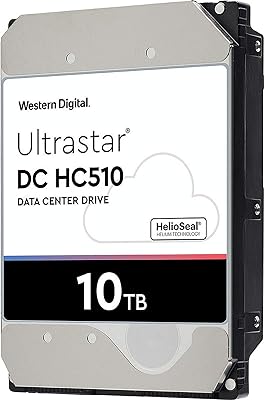
Western Digital Ultrastar DC HC510 10TB HDD
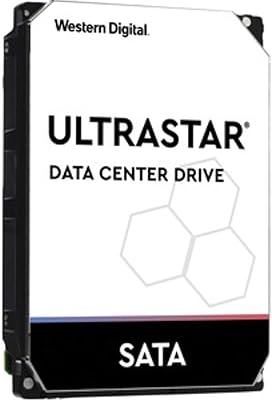
85%
93%
Reliability
89%
Performance under Load
91%
Durability
65%
Noise Levels
72%
Ease of Setup
More
Western Digital Ultrastar DC HA200 2TB HDD
76%
83%
Reliability & Endurance
91%
Workload Tolerance
67%
Value for Money
86%
Vibration Resistance
54%
Batch Consistency
More
Western Digital Ultrastar DC HC320 8TB HDD
77%
91%
Reliability & Uptime
88%
Sequential Throughput
47%
Noise & Vibration
84%
Value for Capacity
93%
NAS Compatibility
More
Western Digital Ultrastar DC HC310 6TB HDD
75%
78%
Long-Term Reliability
93%
Workload Endurance
88%
NAS Compatibility
71%
Value for Money
67%
Acoustic Performance
More
Western Digital Ultrastar DC HA200 1TB HDD
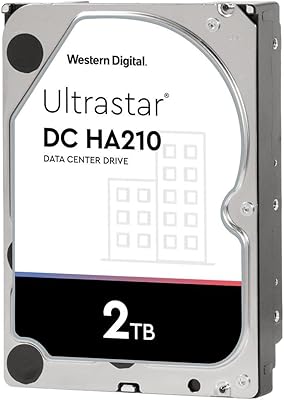
77%
91%
Reliability & Durability
54%
Value for Money
93%
Workload Endurance
86%
NAS Compatibility
89%
Warranty Coverage
More
Western Digital Ultrastar DC HC550 18TB Hard Drive
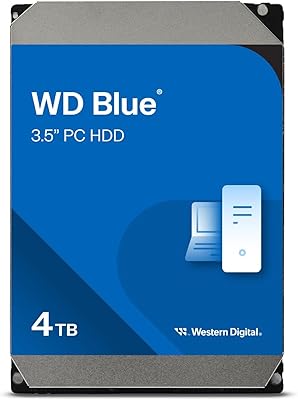
84%
91%
Performance in High-Demand Environments
96%
Storage Capacity
89%
Reliability for Long-Term Use
75%
Data Transfer Speed
92%
Compatibility with NAS/Servers
More
Western Digital WD Black 8TB Hard Drive
79%
83%
Sequential Read Speed
58%
Random Access Performance
88%
Build Quality
81%
Noise & Vibration
63%
Thermal Management
More
Western Digital 4TB WD Black Gaming Internal Hard Drive HDD
82%
92%
Performance (Speed)
89%
Reliability (Durability)
87%
Value for Money
74%
Ease of Setup
81%
Noise Level
More
Western Digital WD Blue 4TB Hard Drive
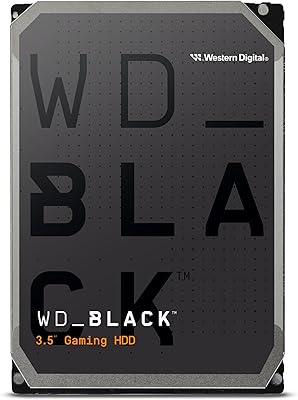
79%
91%
Storage Capacity Value
83%
Noise & Acoustics
67%
Read & Write Performance
92%
Installation Ease
93%
Compatibility
More
WD Red Plus 14TB NAS Hard Drive
82%
83%
Reliability & Longevity
91%
RAID Compatibility
67%
Value for Money
84%
Write Performance
93%
NAS Compatibility
More

FAQ

In most cases, yes — the Western Digital Ultrastar DC HC530 14TB Internal HDD is widely reported to be compatible with popular Synology and QNAP multi-bay enclosures. That said, always check your specific NAS model's official compatibility list before purchasing, since some older units have firmware-level restrictions on drives above a certain capacity.

This is a real and fairly common gotcha worth understanding before you buy. Some NAS enclosures and SATA power cables supply 3.3V on Pin 3 of the power connector, and this drive uses that signal to manage power states in a way that can prevent it from spinning up entirely. If your enclosure does this, a simple fix is placing a small piece of tape over Pin 3 on the drive's power connector, or using a SATA power adapter that omits the 3.3V line. It is not a defect, but it is an enterprise behavior that consumer drives do not have.

That depends heavily on the seller. This Ultrastar HC530 is an OEM enterprise drive that was originally sold to data centers in bulk, so it frequently appears on the market as a pulled or recertified unit rather than a factory-fresh retail product. If you are buying from a third-party marketplace seller, check their listing carefully for language about condition and ask about power-on hours if possible. Buying from a reputable seller with a clear return policy is strongly recommended.

The WD Ultrastar and Seagate Exos line are direct competitors in the enterprise SATA segment and are broadly comparable in reliability and workload ratings. The Exos X16 14TB is often priced similarly and also uses CMR recording. Real-world differences tend to come down to firmware features, vibration compensation implementation, and which seller you find offering a better-conditioned unit at a given time. Both are solid choices for NAS builds; neither has a decisive edge that makes the other irrelevant.

You can, but it is not the most cost-effective choice for that use case. This 14TB enterprise drive was engineered for continuous operation under heavy loads, so most of its design advantages are wasted in a PC that spins up and idles for most of the day. A desktop-class drive like a WD Blue or Seagate BarraCuda would give you similar practical performance for everyday file storage at a more justified price per terabyte.

Not in any practical sense during normal installation and use. The HelioSeal enclosure is welded shut and is not meaningfully more fragile than a standard air-filled drive under ordinary handling conditions. Where you do need to be cautious is with severe physical shocks or drops, since a breach of the seal — while unlikely — would render the drive unrecoverable. Treat it the same way you would handle any hard drive: carefully, without dropping it.

In a well-ventilated NAS enclosure with active airflow, most users report comfortable operating temperatures in the 35–45°C range. Some buyers note that in tighter or poorly ventilated enclosures, the drive can run warmer than expected given its helium design. If you are building a dense multi-bay array, make sure your enclosure has adequate airflow — this is good practice for any high-capacity drive, not just the WD Ultrastar.

If you buy a new retail unit directly from Western Digital or an authorized distributor, the 5-year warranty is generally straightforward to use through WD's RMA process. However, if you buy a pulled or OEM unit from a third-party seller, the manufacturer warranty may not transfer or may have already started when the drive was first deployed. Always confirm warranty status with the seller before purchasing, especially for secondary-market listings.

The helium-sealed design does give this Ultrastar HC530 a genuine acoustic advantage over many air-filled drives at comparable capacities. Most users describe it as noticeably quieter during sustained reads and writes. That said, any 7200 RPM mechanical drive will produce some audible noise — do not expect silence. In a closed NAS enclosure, most people find the noise level easy to live with in a home or office setting.

Yes, and this is arguably one of its strongest use cases. ZFS in particular benefits from drives with robust error correction and consistent CMR write behavior, both of which this drive provides. The enterprise workload rating also holds up well under the heavy scrubbing and resilver operations that ZFS regularly performs. Many TrueNAS and Unraid users specifically seek out enterprise SATA drives like this one for exactly that reason.

Where to Buy