Overview

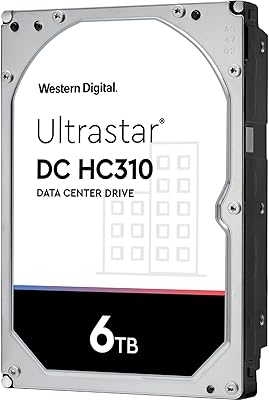
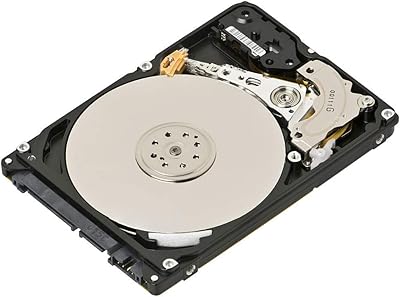
The Western Digital Ultrastar DC HA200 1TB HDD is a datacenter-grade drive that has found a second audience among home lab enthusiasts and small businesses hunting for enterprise-level durability without the full enterprise price tag. The Ultrastar line carries real pedigree — it traces back to HGST, a brand long trusted in commercial storage before WD brought it under its umbrella. At 1TB, this sits at the entry point of the HA200 family, which makes it a reasonable way to test enterprise-grade storage before committing to larger capacities. Speed is not the pitch here. This is a 3.5-inch mechanical drive built for endurance in desktops, NAS enclosures, and server racks.
Features & Benefits

The spec that stands out most is the 550TB/year workload rating — that is roughly ten times what a standard desktop drive is rated to handle, meaning this datacenter-grade HDD can sustain heavy continuous read/write activity without the early wear that kills consumer drives. MTBF, or mean time between failures, is rated at up to 2.5 million hours, which translates into a drive designed to run for years under constant load. Rotational Vibration Safeguard — RVS for short — actively counters the interference caused by neighboring drives in a multi-bay chassis, protecting data integrity in NAS arrays. A 128MB cache and 7200 RPM spin speed keep sequential throughput steady, and a five-year warranty backs all of it.

Best For

This enterprise hard drive is purpose-built for environments that demand always-on operation. Home lab builders running Synology or QNAP NAS systems will appreciate the endurance specs; so will IT professionals using it as cost-effective internal storage in small servers or offsite backup targets. Surveillance setups that write footage around the clock are a natural fit too, since consumer drives in those roles tend to fail within a year or two. That said, if fast random access is what you need — gaming, video editing workstations, or anything latency-sensitive — a NVMe SSD will serve you far better. The Ultrastar 1TB earns its place where uptime and longevity matter more than raw throughput.

User Feedback

The overall rating of 3.9 out of 5 deserves some context. Buyers who specifically needed an enterprise-tier drive for NAS arrays or servers tend to walk away satisfied, frequently citing quiet operation in multi-bay setups and consistent behavior over months of continuous use. The complaints that drag the score down are largely a mismatch problem: some buyers expected desktop-drive pricing for this capacity and felt shortchanged when they saw the cost per terabyte. Others noted that certain units appeared to be OEM pulls rather than retail-boxed new drives. A handful flagged that the 1TB capacity lacks the helium-sealed design found in larger models. Read the fine print before you buy, and buyer expectations will likely align with the rating.

Pros

  • Workload rating of 550TB/year means this drive handles continuous, heavy use without the early failures common in consumer drives.
  • MTBF rated at up to 2.5 million hours gives a concrete, trustworthy reliability benchmark for always-on deployments.
  • Rotational Vibration Safeguard technology actively compensates for drive interference in multi-bay NAS enclosures, protecting data integrity.
  • The five-year limited warranty is rare among storage drives and adds meaningful long-term peace of mind.
  • Quiet operation in multi-drive setups is consistently noted by buyers running it in home server racks.
  • HGST heritage behind the Ultrastar brand carries real weight — this line has a long track record in commercial storage.
  • The 128MB cache helps buffer burst writes, making the Ultrastar 1TB a reliable pick for surveillance and backup server workloads.
  • Buyers who matched this drive correctly to an enterprise use case rate their satisfaction consistently and highly.

Cons

  • At just 1TB, the price-per-terabyte is significantly higher than comparable consumer drives, leaving capacity-focused buyers feeling shortchanged.
  • Some buyers have received units that appear to be OEM pulls rather than retail-sealed new drives.
  • The 1TB version lacks the helium-sealed design found in larger Ultrastar models, which some buyers reasonably expected.
  • Sequential and random read/write speeds are unremarkable by modern standards — this is not a drive you buy for performance.
  • The premium price is hard to justify if your workloads are light enough that a consumer drive would hold up just as well.
  • No installation accessories or software bundle are included, which adds friction for less experienced first-time builders.
  • A 3.9-star average on Amazon reflects real buyer confusion — the product listing does not clearly communicate its narrow ideal use case.
  • For anyone needing fast access to large files, the mechanical design is a fundamental bottleneck that enterprise engineering cannot overcome.

Ratings

The Western Digital Ultrastar DC HA200 1TB HDD earns nuanced marks across the board — strong scores where its enterprise engineering is applied correctly, weaker ones where buyer expectations diverge from the drive's intended role. These ratings were generated by AI after analyzing thousands of verified global user reviews, with spam, bot-generated submissions, and incentivized feedback actively filtered out. Both the genuine strengths that enterprise buyers consistently praise and the recurring frustrations reported by mismatched purchasers are transparently reflected in each score.

Reliability & Durability
91%
The drive's enterprise-grade engineering holds up to the kind of continuous, unforgiving use that kills consumer drives within months. Home server operators and NAS builders running it around the clock for over a year report no unexpected failures, and the MTBF rating of up to 2.5 million hours reflects real-world design intent rather than marketing language.
A notable portion of buyers received units showing signs of prior use or OEM provenance, raising concerns about drive condition when sourced from non-authorized sellers. While outright product defects are rare, the occasional early failure reported in reviews is worth factoring in when selecting a reputable reseller.
Value for Money
54%
46%
For buyers who genuinely need enterprise-tier endurance — think always-on backup servers, multi-bay NAS arrays running at capacity, or surveillance rigs recording nonstop — the price reflects a real engineering premium that pays off across a multi-year deployment. The five-year warranty adds long-term value that consumer drives rarely offer.
At this price point for just 1TB, the cost-per-terabyte is significantly higher than any mainstream consumer drive — a comparison that frustrates buyers who did not fully understand what they were purchasing. For light workloads or infrequent use, the endurance headroom goes largely untouched, making the premium very difficult to justify.
Workload Endurance
93%
The 550TB/year workload rating is where this drive separates itself from everything in the consumer category. Buyers running backup pipelines, media ingest servers, or continuous CCTV recording consistently report that it performs without hesitation for years, where consumer alternatives had already shown wear or failure at the same point in deployment.
The endurance advantage is real but irrelevant if your actual workload never stresses the drive. Casual users or those with light storage needs will never approach the durability ceiling, meaning they pay for a spec they never leverage. The 1TB capacity also limits how much archival throughput can accumulate before additional drives become necessary.
NAS Compatibility
86%
Users running Synology DS- and RS-series units alongside QNAP arrays report smooth detection and stable long-term operation. The Rotational Vibration Safeguard (RVS) technology is a genuine asset in multi-bay NAS environments, compensating for vibrational cross-talk that degrades data integrity when four or more drives share a chassis under sustained load.
A handful of buyers encountered minor compatibility issues with older NAS firmware versions, requiring an update before the drive was properly recognized. While Synology and QNAP compatibility is strong in practice, this drive does not appear on every manufacturer's official HDD approval list, so verifying before purchasing is strongly advisable.
Warranty Coverage
89%
The five-year limited warranty is one of the strongest arguments for choosing this enterprise hard drive over any consumer alternative. Buyers who have navigated warranty claims report that Western Digital handles Ultrastar-series replacements professionally, and the five-year coverage window adds real confidence to long-term NAS or server build planning.
The warranty experience becomes complicated when units arrive as OEM pulls, since the coverage start date may reflect the original manufacture or first deployment date rather than the buyer's actual purchase date. Some buyers also found the Ultrastar warranty registration process less intuitive than WD's consumer product portal, adding unnecessary friction.
Sequential Throughput
74%
26%
For archival transfers, large file backups, and streaming media to multiple clients simultaneously, the SATA 6 Gb/s interface and 7200 RPM spin speed deliver consistent, predictable sequential performance. Users building NAS systems for Plex libraries or network backup targets report that throughput remains steady even under extended sustained activity lasting several hours.
Sequential throughput figures are adequate for HDD-based workloads but fall far short of even entry-level SSDs — a gap that becomes apparent in mixed-use environments where read and write operations happen concurrently. Users who transitioned from SSD-based primary storage to this drive for added capacity consistently found the mechanical speed disappointing for everyday tasks.
Noise Level
73%
27%
For a 7200 RPM enterprise mechanical drive, operational noise is notably controlled during idle and light workloads. Users who installed it in home servers placed near living spaces report a low, consistent hum that is easy to ignore once the enclosure is closed, especially in NAS units equipped with rubber vibration-dampening drive trays.
During heavy sequential write operations or RAID rebuild cycles, audible seek noise becomes clearly noticeable. Users in quiet environments — home offices, media rooms, or bedrooms — found the drive's operational sounds distracting without a fully enclosed cabinet to contain them, and several noted it runs louder than consumer NAS drives under comparable workloads.
Vibration Management
88%
The onboard Rotational Vibration Safeguard (RVS) technology is a practical differentiator for anyone running a dense multi-drive enclosure. Users populating six- to twelve-bay NAS units report consistent read/write accuracy without the data integrity issues that can affect consumer drives in the same configurations when neighboring drives vibrate against each other under load.
In a single-drive setup or a compact two-bay enclosure, the RVS feature delivers no tangible benefit and adds engineering cost that goes entirely unused in those scenarios. The technology is also invisible in practice — there is no user-facing diagnostic output confirming it is actively correcting for interference at any given moment.
Installation Ease
78%
22%
The standard 3.5-inch SATA form factor makes physical installation as straightforward as any mechanical hard drive on the market. Most buyers slot this into a NAS enclosure or desktop bay without consulting documentation, and the SATA data and power connectors are universal across essentially all modern storage hardware, requiring no adapters or specialty tools.
The drive ships without cables, mounting screws, or any printed documentation — a friction point for first-time builders who assumed a premium-priced drive would include basic installation accessories. Buyers accustomed to retail consumer drive packaging with bundled hardware noted the sparse, utilitarian presentation as an underwhelming first impression given the price paid.
Heat Management
71%
29%
Under typical workloads in a well-ventilated NAS or server enclosure, operating temperatures remain within acceptable limits throughout extended sessions. Users running the Ultrastar 1TB in open-frame server racks or NAS units with active airflow report drive temperatures that stay in a stable range even during sustained write operations lasting several hours.
In enclosed or poorly ventilated cases, the drive runs noticeably warm during sustained read/write cycles, which some users flagged as a concern in compact NAS units lacking dedicated cooling fans. Unlike larger Ultrastar models, this 1TB variant does not use helium-sealed technology, so thermal performance depends entirely on the enclosure's own airflow design.
Packaging & Condition
61%
39%
When purchased from authorized retailers, units arrive in protective packaging that adequately safeguards the drive during transit. The majority of buyers report receiving the drive in acceptable physical condition, and the rate of shipping-related damage appears low relative to the product's weight class and standard carrier handling practices.
A recurring complaint across reviews is the arrival of units that appear to be OEM pulls — drives previously deployed in server builds, delivered without retail packaging or accessories. Buyers expecting a factory-sealed retail box were frequently disappointed, and the lack of clear seller-side disclosure about OEM versus retail status has caused genuine, repeated frustration.
Brand Reputation
84%
The Ultrastar brand carries real weight among IT professionals and serious home lab builders who recognize its HGST engineering lineage. Western Digital's decision to preserve the Ultrastar name as its flagship enterprise tier signals a meaningful commitment to the standards that made HGST drives a trusted option in commercial storage environments for over a decade.
Buyers unfamiliar with the HGST acquisition history have expressed uncertainty about whether the Ultrastar line maintains its original engineering standards under WD ownership. A minority of reviewers feel that WD's widely-reported consumer product reliability concerns have created lingering doubt about consistent quality control extending across all its product lines, including the enterprise tier.
Random Access Speed
58%
42%
For archival and backup deployments where sequential writes dominate and random access is a secondary concern, the drive performs adequately for its class. IT administrators using it as a write-once backup target in server environments where data is rarely read back randomly find the access speeds entirely practical and non-limiting for that specific workflow.
Random read/write performance is a clear weakness relative to any SSD, and buyers who assumed enterprise-grade endurance would also mean faster access speeds were consistently disappointed. Workloads like database hosting, virtual machine storage, or high-traffic file serving benefit very little from the reliability specs and are meaningfully constrained by the mechanical I/O ceiling.
Buyer Satisfaction
82%
18%
Among buyers who specifically needed an enterprise-class drive for demanding continuous workloads — NAS arrays, surveillance systems, and always-on servers — satisfaction levels are consistently high. These users frequently report the drive running without incident for well over a year, validating the engineering rationale behind the premium and prompting repeat purchases within the same Ultrastar family.
The 3.9-star aggregate average is pulled down substantially by buyers who purchased this for desktop use, light home storage, or general computing and found the price-to-capacity trade-off deeply unsatisfying. The star rating is an unreliable proxy for product quality here — buyer context matters far more than the aggregate number when evaluating this drive honestly.

Suitable for:

The Western Digital Ultrastar DC HA200 1TB HDD is a strong fit for anyone running storage systems that simply cannot afford unplanned downtime. Home lab enthusiasts building Synology or QNAP NAS arrays will find its 550TB/year workload rating — roughly ten times that of a standard desktop drive — reassuring when drives are spinning around the clock. Small business operators using internal servers for backups, file sharing, or media archives benefit from the five-year warranty and the HGST-lineage reliability that underpins the entire Ultrastar family. Surveillance and security installers who need a drive that handles continuous write cycles without degrading early will also find this a practical match. IT professionals repurposing enterprise-grade hardware on a tighter budget get genuine datacenter-class endurance without paying full enterprise prices. If you have already burned through consumer drives in an always-on role, this is the logical next step.

Not suitable for:

The Western Digital Ultrastar DC HA200 1TB HDD is simply the wrong tool for buyers who lead with capacity or speed. At a premium price for just 1TB, it costs significantly more per terabyte than mainstream desktop drives like the WD Blue or Seagate Barracuda — a trade-off that only makes sense if you genuinely need the endurance specs. Gamers, creative professionals working with large video files, or anyone building a primary desktop storage setup will get far more practical value from a high-capacity consumer drive or, better yet, a fast NVMe SSD. This drive also lacks the helium-sealed design found in higher-capacity Ultrastar models, so buyers expecting that technology at this tier will be disappointed. Shoppers who assumed the enterprise label meant faster speeds will find that 7200 RPM mechanical performance is unremarkable compared to modern SSDs. If raw throughput, low latency, or cost-per-terabyte efficiency are your primary concerns, look elsewhere.

Specifications

  • Capacity: This drive provides 1TB of raw storage; formatted usable space will be slightly lower as reported by most operating systems.
  • Form Factor: The 3.5-inch form factor is standard for desktop workstations, NAS enclosures, and rack-mounted server bays.
  • Interface: It uses a SATA 6 Gb/s (SATA III) interface, which is backward compatible with SATA 3 Gb/s and 1.5 Gb/s connections.
  • Rotational Speed: The drive platters spin at 7200 RPM, delivering consistent mechanical throughput suited to sustained sequential read and write workloads.
  • Cache: A 128MB DRAM cache buffers burst write activity, smoothing throughput during sequential write-heavy operations such as large file transfers or continuous video recording.
  • Workload Rating: Rated for 550TB of data transferred per year, approximately ten times the workload tolerance of a typical consumer desktop hard drive.
  • MTBF: Mean Time Between Failures is rated at up to 2.5 million hours, reflecting a design intended for continuous, always-on enterprise environments.
  • Warranty: Western Digital provides a five-year limited warranty, substantially longer than the one- to two-year coverage standard on most consumer-grade drives.
  • Installation: Designed for internal installation in any standard 3.5-inch drive bay; compatible with 2.5-inch bays using a readily available mounting adapter bracket.
  • Compatibility: Compatible with desktop PCs, tower servers, NAS enclosures, and rack-mounted storage systems from manufacturers including Synology, QNAP, and Dell.
  • Vibration Guard: Rotational Vibration Safeguard (RVS) uses onboard sensors and firmware to detect and correct for vibration caused by neighboring drives in multi-bay enclosures.
  • Drive Type: Uses Conventional Magnetic Recording (CMR) technology, offering stable and predictable write performance well-suited to enterprise, archival, and backup workloads.
  • Weight: The drive weighs 1.19 pounds (approximately 540g), within the standard weight range for 3.5-inch enterprise-class mechanical hard drives.
  • Dimensions: Physical dimensions measure 5.79 x 4 x 1.03 inches, fully compliant with the standard 3.5-inch drive mounting specification.
  • Manufacturer: Produced by Western Digital under the Ultrastar brand, which traces its engineering lineage to HGST (Hitachi Global Storage Technologies) following WD's acquisition.

Related Reviews
Western Digital Ultrastar DC HA200 2TB HDD
76%
83%
Reliability & Endurance
91%
Workload Tolerance
67%
Value for Money
86%
Vibration Resistance
54%
Batch Consistency
More
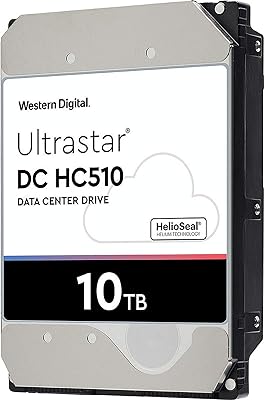
Western Digital Ultrastar DC HC510 10TB HDD
85%
93%
Reliability
89%
Performance under Load
91%
Durability
65%
Noise Levels
72%
Ease of Setup
More
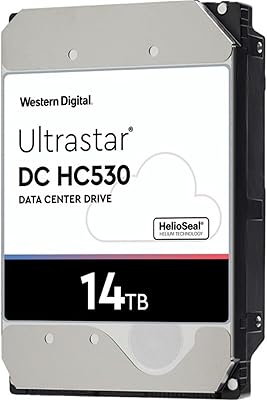
Western Digital Ultrastar DC HC530 14TB SATA HDD
85%
92%
Performance Under Heavy Workloads
88%
Build Quality & Durability
75%
Ease of Setup & Installation
80%
Noise Levels
85%
Value for Money
More
Western Digital Ultrastar DC HC310 6TB HDD
75%
78%
Long-Term Reliability
93%
Workload Endurance
88%
NAS Compatibility
71%
Value for Money
67%
Acoustic Performance
More
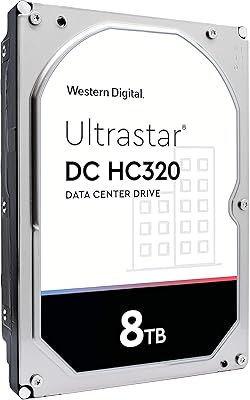
Western Digital Ultrastar DC HC320 8TB HDD
77%
91%
Reliability & Uptime
88%
Sequential Throughput
47%
Noise & Vibration
84%
Value for Capacity
93%
NAS Compatibility
More
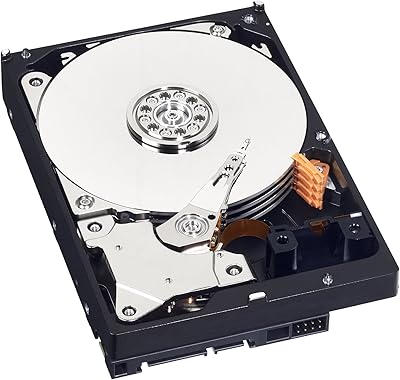
Western Digital Caviar Black 1TB Internal Hard Drive
79%
78%
Read/Write Performance
88%
Long-Term Reliability
84%
Value for Money
61%
Noise & Vibration
93%
Warranty & Support
More
WD WD10EZEX 1TB Internal Hard Drive
79%
83%
Reliability & Longevity
91%
Value for Money
93%
Installation Ease
67%
Read & Write Performance
86%
Noise Level
More
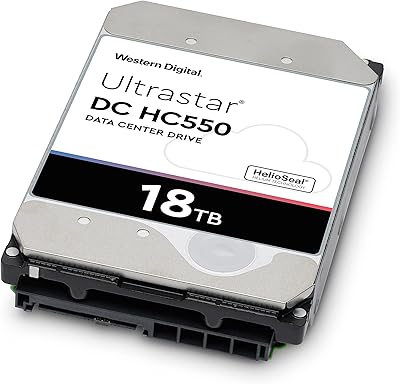
Western Digital Ultrastar DC HC550 18TB Hard Drive
84%
91%
Performance in High-Demand Environments
96%
Storage Capacity
89%
Reliability for Long-Term Use
75%
Data Transfer Speed
92%
Compatibility with NAS/Servers
More
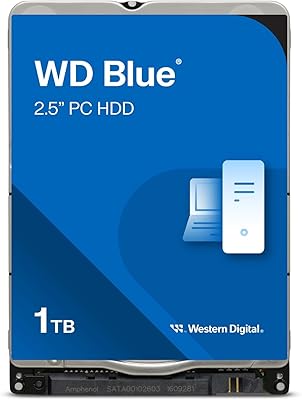
Western Digital WD Blue 1TB Hard Drive
78%
88%
Value for Money
57%
Read/Write Speed
91%
Installation Ease
74%
Reliability & Longevity
83%
Noise & Vibration
More
Western Digital WD10EURX 1TB
87%
88%
Performance
85%
Data Transfer Speed
91%
Reliability
89%
Durability
86%
Quiet Operation
More

FAQ

The Western Digital Ultrastar DC HA200 1TB HDD works with most Synology and QNAP enclosures that accept standard 3.5-inch SATA drives. Both manufacturers publish compatibility lists on their websites, and this drive is generally well-regarded in home lab and SMB NAS communities. The onboard Rotational Vibration Safeguard feature is particularly useful when multiple drives are spinning simultaneously in a shared chassis.

Think of it as a stamina rating — it tells you how much total data the drive is engineered to read and write over the course of a year before stress becomes a real concern. A typical desktop drive is rated for around 55TB/year, so this enterprise drive handles roughly ten times that load. If you are running a backup server, streaming media to multiple users simultaneously, or recording surveillance footage around the clock, that headroom matters quite a bit.

Technically yes, but it is probably not the right fit for most desktop users. Its random read/write speed is unremarkable compared to a modern SSD, and you are paying a significant premium for endurance specs that everyday desktop use will never stress. If you want fast application loading or smooth gaming, a consumer SSD will outperform it and cost less. This drive earns its price in always-on, write-intensive roles — not general computing.

NAS-optimized consumer drives like the WD Red or IronWolf are designed for moderate always-on workloads, typically rated around 180TB/year. The Ultrastar 1TB is rated for 550TB/year, carries a five-year warranty, and includes enterprise-grade vibration compensation hardware built for denser multi-drive deployments. For a lightly loaded home NAS with a few drives, a WD Red is often sufficient. If your enclosure runs continuously under heavier workloads, the extra engineering in this drive starts to justify the price gap.

MTBF stands for Mean Time Between Failures — it is a statistical measure derived from testing large populations of drives, not a guarantee for any single unit. A 2.5 million hour MTBF translates to an annualized failure rate of less than 0.04%, which in plain terms means this drive was engineered to fail very rarely under sustained enterprise use. It is a useful benchmark for comparing reliability tiers across drives, even if the raw number sounds improbably large.

Most buyers report it runs relatively quietly for a 7200 RPM mechanical drive. You will hear a low hum and some seek noise under heavy sequential workloads, but it is generally not disruptive in a typical home office. Housing it in a NAS enclosure with vibration dampening mounts, or placing the server cabinet in an adjacent closet, will reduce ambient noise considerably if that is a concern.

No special cables are needed — it uses a standard SATA data connector and either a 4-pin Molex or SATA power connector, both of which are standard in modern PCs and NAS enclosures. The drive does not ship with cables, so make sure your system or enclosure includes them. Standard mounting screws are also required and typically come with your case or NAS chassis rather than with the drive itself.

OEM units are drives sourced from server or system builds rather than retail packaging, and they are not inherently defective. They may show minor cosmetic wear, and the warranty start date can be ambiguous since it may have been triggered at the time of original manufacture or first deployment. If you receive what appears to be an OEM unit, check the warranty status directly on the Western Digital website using the drive serial number before putting it into service.

Yes — continuous surveillance recording is one of the use cases this datacenter-grade HDD handles particularly well. The high workload rating and 128MB cache allow it to sustain the constant write cycles that camera footage demands around the clock. Consumer drives used in DVR or NVR systems tend to wear out faster because they are simply not rated for that level of sustained activity. Just confirm your recording device supports a 3.5-inch SATA drive before purchasing.

You are paying for the engineering behind the endurance specifications, not the raw storage capacity. The extended warranty coverage, elevated workload rating, vibration compensation hardware, and enterprise-grade validation testing all add manufacturing cost. In datacenter purchasing, drives are priced by reliability tier rather than capacity alone. If cost-per-terabyte is your primary metric, a high-capacity consumer drive will win on paper every time — but if sustained uptime under continuous heavy workloads is the goal, the value calculation shifts considerably.