Overview

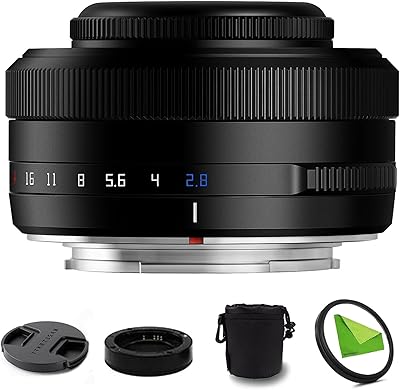
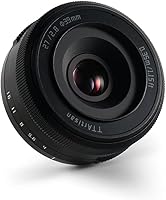
The TTArtisan AF 27mm F2.8 Mirrorless Camera Lens arrived in late 2023 as one of the more interesting mid-range options for Sony APS-C shooters looking to step beyond their kit glass. On a crop-sensor body, 27mm works out to roughly 40mm full-frame — close enough to that classic natural field of view that feels intuitive for street work and everyday shooting. TTArtisan has been quietly building a reputation for punching above its price class, and this autofocus prime fits that pattern. It won't challenge Sony G-series glass or Zeiss optics, but it was never meant to. Think of it as a capable, compact workhorse for photographers who want more than a kit lens without a significant jump in cost.
Features & Benefits

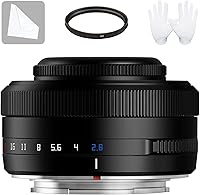
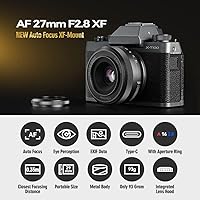
The autofocus system uses an STM stepping motor paired with a lead screw — a combination that keeps focusing noise low enough to use confidently while recording video. Eye-recognition AF works through the camera body, so on an A6400 or A6600, subject tracking feels genuinely reliable for portraits and candid shots in decent light. One quietly clever touch is the USB-C firmware port tucked onto the rear lens cap rather than the barrel itself, keeping the profile clean. The all-metal build — aluminum barrel and mount — gives this compact Sony E-Mount lens a solidity that plastic alternatives lack. At F2.8 with a closest focus distance of 0.35m, background separation is real and usable, not just a spec on paper.

Best For

Street photographers will probably get the most from the TTArtisan 27mm pancake — it is small enough to go largely unnoticed, and the near-normal focal length makes framing intuitive without much mental adjustment. Video shooters working solo will appreciate how quietly the motor hunts for focus, especially in run-and-gun situations where lens noise bleeds into audio. Travelers packing light benefit from the pancake form factor; mounted on an A6000 or A6100, the whole setup slips easily into a jacket pocket. It is also a solid step up for someone coming from a kit zoom who wants a fixed focal length with real autofocus. Those chasing professional-grade optics for commercial portraiture will likely want to look at Sony's own prime lineup instead.

User Feedback

Buyers consistently flag autofocus reliability as the biggest surprise — for a third-party lens at this price, many expected more hunting or hesitation, particularly in lower light. The bokeh at F2.8 draws positive comments for portraits and close-up work, though a few users note it is not quite as refined as what Sony native primes deliver. Build quality earns genuine praise; the metal construction feels substantial for the category. On the critical side, some reviewers report noticeable vignetting and soft corner sharpness when shooting wide open, which tends to improve meaningfully once stopped down to F4. Firmware updates via the rear-cap port have reportedly smoothed out some early autofocus inconsistencies, though individual experiences vary.

Pros

  • Autofocus locks on quickly and accurately for a third-party lens at this price point.
  • The all-metal barrel and mount feel noticeably more premium than plastic kit alternatives.
  • Pancake dimensions make the TTArtisan 27mm pancake genuinely pocketable with a compact Sony body.
  • Eye-recognition AF works reliably on newer Sony APS-C bodies for candid portraits and casual shooting.
  • The STM motor is quiet enough for video use without bleeding focus noise into recorded audio.
  • At 0.35m minimum focus distance, close-up detail shots are surprisingly capable for a pancake lens.
  • Firmware updates via USB-C on the rear cap have measurably improved autofocus consistency post-launch.
  • Center sharpness at F2.8 is strong enough for portraits and street work where subjects fill the frame.
  • The 27mm focal length translates to a natural, versatile field of view for everyday and travel shooting.
  • Build quality and metal finish hold up well through daily use without showing wear quickly.

Cons

  • Corner and edge sharpness wide open is noticeably soft — stopping down to F4 is often necessary.
  • Vignetting at F2.8 is prominent enough to require correction in post for evenly lit subjects.
  • Autofocus can hunt visibly in low-contrast or dim lighting, interrupting video takes.
  • Barrel distortion and chromatic aberration are present in RAW files and need correction in editing.
  • The firmware update process is poorly documented and confusing for less tech-savvy users.
  • Lens flare and contrast loss appear more readily than expected when shooting into strong backlight.
  • Focus and aperture rings are narrow and close together, making quick adjustments fiddly in the field.
  • Eye-detection AF performance varies significantly depending on which Sony body it is paired with.
  • No weather sealing limits confidence when shooting in light rain or dusty outdoor environments.
  • Bokeh rendering shows onion-ring artifacts in specular highlights under close scrutiny at F2.8.

Ratings

The TTArtisan AF 27mm F2.8 Mirrorless Camera Lens has been put through its paces by a wide range of Sony APS-C shooters worldwide, and the scores below reflect what our AI found after parsing verified purchase reviews — actively filtering out incentivized, bot-generated, and outlier feedback. This compact autofocus prime draws a genuinely mixed but mostly positive picture: real strengths in portability and autofocus value, with honest limitations in optical consistency that serious buyers deserve to know about.
Autofocus Speed & Accuracy
83%
For a third-party lens at this price, the STM motor locks on faster than most buyers expect — street shooters report reliable subject acquisition even when tracking pedestrians mid-stride. Eye-detection on compatible bodies like the A6400 works consistently in good light, making candid portraits noticeably easier to nail.
In low-contrast or dim conditions, some users report occasional hunting before the lens settles on focus — not a dealbreaker for stills, but frustrating during video when that hesitation is visible on screen. A handful of reviewers note it is slower to acquire focus than Sony's own native primes at similar apertures.
Image Sharpness
71%
29%
Center sharpness wide open at F2.8 earns consistent praise for portraits and street shots where the subject fills the middle of the frame. Stopped down to F4 or F5.6, the overall image quality tightens up noticeably and delivers results that comfortably outpace the typical kit zoom.
Edge and corner sharpness wide open is a recurring complaint — users shooting architecture or landscapes notice soft corners that do not fully resolve until the lens is stopped down two stops. For photographers who rarely shoot at F2.8, this is a minor issue; for those who bought the lens specifically for wide-open character, it can feel like a limitation.
Build Quality & Materials
88%
The all-metal barrel and mount feel genuinely premium for the category — buyers frequently mention how solid it feels on the camera body compared to plastic kit lenses. The retro industrial look also pairs well with the aesthetic of Sony APS-C bodies, which matters to photographers who care about how their setup looks.
A small number of users report that the focus ring, while smooth, has slightly inconsistent damping — not a functional issue but noticeable to buyers accustomed to higher-end glass. There is no weather sealing, which limits confidence in light rain or dusty shooting environments.
Bokeh & Background Rendering
74%
26%
At F2.8 and with the minimum focus distance of 0.35m, background separation is real and pleasing for a pancake lens — close-up portraits and product shots show smooth out-of-focus areas that hold up in social media and web-sized prints. Several reviewers were genuinely surprised by how usable the rendering is at this price point.
Compared to Sony native primes or fast F1.8 alternatives, the bokeh is noticeably less refined — onion-ring artifacts in specular highlights have been flagged by more technically minded reviewers. At typical portrait distances rather than close range, the separation is modest, not dramatic.
Portability & Form Factor
93%
This is where the TTArtisan 27mm pancake earns its strongest marks without qualification. Mounted on a compact Sony body, the combined package fits in a jacket pocket — travel photographers and commuters consistently highlight this as the single biggest reason they chose it over bulkier alternatives.
The compact size does mean the focus and aperture rings are narrow and close together, which a few users find fiddly when adjusting quickly in the field. For photographers with larger hands, the small grip surface can feel slightly awkward during extended shooting sessions.
Video Performance
78%
22%
The STM motor is quiet enough that focus shifts do not bleed noticeably into audio recorded via the camera's built-in microphone — a practical win for solo video creators who cannot monitor audio while operating. Smooth focusing transitions during slow rack-focus pulls also draw positive comments from vloggers.
Faster, more abrupt focusing movements during continuous video AF can produce visible wobble in the footage, particularly when shooting at wider apertures. Some videographers report that the lens occasionally over-corrects before settling, producing a brief back-and-forth that requires a cut to hide.
Vignetting
62%
38%
For street photography and environmental portraits, mild vignetting at F2.8 actually draws some positive comments — a few users say it adds a natural framing effect that suits their editing style without any post-processing adjustments.
Vignetting wide open is noticeable and shows up clearly in evenly lit subjects like walls, skies, or flat-lay photography. It improves significantly from F4 onward, but buyers who shoot primarily wide open for low-light work will need to correct for it in post consistently.
Chromatic Aberration & Distortion
67%
33%
For everyday shooting — street, travel, portraits — most users do not notice any distracting fringing or distortion in their images, especially with in-camera corrections applied on Sony bodies. The lens profiles available in Lightroom and Sony's own software handle most optical corrections cleanly.
Without corrections applied, barrel distortion is visible at the edges, and lateral chromatic aberration appears in high-contrast scenes like tree branches against bright skies. This is less of an issue for JPEG shooters where corrections apply automatically, but RAW shooters need to factor this into their editing workflow.
Firmware & Upgrade Experience
69%
31%
The USB-C port on the rear cap is a genuinely thoughtful design decision — it keeps the barrel clean and allows users to pull firmware updates without sending the lens in for service. Early adopters report that one key update meaningfully improved autofocus consistency after launch.
The firmware update process itself is not well documented, and several users describe confusion around finding the correct software and following the steps correctly. A small number of reviewers report that updates did not resolve their specific autofocus issues, suggesting some variation in unit-to-unit performance.
Lens Flare & Contrast
72%
28%
In controlled or overcast lighting conditions, contrast holds up well and images look punchy straight out of camera with minimal post-processing. Several travel photographers note that midday outdoor shots retain good tonal depth even without any additional editing.
Shooting into strong backlight or near artificial light sources produces flare and contrast loss more readily than Sony native glass. Street photographers who frequently shoot toward the sun or evening streetlights will need to manage their angles more carefully than they would with a better-coated prime.
Eye-Recognition AF Integration
76%
24%
On bodies like the A6600 and A6400, eye-detection operates through the camera's own processing, and users report it works reliably for relaxed portrait sessions and casual candid shooting. It is a meaningful upgrade over manual or contrast-only AF for photographers coming from older Sony bodies.
Eye-detection performance is ultimately dependent on the camera body rather than the lens itself, and on older Sony models in the compatibility list the experience is considerably less reliable. Users on entry-level bodies like the A5000 or older NEX cameras should not expect the same tracking performance.
Value for Money
86%
The overall consensus among buyers is that this autofocus prime delivers well above its price category in build, focusing performance, and portability. For photographers who want to step beyond a kit zoom without committing to Sony G-series pricing, it hits a genuinely useful middle ground.
Buyers who push into more demanding use cases — commercial portraiture, low-light event photography, or critical sharpness across the full frame — will eventually feel the ceiling of what this lens can do and may find the upgrade cost to Sony native glass was worth it from the start.
Compatibility & Mount Reliability
89%
The metal E-Mount connection is consistently praised for fitting cleanly and securely on every compatible Sony body — no wobble, no play, no concerns about the mount loosening over time. Buyers switching between multiple bodies report the mount holds up well through frequent removal and reattachment.
A small number of users on older NEX-series bodies report occasional communication errors or limited feature access compared to the experience on newer A6000-series cameras. The lens is clearly optimized for the more recent Sony APS-C lineup, and older body users may not get the full feature set.
Close-Up & Macro Capability
77%
23%
A closest focus distance of 0.35m is genuinely useful for product shots, food photography, and detailed close-ups — not true macro, but enough to capture textures and details that a standard kit zoom cannot get close to. Several buyers highlight this as an unexpected secondary use case that adds real versatility.
At 0.35m, the working distance between the front element and the subject is short enough to cast shadows with on-camera flash or block natural light, making lighting arrangements more deliberate. Buyers expecting dedicated macro-level magnification will be disappointed — this is close-focus capability, not magnification.

Suitable for:

The TTArtisan AF 27mm F2.8 Mirrorless Camera Lens is a strong fit for Sony APS-C shooters who want a lightweight, always-on lens they can carry without thinking twice. Street photographers in particular will appreciate how discreet the pancake form factor is — it does not draw attention the way a larger prime would, and the near-normal 40mm-equivalent field of view feels intuitive for quick, instinctive framing. Travel photographers packing light will find the combination of compact size and reliable autofocus genuinely freeing, especially on bodies like the A6400 or A6600 where the overall kit stays pocket-friendly. Solo video creators working without a dedicated sound operator will also benefit from the quiet STM motor, which keeps focus shifts from showing up in the audio. If you are coming off a kit zoom and want to explore what a fixed focal length can do without committing to premium Sony pricing, this autofocus prime is one of the most accessible entry points currently available.
Not suitable for:

The TTArtisan AF 27mm F2.8 Mirrorless Camera Lens is not the right tool for photographers whose work depends on consistent sharpness across the full frame at wide apertures. Edge softness and vignetting wide open are real limitations that will frustrate architecture photographers, real estate shooters, and anyone who regularly needs corner-to-corner clarity without stopping down. Professional portrait photographers working on commercial assignments will likely find the bokeh rendering and autofocus speed fall short of what Sony G-series or Zeiss-branded glass delivers — the gap is noticeable when output is scrutinized at full resolution. Low-light event photographers who need fast, decisive focus acquisition in challenging conditions should also look elsewhere, as this compact Sony E-Mount lens can hunt in difficult light. Finally, if you are shooting on an older NEX-series body or an entry-level A5000, you may not get access to the eye-detection AF or the full feature set that makes this lens perform at its best.

Specifications

  • Focal Length: 27mm fixed focal length, equivalent to approximately 40.5mm on a full-frame camera when used on an APS-C sensor body.
  • Maximum Aperture: F2.8 maximum aperture allows for meaningful background separation and usable low-light performance in a compact pancake form factor.
  • Lens Mount: Sony E-Mount, compatible with the full range of Sony APS-C mirrorless bodies from the A5000 and NEX series through the A6600.
  • Autofocus Type: STM stepping motor with a lead screw drive mechanism delivers quiet, smooth focus transitions suited to both still photography and video recording.
  • Eye Recognition AF: Eye-recognition autofocus is supported and operates through the camera body's own processing on compatible Sony APS-C models.
  • Min. Focus Distance: Minimum focusing distance of 0.35m (approximately 13.8 inches) enables close-up detail shots with visible subject separation at F2.8.
  • Lens Type: Wide-angle prime in a pancake configuration, designed for maximum portability without sacrificing a metal barrel construction.
  • Barrel Material: Aviation-grade aluminum alloy barrel provides a solid, durable build with a retro metal texture that resists everyday wear.
  • Mount Material: Metal lens mount ensures a secure, play-free connection to the camera body and holds up reliably through frequent lens changes.
  • Firmware Port: USB-C firmware upgrade port is located on the rear lens cap rather than the barrel, keeping the exterior profile clean and uninterrupted.
  • Dimensions: The lens measures 1.6 inches in length and 2.5 inches in diameter, maintaining a low-profile pancake shape on any compatible body.
  • Weight: At 11.3 ounces, the lens adds modest mass to a compact Sony body while still contributing to a pocketable overall camera setup.
  • Weather Sealing: No weather sealing is present on this lens, so use in rain, heavy humidity, or dusty conditions is not officially supported.
  • Filter Thread: The lens accepts standard 49mm screw-in filters, compatible with a wide range of widely available ND, UV, and polarizing filter options.
  • Aperture Blades: The lens uses a rounded aperture diaphragm designed to produce smooth, circular bokeh in out-of-focus areas at and near maximum aperture.
  • Release Date: First made available in November 2023, making it one of TTArtisan's more recent autofocus entries in the Sony E-Mount ecosystem.
  • Manufacturer: Designed and produced by TTARTISAN, a Chinese optical manufacturer known for compact, affordable manual and autofocus lenses for mirrorless systems.
  • Compatible Bodies: Works with Sony E-Mount APS-C bodies including the A5000, A5100, A6000, A6100, A6300, A6400, A6500, A6600, NEX-3, NEX-3N, NEX-3R, and NEX-5T.

Related Reviews

TTArtisan AF 27mm F2.8 XF-Mount Autofocus Lens
80%
78%
Autofocus Speed
74%
Autofocus Accuracy
83%
Optical Sharpness
81%
Bokeh Quality
71%
Build Quality
More
Fujifilm X-S20 XF16-50mm Mirrorless Camera Kit
80%
91%
Image Quality
94%
Film Simulations & Color Science
88%
In-Body Image Stabilization
86%
Video Capability
67%
Autofocus Performance
More
TTArtisan 10mm F2 APS-C Wide-Angle Lens
78%
78%
Optical Sharpness
84%
Aperture Performance
86%
Build Quality
91%
Value for Money
73%
Distortion Control
More
TTArtisan 50mm f2 Manual Focus Lens for L Mount Cameras
84%
87%
Image Quality
91%
Manual Focus Precision
90%
Bokeh Quality
85%
Build Quality
82%
Low Light Performance
More
7Artisans 4mm F2.8 Fisheye Lens for Fujifilm X-Mount Cameras
84%
88%
Image Quality
92%
Build Quality
65%
Manual Focus Ease
94%
Portability & Size
79%
Close-Up Performance
More
OM System OM-1 Mark II with M.Zuiko 12-40mm f/2.8 PRO II
81%
93%
Autofocus Performance
91%
Weather Sealing & Durability
84%
Image Quality
71%
Autofocus in Low Light
92%
Lens Quality (M.Zuiko 12-40mm f/2.8 PRO II)
More
Tamron 11-20mm F/2.8 Di III-A Wide-Angle Lens
84%
91%
Image Sharpness
88%
Autofocus Performance
86%
Build Quality & Weather Sealing
74%
Value for Money
67%
Distortion & Optical Corrections
More
Tamron 17-70mm f/2.8 Di III-A Zoom Lens
82%
91%
Optical Sharpness
93%
Aperture Versatility
84%
Autofocus Performance
86%
Image Stabilization
82%
Build Quality & Durability
More
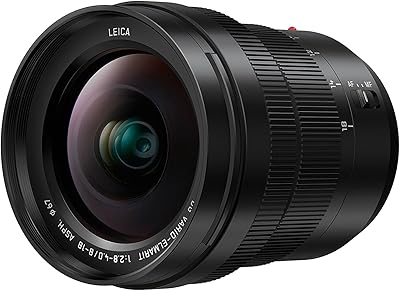
Panasonic LUMIX 8-18mm F2.8-4.0 Lens
89%
91%
Image Quality
88%
Autofocus Performance
89%
Build Quality & Durability
84%
Ease of Use
90%
Video Performance
More
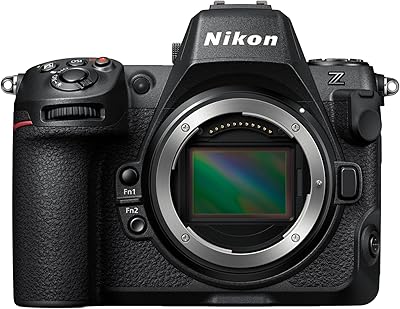
Nikon Z 8
Nikon Z 8
84%
94%
Autofocus Performance
96%
Image Quality
88%
Video Capabilities
93%
Build Quality & Weather Sealing
91%
Burst Speed & Continuous Shooting
More

FAQ

Yes, the TTArtisan AF 27mm F2.8 Mirrorless Camera Lens is fully compatible with the A6400 and takes advantage of the body's built-in eye-recognition AF. The tracking works through the camera's own processing, so the quality of eye-detection you get will match what the A6400 normally delivers with other AF lenses.

On an APS-C sensor, 27mm works out to roughly 40 to 41mm in full-frame terms, which puts it right in the range of a classic normal lens. It is not dramatically wide and not telephoto — most people find it feels natural and close to how your eyes actually see a scene, which is why it works well for street shooting and everyday photography.

For casual action — kids playing in the yard, pets moving around indoors — the autofocus keeps up reasonably well in decent lighting. It is not in the same league as a Sony native prime for fast sports or unpredictable action, but for the kind of spontaneous moments most photographers encounter day-to-day, it handles itself without too much frustration.

The USB-C port for firmware updates is on the rear lens cap, not the barrel itself. You connect the lens cap to a computer, download the updater software from TTArtisan's website, and follow the instructions. Whether it is worth doing depends on your unit — early production lenses benefited noticeably from at least one post-launch update that improved autofocus consistency, so it is worth checking what version your lens shipped with.

At close focus distances — say, shooting a portrait subject within a meter or two — the background separation is genuinely pleasing and smooth enough for social media and web use. At more typical environmental portrait distances, the blur is there but modest. If you are expecting dreamy, swirly bokeh like you get from a fast F1.4 or F1.8 lens, this compact Sony E-Mount lens will not fully deliver that, but for most casual portrait and street work it looks natural rather than clinical.

The build quality genuinely surprises most people when they first handle it. The all-metal barrel and mount feel substantial, not hollow or plasticky, and the finish has a retro industrial look that pairs well with Sony APS-C bodies. The focus ring is smooth and the mount connection is firm with no wobble. It does not have weather sealing, which is the main practical limitation of the build.

For most casual video work — vlogging, travel footage, short social content — the STM motor is quiet enough that focus shifts do not noticeably bleed into audio recorded by the camera's internal mic. If you are recording in a very quiet environment and the lens needs to hunt or correct significantly, you might catch a faint mechanical sound, but in normal shooting conditions it holds up well for solo video use.

Center sharpness at F2.8 is strong and holds up well for portraits, street shots, and subjects positioned in the middle of the frame. Edge and corner sharpness is weaker at F2.8 — if you shoot subjects near the corners of the frame or need even sharpness across the full image, stopping down to F4 or F5.6 makes a clear difference. For most everyday use cases, the center performance at F2.8 is the relevant metric and it delivers.

With a compact Sony body like the A6000 or A6100, yes — the TTArtisan 27mm pancake keeps the overall package small enough to slip into a large jacket or coat pocket. It is the kind of setup you can actually carry all day without a bag, which is one of the main reasons people choose this lens over larger primes.

It mounts physically on full-frame Sony E-Mount bodies, but it is designed for APS-C sensors and will show significant vignetting when used on full-frame cameras in full-frame mode. Most full-frame Sony bodies will automatically switch to APS-C crop mode when they detect an APS-C lens, which resolves the vignetting but reduces your effective resolution. It is really best used on the APS-C bodies it was designed for.

Where to Buy