



Overview

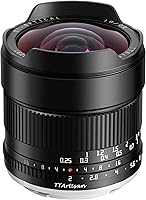
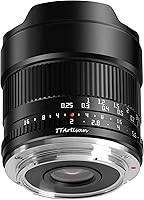
The TTArtisan 10mm F2 APS-C Wide-Angle Lens is a manual ultra-wide prime built for Canon RF-mount APS-C cameras, offering a 16mm full-frame equivalent field of view at a price well below what Canon's own lineup demands. TTArtisan has built a solid reputation crafting affordable manual primes, and this one fits that mold exactly. Be clear about one thing upfront: there is no autofocus and no electronic communication with the camera body whatsoever. This is not a grab-and-go lens. It rewards photographers who take their time composing a shot — for those willing to work that way, this ultra-wide prime opens up real creative possibilities that would otherwise cost significantly more.

Features & Benefits

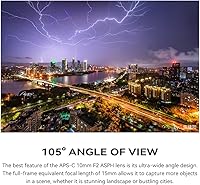
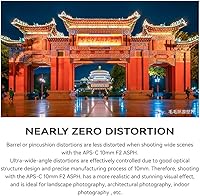
The F2 maximum aperture is where this manual wide-angle lens pulls ahead of most competitors in its price range — the majority of budget ultra-wides cap at F2.8, so that extra stop of light has real consequences for astrophotography and low-light work. TTArtisan claims near-zero distortion, and while real-world results show it is well-controlled, stopping down to F5.6 or F8 is where edge rendering genuinely tightens up. The eight-blade aperture produces clean 8-point sunstars on bright light sources. Optically, the 13-element, 10-group design includes aspherical elements aimed at managing edge sharpness across that wide 105-degree angle of view. The included external 72mm filter holder is a practical bonus, accepting polarizers and ND filters without screw-in adapters.

Best For

This ultra-wide prime was practically built for Milky Way and astrophotography work — a 105-degree field of view paired with F2 means more sky, less exposure time, and cleaner results at lower ISO settings. Landscape and architectural photographers who habitually shoot on a tripod will adapt to the manual focus quickly; it stops being a limitation once your workflow slows down to match it. The core audience is Canon RF APS-C users on bodies like the R7, R10, R50, and R100. Full-frame Canon owners (R5, R6, R3) can use it in crop mode, but the lens was clearly not designed with them in mind. Environmental portrait and wide-angle creative work round out the use cases well.

User Feedback

Most buyers highlight the build quality as a genuine strength — the lens feels solid, the focus ring is smooth, and the overall construction punches above its price point. Center sharpness at F2 receives consistent praise, though corner performance at wide-open settings draws legitimate criticism: coma and softness on star points are noticeable, and they only clear up meaningfully around F4 to F5.6. The manual-only design is the sharpest dividing line in user reviews; photographers who knew what they were buying adapt without complaint, while those expecting any electronic coupling are often frustrated. The filter holder gets mixed feedback — dedicated outdoor photographers value it, but plenty of buyers find it awkward and leave it in the box.

Pros

  • F2 maximum aperture gives a genuine low-light edge over most budget ultra-wides that stop at F2.8.
  • The 105-degree field of view captures expansive landscapes and architecture in a single, dramatic frame.
  • Center sharpness at F2 is strong for the price — stopped down to F5.6, results are impressive across the board.
  • Eight aperture blades produce clean, well-defined 8-point sunstars on light sources.
  • Build quality feels solid and well-machined, with a smooth focus ring that belies the affordable price.
  • Compact and lightweight enough to carry daily without weighing down a mirrorless kit bag.
  • The included external filter holder adds real utility for landscape shooters using ND or polarizing filters.
  • Offers a rare ultra-wide option for Canon RF APS-C users at a fraction of Canon-branded alternatives.
  • Distortion is well-controlled for an ultra-wide, making architectural and interior shots look natural with minimal correction.

Cons

  • No autofocus and no electronic lens communication means no EXIF data, no in-body stabilization assistance, and no focus confirmation.
  • Coma and corner softness at F2 are noticeable, particularly on star-point shapes in astrophotography.
  • Full-frame Canon R body owners can only use this in crop mode, significantly limiting its practical appeal for that group.
  • The external filter holder, while included, is bulky and adds noticeable length to an otherwise compact lens.
  • No weather sealing of any kind, making outdoor use in rain or dusty conditions a genuine risk.
  • Manual focus on a wide-angle lens in low light demands practice and patience before results become consistent.
  • Aperture adjustments are fully manual with no electronic control, which complicates exposure workflows for some shooters.
  • Corner sharpness improvements only become reliable when stopped down to F4 or F5.6, limiting wide-open use for critical work.

Ratings

The scores below reflect an AI-driven analysis of verified global buyer reviews for the TTArtisan 10mm F2 APS-C Wide-Angle Lens, with spam, bot activity, and incentivized feedback actively filtered out to ensure the results are as honest as possible. This ultra-wide prime earned genuine enthusiasm from a specific type of shooter while drawing consistent criticism from others, and both sides of that picture are represented transparently here.

Optical Sharpness
78%
22%
Center sharpness at F2 consistently impresses buyers shooting landscapes and night skies, where the subject of interest sits in the middle of the frame. Stopped down to F5.6 or F8, the overall image quality across the frame is strong enough that many users compare it favorably to lenses costing considerably more.
Corner softness at F2 is a recurring complaint, particularly among astrophotographers who expect round, tight star points across the full frame. Coma at the edges is real and noticeable in night sky shots, and this lens demands stopping down to earn edge-to-edge consistency.
Aperture Performance
84%
The F2 maximum aperture gives this manual wide-angle lens a practical advantage that buyers notice immediately in low-light situations — Milky Way sessions, indoor architecture without flash, and dim urban scenes all benefit from the extra stop over F2.8 alternatives. Lower ISO requirements in long-exposure scenarios translate directly to cleaner results.
Wide-open performance comes with trade-offs that some buyers did not anticipate, including edge coma and a slight drop in micro-contrast compared to stopped-down results. For photographers expecting clinical sharpness at F2 corner to corner, the reality is a mild disappointment.
Build Quality
86%
The metal barrel and smooth, well-damped focus ring stand out repeatedly in buyer feedback as highlights that exceed expectations at this price tier. The lens feels substantial in hand without being heavy, and the machined finish gives it a premium feel that third-party budget lenses do not always deliver.
The absence of weather sealing is a meaningful gap for outdoor photographers, and a few buyers have noted that the focus ring, while smooth initially, can develop slightly loose tolerances over extended use. There is no gasket at the mount either, which is worth noting for dusty shooting environments.
Value for Money
91%
Among Canon RF-mount ultra-wide options, the TTArtisan 10mm F2 sits at a price point that is genuinely difficult to argue against for APS-C shooters. Buyers who understand what they are getting — a manual, niche-use wide prime — consistently rate the value as exceptional, especially when comparing it against Canon's own RF-S offerings.
Buyers who purchased without fully appreciating the manual-only design feel the value proposition falls apart for their use case. If you needed autofocus and bought this expecting anything close to it, no price makes the frustration worthwhile.
Distortion Control
73%
27%
For an ultra-wide prime at this price, barrel distortion is reasonably well-managed, and architectural shooters report that straight lines hold up acceptably without aggressive correction in post. Interior and landscape scenes generally require only a minor lens correction profile to look natural.
The distortion control claims in the product listing set expectations higher than real-world results consistently deliver. Several buyers shooting rooms or buildings noted visible barrel distortion on straight edges near the frame periphery, requiring post-processing correction that they felt should not have been necessary.
Astrophotography Suitability
79%
21%
The combination of F2 aperture and 105-degree field of view makes this one of the more capable budget options for Milky Way and wide-field night sky shooting. Buyers shooting dark-sky locations report that the wide field captures sweeping galactic detail, and the low-light aperture advantage over F2.8 alternatives is consistently appreciated in practice.
Coma on star points at the frame edges at F2 is the most frequently cited technical flaw in astrophotography use, and it is significant enough to affect the final image quality in wide-open night sky shots. Stopping down to F3.5 or F4 improves coma noticeably but extends required exposure times.
Manual Focus Usability
69%
31%
The focus ring is smooth and well-weighted, which makes precise manual adjustments more intuitive than on cheaper alternatives where the ring feels loose or sticky. For landscape and astrophotography shooters who set focus to hyperfocal distance or infinity and leave it, the manual focus system is essentially a non-issue in practice.
Buyers coming from autofocus lenses face a genuine learning curve, and a few reported frustration that the camera provides no focus confirmation or peaking trigger by default due to the lack of electronic contacts. Dynamic or fast-moving subjects are simply not workable with this system.
Sunstar Rendering
88%
The 8-blade aperture produces well-defined, symmetrical 8-point sunstars that buyers shooting golden-hour landscapes and urban night scenes specifically praise. At F8 to F11, the spikes are clean and visually sharp, adding a natural dramatic quality to light sources in wide-angle compositions.
At very small apertures beyond F11, diffraction softens the overall image noticeably, which limits how aggressively you can stop down to enhance the sunstar effect without sacrificing sharpness elsewhere in the frame.
Filter System
63%
37%
The included 72mm external filter holder is a meaningful practical addition for landscape and outdoor photographers who regularly use circular polarizers or ND filters, and most buyers are happy to receive it included in the box rather than paying separately.
The filter holder adds noticeable bulk and length to an otherwise compact lens, and a significant portion of buyers report leaving it unused because the added size defeats the portability benefit. The holder can also introduce vignetting at the widest settings if filters are stacked.
Chromatic Aberration
71%
29%
Lateral chromatic aberration is relatively controlled compared to competing budget ultra-wides, and most buyers shooting landscapes or architecture find that any fringing is minor enough to correct quickly with a single click in Lightroom's lens correction panel.
At F2, some buyers shooting high-contrast scenes — tree lines against bright sky, architectural edges against sunlight — report visible purple or green fringing along edges that requires manual correction rather than a simple automatic profile fix.
Portability
87%
At 1.3 lbs and with a compact 2.36-inch diameter, the TTArtisan 10mm F2 pairs naturally with the lightweight Canon RF APS-C mirrorless bodies it is designed for. Buyers carrying it on hikes or travel days appreciate that it does not unbalance smaller bodies like the R10 or R50.
The external filter holder, when attached, extends the lens significantly and adds awkward bulk that makes bag packing less convenient. A few buyers also noted that the 1.3 lb weight is on the heavier side relative to the lens's compact footprint.
Low-Light Performance
81%
19%
Buyers shooting indoor events, dimly lit interiors, and nightscapes consistently note that F2 delivers a usable image at ISO settings where an F2.8 alternative would require pushing further and introducing more noise. The real-world difference of one stop is meaningful when you are already at the camera's noise ceiling.
Without image stabilization and without electronic lens correction profiles available to the camera body, handheld low-light shooting demands very steady hands or a fast enough shutter speed to freeze camera shake entirely, which limits the practical low-light advantage in handheld scenarios.
Compatibility Clarity
58%
42%
Buyers who researched carefully and purchased for a dedicated Canon RF APS-C body report a straightforward, frustration-free experience from day one, with no compatibility issues on R7, R10, R50, or R100 bodies.
A recurring source of negative reviews comes from full-frame Canon R body owners who were not aware the lens only covers APS-C sensors natively, leading to vignetting in full-frame mode and a forced crop that surprised and disappointed them. The product listing does not make this limitation prominent enough.

Suitable for:

The TTArtisan 10mm F2 APS-C Wide-Angle Lens is purpose-built for Canon RF APS-C shooters — particularly R7, R10, R50, and R100 owners — who want a serious ultra-wide option without paying a steep premium for a first-party alternative. Astrophotographers will find the F2 aperture especially valuable: capturing the Milky Way benefits directly from that extra stop of light compared to F2.8 competitors, meaning lower ISO settings and cleaner long-exposure results. Landscape and architectural photographers who already work methodically on a tripod will barely notice the manual-focus-only design, since careful composition and precise focusing are already part of their process. Videographers shooting slow, deliberate wide-angle footage — establishing shots, time-lapses, static environmental coverage — are also well-served here, as the lack of autofocus matters far less when your subject and framing are locked down. Anyone experimenting with creative wide-angle portraiture or dramatic perspective work on a budget will find this manual wide-angle lens a capable, affordable tool.

Not suitable for:

If you rely on autofocus for any part of your shooting — wildlife, events, street photography, family moments — the TTArtisan 10mm F2 APS-C Wide-Angle Lens will frustrate you quickly, since it offers zero electronic communication with the camera body and no focus assistance beyond what you set manually. Full-frame Canon R body owners (R5, R6, R3, R8) should approach this with caution: the lens only covers APS-C sensors, meaning full-frame users are forced into crop mode, sacrificing resolution and defeating much of the purpose of owning a high-megapixel body. Photographers who expect factory-calibrated, corner-to-corner sharpness wide open will be disappointed — coma and edge softness at F2 are real, and the lens needs to be stopped down to F4 or beyond to deliver consistent results across the frame. Those who shoot in dynamic, fast-moving conditions without a tripod will also struggle with the absence of any image stabilization. If your priority is a versatile everyday wide lens that handles varied subjects with minimal fuss, a zoom with autofocus is a more practical choice.

Specifications

  • Focal Length: The lens has a native focal length of 10mm, equivalent to approximately 16mm on a full-frame sensor when used on an APS-C body.
  • Max Aperture: The maximum aperture is F2, providing a meaningful light-gathering advantage over the F2.8 ultra-wides that dominate this price category.
  • Min Aperture: The minimum aperture is F16, giving sufficient range for daytime shooting in bright conditions without a neutral density filter.
  • Angle of View: This lens covers a 105-degree angle of view on APS-C sensors, capturing expansive wide scenes in a single frame.
  • Optical Design: The optical formula consists of 13 elements arranged in 10 groups, incorporating aspherical elements to manage edge sharpness and aberrations across the wide field.
  • Aperture Blades: Eight rounded aperture blades produce clean 8-point sunstars on bright light sources and contribute to smooth out-of-focus rendering at wider aperture settings.
  • Lens Mount: The lens is built exclusively for the Canon RF mount, making it physically compatible with all Canon RF-system camera bodies.
  • Format Coverage: Designed for APS-C sensors, this lens fully covers R7, R10, R50, and R100 bodies; full-frame Canon R bodies require crop mode activation.
  • Focus System: Focus is entirely manual with no autofocus motor and no electronic contacts, meaning no EXIF data, no lens-based image stabilization, and no focus confirmation signal is transmitted to the camera.
  • Filter System: An external 72mm circular filter holder is included in the box, compatible with standard ND, graduated ND, and circular polarizer filters of that diameter.
  • Dimensions: The lens measures 1.1 inches in length and 2.36 inches in diameter, making it notably compact for an ultra-wide prime with an F2 aperture.
  • Weight: The lens weighs 1.3 lbs, which is manageable for handheld use but worth noting for photographers building a lightweight travel kit.
  • Construction: The barrel is constructed from metal alloy with a machined finish, giving the lens a solid, well-built feel relative to its price point.
  • Weather Sealing: No weather sealing or moisture resistance is present on this lens, so use in rain, snow, or dusty environments carries a real risk of damage.
  • Manufacturer: The lens is designed and manufactured by TTArtisan, a Chinese optical brand that has built a following for producing affordable manual prime lenses across a wide range of mounts.
  • Availability: This lens was first made available in December 2023, making it a relatively recent addition to the third-party Canon RF-mount lens market.

Related Reviews
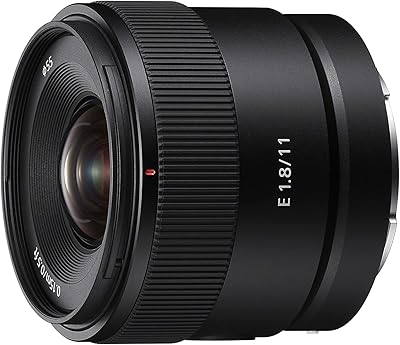
Sony E 11mm F1.8 APS-C Ultra-Wide-Angle Prime Lens
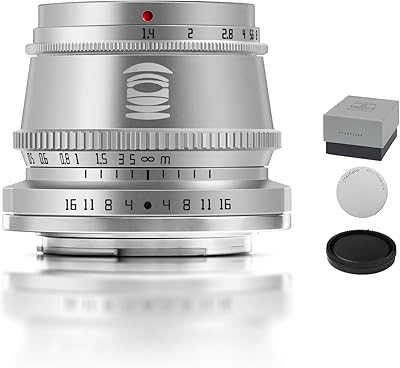
87%
93%
Autofocus Speed
91%
Image Quality
89%
Portability
74%
Low-Light Performance
88%
Build Quality
More
TTArtisan 35mm F1.4 APS-C Lens
76%
88%
Build Quality
74%
Optical Performance
91%
Bokeh Quality
82%
Low-Light Usability
71%
Manual Focus Experience
More
TTArtisan 50mm F1.2 APS-C Manual Focus Lens
84%
88%
Image Quality
75%
Manual Focus Experience
90%
Low Light Performance
85%
Build Quality
91%
Portability
More
Rokinon 14mm F2.8 Wide Angle Lens
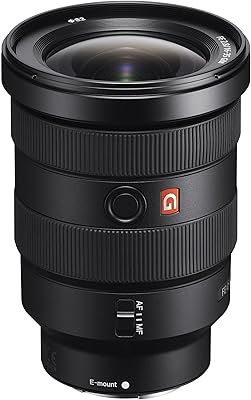
71%
83%
Optical Sharpness (Center Frame)
58%
Edge & Corner Sharpness
52%
Vignetting Control
61%
Chromatic Aberration
74%
Flare & Ghosting Resistance
More
Sony FE 16-35mm F2.8 GM Zoom Lens
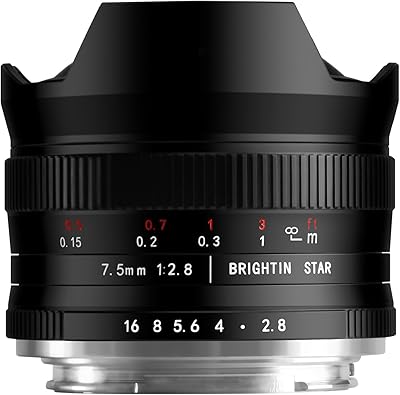
82%
94%
Optical Sharpness
91%
Aperture Consistency
89%
Autofocus Performance
88%
Build Quality & Weather Sealing
86%
Distortion Control
More
Brightin Star 7.5mm F2.8 III Fisheye Lens
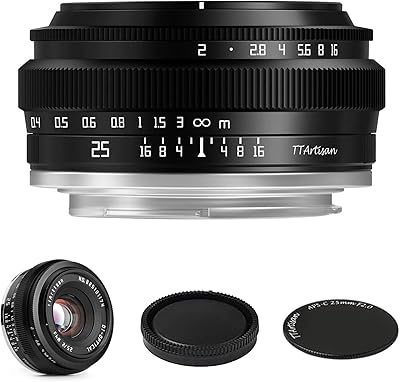
75%
78%
Image Sharpness
88%
Value for Money
71%
Low-Light & Astrophotography Performance
82%
Build Quality & Construction
61%
Manual Focus Usability
More
TTArtisan 25mm F2 Fujifilm X-Mount Lens
85%
88%
Image Quality
75%
Manual Focus Control
90%
Low-Light Performance
85%
Portability
92%
Build Quality
More
TTArtisan 50mm f2 X-Mount Manual Focus Lens
85%
88%
Image Quality
90%
Build Quality
93%
Portability/Size
70%
Manual Focus Performance
75%
Ease of Use for Vlogging
More
TTArtisan AF 27mm F2.8 Mirrorless Camera Lens
78%
83%
Autofocus Speed & Accuracy
71%
Image Sharpness
88%
Build Quality & Materials
74%
Bokeh & Background Rendering
93%
Portability & Form Factor
More
TTArtisan AF 27mm F2.8 XF-Mount Autofocus Lens
80%
78%
Autofocus Speed
74%
Autofocus Accuracy
83%
Optical Sharpness
81%
Bokeh Quality
71%
Build Quality
More

FAQ

No — the TTArtisan 10mm F2 APS-C Wide-Angle Lens is strictly manual focus with no electronic contacts at all. Your camera will not communicate with it in any way, which also means no EXIF lens data will be recorded and no in-body image stabilization profile will be applied automatically. If autofocus is important to your shooting, this is not the right lens for you.

You can mount it physically, but since it is designed for APS-C sensors, you will need to shoot in your camera's crop mode to avoid heavy vignetting. That means you are sacrificing a significant portion of your full-frame sensor's resolution, which largely defeats the purpose of using a high-resolution body. R7, R10, R50, and R100 owners will get the most out of it.

It is better than you might expect from an ultra-wide at this price. Barrel distortion is reasonably well-managed for architecture and interiors, and most users find that straight lines hold up without heavy post-processing correction. That said, it is not perfect, and complex scenes with strong geometric lines may still benefit from a quick correction pass in Lightroom or similar software.

Center sharpness at F2 is genuinely good and holds up well for landscape and astro work. The corners, however, are noticeably softer at F2 and show coma on star points, which matters for astrophotographers. Stopping down to around F4 to F5.6 brings the whole frame into much more consistent sharpness. Wide open is great for the center of the frame; expect to stop down for critical edge-to-edge work.

It is genuinely useful if you do landscape or outdoor photography and already work with 72mm circular filters. The holder screws onto the front of the lens and accepts standard circular polarizers, ND filters, and graduated NDs. The main downside is that it adds noticeable length to an otherwise compact lens, so many photographers leave it off unless they specifically need it for a shoot.

Yes, and they are one of its more appealing characteristics. The 8-blade aperture produces well-defined 8-point sunstars when you shoot a bright light source — street lights, the sun near the horizon, or artificial lights — at smaller apertures like F8 to F11. The results are clean and visually attractive, which makes this ultra-wide prime a nice choice for golden-hour landscape shots.

Easier than you might think, actually. Ultra-wide lenses have a naturally deep depth of field, especially at F4 and beyond, so a lot of subjects will be acceptably sharp once you focus to the hyperfocal distance — typically somewhere in the 3 to 5 foot range at moderate apertures. For astrophotography, you focus on infinity and leave it there. The learning curve is real, but it flattens out quickly with a bit of practice.

It is one of the stronger use cases for this manual wide-angle lens. The combination of a 105-degree field of view and F2 aperture lets you capture a wide swath of sky while keeping ISO lower than you would need with an F2.8 lens, which directly improves image quality in long exposures. The main caveat is that coma on star points at F2 is present at the edges of the frame, so if perfectly round stars corner-to-corner matter to you, plan to stop down slightly and extend your exposure time.

No. There are no optical stabilization elements in this lens, and since there are no electronic contacts, the camera body cannot apply its in-body stabilization to compensate either. For tripod-based landscape, architecture, or astro work this is essentially a non-issue. For handheld shooting in low light, it is a genuine limitation you need to plan around.

Most buyers are pleasantly surprised by it. The barrel is metal, the focus ring turns smoothly without play or grinding, and the overall fit and finish is above what you would typically expect at this price point. The one area to keep in mind is the lack of weather sealing — it feels solid, but it is not built for rain or dusty environments, so treat it with the care you would give any unsealed lens.

Where to Buy