
Overview

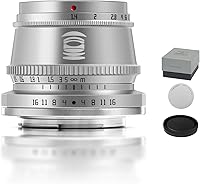
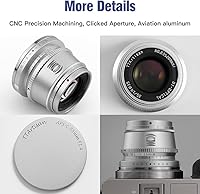
The TTArtisan 35mm F1.4 APS-C Lens is a compact manual prime built for Sony E mount APS-C shooters who want genuine optical character without a hefty price tag. On an APS-C body, the 35mm focal length works out to roughly 52mm equivalent, close enough to how the eye naturally sees that it feels instinctive for street work, portraits, and everyday shooting. The barrel is machined from aviation-grade aluminum, which is rare at this price tier and gives it a density that feels purposeful in the hand. This brand has been quietly expanding its lineup of affordable manual primes, and this lens fits that philosophy well. Be clear-eyed going in: no autofocus, no electronic contacts, and no EXIF data passed to the camera body.

Features & Benefits

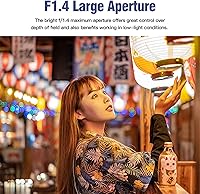
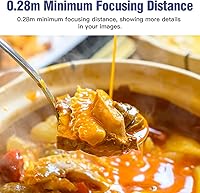
The F1.4 maximum aperture is what draws most people in — it lets you shoot in low light without immediately cranking ISO, and it produces the kind of subject separation that makes portraits feel genuinely three-dimensional. Wide open, center sharpness is solid, but expect some softness toward the edges; stopped down to F2 or F2.8, the image noticeably tightens up. The 10-blade diaphragm contributes to bokeh that looks smooth and rounded, not the harsh polygon shapes cheaper lenses produce. A minimum focus distance of about 11 inches is tighter than many primes in this class, which opens up close-up lifestyle shots nicely. The click-stop aperture ring adds tactile control, and the 39mm filter thread keeps your accessory costs minimal.

Best For

This manual prime suits a specific kind of shooter, and knowing whether you fit that profile matters. Street photographers will appreciate how small and quiet it is — no whirring motor, no give-away lens movement, just a discreet barrel that barely attracts attention. Budget-conscious portrait shooters get F1.4 bokeh without committing to autofocus glass that costs several times more. If you are new to manual focus, this is a low-stakes way to build that skill on a Sony body. Food and lifestyle content creators will find the close focus distance particularly useful for tight, atmospheric shots. Videographers who prefer pulling focus manually on a compact rig will feel right at home.

User Feedback

With over 200 ratings averaging 4.4 out of 5, the reception to this compact prime lens is broadly positive. Buyers consistently highlight that the build quality punches well above its price bracket, and the bokeh character earns genuine praise. The sticking point for a meaningful share of reviewers is the manual focus requirement — this is not a minor caveat for anyone shooting fast-moving subjects. Some users note the focus ring feels stiff out of the box, though most report it loosens naturally with use. Vignetting wide open surprises a few buyers, but it is expected behavior at this aperture class. Worth noting: since there is no electronic link to the camera, shooting data like aperture will not appear in your image metadata.

Pros

  • F1.4 aperture delivers real low-light capability without pushing ISO to noisy extremes.
  • The 10-blade diaphragm produces smooth, rounded bokeh that looks far more expensive than the price suggests.
  • Aviation-grade aluminum construction gives the lens a solid, premium feel that stands out at this budget tier.
  • At roughly 180g, this compact prime lens pairs beautifully with smaller APS-C bodies without throwing off the balance.
  • An 11-inch minimum focus distance opens up close-up lifestyle and product shots that many standard primes cannot match.
  • The click-stop aperture ring provides satisfying, tactile control that videographers and deliberate shooters will genuinely appreciate.
  • The 39mm filter thread means compatible filters and lens caps are widely available and inexpensive.
  • Center sharpness is commendably good when stopped down to F2 or F2.8, producing crisp, detailed images.
  • Over 200 buyer reviews average 4.4 out of 5, reflecting consistent real-world satisfaction across a broad user base.
  • The discreet, motorless design makes it one of the quietest options for street photography on Sony E mount.

Cons

  • No autofocus means missed shots are a real risk when subjects move unpredictably.
  • Zero electronic communication with the camera body means aperture and focal length data will never appear in your image EXIF.
  • Edge and corner sharpness wide open is noticeably soft, which limits full F1.4 usability to center-focused compositions.
  • Some units arrive with a stiff focus ring that requires a break-in period before it turns smoothly.
  • Vignetting at F1.4 is visible and may require correction in post if clean, even exposures are needed.
  • No optical stabilization of any kind, which combined with a fast aperture can still produce blur in very low light at slower shutter speeds.
  • The manual-only design has a learning curve that can frustrate newer photographers expecting modern conveniences.
  • No weather sealing, which limits use in rain or dusty outdoor conditions.

Ratings

Our AI rating system analyzed verified global buyer reviews for the TTArtisan 35mm F1.4 APS-C Lens, actively filtering out incentivized, duplicate, and bot-generated submissions to surface what real photographers actually experience day to day. Scores reflect a transparent balance of genuine strengths and recurring frustrations, weighted by how frequently each issue appears across the verified review pool. Where buyers consistently agree — positively or negatively — those signals carry the most weight in the final scores.

Build Quality
88%
The aluminum alloy barrel consistently impresses buyers who expect plastic at this price point. Shooters report that the lens feels noticeably dense and solid in hand, with no creaking or flex — a quality that builds confidence when using it on city streets or outdoor shoots.
A subset of buyers note that the focus ring feels stiff and slightly rough straight out of the box, which can be frustrating during initial use. While it typically loosens with break-in, the inconsistency across units suggests quality control is not perfectly uniform.
Optical Performance
74%
26%
Center sharpness when stopped down to F2 or F2.8 earns consistent praise, producing clean, detailed images for portraits and lifestyle shots that hold up well at standard print and screen sizes. Buyers shooting food and coffee content find the rendering pleasing and characterful.
Wide open at F1.4, edge and corner sharpness is soft in the way typical of budget fast primes — usable for artistic subject isolation but not for scenes requiring detail across the full frame. Some buyers feel this limitation is understated in product descriptions and were mildly caught off guard.
Bokeh Quality
91%
The 10-blade diaphragm earns some of the most enthusiastic feedback in the entire review pool. Buyers regularly describe the background blur as smooth, creamy, and visually rounded — more reminiscent of lenses at significantly higher price points than this compact prime lens sits at.
At mid-range apertures like F2.8 to F4, the bokeh transition zone can show slight outlining on high-contrast edges, a characteristic some portrait shooters find mildly distracting. This is a minor optical trade-off at this price tier, but worth knowing if clinical smoothness is a priority.
Low-Light Usability
82%
18%
The F1.4 aperture makes a tangible difference in real low-light scenarios — indoor cafe shoots, evening street photography, and dimly lit studio setups all benefit from the extra light gathering. Buyers report keeping ISO noticeably lower than they could with slower kit lenses.
Without optical stabilization and no electronic communication to enable in-body stabilization compensation, handheld low-light shooting still demands careful technique. Users on bodies without effective IBIS report more motion blur than expected when shooting in very dim conditions at slower shutter speeds.
Manual Focus Experience
71%
29%
For photographers who prefer or are learning manual focus, the ring action — once broken in — is described as smooth and well-damped, making deliberate focus pulls in video and careful portrait sessions feel controlled and satisfying. The throw distance gives reasonable precision for a 35mm lens.
Out-of-the-box stiffness is a recurring complaint that affects first impressions, and buyers coming from autofocus systems often find the adjustment steep, particularly in street shooting scenarios where quick focus changes matter. This is not a lens for reactive, spontaneous shooting styles.
Value for Money
93%
Across the review pool, value is the single most frequently praised attribute. Buyers repeatedly express surprise at receiving aluminum construction, F1.4 light gathering, and smooth bokeh at this price bracket, with many stating they expected far less optical character for the cost.
A small segment of reviewers feel the manual-only design limits who can realistically use the lens well, effectively narrowing the value proposition for buyers who did not factor that trade-off in before purchasing. For those buyers, value perception drops considerably post-purchase.
Aperture Ring Feel
84%
The click-stop aperture ring receives consistent positive feedback from videographers and deliberate shooters who appreciate being able to change exposure by feel without taking their eye from the viewfinder. Clicks are firm and clearly defined between stops, which aids repeatable exposure control.
A handful of users who prefer de-clicked aperture rings for smooth video exposure transitions note that the clicks cannot be disabled on this lens, which is a design limitation for certain filmmaking workflows. There is no declicked variant available in this model.
Compatibility
78%
22%
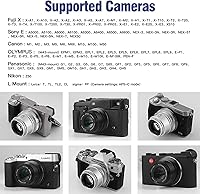
The Sony E mount fit is clean and secure across all tested APS-C bodies, including older NEX-series cameras and current A6000-series bodies. Buyers with multiple Sony APS-C bodies appreciate that a single lens transfers between systems without any adapters or conversion.
Full-frame Sony bodies require crop mode to avoid heavy vignetting, which reduces effective resolution — not a dealbreaker but worth flagging for shooters who use both APS-C and full-frame bodies. No EXIF lens data is passed under any configuration, which remains a persistent compatibility gap.
Size & Portability
89%
At around 180g, this manual prime slips into a jacket pocket or small camera bag without adding meaningful weight or bulk. Street photographers in particular highlight how naturally it pairs with compact APS-C bodies, resulting in a setup that draws far less attention than a larger zoom rig.
The 39mm filter thread, while compact and cost-efficient, means dedicated step-up rings are needed if you want to share larger filters from other lenses in your kit. This is a minor inconvenience but adds a small hidden cost for filter-heavy shooters.
Vignetting
62%
38%
Buyers who understand fast prime optics are largely unbothered by the vignetting at F1.4, with some actively using it as a creative framing tool to draw attention to the center of the image, particularly in portrait and street contexts where darkened corners add mood.
Because the lens has no electronic contacts, automatic lens correction profiles in software like Lightroom cannot identify the lens and apply corrections automatically. Manual correction is required every time, which adds a repetitive step to post-processing workflows that some users find tedious at scale.
Sharpness at F1.4
61%
39%
Center-frame sharpness wide open is sufficient for subject-focused portraits and lifestyle imagery where the background is intentionally blurred. Buyers who set their expectations correctly — understanding that F1.4 on a budget prime is for light and character, not clinical precision — report being satisfied.
Edge softness and mild chromatic aberration wide open are regularly noted by more technically minded buyers, especially those comparing directly to native Sony lenses. Shooting flat subjects like documents or artwork wide open reveals the optical limitations clearly, and this is not the right tool for that use case.
EXIF & Metadata
41%
59%
For photographers who manage images by creative project rather than technical metadata, the absence of EXIF lens data is essentially a non-issue — they never look at it, and the images stand entirely on their own visual quality.
The complete absence of aperture, focal length, and lens identification in image EXIF data is a genuine workflow problem for photographers who use metadata to organize shoots, apply batch corrections, or maintain accurate records across large volumes of images. There is no workaround short of logging settings manually.
Packaging & Unboxing
69%
31%
Most buyers report receiving the lens in clean, functional packaging with front and rear caps included, and find the presentation perfectly acceptable for a value-tier product. The lens arrives ready to mount without any notable setup required.
The included soft pouch offers minimal protection for transport or storage, and a few buyers note the packaging feels sparse compared to other TTArtisan lenses in the lineup. Those planning to travel with the lens will want to invest in a third-party hard case separately.
Video Suitability
77%
23%
Filmmakers who prefer manual control praise the lens for its predictable aperture clicks, smooth focus ring action after break-in, and compact profile that sits well on cage-mounted rigs. The lack of autofocus is a non-issue for planned, scripted video work where focus marks are set in advance.
The absence of electronics means the camera cannot log aperture changes during a recording session, and focus confirmation tools like face-tracking are unavailable. For run-and-gun video work or documentary-style shooting, the manual-only nature significantly limits practical usability.

Suitable for:

The TTArtisan 35mm F1.4 APS-C Lens is a strong fit for Sony APS-C shooters who shoot deliberately and are comfortable — or curious — about working without autofocus. Street photographers will find the compact, quiet form factor ideal for blending in, while the near-standard 52mm equivalent field of view makes framing feel natural rather than forced. Portrait shooters on a tight budget get access to a genuine F1.4 aperture and smooth, rounded bokeh without paying a premium for autofocus glass they may not even need. Content creators focused on food, coffee, or lifestyle work will appreciate how close the lens can focus — about 11 inches — which adds creative flexibility for tight, intimate compositions. Videographers who pull focus manually and want clean aperture clicks for controlled exposure transitions will find this compact prime lens easy to work with on a small rig.

Not suitable for:

The TTArtisan 35mm F1.4 APS-C Lens has a hard dealbreaker baked into its design: there is no autofocus, and no amount of workarounds changes that. If you regularly shoot fast-moving subjects — kids, sports, pets, events — this manual prime will cost you shots, full stop. The lack of any electronic contacts also means your camera body receives zero data from the lens, so aperture, focal length, and other shooting parameters will be absent from your image EXIF records, which matters if you organize or sort by metadata. Wide open at F1.4, edge sharpness is soft in the way most budget fast primes are, so if pixel-perfect corner resolution is a priority, you will need to stop down and sacrifice some of that low-light advantage. Photographers who rely on in-body optical stabilization with lens-specific correction profiles may also find that vignetting and distortion compensation is unavailable since the body has no communication channel to work from.

Specifications

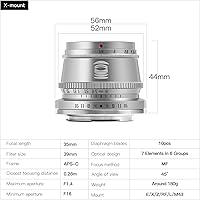
  • Focal Length: The lens has a 35mm focal length, which translates to approximately 52mm equivalent on an APS-C sensor, closely matching the natural field of human vision.
  • Maximum Aperture: The maximum aperture is F1.4, allowing significant light transmission for low-light shooting and shallow depth-of-field effects.
  • Minimum Aperture: The lens stops down to a minimum aperture of F16, giving full control over depth of field across a wide range of lighting conditions.
  • Optical Design: The optical formula consists of 7 elements arranged in 6 groups, balancing image quality and compact form factor.
  • Diaphragm Blades: Ten rounded diaphragm blades produce smooth, circular bokeh at wide apertures rather than the angular highlights associated with fewer-blade designs.
  • Focus Method: Focus is entirely manual, with no autofocus motor or electronic communication between the lens and camera body.
  • Closest Focus: The minimum focusing distance is 0.28m (approximately 11 inches), which is closer than many standard primes in this focal length range.
  • Angle of View: The lens delivers a 45-degree angle of view on an APS-C sensor, providing a natural, versatile perspective suited to everyday and portrait shooting.
  • Filter Thread: The front of the lens accepts 39mm screw-in filters, a slim, cost-efficient size that keeps the lens profile compact.
  • Mount Compatibility: The lens is built for Sony E mount and is designed for APS-C sensor cameras, though it can be mounted on full-frame Sony bodies in crop mode.
  • Body Material: The lens barrel is machined from aviation-grade aluminum alloy, providing durability and a premium tactile feel at a budget price point.
  • Aperture Ring: The aperture ring features click stops at each full and half stop, allowing precise, repeatable exposure adjustments by feel alone.
  • Weight: The lens weighs approximately 180g (around 6.3 oz), making it one of the lighter F1.4 primes available for Sony E mount.
  • Dimensions: Physical dimensions measure 3.98 x 4.17 x 3.03 inches, resulting in a compact footprint that pairs naturally with smaller APS-C mirrorless bodies.
  • Frame Coverage: The lens is designed for APS-C frame coverage and will produce heavy vignetting if used without crop mode on a full-frame Sony body.
  • EXIF Data: Because there are no electronic contacts, the lens transmits no data to the camera body, meaning aperture, focal length, and lens ID will not be recorded in image metadata.

Related Reviews
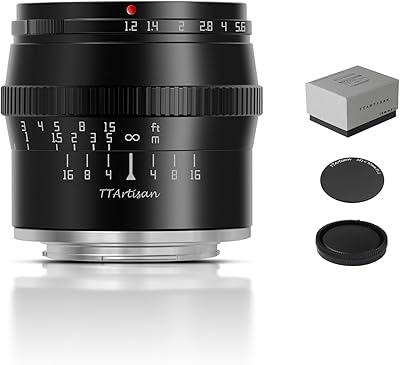
TTArtisan 50mm F1.2 APS-C Manual Focus Lens
84%
88%
Image Quality
75%
Manual Focus Experience
90%
Low Light Performance
85%
Build Quality
91%
Portability
More
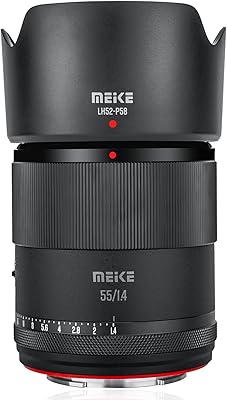
Meike 55mm F1.4 Nikon Z Mount Lens
77%
91%
Value for Money
86%
Bokeh Quality
78%
Image Sharpness
69%
Autofocus Performance
74%
Build Quality
More
Meike 35mm F1.4 MFT Lens
84%
89%
Sharpness & Image Quality
74%
Manual Focus Usability
91%
Build Quality
87%
Low Light Performance
92%
Value for Money
More
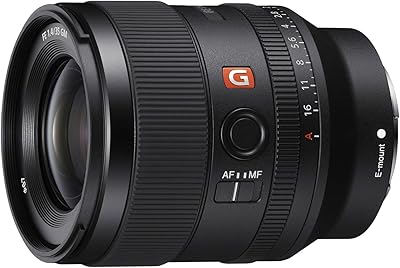
Sony FE 35mm F1.4 GM Prime Lens
86%
96%
Optical Sharpness
93%
Autofocus Performance
91%
Bokeh Quality
88%
Build Quality
67%
Vignetting Control
More
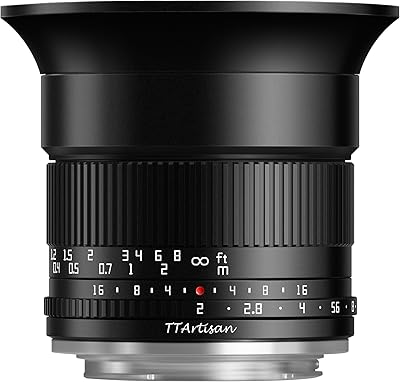
TTArtisan 10mm F2 APS-C Wide-Angle Lens
78%
78%
Optical Sharpness
84%
Aperture Performance
86%
Build Quality
91%
Value for Money
73%
Distortion Control
More
7artisans 50mm F1.8 APS-C Manual Lens for Fuji
83%
88%
Image Quality
73%
Manual Focus Usability
85%
Low-Light Performance
80%
Build Quality
92%
Value for Money
More
Meike 25mm F1.8 Sony E-Mount Lens
78%
88%
Build Quality
74%
Optical Sharpness
81%
Bokeh & Background Blur
77%
Low-Light Performance
83%
Manual Focus Experience
More
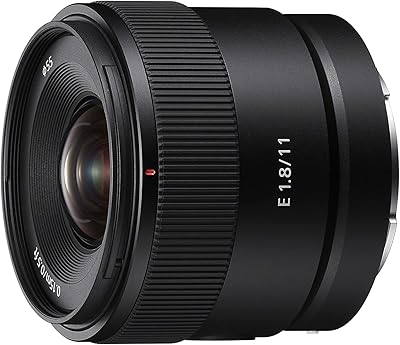
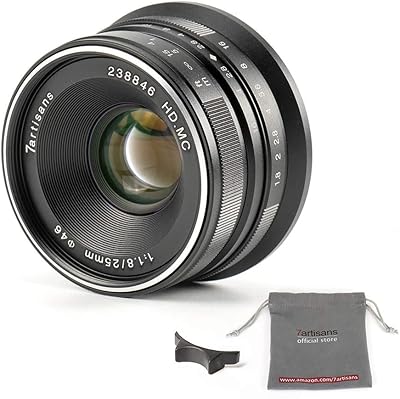
Sony E 11mm F1.8 APS-C Ultra-Wide-Angle Prime Lens
87%
93%
Autofocus Speed
91%
Image Quality
89%
Portability
74%
Low-Light Performance
88%
Build Quality
More
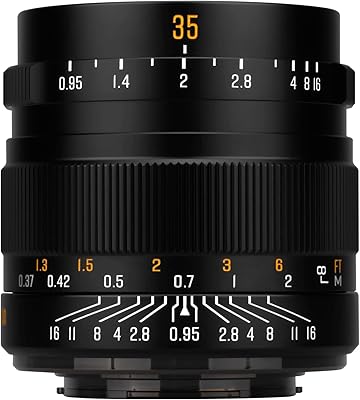
7artisans 25mm F1.8 Manual Prime Lens
79%
88%
Build Quality
91%
Value for Money
72%
Image Sharpness
83%
Bokeh Quality
61%
Chromatic Aberration
More
Brightin Star 35mm F0.95 Prime Lens
80%
91%
Bokeh & Background Separation
88%
Aperture & Low-Light Performance
67%
Sharpness Wide Open
89%
Build Quality & Finish
72%
Manual Focus Experience
More

FAQ

Yes, it mounts directly onto any Sony E mount APS-C camera, including the full A6000 series. The lens covers the APS-C sensor perfectly with no cropping or compatibility issues.

It will mount on full-frame Sony E mount bodies, but the image circle is only designed for APS-C sensors, so you will get heavy vignetting unless you shoot in crop mode. In APS-C crop mode on an A7-series body, it works fine.

It depends entirely on what you shoot. For static subjects like portraits, street scenes, food, or landscapes, manual focus is very manageable with a little practice. If you regularly shoot fast-moving subjects — kids running around, sports, animals in motion — missing shots will be a genuine frustration. Be honest with yourself about your shooting style before buying.

No. Because the TTArtisan 35mm F1.4 APS-C Lens has no electronic contacts, it sends zero information to the camera body. Your EXIF data will show no lens information, and the camera cannot read or display the current aperture. If you organize your images by metadata, this is worth factoring in.

Center sharpness at F1.4 is decent and usable, but like most budget fast primes, the edges and corners are noticeably soft when fully open. Stopped down to around F2 or F2.8, the image sharpens up considerably across the frame. Wide open is best used for subject isolation rather than expecting edge-to-edge detail.

Almost certainly not. A number of buyers mention this, and it is a common characteristic of new manual lenses. With regular use, the focus ring typically loosens and smooths out over time. If it does not improve after extended use, that would be worth contacting the seller about.

Yes, vignetting is visible at F1.4, particularly in the corners. This is completely normal behavior for a fast prime at this price point — even much more expensive lenses show it wide open. Since the lens sends no data to the camera, automatic lens correction profiles in Lightroom or similar software will not apply automatically, but you can correct it manually using the vignetting slider with no trouble.

It actually works quite well for video. The click-stop aperture ring is useful if you need to change exposure between shots, and the smooth manual focus ring suits deliberate focus pulls. Just keep in mind the camera will record no lens metadata, and you will need to monitor focus carefully since there is no focus confirmation assist beyond peaking and magnification in your camera settings.

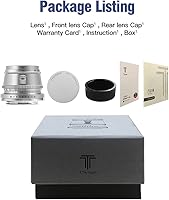
TTArtisan typically includes a basic soft pouch and front and rear lens caps in the box. Do not expect a rigid case — if you want hard protection for travel, a third-party lens case sized for a small prime is a worthwhile addition.

This compact prime lens is generally considered a strong performer in its category, with the aluminum build and 10-blade aperture being notable advantages over plastic-bodied competitors. The bokeh character is well-regarded. The main trade-offs are consistent with the category: manual focus only, no electronics, and some optical compromises wide open. If you want autofocus at a low price, you are looking at a different category of lens entirely.

Where to Buy