Overview

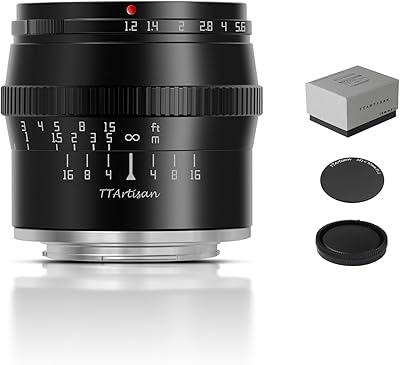
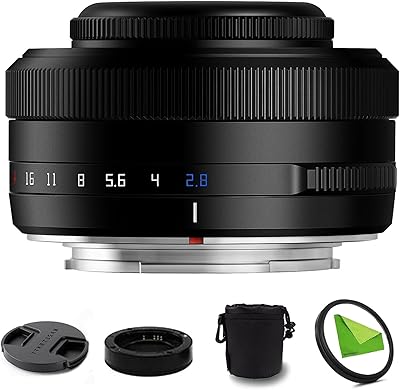
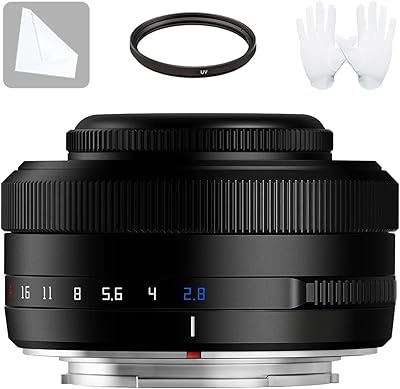
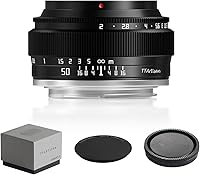
The TTArtisan 50mm F2 X-Mount Manual Focus Lens is one of the more interesting budget primes to emerge from China's growing optical industry in recent years. TTArtisan has been quietly earning a following among enthusiast photographers who want manual glass without spending native-lens money. On an APS-C Fujifilm body, this focal length translates to roughly a 75mm equivalent, putting you in short-telephoto portrait territory rather than a true standard view — a distinction worth knowing before you buy. There are no electronic contacts, no autofocus, no EXIF data passed to your camera. What you get is a purely tactile experience that either suits your workflow or simply doesn't.
Features & Benefits

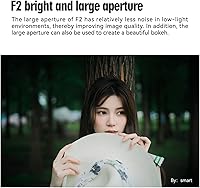
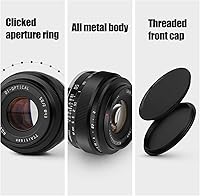
The 10-blade diaphragm is one of the first things worth noting — it produces noticeably round, smooth bokeh at f/2 that would embarrass lenses costing considerably more. The all-metal body feels dense and purposeful in hand, with an anodized finish that shrugs off the casual abuse of daily shooting on the move. At roughly 200g and just 1.4 inches thick, this compact X-Mount lens barely registers in a bag. The click-stop aperture ring is satisfying to use; each detent is positive and repeatable, which matters when you are adjusting exposure quickly. A 43mm filter thread is a practical bonus that keeps filter costs low across your whole kit.

Best For

This manual 50mm prime is genuinely well-suited to photographers who shoot slowly and deliberately. Street shooters working zone-focus technique will feel at home with the tactile aperture ring and smooth focus throw. Travelers who want one small, durable prime that doesn't draw attention will appreciate how little space it occupies. It also fits naturally into food and portrait shooting, where you control the distance and f/2 subject separation does the heavy lifting. Fujifilm users who lean into film simulations and shoot JPEG-first will find this compact X-Mount lens pairs well with that unhurried, analog-style workflow. Anyone dependent on autofocus should look elsewhere entirely.

User Feedback

Across roughly 78 ratings, the TTArtisan 50mm f/2 holds a 4.1 out of 5, which fairly reflects what you are actually getting. Buyers consistently highlight the build quality and aperture feel, and many note that center sharpness from f/4 onward is genuinely impressive at this price. Wide open at f/2, though, expect softer edges and some chromatic aberration in high-contrast scenes. The absence of electronic contacts is a real inconvenience — no EXIF logging and reduced in-body stabilization effectiveness. The 0.5m minimum focus distance also limits how close you can work. That said, most buyers consider the trade-offs more than fair given what they paid.

Pros

  • The 10-blade diaphragm produces smooth, circular bokeh that looks far more expensive than it is.
  • All-metal construction with an anodized finish feels genuinely premium and resists everyday wear.
  • At roughly 200g and 1.4 inches thick, this manual 50mm prime is one of the most compact options for X-Mount shooters.
  • The click-stop aperture ring is precise and satisfying, making exposure adjustments quick and repeatable.
  • Center sharpness from f/4 onward is strong and punches well above the price tier.
  • A 43mm filter thread is a practical, cost-friendly size that most photographers already have filters for.
  • The f/2 maximum aperture performs well in low-light situations like dusk shooting or dim indoor settings.
  • Build quality and overall fit feel noticeably better than comparable lenses at this price point.
  • Wide compatibility across the full Fujifilm X-Mount lineup makes it a versatile option for current and future bodies.

Cons

  • No electronic contacts means zero EXIF data recorded, complicating post-processing organization and lens correction.
  • In-body stabilization on Fujifilm cameras operates less effectively without focal length communication from the lens.
  • Edge sharpness wide open at f/2 is noticeably soft, which limits its usefulness for landscape or architectural detail work.
  • Chromatic aberration at f/2 in high-contrast scenes requires correction in post, adding editing time.
  • The 0.5m minimum focus distance is a real restriction for close-up or product photography where you need to get tight.
  • Manual-only focus makes this compact X-Mount lens impractical for fast-moving or unpredictable subjects.
  • No weather sealing leaves the lens vulnerable during outdoor shooting in rain or dusty conditions.
  • The 75mm APS-C equivalent may disappoint buyers expecting a true standard 50mm field of view on their camera.
  • Resale value is limited compared to native Fujifilm glass, so it is harder to recoup costs if you change systems.

Ratings

The TTArtisan 50mm F2 X-Mount Manual Focus Lens has been evaluated by our AI system after analyzing verified global buyer reviews, with spam, bot-generated feedback, and incentivized posts actively filtered out. Scores reflect the full picture — where this compact manual prime genuinely impresses and where real users have run into frustration. Strengths and pain points are weighted equally, so you can make a purchase decision based on honest signal rather than curated noise.

Build Quality
88%
The all-metal body with anodized finish consistently draws praise from users who have carried this lens across city streets, mountain trails, and busy travel days. It feels noticeably more solid than its price suggests, and the aperture ring in particular has a satisfying, well-machined heft that photographers coming from plastic kit lenses find genuinely refreshing.
Despite the premium-feeling exterior, the lens lacks any weather sealing, which becomes a real concern during outdoor shooting in light rain or dusty conditions. A handful of users have also noted minor variation in focus ring tension between production units, suggesting quality control is consistent but not perfectly uniform.
Optical Sharpness
74%
26%
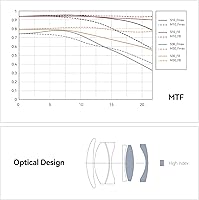
Center sharpness from f/4 onward earns genuine compliments from portrait and food photographers who stop down for their primary shots. At those middle apertures, the 6-element optical design delivers clean, natural rendering that holds up well even when images are examined at 100 percent crop.
Wide open at f/2, edge softness and chromatic aberration in high-contrast scenes are recurring complaints that show up across multiple independent reviews. Users shooting architecture, landscapes, or anything requiring corner-to-corner sharpness will find the wide-open performance limiting and may spend extra time correcting fringing in post.
Bokeh Quality
86%
The 10-blade diaphragm produces smooth, near-circular out-of-focus highlights that photographers consistently describe as soft and natural rather than harsh or geometric. Portrait and food shooters in particular appreciate how background elements melt away at f/2 without the busy, nervous quality found in cheaper lenses with fewer blades.
At closer focus distances and toward the edges of the frame, some onion-ring patterning in bright specular highlights has been noted by more technically observant users. It is not a deal-breaker for most shooting scenarios, but those doing careful portrait or product work with controlled lighting may find it occasionally distracting.
Value for Money
91%
Across the review pool, the price-to-performance ratio is the single most commonly praised attribute. Buyers who compared this manual 50mm prime against native Fujifilm alternatives at two or three times the cost found it compelling for casual, deliberate, or exploratory shooting where autofocus is not a requirement.
The value calculation shifts if you factor in the time cost of manual post-processing corrections for chromatic aberration and the absence of EXIF data for lens-based profiles. For photographers who bill hourly or edit at volume, those extra steps add up in ways that erode the upfront savings over time.
Manual Focus Experience
82%
18%
The focus ring has a smooth, well-damped throw that experienced manual focus shooters find pleasurable to work with during slow-paced street walks or tripod-based food and product setups. Combined with Fujifilm bodies that offer focus peaking and magnified view assist, the tactile experience is described by many users as genuinely enjoyable rather than a compromise.
Users who picked this up expecting an easy transition from autofocus lenses report a frustrating early learning curve, particularly when shooting at f/2 where the shallow depth of field punishes even minor focus errors. In fast or unpredictable shooting situations, missed focus rates are noticeably higher than anything an autofocus lens would produce.
Aperture Ring Feel
89%
The click-stop aperture ring is one of the most frequently praised physical details across user reviews. Each stop from f/2 through f/16 has a positive, tactile detent that makes setting exposure by feel second nature after a short period of use, especially when shooting from the hip on city streets.
A small number of users have reported that the clicks feel slightly stiff or unevenly spaced on their particular copy, pointing again to minor unit-to-unit variation. There is also no de-click option for video work, which limits the lens's usefulness for smooth aperture pulls in cinematic applications.
Portability & Size
93%
At roughly 200g and just 1.4 inches deep, this compact X-Mount lens is genuinely easy to forget is attached to your camera during long days on foot. Travel photographers and street shooters highlight how naturally it balances on smaller Fujifilm bodies like the X-E4 or X-S10 without creating front-heaviness.
The compact size comes at a minor ergonomic cost — users with larger hands sometimes find the narrow focus ring harder to grip precisely, especially when shooting one-handed or in cold weather with gloves. There is not much barrel to hold onto compared to longer manual primes.
Low-Light Performance
76%
24%
The f/2 aperture gives photographers a meaningful light-gathering advantage during dusk, interior, or evening shooting scenarios where lifting ISO would otherwise become necessary. Users who shoot available-light street or cafe scenes report keeping ISO at more manageable levels than they could with a kit zoom.
The absence of image stabilization data communication reduces the effectiveness of in-body stabilization in low light, making handheld shots at slower shutter speeds riskier than they would be with a native lens. Additionally, wide-open aberrations become more visible in artificial lighting conditions with strong point sources.
Chromatic Aberration
61%
39%
Stopped down to f/4 and beyond, chromatic aberration is well-controlled and largely a non-issue for the portrait, food, and travel subjects this lens is primarily aimed at. In those conditions, color fringing at edges is minimal enough that many users do not bother correcting it in post.
Wide open at f/2 in high-contrast situations — think bright foliage against an overcast sky, or backlit subjects with strong edge definition — purple and green fringing becomes clearly visible and requires manual correction in Lightroom or similar software. Without automatic lens profiles due to the missing EXIF data, this correction must be applied by hand each time.
Camera Compatibility
84%
The lens mounts cleanly and securely across the full breadth of Fujifilm X-Mount bodies, from older models like the X-T1 through current releases like the X-T5 and X-S20, which buyers appreciate since it carries over between camera upgrades without any compatibility anxiety.
Compatibility is limited strictly to the Fujifilm X-Mount ecosystem with no adapter pathway to other systems that makes practical sense given the manual-only design. Users who later switch to Sony E-Mount or Micro Four Thirds will find the lens has no resale flexibility toward those systems.
EXIF & Metadata
38%
62%
For photographers who shoot RAW and manage their libraries manually or by date rather than by lens metadata, the absence of EXIF lens data is a non-issue and does not affect their day-to-day workflow in any meaningful way.
The total lack of electronic contacts means no focal length, aperture, or lens identification data is written to image files. This creates real friction for photographers who rely on Lightroom's lens correction profiles, organize shoots by lens in their DAM software, or need to report accurate technical metadata for editorial or commercial clients.
Minimum Focus Distance
57%
43%
At 0.5m, the minimum focus distance is adequate for standard portrait framing, food photography at typical table distances, and street-scene subjects at conversational proximity, covering the majority of everyday shooting scenarios this lens is marketed toward.
Users who expected more close-focusing capability for tight detail shots of food, flowers, jewelry, or small products regularly flag the 0.5m floor as a genuine constraint. It rules out improvised macro work entirely and forces photographers to reframe or step back more than they would with competing lenses that focus closer.
Video Usability
52%
48%
The smooth focus ring throw makes rack focusing between subjects manageable for deliberate, scripted video work when the camera is on a tripod and subject distances are predictable. Some vloggers use it for static talking-head setups where focus is set and left alone.
The clicked aperture ring with no de-click option makes smooth exposure changes during recording impractical, and the lack of stabilization data communication reduces handheld footage smoothness. For active or documentary-style video shooters, these combined limitations make this compact X-Mount lens a poor primary video tool.
Filter Thread Usability
79%
21%
The 43mm filter thread is a practical and underrated spec — filters at this size are meaningfully less expensive than 67mm or 77mm options, and the thread size is common enough that thin-ring circular polarizers and UV filters are readily available from major filter brands without special ordering.
Photographers who already own a set of larger filters will need step-up rings to use them here, which adds a small amount of bulk and can create vignetting at wider apertures if the ring stack is too tall. The 43mm size, while practical for new purchases, sits outside most existing filter kits.

Suitable for:

The TTArtisan 50mm F2 X-Mount Manual Focus Lens was clearly designed with a specific kind of photographer in mind, and if you fit that profile, it delivers real value. Street and documentary shooters who embrace zone focusing or enjoy the deliberate pace of manual glass will feel right at home with its tactile aperture ring and smooth focus throw. On an APS-C Fujifilm body, the 75mm equivalent field of view is a natural fit for portraits, candid close-ups, and food work where you control the shooting distance and let f/2 do the subject isolation. Travelers who want a small, tough prime that slips into any bag without adding bulk or worry will appreciate just how compact and well-built this lens feels in the hand. It also resonates strongly with Fujifilm users who shoot with film simulations and prefer a slower, more intentional approach to capturing images.
Not suitable for:

The TTArtisan 50mm F2 X-Mount Manual Focus Lens is a poor fit for anyone whose shooting style depends on speed or camera automation. There are no electronic contacts whatsoever, which means no EXIF data is written to your files, and in-body image stabilization on compatible Fujifilm bodies will operate without focal length information, reducing its effectiveness. If you shoot fast-moving subjects — kids, sports, pets, events — manual focus at f/2 will test your patience and cost you keepers. Photographers who rely on reviewing lens metadata in Lightroom or similar software for sorting and correction will find the missing EXIF a genuine inconvenience over time. The 0.5m minimum focus distance also rules it out for anyone hoping to do close macro work. And if you are accustomed to native Fujifilm primes with weather sealing and autofocus, the trade-offs here may feel like too many compromises regardless of the savings.
Specifications

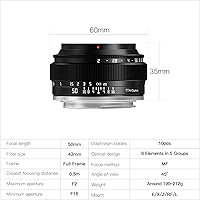
  • Focal Length: This lens has a fixed 50mm focal length, which translates to approximately 75mm equivalent on APS-C Fujifilm bodies due to the 1.5x crop factor.
  • Maximum Aperture: The maximum aperture is F/2, allowing for meaningful background separation and usable performance in lower ambient light conditions.
  • Minimum Aperture: The aperture can be stopped down to F/16, giving photographers fine-grained control over depth of field and exposure across a wide range of lighting scenarios.
  • Aperture Blades: A 10-blade diaphragm produces smooth, near-circular bokeh highlights that remain pleasing even at middle aperture values.
  • Optical Design: The lens uses a 6-elements-in-5-groups optical formula designed to prioritize center sharpness and natural tonal rendering.
  • Focus Method: Focus is entirely manual with no electronic or mechanical autofocus mechanism of any kind.
  • Minimum Focus: The closest focus distance is 0.5m (approximately 1.6 feet), which limits suitability for tight close-up or macro shooting.
  • Weight: The lens weighs between approximately 190g and 212g depending on production tolerances, making it light enough for all-day carry.
  • Thickness: At just 3.5cm (1.4 inches) deep, this is one of the slimmer manual primes available for the Fujifilm X-Mount system.
  • Filter Thread: The front element accepts 43mm filters, a compact and widely available size that keeps accessory costs reasonable.
  • Lens Mount: This lens is designed exclusively for the Fujifilm X-Mount bayonet and is not compatible with other mirrorless or DSLR systems without an adapter.
  • Electronic Contacts: There are no electronic contacts on the mount, meaning no EXIF metadata is passed to the camera body and stabilization systems receive no focal length data.
  • Body Material: The barrel and aperture ring are constructed from aerospace-grade aluminum alloy with an anodized surface finish for scratch and wear resistance.
  • Aperture Control: The aperture ring features positive click stops at each full stop from F/2 through F/16, enabling tactile and repeatable manual exposure adjustments.
  • Angle of View: The angle of view measures 45 degrees on a full-frame body and approximately 32 degrees on an APS-C sensor camera.
  • Weather Sealing: No weather sealing is present on this lens; it should be used with caution in rain, dust, or humid outdoor conditions.
  • Color Finish: The lens is available in black only, with the anodized finish providing a consistent matte appearance that resists fingerprints reasonably well.
  • Brand Origin: TTArtisan is a Chinese optical manufacturer based in Shenzhen, known for producing affordable manual-focus lenses across multiple mirrorless mount systems.

Related Reviews

TTArtisan 50mm f2 Manual Focus Lens for L Mount Cameras
84%
87%
Image Quality
91%
Manual Focus Precision
90%
Bokeh Quality
85%
Build Quality
82%
Low Light Performance
More
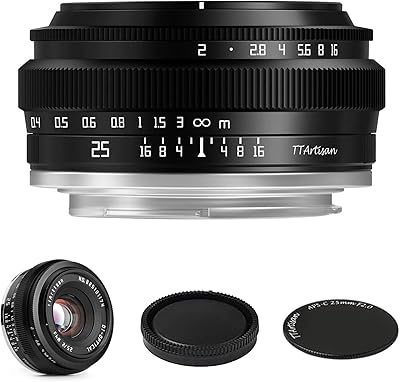
TTArtisan 25mm F2 Fujifilm X-Mount Lens
85%
88%
Image Quality
75%
Manual Focus Control
90%
Low-Light Performance
85%
Portability
92%
Build Quality
More
TTArtisan 50mm F1.2 APS-C Fuji X Lens
82%
89%
Build Quality
92%
Bokeh & Background Blur
68%
Sharpness Wide Open
84%
Sharpness Stopped Down
91%
Value for Money
More
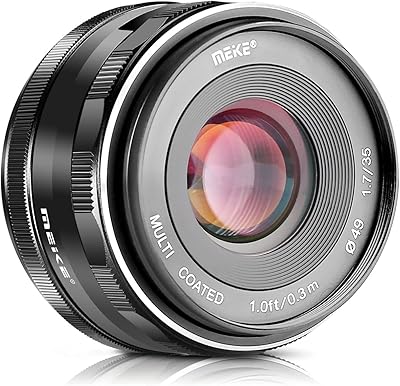
Meike 35mm f1.7 Manual Focus Lens
80%
93%
Value for Money
78%
Optical Sharpness
81%
Build Quality
74%
Aperture Performance
84%
Manual Focus Experience
More
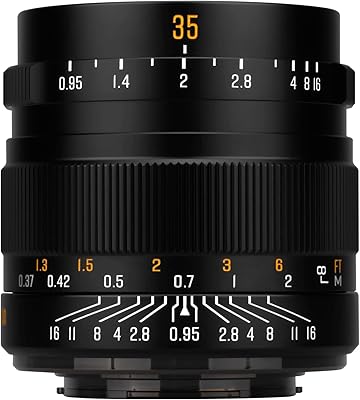
Brightin Star 35mm F0.95 Prime Lens
80%
91%
Bokeh & Background Separation
88%
Aperture & Low-Light Performance
67%
Sharpness Wide Open
89%
Build Quality & Finish
72%
Manual Focus Experience
More
TTArtisan AF 27mm F2.8 XF-Mount Autofocus Lens
80%
78%
Autofocus Speed
74%
Autofocus Accuracy
83%
Optical Sharpness
81%
Bokeh Quality
71%
Build Quality
More
TTArtisan AF 27mm F2.8 Mirrorless Camera Lens
78%
83%
Autofocus Speed & Accuracy
71%
Image Sharpness
88%
Build Quality & Materials
74%
Bokeh & Background Rendering
93%
Portability & Form Factor
More
BENOISON 85mm f/1.8 Portrait Prime Lens
76%
83%
Bokeh & Background Separation
88%
Value for Money
71%
Build Quality & Feel
74%
Optical Sharpness (Center)
66%
Manual Focus Accuracy
More
7Artisans 4mm F2.8 Fisheye Lens
77%
86%
Build Quality
91%
Value for Money
71%
Image Sharpness
63%
Optical Aberrations
58%
Ease of Use
More
Sigma 18-50mm F2.8 DC DN Contemporary Lens
82%
88%
Optical Sharpness
83%
Autofocus Performance
81%
Build Quality & Durability
93%
Size & Portability
86%
Low-Light Capability
More

FAQ

Yes, the TTArtisan 50mm F2 X-Mount Manual Focus Lens is compatible with all current Fujifilm X-Mount bodies, including the X-T30 II, X-S10, X-T4, X-T5, X-Pro3, and X-E4, among many others. Since there are no electronic contacts, basic shooting functions like aperture-priority and manual mode work fine, but you will need to set the focal length manually in the camera menu if you want stabilization to function with any accuracy.
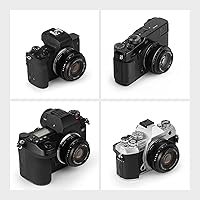
On any APS-C Fujifilm body, the 1.5x crop factor pushes the effective field of view to roughly 75mm equivalent. That puts you in short-telephoto portrait territory rather than the classic street-shooter standard view — closer to a tight headshot lens than a walkaround prime. If you are hoping for a true 50mm field of view on Fujifilm, you would actually want something closer to a 33mm or 35mm lens.

It depends entirely on how you shoot. For stationary or slow-moving subjects like street scenes, food, architecture, or posed portraits, manual focus is very manageable and many photographers find it rewarding. For anything unpredictable or fast-moving, it becomes genuinely challenging. Using focus peaking or magnified view assist on your Fujifilm body helps significantly.

Yes, it does. Fujifilm bodies with in-body image stabilization will still attempt to stabilize, but without a focal length signal from the lens, the system cannot optimize its correction algorithm properly. You can manually enter 50mm (or 75mm for the APS-C equivalent) in the camera settings to partially compensate, but results may be less consistent than with a native electronic lens.

Center sharpness is genuinely good, especially once you stop down to f/4 or f/5.6. Wide open at f/2, center performance is still acceptable for portraits, but edge sharpness drops off noticeably and chromatic aberration in high-contrast areas becomes visible. It is not a clinically sharp optic at every aperture, but for the price and intended use cases, the optical performance is solid and well within expectations.

It works reasonably well for food photography, especially on a tripod where manual focus is less of a constraint. The f/2 aperture gives you pleasant background separation, and the 75mm equivalent framing suits overhead or angled table shots nicely. Just keep in mind the 0.5m minimum focus distance — you cannot get extremely close, so very tight detail shots of small items may require stepping back more than you would like.

No automatic lens correction profile will apply because the lens transmits no EXIF data to identify itself. You can manually select a generic correction profile or build a custom one in Lightroom using the lens calibration tool, but out of the box you are on your own for distortion and chromatic aberration correction in post.

The all-metal construction genuinely feels premium and noticeably more solid than you might expect at this price. That said, it lacks the weather sealing of higher-end native Fujifilm glass, and the tolerances on the focus ring can vary slightly between production runs based on user reports. Overall though, the physical feel of this compact X-Mount lens holds up well against lenses that cost two or three times as much.

The front element uses a 43mm filter thread, which is a smaller and less common size than the 52mm or 58mm threads found on many lenses, but 43mm filters are widely available from brands like B+W, Hoya, and Marumi. If you already own larger filters, a 43mm step-up ring is inexpensive and easy to find. A UV or slim circular polarizer is a practical starting choice.

It is actually a good entry point for manual focus exploration precisely because the stakes are low and the learning curve is forgiving. The aperture ring click stops are satisfying and easy to understand, and the focus ring has a smooth, predictable throw. Pair it with focus peaking enabled on your Fujifilm body and you will pick up manual technique faster than you might expect. Just do not start with a fast-moving subject as your first test.