Overview

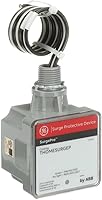
The ABB THOMESURGEP Type 1 Surge Protective Device comes from ABB, a company with decades of experience in industrial and utility-grade electrical infrastructure — which gives it considerably more credibility than the average residential SPD. This is not a power strip; it mounts externally at your home's service entrance or sub-panel, stopping surges before they reach any circuit in the house. That upstream position is precisely what Type 1 classification means. With NEC 2023 Art.230.67 compliance, it also satisfies surge protection mandates now required for new construction and many permitted renovations. At its mid-range price, it sits in a practical sweet spot — professional pedigree without the cost of full commercial-grade hardware.
Features & Benefits

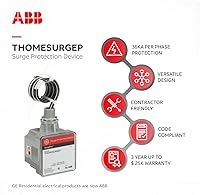
The ABB SurgePro SPD's headline spec is its 36kA per-phase rating — a measure of how large a surge it can absorb in a single event, whether from a nearby lightning strike or a grid disturbance. In plain terms, that's a substantial buffer between an electrical event and your refrigerator, home network, or HVAC system. The 200kA short-circuit current rating adds durability against fault scenarios that lesser units can't handle. Critically, it installs without claiming a single breaker slot, a real advantage in older panels already running tight on space. The LED status indicator on the enclosure provides a quick visual health check, so you always know whether protection is active without needing a service call.

Best For

This whole-home surge protector makes the most sense for homeowners building new or pulling renovation permits, since NEC 2023 compliance is no longer optional in those scenarios. Households running smart home ecosystems, home theater setups, or medically sensitive equipment will benefit from having upstream protection covering every circuit simultaneously. It's equally well-suited for electricians who want a contractor-friendly unit that installs across panel brands without compatibility headaches. One honest caveat: this Type 1 SPD is best understood as a first line of defense rather than complete protection — pairing it with point-of-use surge strips on your most critical devices gives you a genuinely layered approach.

User Feedback

With just over 90 ratings at the time of writing, the review base for this Type 1 SPD is still developing, so the 4.6-out-of-5 average is a positive early signal rather than an established track record. Electricians tend to be the most enthusiastic reviewers, pointing to clean, fast installation and build quality that matches ABB's professional reputation. On the critical side, a handful of buyers have noted the included documentation could be more detailed, especially for less common panel configurations. When compared to Siemens and Square D alternatives, most reviewers position the ABB option favorably for its price. No widespread durability issues have emerged yet, which is encouraging for a product still accumulating real-world feedback.

Pros

  • ABB's industrial-grade reputation adds genuine confidence that this isn't a commodity surge device.
  • Meets NEC 2023 Art.230.67 requirements, making permitted renovations and new builds straightforward.
  • A robust 36kA per-phase surge rating handles serious electrical events, not just minor line noise.
  • Installs without occupying any breaker spaces — a meaningful advantage in crowded older panels.
  • Works with virtually any load center brand, so your electrician isn't locked into one ecosystem.
  • The LED status indicator removes all guesswork about whether protection is still active.
  • Compact enclosure keeps the installation tidy and doesn't require significant extra space near the panel.
  • Early user reviews are consistently positive, with electricians specifically praising its installation experience.
  • Supports both 120/240V and 120/208V configurations, covering the most common residential wiring setups.

Cons

  • Professional installation is mandatory, adding labor cost on top of the unit price — budget accordingly.
  • A Type 1 SPD alone won't fully protect sensitive electronics; point-of-use protection is still needed downstream.
  • The included documentation has drawn complaints from some buyers, particularly for non-standard panel configurations.
  • With fewer than 100 reviews, long-term reliability data is still limited compared to more established competitors.
  • No surge energy rating is publicly listed, making direct spec comparisons with Siemens or Square D units harder.
  • Buyers in areas with extremely frequent or severe lightning events may want to evaluate higher-kA-rated alternatives.
  • Once the SPD reaches end-of-life and the LED signals a fault, replacement requires another electrician visit and added expense.
  • No audible alarm accompanies the LED indicator, so the status check relies entirely on visual inspection near the panel.

Ratings

Our AI-generated scores for the ABB THOMESURGEP Type 1 Surge Protective Device are based on deep analysis of verified global buyer reviews, with spam, incentivized, and bot-generated submissions actively filtered out before scoring. Each category reflects both the genuine strengths buyers praised and the real frustrations they encountered, giving you an honest picture before you commit.
Surge Protection Performance
88%
Buyers in storm-prone regions — Florida, the Gulf Coast, the Midwest — consistently report confidence in the 36kA per-phase rating as meaningful upstream defense. Electricians who've seen lesser SPDs fail after a single significant event appreciate that this whole-home surge protector is spec'd well above the bare minimum for residential use.
Because surge events are invisible and rare, most homeowners can't directly verify performance from experience alone. A small number of reviewers noted they had no way to confirm the device had absorbed anything without the LED changing state, which left some uncertainty about day-to-day activity.
Build Quality
91%
The enclosure feels deliberately engineered rather than cheaply assembled — something several electricians called out specifically when comparing it to budget-tier competitors. ABB's industrial manufacturing background is visible in the component fit and the robustness of the terminal connections, which hold up well during installation handling.
A handful of buyers noted the enclosure housing, while solid, is entirely plastic rather than metal, which a few contractors considered a minor downgrade for an outdoor-adjacent or garage-panel installation where long-term UV and heat exposure is a factor.
Installation Experience
86%
Licensed electricians consistently describe the wiring process as clean and fast. The external mounting approach means no fighting with a crowded breaker box, and the lead wires are long enough to accommodate typical service entrance configurations without awkward routing or extensions.
A recurring complaint involves the printed installation guide, which multiple buyers and electricians described as sparse on detail for non-standard setups. Installers working with older or less common panel configurations occasionally had to rely on ABB's online resources rather than the included documentation.
NEC 2023 Compliance
94%
For homeowners navigating new construction inspections or renovation permits, this ABB SurgePro SPD removes one compliance headache entirely. Inspectors working in jurisdictions that have adopted NEC 2023 accept it without issue, and several contractor reviewers cited this as the primary reason they stock it for new-build projects.
The compliance benefit is only relevant if your local jurisdiction has adopted the 2023 NEC — many areas are still on the 2020 or earlier editions. Buyers in those regions are paying for a compliance credential that currently offers no practical regulatory advantage to them.
Value for Money
77%
23%
At its mid-range price point, this Type 1 SPD lands in a reasonable spot for buyers who want a brand-name unit with credible specs without paying for commercial-grade hardware. For households protecting a smart home ecosystem or expensive electronics, the cost-per-protected-circuit math tilts favorably.
The total cost of ownership includes mandatory professional installation, which typically adds more than the device price itself in labor. Buyers who didn't factor that in upfront reported sticker shock, and a few felt the overall value proposition weakened once the full installed cost was tallied.
Panel Compatibility
89%
The multi-brand compatibility story resonates strongly with electricians who work across different home vintages and panel manufacturers. Not needing to specify a panel brand when ordering simplifies procurement, and reviewers confirmed successful installs on Siemens, Square D, Eaton, and Leviton load centers alongside ABB's own lineup.
A small subset of reviewers with older or less common sub-panel configurations reported needing to verify compatibility details with ABB's technical support before proceeding. The documentation doesn't proactively address edge cases, so compatibility confidence depends somewhat on the installer's own experience.
LED Status Indicator
83%
For non-technical homeowners, having a simple visual indicator near the panel removes a genuine source of anxiety. Buyers specifically praised being able to do a quick visual check — especially after a thunderstorm — without needing to schedule an electrician visit just to confirm the unit is still functioning.
The LED provides a binary status signal only — active or end-of-life — with no indication of how much protective capacity remains or how many surge events have been absorbed. There is also no audible alarm, so the status check requires a deliberate visit to wherever the panel is located.
Documentation & Instructions
61%
39%
The basics are covered adequately for a straightforward residential service entrance install on a common modern panel. Experienced electricians who already understand SPD wiring conventions generally found the included guide sufficient for a standard job.
This is the most consistently flagged weak point across reviewer feedback. Non-standard configurations, older wiring setups, and sub-panel installs all generated confusion that the printed documentation didn't resolve. Several buyers had to consult ABB's online resources or contact technical support, which added friction to what should be a simple process.
Brand Credibility
92%
ABB's name carries real weight in the electrical trade, and that credibility transfers directly to buyer confidence in this product. Reviewers who had previously dealt with no-name SPDs failing after a single event specifically cited the brand reputation as a key reason they chose this unit over cheaper alternatives.
ABB is primarily known in industrial and utility contexts rather than residential consumer products, so some homeowners weren't familiar with the brand before purchasing. A few noted it took additional research to feel confident they weren't buying an obscure or rebranded product.
Physical Footprint
84%
The compact enclosure — roughly the size of a thick hardcover book — fits neatly beside most service panels without requiring significant additional space or a dedicated mounting surface. Contractors noted the dimensions make it practical even in tight utility closets or finished basement panel locations.
In garages or utility rooms where panels are already flanked by meters, conduit runs, or other hardware, the external mounting footprint can become a genuine layout challenge. A small number of installers had to reroute existing hardware to find a clean mounting position.
Long-term Reliability
74%
26%
Early indicators are encouraging — no pattern of premature failures has emerged in the current review pool, and ABB's manufacturing quality control is generally regarded as consistent. Buyers in regions with moderate surge activity report the LED remaining green well past the first year of installation.
The honest limitation here is data: with fewer than 100 reviews and a product launched in early 2024, there simply isn't enough long-term ownership experience to draw firm conclusions about multi-year durability. Buyers in high-surge environments should revisit the review landscape in 12 to 18 months for a clearer picture.
Contractor Experience
87%
Electricians and contractors represent a meaningful portion of the reviewer base, and their feedback skews notably positive. The combination of fast wiring, no breaker slot consumption, and broad panel compatibility makes it a practical stocking item for residential service work rather than a special-order unit.
A few contractors mentioned that ABB's residential product support line, while reachable, is slower to respond than what they experience with Square D or Siemens technical support teams. For time-sensitive job site questions, that lag can be a minor but real inconvenience.
Protection Scope Clarity
69%
31%
Buyers who understood what a Type 1 SPD is designed to do — intercepting large external surges before they reach the panel — came away satisfied that the device delivered exactly what was promised. The LED indicator reinforces this by providing a visible confirmation of active coverage.
A recurring source of disappointment stems from buyers expecting whole-home protection to mean complete protection for every individual device. Several reviewers expressed frustration after realizing they still needed point-of-use surge strips for computers and entertainment systems, suggesting the product category itself is commonly misunderstood at the point of purchase.

Suitable for:

The ABB THOMESURGEP Type 1 Surge Protective Device is the right call for homeowners who are building new, completing a permitted renovation, or upgrading an older service entrance to meet current NEC 2023 Art.230.67 requirements. If your household runs a smart home system, high-end A/V equipment, a home office full of computers, or any kind of medical device that can't afford an unexpected power event, having upstream panel-level protection is genuinely worth the investment and electrician's labor. People living in regions with frequent thunderstorms, aging utility infrastructure, or known grid instability will get the clearest day-to-day value from this whole-home surge protector. It's also a practical choice for licensed electricians and contractors who want a code-compliant, brand-agnostic SPD they can install across different panel brands without sourcing multiple SKUs. If your priority is a set-and-monitor solution — one that tells you when it's done its job and needs replacing rather than leaving you to guess — the LED health indicator makes this Type 1 SPD particularly well-suited for non-technical homeowners.
Not suitable for:

The ABB THOMESURGEP Type 1 Surge Protective Device is not the right fit for anyone expecting a DIY weekend project — this device must be installed by a licensed electrician at the service entrance or sub-panel, and that labor cost needs to be factored into your total budget from the start. Renters, apartment dwellers, or anyone without access to their own electrical panel simply cannot use this device. Buyers looking for complete surge protection coverage should also understand that a Type 1 SPD alone is not sufficient for your most sensitive electronics — it handles large upstream events, but point-of-use surge strips or a Type 2 SPD are still recommended for computers, TVs, and similar gear. If your panel is already fully compliant or recently updated with a comparable SPD from another brand, this ABB SurgePro SPD doesn't offer a compelling reason to replace it. Finally, with a review base still under 100 ratings, buyers who heavily rely on long-term owner feedback before committing may want to revisit in several months as more real-world data accumulates.
Specifications

  • Brand: Manufactured by ABB, a globally recognized company with extensive experience in industrial and residential electrical systems.
  • Model Number: The model designation is THOMESURGEP, the identifier used across ABB documentation and compatible panel references.
  • SPD Type: Classified as a Type 1 Surge Protective Device, designed for installation at the service entrance or sub-panel — the first point of electrical entry into a home.
  • Surge Rating: Rated at 36kA per phase, indicating the maximum surge current the device can absorb in a single event without failing.
  • Voltage Range: Compatible with 120/240V and 120/208V AC systems, covering the two most common residential electrical configurations in North America.
  • SCCR: Carries a Short-Circuit Current Rating of 200kA, reflecting its ability to withstand high-energy fault conditions without catastrophic failure.
  • Discharge Current: Nominal discharge current is rated at 10kA, representing the repetitive surge energy the device is engineered to handle under normal operating conditions.
  • Frequency: Operates across a 50–60Hz frequency range, making it compatible with standard North American residential power as well as select international applications.
  • Number of Poles: Two-pole design provides protection across both legs of a standard split-phase residential electrical system.
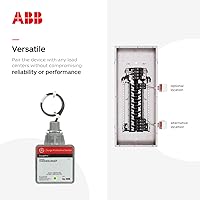
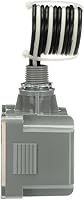
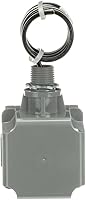
  • Mounting Type: Mounts externally to the load center via a wired connection and does not occupy any breaker slots inside the panel.
  • Status Indicator: Equipped with an LED operational health light that displays active protection status and signals when the device has reached end-of-life and requires replacement.
  • Compliance: Fully compliant with NEC 2023 Article 230.67, satisfying the surge protection requirements now mandated for new residential construction and qualifying renovations.
  • Dimensions: The enclosure measures approximately 8.5″ x 5.5″ x 3.5″, keeping the installed footprint compact near the panel.
  • Weight: Unit weighs approximately 2.72 lb, making handling and positioning during installation straightforward for a single electrician.
  • Compatibility: Designed for use with ABB PowerMark PRO load centers and confirmed compatible with load centers from other major panel brands at both service entrance and sub-panel locations.

Related Reviews

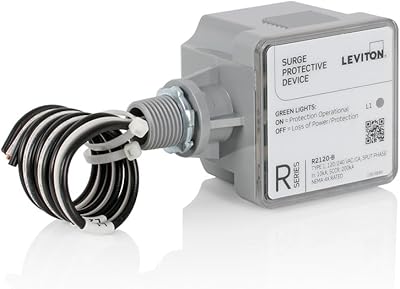
Leviton R2120-B Type 1 Surge Protection Panel
74%
88%
Surge Protection Performance
79%
Ease of Installation
93%
NEC Code Compliance
82%
Build Quality & Enclosure
41%
Monitoring & Alerts
More
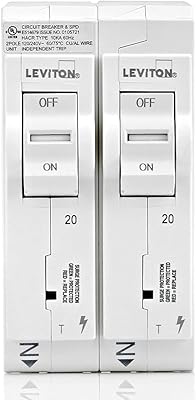
Leviton LSPD2-T Surge Protective Device with 2-20A 1-Pole Breakers
86%
94%
Ease of Installation
90%
Surge Protection Effectiveness
88%
Compatibility with Electrical Panels
80%
Reliability and Durability
86%
Value for Money
More
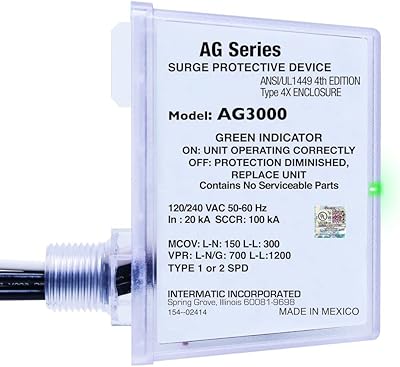
Intermatic AG3000 HVAC Surge Protective Device
82%
88%
Surge Protection Effectiveness
91%
TPMOV Technology Reliability
84%
Build Quality & Enclosure
86%
Ease of Installation
73%
LED Status Indicator
More
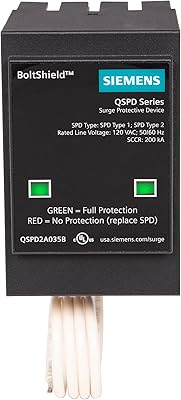
Siemens QSPD2A035B Surge Protective Device
90%
94%
Ease of Installation
92%
Surge Protection Effectiveness
89%
Build Quality and Durability
88%
Visual Indicators
90%
Compact Design
More
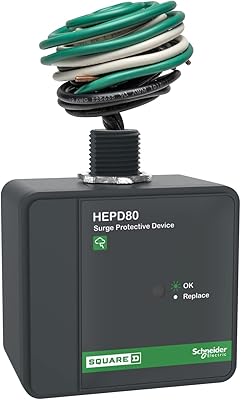
Square D HEPD80 Whole House Surge Protector 80kA
84%
93%
Surge Protection Performance
78%
Installation Experience
86%
Build Quality & Durability
91%
Universal Compatibility
82%
LED Status Indicator
More
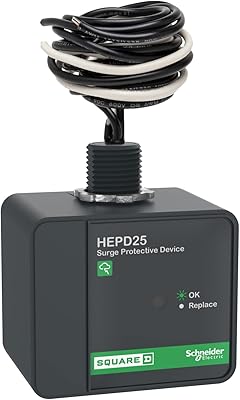
Square D HEPD25 Whole House Surge Protector
84%
83%
Protection Effectiveness
78%
Ease of Installation
86%
Build Quality
88%
Status Indicator Usefulness
91%
Panel Compatibility
More
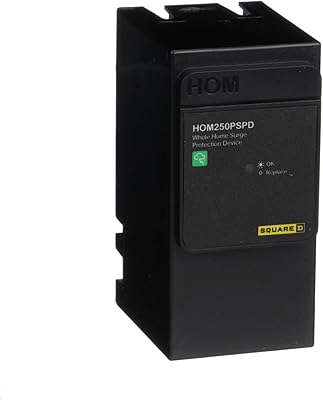
Square D HOM250PSPD Whole House Surge Protection Device
85%
90%
Value for Money
93%
Ease of Installation
85%
Surge Protection Performance
88%
Compatibility with Electrical Systems
80%
Build Quality
More
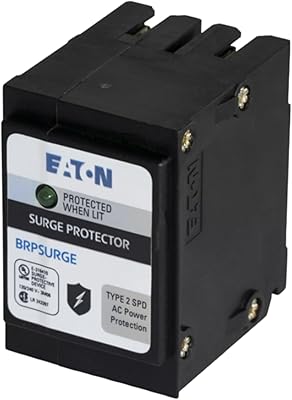
Eaton BRPSURGE Whole Home Surge Protector
83%
88%
Installation Ease
74%
Panel Compatibility
91%
Surge Protection Performance
83%
Build Quality
77%
LED Status Indicator
More
Umberto Giannini Curl Type 4 Kit for Type 4a-4c Hair, 8.4oz Wash & Care, 6.7oz Curl Jelly & Banana Butter Leave-In, 1.69oz Curl Oil
85%
92%
Curl Definition
88%
Frizz Control
85%
Moisturizing Effectiveness
80%
Ease of Application
93%
Sulfate and Silicone-Free Formulation
More
Zhenjiang 25FT Outdoor Extension Cord with Surge Protection
87%
92%
Weather Resistance
89%
Durability
85%
Ease of Use
90%
Surge Protection Effectiveness
88%
Length Flexibility
More

FAQ

You need a licensed electrician — this is not a plug-in or DIY device. The ABB THOMESURGEP Type 1 Surge Protective Device must be hardwired at the service entrance or sub-panel, and most jurisdictions require a permit for this type of work. Attempting it without proper credentials is both a safety hazard and likely a code violation.
Yes, it is designed to work with virtually any residential load center brand, not just ABB's own PowerMark PRO panels. As long as your electrician has enough space near the panel for the external enclosure and proper wiring clearance, brand compatibility generally isn't an issue.

When the LED is on and steady, the device is actively protecting your home. If it goes out or changes state, that's your signal that the SPD has absorbed a significant event and its internal components have reached the end of their protective life. At that point you'll want to schedule a replacement — the house circuits will still function, but surge protection will no longer be active.

Think of this whole-home surge protector as your first line of defense, not your only one. It handles large incoming surges at the panel level — things like nearby lightning strikes or utility grid disturbances. For computers, televisions, and other sensitive electronics, pairing it with quality point-of-use surge strips gives you a much more complete protection strategy.

It's a code requirement added to the 2023 National Electrical Code that mandates surge protection at the service entrance for new residential builds and certain permitted renovation projects. Whether it applies to your home depends on which edition of the NEC your local jurisdiction has adopted. If you're pulling permits for new construction or a significant electrical upgrade, check with your electrician or local building department.

A Type 1 SPD is installed before or at the main disconnect — it sits at the very front of your electrical system and is rated to handle the most severe external surges, including indirect lightning events. A Type 2 SPD installs inside the panel after the main breaker and is better suited for smaller, more frequent surges. Many electricians recommend using both for layered coverage, with this ABB SurgePro SPD handling the upstream role.

Lifespan depends heavily on how many surge events the unit absorbs over its lifetime. Each significant surge partially depletes the device's protective capacity. In areas with frequent storms or unstable utility power, it could need replacement sooner than in calmer electrical environments. The LED indicator will let you know when the end-of-life threshold is reached, so you're not left guessing.

No — that is one of its practical advantages. The enclosure mounts externally and connects via wired leads, leaving every breaker slot in your panel available. If your panel is already full or close to capacity, this avoids the problem of needing to consolidate or replace breakers just to accommodate surge protection.

Homes with solar inverters, battery storage, or generator inputs have more complex electrical configurations, and compatibility depends on exactly how your system is wired. You should discuss this specifically with your electrician before purchasing, as the interconnection points and grounding requirements can vary. The device itself supports standard 120/240V and 120/208V setups, but a professional assessment of your specific system is the safest step.

All three are credible brands in the residential SPD space, and at comparable specifications they perform similarly in terms of core protection. ABB's industrial background gives some buyers extra confidence in build quality, and its multi-brand panel compatibility removes a common compatibility headache. The honest answer is that the differences at this tier are marginal — whichever unit your electrician is comfortable sourcing and installing is often the most practical choice.