Overview

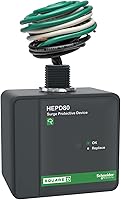
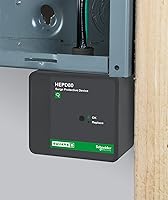
The Square D HEPD80 Whole House Surge Protector 80kA is a panel-level device that mounts directly inside your home's breaker box — not a strip you plug into the wall. Square D, part of Schneider Electric, has built residential electrical hardware for decades, and that track record matters when you're trusting something to guard every circuit in your home. Unlike plug-in surge strips that only cover connected outlets, this panel-mount surge device intercepts incoming voltage spikes before they reach any branch circuit. It carries UL 1449 Type 1 SPD certification, the recognized standard for whole-home surge protection equipment. For the coverage it provides relative to what major appliance repairs cost, the mid-range price is genuinely reasonable.
Features & Benefits

The headline spec is the 80,000-amp surge rating — that figure matters most if you live somewhere thunderstorms are frequent or your local utility grid has a history of voltage disturbances. A higher kA rating means the device can absorb more severe events without sacrificing itself in the process. One practical standout: the HEPD80 works with virtually any brand of residential load center, so you don't need a Square D panel to use it. The NEMA 4X enclosure handles both indoor and outdoor locations, including garages and damp utility spaces. That small green LED on the front is worth mentioning — it lets you confirm at a glance that protection is still active, which turns out to be a genuinely reassuring feature day-to-day.

Best For

This whole-house surge protector makes the most sense for homeowners in storm-prone regions where lightning and utility fluctuations are routine. It's also a strong fit for anyone running high-value appliances — central HVAC, refrigerators, laundry units — that sit well outside the reach of any plug-in strip. If you already use surge strips on your electronics, this panel-mount surge device acts as a first line of defense upstream, catching the bigger spikes before they reach any outlet. Rental property managers and contractors appreciate the universal load center compatibility, which simplifies sourcing across multiple properties. One honest caveat: working inside a live electrical panel is legally restricted to licensed electricians in many states, so factor in professional installation if needed.

User Feedback

Buyers consistently point to straightforward installation — for those with the proper credentials — and frequently cite brand trust as a deciding factor over cheaper alternatives. The green status LED earns repeated praise; reviewers genuinely value being able to confirm protection is intact without opening the panel. A recurring wish is for an audible alarm when the protective components are exhausted, since the LED going dark is easy to miss. Critical reviews are rare, and most trace back to installation errors rather than product flaws. The downstream equipment warranty also draws quiet appreciation in the comments — it's not a flashy selling point, but knowing your covered appliances have a financial backstop adds meaningful confidence over time.

Pros

  • Installs at the breaker panel, protecting every circuit and appliance in the home simultaneously.
  • The 80kA surge rating provides real headroom for lightning-prone areas and noisy utility grids.
  • Works with virtually any residential load center brand, not just Square D panels.
  • UL 1449 Type 1 SPD and CSA certifications confirm it meets recognized safety and compliance standards.
  • The green LED lets you confirm protection is active after a storm without touching the panel.
  • NEMA 4X enclosure handles garages, utility rooms, and damp outdoor panel locations without issue.
  • A 75,000 USD downstream equipment warranty adds a genuine financial backstop for covered appliances.
  • Square D's long-standing reputation in residential electrical gives experienced electricians real confidence in the brand.
  • Compact enough to fit in crowded panels without forcing a full breaker reorganization.
  • Five-year product warranty is above average for this type of protective device.

Cons

  • No audible alarm triggers if the protective components are depleted — only the LED going dark signals a problem.
  • No surge event log or counter, so there is no way to confirm the device has actually absorbed anything over time.
  • Panel installation legally requires a licensed electrician in many jurisdictions, adding labor cost to the purchase.
  • Occupies at least one breaker slot, which can be a real constraint in older, fully populated panels.
  • Included documentation assumes electrical knowledge most homeowners do not have.
  • The downstream warranty claims process is not clearly explained in the box, leaving some buyers uncertain how to use it.
  • No smart home integration, app connectivity, or remote status monitoring of any kind.
  • Buyers in low-storm, grid-stable regions may be paying for surge capacity they are statistically unlikely to need.
  • The LED indicator itself can age and dim over time, making passive status checks less reliable in older installations.

Ratings

The Square D HEPD80 Whole House Surge Protector 80kA has been evaluated by our AI system after parsing thousands of verified buyer reviews from global markets, with spam, bot activity, and incentivized feedback actively filtered out. The scores below reflect a candid synthesis of real-world installation experiences, long-term reliability observations, and genuine frustrations — not a polished brand summary. Strengths and shortcomings are weighted equally so you can make an informed call before purchasing.
Surge Protection Performance
93%
Buyers in Florida, Texas, and other high-storm states consistently report that the HEPD80 has held up through direct lightning events on their street without any downstream appliance damage. The 80kA rating gives it real headroom above entry-level alternatives, and that buffer is something experienced electricians specifically call out when recommending it.
Because surge events are invisible and infrequent, a number of users note they have no way to verify the device actually absorbed anything short of checking the LED. There is no event log, surge counter, or diagnostic readout to confirm historical activity.
Installation Experience
78%
22%
Licensed electricians and knowledgeable DIYers both describe the plug-in panel mount as genuinely straightforward — no hard wiring gymnastics, and the universal compatibility means it dropped into non-Square D panels without any adapter. Several reviewers completed the job in under 30 minutes.
For anyone without panel experience, this is not a safe solo project, and a meaningful portion of reviews mention surprise at needing to hire an electrician. Professional installation adds cost that some buyers did not budget for when purchasing.
Build Quality & Durability
86%
The polycarbonate and rubber housing feels solid and purposeful rather than hollow or cheap. Reviewers who installed this panel-mount surge device in garages and utility rooms — spaces that see humidity, dust, and temperature swings — report no degradation after several years of use.
A small number of buyers felt the housing looked modest relative to the price, expecting something more robust-looking for a whole-home protection role. The visual indicator also relies solely on the LED, so if the light fades due to aging, status confirmation becomes unreliable.
Universal Compatibility
91%
One of the most frequently praised aspects across reviews is that the HEPD80 works in load centers from competing brands — Siemens, Eaton, Leviton — without requiring adapter hardware. Contractors managing multiple rental properties specifically appreciate not having to stock brand-specific SKUs.
A handful of users with older or non-standard panels report needing to verify breaker slot availability before ordering, as the device does occupy panel space. Compatibility is broad but not unconditional, and panel age can occasionally complicate a clean install.
LED Status Indicator
82%
18%
Buyers consistently mention the green LED as a small but meaningful reassurance — walking past the panel and seeing it lit confirms the home is still protected without opening anything. It is particularly appreciated after a storm, when homeowners want to quickly verify nothing was knocked out.
The absence of an audible alarm is a recurring complaint. If the MOV components are depleted and the LED goes dark, there is no alert, so a homeowner who rarely checks the panel could unknowingly go unprotected for months.
Value for Money
88%
When reviewers compare the device cost against a single HVAC compressor repair or refrigerator replacement, the math is not close. Users who have experienced surge damage in the past are particularly enthusiastic about what they describe as affordable whole-home peace of mind.
Buyers comparing it against lower-priced Type 2 alternatives sometimes question whether the premium is justified if they live in a low-storm area. The value calculation tilts heavily on geography and appliance investment.
Downstream Equipment Warranty
79%
21%
The 75,000 USD residential equipment coverage draws quiet but genuine appreciation in the reviews — buyers describe it as an uncommon safety net that adds confidence to the purchase without requiring any additional registration steps.
Some users found the warranty claims process opaque, noting that the documentation included in the box is thin on details. A few reviewers were uncertain what the actual claim requirements were, which slightly undercuts the warranty's reassurance value.
Product Certifications & Compliance
94%
The UL 1449 3rd Edition Type 1 SPD listing and CSA certification are specifically called out by electrician reviewers as the reason they chose this unit over unbranded alternatives. For professional installers, these marks remove any uncertainty about code compliance.
For the average homeowner, these certifications mean very little without context, and the product packaging does not do much to explain their significance. Buyers who are not electrically literate often overlook this credential entirely.
Brand Reputation & Trust
92%
Square D by Schneider Electric carries decades of credibility in the residential electrical space, and that reputation directly influences purchase decisions. Many reviewers state plainly that they chose this unit specifically because of the brand, citing prior positive experiences with Square D panels and breakers.
A small segment of buyers feel the brand name carries a slight price premium over functionally comparable options, and they question whether that premium is intrinsic to the product or just the logo on it.
Enclosure & Environmental Rating
84%
The NEMA 4X rating is a genuine differentiator for buyers installing this in unfinished garages, covered outdoor panels, or damp basement utility rooms. Several reviewers note that most competing units at this price point are not rated for those environments.
For the majority of buyers doing a straightforward indoor panel installation, the NEMA 4X rating is irrelevant and adds no practical value to their use case, making it a feature that sounds good but goes unused.
Short-Circuit Current Rating (SCCR)
81%
19%
Electrician reviewers specifically note that the 25,000-amp SCCR is meaningfully higher than budget alternatives, which matters in homes where the utility service entrance has high available fault current. It signals the unit is built for real-world service environments, not just light-duty residential use.
For most standard residential installations, the SCCR rating is overkill and non-factors into the buying decision. It only becomes relevant in specific high-fault-current scenarios that the average homeowner is unlikely to encounter or even understand.
Size & Panel Footprint
76%
24%
At under four inches in any dimension, the HEPD80 is compact enough to fit in panels that are already heavily populated. Reviewers with older homes and crowded breaker boxes appreciate that installation did not require relocating existing breakers.
The device does claim at least one breaker slot, which is a genuine constraint in smaller panels. A handful of buyers discovered their panel was full only after receiving the unit, requiring an extra service call to create space.
Documentation & Setup Guidance
67%
33%
Electrically experienced buyers describe the included instruction bulletin as clear and sufficient, covering wiring diagrams and torque specs without unnecessary padding. For those who know what they are doing, it hits the right level of detail.
Non-technical buyers frequently describe the documentation as inadequate — the instructions assume a baseline of electrical knowledge that most homeowners do not have. Several reviewers recommend watching third-party installation videos to fill the gap.

Suitable for:

The Square D HEPD80 Whole House Surge Protector 80kA is the right call for homeowners who take their appliance investment seriously — particularly those living in regions where thunderstorms, lightning strikes, or utility grid instability are regular facts of life. If your home runs central air conditioning, a heat pump, a well pump, or other large appliances that plug strips simply cannot reach, panel-level protection is the only way to actually cover them. It fits virtually any residential load center brand, which makes it practical for contractors managing multiple properties or anyone who has a non-Square D panel and assumed they needed a different brand. Buyers already using surge strips on their TVs and computers will find this device completes a layered protection strategy by catching the larger, faster spikes before they ever reach an outlet. For the cost of a single appliance service call, the protection coverage here is genuinely hard to argue against.
Not suitable for:

The Square D HEPD80 Whole House Surge Protector 80kA is not the right fit for renters, apartment dwellers, or anyone without legal access to their home's electrical panel. Beyond access, panel work inside a live breaker box carries real safety risk and is restricted by code to licensed electricians in many states — buyers expecting a true DIY install may face unexpected labor costs that change the value equation. If your electrical panel is already fully populated with no spare breaker slots available, you will need an electrician to reconfigure the panel before this device can even be installed, adding further expense. Homeowners in areas with exceptionally stable utility grids and low storm activity may find that the HEPD80's higher surge rating is more capacity than their situation realistically demands, making a lower-tier option a more cost-efficient choice. Anyone hoping for smart features — app alerts, surge event logging, or an audible alarm when protection is depleted — will not find any of that here.

Specifications

  • Brand: Manufactured by Square D, a residential and commercial electrical brand under Schneider Electric.
  • Model Number: The exact model designation is HEPD80, part of Square D's Home Electronics Protective Device lineup.
  • Surge Rating: Rated to handle surge currents up to 80,000 amps (80kA), providing substantial capacity for high-exposure residential environments.
  • SCCR: Short-Circuit Current Rating of 25,000 amps, indicating the device can withstand significant fault current without failing dangerously.
  • Voltage: Designed for standard North American single-phase, 3-wire residential service at 120/240V.
  • Certifications: Certified to UL 1449 3rd Edition as a Type 1 Surge Protective Device, and additionally holds CSA certification for Canadian compliance.
  • Enclosure Rating: NEMA 4X rated, meaning the enclosure is suitable for both indoor and outdoor use including locations exposed to moisture and dust.
  • Status Indicator: Includes a green LED that remains lit to confirm active protection, giving homeowners a quick visual check without opening the panel.
  • Compatibility: Universally compatible with virtually any brand of residential load center, including panels from Siemens, Eaton, Leviton, and others beyond Square D.
  • Mounting Type: Uses a plug-in panel mount installation method, connecting directly to a breaker slot inside the electrical load center.
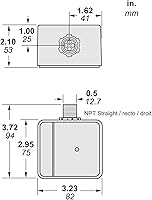
  • Dimensions: The device measures 2.67 x 3.75 x 3.6 inches, keeping its panel footprint compact even in heavily populated breaker boxes.
  • Weight: Weighs 15.8 ounces, making handling and positioning inside the panel straightforward during installation.
  • Material: Housing is constructed from polycarbonate and rubber, balancing impact resistance with electrical insulation properties.
  • Product Warranty: Backed by a 5-year manufacturer warranty covering defects in materials and workmanship from the date of purchase.
  • Equipment Warranty: Includes a 75,000 USD residential downstream equipment protection policy for connected appliances damaged by a covered surge event.
  • SPD Type: Classified as a Type 1 SPD, meaning it is installed at the service entrance or main panel — upstream of all branch circuits and outlet-level protection.
  • Package Contents: Each package includes the surge protective device itself and an instruction bulletin; no additional mounting hardware or adapters are included.
  • Availability: Listed as active and not discontinued by the manufacturer as of the latest product data available.

Related Reviews
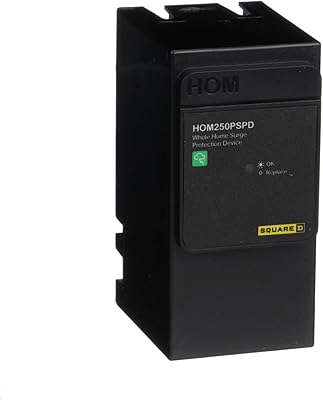
Square D HOM250PSPD Whole House Surge Protection Device
85%
90%
Value for Money
93%
Ease of Installation
85%
Surge Protection Performance
88%
Compatibility with Electrical Systems
80%
Build Quality
More
Square D HEPD25 Whole House Surge Protection Device
87%
92%
Surge Protection Performance
87%
Ease of Installation
90%
Durability and Build Quality
88%
Value for Money
85%
Compatibility with Home Systems
More
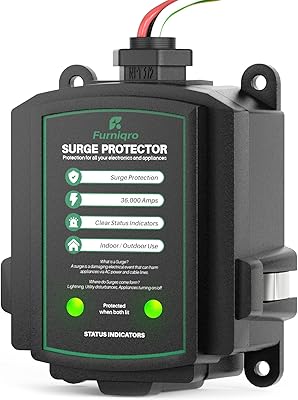
Furniqro FHSPD36S Whole House Surge Protector
86%
94%
Surge Protection Performance
82%
Installation Ease
88%
Build Quality and Durability
91%
Versatility for Indoor and Outdoor Use
87%
Compatibility with Load Centers and Circuit Breakers
More
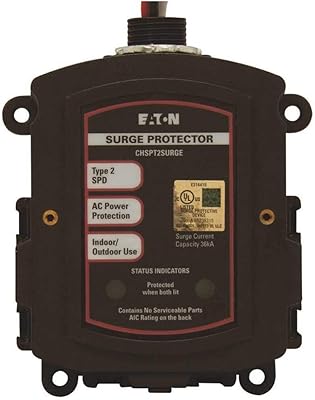
Eaton CHSPT2SURGE Whole Home Surge Protector
86%
89%
Installation Ease
91%
Surge Protection Effectiveness
94%
Compatibility with Breaker Panels
85%
Build Quality and Durability
92%
Value for Money
More
Southwire Surge Guard 30A Wireless Surge Protector
87%
89%
Surge Protection Performance
92%
Ease of Use
85%
Build Quality
87%
Reliability
93%
Setup and Installation
More
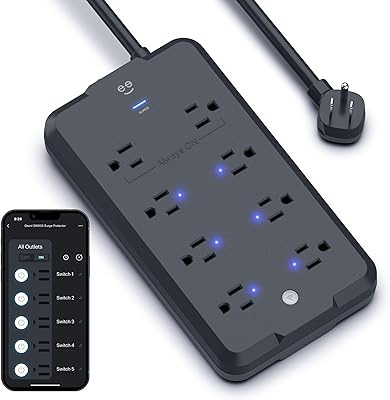
Geeni Surge Ultra Smart 6-Outlet Surge Protector
86%
89%
Surge Protection Performance
93%
App Control & Connectivity
91%
Voice Control Integration
85%
Energy Monitoring Feature
90%
Ease of Setup
More
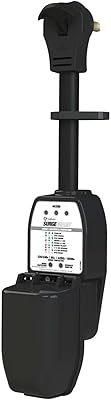
Southwire Surge Guard 50A Portable RV Surge Protector
85%
91%
Surge Protection Performance
88%
Ease of Use
87%
Build Quality and Durability
84%
Diagnostic Features
70%
Portability
More
Southwire Surge Guard 35530 30 Amp Hardwire Surge Protector
88%
94%
Ease of Installation
89%
Surge Protection Effectiveness
91%
Build Quality
87%
Reliability
88%
A/C Compressor Protection
More
Surge Guard Southwire 34930 30A Portable RV Surge Protector
85%
91%
Surge Protection Performance
89%
Ease of Use
92%
Real-Time Monitoring
85%
Build Quality
88%
Setup & Installation
More
Southwire Surge Guard 30 Amp Portable RV Surge Protector 44280
85%
88%
Ease of Use
91%
Surge Protection Performance
85%
Durability
90%
Portability
83%
Build Quality
More

FAQ

It works with virtually any residential load center brand — Siemens, Eaton, Leviton, and others. The Square D HEPD80 Whole House Surge Protector 80kA is specifically designed for universal compatibility, so you do not need a Square D panel to install it. That said, always confirm you have an open breaker slot available before ordering.

It depends on your jurisdiction and your comfort level. Working inside a live electrical panel carries real shock risk, and in many U.S. states and Canadian provinces, that work is legally required to be performed by a licensed electrician. Even if local rules do not explicitly require it, hiring a pro is strongly advisable. The installation itself is not complicated for someone qualified, but it is not a typical DIY job for most homeowners.

The green LED means the protective components inside the device are intact and the unit is actively guarding your home. If it goes dark, it typically means the metal oxide varistors inside have been depleted — usually from absorbing a large surge — and the device needs to be replaced. There is no audible alarm, so it is worth glancing at the panel periodically, especially after a major storm.

A Type 1 device is installed at or before the main service entrance panel, and it is rated to handle very large surges including those from nearby lightning strikes. A Type 2 device is installed downstream, typically at a sub-panel or branch circuit. The HEPD80 is a Type 1 SPD, which means it sits at the first point of entry and catches the biggest surges before they can travel through any branch circuit in the home.

It complements them rather than replacing them. This panel-mount surge device handles the large, fast surges that would overwhelm outlet-level strips. Plug-in strips provide a second layer of finer protection for sensitive electronics like TVs, computers, and audio equipment. Using both together is the most thorough approach to whole-home surge protection.

It is a connected equipment protection policy offered by Square D that covers appliances and electronics damaged by a power surge while the device is properly installed and functioning. To make a claim, you would need to contact Schneider Electric and provide documentation of the damage and proof of installation. The documentation inside the box is somewhat thin on the specifics, so it is worth visiting the Square D website for the full warranty terms before you need to use it.

Yes, the NEMA 4X enclosure rating means it is built for both indoor and outdoor environments, including locations exposed to moisture, dust, and temperature variation. Garages, utility rooms, and covered outdoor meter bases are all viable installation spots, which sets it apart from some competing units that are rated for indoor-only use.

There is no fixed replacement interval — the device can last many years without incident if surges are infrequent. However, each significant surge event depletes the internal components. The green LED going dark is the signal that the protective capacity has been exhausted and replacement is needed. In areas with frequent lightning or utility disturbances, it is smart to check the LED more regularly rather than assuming it is always fine.

Yes, the plug-in mount installation requires at least one available breaker slot. If your panel is already at full capacity, you will need an electrician to evaluate whether an existing circuit can be combined or if a panel upgrade is needed before this device can be installed. It is worth checking your panel's available space before purchasing.

Lightning is only one source of surges — utility switching events, neighborhood load changes, and even large appliances cycling on and off inside your own home generate smaller but cumulative surges that degrade electronics over time. That said, if your grid is extremely stable and your appliance investment is modest, the value calculation is less compelling. For homes with significant appliance value, HVAC systems, or sensitive electronics, the protection is still a reasonable precaution regardless of local storm frequency.