Overview

The Square D HOM250PSPD Whole Home Surge Protector takes a fundamentally different approach to surge protection than the power strips most people rely on — it installs directly inside your home's breaker panel and guards every circuit in the house at once. That means your HVAC system, kitchen appliances, and home office equipment all get covered under one device. Before you buy, though, the compatibility requirement is non-negotiable: this whole-home surge protector works only with Square D Homeline load centers manufactured after 2014. If your panel qualifies, you're looking at a mid-range investment that replaces the patchwork of outlet-level strips with a single, clean solution rated at 50kA per phase — a meaningful level of surge capacity for most residential scenarios.
Features & Benefits

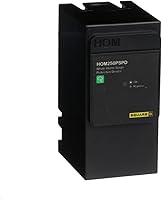
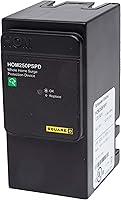
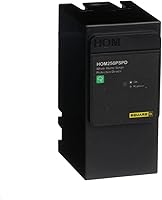
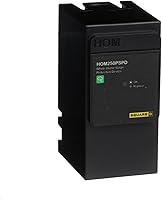
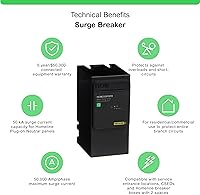
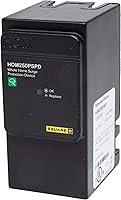
What makes the HOM250PSPD stand out among panel-mount options is how much thought went into making it accessible. The plug-on neutral design means it snaps directly into a compatible Homeline panel — no wire splicing, no separate neutral pigtail, no electrician needed just to make the connection. A small LED status indicator on the unit confirms it's active, so you don't have to open the panel to check. It handles the full 120/240V single-phase setup standard in North American homes, and at roughly 7.5 inches tall, it doesn't crowd other breakers. The UL 1449 listing signals independent safety testing and can actually matter when documenting home improvements for insurance.

Best For

This panel-mount surge device makes the most sense for homeowners who already have a qualifying Square D Homeline panel and want whole-home coverage without a complex installation job. It's particularly valuable in storm-prone or rural areas where utility fluctuations and lightning are more frequent risks. Homes running significant electrical load — HVAC systems, smart devices, high-end appliances — stand to benefit the most, since the cost of a single damaged unit often exceeds what the protector costs entirely. It's also a logical upgrade for anyone currently relying on outlet-level strips, which only cover what's directly plugged in. DIY-confident homeowners comfortable working inside a panel will likely find this a satisfying, permanent fix.

User Feedback

Across well over a thousand reviews, this whole-home surge protector holds a 4.7-star average — and the sheer volume of feedback makes that rating genuinely credible. Installation ease is the most repeated compliment; many buyers admitted they expected the job to be harder than it turned out to be. The most consistent frustration, though, comes from compatibility mismatches: shoppers who skip confirming their panel brand and production year sometimes end up returning the unit. A smaller but recurring concern involves owners unsure whether the device ever responded to a surge event, since it operates quietly — the LED is your only real readout. Long-term reviewers occasionally flag that surge protectors degrade over time, particularly after absorbing a significant event, and may eventually need replacement.

Pros

  • Guards every circuit in the home at once, replacing a tangle of outlet strips with one clean, permanent solution.
  • The plug-on neutral design requires no wire splicing — a genuine advantage for capable DIY homeowners.
  • A front-facing LED gives immediate visual confirmation the unit is active without ever opening the panel door.
  • UL 1449 listed, which meets the documentation threshold many home insurance policies require for surge protection.
  • Compact enough at roughly 7.5 inches tall to fit inside a Homeline panel without crowding adjacent breakers.
  • Draws on a review pool of over a thousand buyers with a 4.7-star average — a credible signal of consistent satisfaction.
  • The 50kA per-phase surge rating is a meaningful spec for handling utility spikes and indirect lightning events.
  • Backed by Schneider Electric, a globally recognized manufacturer with a long track record in residential electrical equipment.
  • Eliminates the ongoing cost and clutter of replacing individual surge strips throughout the home over time.

Cons

  • Strictly limited to Square D Homeline panels manufactured after 2014 — incompatible with every other brand and older units.
  • Provides no audible alarm or flashing alert when the unit has degraded and actually needs to be replaced.
  • Panel-level surge protection meaningfully reduces risk but cannot fully prevent damage from a direct or very nearby lightning strike.
  • Buyers must confirm their panel's exact brand and manufacture date before ordering, or a return becomes almost inevitable.
  • Once the unit absorbs a significant surge event and degrades, the only option is full replacement — there is no reset.
  • The device operates silently, so owners have no way to know whether it has ever responded to a real surge event.
  • Shutting off the main breaker for installation is a step that makes some homeowners uneasy without professional assistance.
  • Offers no protection against power quality issues like sags, brownouts, or sustained overvoltage — only transient surge events.

Ratings

The Square D HOM250PSPD Whole Home Surge Protector scores below were generated by our AI system after analyzing thousands of verified buyer reviews from global markets, with spam, bot submissions, and incentivized feedback actively filtered out before any scoring was applied. The results reflect a product with a genuinely strong track record within its intended use case — but also one where a strict compatibility constraint has left a notable minority of buyers frustrated. Both the real strengths and the honest pain points are transparently represented in every category breakdown.
Ease of Installation
91%
Buyers consistently describe the installation as faster and less intimidating than expected for a panel-level device. The plug-on neutral design — which means the unit snaps into a dedicated slot rather than requiring wire splicing — removed the biggest barrier most DIYers anticipated. Many reviewers finished the full job in under 30 minutes.
A smaller segment of users without prior panel experience found the process less intuitive than the instructions implied, particularly around identifying the correct slot in a densely populated panel. Some relied on third-party video guides rather than the included documentation to feel fully confident before proceeding.
Panel Compatibility
57%
43%
For homeowners who already own a qualifying Square D Homeline panel made after 2014, the fit is precise and intentional — the device slots in cleanly and behaves exactly as designed, with no improvisation or adapter workarounds required.
This is the single most cited source of buyer frustration across the review pool: the strict Homeline-only, post-2014 requirement catches a significant number of shoppers off guard, resulting in returns and negative reviews unrelated to the device's actual performance. Buyers with older panels or different brands have absolutely no workaround available.
Surge Protection Capacity
88%
The 50kA per-phase rating gives homeowners in storm-prone or rural areas genuine confidence that common utility transients — power company switching events, nearby indirect lightning, grid fluctuations — are well within what this device handles. Buyers in high-lightning states frequently cite this spec as the deciding factor in their purchase.
A recurring concern among buyers in areas with heavy electrical activity is the absence of any event log or active confirmation that a surge was absorbed. The protection ceiling, while appropriate for standard residential use, is not positioned or suited for semi-commercial or unusually high-load scenarios.
Value for Money
83%
At its mid-range price point, this panel-mount surge device compares favorably to replacing even one major appliance damaged by a utility spike — a calculation that resonates strongly with buyers protecting HVAC systems, smart home hubs, or home theater setups.
Some buyers feel the price is elevated for what is physically a compact plastic component. Those who discover post-purchase that their panel is incompatible often factor return shipping friction into their value assessment, and a few note that the lack of surge event notification feels like a gap at this price level.
Build Quality
76%
24%
The unit seats cleanly and firmly inside a compatible panel, and reviewers with hands-on electrical experience note that the plastic enclosure is consistent with standard panel-accessory construction from established brands — appropriate for its intended interior environment.
The all-plastic housing draws periodic commentary from buyers who compare it to the metal construction of other components in their load center. While functionally adequate, it does not project the premium feel that some buyers expect given the protective role this device is meant to play.
LED Status Indicator
72%
28%
The LED gets consistently positive mentions from buyers who value a quick visual check that the unit is active without needing to open the panel. Homeowners who make a habit of checking it after summer storms find the simple readout genuinely reassuring.
The indicator's limitations frustrate a recurring segment of reviewers: it only signals on or off, with no differentiation between normal standby and a post-surge degraded state until the light fully extinguishes. After a power event, many users report that the LED gives them no useful information about whether anything was actually absorbed.
Form Factor & Fit
84%
At roughly 7.5 inches tall, the device occupies a double-pole space without blocking adjacent breakers or creating awkwardness in a reasonably populated panel. Buyers with tidiness preferences appreciate how cleanly it integrates into the load center without disrupting the overall layout.
In panels already close to capacity, the double-pole footprint can feel tight, and a few reviewers note that accessing neighboring breakers after installation requires extra care. Buyers with high-density or older compact panels may find the physical clearance insufficient for a clean installation.
Safety Certification
93%
The UL 1449 listing is consistently cited by electrically informed buyers as a meaningful differentiator — it confirms the device passed independent safety testing under the recognized North American standard for surge protective devices. Several reviewers mention it specifically when documenting home improvements for insurance purposes.
A portion of buyers, particularly those less familiar with electrical certifications, do not factor the UL 1449 listing into their decision at all, meaning the certification's value is not always communicated effectively at point of sale. No additional certifications are noted, which may matter in certain regulated or commercial-adjacent installation contexts.
Brand Reliability
87%
Schneider Electric's Square D brand carries genuine credibility with homeowners and licensed electricians alike, and that reputation meaningfully shapes buyer confidence. Reviewers frequently mention brand trust as a deciding factor, particularly those who have used Square D panels and breakers for years without issue.
Some buyers express frustration that the brand's strong reputation led them to assume broader compatibility than actually exists, feeling the Homeline-only restriction was insufficiently prominent given Square D's diverse product portfolio. A smaller number note that warranty documentation could be clearer about what constitutes a covered failure versus normal degradation.
Long-term Durability
68%
32%
Buyers who installed the HOM250PSPD several years prior and revisit their reviews describe the unit as still showing an active LED and functioning normally, particularly in regions with moderate and stable power quality. The passive, no-moving-parts design reduces the likelihood of mechanical failure under typical conditions.
The core durability concern is surge degradation: each significant absorbed event reduces the unit's remaining capacity without any external indication until the LED eventually goes dark. Buyers in high-activity storm regions report meaningful uncertainty about when proactive replacement is actually warranted, since no event counter or wear indicator exists.
Whole-Home Coverage
89%
The panel-level approach is what buyers consistently describe as the meaningful upgrade over outlet strips — protecting every circuit simultaneously, including hardwired appliances, HVAC units, and outlets in rooms that would otherwise have no surge protection at all. This breadth of coverage is the primary reason most buyers choose this device.
Technically informed buyers note that panel-level protection is most effective when layered with point-of-use protection on sensitive electronics, since residual surge energy can still propagate along internal wiring. The device also does not address power quality issues beyond transient overvoltage, leaving brownouts and sags entirely outside its scope.
DIY Documentation
74%
26%
For buyers who research before starting, the installation is well-supported by manufacturer guides and widely available video walkthroughs that clarify the plug-on neutral slot identification process step by step. Most DIY-comfortable reviewers describe the learning curve as minimal once the core concept clicks.
The physical documentation included in the box has drawn sustained criticism from buyers who prefer not to rely on external resources mid-installation. Several reviewers note that compatibility requirements in particular were insufficiently clear in the printed materials, directly contributing to return rates among buyers who skipped pre-purchase research.

Suitable for:

The Square D HOM250PSPD Whole Home Surge Protector is the right call for homeowners who already have a Square D Homeline load center — that's the breaker box found in homes built or upgraded with Schneider Electric equipment after 2014. If your household runs a meaningful amount of sensitive electronics — a smart home system, a home theater setup, high-efficiency HVAC, or a home office full of computers — protecting all of it with one panel-level device makes far more practical sense than stacking outlet strips in every room. This is especially true in areas prone to summer thunderstorms, rural locations with aging utility infrastructure, or anywhere power quality tends to be inconsistent. DIY-capable homeowners comfortable switching off the main breaker and working inside a panel will find the installation process genuinely manageable, since no wire splicing is required. It also suits anyone tired of managing a patchwork of outlet-level surge strips that only cover individual devices while leaving every other circuit in the home fully exposed.
Not suitable for:

The Square D HOM250PSPD Whole Home Surge Protector has one firm, non-negotiable constraint: it only works with Square D Homeline load centers manufactured after 2014, and there are no workarounds. If you have a GE, Eaton, Siemens, or older Homeline panel, this device simply will not physically fit or function correctly — something a surprising number of buyers discover only after opening the box. Renters are effectively ruled out too, since accessing and modifying a breaker panel typically requires landlord authorization and local code compliance. It's also not a substitute for lightning rods or comprehensive storm hardening; while it significantly reduces the likelihood of surge damage, a direct lightning strike on or immediately adjacent to your home can exceed the capacity of any residential surge protection device. Anyone who needs a brand-agnostic solution, who isn't certain about their panel's age or model, or who is not comfortable doing any work near live electrical components should consult a licensed electrician before buying.
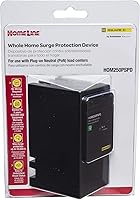
Specifications

  • Brand: Manufactured by Square D, a brand of Schneider Electric with a long-standing presence in residential electrical equipment.
  • Model Number: Model HOM250PSPD designates the plug-on neutral, 50kA whole-home surge variant within the Square D Homeline product line.
  • Surge Current: Rated at a maximum surge current of 50,000 amps (50kA) per phase, covering both legs of a standard residential electrical service.
  • Voltage Rating: Designed for 120/240V AC applications, which is the standard single-phase residential voltage configuration in the United States and Canada.
  • Phase Type: Engineered exclusively for single-phase electrical service, the configuration found in the overwhelming majority of North American homes.
  • Installation: Uses a plug-on neutral architecture that connects directly to a compatible panel slot with no wire splicing, pigtail connections, or conduit work required.
  • LED Indicator: A built-in LED status indicator displays active protection status and signals when the unit has been compromised and requires replacement.
  • Compatibility: Compatible exclusively with Square D Homeline load centers manufactured after 2014; not compatible with any other panel brand or earlier Homeline models.
  • Circuits Protected: Protects across 2 poles, covering both the 120V and 240V sides of the home's electrical service simultaneously at the panel level.
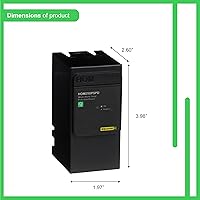
  • Dimensions: Physical footprint measures 7.5″ H x 5″ W x 3.5″ D, occupying minimal space inside a compatible Homeline load center.
  • Weight: The unit weighs approximately 7.68 ounces, making it lightweight enough to handle easily during panel installation.
  • Material: Enclosure is constructed from a plastic housing rated for the interior environment of a residential electrical panel.
  • Safety Listing: Listed under UL 1449, the nationally recognized standard for surge protective devices, confirming independent safety and performance testing.
  • AC Frequency: Rated for 60Hz electrical systems, which is the standard power frequency for residential service throughout North America.
  • Protection Scope: Provides panel-level protection for every circuit in the home simultaneously, including hardwired appliances, HVAC systems, and all branch circuit outlets.
  • Application: Intended for residential single-phase whole-home surge protection, installed directly inside the main or sub-panel load center.

Related Reviews

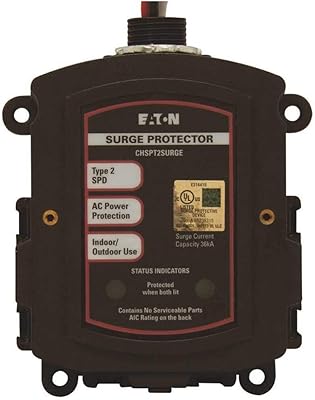
Eaton CHSPT2SURGE Whole Home Surge Protector
80%
91%
Surge Protection Performance
88%
Installation Experience
84%
Build Quality & Durability
52%
Status Indicator & Monitoring
86%
Value for Money
More
Square D HEPD25 Whole House Surge Protector
84%
83%
Protection Effectiveness
78%
Ease of Installation
86%
Build Quality
88%
Status Indicator Usefulness
91%
Panel Compatibility
More
Square D HEPD80 Whole House Surge Protector 80kA
84%
93%
Surge Protection Performance
78%
Installation Experience
86%
Build Quality & Durability
91%
Universal Compatibility
82%
LED Status Indicator
More
Furniqro FHSPD36S 36,000A Whole House Surge Protector
79%
83%
Surge Protection Performance
88%
Value for Money
71%
Ease of Installation
74%
Build Quality
79%
Status Indicator Clarity
More
Southwire Surge Guard 34931 30A Surge Protector
81%
93%
Surge Protection Effectiveness
89%
Build Quality
88%
LCD Display Clarity
91%
A/C Compressor Protection
86%
Ease of Setup
More
Geeni Surge Ultra 8-Outlet Smart Surge Protector
80%
88%
Ease of Setup
71%
App Performance
91%
Smart Outlet Control
84%
Voice Control
78%
Surge Protection
More
Southwire Surge Guard 50A Portable RV Surge Protector
85%
91%
Surge Protection Performance
88%
Ease of Use
87%
Build Quality and Durability
84%
Diagnostic Features
70%
Portability
More
Surge Guard 34930 30A RV Surge Protector
79%
93%
Surge Protection Effectiveness
91%
Fault Detection Accuracy
88%
LCD Display Usefulness
86%
Build Quality & Durability
89%
A/C Compressor Protection
More
Southwire Surge Guard 35530 30 Amp Protector
79%
91%
Protection Reliability
82%
Installation Experience
67%
Value for Money
84%
Build Quality
89%
Compressor Protection
More
Southwire Surge Guard 30 Amp RV Protector
74%
91%
Diagnostic Accuracy
93%
Ease of Use
78%
Surge Protection
74%
Build Quality
43%
Weatherproofing
More

FAQ

Check the label on your breaker box door — it needs to say Square D Homeline specifically, not just Square D. Even then, the panel must have been manufactured after 2014, because the plug-on neutral slot this device requires wasn't included in older Homeline models. The manufacture date is almost always printed on a label inside the panel door. If you're unsure, a quick photo of that label and a call to Square D support can confirm compatibility before you order.

For homeowners who are comfortable switching off the main breaker and working inside a panel, this is a genuinely manageable DIY installation — there's no wire splicing involved, and the device snaps into the plug-on neutral slot much like a standard double-pole breaker. If you've never opened a breaker box before or aren't confident around electrical panels, bringing in a licensed electrician is the smarter and safer call. Either way, the installation itself is straightforward once the panel is confirmed compatible.

A steady lit LED means the unit is active and providing surge protection normally. If that light goes out unexpectedly — especially after a storm or a grid disturbance — it's a strong signal that the device absorbed a significant surge event and is no longer fully functional. At that point, the unit should be replaced rather than ignored. Make a habit of checking the LED periodically, particularly after severe weather.

The Square D HOM250PSPD Whole Home Surge Protector is rated to handle 50,000 amps per phase, which is a solid capacity for utility transients and nearby indirect lightning events. However, a direct lightning strike on your home or the incoming service line can release energy levels that exceed what any residential surge protective device is designed to absorb. Think of this as dramatically reducing your risk from the most common surge scenarios — not as a guarantee against worst-case direct strikes.
Outlet-level strips only protect whatever is plugged directly into them, and they leave every other circuit in your home unprotected. This panel-mount surge device sits inside your breaker box and catches surges at the entry point before they branch out to any circuit in the house — including hardwired appliances, HVAC equipment, and outlets with no strip attached. The two approaches aren't mutually exclusive, and layering a panel-level device with quality outlet strips gives the most complete protection.

There's no fixed lifespan — it depends on how many surges the unit absorbs over its service life. In an area with frequent storms or unstable utility power, it may degrade sooner than in a stable grid environment. The LED indicator is your primary signal: if it goes dark without an obvious power interruption, treat that as a sign the unit needs inspection and likely replacement. This is not a permanently install-and-forget device, and periodic checks are worth the habit.

This panel-mount surge device is specifically engineered to handle transient overvoltage events — sudden spikes and surges — not sustained undervoltage conditions like brownouts or sags. If you're in an area with chronic low voltage or frequent outages, a separate voltage regulator or whole-home UPS system would address those gaps. The two types of protection solve different problems.

The HOM250PSPD occupies a double-pole space in the panel rather than the standard single-breaker positions, and it connects via the plug-on neutral slot. That said, you do need to confirm there is physical room in your panel before purchasing, especially if your load center is already heavily populated with breakers. A panel that is close to capacity may not have space to accommodate it cleanly.

It can technically be installed in a compatible Homeline sub-panel, but for whole-home protection, the main service panel is the more effective location. Installing it at the main panel means surges from the utility feed are caught before they ever branch into the rest of the home's wiring. A sub-panel installation would only protect circuits downstream of that specific panel, leaving others uncovered.

The device doesn't have an event log, alarm, or remote notification capability — it operates silently. Your only post-event indicator is the LED: green means it's still active and functional; out means it likely absorbed something significant and should be replaced. Homeowners who want more visibility into grid events sometimes pair a whole-home surge protector with a smart energy monitor, which can log unusual voltage activity independently.