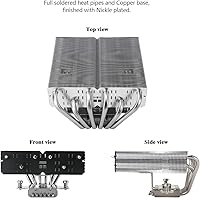
Overview

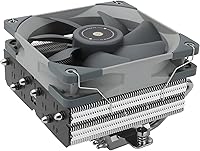
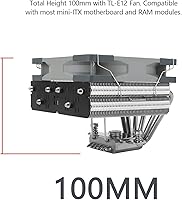
The Thermalright SI-100 CPU Air Cooler comes from a Taiwanese company with over two decades spent doing exactly one thing: thermal hardware. That focused background shows in the engineering choices here. The defining number is 100mm total height — a hard ceiling that either fits your case or rules this cooler out entirely, and that clarity is actually useful when you're spec-checking a compact build. Socket support covers current AMD and Intel platforms, so compatibility is rarely the obstacle. Just set expectations accordingly: this is a value-tier cooler, built to punch above stock performance within a tight physical envelope, not to compete with full-tower heatsinks.

Features & Benefits

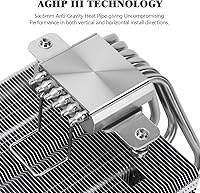
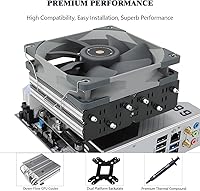
The six copper heat pipes use Thermalright's AGHP 3.0 technology, which tackles a real problem — heat pipes can lose efficiency when the cooler sits horizontally or at an angle inside a compact case. That issue is largely resolved here. The aluminum fin stack moves heat effectively for its size class, and the bundled TL-E12 PWM fan keeps noise in check, spinning up to 2000 RPM while staying genuinely unobtrusive during typical desktop workloads. The S-FDB V2.0 bearing carries a 20,000-hour rating, which realistically means years of reliable daily operation. Metal mounting hardware for both AMD and Intel platforms comes included — no chasing down separate brackets after the fact.

Best For

This low-profile air cooler makes the most sense when physical constraints dictate the decision. If your build lives inside an ITX or mATX case with strict clearance limits, that 100mm ceiling stops being a compromise and starts being a feature. It also suits home office and HTPC environments where fan noise matters more than overclocking potential. Paired with a mainstream mid-range CPU running at stock settings, the SI-100 handles thermals consistently and without drama. AM5 builders on a budget who need something functional now while planning a bigger upgrade later will find it covers the essentials. Pushing a high-TDP chip past stock limits with this compact CPU cooler, however, is not a realistic use case.

User Feedback

Installation draws consistent praise — most owners describe the process as straightforward, especially compared to bulkier aftermarket options. The value-for-money ratio is a recurring theme, with buyers noting tangible noise reductions over stock coolers without spending much. On the other side, the included instruction manual has frustrated a number of first-time builders who found the mounting steps less intuitive than expected. RAM clearance occasionally comes up in tighter configurations, so cross-referencing your memory module height before ordering is worth doing. The core criticism, though, is thermal headroom: owners running anything power-hungry report temperatures climbing quickly. For light-to-moderate workloads over the long haul, satisfaction rates are solid.

Pros

  • Fits inside compact ITX and mATX cases where full tower coolers are simply off the table.
  • Noticeably quieter than stock Intel and AMD coolers during everyday desktop use.
  • Six copper heat pipes handle thermal transfer efficiently for a cooler of this physical size.
  • The S-FDB V2.0 bearing is rated for long-term daily use, reducing concerns about early fan failure.
  • Complete metal mounting hardware for both AMD and Intel platforms is included in the box.
  • Broad socket support covers AM4, AM5, and most current Intel sockets without adapter kits.
  • The 4-pin PWM fan adjusts speed automatically, keeping noise low when thermals allow.
  • Lightweight build at under 700g reduces stress on the motherboard during transport.
  • AGHP 3.0 technology keeps heat pipe performance consistent regardless of case orientation.
  • Represents strong value for builders who need a reliable step up from a stock cooler on a tight budget.

Cons

  • Thermal headroom runs out quickly under sustained high-load workloads — not suitable for demanding CPUs.
  • The printed installation manual lacks clarity, which can frustrate builders new to aftermarket cooling.
  • Taller RAM modules may cause clearance issues in certain board and case combinations.
  • No overclocking headroom — this compact CPU cooler is strictly a stock-speed solution.
  • Fin stack surface area is inherently limited by the low-profile form factor, capping peak heat dissipation.
  • The fan only reaches moderate speeds, which limits its ability to recover quickly from sudden thermal spikes.
  • Thermalright's customer support responsiveness is inconsistent based on reported buyer experiences.
  • Long-term real-world bearing durability is harder to verify compared to the rated specification alone.

Ratings

The scores below reflect an AI-driven analysis of verified global user reviews for the Thermalright SI-100 CPU Air Cooler, with spam, bot-generated, and incentivized submissions actively filtered out to ensure only genuine ownership experiences are counted. Every category is scored against real buyer expectations for this specific product tier and use case — not against flagship coolers costing several times more. Both the strengths that consistently won users over and the recurring frustrations that tempered their enthusiasm are reflected transparently in each scorecard.

Thermal Performance
74%
26%
For stock-speed mainstream CPUs — a Ryzen 5 keeping a home office system running all day, or a Core i5 handling light gaming — the SI-100 delivers noticeably cooler temperatures than bundled stock coolers. Users in that usage bracket consistently report solid headroom during typical workloads.
The moment CPU load becomes sustained and demanding, the thermal ceiling becomes obvious. Owners running video encoding jobs, heavy multitasking, or any workload that pushes CPU power beyond its rated TDP report temperatures climbing uncomfortably, with some observing throttling in poorly ventilated cases.
Noise Level
83%
During everyday desktop use — browsing, streaming, light productivity — the fan operates at a fraction of its maximum speed and effectively disappears into the background. Users building quiet home office systems and HTPCs specifically praised how infrequently they noticed the cooler running at all.
Under heavier load the fan spins up to audible levels, and a handful of users noted that their particular unit produced a faint whine at mid-range RPMs. It is not a common complaint, but it does appear often enough to be worth flagging for those in acoustically sensitive environments.
Build Quality
81%
19%
The heatsink feels solid for its weight class — the fin stack is well-formed, the copper heat pipes are cleanly seated, and the overall assembly does not rattle or flex. Buyers who handled competing options at similar price points frequently commented that the SI-100 felt more substantial than expected.
The fan housing uses standard plastic construction that does not inspire the same confidence as the metal heatsink itself. A small number of users reported minor cosmetic imperfections on the fin stack out of the box, which does not affect performance but is a mild quality-control inconsistency.
Value for Money
89%
Within its intended use case, the value proposition is strong. Buyers who needed a low-profile cooler that genuinely outperforms stock options — and found one for a fraction of what larger aftermarket coolers cost — consistently rated satisfaction high, particularly when the complete mounting hardware is factored in.
Value perception drops sharply for buyers who purchased it hoping for more thermal headroom than it can deliver. A recurring frustration in negative reviews is that the cooler was chosen without fully understanding its TDP limits, leading to disappointment that is arguably a mismatch of expectations but still reflects on the perceived value.
Installation Ease
67%
33%
Experienced builders generally find the physical mounting process quick and intuitive, and the inclusion of metal fasteners for both AMD and Intel platforms means everything needed is in the box. Those who have installed aftermarket coolers before rarely report issues getting it seated correctly.
First-time builders repeatedly flag the printed instruction manual as a genuine obstacle. The diagrams lack clarity for users unfamiliar with the process, and the small hardware components can be confusing to sort without prior experience. Several reviewers recommended watching a third-party installation video as a near-mandatory companion step.
Compatibility Range
88%
Support for both AM4 and AM5 alongside a wide spread of current and legacy Intel sockets makes this cooler a practical choice for mixed-platform households or builders reusing hardware across different builds. Users appreciated not needing to verify platform-specific SKUs before ordering.
While socket compatibility is broad, physical case compatibility is the real variable — the 100mm height fits most standard ATX and mATX cases comfortably, but ultra-compact ITX chassis with lower clearance limits will rule it out entirely, and a handful of buyers discovered this only after purchase.
RAM Clearance
69%
31%
In the majority of standard builds using normal-height memory modules, clearance is not an issue at all. Users with typical DDR4 or DDR5 sticks without tall heatspreaders found the cooler sat clear of all four DIMM slots without any modification or repositioning required.
Owners running high-profile RAM with tall aesthetic heatspreaders ran into genuine clearance problems on certain board layouts, with the cooler's fan or fin base encroaching on the first DIMM slot. This is not a rare edge case — it shows up frequently enough in reviews that it warrants careful measurement before purchasing.
Fan Longevity
78%
22%
The S-FDB V2.0 fluid dynamic bearing is a meaningful upgrade over the sleeve bearings found in many coolers at this price point. Early adopters who have owned the cooler for two or more years have largely reported the fan operating without any degradation in noise or performance.
The 20,000-hour lifespan rating is a manufacturer specification, and long-term field data for this specific fan model is still accumulating. A small number of users reported early bearing noise developing within the first year, which is statistically uncommon but worth noting for buyers prioritizing longevity above all else.
Low-Profile Fit
91%
For the specific problem this cooler was designed to solve — fitting meaningful aftermarket cooling into a case with a strict height ceiling — it executes reliably. Compact build enthusiasts consistently single out the 100mm profile as the primary reason they chose it, and most report it cleared their case with room to spare.
The same characteristic that makes it ideal for tight cases becomes a thermal constraint by definition. There is an unavoidable trade-off between keeping the heatsink short and maximizing fin surface area, and buyers expecting tower-level performance from a low-profile unit will encounter that ceiling sooner or later.
Mounting Hardware Quality
82%
18%
The metal fasteners and brackets are a clear step above the plastic mounting clips bundled with some competing value coolers. Users noted the hardware held securely after installation and did not require re-seating or adjustment over time, which matters in systems that get moved or transported.
The assortment of small screws, standoffs, and brackets can be overwhelming to sort through without the manual making clear which components belong to which platform. Losing or misidentifying a piece during installation is a genuine risk without an organized tray or clearer component labeling.
Overclocking Headroom
38%
62%
For users running mild, conservative efficiency-focused settings rather than aggressive overclocks, the cooler can sustain slightly elevated frequencies on lower-TDP chips without immediately throttling. Some AM5 users noted stable operation with modest Precision Boost tuning under light conditions.
Any meaningful overclocking quickly exposes the cooler's thermal limits. Users who pushed CPU voltages and clocks beyond stock parameters saw temperatures spike rapidly, with throttling following shortly after. This compact CPU cooler was simply not designed for sustained power delivery beyond stock specs, and the scores from overclocking-focused buyers reflect that clearly.
Aesthetics
63%
37%
The clean, no-frills design fits unobtrusively into almost any build aesthetic. For users who prefer their builds to look tidy without drawing attention to individual components, the understated matte aluminum finish and absence of RGB lighting is considered a positive rather than a shortcoming.
Buyers who wanted their cooler to contribute to a visually polished windowed build were generally underwhelmed. There is no RGB lighting, no premium finish option, and the overall visual presentation is functional rather than striking — which is fine for its intended market but leaves enthusiasts wanting more.
Packaging & Unboxing
71%
29%
The cooler arrives well-protected, and the hardware components are sorted into small bags that keep parts organized during unboxing. Several buyers noted the product arrived in perfect condition even after longer international shipping routes, suggesting adequate protective packaging for its weight class.
The overall packaging presentation is utilitarian, which is perfectly acceptable but does not set expectations for the unboxing experience that some buyers have come to expect from higher-end thermal brands. The instruction leaflet tucked inside is where the real frustration begins for less experienced users.

Suitable for:

The Thermalright SI-100 CPU Air Cooler was built for builders who are working within real physical constraints, not just chasing maximum performance numbers. If your case is a compact ITX or mATX chassis with a strict height limit around 100mm, this cooler slots in where tower heatsinks simply cannot go. It pairs well with mainstream mid-range CPUs running at stock settings — think everyday workloads, light productivity, media playback, and casual gaming rather than sustained heavy rendering. Home office users and HTPC builders will appreciate that the fan stays genuinely quiet during typical use, making it easy to forget the cooler is running at all. AM5 adopters who need a functional, platform-compatible cooler right now without committing to a larger budget will also find this a sensible stopgap. Anyone upgrading from a stock Intel or AMD cooler will notice a real improvement in both noise levels and idle temperatures without overcomplicating the build.

Not suitable for:

The Thermalright SI-100 CPU Air Cooler is not the right tool if your CPU regularly runs at high thermal loads or if you plan to push beyond stock clock speeds. High-TDP processors — anything in the upper tier of AMD or Intel lineups — will saturate this cooler's thermal capacity faster than you might expect, leading to throttling under sustained workloads. Enthusiast builders who want headroom for overclocking, stress testing, or extended creative workloads like 3D rendering or video encoding should look at a larger tower cooler or an all-in-one liquid solution instead. First-time builders who are not confident interpreting a somewhat sparse instruction manual may find the mounting process more stressful than it needs to be. If your memory modules are taller than standard, RAM clearance could become a problem in tighter configurations, so checking physical compatibility before ordering is not optional — it is necessary.

Specifications

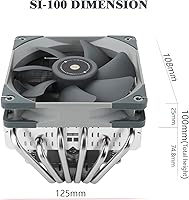
  • Dimensions: The cooler measures 120mm long, 108mm wide, and 100mm tall, making it compatible with cases that enforce a strict CPU cooler height limit.
  • Weight: At 0.64 kg (1.4 lb), the cooler is light enough to avoid placing excessive stress on the motherboard during normal use or transport.
  • Heat Pipes: Six 6mm copper heat pipes using AGHP 3.0 anti-gravity technology distribute heat efficiently regardless of whether the cooler is mounted vertically or at an angle.
  • Fin Material: The heatsink fin stack is constructed from aluminum, which provides a practical balance of thermal conductivity and low weight at this price tier.
  • Fan Model: The included TL-E12 fan measures 120mm x 120mm x 25mm and connects via a 4-pin PWM header for automatic speed control by the motherboard.
  • Fan Speed: The TL-E12 fan spins at up to 2000 RPM with a tolerance of plus or minus 10%, scaling down automatically during lighter workloads.
  • Airflow: Maximum airflow is rated at 72.37 CFM, which is adequate for cooling mainstream CPUs operating within their stock thermal design limits.
  • Noise Level: Noise output is rated at no more than 27.7 dB(A), a level that remains unobtrusive in a typical home office or living room environment.
  • Bearing Type: The S-FDB V2.0 fluid dynamic bearing is rated for approximately 20,000 hours of operation, indicating a design intended for long-term daily reliability.
  • Voltage: The fan operates at 12V DC, which is standard across virtually all desktop ATX and ITX motherboard fan headers.
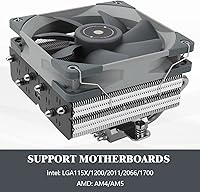
  • Intel Sockets: Compatible Intel sockets include LGA 1150, 1151, 1155, 1156, 1200, 1700, 2011, and 2066, covering a wide range of mainstream and older enthusiast platforms.
  • AMD Sockets: AMD compatibility covers the AM4 and AM5 sockets, supporting Ryzen processors from the 3000 series through the current Ryzen 7000 lineup.
  • Mounting Hardware: Metal fasteners and mounting brackets for both Intel and AMD platforms are included in the box, so no separate purchase is required for standard installations.
  • Connector Type: The 4-pin PWM connector allows the motherboard to regulate fan speed dynamically based on CPU temperature, reducing unnecessary noise during idle or light workloads.
  • Brand Origin: Thermalright is a Taiwanese manufacturer with over 20 years of experience focused exclusively on PC thermal management products.

Related Reviews
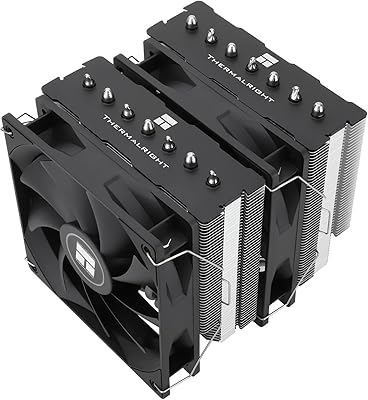
Thermalright PS120SE CPU Air Cooler
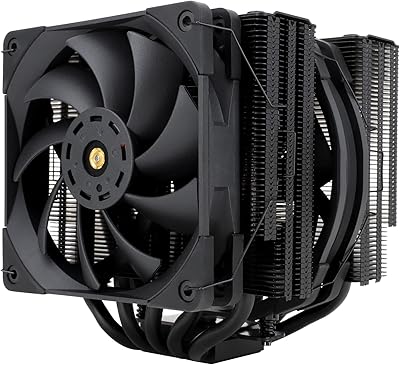
80%
89%
Thermal Performance
86%
Noise Level
93%
Value for Money
74%
Build Quality
81%
Ease of Installation
More
Thermalright BA120 ARGB CPU Air Cooler
86%
88%
Cooling Performance
91%
Noise Level
85%
Build Quality
87%
ARGB Lighting Effect
90%
Compatibility with CPUs
More
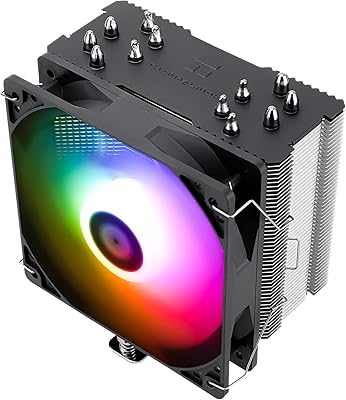
Thermalright FC140 Black CPU Air Cooler
86%
94%
Cooling Performance
85%
Noise Level
92%
Build Quality
75%
Ease of Installation
90%
Compatibility
More
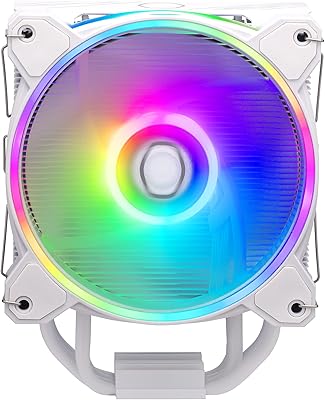
Thermalright Peerless Assassin 120 SE ARGB White CPU Air Cooler
87%
92%
Cooling Performance
88%
ARGB Lighting Customization
85%
Noise Levels
90%
Installation Ease
87%
Build Quality
More
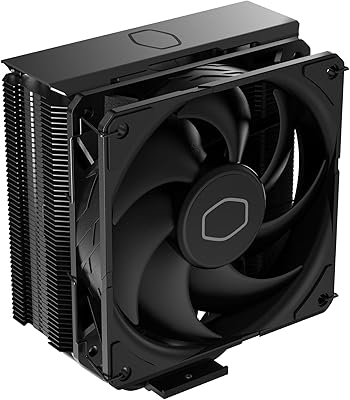
Cooler Master Hyper 212 Black CPU Cooler
79%
83%
Thermal Performance
79%
Noise Level
93%
Value for Money
76%
Installation Experience
81%
Build Quality
More
Cooler Master Hyper 212 Halo CPU Air Cooler
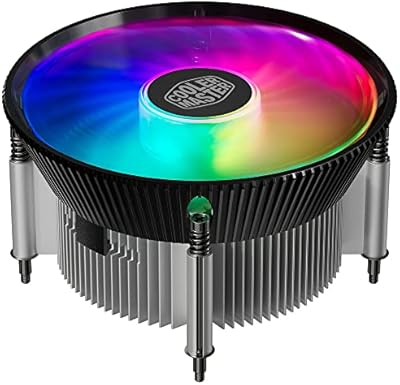
84%
88%
Cooling Performance
91%
Noise Level
85%
Ease of Installation
89%
Build Quality
80%
RGB Aesthetics
More
Cooler Master i70C Low-Profile CPU Cooler
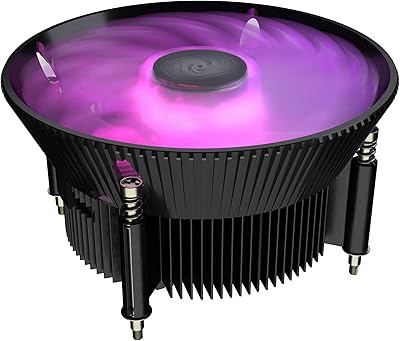
78%
72%
Thermal Performance
88%
Noise Level
93%
Form Factor & Fit
86%
Installation Ease
78%
ARGB Lighting
More
Cooler Master i71C RGB Intel Low-Profile CPU Air Cooler
84%
88%
Cooling Performance
91%
Noise Level
85%
RGB Customization
89%
Build Quality
75%
Installation Ease
More
Cooler Master MasterAir MA824 Stealth CPU Cooler
81%
88%
Thermal Performance
91%
Noise Level
93%
RAM Clearance
72%
Installation Experience
89%
Build Quality & Materials
More
Cooler Master Hyper 622 Halo Dual Tower CPU Cooler
82%
83%
Thermal Performance
88%
Noise Level
89%
Ease of Installation
67%
RAM Clearance
86%
Build Quality
More

FAQ

It depends on your specific case, but the 100mm total height clears the CPU cooler clearance limit in most ITX enclosures designed for aftermarket cooling. Always cross-reference your case manufacturer's listed CPU cooler height limit before ordering, as some ultra-compact ITX cases cap out at 55mm to 70mm.

Yes, for mainstream mid-range CPUs running at their factory-rated power limits, this cooler handles the thermal load without issue. You will see lower temperatures and noticeably reduced fan noise compared to the stock coolers bundled with most processors. Just do not expect it to keep up if you push the CPU beyond its rated TDP.

Not realistically. The SI-100 is designed around stock CPU operating conditions, and its thermal capacity is limited by the compact heatsink size. Overclocking increases heat output significantly, and this low-profile air cooler will hit its ceiling quickly under those conditions, leading to throttling.

Thermalright typically includes a small amount of thermal compound with this cooler, but it is worth confirming in the box contents when yours arrives. If you already have a quality thermal paste on hand, you can use that instead with no performance penalty.

The hardware kit is complete and covers both AMD and Intel platforms, so you will not need to source anything extra. That said, several owners note that the printed manual is not the clearest, especially for first-time builders. Watching a video walkthrough for your specific socket before you start will save you a lot of frustration.

This is worth checking carefully. Because the cooler sits low, the fan and fin stack can sometimes encroach on the first one or two DIMM slots depending on your motherboard layout and how tall your RAM modules are. If your memory heatspreaders extend notably above the DIMM slot, measure the clearance on your specific board before committing.

During typical tasks like browsing, video playback, or light office work, the fan runs at a fraction of its maximum speed and is genuinely hard to hear. It only becomes audible when the CPU is under sustained load, and even then it stays within a reasonable range for home use.

Standard heat pipes rely partly on gravity to cycle the coolant fluid efficiently, which means performance can drop if the cooler ends up in a horizontal or angled position inside certain case layouts. AGHP 3.0 is Thermalright's approach to compensating for that gravity dependency, so the heat pipes move thermal energy effectively regardless of the cooler's physical orientation.

The S-FDB V2.0 fluid dynamic bearing carries a 20,000-hour rating, which translates to roughly eight to ten years of regular daily use if the system runs eight hours a day. Real-world longevity can vary, but fluid dynamic bearings generally outlast sleeve bearing fans by a meaningful margin, so long-term reliability concerns here are fairly low.

Yes, AM5 is explicitly supported, and the included mounting hardware covers that platform without needing any adapter. It is a practical option for AM5 builders working on a budget, particularly those who want something better than stock while keeping costs down during an initial build.