Overview

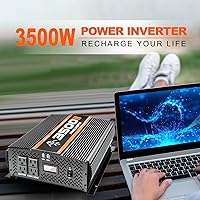
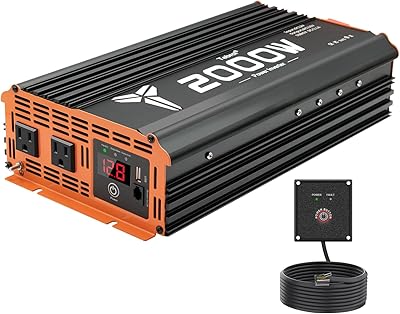
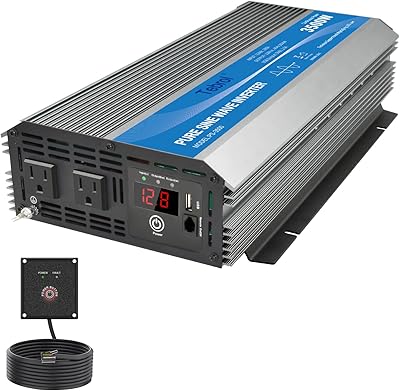
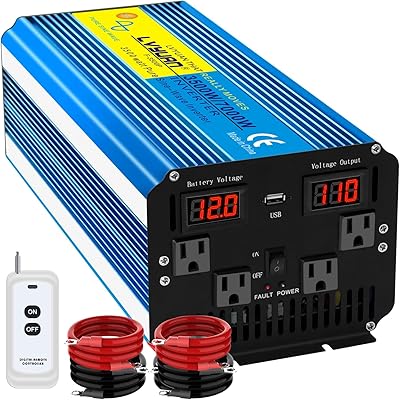
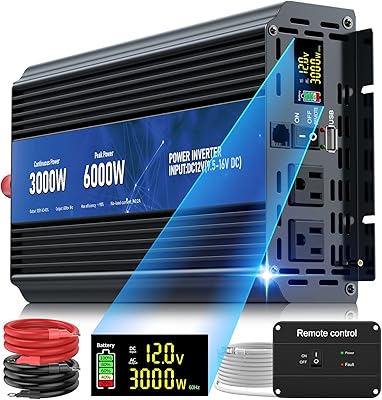
The Tebrol 3500W Power Inverter entered the market in mid-2024 as a mid-range option for RV owners, off-grid solar users, and anyone who wants a credible backup power source without paying premium prices. It delivers continuous 3500 watts with a 7000W surge rating — enough headroom to start motor-driven appliances that briefly spike demand. At just over 14 pounds and with a fairly large footprint, this 3500W inverter is not something you toss in a backpack. Tebrol is a newer name, so long-term reliability data is thin, but for occasional or semi-regular use it positions itself as a practical, honest-value choice rather than a whole-home power solution.
Features & Benefits

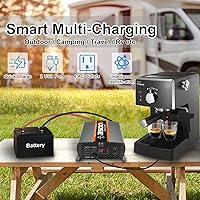
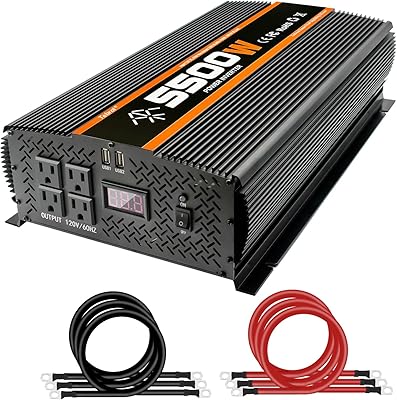
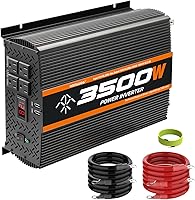
One thing worth knowing upfront: this DC-to-AC converter produces a modified sine wave, not a pure sine wave. That distinction matters. Most household appliances — TVs, phone chargers, LED lights, basic power tools — run fine on it. But if you plan to power a CPAP machine, audio equipment, or anything with a variable-speed motor, you may run into humming, reduced efficiency, or outright incompatibility. Beyond that caveat, the practical setup is solid. Four AC outlets and dual USB ports let you run several devices at once. The LCD screen gives a live readout of battery voltage, and the included remote controller is a genuine convenience when the unit is tucked away in a storage compartment.

Best For

This 3500W inverter hits a sweet spot for a fairly specific type of user. RV travelers and overlanders with an existing 12V battery bank will get the most out of it — it handles the typical mix of lighting, small appliances, and device charging without drama. Truck drivers who need to run a microwave or laptop during a rest stop will find the output more than adequate. It also fits neatly into off-grid solar setups as the conversion stage between stored DC power and usable AC current. For home emergency use during a power outage — running fans, keeping lights on, charging phones — it works well. Where it falls short is as a pure sine wave alternative for medical or audio equipment.

User Feedback

With a 4.3-star average across nearly 180 ratings, the Tebrol inverter has earned a broadly positive reception for a product barely a year old. Buyers consistently mention the easy setup process and appreciate that the build feels solid relative to the price. The LCD readout and remote get called out as practical extras rather than throwaway additions. On the downside, a handful of reviewers noted the unit gets noticeably warm during extended heavy use — functional, but worth watching. A few also found the modified sine wave incompatible with specific devices they assumed would work. Perhaps the biggest honest caveat: long-term durability is still unknown, and with a brand this new, that uncertainty is real. No widespread failure patterns yet, but the sample size is still growing.

Pros

  • Continuous 3500W output handles most common household appliances without issue.
  • The 7000W surge capacity gives plenty of headroom for motor-driven devices at startup.
  • Four AC outlets mean you can run multiple devices at the same time without a power strip.
  • LCD display shows live battery voltage, so you always know where your charge stands.
  • The included remote controller is a practical touch, especially when the unit is mounted out of reach.
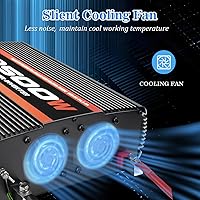
  • Dual fans activate based on internal temperature, keeping noise low during lighter loads.
  • Built-in protections cover overload, short circuit, overheating, and voltage swings — solid safety coverage.
  • Setup is straightforward; most buyers report getting it running without confusion.
  • Build quality feels solid relative to what you pay, according to a consistent pattern in early reviews.
  • Ships well-packaged with no widespread reports of damage or missing parts out of the box.

Cons

  • Modified sine wave output is incompatible with CPAP machines, some audio gear, and variable-speed tools.
  • No pure sine wave option in the Tebrol lineup means sensitive-device users must shop elsewhere.
  • At over 14 pounds with a large footprint, this 3500W inverter is not practical for portable or on-the-go use.
  • The unit runs noticeably warm under sustained heavy loads, which may concern users running it for long stretches.
  • Tebrol is a new brand with limited track record — durability beyond the first year is genuinely unknown.
  • Fan noise, while manageable, is audible and may be disruptive in quieter environments like a sleeping area.
  • No built-in battery charger — this is strictly a conversion unit, not a charge-and-discharge system.
  • Hardwire DC connection requires proper cable sizing and installation knowledge; not truly plug-and-play for beginners.

Ratings

The scores below for the Tebrol 3500W Power Inverter were generated by our AI system after analyzing verified buyer reviews from multiple global sources, with spam, bot activity, and incentivized feedback actively filtered out. Each category reflects both the genuine strengths that real users praised and the honest pain points they flagged — nothing is glossed over to protect the rating. Whether this 3500W inverter earns a spot in your RV, solar setup, or emergency kit depends heavily on your specific use case, and these scores are designed to make that decision clearer.
Power Output & Surge Handling
88%
Buyers consistently report that the 3500W continuous rating handles real-world mixed loads — a small microwave, a fan, and a laptop running simultaneously — without tripping or struggling. The 7000W surge capacity also earns trust for starting motor loads that briefly spike well above their running wattage.
A small number of users pushing the inverter close to its maximum continuous rating over extended periods noticed performance became less stable. For genuinely heavy sustained loads, the headroom feels tighter than the spec sheet suggests.
Wave Quality & Device Compatibility
61%
39%
For everyday electronics — LED TVs, phone chargers, standard laptops, LED lighting rigs — the modified sine wave causes zero issues, and most buyers in RV and truck contexts report their typical device lineup works without complaint. It is a practical wave type for non-sensitive loads.
Modified sine wave is a real limitation that has caught several buyers off guard. CPAP users, anyone running variable-speed power tools, and audiophiles with sensitive audio gear have reported humming, reduced efficiency, or outright incompatibility — a recurring theme in negative reviews that should be weighed carefully before purchasing.
Build Quality & Materials
82%
18%
Reviewers repeatedly describe the housing as feeling solid and well-assembled for the price tier, with no reports of rattling panels or flimsy connectors. The overall construction inspires enough confidence for semi-permanent vehicle or RV installations where vibration is a factor.
Tebrol is a relatively young brand and the sample size of long-term users is still small, so there is limited evidence of how well the casing and internal components hold up beyond the first year of regular use. A few buyers noted the unit feels heavier than expected given its size, which can complicate mounting.
Thermal Management
74%
26%
The temperature-activated dual fan system works as intended under moderate loads — the inverter often runs quietly during lighter use, with fans only spinning up when internal heat builds. Buyers who mount it in well-ventilated spaces report no thermal shutdowns under normal operation.
Under sustained heavy loads, the unit does run noticeably warm, and several reviewers flagged this as a concern for enclosed or poorly ventilated installations. The thermal protection will shut things down before damage occurs, but running the unit hard in a tight space is not advisable.
Ease of Setup
91%
Setup is one of the most consistently praised aspects across buyer feedback. The terminal connections are clearly labeled, the LCD lights up immediately on connection, and most users — including those without prior inverter experience — report being up and running within minutes of unboxing.
While the initial connection is simple, proper cable sizing for a 3500W draw on 12V is a detail the manual does not emphasize strongly enough. A handful of buyers underestimated the gauge of wire needed and ran into issues, which points to a gap in the documentation rather than the hardware.
LCD Display & Monitoring
84%
Real buyers find the LCD genuinely useful rather than ornamental — being able to glance at battery voltage in real time removes the guesswork from managing your battery bank, especially during extended off-grid use. The under and overvoltage alerts have also caught low-battery situations before they became a problem.
The display is functional but basic. There is no readout for output wattage or current load, which would make it easier to manage what you are running. A few users noted the display can be hard to read at certain angles in bright outdoor light.
USB Charging Performance
78%
22%
The dual 3.4A USB ports provide a notably fast charge for phones and tablets, and having them built directly into the inverter means you are not burning an AC outlet just to charge a device. RV and truck users in particular appreciate this for overnight charging without draining an outlet.
Only two USB ports limits simultaneous charging when multiple people are sharing the setup, which is common in RV scenarios. There is also no USB-C port, which is increasingly a limitation for newer devices that charge faster via USB-C.
Safety Protections
86%
The full suite of protections — overload, short circuit, overvoltage, undervoltage, and overheating — adds genuine peace of mind for buyers leaving the unit running unattended, whether in a parked RV overnight or during a storm. Users report the protections activate cleanly without requiring manual resets in most cases.
The overvoltage protection threshold has triggered unexpectedly for a small number of users with battery banks that briefly spike above the acceptable range, causing unwanted shutdowns. This is an edge case, but worth knowing if your battery management system is less precisely regulated.
Remote Controller
79%
21%
The wired remote is a thoughtful inclusion that buyers who mount the unit in tight or hard-to-reach spots — under a truck cab, inside an RV utility compartment — genuinely appreciate. It works reliably and removes the need to physically access the unit just to power it on or off.
Being wired rather than wireless limits its practical range to the length of the cable. Buyers hoping to control the unit from across a campsite or from inside a cab while the inverter is mounted in the bed will find the reach frustrating. A wireless option would meaningfully improve usability.
Fan Noise Level
72%
28%
Under light to moderate loads, the temperature-triggered fan system keeps noise at a genuinely low level — several buyers describe the inverter as nearly silent during casual use, which matters in quiet camping environments or when someone is sleeping nearby.
Under heavier loads, the fans spin up to a level that is clearly audible and, in some nighttime or sleeping-area contexts, disruptive. It is not abnormally loud for a unit of this wattage, but buyers expecting whisper-quiet operation at all times will be disappointed.
Value for Money
83%
At its price point, this DC-to-AC converter delivers a feature set — four AC outlets, dual USB, LCD, remote, and a full protection suite — that buyers find hard to match from established brands. For users whose workload suits modified sine wave output, the value calculation is straightforward and favorable.
The value equation shifts if you need pure sine wave output, since you will need to spend more on a different unit anyway. And with limited long-term durability data, buyers paying for a multi-year solution are taking on more uncertainty than the price alone might suggest.
Portability & Form Factor
53%
47%
The larger form factor is not inherently a problem for its intended audience — RV owners, truck drivers, and off-grid installers all typically have a dedicated mounting location in mind and are not expecting a pocket-sized device. The hardwire input also encourages a proper, stable installation.
At over 14 pounds and with substantial dimensions, this inverter is not practical for anyone who needs to move it frequently or pack it into a vehicle without a dedicated mounting spot. Buyers who assumed it would be easy to relocate between a car, cabin, and campsite have found it cumbersome.
Packaging & Unboxing
87%
Buyers across early reviews report clean, well-protected packaging with all components present and undamaged on arrival. The out-of-box experience sets a positive first impression, and the inclusion of the remote controller and necessary basic hardware is appreciated.
The included documentation is minimal — setup instructions are basic and do not go deep on cable sizing, fuse recommendations, or installation best practices. For less experienced users, this gap can lead to setup mistakes that are really just avoidable with clearer guidance.
Brand Reliability & Support
58%
42%
Early adopters report no widespread product defects or failure patterns, and the initial build quality feedback is broadly positive. For buyers who monitor their unit and use it within its designed parameters, the experience so far has been encouraging for a new-to-market brand.
Tebrol's limited market history means there is almost no data on post-warranty support, parts availability, or how the company responds to failures beyond the return window. Buyers who prioritize long-term manufacturer accountability are taking a meaningful gamble with a brand this new.

Suitable for:

The Tebrol 3500W Power Inverter is a strong fit for anyone who already runs a 12V battery setup and needs reliable AC power in the field. RV owners and overlanders will appreciate the four AC outlets and USB ports for powering a mix of devices simultaneously — think a small TV, a laptop, and phone chargers all running at once. Truck drivers on long hauls can use it to run a microwave or keep devices charged during rest periods without hunting for a plug. It also slots in well as the AC conversion stage in a DIY off-grid solar system, handling daytime loads while the panels keep the batteries topped up. For home emergency use — a power outage, a hurricane, a grid disruption — this DC-to-AC converter covers the essentials: fans, lighting, and communication devices. If your appliance list consists mostly of standard household electronics and you are not powering anything particularly sensitive, this inverter delivers genuine value at its price point.
Not suitable for:

The Tebrol 3500W Power Inverter is not the right call for buyers who need a pure sine wave output. If you rely on a CPAP or BiPAP machine, run high-end audio equipment, or use tools with variable-speed motors, the modified sine wave this unit produces can cause humming, reduced motor efficiency, or outright device incompatibility — and that is a real concern, not a minor footnote. Anyone expecting to run a fully loaded workshop or treat this as a whole-home backup solution should also look elsewhere; this is a capable unit, but it is sized for targeted, moderate loads rather than continuous heavy-duty operation. The unit's footprint and weight mean it is not practical for truly portable or backpacking scenarios either. Finally, buyers who prioritize long-term brand accountability should factor in that Tebrol is a relatively new market entrant — solid early signs, but there is simply not enough multi-year data yet to speak confidently to how these units hold up over time.

Specifications

  • Continuous Output: This inverter delivers a steady 3500 watts of continuous AC power for running multiple appliances simultaneously.
  • Surge Capacity: Peak surge output reaches 7000 watts, providing the short-term power spike needed to start motor-driven appliances.
  • Input Voltage: Designed to connect to a standard 12V DC battery bank via hardwire DC terminal connection.
  • Output Voltage: Converts 12V DC input to 110V/120V AC output, compatible with standard North American household appliances.
  • Wave Type: Produces a modified sine wave signal, suitable for most common electronics but not recommended for sensitive or medical devices.
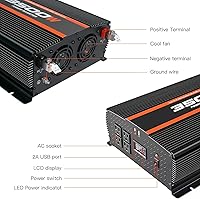
  • AC Outlets: Equipped with four standard AC outlets, allowing multiple appliances or devices to be powered at the same time.
  • USB Ports: Includes two USB charging ports, each rated at 3.4A, for direct charging of phones, tablets, and similar devices.
  • Display: An LCD screen provides real-time battery voltage readings and triggers visual alerts for undervoltage or overvoltage conditions.
  • Cooling System: Dual built-in fans operate intelligently, activating automatically when internal temperature reaches a set threshold to prevent overheating.
  • Protections: Onboard safety circuitry guards against overload, overvoltage, undervoltage, short circuit, and overheating conditions.
  • Remote Controller: A wired remote controller is included in the box, enabling the unit to be switched on or off from a distance.
  • Input Connection: Power input is handled via a hardwire DC terminal, requiring proper gauge cabling and a secure battery connection.
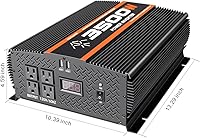
  • Weight: The unit weighs 14.15 lbs, making it a stationary or semi-permanent installation rather than a truly portable device.
  • Dimensions: Physical dimensions measure 36.5 x 26.5 x 11.5 inches, requiring dedicated mounting space in a vehicle, RV, or storage compartment.
  • Brand: Manufactured by Tebrol, a brand that entered the power inverter market in mid-2024.
  • Availability: This product became available for purchase in July 2024, making long-term reliability data limited at this stage.

Related Reviews

Tebrol 2000W Power Inverter
86%
88%
Performance & Power Output
90%
Ease of Use & Setup
85%
Portability & Size
75%
Cooling System & Noise
91%
Safety Features
More
Tebrol 5500W Power Inverter
83%
88%
Performance
91%
Ease of Setup
85%
Build Quality
73%
Cooling System Efficiency
80%
Portability
More
Tebrol 3500W Pure Sine Wave Inverter
79%
88%
Output Power Accuracy
92%
Pure Sine Wave Quality
79%
Build Quality
83%
Cooling & Thermal Management
81%
Ease of Installation
More
Yinleader 3500W Pure Sine Wave Power Inverter
73%
83%
Power Output Quality
61%
Build Quality
67%
Thermal Management
63%
Surge Performance
86%
Ease of Setup
More
Kzreect Inverter-MK 220W Portable Power Inverter
85%
94%
Portability and Size
89%
Charging Speed (USB-C & USB-A)
82%
Battery Compatibility
88%
Ease of Use
90%
Safety Features (Overload, Overcurrent)
More
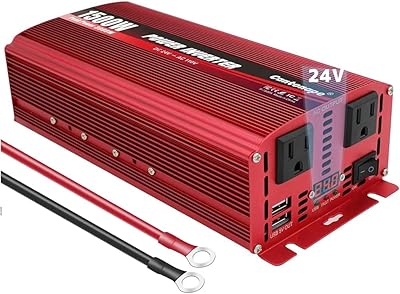
Cantonape 1500W 24V Power Inverter
76%
82%
Power Output Reliability
91%
Ease of Setup
88%
LED Display & Diagnostics
74%
Build Quality
69%
Thermal Management
More
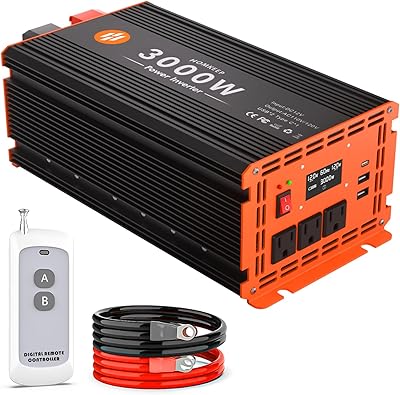
Homkeep 3000W Power Inverter
86%
91%
Value for Money
88%
Performance
85%
Build Quality
93%
Ease of Use
89%
Energy Efficiency
More
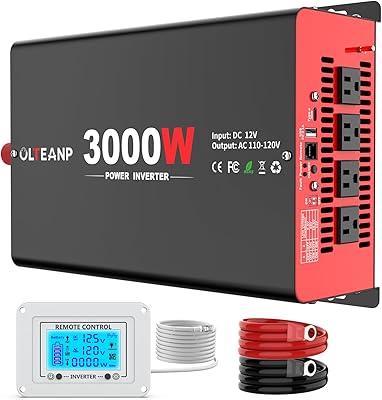
OLTEANP 3000W Power Inverter
87%
91%
Power Output
88%
Portability & Size
85%
Ease of Use
87%
Durability & Build Quality
92%
Safety Features
More
ROARBATT 3000W Power Inverter
77%
83%
Build Quality
78%
Power Output Accuracy
86%
Value for Money
88%
Ease of Setup
91%
LCD Display
More
HONOURLIGHT 3000W Power Inverter
79%
88%
Value for Money
83%
Power Performance
91%
Ease of Setup
89%
LED Display Clarity
84%
Remote Control
More

FAQ

This is one of the most important questions to get right before buying. The Tebrol 3500W Power Inverter produces a modified sine wave, and many CPAP and BiPAP machines are designed to run on a pure sine wave. Using a modified sine wave with these devices can cause motor strain, increased noise, or simply prevent the machine from functioning correctly. If a CPAP is on your list, look for a pure sine wave inverter specifically rated for medical equipment.
At 3500W continuous draw on a 12V system, you are pulling roughly 290 to 300 amps from your battery — that is an enormous demand. In practice, you would need a very large battery bank, ideally 200Ah or more, and even then full-load runtime will be short. Most real-world users run well under the maximum wattage, which makes the battery math much more manageable. Size your battery bank based on your actual expected load, not the inverter's ceiling.

It does, but not directly. This DC-to-AC converter connects to a 12V battery bank, so you would pair it with a solar charge controller that keeps that battery charged from your panels. The inverter itself does not have a solar input — it simply draws from whatever 12V source you connect it to. For off-grid solar setups, it works well as the final conversion stage between your battery storage and your AC-powered devices.

The fans use a temperature-triggered system, so they do not run constantly. Under light loads the unit often operates quietly, with fans only spinning up when the internal temperature climbs. Under sustained heavy loads the fans are audible — reviewers describe the noise as noticeable but not disruptive in most outdoor or vehicle contexts. If you plan to run it in a sleeping area at night, it is worth keeping that in mind.

Yes, and that is actually one of the most practical ways to install it. The unit connects via a DC hardwire terminal rather than clamps, which is better suited to a permanent or semi-permanent mount. You will need to use appropriately rated cabling — at 3500W on 12V, current draw is high, so undersized wire is a safety risk. If you are not confident sizing the cables yourself, it is worth consulting an auto electrician for the installation.

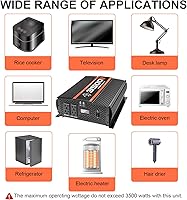
For most standard household electronics — televisions, LED lighting, laptops, phone chargers, small fans, and basic kitchen appliances like a coffee maker — this 3500W inverter handles things comfortably. A microwave rated under 1500W is also a common use case. Where it struggles is with appliances that require a pure sine wave, like certain variable-speed power tools, high-end audio equipment, or medical devices. Stick to resistive and standard motor loads and you should be fine.

A handful of buyers have noted the unit gets warm during long stretches of heavy use. The built-in dual fans and thermal protection circuitry are designed to manage this, and the overheating protection will shut the unit down before damage occurs. That said, it is a good habit to ensure the inverter has adequate airflow around it and is not enclosed in a tight space with no ventilation. Running it near its maximum rated wattage for hours at a time is harder on any inverter, not just this one.

The included remote is a wired controller rather than wireless, so its range is determined by the cable length rather than a signal. It is designed for situations where the inverter is mounted in an awkward or hard-to-reach spot — think a truck bed cabinet or under an RV bench — and you want to switch it on or off without crawling to reach it. Do not expect it to operate from across a campsite; it is a convenience tool for short-distance control.

The LCD display on this DC-to-AC converter shows real-time battery voltage, so you can check it at a glance. More usefully, the unit is also programmed to trigger an alarm when the battery voltage drops into undervoltage territory — it will alert you before it shuts down to protect your battery from deep discharge. Keeping an eye on the display during heavy use is a good habit, especially if you are running loads for an extended period.

Pure sine wave inverters at this wattage typically cost noticeably more, so the trade-off is straightforward: you pay less with this unit but accept modified sine wave output. For users whose appliance list does not include sensitive electronics, medical equipment, or precision audio gear, that trade-off is often perfectly reasonable. If you are powering a TV, lighting, a laptop, and some USB devices, the difference in wave quality will likely never matter to you. But if you have any doubt about compatibility with a specific device, it is worth checking that device's manual or contacting the manufacturer before committing.