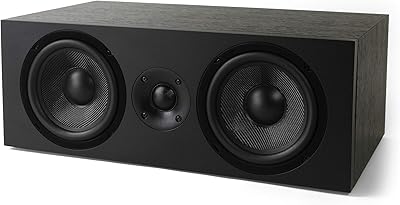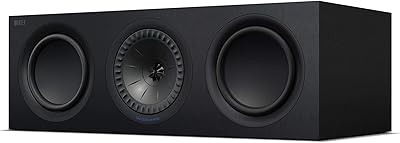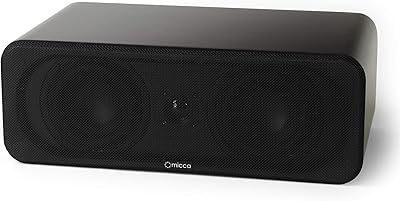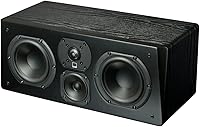
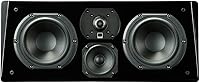
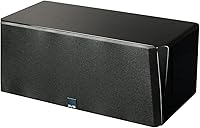
Overview

The SVS Prime Center Channel Speaker occupies a well-earned spot in the mid-to-upper tier of the home theater market, built specifically for listeners who get genuinely frustrated when movie dialogue sounds muddy or buried in effects. A center speaker has a harder job than most people realize — it needs to deliver every whispered line with surgical clarity, then immediately pull back and blend into the wider soundstage when the action picks up. This three-way center speaker fits naturally within the broader SVS Prime family, sharing the same neutral voicing philosophy as the Prime bookshelf and tower models. The cabinet comes in Premium Black Ash or Piano Gloss Black, both substantial and purpose-built. Worth noting upfront: how well this performs depends meaningfully on your AV receiver quality and room setup.

Features & Benefits

What separates this center channel speaker from the crowded field of two-way designs is its true three-way architecture. By vertically aligning the tweeter and a 3.5-inch midrange driver — each in its own sealed enclosure — the speaker eliminates comb filtering, which is what causes dialogue to sound harsh or inconsistent depending on where you are sitting in the room. The dual 5.25-inch woofers add genuine weight to deep voices and low-end cinematic moments without bleeding into that critical midrange band. On the high end, the 1-inch aluminum dome tweeter keeps detail open and natural, not harsh. The 8-ohm load and 20-to-200-watt power range mean most mid-range receivers handle it without strain. Voices simply sound like real voices — not a speaker trying to reproduce them.

Best For

This center channel speaker is the right choice for anyone building or meaningfully upgrading a 5.1 or 7.1 home theater where dialogue performance is the priority. If you have been turning on subtitles not because of any hearing issue but because your current center simply cannot keep up, this is the kind of upgrade that actually solves the problem. It also makes a natural anchor for anyone already running other SVS Prime series speakers — the tonal matching is practical and immediately audible, not just a spec-sheet talking point. Larger rooms with multiple seating rows benefit most, since the off-axis consistency is genuinely strong. Music lovers who use their setup for both film and stereo listening will find this three-way center speaker holds its own without sacrificing musical texture for cinematic punch.

User Feedback

Owner feedback is consistently enthusiastic about one thing above all else: the jump in dialogue clarity when switching from a soundbar or basic two-way center is immediately and obviously audible. Those who pair the SVS Prime Center with matching Prime bookshelf or tower speakers repeatedly note how coherently the front stage holds together across both movies and music. The practical concern worth knowing: at 23 inches wide and 20 pounds, placement requires real planning — a narrow TV stand may simply not cut it. Owners who ran room correction software like Audyssey or YPAO report noticeably better results than those who skipped calibration. One honest caveat: the 86dB sensitivity means receivers on the lower end of the power spectrum can leave this speaker working below its potential.

Pros

  • Dialogue clarity improves immediately and obviously compared to soundbars or basic two-way center speakers.
  • The three-way driver layout means consistent, clear speech reaches every seat, not just the sweet spot.
  • Neutral voicing makes voices sound naturally present on both film and music without a pushed or colored midrange.
  • A dedicated sealed midrange compartment keeps vocals clean and textured even during heavy bass passages.
  • Dual 5.25-inch woofers add genuine authority to deep voices and cinematic low-end moments.
  • Tonal matching with other SVS Prime series speakers creates a coherent front soundstage with minimal calibration effort.
  • The 20-to-200-watt power range makes it compatible with a wide range of mid-grade AV receivers.
  • Premium cabinet construction feels built to last, not like something that needs replacing in a few years.
  • Running room correction software like Audyssey or YPAO unlocks a noticeably higher level of overall performance.
  • Off-axis performance is strong enough that listeners seated well outside the center position still benefit fully.

Cons

  • At 23 inches wide and 20 pounds, it demands a sturdy, wide support surface that many TV stands cannot provide.
  • The 86dB sensitivity rating leaves headroom on the table if your AV receiver is on the lower-power end.
  • Achieving full potential requires room correction calibration, which adds meaningful setup time for less experienced users.
  • The physical size makes it incompatible with narrow or wall-mounted display configurations without dedicated bracketing.
  • Buyers pairing this center channel speaker with non-SVS speakers may need extra calibration work to achieve tonal cohesion.
  • No wireless option exists; wired installation is the only path, which can restrict placement choices in some rooms.
  • Solo installation is awkward given the weight; having a second person available during setup is a practical necessity.
  • Buyers who skip proper amplification investment may feel the overall performance does not justify the asking price.

Ratings

Our scores for the SVS Prime Center Channel Speaker are generated by AI after analyzing thousands of verified buyer reviews from global markets, with spam, incentivized feedback, and bot-generated content actively filtered out before any scoring takes place. The result captures both what genuine owners consistently celebrate and the practical frustrations that surface repeatedly across real-world setups. Every category below reflects that balanced picture transparently, without glossing over the trade-offs.

Dialogue Clarity
94%
The single most celebrated aspect across all owner feedback. Buyers consistently describe an immediate, obvious improvement in speech intelligibility compared to soundbars and entry-level two-way centers. Deep male voices carry weight and texture, while whispered lines in dialogue-heavy films remain fully audible without needing to push the volume.
A small number of owners noted that on very demanding action sequences where dialogue competes with heavy effects, the speaker benefits significantly from a properly configured bass management crossover in the receiver. Without that setup step in place, dialogue can occasionally feel slightly crowded rather than fully separated.
Off-Axis Performance
91%
The vertically-aligned driver arrangement solves a problem many buyers did not know they had until they heard the difference. People seated at the far ends of the couch report hearing dialogue as clearly and naturally as whoever sits in the center position, which transforms multi-seat home theater viewing in a way that is hard to go back from.
At very wide seating angles — essentially anyone seated nearly perpendicular to the display — a marginal rolloff in high-frequency presence becomes audible to more sensitive listeners. This is largely a room geometry edge case rather than a core design issue, but unusually wide or L-shaped seating arrangements may expose it.
Tonal Neutrality
92%
Owners who also use their system for music specifically note that voices and instruments reproduce without the colored, pushed midrange character common in lesser center speakers. Jazz vocalists, acoustic guitars, and orchestral string passages all benefit from a presentation that adds nothing and removes nothing from the original recording.
A handful of buyers with a taste for a warmer, more forgiving sound signature found the neutral tuning slightly clinical in direct comparisons with competing speakers that apply a mild midrange lift. This is a personal preference issue rather than a flaw, but listeners conditioned to a more colored presentation may need time to adjust.
Value for Money
82%
18%
Within its price tier, this three-way center speaker offers a level of engineering — sealed midrange compartment, aluminum dome tweeter, dual dedicated woofers — that comparable competitors rarely match driver-for-driver. Long-term owners frequently describe it as the last center channel upgrade they expect to make, which speaks to its long-term value proposition.
For buyers who are financially stretched to reach this price point, the return on investment depends heavily on already having a capable AV receiver and a properly treated room. Pairing it with a budget receiver limits the overall result enough that some owners in that situation felt the speaker was performing below its potential.
Placement & Footprint
54%
46%
The substantial cabinet dimensions signal genuine acoustic engineering rather than unnecessary bulk. Buyers who had appropriate furniture to accommodate it universally appreciated the solid, purposeful feel of the enclosure and found it looked well-considered and serious in context rather than simply oversized.
At 23 inches wide and 20 pounds, placement is a logistical challenge that multiple owners flagged as a surprise before purchase. Shallow TV stands, narrow media consoles, and tight shelving are often ruled out entirely, and the weight makes solo repositioning awkward enough that a second person is effectively required for any installation adjustment.
Build Quality
88%
The cabinet feels genuinely dense and premium in person. Both finish options hold up well over years of regular use, and the driver hardware shows no signs of cost-cutting at this price level. Owners who have lived with it for multiple years consistently report no degradation in either structural integrity or acoustic performance.
The Piano Gloss Black finish, while visually striking, attracts fingerprints and shows fine surface marks with routine handling. Buyers who need to reposition or clean the cabinet regularly may find the gloss surface demands ongoing attention to stay looking as sharp as it did out of the box.
Bass Response
78%
22%
The dual 5.25-inch woofers deliver more convincing authority on deep male voices and low-pitched cinematic effects than most single-woofer center designs at this price level. War films, documentary narration, and action sequences all benefit from a center that does not thin out at lower vocal registers.
This center channel speaker was not designed to substitute for a subwoofer, and in rooms without proper bass management the low end can feel slightly loose without a dedicated sub handling the deepest octaves. Owners running subwoofer-free setups reported mixed satisfaction with the overall low-frequency picture at reference listening levels.
High-Frequency Detail
87%
The aluminum dome tweeter extends the top end with a cleanness that makes cymbal crashes, string harmonics, and high-pitched film score elements feel genuinely open rather than compressed or smoothed over. Owners who came from budget center speakers frequently noted how much high-frequency information they had simply been missing before.
A minority of listeners found the aluminum dome tweeter to have a slightly analytical character on very bright source material or poorly mastered tracks, which can make some recordings feel harder-edged than expected. This is a characteristic shared broadly by aluminum dome tweeters and is considerably less pronounced at moderate listening levels.
Receiver Compatibility
79%
21%
The 8-ohm nominal impedance presents an easy electrical load that pairs without complaint across a wide range of AV receivers from mainstream consumer brands. The broad 20-to-200-watt power handling range gives buyers meaningful flexibility to pair it with current amplification and then upgrade the receiver later without replacing the speaker.
The 86dB sensitivity rating is honest but not generous, and owners using receivers at the lower end of the power spectrum consistently noted the speaker felt constrained at higher volumes in medium and larger rooms. Stepping up to a more powerful receiver produces a clearly audible improvement that budget-receiver owners are unlikely to experience.
Calibration Payoff
71%
29%
Buyers who invested time in an auto-calibration pass using Audyssey, YPAO, or a comparable room correction system reported a noticeably more cohesive and natural result. The SVS Prime Center responds particularly well to calibration, and the reward for completing the process is clearly audible in a direct before-and-after comparison in any room.
Owners who skipped calibration or lacked experience configuring AV receivers sometimes reported underwhelming initial results and incorrectly attributed the issue to the speaker itself. Getting the full return on this investment requires more receiver and room setup effort than a simpler, more plug-and-play option in the same category would demand.
Ecosystem Integration
89%
Buyers already running SVS Prime bookshelf or tower speakers found the tonal cohesion of the matched front stage immediately and practically audible — not a theoretical spec-sheet benefit, but something that shows up clearly on the first film watched with the full system running together. The matching is a genuinely practical advantage.
For buyers pairing the SVS Prime Center with speakers from other manufacturers, achieving tonal cohesion in the front soundstage requires meaningful additional calibration effort and may still leave minor inconsistencies that are noticeable during music playback, where blending precision matters more than it typically does on cinematic sound effects.
Cabinet Aesthetics
83%
Both available finishes look deliberate and premium rather than utilitarian. The Black Ash texture complements wood-toned furniture naturally, while the Piano Gloss Black is a bold finish that holds its own in a dedicated home theater environment. Owners consistently describe the overall appearance as looking like a piece of serious hardware.
The cabinet dimensions mean it can visually dominate a media console in smaller living rooms, and a few buyers noted it draws attention in a way that felt slightly out of scale with the rest of their setup before they had adapted to living with it. Room proportion matters more than it does with smaller center speaker designs.
Long-Term Durability
86%
Several multi-year owners reported no degradation in driver performance, binding post integrity, or cabinet finish quality over extended regular use. The brand's broader reputation for durable engineering means most buyers approach this center channel speaker as a one-time purchase in its category rather than something they expect to replace.
The warranty is categorized as limited, and the exact scope of coverage deserves a careful read before committing. Practically speaking, the cabinet size and weight make shipping the unit for any warranty service a logistical challenge, and the associated freight costs could add meaningful expense to any out-of-warranty repair or service scenario.

Suitable for:

The SVS Prime Center Channel Speaker is purpose-built for home theater enthusiasts who have quietly accepted that their center speaker is the weakest link in an otherwise capable system. If you find yourself routinely cranking the volume just to catch whispered dialogue, or defaulting to subtitles on films you know well, this is the kind of hardware upgrade that directly solves that problem rather than masking it. It fits particularly well for anyone already running SVS Prime bookshelf or tower speakers, since the shared voicing means the front soundstage locks together in a way that mixed-brand setups rarely achieve without significant calibration effort. Medium-to-large rooms with multiple seating rows benefit most, as the three-way design's off-axis consistency means the person sitting at the edge of the couch gets the same dialogue clarity as whoever's in the prime center seat. It also rewards buyers with a longer investment horizon — pair it with a solid receiver now, upgrade the amplification down the road, and this center channel speaker will keep pace.

Not suitable for:

The SVS Prime Center Channel Speaker is not the right choice for buyers working with compact TV furniture or entry-level AV receivers. At 23 inches wide and 20 pounds, it physically demands a sturdy, wide TV stand or a purpose-built shelf — if that real estate isn't available in your setup, placement becomes a genuine problem before the speaker ever plays a note. The 86dB sensitivity rating is workable, but it is not forgiving of underpowered receivers; if your amplification sits at the modest end of the spectrum, this three-way center speaker will consistently perform below its actual capability. It is also a poor match for casual listeners who are not ready to invest in a proper surrounding speaker system — a center at this level only reveals its strengths when the rest of the chain can meet it. Buyers expecting a plug-and-play improvement without room calibration or setup effort may walk away underwhelmed despite the hardware quality.

Specifications

  • Driver Config: True 3-way design with a vertically-aligned tweeter and midrange driver operating independently alongside dual woofers for distinct frequency handling.
  • Tweeter: 1-inch aluminum dome tweeter engineered for extended, natural high-frequency reproduction without harshness at elevated listening levels.
  • Midrange Driver: 3.5-inch dynamic midrange driver housed in its own fully sealed internal enclosure, preventing bass energy from modulating vocal and instrument frequencies.
  • Woofers: Dual 5.25-inch dynamic woofers responsible for deep male voice reproduction and cinematic low-frequency impact below the midrange band.
  • Impedance: Nominal impedance of 8 ohms, an easy load compatible with the vast majority of consumer AV receivers currently on the market.
  • Sensitivity: Sensitivity rated at 86dB measured at 2.83V at 1 meter, a moderate efficiency figure that performs best with adequately powered amplification.
  • Power Handling: Recommended amplifier power range of 20 to 200 watts, offering broad compatibility from mid-range receivers through higher-end separates.
  • Frequency Response: Rated bandwidth of 48Hz to 25kHz within plus or minus 3dB, covering deep-voiced male dialogue through the upper audible frequency range.
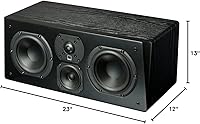
  • Dimensions: Cabinet measures 23″ wide by 12″ deep by 13″ tall, requiring a sturdy, wide support surface for safe and stable horizontal placement.
  • Weight: Unit weighs 20 pounds, making a reinforced shelf or wide TV stand necessary and two-person installation strongly advisable.
  • Finish Options: Available in Premium Black Ash with a textured matte wood-grain appearance, or Piano Gloss Black with a high-sheen lacquer surface.
  • Mounting Type: Designed for tabletop placement in a horizontal orientation, typically positioned below or above the display screen on AV furniture.
  • Connectivity: Passive wired speaker using standard five-way binding post terminals for direct connection to an AV receiver's dedicated center channel output.
  • Channel Config: Configured as a 3.0 surround channel speaker, intended exclusively for the center channel position within a multi-channel surround sound system.
  • Compatible Sources: Works with any audio source routed through an AV receiver, including televisions, projectors, desktop computers, and laptops.
  • Warranty: Covered by a limited manufacturer warranty from SVS, a brand widely recognized for responsive customer support and a strong service reputation.

Related Reviews
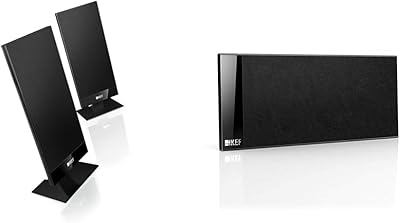
KEF T101 Satellite and Center Channel Speakers
80%
88%
Sound Clarity
91%
Build Quality
94%
Design & Aesthetics
89%
Dialogue Intelligibility
62%
Value for Money
More
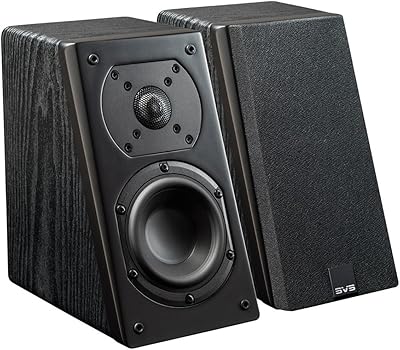
SVS Prime Elevation Surround Speakers
82%
91%
Sound Clarity
93%
Build Quality
88%
Surround Imaging
71%
Mounting Experience
79%
Value for Money
More
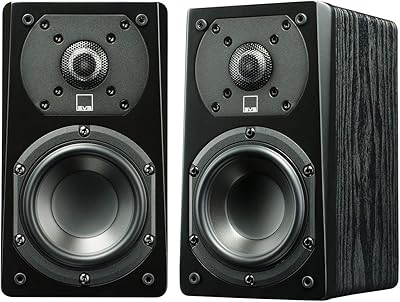
SVS Prime Satellite Surround Sound Speakers
80%
88%
Sound Clarity
54%
Bass Performance
91%
Build Quality
76%
Value for Money
89%
Surround Integration
More
KEF T301C Center Channel Speaker
80%
93%
Dialogue Clarity
96%
Design & Aesthetics
88%
Build Quality
67%
Value for Money
48%
Bass Performance
More
SVS Prime Pinnacle Floorstanding Speakers
81%
93%
Bass Performance
89%
Midrange Clarity
86%
High-Frequency Detail
91%
Soundstage & Imaging
88%
Dynamic Range
More
KEF Q250c Center Channel Speaker
80%
93%
Dialogue Clarity
88%
Build Quality
91%
Off-Axis Performance
79%
Value for Money
67%
Bass Performance
More
NEUMI CS5 Center Channel Speaker
74%
88%
Dialogue Clarity
84%
Value for Money
57%
Bass Performance
67%
Build Quality
83%
Ease of Setup
More
Yamaha NS-C444 Center Channel Speaker
81%
93%
Dialogue Clarity
88%
Build Quality
91%
Tonal Matching
54%
Bass Performance
84%
Waveguide Performance
More
Klipsch RP-450C Center Channel Speaker
84%
96%
Dialogue Clarity
93%
Build Quality
91%
Tonal Matching
88%
Soundstage & Imaging
89%
Dynamic Range
More
DALI Spektor VOKAL Center Channel Speaker
81%
93%
Dialogue Clarity
91%
Tonal Matching
88%
Sound Dispersion
86%
Build Quality
89%
Amplifier Compatibility
More

FAQ

Most mid-range receivers rated at 50 watts per channel or above into 8 ohms will drive this center channel speaker without issue. The 8-ohm impedance is an easy load, so compatibility is rarely the problem. The more relevant factor is the 86dB sensitivity rating — it is a moderate figure, meaning a very budget-oriented receiver that struggles to deliver clean power at higher volumes may leave some performance unrealized. If your receiver is from a reputable brand with honest power specs, you should be fine.

You do not strictly need to, but pairing the SVS Prime Center with other speakers from the Prime family produces a noticeably coherent front soundstage because the drivers and crossover tuning are deliberately voiced to match. Mixed-brand setups can still sound excellent, but expect to spend extra time with calibration to align tonal balance across the front three channels. For anyone already invested in the SVS Prime ecosystem, the matching argument is genuinely practical, not just a marketing point.

It is genuinely large for a center channel: 23 inches wide, 12 inches deep, and 13 inches tall. Width is rarely the problem, but the 12-inch depth can be an issue on shallow shelving. At 20 pounds, the surface also needs to hold the weight safely without wobbling. Measure your stand before purchasing and check whether a low-profile horizontal placement will block your display's IR sensor or cut into your viewing angle.

Yes. This three-way center speaker handles deep voices and mid-bass content well, but a dedicated subwoofer is still essential for true low-frequency impact below around 80Hz. In a properly configured surround system, your AV receiver will high-pass the center channel and redirect the deepest bass to the subwoofer automatically. The center channel speaker handles what it is designed for; the sub handles everything below that threshold.

Yes, and noticeably so. Owners who complete an auto-calibration pass consistently report better-blended, more natural-sounding results compared to those running default settings. Room acoustics always color what you hear regardless of speaker quality, and calibration helps the receiver compensate for those variables. If your receiver supports Audyssey, YPAO, or MCACC, it is worth the ten-minute setup — the improvement is real.

It depends entirely on what you are upgrading from. If your current center is a basic two-way design from a bundled home theater package or a soundbar, the improvement in dialogue clarity and off-axis consistency will be immediately and obviously audible. If you are already running a quality three-way center from a respected brand, the gap will be smaller and harder to justify. The strongest upgrade case is coming from entry-level or soundbar-style setups.

It works well for both. The neutral voicing means vocals and acoustic instruments reproduce without the pushed or colored midrange that plagues many center speakers, which matters equally for music and film. Whether you are watching a concert film or streaming music through your AV receiver's multi-channel setup, this center channel speaker holds up naturally. It is not a substitute for a dedicated stereo pair, but within a surround context it handles music without sounding like an afterthought.

The electrical connection is straightforward — standard binding posts that any receiver's center channel output connects to directly. The more involved part is placement logistics, since a 23-inch-wide, 20-pound cabinet requires more physical planning than most center speakers. Running an auto-calibration pass afterward is strongly recommended, but modern receivers walk you through that process step by step with an included microphone. The challenge is physical setup, not technical wiring.

Black Ash has a textured matte wood-grain look that blends into most home theater setups and is significantly more forgiving of fingerprints, dust, and minor handling marks over time. Piano Gloss Black looks genuinely premium but shows smudges and fine surface scratches with regular use. If the speaker will sit in a high-traffic area or requires periodic repositioning, Black Ash is the lower-maintenance and more practical choice. Gloss Black makes a strong visual impression in a dedicated room where it is rarely touched.

The most audible difference in daily use comes down to the three-way driver layout and the isolated midrange compartment. Most budget center speakers use a two-way design where a single driver handles both vocals and upper bass, which introduces coloration and inconsistent sound depending on where you are sitting in the room. With this three-way center speaker, dialogue stays clear and natural across multiple seating positions, not just the prime center seat — which is a genuine real-world advantage in any room where people sit off-axis.

Where to Buy