Overview

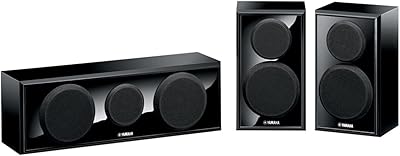
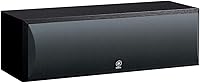
The Yamaha NS-C210 Center Channel Speaker is Yamaha's dependable mid-range entry in the NS-200 series, built specifically to anchor a 5.1 surround system with clear, natural dialogue reproduction. It sits compact enough — 13.4 inches wide — to fit on most TV stands without crowding your setup, and the piano black finish blends quietly into most AV furniture rather than demanding attention. The 2-way bass-reflex design strikes a practical balance: you get enough low-mid body to keep voices from sounding thin, while the overall tuning stays focused on vocal clarity. If you're already running Yamaha NS-series speakers at the sides or rear, this center speaker slots into that system naturally.

Features & Benefits

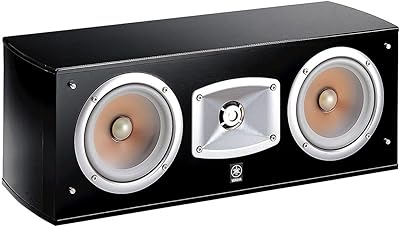
At its core, the NS-C210 is built around dual 4-inch aluminum woofers that respond quickly enough to keep fast-paced dialogue intelligible even when the action gets loud. The 7/8-inch balanced dome tweeter adds high-frequency detail without pushing into harshness — a common problem with cheaper center speakers at this size. A rear bass-reflex port gives the cabinet genuine low-mid extension, so voices don't come across as hollow or boxed-in. With 80W of max power handling and a 6-ohm impedance load, it plays nicely with most entry-to-mid AV receivers without demanding anything exotic from your amplifier. The physical footprint stays compact enough to avoid cluttering your setup.

Best For

This center channel speaker makes the most sense for people assembling or upgrading a 5.1 home theater on a sensible budget — particularly those already invested in the Yamaha NS ecosystem. Matching it with NS-series bookshelf or floor-standing speakers means your surround sound will carry a consistent tonal character across the front stage. It's also well-suited for smaller rooms and apartments where a physically large center channel would be excessive. Movie and TV watchers benefit most; if music listening is your primary use, manage your expectations around bass — this speaker is tuned for dialogue clarity, not low-end punch. A receiver rated around 50–100W per channel is the sweet spot.

User Feedback

Owners who've lived with this Yamaha center speaker for a year or more tend to report consistent satisfaction, particularly around dialogue intelligibility during dense action sequences. The build quality and piano black finish draw repeated praise as punching above their price class. That said, a vocal minority of buyers — especially those using the center channel for music — find the bass extension somewhat limited. It's a fair point; this speaker was never designed to do heavy lifting in the low end. A practical tip that keeps surfacing: if your TV stand is low, tilting the speaker slightly upward noticeably improves clarity. Not a flaw — just worth knowing before you finalize placement.

Pros

  • Dialogue clarity is genuinely exceptional — voices stay locked and intelligible even during loud, chaotic scenes.
  • The piano black finish looks polished and sits above average build quality for this price tier.
  • Dual aluminum cone woofers respond quickly, keeping fast speech and subtle vocal texture intact.
  • 6-ohm impedance makes it easy to drive with a standard mid-range AV receiver — no exotic amp required.
  • Compact dimensions fit neatly on most TV stands without blocking the screen or cluttering the cabinet.
  • Pairs with Yamaha NS-series speakers for a tonally consistent front and surround stage.
  • Long-term owners consistently report the speaker holds up well after years of regular use.
  • The bass-reflex design gives voices genuine body — they don't sound thin or hollow at normal listening volumes.
  • 80W power handling provides real headroom for dynamic film soundtracks without straining the driver.

Cons

  • Bass extension is limited — music listeners will likely feel the low end trails off too early.
  • Larger rooms can expose the output ceiling; this center channel isn't built for big dedicated home cinemas.
  • Placement angle affects performance noticeably — buyers with very low TV stands may need to experiment with tilt.
  • Only available in a limited finish range, which may not suit lighter or wood-toned AV furniture setups.
  • No built-in mounting hardware for wall installation — strictly a tabletop or shelf solution.
  • Buyers pairing it with non-Yamaha speakers may find tonal matching more hit-or-miss than expected.
  • The grille is non-removable on some units, which limits acoustic fine-tuning options for enthusiasts.

Ratings

The Yamaha NS-C210 Center Channel Speaker has been scored by our AI after analyzing thousands of verified buyer reviews from global markets, with spam, incentivized, and bot-generated feedback actively filtered out. Scores reflect the full picture — what real owners genuinely praise, and where the speaker consistently falls short in everyday use. Both strengths and frustrations are weighted transparently so you can make a clear-eyed buying decision.

Dialogue Clarity
93%
This is the single most praised aspect across the entire review base. Owners describe voices staying locked and natural even during dense action sequences, and the improvement over TV built-in speakers or mismatched center channels is immediately noticeable. Fast-paced dialogue in thrillers and dense ensemble scenes is where it earns its reputation.
A small number of users with larger rooms note that at high volumes, very deep male voices can occasionally lose a touch of presence. This is a minor edge case rather than a systematic flaw, but buyers in bigger spaces should be aware.
Value for Money
88%
For a Yamaha-branded, well-engineered center channel at this price tier, owners consistently feel they received more than they paid for. The build quality and acoustic performance both read as punching above the price point, which is why so many reviewers cite it as a go-to recommendation for budget-conscious 5.1 builders.
A handful of buyers who compared it against competing options at a similar price felt the bass performance gap was enough to make the value proposition feel tighter than the overall score suggests. For pure dialogue use it holds up; for wider home theater ambition, the competition closes in.
Build Quality
86%
The cabinet feels dense and well-assembled, with no rattles or flex even at elevated volume levels. The piano black lacquer finish is consistently called out as looking and feeling more expensive than expected, and long-term owners report no degradation in either the cabinet or driver performance over multiple years of regular use.
The grille is not designed for frequent removal, and some buyers found the clip mechanism feels fragile if you try to detach it repeatedly. A few owners also noted the finish shows fingerprints easily, requiring occasional wiping to keep it looking clean.
Bass Response
58%
42%
The rear bass-reflex port does meaningful work at this cabinet size — voices carry genuine body and warmth rather than sounding thin or hollow, which is exactly what you need from a center channel handling dialogue-heavy content across long movie sessions.
This is the most common point of frustration in the review pool. Music listeners and buyers who expected fuller low-end performance from a speaker with a bass-reflex port are regularly disappointed. The extension is adequate for its intended role but genuinely limited for anything beyond vocal-range content.
System Compatibility
91%
The 6-ohm impedance and 80W power handling mean this center speaker works reliably with virtually any standard AV receiver without demanding exotic amplification. Buyers consistently report smooth integration with receivers across multiple brands, and the tonal pairing with other Yamaha NS-series speakers draws specific praise from system builders.
Users mixing this speaker with non-Yamaha surround setups occasionally notice a tonal mismatch in the front stage, particularly if their bookshelf or floor-standing speakers have a warmer or brighter character. It is not a universal match — it simply performs best within its own ecosystem.
Ease of Setup
89%
The included 4-meter speaker cable means most buyers can connect and test the speaker straight out of the box without a separate hardware trip. Terminal connections are clearly labeled and sized to accept standard speaker wire gauges, which makes first-time setup approachable even for buyers with limited AV experience.
The one consistent placement friction mentioned by owners is the tilt adjustment needed on low TV stands to optimize dialogue projection toward seated listeners. It is a simple fix, but buyers who expect perfectly flat placement without any angle tuning may be briefly caught off guard.
High-Frequency Detail
82%
18%
The 7/8-inch balanced dome tweeter handles sibilance and upper vocal texture with composure — consonants stay clear without edging into harshness, which is a genuine challenge for center channel tweeters in this size class. Owners specifically mention TV dialogue and live-recorded content as sounding more natural than expected.
Hardcore audiophiles note the tweeter lacks the micro-detail resolution of higher-tier dome or ribbon designs. For most home theater users this is invisible in practice, but if you're accustomed to more revealing speaker systems, the tweeter performance is competent rather than exceptional.
Finish & Aesthetics
84%
The piano black lacquer is consistently praised as looking premium and fitting naturally into modern AV setups. At its price tier, the visual presentation is genuinely above average, and the rectangular profile keeps it unobtrusive in front of or below most television screens.
Piano black is a fingerprint and dust magnet that requires regular attention to maintain its appearance. The speaker is also only visually versatile if your setup skews dark — buyers with lighter wood or white AV furniture may find the aesthetic mismatch more pronounced than expected.
Driver Responsiveness
87%
The aluminum cone woofers are noticeably quick — fast dialogue exchanges and rapid sound effect transitions land with clarity rather than smearing together. Owners who previously used paper cone or polypropylene center speakers frequently describe the step-up in transient precision as one of the most audible improvements.
At higher SPL levels in larger rooms, the dual 4-inch woofers approach their physical limits and the midrange can lose a degree of composure. This is a natural ceiling for drivers of this diameter and is not a flaw so much as a reminder that room size matters when selecting this speaker.
Durability
91%
Long-term owners are among the most satisfied voices in the review pool. Multiple buyers report using this center channel daily for three to five years without any driver failure, finish degradation, or cabinet resonance developing over time. Yamaha's manufacturing consistency is reflected in the low rate of defect reports.
There are isolated reports of the grille clips weakening after repeated handling, and a very small number of buyers experienced cosmetic blemishes in shipping due to the glossy finish being sensitive to impact. These are edge cases rather than systemic reliability concerns.
Size & Placement Flexibility
76%
24%
At just 4.2 inches tall and 5.2 inches deep, this center channel fits cleanly in front of most TVs without creeping into the screen's sightline. Apartment dwellers and buyers with furniture-constrained setups particularly appreciate that it doesn't demand dedicated real estate or special shelving.
The tabletop-only design limits placement options if your AV furniture doesn't have a clear flat surface below the TV. There is no integrated wall-mount hardware, so buyers hoping for a low-profile under-screen wall installation will need to source a third-party bracket solution.
Music Performance
54%
46%
For vocal-focused genres — acoustic, jazz, spoken word, or classical chamber — the NS-C210 handles the midrange with accuracy that keeps instruments and voices well-separated. Users running background music through their home theater system in casual listening contexts report satisfactory results.
Buyers who expected well-rounded music performance are the most consistently disappointed segment in the review base. Bass lines feel thin, and the overall frequency balance is clearly calibrated for film and television rather than music. Using it as a primary music speaker would be a genuine mismatch of purpose.
Surround Integration
88%
When matched with Yamaha NS-series bookshelf or floor-standing speakers, the tonal handoff across the front soundstage is remarkably coherent. Panning effects in film soundtracks move across the stage naturally, and the center channel anchors the image without drawing attention to itself as a separate source.
The integration advantage is most pronounced within the Yamaha NS family. Buyers building mixed-brand surround systems report that timbre matching requires more receiver-level EQ correction to achieve the same spatial coherence, adding a layer of setup complexity that ideally shouldn't be necessary.

Suitable for:

The Yamaha NS-C210 Center Channel Speaker is a strong fit for home theater builders who want reliable dialogue clarity without overspending on a center channel. If you're assembling a 5.1 system around Yamaha NS-series bookshelf or floor-standing speakers, this center speaker slots in with a tonal consistency that a mismatched brand simply can't replicate. It's also a smart pick for apartment dwellers or anyone working with a smaller living room, where the compact 13.4-inch width won't crowd a TV stand or dominate the space. Paired with an AV receiver in the 50–100W per channel range, it performs confidently — you don't need high-end amplification to get the best out of it. Movie and TV-focused listeners will find the dialogue reproduction genuinely satisfying, especially during complex scenes where cheaper center speakers tend to turn speech into mush.

Not suitable for:

The Yamaha NS-C210 Center Channel Speaker is not the right tool if music listening is your primary goal — its tuning prioritizes voice and midrange presence over bass extension, and that trade-off becomes noticeable when you're asking it to carry the low end of a stereo or multi-channel music mix. Audiophiles chasing truly full-range center-channel performance at higher volumes will also find it falls short, particularly in larger rooms where a physically bigger cabinet and more driver surface area matter. If your AV setup is built around non-Yamaha speakers with a distinctly different tonal character, the NS-C210 may not blend as naturally as you'd hope. Buyers who are sensitive to placement constraints should also know upfront that optimal clarity sometimes requires experimenting with tilt angle — it's manageable, but not plug-and-play in every cabinet configuration. Finally, if you're building a serious home cinema in a dedicated room, this center channel's output ceiling may leave you wanting more headroom.

Specifications

  • Speaker Type: 2-way bass-reflex center channel speaker designed for 5.1 surround sound configurations.
  • Woofer: Dual 4-inch (10.16 cm) aluminum cone dynamic drivers for fast transient response.
  • Tweeter: Single 7/8-inch (0.88 in) balanced dome tweeter for clean, detailed high-frequency reproduction.
  • Power Handling: Maximum output power of 80 watts, providing headroom for dynamic film soundtracks.
  • Impedance: 6-ohm nominal impedance, compatible with most standard entry-to-mid-range AV receivers.
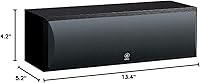
  • Dimensions: Measures 13.4″ wide, 5.2″ deep, and 4.2″ tall — compact enough for most TV stand placements.
  • Weight: Weighs 4.4 pounds, making it easy to position or reposition without assistance.
  • Finish: Piano Black lacquer finish; three additional finish options are available to match different interiors.
  • Mounting Type: Tabletop mount designed for shelf or TV stand placement; no integrated wall-mount hardware included.
  • Connectivity: Wired connection via standard speaker cable terminals; no wireless or Bluetooth capability.
  • Audio Driver Type: Dynamic driver configuration across both woofer and tweeter elements.
  • Surround Config: Optimized for the center channel position in a 5.1 surround sound speaker system.
  • Bass Design: Rear bass-reflex port extends low-mid frequency response beyond what a sealed cabinet of this size would deliver.
  • Series: Part of the Yamaha NS-200 series, designed to pair tonally with other NS-series bookshelf and floor-standing speakers.
  • Warranty: Covered by a Yamaha limited warranty; specific terms vary by region and registration.
  • Cable Included: A 4-meter speaker cable is included in the box for immediate setup convenience.
  • Compatibility: Compatible with AV receivers and televisions; works within standard 5.1 home theater configurations.
  • Water Resistance: Not water resistant — intended strictly for indoor, dry-environment use.

Related Reviews
Yamaha NS-C444 Center Channel Speaker
81%
93%
Dialogue Clarity
88%
Build Quality
91%
Tonal Matching
54%
Bass Performance
84%
Waveguide Performance
More
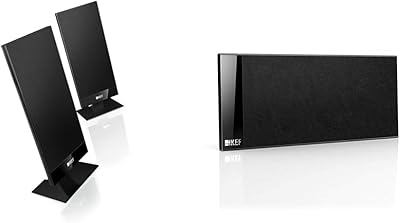
KEF T101 Satellite and Center Channel Speakers
80%
88%
Sound Clarity
91%
Build Quality
94%
Design & Aesthetics
89%
Dialogue Intelligibility
62%
Value for Money
More
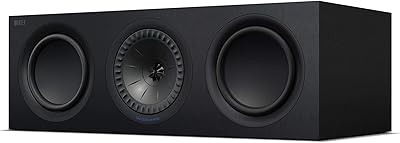
KEF Q250c Center Channel Speaker
80%
93%
Dialogue Clarity
88%
Build Quality
91%
Off-Axis Performance
79%
Value for Money
67%
Bass Performance
More
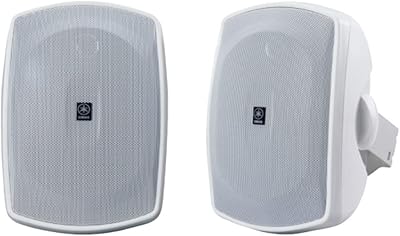
Yamaha NS-AW294BL Outdoor Speakers
86%
88%
Sound Quality
92%
Durability
83%
Ease of Installation
90%
Water Resistance
89%
Build Quality
More
KEF T301C Center Channel Speaker
80%
93%
Dialogue Clarity
96%
Design & Aesthetics
88%
Build Quality
67%
Value for Money
48%
Bass Performance
More
NEUMI CS5 Center Channel Speaker
74%
88%
Dialogue Clarity
84%
Value for Money
57%
Bass Performance
67%
Build Quality
83%
Ease of Setup
More
Yamaha NS-P150 Speaker Package
84%
85%
Sound Quality
90%
Ease of Setup
88%
Design & Build Quality
92%
Value for Money
87%
Dialogue Clarity
More
Yamaha NS-F210BL Floorstanding Speaker
78%
83%
Sound Quality
67%
Bass Performance
81%
Value for Money
78%
Build Quality
86%
Dialogue Clarity
More
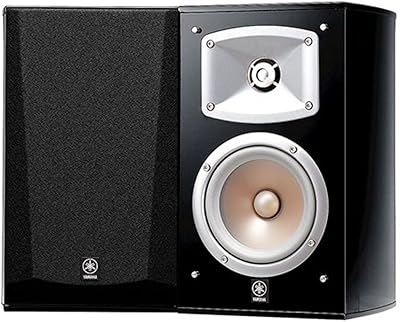
Yamaha NS-333
Yamaha NS-333
79%
88%
Sound Clarity
86%
Soundstage & Imaging
58%
Bass Performance
84%
High-Frequency Performance
83%
Build Quality
More
Polk Audio TL1 Center Channel Speaker
78%
88%
Dialogue Clarity
52%
Bass & Low-End Response
83%
Value for Money
79%
Build Quality & Finish
91%
AV Receiver Compatibility
More

FAQ

It works with virtually any AV receiver that supports a 6-ohm speaker load, which includes most mainstream brands. You do not need a Yamaha receiver to run it — the pairing with other Yamaha NS-series speakers is about tonal consistency, not a technical requirement.

In most cases, yes. At 13.4 inches wide and 4.2 inches tall, it fits comfortably in front of or below most 55-inch TV stands without blocking the screen. That said, measure your specific stand shelf depth against the 5.2-inch depth before purchasing, just to be safe.

A dedicated center channel speaker makes a significant difference for dialogue clarity, and this one in particular is tuned with that exact use case in mind. The dual aluminum woofers respond quickly to fast speech, and the dome tweeter adds vocal detail without harshness. Most users notice an immediate improvement over TV speakers or systems without a proper center channel.

Technically you can connect it as a standalone speaker to an AV receiver, but it's genuinely designed to serve as the center anchor in a 5.1 or similar surround setup. Running it solo in a stereo context would be an unusual use and wouldn't make the most of what it's built for.

It pairs very well with other speakers in the Yamaha NS series. The shared cabinet tuning philosophy and driver materials mean the tonal character stays consistent across your front stage, which is exactly what you want when sound needs to pan smoothly from the center to the sides during a movie.

This is a common issue with low TV stands, and the fix is straightforward: tilt the speaker slightly upward toward your listening position. Several long-term owners specifically recommend this adjustment, and it makes a noticeable difference. It is not a design flaw — just a placement consideration worth knowing before you set it up.

It handles the vocal and midrange frequencies in music very well, but if you're hoping for meaningful low-end punch when playing music through your center channel, you may be underwhelmed. The bass-reflex port helps, but this speaker is fundamentally tuned for dialogue and film soundtracks rather than full-range music reproduction.

Build quality is consistently praised by owners who have used this Yamaha center speaker for several years. The cabinet feels solid, the finish holds up well with normal care, and there are no common reports of driver failure or structural issues over time. For a speaker at this price tier, the longevity track record is reassuring.

A receiver rated at around 50 to 100 watts per channel into 6 or 8 ohms is the practical sweet spot. You don't need a high-powered or boutique amplifier — a standard mid-range AV receiver from any major brand will drive it comfortably without strain.

The grille is designed to stay on during normal use and is part of the speaker's acoustic presentation. Some users do remove it for aesthetic preference, but it is not intended to be frequently detached, and doing so on certain unit variants may risk the grille clips. If you prefer the look of exposed drivers, check product photos carefully before buying.

Where to Buy